Mempertahankan kepatuhan ISO 14644-1 memerlukan pengendalian setiap sumber partikel, termasuk furnitur. Kursi kantor dan meja kerja standar dapat menjadi vektor kontaminasi yang signifikan, merusak kebersihan udara, dan membatalkan sertifikasi. Tantangannya adalah memvalidasi barang-barang ini dengan benar-menguji kondisi yang salah atau menggunakan metode yang tidak tepat akan menghasilkan data yang menyesatkan, sehingga menciptakan risiko kepatuhan. Para profesional harus mengisolasi kontribusi spesifik furnitur terhadap beban partikulat kamar bersih.
Validasi ini sangat penting saat ini karena pengawasan peraturan semakin ketat dan industri seperti farmasi dan mikroelektronika mendorong kontrol proses yang lebih ketat. Furnitur adalah komponen bersertifikat, bukan sekadar barang pelengkap. Pendekatan sistematis terhadap pengujian pembuatan partikelnya melindungi sertifikasi Anda, memastikan kualitas produk, dan menyediakan dokumentasi audit yang dapat dipertahankan. Protokol berikut menjelaskan cara menjalankan validasi ini dengan benar.
Peran Penting Kondisi Uji Saat Istirahat untuk Furnitur
Mendefinisikan Tiga Status Uji
ISO 14644-1 mendefinisikan tiga status operasional yang berbeda untuk klasifikasi: As-built, Saat Istirahat, dan Operasional. Status As-built mewakili ruangan kosong dengan HVAC yang berjalan, yang menetapkan garis dasar tetapi tidak memberi tahu Anda apa pun tentang peralatan yang terpasang. Status Operasional mencakup personel dan aktivitas proses penuh, memperkenalkan terlalu banyak variabel untuk mengisolasi satu sumber. Untuk validasi furnitur, kondisi At-rest tidak dapat dinegosiasikan. Dalam kondisi ini, peralatan dan perabot terpasang dan beroperasi, tetapi tidak ada personel yang hadir. Hal ini secara langsung mengisolasi kontribusi partikel dari item yang terpasang itu sendiri.
Implikasi Strategis untuk Validasi
Memilih negara bagian yang tepat merupakan keputusan kepatuhan yang strategis. Lulus tes di satu negara bagian tidak menjamin kelulusan di negara bagian lain. Kamar bersih dapat memenuhi ISO Kelas 5 dalam kondisi As-built tetapi gagal dalam kondisi At-rest jika furnitur menghasilkan partikel yang berlebihan. Oleh karena itu, prosedur kualitas Anda harus secara eksplisit mendefinisikan kondisi pengujian mana yang diperlukan untuk validasi komponen. Untuk furnitur, kondisi At-rest memberikan data yang paling indikatif dan dapat dipertahankan, membuktikan bahwa item tersebut tidak merusak lingkungan yang terkendali. Saya telah melihat proyek yang tertunda karena perbedaan ini tidak diklarifikasi dalam rencana induk validasi, yang menyebabkan pengujian ulang yang mahal.
Bahan Utama dan Fitur Desain untuk Furnitur Berpartikel Rendah
Rekayasa untuk Lingkungan Ruang Bersih
Bahan-bahan kantor standar adalah penghasil partikel yang produktif. Kayu, kain, dan komposit berpori terus menerus rontok dan tidak dapat dibersihkan secara efektif. Perabot kamar bersih bersertifikat dirancang dari bawah ke atas dengan bahan rendah emisi. Ini termasuk penggunaan ekstensif baja tahan karat 304 atau 316, logam berlapis bubuk dengan lapisan akhir yang tidak berpori, dan plastik tidak berpori tertentu seperti PVDF atau polipropilena. Filosofi desain menghilangkan perangkap partikel; jahitannya dilas atau disegel, sudut-sudutnya diradiasikan, dan rongga diminimalkan.
Desain Fungsional untuk Pengendalian Kontaminasi
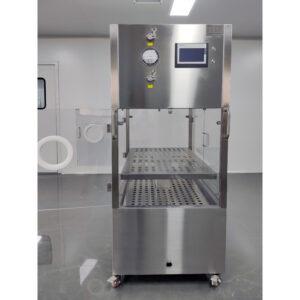
Selain bahan, desain fungsional sangat penting untuk diintegrasikan ke dalam rezim aliran udara laminar. Bagian atas meja yang berlubang atau berparut memfasilitasi aliran udara laminar vertikal (LAF) yang tepat, mencegah akumulasi partikel. Kursi menggunakan kastor dengan penumpahan rendah dan mekanisme pengangkatan pneumatik yang disegel untuk menampung pelumas internal. Detail yang sering diabaikan adalah penyertaan sifat ESD (disipatif elektrostatik). Tanpa sifat tersebut, muatan statis dapat menarik dan menahan partikel di udara, menciptakan awan kontaminasi yang terlokalisasi. Pengadaan harus memperlakukan furnitur sebagai spesifikasi teknis, yang menuntut data emisi partikel yang dapat diukur dari produsen.
Spesifikasi Bahan dan Desain
Tabel di bawah ini menguraikan bahan inti dan fitur yang menentukan furnitur ruang bersih rendah partikel.
| Bahan / Fitur | Karakteristik Utama | Manfaat Utama |
|---|---|---|
| Baja tahan karat | Penggunaan ekstensif | Rendah emisi, tahan lama |
| Logam Berlapis Serbuk | Permukaan yang tidak berpori | Penumpahan partikel yang minimal |
| Plastik Tidak Berpori | Jahitan yang disegel | Mencegah perangkap partikel |
| Bagian Atas Meja Berlubang | Memfasilitasi aliran udara laminar | Menjaga keseragaman udara |
| Lift Pneumatik Tertutup | Kastor dengan daya tampung rendah | Mengurangi generasi dinamis |
| Properti ESD | Disipatif elektrostatik | Mencegah tarikan partikel |
Sumber: IEST-RP-CC018.4: Tata Graha Kamar Bersih. Praktik yang direkomendasikan ini memberikan panduan untuk permukaan dan bahan ruang bersih, menekankan perlunya bahan yang tidak mudah tumpah, mudah dibersihkan, dan desain yang tepat untuk memfasilitasi tata graha yang efektif dan pengendalian partikel.
Cara Melakukan Pengujian Partikel untuk Kepatuhan ISO 14644-1
Menetapkan Rencana Pengambilan Sampel
Metodologi dimulai dengan rencana pengambilan sampel yang baik secara statistik. Jumlah minimum lokasi sampel (NL) dihitung dengan menggunakan rumus di ISO 14644-1, berdasarkan luas lantai kamar bersih dalam meter persegi. Lokasi harus didistribusikan secara merata dan biasanya pada ketinggian bidang kerja (misalnya, 1 meter di atas lantai). Pengambilan sampel yang kurang adalah jebakan umum yang dapat melewatkan gumpalan partikel dari item furnitur tertentu. Rencana tersebut juga harus menentukan volume sampel minimum udara yang akan dikumpulkan di setiap lokasi untuk mencapai signifikansi statistik untuk ukuran partikel target (misalnya, ≥0,5μm).
Menjalankan Protokol Pengukuran
Dengan rencana yang telah ditetapkan, eksekusi membutuhkan prosedur yang ketat. Pengukuran harus dilakukan di setiap lokasi yang ditentukan dengan ruang bersih yang distabilkan dalam keadaan diam. Penghitung partikel harus mengambil sampel volume minimum penuh. Sangat penting untuk juga menguji kondisi dinamis-membuka laci, menyesuaikan ketinggian kursi, atau memindahkan gerobak-untuk menangkap profil emisi kasus terburuk. Analisis data melibatkan penghitungan konsentrasi partikel rata-rata di setiap lokasi dan kemudian rata-rata ruang bersih secara keseluruhan. Angka-angka ini dibandingkan secara langsung dengan batas konsentrasi untuk Kelas ISO target Anda.
Metodologi Pengujian Langkah-demi-Langkah
Uji partikel yang valid mengikuti proses multi-langkah yang ketat seperti yang diuraikan di bawah ini.
| Langkah | Tindakan Utama | Parameter / Alat Kritis |
|---|---|---|
| 1. Menentukan Lokasi | Gunakan rumus area ISO | Lokasi sampel minimum |
| 2. Pilih Peralatan | Meja kerja/meja portabel | Laju aliran 1,0 CFM |
| 3. Melakukan Pengukuran | Mengumpulkan udara di lokasi | Volume sampel minimum |
| 4. Menganalisis Data | Menghitung rata-rata lokasi | Bandingkan dengan batas kelas ISO |
Sumber: ISO 14644-3: Metode pengujian. Standar ini menetapkan metode pengujian untuk mengkarakterisasi kinerja ruang bersih, termasuk metodologi standar untuk mengukur konsentrasi partikel di udara, yang merupakan inti dari pengujian validasi furnitur.
Dokumentasi Penting untuk Laporan Uji Ruang Bersih Anda
Elemen Inti dari Laporan yang Dapat Dipertahankan
Laporan pengujian adalah jejak audit legal dan kualitas Anda. Laporan tersebut harus dengan jelas menyatakan standar yang digunakan (ISO 14644-1:2015), pengenal ruang bersih, dan Kelas ISO target. Yang terpenting, laporan tersebut harus mendokumentasikan kondisi pengujian (Saat istirahat). Tanggal pengujian dan tanggal kalibrasi penghitung partikel tidak dapat dinegosiasikan; kalibrasi tahunan yang dapat dilacak NIST wajib dilakukan untuk integritas data. Diagram terperinci yang menunjukkan tata letak ruang bersih dengan semua lokasi sampel yang ditandai sangat penting untuk reproduktifitas dan investigasi.
Penyajian Data dan Pernyataan Kepatuhan
Laporan harus menyajikan data jumlah partikel mentah, perhitungan untuk rata-rata lokasi, dan rata-rata ruangan secara keseluruhan. Transparansi ini memungkinkan verifikasi independen. Komponen terakhir adalah pernyataan yang jelas dan tegas tentang kepatuhan atau ketidakpatuhan terhadap batas Kelas ISO yang ditentukan. Dokumentasi yang komprehensif ini mengubah kalibrasi dari entri log pemeliharaan menjadi elemen dasar dari sistem kualitas Anda. Tanpa itu, pengujian itu sendiri hanya memiliki sedikit nilai selama audit.
Jebakan Pengujian Umum dan Cara Menghindarinya
Kesalahan dalam Pengambilan Sampel dan Pemilihan Status
Kesalahan yang paling sering terjadi melibatkan kecukupan pengambilan sampel dan kondisi pengujian. Menggunakan formula atau alasan yang sudah ketinggalan zaman untuk mengurangi lokasi sampel akan menghemat sedikit waktu namun berisiko kehilangan kejadian kontaminasi lokal. Menguji furnitur dalam kondisi As-built (ruangan kosong) adalah kesalahan mendasar yang tidak menghasilkan data validasi yang berguna. Demikian pula, hanya mengandalkan data pemantauan berkelanjutan di lokasi tetap untuk sertifikasi tidaklah cukup; sistem ini tidak memiliki cakupan spasial yang diperlukan oleh ISO 14644-3 untuk klasifikasi formal.
Mengabaikan Pengujian dan Prosedur Dinamis
Pengujian statis hanya menceritakan sebagian dari cerita. Mengabaikan pengujian operasional dinamis furnitur - menggulingkan kursi, membuka lemari penyimpanan - berarti Anda belum menangkap profil emisi yang sebenarnya. Selain itu, gagal mendokumentasikan dan mengontrol kondisi “operasional” tertentu jika kondisi tersebut diuji akan menimbulkan variabilitas. Tingkat staf dan aktivitas proses harus didefinisikan dan direplikasi agar pengujian dapat dibandingkan dari waktu ke waktu. Menghindari jebakan ini membutuhkan ketaatan yang ketat terhadap protokol tertulis dan fokus untuk menangkap skenario terburuk.
Memilih Penghitung Partikel yang Tepat untuk Validasi Furnitur
Spesifikasi Instrumen Mendikte Validitas
Pemilihan penghitung partikel tidak sembarangan; ini ditentukan oleh Kelas ISO target dan persyaratan formal pengujian. Untuk sertifikasi ISO Kelas 5 atau ruangan yang lebih bersih, penghitung partikel genggam secara eksplisit tidak cocok. Laju alirannya yang lebih rendah (misalnya, 0,1 CFM) tidak dapat mengambil sampel volume udara yang diperlukan dalam waktu yang wajar untuk mencapai signifikansi statistik. Benchtop atau unit portabel dengan laju aliran 1,0 CFM biasanya diamanatkan untuk tingkat klasifikasi ini.
Keharusan Pengadaan
Spesifikasi ini menjadikan pengadaan peralatan sebagai langkah pertama yang penting dengan implikasi modal yang signifikan. Membeli unit genggam untuk upaya sertifikasi formal akan memvalidasi data dan merupakan investasi yang sia-sia. Organisasi harus menetapkan pedoman pengadaan yang ketat yang selaras dengan target kelas ISO tertinggi fasilitas mereka. Tabel di bawah ini menjelaskan persyaratan instrumen berdasarkan konteks pengujian.
| Konteks Kelas ISO | Jenis Penghitung yang Diperlukan | Laju Aliran Minimum |
|---|---|---|
| Sertifikasi Formal (misalnya, ISO Kelas 5) | Benchtop atau Portabel | 1.0 CFM |
| Identifikasi Sumber / Analisis Tren | Unit genggam | Laju aliran yang lebih rendah |
| Catatan: Penghitung genggam tidak cocok untuk sertifikasi formal ISO Kelas 5 atau ruangan yang lebih bersih. |
Sumber: ISO 14644-3: Metode pengujian. Standar ini menguraikan persyaratan peralatan untuk uji penghitungan partikel, yang menetapkan bahwa instrumen harus mampu mengambil sampel volume udara yang diperlukan untuk mendapatkan data yang signifikan secara statistik untuk klasifikasi ruang bersih.
Mengintegrasikan Pengujian Furnitur ke dalam Program Pemantauan Anda
Pengujian Berkala yang Diwajibkan
Validasi furnitur harus diintegrasikan ke dalam jadwal kepatuhan yang sedang berjalan, bukan diperlakukan sebagai kegiatan yang dilakukan satu kali saja. ISO 14644-2 mengamanatkan bahwa tes jumlah partikel untuk sertifikasi ulang dilakukan setidaknya setiap tahun untuk ISO Kelas 5 dan ruangan yang lebih bersih, dan setiap enam bulan untuk ISO Kelas 6-9. Hal ini menciptakan jadwal berulang di mana kontribusi partikel dari semua peralatan yang terpasang, termasuk furnitur, dinilai kembali. Program pemantauan Anda harus memperhitungkan frekuensi ini.
Peran Pemantauan Berkelanjutan
Sangat penting untuk memahami peran yang berbeda dari berbagai alat pemantauan. Sistem pemantauan berkelanjutan memberikan kontrol waktu nyata yang sangat baik dan analisis tren, yang memberi tahu Anda tentang kunjungan. Namun, sistem ini melengkapi tetapi tidak menggantikan pengujian manual wajib yang diperlukan untuk sertifikasi. Probe tetap tidak memiliki cakupan spasial yang diperlukan untuk penilaian klasifikasi formal. Secara strategis, hal ini menciptakan model biaya ganda: penganggaran untuk investasi modal dalam sistem berkelanjutan dan biaya berulang untuk audit manual atau layanan sertifikasi pihak ketiga.
Jadwal Pengujian Kepatuhan
Tabel berikut ini menguraikan frekuensi pengujian yang diwajibkan dan peran strategis sistem pemantauan.
| Kelas ISO Kamar Bersih | Frekuensi Tes yang Diwajibkan | Peran Sistem Pemantauan |
|---|---|---|
| Kelas 5 dan lebih bersih | Setidaknya setiap tahun | Pelengkap, bukan pengganti |
| Kelas 6 hingga 9 | Setiap enam bulan | Kontrol waktu nyata & analisis tren |
| Implikasi Strategis: Model biaya ganda untuk biaya modal (kontinu) dan biaya berulang (audit manual). |
Sumber: ISO 14644-1: Klasifikasi kebersihan udara. Standar ini menetapkan konsentrasi partikel maksimum yang diperbolehkan untuk setiap kelas ISO dan menjadi dasar untuk jadwal pengujian berkala wajib yang diperlukan untuk menunjukkan kepatuhan yang berkelanjutan.
Menciptakan Protokol Validasi Furnitur Kamar Bersih yang Sesuai
Memformalkan Prosedur menjadi Dokumen Terkendali
Protokol validasi yang kuat mengkodifikasi semua langkah sebelumnya ke dalam satu dokumen yang terkontrol. Protokol tersebut harus secara eksplisit mendefinisikan kondisi pengujian (saat istirahat), metode penghitungan rencana pengambilan sampel, dan spesifikasi penghitung partikel yang disetujui (merek, model, laju alir). Protokol harus mewajibkan pengujian dalam kondisi statis dan dinamis untuk mendapatkan profil emisi yang sebenarnya. Protokol tersebut juga harus mengunci parameter spesifik untuk setiap pengujian kondisi operasional, karena perubahan jumlah petugas dapat mengubah hasil - sebuah pertimbangan yang semakin penting dalam model kerja hibrida.
Dari Data Kepatuhan hingga Wawasan Prediktif
Nilai strategis dari protokol ini lebih dari sekadar kepatuhan. Volume data yang dihasilkan dari pengujian manual secara berkala, dikombinasikan dengan aliran pemantauan yang terus menerus, menghadirkan peluang. Organisasi terkemuka berinvestasi dalam platform data terintegrasi untuk melakukan analisis tren tingkat lanjut pada informasi ini. Hal ini mengubah data kepatuhan pasif menjadi alat prediktif untuk pemeliharaan preventif, mengidentifikasi kapan furnitur mungkin mengalami penurunan kualitas atau memprediksi masa pakai filter, sehingga mengurangi risiko sebelum peristiwa kontaminasi terjadi.
Memvalidasi furnitur kamar bersih membutuhkan fokus yang disiplin pada kondisi pengujian saat istirahat, instrumentasi yang tepat, dan rencana pengambilan sampel yang baik secara statistik. Keputusan untuk memperlakukan furnitur sebagai komponen bersertifikat, bukan peralatan kantor biasa, merupakan hal yang mendasar. Prioritas implementasi termasuk menetapkan protokol validasi tertulis, mengamankan penghitung partikel yang benar, dan mengintegrasikan pengujian ke dalam jadwal pemantauan yang diamanatkan kepada Anda.
Butuh solusi furnitur kamar bersih kelas profesional yang dirancang dan divalidasi untuk kepatuhan? Jelajahi opsi tersertifikasi yang dirancang untuk lingkungan terkendali di YOUTH. Untuk persyaratan proyek tertentu atau lembar data teknis, Anda juga dapat Hubungi Kami.
Pertanyaan yang Sering Diajukan
T: Mengapa status uji At-Rest secara khusus diperlukan untuk memvalidasi furnitur kamar bersih?
A: Status Saat Istirahat, didefinisikan dalam ISO 14644-1, adalah satu-satunya kondisi di mana furnitur terpasang dan beroperasi namun personel tidak ada, sehingga mengisolasi kontribusi partikelnya. Pengujian dalam kondisi As-Built (kosong) melewatkan hal ini, sementara kondisi Operasional menambahkan variabel manusia. Ini berarti fasilitas harus secara eksplisit mendefinisikan kondisi pengujian yang diperlukan dalam protokol kualitas mereka, karena kelulusan dalam satu kondisi tidak menjamin kepatuhan dalam kondisi lain untuk sertifikasi furnitur.
T: Apa spesifikasi material yang paling penting untuk furnitur kamar bersih rendah emisi partikel?
J: Furnitur bersertifikat menggunakan bahan yang tidak berpori dan rendah emisi seperti baja tahan karat, logam berlapis bubuk, dan plastik khusus, menghindari bahan kantor standar seperti kayu atau kain. Fitur desain termasuk jahitan yang disegel, sudut yang membulat, dan properti ESD untuk mencegah tarikan statis. Untuk proyek yang mempertahankan ISO Kelas 5 atau lebih bersih sangat penting, pengadaan harus meminta data emisi partikel yang dapat diukur dari produsen sebagai spesifikasi teknis utama.
T: Bagaimana cara memilih penghitung partikel yang benar untuk validasi dan sertifikasi furnitur formal?
J: Untuk klasifikasi ISO resmi, khususnya untuk ISO Kelas 5 dan pembersih, penghitung genggam tidak cocok. Anda harus menggunakan benchtop atau unit portabel dengan laju aliran 1,0 CFM (atau yang setara) untuk mengumpulkan volume sampel yang diperlukan untuk signifikansi statistik. Hal ini menjadikan pengadaan peralatan sebagai langkah pertama yang penting; memilih alat penghitung yang salah akan membatalkan upaya sertifikasi dan merupakan pengeluaran modal yang sia-sia.
T: Kesalahan dokumentasi umum apa yang dapat membuat laporan uji partikel ruang bersih tidak sesuai?
J: Laporan yang sesuai harus menyertakan tanggal kalibrasi penghitung partikel dengan keterlacakan NIST, pernyataan yang jelas tentang status pengujian (At-Rest), dan diagram terperinci dari semua lokasi sampel. Menghilangkan salah satu elemen ini akan merusak jejak audit. Hal ini mengubah kalibrasi tahunan dari tugas pemeliharaan menjadi persyaratan dasar untuk data yang dapat dipertahankan dan siap audit per ISO 14644-3 metode pengujian.
T: Haruskah sistem pemantauan partikel berkelanjutan menggantikan pengujian manual untuk validasi furnitur?
J: Tidak. Meskipun monitor kontinu sangat baik untuk kontrol waktu nyata dan analisis tren, monitor ini tidak memiliki cakupan spasial yang diperlukan untuk klasifikasi formal. ISO 14644-3 mewajibkan pengujian manual secara berkala di lokasi sampel yang ditentukan. Hal ini menciptakan model biaya ganda di mana Anda harus menganggarkan untuk investasi modal dalam sistem berkelanjutan dan biaya audit manual yang berulang.
T: Apa yang menjadi kendala penting saat merancang rencana pengambilan sampel untuk pengujian partikel furnitur?
J: Kesalahan utama adalah menggunakan jumlah lokasi sampel yang tidak mencukupi, sering kali karena menggunakan rumus yang sudah ketinggalan zaman. Pengambilan sampel yang kurang dapat gagal mendeteksi gumpalan partikel lokal yang dipancarkan dari item furnitur tertentu. Anda harus menghitung lokasi minimum menggunakan rumus saat ini dalam ISO 14644-1 berdasarkan area ruang bersih. Jika fasilitas Anda memiliki meja kerja yang besar atau banyak kursi, rencana pengambilan sampel yang kuat sangat penting untuk menangkap semua sumber kontaminasi.
T: Bagaimana seharusnya validasi furnitur diintegrasikan ke dalam program pemantauan ruang bersih yang sedang berlangsung?
J: Perlakukan validasi furnitur sebagai acara berulang dalam jadwal yang diamanatkan oleh ISO 14644-2, yang mengharuskan pengujian tahunan untuk ISO Kelas 5+ dan pengujian dua tahunan untuk ISO Kelas 6-9. Protokol validasi Anda harus mencakup pengujian tindakan dinamis seperti memindahkan kursi. Pendekatan terintegrasi ini mengubah data kepatuhan menjadi alat prediksi untuk penjadwalan pemeliharaan dan mitigasi risiko kontaminasi.
Konten Terkait:
- Panduan Pemilihan dan Spesifikasi Furnitur Cleanroom Lengkap untuk Lingkungan yang Terkendali Kontaminasi: Edisi 2025
- Standar Kepatuhan ISO 14644 dan GMP untuk Peralatan Kamar Bersih: Persyaratan Sertifikasi Lengkap dan Protokol Pengujian
- ISO 14644-1 Kepatuhan Aliran Udara Laminar
- Standar Peralatan Kamar Bersih ISO 14644 | Panduan Kepatuhan
- Fitur Furnitur Kamar Bersih yang Penting untuk Kepatuhan ISO 14644: 12 Daftar Periksa Spesifikasi Kritis
- Proses Sertifikasi Kotak Perumahan HEPA ISO 14644
- Kepatuhan 21 CFR Bagian 11: Isolator Uji Sterilitas
- Sertifikasi Tahunan untuk Gerobak LAF Bergerak: Panduan
- Memvalidasi Pemantauan Lingkungan dalam Isolator