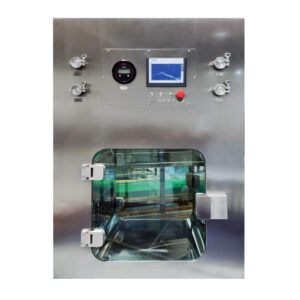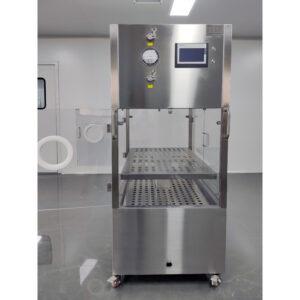
Fabricating a custom stainless housing for a Bag-In-Bag-Out filtration system looks straightforward on a project schedule until the first field modification is needed because the bagging ring conflicts with a duct flange that nobody confirmed during design. That single oversight — access direction left undefined before drawings went to the factory — is enough to compromise containment integrity and force rework that is far more expensive than a drawing review cycle would have been. The same project can carry a second risk sitting quietly alongside it: stainless steel grade is chosen confidently, but gasket material and bag chemistry against actual decontamination agents are deferred, only surfacing as a compatibility problem during qualification. What follows helps procurement engineers, project engineers, and cleanroom facility planners identify the specific inputs, tradeoffs, and approval checks that determine whether a custom stainless BIBO housing order reaches site ready to install and validate — or arrives ready for argument.
Project Drawings Needed For Stainless BIBO Fabrication
A custom stainless BIBO housing cannot be reliably fabricated from a specification sheet alone. The housing geometry — specifically where the access door swings, where the bagging ring sits, and how the flanges align with upstream and downstream ductwork — is determined by dimensional inputs that only exist in project drawings. When those inputs are absent or ambiguous, the factory makes assumptions, and those assumptions are corrected in the field rather than at the drawing stage.
Three inputs carry the most fabrication consequence. Access direction, whether top-access or side-access, directly determines bagging ring placement relative to the filter carriage. Getting this wrong means the ring is positioned where a technician cannot complete the bag change procedure without the housing partially obstructing the work. Inlet and outlet orientation — left, right, or end-facing — must match the existing or designed ductwork interface, because a housing built with the outlet on the wrong side generates a duct transition that either leaks or requires a field-fabricated adapter. For installations that require multi-layer stacking to handle high air volumes, the stacking layout and inter-unit dimensional transitions must be explicit in project drawings before fabrication begins; a three-layer stack that was dimensioned from catalog figures without project-specific coordination is unlikely to align correctly in the ceiling plenum where it must fit.
Custom drilled flanges, zero-leak dampers, and built-in transitions depend entirely on schematic input to be made correctly the first time. The factory cannot drill a flange to the correct bolt pattern without a dimensional call-out, and a damper installed at the wrong position in the airflow path creates a control problem that is difficult to fix without cutting into the housing.
| Masukan Desain | What It Impacts | Risk If Unspecified |
|---|---|---|
| Access direction (top/side) and inlet/outlet orientation | Duct interface and bagging ring placement | Misalignment and rework on site |
| Custom dimensions and stacking layout (up to 3 layers) | Dimensional compatibility for high air volume | Stacking mismatch and performance loss |
| Custom drilled flanges, transitions, zero-leak dampers | Accurate fabrication to schematics | Fabrication delays and field modifications |
The practical consequence is not just fabrication delay. Field modifications made to correct a housing that was built from incomplete drawings often involve cutting, re-welding, or re-sealing in an environment where containment is the primary concern. Any modification to a BIBO housing after it is installed in a controlled area introduces contamination risk that a proper drawing review would have eliminated entirely. Submit project schematics — including duct interface geometry, service clearance dimensions, and stacking configuration — before scope is agreed and before fabrication begins.
Material Compatibility Around Gaskets, Bags And Cleaning Agents
Selecting 304 or 316L stainless steel for the housing shell is the right starting point for most pharmaceutical and biotech applications, but treating it as the primary material decision and deferring the rest is a reliable path to a seal failure or bag failure during the first validation cycle. The housing grade, the seal type, and the bag material are three distinct compatibility checks that must be resolved together, not sequentially.
The seal choice between a gasket seal — typically neoprene or rubber — and a gel seal is an engineering decision driven by two factors: the containment level the system must achieve and the chemical agents used for decontamination. Gel seal housings offer zero-leakage performance at the filter face, which matters in high-hazard containment applications, but they also require gel tray integrity to be maintained through cleaning cycles. A gasket seal housing may be appropriate at lower containment levels, but the gasket material must be verified against every cleaning agent used in the process area, not just the standard ones listed on a generic compatibility chart. If the actual decontamination protocol involves agents outside that verification, the gasket becomes the weakest point in the assembly.
Stainless steel housings built to 304 or 316L grade are specified to withstand operating pressures up to ±2500 Pa, a design figure referenced against ASME/ANSI N510 — which is a useful reference for confirming that the housing shell is not the pressure-limiting component. The seal and the bag, however, are. PVC BIBO bags attach via a ribbed collar on the housing, and PVC compatibility with strong oxidizing agents, aldehydes, or high-concentration alcohol solutions used in certain decontamination protocols is not guaranteed. Each project’s actual decontamination chemistry needs to be matched against the bag material specification before the housing is ordered. If there is any uncertainty, the bag material choice should be flagged during the inquiry stage, not confirmed after delivery.
| Titik Pemeriksaan | Apa yang harus diverifikasi | Risk if Mismatched |
|---|---|---|
| Housing material grade (304/316L) | Grade certificate; pressure capability to ±2500 Pa | Structural failure under operating pressure |
| Seal type (gasket vs. gel seal) | Containment level and chemical agent exposure suitability | Leakage or chemical degradation of seal |
| BIBO bag material (PVC) | Compatibility with process chemicals and decontamination agents | Bag failure during filter change |
| Cleaning agent exposure | Material compatibility of all wetted parts (housing, seal, bag) | Degradation, reduced service life, or containment loss |
The most common error pattern here is treating stainless construction as a proxy for chemical resistance throughout the assembly. It is not. The steel handles the structural and cleanability requirements well; the seal and bag carry the chemical exposure risk. Both need explicit compatibility verification before the order is placed. For more background on how 304 and 316L grades perform in laboratory environments, the comparison of these grades in practical applications is worth reviewing alongside the seal and bag assessment.
Custom Dimensions Versus Standard Housing Lead-Time Tradeoffs
Standard BIBO housings are pre-engineered to defined dimensions — a cataloged size such as 708×403×540 mm supports airflow up to 1700 CMH and can be quoted and delivered on a standard lead time without a factory re-engineering cycle. That is not a trivial advantage when a project schedule is tight. The hidden trade-off appears when buyers expect standard pricing and delivery while describing a scope that is clearly custom.
Custom dimensions are necessary when the available installation space, the required airflow, or the duct interface geometry does not match any cataloged configuration. Once the project crosses into custom territory, lead time extends because the factory must develop and approve project-specific drawings before cutting begins. That approval cycle — dimensional review, engineering sign-off, and buyer confirmation — is not bureaucratic overhead; it is the step that prevents a custom housing from arriving with the same misalignment problems that incomplete drawings cause in standard builds. Skipping or rushing it is where schedule recovery becomes more expensive than the original lead time would have been.
Add-on options compound the lead-time consequence in ways that are often underestimated at the inquiry stage. Pre-filters, scan sections for in-place HEPA testing, zero-leak dampers, and duct transitions can all be integrated into a custom housing, but each one requires dimensional coordination and formal approval before fabrication. A buyer who adds a scan section to a custom housing after the initial drawings are approved is effectively restarting the dimensional review cycle for that component.
| Parameter | Standard Housing (e.g., 708×403×540 mm) | Custom Housing |
|---|---|---|
| Dimensi | Predetermined, as cataloged | Per project drawings |
| Max Airflow | Up to 1700 CMH (for reference size) | Variable, project-specific |
| Waktu Pimpin | Standard lead time | Extended; requires factory re-engineering |
| Engineering & Approval | Pre-approved standard design | Detailed dimensional approval needed before fabrication |
| Add-on Options (pre-filters, scan sections, dampers, transitions) | Typically not included; may require separate inquiry | Can be integrated but further extend lead time and approval |
The practical implication is that the standard-versus-custom decision should be made at the earliest point in the project, not after space constraints or airflow calculations push the design outside standard parameters. If custom dimensions are inevitable, beginning the drawing exchange and dimensional approval process early is the single most effective schedule management action available to the project team.
Installation Friction From Poor Clearance And Port Placement
A BIBO housing can be fabricated correctly and still generate significant installation and maintenance problems if service clearance and port orientation were not resolved before the unit was specified. These are not minor adjustment items; they determine whether the bag-change procedure can be completed safely and whether the housing can be connected to existing ductwork without field modification.
The bagging access clearance behind the access door is the most commonly underestimated dimension in retrofit projects. The bag-change procedure requires a technician to attach, seal, and remove a bag through the access opening while the housing remains under negative pressure. If the space between the door and the nearest wall, ceiling, or adjacent equipment is insufficient for the bagging ring and the collapsed bag to be manipulated correctly, the procedure either cannot be completed as designed or is completed in a way that compromises containment. This problem is encountered frequently in retrofit installations where the housing is being inserted into an existing plenum or ceiling cavity that was never designed around BIBO maintenance access. On-site dimensional verification of service clearance before ordering is the correct sequence; discovering the problem after the housing is installed is the expensive one.
Port placement — whether the inlet and outlet face left, right, or end — must be matched against the existing duct routing before the housing is fabricated. A port on the wrong face requires either a field-fabricated transition or a duct reroute, both of which add cost, create additional leak points, and delay commissioning. For retrofit projects specifically, the duct interface geometry should be measured and documented as part of the inquiry, not assumed from floor plans that may not reflect as-built conditions.
| Aspek Instalasi | Problem If Unresolved | What to Clarify Before Ordering |
|---|---|---|
| Bagging access clearance | Insufficient space behind access door for bag ring and bag manipulation | Required service clearance behind door for maintenance workflow |
| Inlet/outlet port orientation | Port placement (left, right, end) mismatched with existing ductwork | Confirm port orientation matches duct interface early |
| Retrofit service clearance | Inadequate clearance for bag sealing and filter access in retrofit projects | On-site dimensional verification and design adjustments needed |
The failure pattern is predictable: access direction and port orientation are treated as details to confirm during installation rather than as design inputs that fix the housing geometry. By the time the housing arrives on site, those details are locked in steel. Capturing them before the fabrication order is placed is the only point at which they can be resolved without cost or schedule consequence. For broader guidance on installation sequencing and maintenance access planning in controlled environments, this overview of cleanroom equipment installation and maintenance addresses the coordination steps that prevent these kinds of field problems.
Approval Checks Before Ordering A Custom Stainless Housing
A custom stainless BIBO housing entering a pharmaceutical or biotech facility will face documentation review at goods receipt, at installation qualification, and likely during an external audit. The approvals that need to exist at that point must be specified at order placement — not requested during commissioning, and not treated as standard inclusions unless they are explicitly confirmed in the purchase order.
Factory leak test certification is the first item to confirm. Housings should be pressure-tested to documented levels — up to 30 kPa in manufacturer testing protocols — and the certificate should accompany the unit. This is not a self-executing requirement; it needs to be called out in the purchase order so that the test is conducted and documented before shipment. A housing that arrives without a leak test certificate requires either an on-site test or a formal waiver, both of which create audit trail complications. Material grade certificates for 304 or 316L stainless steel construction serve the same function: they confirm corrosion resistance and structural grade independently of the housing’s exterior appearance.
Conformance to ASME N509/N510 or AG-1, where applicable to the project, should be confirmed at the quotation stage as a review check — not assumed from the product description. These references provide the testing and performance framework against which the housing’s design claims can be evaluated; they are relevant as defensibility items in regulatory submissions and qualification documentation, and their applicability to a specific project depends on the regulatory environment the facility operates in. The verification and documentation discipline described in standards like ASTM E2500-25 — which addresses specification, design, and verification of pharmaceutical manufacturing systems — reflects the broader expectation that equipment documentation is planned and confirmed before installation, not assembled retrospectively.
In-place test provisions are a frequent omission. If the housing will be tested with DOP or PAO challenge aerosol after installation, the PAO injection ports and downstream sampling ports must be built into the housing at fabrication. Adding them after the housing is installed in a classified area is either impractical or requires a formal change control cycle. If an integrated scanning module is required for filter face scanning, that must also be specified at order placement. ATEX-ready configurations, where the application involves flammable process gases or classified hazardous areas, require explicit confirmation before quotation because they involve additional component specifications and documentation that cannot be retrofitted to a standard housing.
| Item to Confirm | Apa yang harus diverifikasi | Mengapa Ini Penting |
|---|---|---|
| Sertifikat uji kebocoran pabrik | Test pressure up to 30 kPa included | Ensures pressure integrity before shipment |
| Material grade certificate | 304 or 316L stainless steel verification | Confirms corrosion resistance and strength |
| Standar kepatuhan | ASME N509/N510 or AG-1 conformance | Regulatory and quality assurance acceptance |
| In-place test provisions | DOP/PAO injection ports and optional scanning modules specified | Enables on-site validation; missing provisions cause compliance gaps |
| ATEX-ready configuration | ATEX compliance confirmed if required | Prevents non-compliance and costly rework |
| Project-specific documentation | FAT report, material certs, and any additional required documents | Avoids procurement delays from incomplete paperwork |
The practical consequence of incomplete approval checks is not just procurement inconvenience. A housing that arrives without factory test certification, without material grade documentation, or without validation provisions built in is a housing that will cause a qualification hold. The cost of that hold — in schedule, in engineering time, and in the documentation work required to close the gap — reliably exceeds the cost of confirming the checklist before the order was placed.
A custom stainless BIBO housing inquiry becomes quotable when material grade, filter size, seal type, access direction, port orientation, airflow requirement, service clearance, and required documentation are all confirmed. Any of those inputs left open at the point of ordering is not a detail to resolve later — it is a cost and schedule risk that has already entered the project. The order of confirmation matters: drawings and dimensional inputs must come before fabrication scope is agreed, and approval documentation requirements must be specified before the purchase order is placed, not requested after the unit ships.
Before moving a custom stainless BIBO project to quotation, the most useful step is to audit the project against the full input list as a pre-procurement check: Are access direction and inlet/outlet orientation fixed? Is the seal type selected against the actual decontamination protocol? Are PAO ports and factory leak test certification called out in the specification? Is the lead time for a custom build reflected in the project schedule? The projects that reach site, install cleanly, and pass qualification on the first attempt are the ones where those questions were answered before the drawings went to the factory — not after.
Pertanyaan yang Sering Diajukan
Q: Can a stainless BIBO housing be ordered without a full project drawing if the key dimensions are known?
A: No — dimensional figures alone are insufficient for reliable fabrication. Access direction, inlet/outlet orientation, and service clearance interact with each other in ways that only a complete project drawing captures. A factory working from dimensions without geometry context will make assumptions about bagging ring placement, flange drill patterns, and door swing clearance that are likely to require field correction. The drawing exchange should happen before scope is agreed, not after.
Q: Does choosing 316L over 304 stainless eliminate the need to verify gasket and bag compatibility separately?
A: No, and conflating them is one of the more costly assumptions in custom BIBO projects. The steel grade addresses the housing shell’s corrosion resistance and structural performance; the gasket material and PVC bag are exposed to decontamination chemistry that the steel never contacts directly. Each element carries its own compatibility requirement against the actual agents used in the process area. Upgrading to 316L does not extend that assurance to neoprene seals or standard PVC bags when strong oxidizing agents or aldehydes are part of the decontamination protocol.
Q: At what point does a project scope clearly cross from standard to custom, and what does that mean for schedule planning?
A: The scope is custom the moment any single parameter — installation space, required airflow, duct interface geometry, or add-on provisions like scan sections or zero-leak dampers — falls outside the cataloged configuration. A standard housing at 708×403×540 mm supporting up to 1700 CMH can move on normal lead time; anything outside that envelope requires a factory re-engineering cycle and a formal dimensional approval before cutting begins. The schedule implication should be reflected from the earliest project milestone, not absorbed as a surprise after the inquiry confirms custom requirements.
Q: What happens if PAO injection ports and sampling ports are not specified before the housing is fabricated?
A: The housing arrives without the provisions needed to conduct in-place filter integrity testing after installation. Adding ports to a unit already installed in a classified area is either structurally impractical or triggers formal change control, both of which create qualification holds and documentation burden that delay commissioning. These provisions must be called out explicitly in the purchase order because they are not standard inclusions unless confirmed — and the opportunity to specify them closes when fabrication begins.
Q: Is a stainless BIBO housing the right choice when the application involves lower containment risk and budget pressure is significant?
A: Not always. Stainless construction delivers measurable advantages in cleanability, corrosion resistance, and project documentation confidence, but those advantages carry a cost premium over coated or simpler constructions. Where containment risk is genuinely lower and the decontamination protocol is less aggressive, a coated housing may perform adequately at lower cost. The decision should be driven by the actual containment level, the cleaning chemistry, and the regulatory documentation requirements of the specific facility — not by a default preference for stainless. If the audit trail and validation documentation requirements are demanding, the stainless premium is easier to justify against the qualification risk of specifying a lighter construction.