
In high-containment environments, a single procedural error can compromise an entire facility’s safety. The challenge for facility managers and engineers is not just selecting a Bag In Bag Out (BIBO) system, but understanding the integrated engineering that makes it fail-safe. Common misconceptions treat BIBO as a simple filter housing, overlooking the critical mechanisms that maintain containment during the most vulnerable moment: filter change-out. This misunderstanding can lead to specification errors with severe consequences.
Attention to BIBO technology is non-negotiable now due to the global nuclear resurgence and evolving biosecurity mandates. Government targets for tripling nuclear capacity by 2050 create a direct, long-term demand for non-negotiable safety infrastructure. Simultaneously, pharmaceutical and advanced research sectors face stricter containment regulations. BIBO has evolved from a component to a strategic investment in operational continuity and liability management, where the cost of failure is measured in safety breaches and regulatory shutdowns.
How BIBO Filter Housings Ensure Hazardous Containment
The Core Containment Function
BIBO filter housings are engineered containment systems designed to protect personnel and the environment during the handling of hazardous airborne materials, including radioactive particles, toxic chemicals, and biological agents. Their primary function is to enable the safe replacement of contaminated HEPA or carbon filters without breaching containment. This is achieved through a series of integrated safety mechanisms that maintain a sealed barrier throughout the entire process. The system’s design philosophy centers on making human error increasingly difficult through engineered safeguards.
Strategic Importance in Modern Industry
The strategic value of BIBO technology is amplified by parallel trends in high-risk industries. In nuclear, the push for new and refurbished capacity locks in demand for systems compliant with codes like ASME AG-1. In pharmaceuticals, the production of high-potency active pharmaceutical ingredients (HPAPIs) requires absolute containment. This convergence elevates BIBO from a ventilation component to a critical piece of risk management infrastructure. We’ve observed that projects which treat BIBO as an afterthought inevitably face costly redesigns and compliance delays during commissioning.
The 7 Critical Safety Mechanisms of BIBO Technology
An Interdependent Safety Stack
BIBO safety relies on seven interdependent mechanisms working in concert. The first is the sealed bagging collar and gastight access door, which provides the controlled interface for filter exchange. Second, gastight welded housing construction forms the primary containment vessel. Third, internal tool-less filter clamping prevents dangerous air bypass. Fourth, service bag change or isolation systems add a secondary containment layer. Fifth, integrated safety interlocks and valves automate hazard response. Sixth, in-place testing ports allow for integrity validation without opening the system. Seventh, ergonomic design ensures fail-safe bag handling.
Engineering Out Procedural Risk
This proliferation of mechanisms signals a fundamental shift in industry liability concerns. The goal is to engineer out procedural risks, creating a “safety stack” where the failure of one component is caught by another. For instance, a potential tear in the primary containment bag is mitigated by an internal isolation mechanism. This layered approach transforms the operator’s role from one of precision to one of following a fail-safe sequence. The investment decision, therefore, shifts from evaluating individual features to assessing the robustness of the entire integrated system.
Gastight Construction and Welded Housing Integrity
The Foundation of Containment
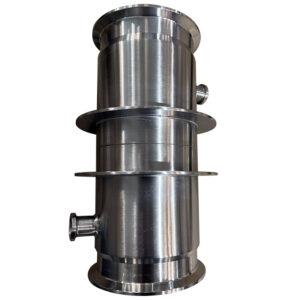
The housing itself is the foundational barrier. It is constructed from materials like 304 or 316 stainless steel using gastight welding techniques to create a torsion-resistant, leak-proof enclosure. This construction is not merely about sealing; it is tested to withstand significant internal pressure differentials, often to standards like 30 kPa. This ensures the housing contains hazardous gases and particles during both normal operation and the pressure transients of maintenance activities. For nuclear and BSL-4 applications, this sealed welding is a non-negotiable baseline as mandated by authoritative codes like ASME AG-1.
The Cost of Compromise
Strategically, this locks in specific manufacturing and material costs. Attempting cost-driven compromises on housing construction—such as substituting lower-grade materials or non-gastight welds—is invalid for high-hazard uses. The housing’s integrity is as critical as the filter’s efficiency; a leak in the vessel nullifies the performance of even the highest-grade HEPA filter. Industry experts recommend verifying third-party certification of pressure testing for any specified housing, as this is a common oversight in procurement checklists.
Evaluating Housing Performance Specifications
The following table details the key construction features that define a housing’s integrity and compliance level. These parameters form the non-negotiable baseline for any high-containment application.
| Construction Feature | Key Parameter/Standard | Livello di prestazione |
|---|---|---|
| Welding Technique | Gastight, leak-proof | Mandatory baseline |
| Prova di pressione | Up to 30 kPa | Torsion-resistant |
| Materiale | Acciaio inox | High integrity |
| Standard di conformità | ASME AG-1, DIN 25496 | Nuclear-grade |
Source: ASME AG-1: Code on Nuclear Air and Gas Treatment. This standard establishes the mandatory safety and performance requirements for nuclear air treatment systems, providing the authoritative basis for gastight construction, pressure testing, and material specifications to ensure containment of radioactive releases.
The Sealed Bagging Process: Collar, Door, and Procedure
Executing the Controlled Exchange
The critical filter exchange is executed via a gastight access door with a dedicated bagging collar. The procedure is sequential and failsafe: a clean containment bag is sealed to this collar from the outside before the housing interior is accessed. When the used filter is detached, it falls directly into this sealed bag, preventing any contaminant escape into the environment. The entire procedure is performed from outside the contamination zone, a principle standardized in documents like ISO 14644-7 for separative devices.
Design Geometry Matters
The physical design of this interface is a primary determinant of operational safety. A frequently overlooked detail is the filter casing geometry. Circular filter casings are explicitly recommended over rectangular designs. Their continuous curved surface provides better resistance to external forces on the attached bag and improves the reliability of the seal at the collar interface. Rectangular designs have corners that create stress points and potential leak paths. This geometric consideration directly mitigates the primary operational vulnerability: bag detachment during handling.
Components of a Safe Bagging Interface
The safety of the bagging process hinges on specific design features and procedural adherence. The table below outlines the critical components and their functions, which are standardized to ensure consistent containment performance across applications.
| Component/Feature | Design Recommendation | Primary Safety Function |
|---|---|---|
| Filter Casing Shape | Circular over rectangular | Better seal reliability |
| Bagging Collar | Gastight access door | Controlled exchange interface |
| Procedure Sequence | Bag attached first | Prevents contaminant escape |
| Posizione dell'operatore | Outside contamination zone | Ergonomic, fail-safe design |
Source: ISO 14644-7: Cleanrooms and associated controlled environments — Part 7: Separative devices. This standard specifies minimum requirements for the design and construction of separative devices like isolators, standardizing the containment performance of interfaces and procedures used to handle hazardous agents.
Internal Safety: Filter Clamping and Isolation Mechanisms
Securing the Filter Media
Inside the housing, safety begins with secure filter clamping. These are often gasketed, tool-less mechanisms that hold the filter firmly in place, ensuring proper seating against the sealing surface to prevent dangerous air bypass. Advanced designs utilize pneumatic tension-release clamps, which allow for safer, more controlled manipulation from outside the housing. A loose or improperly seated filter is not just an efficiency issue; it creates a direct pathway for contaminated air to circumvent the filtration media entirely, breaching containment at its source.
The Layer of Secondary Containment
Beyond primary clamping, the service bag change or internal isolation mechanism provides a critical secondary layer of protection. This system allows the technician to seal the contaminated filter within an inner bag or an isolated compartment before detaching it from the housing frame. This double-containment strategy is a robust safeguard against accidental tears in the primary outer bag during the physical manipulation and removal of the encapsulated hazardous material. In our analysis of failure modes, this internal isolation is what differentiates premium systems from basic ones.
Validation and Compliance: Testing Ports and Standards
In-Place Testing for Continuous Assurance
Compliance with stringent regulations from bodies like the U.S. NRC or EMA requires demonstrable, ongoing system integrity. BIBO housings facilitate this through integrated in-place testing ports and scanning modules. These allow for the injection of challenge aerosols (like DOP/PAO) and downstream sampling to conduct HEPA filter leak tests and efficiency validation while the system remains fully operational and sealed. This capability, based on methods like those in ANSI/ASHRAE 110, transforms maintenance from a fixed schedule to a condition-based protocol.
The Shift to Data-Driven Safety
The strategic implication is a clear shift toward higher initial investment in “smart” housings equipped for real-time validation. These systems reduce downtime and potential exposure events by allowing performance to be verified without breaking containment. Data from regular in-place testing can maximize filter service life by confirming continued efficiency, rather than relying on conservative time-based replacements. This creates a compelling operational expenditure (OPEX) argument that offsets the higher capital expenditure (CAPEX).
Enabling Proactive Maintenance
The integration of specific testing features directly enables safer and more efficient maintenance protocols. The following table compares the validation methods and their operational benefits.
| Metodo di convalida | Enabling Feature | Vantaggi operativi |
|---|---|---|
| HEPA Leak Test | In-place testing ports | Integrity validation while sealed |
| Test di efficienza | Aerosol injection ports | Verifica delle prestazioni |
| Maintenance Protocol | Condition-based, not fixed schedule | Maximizes filter life |
| Monitoraggio in tempo reale | Integrated scanning modules | Data-driven safety |
Source: ANSI/ASHRAE 110: Method of Testing Performance of Laboratory Fume Hoods. This standard provides the foundational quantitative method for evaluating containment performance through tracer gas testing, directly applicable to verifying the sealed integrity of BIBO systems.
Key Considerations for BIBO System Selection and Sizing
Matching System to Application
Selecting an effective system requires precise technical matching, not generic specification. The BIBO module must be sized to the specific HEPA filter dimensions (e.g., 24″x24″x11.5″) and the required system airflow capacity, which can range from 50 m³/h for small isolators to over 6,500 CFM for large ducted exhaust streams. This need for precise tailoring to filter type and airflow creates a strategic configuration bottleneck. Each installation becomes highly application-specific, limiting the feasibility of purely off-the-shelf deployment.
The Configuration Bottleneck and Platform Strategy
Consequently, project planners must engage filtration specialists during the earliest design phases of a facility or ventilation system upgrade. Late-stage BIBO selection often forces costly ductwork redesigns or compromises on safety features. Furthermore, the engineering principles of nuclear-grade BIBO are migrating to adjacent high-risk industries like pharmaceuticals and semiconductor manufacturing. This suggests a market trend toward adaptable platform systems from suppliers—configurable housings that can be adapted for different filter types and hazard levels without a complete redesign.
Critical Selection Parameters
Navigating the selection process requires a clear understanding of the technical and strategic parameters that dictate system suitability. The table below outlines the key criteria that drive the specification process.
| Criteri di selezione | Typical Range/Capacity | Strategic Implication |
|---|---|---|
| Capacità del flusso d'aria | 50 m³/h to 6,500+ CFM | Requires precise tailoring |
| Filter Dimensions | Specific HEPA size | Creates configuration bottleneck |
| Application Hazard | Nuclear, BSL-4, Pharma | Drives adaptable platform systems |
| Design Phase Engagement | Earliest stages | Avoids costly redesigns |
Source: Technical documentation and industry specifications.
Implementing and Maintaining a Safe BIBO Operation
Rigorous Procedural Adherence
Effective implementation hinges on rigorous, documented procedures. The prescribed maintenance sequence—bag attachment, filter isolation, clamp release, bag sealing, and reverse installation—must be strictly followed every time. Safety in these regulated environments is explicitly a shared responsibility among operators, regulators, maintenance personnel, and design engineers, creating complex interdependencies. Organizations must therefore implement integrated compliance platforms that audit and digitally connect all stakeholder actions and validations to prevent systemic safety gaps.
The Future of Hazard Management
Looking ahead, the integration of Industrial Internet of Things (IIoT) sensors for continuous monitoring of parameters like differential pressure, clamp status, and door seals will unlock predictive safety and compliance. This evolution pushes the market toward digitized, fully auditable hazard management ecosystems. These systems will not only alert personnel to deviations but also lock out procedures if pre-conditions are not met, further reducing the window for human error and elevating the role of engineered safety in high-containment operations.
The core decision points for professionals center on recognizing BIBO as an integrated safety system, not a commodity housing. Prioritize gastight construction validated to authoritative standards, insist on designs that facilitate in-place testing, and select a system with redundant safety mechanisms like internal isolation. Early engagement with specialists is non-negotiable to avoid the configuration bottleneck and ensure the solution matches the specific hazard and airflow profile.
Need professional guidance on specifying and implementing a safe BIBO containment solution for your facility? The engineers at YOUTH specialize in the precise application of high-containment filtration technology, from initial system design to ongoing validation support. For a detailed review of our engineered bag-in bag-out filter housing systems, explore our technical resources. For direct consultation on your project requirements, you can also Contatto.
Domande frequenti
Q: How do you validate HEPA filter integrity in a sealed BIBO system without shutting it down?
A: Integrated in-place testing ports allow you to inject challenge aerosols and sample downstream while the housing remains sealed and operational, enabling leak tests and efficiency validation without a breach. This method, aligned with standards for separative devices like ISO 14644-7, supports a shift from scheduled to condition-based maintenance. This means facilities requiring continuous operation should prioritize housings with these built-in testing capabilities to maximize filter life and minimize exposure risk.
Q: What are the critical design differences between circular and rectangular BIBO filter housings?
A: Circular filter casings are explicitly recommended over rectangular designs because their geometry provides superior resistance to external forces on the attached containment bag, which directly improves seal reliability during the change-out procedure. This ergonomic design mitigates the primary operational vulnerability of bag detachment. For projects where procedural safety is paramount, you should specify circular housings to engineer out this failure mode and ensure fail-safe handling.
Q: Which standards mandate gastight welded construction for BIBO housings in nuclear applications?
A: Gastight, torsion-resistant welded construction is a non-negotiable baseline for nuclear air treatment systems, as mandated by codes like ASME AG-1. This construction is tested to withstand significant pressure differentials, often up to 30 kPa, to ensure containment of hazardous gases and particles. This means cost-driven compromises on housing integrity are invalid for high-hazard uses; the housing is as critical an investment as the filter itself.
Q: What internal mechanisms prevent hazardous air bypass during BIBO filter operation?
A: Secure, often gasketed, internal clamping mechanisms hold the filter in place without tools, ensuring proper seating to prevent dangerous air bypass around the filter media. Advanced systems may use pneumatic tension-release clamps for safer manipulation during service. This means operators must verify the presence and correct function of these tool-less clamps during procurement, as they are a fundamental component of the primary containment barrier.
Q: How does the service bag change mechanism add a layer of safety during filter replacement?
A: This internal isolation feature allows a technician to seal the contaminated filter within an inner bag or compartment before detaching it from the housing frame, creating a critical secondary containment layer. This double-containment strategy guards against accidental tears in the primary outer bag during physical removal. If your risk assessment identifies bag handling as a key vulnerability, you should prioritize systems with this integrated secondary isolation feature.
Q: Why is early engagement with filtration specialists critical for BIBO system selection?
A: BIBO modules must be precisely sized to specific HEPA filter dimensions and required airflow, which can range from 50 m³/h to over 6,500 CFM, creating a configuration bottleneck that limits off-the-shelf deployment. This need for precise tailoring makes each installation highly application-specific. For project planners, this means engaging specialists during the earliest design phases is essential to avoid costly redesigns and ensure proper technical matching.
Q: What operational sequence ensures a safe BIBO filter change-out?
A: The prescribed fail-safe sequence is: attach a clean bag to the sealed collar, isolate the filter internally, release the clamping mechanism, allow the filter to fall into the bag, seal the bag, and then perform the reverse steps for installation. This entire procedure is designed to be performed from outside the contamination zone. This means organizations must implement strict, audited procedures and train personnel to follow this exact sequence without deviation to maintain containment integrity.
Contenuti correlati:
- Unità BIBO Nucleare | Sistemi di contenimento delle radiazioni
- L'intricato mondo degli alloggiamenti dei filtri BIBO
- Sistemi Bag-In/Bag-Out (BIBO): Guida al funzionamento e alla manutenzione
- Rivoluzione nella sicurezza nucleare: I sistemi BIBO migliorano la protezione
- Sistemi Bag In Bag Out - I fondamenti della sicurezza spiegati
- Protocolli di sicurezza per i box HEPA delle strutture nucleari 2025
- BIBO System Basics | Principi del filtro Bag In Bag Out
- Comprensione del BIBO | Contenimento dei materiali pericolosi
- Alloggiamento del filtro BIBO - Principi di progettazione e componenti





 IT
IT  EN
EN  AR
AR  FR
FR  KO
KO  ID
ID  PT
PT  RU
RU  RO
RO  ES
ES  PL
PL  NL
NL  UK
UK  DE
DE  TR
TR