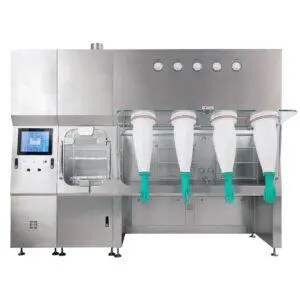
Procurement teams often receive two or three cabinet quotes with meaningfully different totals and no clear explanation of why. The instinct is to compare sticker prices directly, but that comparison frequently falls apart at commissioning when the lower-priced quote turns out to exclude exhaust tie-in hardware, factory acceptance testing, or the field certification required before the unit can be used. That gap surfaces at exactly the wrong moment — when construction is complete, the schedule is tight, and the validation team is already on-site. Understanding how width, exhaust configuration, and certification scope each contribute to the true equipment cost is what allows a procurement team to evaluate quotes on the same basis and avoid being surprised after the purchase order is signed.
Which cost components sit inside and outside the base cabinet quote
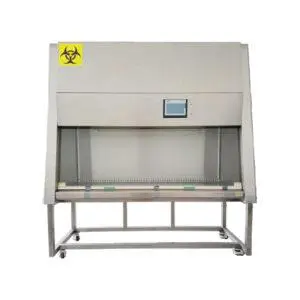
The base cabinet quote typically covers the cabinet enclosure, installed HEPA filters, internal lighting, a blower assembly, and a standard accessory package that may include UV lamps and a remote control. That boundary is reasonable for catalog comparison, but it is a poor basis for budget planning because the costs that fall outside it are structural, not optional.
Facility-side costs are the first category that gets missed. Depending on the exhaust strategy, these can include supply ductwork, exhaust connection hardware, a dedicated exhaust fan, HVAC rebalancing to compensate for exhaust draw, and any fire-rated penetration or damper work required by the building. None of these appear in a cabinet quote, but they are required for the cabinet to function as specified.
Recurring operational costs represent a second category. Annual airflow calibration and inspection, HEPA filter replacement, and UV bulb replacement are all outside the base scope. As planning figures, HEPA filter replacement runs roughly $200–$600 per cycle depending on filter size and configuration, UV bulb replacement adds $50–$150, and service or calibration contracts range from approximately $1,000 to $5,000 annually. These are directional inputs for budgeting, not fixed cost schedules, but their cumulative effect over a three- to five-year ownership period is significant. A $3,000 difference between two cabinet models can become irrelevant if one configuration generates higher annual service costs or requires more frequent filter changes due to exhaust arrangement.
The practical rule is to treat the base quote as the starting point of a cost build-up, not the cost itself. Before comparing quotes, confirm what each one includes at the facility interface and whether any post-install verification work is priced in.
How width and work-zone size change the equipment price
Cabinet width is one of the most direct drivers of equipment price within a product class, and it affects cost in two ways simultaneously: it changes the purchase price, and it changes the downstream demands on space, HVAC, and sometimes exhaust infrastructure.
The practical work zone inside a Class II cabinet is consistently narrower than the external cabinet dimension. A unit with an external width around 700mm typically provides a usable work zone near 600mm — a common reference point in the market but not a universal standard. Wider configurations, such as 1200mm or 1500mm external widths, add meaningful cost at the equipment level and may require wider exhaust connection sizing, higher exhaust volumes, or dedicated penetration work that a narrower unit would not trigger.
Within the Class II category, the new cabinet market spans roughly $6,000 to $20,000 depending on width, type, control package, and supplier. That range is a market orientation figure, not a regulated price tier, and actual procurement outcomes vary. The important implication is that process requirements should drive width selection first, and cost should be evaluated in the context of the total installed scope — not just the catalog line. A wider cabinet may be justified by the work being performed, but buying width that the process does not require adds capital cost at the equipment level and compounds facility costs that scale with exhaust volume. Conversely, selecting a narrow unit to reduce cost when the process requires lateral access or parallel workflows creates a different kind of downstream problem: operational workarounds, reduced throughput, and in some cases repeated containment events that create audit exposure.
Confirm that the selected width matches the actual procedural requirements before the quote advances to approval.
Why exhaust strategy can outweigh the cabinet model delta
The choice between a Type A2 and a Type B2 cabinet is where the most significant and least visible cost divergence occurs. It is tempting to frame this as a model selection decision, but it functions more like a facility scope decision with a cabinet attached to it.
A Class II Type A2 cabinet recirculates approximately 70% of cabinet air back into the room and exhausts the remaining 30%. That exhaust can be handled by the building’s general HVAC system or through a thimble connection, which limits the facility modification required. The cabinet price is lower within the Class II range, and the facility integration cost is generally minimal. For most non-volatile, non-cytotoxic applications, the A2 configuration is adequate and represents the more economical total scope.
A Type B2 cabinet exhausts 100% of air to the outside and requires a dedicated hard-ducted connection with a specific exhaust volume and negative pressure relationship to the building. That requirement is not optional — it is necessary for the cabinet to provide the containment it is designed for. The facility costs associated with hard-ducted exhaust include ductwork fabrication, penetration work, a dedicated exhaust fan or connection to an appropriate exhaust system, balancing of the new exhaust branch against the existing building envelope, and ongoing energy cost to move that exhaust volume continuously. The cabinet itself may cost somewhere in the $10,000–$20,000 range as a directional figure, but the installed cost including the exhaust system can substantially exceed that.
The mistake pattern here is selecting a Type B2 on the basis of a catalog comparison that shows a smaller price difference than expected, without modeling the facility side of the cost. Teams that discover the exhaust infrastructure requirement after the equipment order is placed face a compressed timeline to design and install ductwork that should have been planned from the start. For processes that genuinely require volatile or hazardous agents, the Type B2 is the correct choice and the facility investment is justified. For processes that do not, the compounding lifecycle cost of hard-ducted exhaust — energy, balancing maintenance, exhaust fan service — adds cost without corresponding safety benefit. The decision should be made on process risk criteria, with the full cost scope modeled before the equipment is specified.
For labs evaluating whether a recirculating or hard-ducted approach makes sense for their process requirements, the 클래스 II A2 생물안전 캐비닛: 기능 및 용도 article provides a useful grounding on the design and intended applications of the A2 type.
Which certification and validation items become hidden extras
Certification and validation costs follow the same pattern as facility costs: they are structurally required, routinely excluded from the base cabinet quote, and consistently assigned to the wrong budget line or left unassigned entirely until a deadline forces the issue.
The core certification requirement is annual performance testing — airflow verification, HEPA filter integrity testing, and related cabinet performance checks that confirm the unit meets its specified containment parameters. This is not a one-time event tied to installation; it is an ongoing validation obligation that recurs throughout the cabinet’s service life. The scope of that annual work, and who performs it, needs to be established before procurement, not after.
| Certification/Validation Item | 일반적인 빈도 | 일반적인 비용 범위 | Often Included in Base Quote? |
|---|---|---|---|
| Annual airflow calibration and component inspection | 연간 | $1,000–$5,000 | No, often a separate service contract |
| HEPA 필터 교체 | Every 6–12 months | $200–$600 | No, recurring cost |
What the table reflects is a scoping gap, not an unusual cost. Both items — annual calibration and HEPA filter replacement — are predictable, recurring, and well-understood by suppliers and service providers. The problem is not that these costs are unknown; it is that they are routinely excluded from the procurement scope without being explicitly assigned elsewhere. When validation teams later request a field certification before the cabinet enters service, the question of who budgeted for that work often has no clear answer. The same issue appears at the first regulatory audit when maintenance records, calibration certificates, and filter change logs are requested and the documentation trail is incomplete.
Establishing whether post-install certification is included in the supplier’s commissioning scope, or whether a third-party testing firm needs to be contracted separately, is a procurement decision that should be resolved before the PO is issued. The BSC 인증: 연구소의 규정 준수 보장 resource covers the scope of field certification in practical terms and is worth reviewing during the planning stage to confirm what the process actually requires.
How to compare lifecycle cost instead of sticker price alone
The sticker price comparison is a proxy for the real cost question, and it is a poor proxy because two cabinets at similar price points can have substantially different ownership costs depending on energy consumption, filter change frequency, and service requirements.
Energy-efficient features — variable-speed blower motors, LED lighting, and optimized airflow geometry — typically add cost at the equipment level but reduce electricity consumption over the operational life of the cabinet. Whether that trade-off is favorable depends on the energy cost environment, the operational hours of the cabinet, and the expected service life. Without quantifying those factors for the specific facility, the trade-off cannot be resolved from catalog data alone. The honest framing is that energy-efficient models often have a better lifecycle cost profile, but the magnitude of the benefit is site-specific and should be estimated rather than assumed.
Filter replacement frequency is a more predictable lifecycle variable. Cabinets operating in higher-particulate environments or with heavier process loads will exhaust HEPA filter life more quickly, pushing replacement cycles toward the shorter end of the 6–12 month range. For budgeting, the conservative assumption is replacement every six months in active-use scenarios, with cost per replacement depending on filter size and supplier. Over five years, that represents ten replacement cycles — a total filter cost that, at even the low end of the replacement range, represents a material ownership cost that does not appear in the sticker price.
The structured disciplines that apply to quality management decision-making — specifically the principle of documenting cost evidence before approving a procurement decision — are relevant here. ISO 9001:2015’s emphasis on evidence-based decision making provides a useful framework for treating lifecycle cost documentation as a required input to the purchasing process, not as a post-hoc justification. A lifecycle cost summary that captures equipment price, facility integration cost, annual certification and service cost, and energy and consumable costs over a defined period gives procurement and operations teams a defensible basis for selecting between competing configurations.
Which scope notes should be fixed before PO approval
Scope ambiguity at the PO stage is the most common source of cost overruns and schedule disruption for cabinet procurements, and it almost always involves items that were discussed but never formally assigned.
The warranty scope is the first item. Standard warranties in the Class II cabinet market typically cover manufacturing defects for one to five years, but coverage for major mechanical components — particularly the blower assembly and airflow system — varies significantly between suppliers. A cabinet that fails its first annual certification due to blower degradation, and whose warranty excludes that component, creates an unbudgeted repair cost and a compliance gap simultaneously. Confirming exactly what is covered, and for how long, before the PO is signed is straightforward to do and difficult to remedy after.
Used and re-certified cabinets introduce a different class of scope risk. Capital savings of up to 50% compared to a new unit are possible, and in some procurement environments that saving is significant enough to justify the additional diligence required. The condition that makes that trade-off defensible is a documented pre-purchase inspection that confirms airflow system integrity, filter condition, and the basis on which the unit’s certification will be re-established after installation. Without that documentation, the cost advantage may be real at the equipment level but offset by post-installation remediation, failed field certification, or a compliance gap that requires the unit to be taken out of service.
The exhaust tie-in responsibility, FAT witness requirement, and post-install field certification ownership are three additional scope items that frequently surface as conflicts at commissioning because procurement, facilities, and validation teams each assumed a different party was responsible. The conflict is not resolved by the contract unless these items are explicitly named and assigned.
| Scope Item | 불분명한 경우 위험 | 확인해야 할 사항 |
|---|---|---|
| Warranty coverage | Unexpected costs for critical component failures post-installation | Warranty duration (1–5 years standard) and whether major components (e.g., airflow system) are covered by an extended warranty |
| Used/re-certified cabinet purchase | Compliance and functionality issues, potentially voiding certification | That a thorough pre-purchase inspection for functionality and compliance has been performed, and that savings (up to 50% vs. new) justify any additional risk |
The resolution for all of these items is identical: name them explicitly in the procurement scope before the PO is approved. Scope clarity at the pre-approval stage is significantly less expensive than scope recovery after commissioning.
For teams reviewing the installation planning requirements in more detail, the 생물학적 안전 캐비닛 설치: 주요 고려 사항 article addresses the facility-side requirements that directly affect scope definition and installation cost.
The most practical takeaway from this analysis is that a biological safety cabinet quote is not a self-contained cost figure. The equipment price is the starting point of a cost build-up that includes facility integration work, ongoing certification and service obligations, consumable replacement, and energy costs — none of which appear on the catalog line. Two quotes with a $3,000 difference at the cabinet level can produce outcomes that diverge by multiples of that figure over a five-year ownership period, depending on exhaust configuration, filter replacement frequency, and whether certification costs are absorbed or separately contracted.
Before approving a PO, confirm that the quote comparison covers the same scope on all sides: equipment cost, facility modification requirements, warranty terms, and post-install certification ownership. If any of those items is assigned to a different budget holder or assumed to be handled by another party, resolve that assignment explicitly rather than leaving it open. The questions that are easiest to answer before approval are the same ones that are most disruptive when they surface after commissioning.
자주 묻는 질문
Q: What happens if the facility’s exhaust infrastructure can’t support a Type B2 cabinet after the equipment is already ordered?
A: The procurement becomes a schedule and cost problem simultaneously. Hard-ducted exhaust requires dedicated ductwork, penetration work, exhaust fan installation, and HVAC rebalancing — work that typically needs structural planning well before cabinet delivery. Discovering the requirement after order placement compresses the design and installation timeline into the commissioning window, when trades are already coordinated around a fixed schedule. If the process genuinely requires volatile or hazardous agents, the exhaust infrastructure investment is unavoidable and should be scoped and budgeted before the equipment is specified, not treated as a facility footnote after the PO is signed.
Q: After the cabinet is installed and field-certified, what is the first operational step that teams most often skip?
A: Establishing a documented maintenance schedule before the cabinet enters active service. Annual airflow calibration, HEPA filter replacement cycles, and UV bulb replacement are all recurring obligations that begin accruing from first use — but without an assigned owner and a formal schedule, the first renewal date is often missed. When a regulatory audit requests calibration certificates and filter change logs, an incomplete documentation trail from the first service interval creates a compliance gap that is harder to remediate than it was to prevent. The maintenance scope, responsible party, and service provider should be confirmed at commissioning, not at the first annual inspection.
Q: Is a used or re-certified cabinet a viable option for a GMP-regulated environment, or does the compliance risk outweigh the capital saving?
A: It can be viable, but only with documented pre-purchase verification. Capital savings of up to 50% are possible, and that figure is material in many procurement environments. The condition that makes the trade-off defensible in a regulated setting is a pre-purchase inspection report that confirms airflow system integrity, filter condition and remaining service life, and a clear statement of the basis on which field certification will be re-established after installation. Without that documentation, a failed post-installation certification creates a compliance gap and forces remediation costs that can eliminate the purchase-price advantage. The saving is real only when the re-certification pathway is confirmed before the unit changes hands.
Q: At what point does selecting a wider cabinet stop being justified by process need and start adding cost without proportional benefit?
A: Width selection stops being justified when the procedural requirement for lateral access or parallel workflows cannot be demonstrated. Wider cabinets compound cost at two levels: the equipment price increases within the $6,000–$20,000 Class II market range, and the facility costs that scale with exhaust volume — ductwork sizing, exhaust capacity, and HVAC rebalancing — increase alongside it. The test is whether the actual work being performed in the cabinet requires the additional work zone. If it does, the wider unit is the correct specification and the compounded cost is the real cost of meeting process requirements. If it does not, the extra width adds capital expenditure at purchase and recurring facility cost throughout the service life, with no containment or throughput benefit to offset either.
Q: How should procurement, facilities, and validation teams divide responsibility for exhaust tie-in and post-install certification before the PO is approved?
A: Each item should be named explicitly and assigned to a single owner in the procurement scope document before the PO is signed. The conflict pattern — where exhaust tie-in, FAT witness attendance, and field certification each land in a gap between team assumptions — does not resolve itself through general coordination. It resolves only when the scope document identifies who is responsible and whose budget covers the cost. A practical approach is to list exhaust tie-in, post-install certification, and ongoing annual calibration as separate line items in the procurement scope, confirm the assigned owner for each, and verify that the relevant budget holder has acknowledged the assignment before approval proceeds. Ambiguity at this stage is significantly less expensive to resolve than contested ownership at commissioning.