
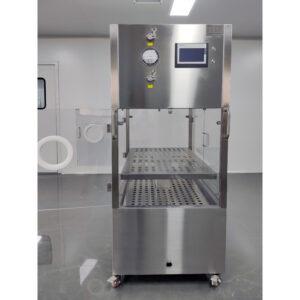
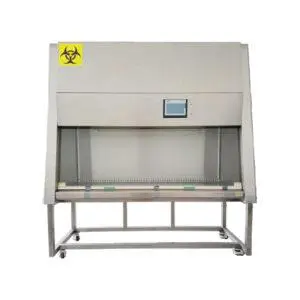
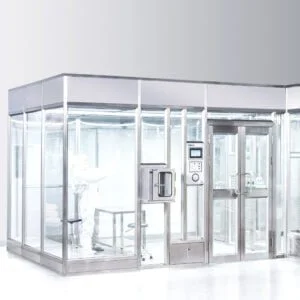
In pharmaceutical, chemical, and advanced manufacturing, the weighing booth is not just a piece of furniture. It is a critical engineered safeguard. Its primary function is to establish a controlled, predictable environment that protects both the operator from potent compounds and the product from contamination. The core challenge lies in specifying a system that meets stringent Occupational Exposure Limits (OELs) while integrating seamlessly into complex workflows and justifying its total cost of ownership. A common misconception is that all laminar flow booths are functionally equivalent, leading to costly mismatches between application needs and system capabilities.
Attention to this topic is essential now due to converging industry pressures. Regulatory scrutiny around potent compound handling is intensifying, with a clear trend toward standardized containment testing. Simultaneously, the drive for operational efficiency and sustainability makes energy consumption a primary design criterion. The modern weighing booth must therefore be evaluated as a configurable containment solution, not a commodity, with decisions on airflow principle, filtration, and controls having long-term implications for safety, compliance, and cost.
Fundamental Principles: Laminar Flow vs. Turbulent Flow
Defining the Dynamic Barrier
The operational integrity of a weighing booth is predicated on establishing laminar, or unidirectional, airflow. This involves air moving in parallel streams at a consistent velocity, typically 0.3 to 0.5 m/s, from the ceiling filter bank to the work surface. This uniform “curtain” is the active containment element. In contrast, turbulent airflow is characterized by chaotic eddies and recirculation zones. These inconsistencies can compromise containment by allowing hazardous particulates to escape the designated control zone and enter the operator’s breathing area.
Application in Containment Strategy
Laminar downflow serves a dual protective function. First, it suppresses dust clouds generated during dispensing or weighing, directing particles downward in a controlled manner. Second, it creates a predictable aerodynamic profile that ensures captured contaminants are efficiently channeled toward the exhaust grilles. This principle is the foundation upon which all other performance variables—filter efficiency, booth depth, airflow velocity—are built. Industry experts recommend visualizing the airflow as a physical barrier; its stability is non-negotiable for achieving target OELs.
Impact on Performance Validation
The quality of laminar flow directly determines the reliability of performance validation. Testing protocols, such as those based on ANSI/ASHRAE 110-2016 principles, rely on consistent airflow to measure containment. Turbulent conditions yield unreliable tracer gas results, making it impossible to certify the booth for handling specific compound toxicity levels. From our analysis of validation reports, a easily overlooked detail is the need to test under simulated operational loads, as the act of weighing can itself introduce minor turbulence that must be managed by the system’s design.
Comparing Recirculating and Single-Pass Airflow Systems
The Critical Application Boundary
The choice between recirculating (closed-loop) and single-pass (once-through) systems is the first and most consequential design decision. It creates a strict application boundary based on material hazard. Recirculating systems draw room air through a filtration stack, deliver clean laminar air to the work zone, then capture, filter, and return the air in a closed loop. This design is intended for applications involving dry powders where the primary risk is particulate exposure.
Solution for Volatile and Hazardous Materials
For processes involving solvents, volatile organic compounds, or explosive vapors, a single-pass system is mandatory. This configuration exhausts 100% of the supplied air to the outside after a single use. Recirculation in these scenarios could lead to dangerous accumulations of flammable vapors or insufficient removal of toxic gases. Selecting the wrong airflow principle doesn’t just reduce efficiency—it fundamentally compromises safety and violates regulatory compliance. A thorough Process Hazard Analysis (PHA) of all materials is therefore the essential first step in specification.
Decision Framework for Selection
The decision framework is clear-cut but must be rigorously applied. The following table clarifies the primary application boundaries for each system type, forming the basis of your initial screening.
| Type systeem | Primaire toepassing | Key Operational Characteristic |
|---|---|---|
| Recirculating (Closed-loop) | Dry powder handling | Highly energy-efficient |
| Single-Pass (Once-through) | Solvents, volatile compounds | 100% air exhausted outside |
| Recirculating | Non-hazardous particulates | Significant operational cost savings |
| Single-Pass | Explosive vapors | Mandatory for safety compliance |
Source: Technical documentation and industry specifications.
Beyond the base principle, we compared total energy use and found that while single-pass systems offer absolute material segregation, their operational cost is dominated by the energy needed to condition large volumes of fresh air. This makes the initial application assessment critical for both CapEx and long-term OpEx.
How HEPA and Pre-Filter Configurations Enhance Containment
Defining Filtration Requirements
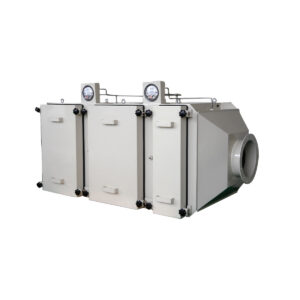
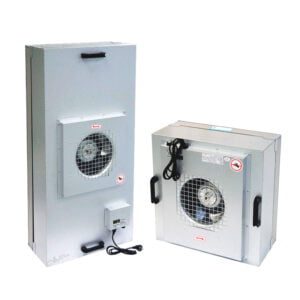
High-Efficiency Particulate Air (HEPA) filtration is the non-negotiable core of particulate containment. A standard H14 HEPA filter provides a minimum of 99.995% efficiency on 0.3-micron particles. However, achieving a specific OEL is a configurable equation involving multiple filtration stages. The filtration train is designed to manage particulate load and protect the integrity of the final HEPA filter, which is the most costly component to replace.
Methods for Multi-Stage Protection
A typical configuration employs pre-filters (G4/F8 grade) upstream of the HEPA to capture the bulk of larger particulates. This extends the service life of the main HEPA filter significantly. For highly potent compounds, an additional safety HEPA filter may be installed in the exhaust path, creating a redundant barrier. Applications involving volatile compounds may integrate carbon filters for vapor adsorption. The selection of this stack is a direct function of the material risk assessment.
The Maintenance Protocol Decision
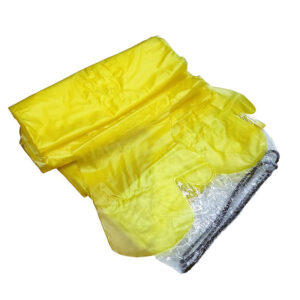
The filter maintenance strategy presents a critical operational and safety choice. The spectrum ranges from internal safe-change systems for less hazardous materials to full Bag-in/Bag-out (BIBO) systems for potent compounds. BIBO systems maximize operator safety during filter change-outs but increase procedural complexity, downtime, and cost. The material’s toxicity and OEL band must dictate this protocol. The table below outlines the roles of key filter types in a containment strategy.
| Filtertype | Efficiency (0.3µm) | Primary Role |
|---|---|---|
| Standard H14 HEPA | 99.995% | Final particulate capture |
| Pre-filter (G4/F8) | Bulk capture | Extends HEPA service life |
| Koolstoffilter | Vapor adsorption | For volatile compounds |
| Safety HEPA (Exhaust) | Additional barrier | For highly potent compounds |
Opmerking: Filter maintenance strategy ranges from internal safe-change to full Bag-in/Bag-out (BIBO) systems.
Source: Technical documentation and industry specifications.
In our experience, specifying the filtration and maintenance protocol without input from the EHS and maintenance teams is a common oversight that leads to operational friction or unintended risk exposure during routine service.
Key Design Factors: Materials, Controls, and Ergonomics
Construction and Material Requirements
Technical design choices directly dictate performance longevity and cleanability. Construction typically uses 304 or 316L stainless steel for its resistance to corrosion and ease of decontamination. A pivotal advancement is the move toward modular construction. This philosophy transforms the capital asset lifecycle by allowing for on-site reconfiguration of booth width, depth, and height. It future-proofs the investment, enabling adaptation to process changes or facility relocations without a full system replacement.
Integrated Control Systems
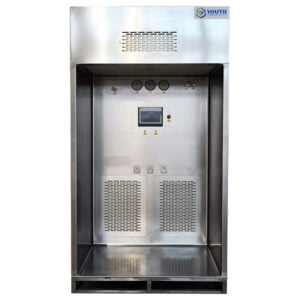
Modern booths utilize PLC-based control systems with Human-Machine Interface (HMI) panels. These systems manage variable fan speed via energy-efficient EC motors and continuously monitor critical parameters: differential pressure across filters, airflow velocity, and containment integrity. This real-time monitoring is essential for maintaining a state of control and providing auditable data for compliance. The control system is also the integration point for auxiliary functions like sash positioning or interlocking with material airlocks.
Ergonomics and Workflow Integration
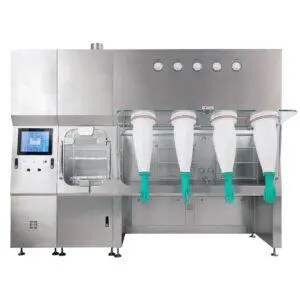
Ergonomics are engineered into the system to reduce operator fatigue and error. This includes flush-mounted LED lighting providing at least 500 lux at the work surface, optional cooling coils for temperature control in warm environments, and noise reduction designs. Furthermore, contemporary booths are designed as platforms for integration. Pre-engineered interfaces for drum tippers, IBC stations, and conveyors transform the booth from an isolated enclosure into a streamlined, efficient workcell. Procurement should involve cross-functional teams to specify these integrations upfront, eliminating manual transfer bottlenecks. The following table summarizes key design aspects and their impact.
| Ontwerpaspect | Specification/Feature | Prestatie-impact |
|---|---|---|
| Bouwmateriaal | 304 of 316L roestvrij staal | Reinigbaarheid, corrosiebestendigheid |
| Verlichting | Flush-mounted LED (≥500 lux) | Operator ergonomics, visibility |
| Ventilatormotor | Energy-efficient EC motor | Manages speed, reduces energy use |
| Besturingssysteem | PLC with HMI interface | Monitors pressure, airflow, integrity |
| Design Philosophy | Modulaire constructie | Enables future reconfiguration |
Source: Technical documentation and industry specifications.
Performance Validation and Meeting OEL Compliance
The Validation Mandate
Validation is the process that certifies the booth performs as a guaranteed containment system, complying with cGMP and relevant standards like ISO 14644-1:2015. Performance is not intrinsic to the booth alone but is the result of a synergistic configuration of depth, airflow velocity, and filter stages. Advanced designs are capable of achieving validated containment for materials with OELs as low as 1 µg/m³. This process moves the booth from a piece of equipment to a qualified system with a defined operational envelope.
Standardized Testing Methods
The industry is trending toward standardized containment protocols, often visualized in a “Containment Pyramid.” Quantitative testing frequently employs tracer gas methods (e.g., SF6) following principles outlined in ANSI/ASHRAE 110 to measure containment factor. Air cleanliness is verified through particle count testing to meet an ISO class. These tests should be performed at rest and in operational simulation, including worst-case activities like powder pouring.
Establishing an Internal Framework
Facilities must adopt formal internal assessment frameworks to ensure seamless compliance with emerging benchmarks. This involves defining acceptable validation criteria before supplier selection. The table below outlines key metrics and reference standards central to the validation process.
| Prestatiemeting | Typical Range/Capability | Validation Standard Reference |
|---|---|---|
| Luchtstroomsnelheid | 0.3 to 0.5 m/s | Critical for laminar flow |
| Achievable OEL | As low as 1 µg/m³ | Result of booth configuration |
| Air Cleanliness Testing | Deeltjesconcentratie | ISO 14644-1 classification |
| Inperkingstesten | Tracer gas methods | ANSI/ASHRAE 110 principles |
Source: ISO 14644-1:2015 en ANSI/ASHRAE 110-2016. ISO 14644-1 defines air cleanliness classes and testing for particulate concentration. ANSI/ASHRAE 110 provides test methods for evaluating airflow containment performance, relevant for assessing operator exposure.
A common mistake is treating factory acceptance testing (FAT) as the final validation step. Site qualification (IQ/OQ) is critical, as installation conditions—room pressurization, adjacent traffic—can significantly impact final performance.
Installation, Maintenance, and Total Cost of Ownership
Planning for Installation and Integration
A holistic view of the booth’s lifecycle begins with installation. This phase requires careful coordination for utility connections (power, exhaust ducting) and integration with the facility’s HVAC system. The booth’s performance is interdependent with room air balance. Poor installation planning can lead to extended project timelines and performance deviations during site qualification. Modular designs offer an advantage here, as they can be assembled and reconfigured with less disruption.
The Dominance of Maintenance Costs
The primary long-term operational cost driver is filter maintenance. The chosen safety protocol (e.g., BIBO) dictates the procedure’s complexity, frequency, and cost. Downtime for filter changes must be factored into production scheduling. Energy consumption has emerged as a secondary but substantial operational expense. Advanced EC fan systems with optimized aerodynamics can reduce energy use by up to 70% compared to conventional AC fan designs. This efficiency directly lowers operating expenses and supports sustainability goals.
Calculating Total Cost of Ownership
Evaluating Total Cost of Ownership (TCO) is imperative for sound investment. TCO analysis weighs the higher initial capital expenditure of an energy-efficient, modular system against the long-term savings in energy, maintenance, and adaptability. In many cases, the operational savings justify the upfront investment. The following table breaks down the key factors influencing TCO.
| Cost/Operational Factor | Belangrijke overwegingen | Impact on TCO |
|---|---|---|
| Energie-efficiëntie | Advanced EC fan systems | Up to 70% energy savings |
| Maintenance Protocol | Bag-in/Bag-out (BIBO) | Increases safety, cost, downtime |
| Initial Capital Expenditure | Higher for advanced designs | Can be offset by operational savings |
| Primary Maintenance Driver | Filter changes | Dictates procedure complexity |
Source: Technical documentation and industry specifications.
We have observed that projects which fail to model TCO over a 5-10 year period often default to the lowest bidder, incurring higher lifetime costs through energy waste and limited flexibility.
Selecting a System: A Decision Framework for Your Application
Initiate with Material Risk Assessment
Selecting the optimal system requires a structured, cross-functional framework. The process must begin with a rigorous material risk assessment. This defines the required OEL and immediately dictates the non-negotiable airflow principle: single-pass for volatiles, recirculating for dry powders. This step prevents a fundamental safety misstep. All subsequent specifications flow from this foundational understanding of the hazard.
Map the Operational Workflow
Next, map the specific material workflow from receipt to discharge. Identify points where integrations—like drum tippers, split butterfly valves, or material airlocks—can eliminate manual handling and reduce exposure events. This step defines the booth not as an enclosure but as a integrated workcell. Involving operators in this mapping uncovers practical inefficiencies that pure technical specifications miss.
Evaluate Suppliers on Solution Stack
Finally, supplier evaluation must shift from a product-centric to a solution-centric view. Competition is now based on the bundled offering: application engineering, detailed design, validation support (IQ/OQ protocols), installation project management, and aftersales technical support. Buyers must assess vendors on their capability to reduce total project risk and timeline. The most reliable weighing booth and containment solutions are those backed by a strong regulatory support ecosystem and proven project execution.
Future-Proofing Your Investment and Next Steps
The Path to Automation
To protect long-term value, consider trends defining next-generation containment. The convergence of modular design, standardized PLC interfaces (e.g., Siemens, Allen Bradley), and integrated material handling points toward seamless robotic integration. The booth’s role will evolve from operator protection to a fully automated containment cell. Planning facility layouts and utility provisions today to enable this future integration avoids costly retrofits later.
Data-Driven Operational Management
With standard PLC controls and sensor arrays already in place, the logical progression is toward data-driven predictive maintenance. Algorithms analyzing pressure trends and airflow data can forecast filter loading and schedule maintenance proactively. This minimizes unplanned downtime and ensures continuous compliance. Investing in booths with smart, connected controls creates the foundational data infrastructure for Industry 4.0 efficiency gains.
The core decision points are clear: let material hazard dictate the airflow principle, use a multi-stage filtration strategy aligned with OEL, and prioritize modularity and energy efficiency to control TCO. Performance must be guaranteed through rigorous validation against recognized standards. This transforms the procurement from a simple equipment purchase into a strategic investment in facility capability and operator safety.
Need professional guidance to specify and validate a containment solution for your specific application? The engineering team at YOUTH specializes in translating process requirements into technically sound, compliant weighing booth configurations. Contact us to discuss your project parameters and develop a tailored solution framework.
Veelgestelde vragen
Q: How do you decide between a recirculating and a single-pass airflow system for a new weighing booth?
A: The decision is dictated by the materials you handle. Recirculating systems filter and reuse air, offering major energy savings for dry powders. Single-pass systems exhaust all air externally and are mandatory for solvents, volatiles, or explosive vapors to prevent hazardous accumulation. This means facilities processing potent compounds with volatile excipients must specify single-pass to meet fundamental safety and regulatory compliance, while dry powder-only operations can optimize for energy efficiency.
Q: What is the role of modular construction in future-proofing a weighing booth investment?
A: Modular construction transforms the booth from a fixed asset into a reconfigurable workcell. It allows on-site adjustments to width, depth, and height to accommodate new processes, equipment integrations, or facility relocations. This means companies anticipating process changes or expansion should prioritize modular designs to protect their capital investment and avoid the cost of complete system replacement down the line.
Q: How do you validate that a weighing booth meets a specific Occupational Exposure Limit (OEL)?
A: Validation confirms the booth operates as a guaranteed containment system through synergistic configuration of depth, airflow velocity (typically 0.3-0.5 m/s), and HEPA filter stages, capable of supporting OELs as low as 1 µg/m³. The process follows cGMP and standards like ISO 14644-1 for air cleanliness classification. For projects targeting low OELs, plan for a formal, risk-based specification and validation protocol during procurement, not as an afterthought.
Q: Why is Total Cost of Ownership (TCO) analysis critical when selecting a weighing booth?
A: TCO shifts focus from initial price to lifecycle costs, where energy consumption is a dominant factor. Advanced designs with EC fan motors and optimized aerodynamics can reduce energy use by up to 70% compared to conventional systems. This means operations with high runtime should evaluate energy efficiency data closely, as long-term utility savings can justify a higher capital expenditure and become a key differentiator among suppliers.
Q: What safety protocols are available for changing HEPA filters in potent compound applications?
A: The protocol spectrum ranges from internal safe-change to full Bag-in/Bag-out (BIBO) systems. BIBO maximizes operator safety during changeouts for highly toxic materials by fully containing the contaminated filter but increases cost and downtime. If your operation handles compounds with very low OELs, you must plan for the higher complexity and validated procedures of a BIBO system from the initial design phase.
Q: How should a cross-functional team evaluate suppliers during the selection process?
A: Move beyond product specs to assess the vendor’s total solution stack, including their design support, validation (IQ/OQ) services, installation project management, and aftersales support ecosystem. This evaluation is based on the supplier’s ability to reduce your total project risk and timeline. For complex integrations, prioritize vendors with proven regulatory support and the capability to manage the booth as part of a larger, streamlined workcell.
Q: What trends should we consider to enable future robotic integration with weighing booths?
A: Plan for convergence by selecting booths with modular design, standardized control interfaces (e.g., Siemens, Allen Bradley PLCs), and pre-engineered integration points for material handling. This setup prepares the containment zone to evolve from an operator-protected area to an automated cell. Companies should therefore ensure facility layouts and utility provisions support this future state during the initial installation.
Gerelateerde inhoud:
- Precisieweegcabines voor de farmaceutische industrie
- Weegcabine vs Weegschaal: Wat is geschikt voor jou?
- Wat is een weegcabine? Essentiële feiten uitgelegd
- Verhoog de productiviteit met geautomatiseerde weegcabines
- Opkomende trends: De toekomst van weegcabine-technologie
- De ultieme gids voor weegcabines [2025 Editie].
- De ROI van een stand wegen: Maximaliseer uw investering
- 7 stappen om uw weegcabine perfect te kalibreren
- 5 cruciale veiligheidsfuncties in moderne weegcabines



 NL
NL  EN
EN  AR
AR  FR
FR  KO
KO  ID
ID  IT
IT  PT
PT  RU
RU  RO
RO  ES
ES  PL
PL  UK
UK  DE
DE  TR
TR