
In cleanroom operations, personnel decontamination remains a persistent challenge. Traditional methods often fail to remove the finest, most adherent particles from protective garments without compromising the barrier or creating secondary contamination. This leaves facilities vulnerable to cross-contamination events that can compromise product integrity and regulatory standing. The core problem is achieving thorough decontamination while maintaining operator comfort and workflow efficiency.
The shift toward more potent active pharmaceutical ingredients and advanced biologics has intensified this challenge. Regulatory scrutiny on contamination control is escalating, making validated, repeatable decontamination processes a critical investment. Understanding the operating principles of modern mist shower technology is no longer optional for facility managers and engineers; it is essential for designing contamination control strategies that protect both product and personnel.
How Ultrasonic Fogging Generates a 5-10 Micron Mist
The Principle of Ultrasonic Atomization
The foundation of effective personnel decontamination lies in the precise generation of an ultra-fine water fog. Unlike pressure-based spray systems, mist showers utilize ultrasonic atomization. High-frequency sound waves create standing capillary waves on the surface of a water reservoir. When the wave amplitude reaches a critical point, microscopic droplets are ejected from the wave crests. This physical process is inherently capable of producing droplets in the low-micron range. However, achieving a consistent 5-10 micron output requires precise engineering of frequency, transducer power, and fluid dynamics. Industry experts note that the calibration of these parameters separates industrial decontamination systems from consumer-grade humidifiers, which lack the rigorous control needed for validated processes.
Engineering for Consistent Droplet Size
The target droplet size is not a byproduct but a deliberate design specification. The system is engineered to produce a tightly controlled droplet size distribution centered on the 5 to 10-micron range. This involves more than just the transducer; it includes controlled water feed systems, stable reservoir conditions, and often, air entrainment controls to manage the mist cloud. A common oversight is assuming all ultrasonic fog is equivalent. We compared industrial mist shower outputs with standard humidifier fog and found the latter produces a much broader, unpredictable size range, including larger droplets that lead to wetting. The consistency of the industrial output is what enables predictable decontamination physics and reliable validation.
The Critical Role of Droplet Size Specification
This precision is the primary technical benchmark for system selection. Decontamination efficacy is a direct function of droplet size. Droplets significantly larger than 10 microns will wet the garment, potentially driving contaminants through the material or creating a runoff issue. Droplets much smaller than 5 microns may not possess sufficient mass to effectively encapsulate and weigh down contaminant particles, reducing efficiency. Therefore, verifying a system’s proven ability to generate and maintain this specific droplet spectrum is the first and most critical step in evaluation. It is the non-negotiable foundation upon which all other features are built.
The Science Behind 5-10 Micron Droplet Decontamination
The Physics of Particle Encapsulation
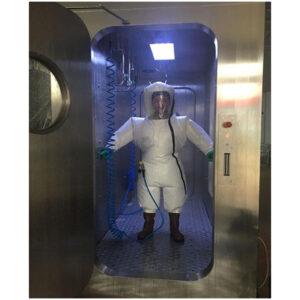
The 5-10 micron range represents the optimal balance between two competing physical requirements: effective particle interaction and minimal liquid transfer. Droplets in this band are small enough to remain airborne as a dense fog, surrounding the operative and penetrating the microscopic texture of the garment fabric. They are large enough to encapsulate contaminant particles, adding sufficient mass. This added mass neutralizes the powder’s airborne potential, causing the now-heavier, water-coated particles to fall away from the garment under gravity. The process relies on physical encapsulation and mass addition, not high-pressure impingement.
Achieving Dry Decontamination
A key advantage of this mechanism is that the collective volume of 5-10 micron droplets does not coalesce into significant liquid runoff. The operator experiences a dense fog but emerges essentially dry. This “dry” decontamination is crucial for operator acceptance and for protecting the integrity of reusable cleanroom garments. If the garment becomes wet, it can become a conduit for contaminants or require a lengthy drying process, disrupting workflow. The science confirms that this precise size range maximizes particle removal while minimizing moisture-related complications, a balance critical for practical daily use.
Quantifying Efficacy
The decontamination outcome is measurable and significant. The mechanism of encapsulation and fallout can reduce surface particle contamination on garments by factors of several hundred. This level of efficacy transforms the mist shower from a simple hygiene step into a critical engineering control within the contamination control strategy. It directly protects the core cleanroom environment from particulate ingress via personnel. Validating this particle count reduction is central to performance qualification, aligning the system’s operation with cleanroom classification goals as defined in standards like ISO 14644-1:2015.
| Physical Mechanism | Key Characteristic | Decontamination Outcome |
|---|---|---|
| Droplet Size | 5-10 micron optimal range | Balances interaction & wetting |
| Particle Encapsulation | Adds mass to contaminants | Neutralizes airborne potential |
| Particle Fallout | Water-coated particles | Captured by drainage |
| Забруднення поверхні | Effective particle removal | Up to 800x reduction |
Source: Technical documentation and industry specifications.
Key Components of a Modern Mist Shower System
The Structural Enclosure
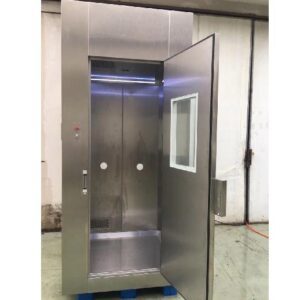
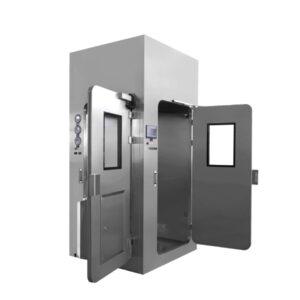
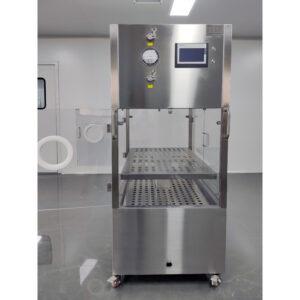
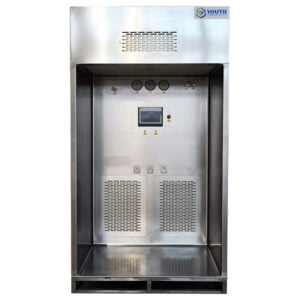
The system chassis is a chamber constructed from cleanroom-compatible materials, typically 304 or 316 stainless steel for its corrosion resistance and cleanability. Doors are often tempered glass or phenolic resin, providing durability and visibility. The enclosure must be sealed to contain the mist cloud while integrating with facility layouts. Its design directly impacts personnel flow, with options like straight-through tunnels or right-angled configurations to suit different space and process constraints. The enclosure is more than a box; it defines the operational footprint and workflow integration point.
The Fog Generation Heart
At the core is the ultrasonic fog generation module. This includes the transducer array, water reservoir, and feed system. Its sole purpose is to produce the specified 5-10 micron mist consistently throughout the decontamination cycle. Redundancy and reliability are built into industrial-grade units to prevent failure during critical operations. From my experience, the accessibility of this module for routine inspection is a design feature often undervalued during procurement but paramount for long-term uptime.
The Control and Design Philosophy
The inclusion of a Programmable Logic Controller (PLC) is what transforms the unit into an automated, data-driven control point. Beyond hardware, the overarching design philosophy increasingly emphasizes modularity. Using standard, plug-connected components facilitates rapid replacement, directly targeting the critical risk of operational downtime in high-value environments. This modular strategy makes serviceability a key component of the system itself, influencing total cost of ownership more than initial purchase price.
| Компонент | Material/Type | Основна функція |
|---|---|---|
| Корпус | 304/316 Нержавіюча сталь | Cleanroom-compatible chamber |
| Двері | Tempered Glass / Phenolic | Visibility & durability |
| Fog Generator | Ultrasonic Atomizer | Produces 5-10 micron mist |
| Система управління | Programmable Logic Controller (PLC) | Automated cycle management |
| Design Philosophy | Modular, plug-connected components | Facilitates rapid replacement |
Source: ISO 14644-14:2016. This standard provides the framework for assessing equipment suitability for cleanrooms, directly relevant to evaluating the particle emission and material compatibility of mist shower components like enclosures and fog generators.
Operational Control and Cycle Management via PLC
Automated Cycle Execution
Operation is governed by a PLC, which stores and executes timed fogging recipes. The user selects a pre-validated cycle via a touchscreen interface, and the PLC automates the sequence: door lock, mist generation for a set duration, dwell time, and exhaust. This removes operator variability, ensuring each decontamination event is identical to the validated process. The PLC also monitors critical parameters like water level and air pressure, halting the cycle if conditions deviate from specifications, thus protecting the system and ensuring consistent output.
Data Logging for Compliance
The PLC’s role extends beyond automation to documentation. It logs each cycle, recording parameters and any faults. This creates an audit trail essential for regulatory compliance, proving that personnel underwent the correct decontamination procedure before entering a controlled zone. This data logging capability is fundamental for meeting the requirements of standards like ANSI/AAMI ST98:2022, which emphasizes documented, controlled cleaning processes.
The Trajectory Toward Advanced Analytics
The PLC infrastructure creates a foundation for advanced process analytics. Future systems are poised to integrate in-line particle counters or other sensors for real-time efficacy verification, moving beyond periodic validation. This positions the PLC not just as a timer, but as the core of a smart system that feeds data into facility-wide quality management systems. Maintenance personnel must therefore be trained not only on mechanical components but also on basic control system diagnostics.
| Функція управління | Параметр, що контролюється | Інтерфейс користувача |
|---|---|---|
| Cycle Execution | Stored fogging recipes | Touchscreen operation |
| Моніторинг системи | Air & water pressure | Ensures consistent mist |
| Реєстрація даних | Critical process parameters | Audit trail for compliance |
| Future Integration | In-line particle counters | Real-time efficacy verification |
Source: ANSI/AAMI ST98:2022. This standard for cleaning validation requires documented, controlled processes, making the PLC’s role in executing timed recipes and providing a data trail essential for proving a validated decontamination cycle.
Validating Mist Shower Performance and Compliance
Кваліфікація роботи (PQ)
Validation confirms the system operates within its specified parameters in the actual installed environment. Performance Qualification typically involves placing a known particulate challenge on test garments, running the standard mist shower cycle, and measuring the reduction in particle counts. The key measurable outcome is the logarithmic reduction achieved, proving the system meets its claimed efficacy, such as an 800-fold surface contamination reduction. This testing must align with the airborne particle concentration goals of the cleanroom.
The Ongoing Compliance Framework
Validation is not a one-time event. The PLC’s data trail supports ongoing compliance by providing evidence of consistent operation. Furthermore, a robust Planned Preventative Maintenance (PPM) plan is required to ensure the system continues to perform as validated. This includes regular transducer checks, seal inspections, and calibration of any monitoring sensors. Vendors are increasingly differentiated by their service ecosystems; a strong PPM offering directly reduces operational risk and total cost of ownership.
Vendor Support as a Selection Criterion
The validation process itself often requires vendor support. The ability of a supplier to provide installation qualification (IQ) and operational qualification (OQ) protocols, and to assist with PQ, is a significant factor. This support ecosystem—encompassing training, documentation, and responsive service—is as important as the hardware. It ensures the capital investment remains compliant and operational over its full lifecycle, safeguarding the facility’s regulatory standing.
| Фокус валідації | Measured Parameter | Supporting Activity |
|---|---|---|
| Перевірка ефективності | Particle count reduction | Кваліфікація виконання (PQ) |
| Цілісність даних | PLC audit trail | Відповідність нормативним вимогам |
| Ongoing Assurance | Planned Preventative Maintenance (PPM) | Minimizes operational downtime |
| Vendor Support | Service & validation ecosystems | Impacts total cost of ownership |
Source: ISO 14644-1:2015. Validation must confirm the system reduces airborne particle concentration to levels appropriate for the target cleanroom ISO Class, making particle count reduction the key measurable outcome.
Integrating Chemical Dosing and Rinse Cycles
Enhancing Function with Chemical Dosing
A proportional dosing pump can be integrated as an optional module. This allows for the introduction of disinfectants or sterilants into the fog stream. The system then shifts from passive particle removal to active microbial control, addressing biological contamination risks. This option reflects an industry trajectory toward dual-purpose containment for both potent compound particles and biological agents. Validating such a chemical cycle requires additional steps to prove chemical concentration, contact time, and residue removal, per relevant standards.
Supporting Reusable PPE Strategies
A separate optional module adds a rinse cycle using coarser water sprays, followed by an HEPA-filtered air shower for drying. This is explicitly designed for facilities using reusable cleanroom garments. It creates a closed-loop PPE management system within the facility, potentially reducing long-term garment costs and waste. The decision to include this module is a direct function of an organization’s broader PPE strategy and cost model. It links capital investment to operational protocol.
Configuring the Complete Decontamination Line
These modules allow a mist shower to be configured as a multi-stage decontamination line: a chemical fog for microbial kill, a water rinse for residue removal, and an air shower for drying. This level of integration requires careful planning for drainage, chemical storage, and increased cycle times. It represents a commitment to a highest-tier decontamination protocol, often seen in high-containment or sterile processing applications.
| Optional Module | Функція | Основний варіант використання |
|---|---|---|
| Proportional Dosing Pump | Introduces disinfectants | Microbial control |
| Rinse Cycle Module | Uses coarser water sprays | Reusable garment cleaning |
| HEPA-filtered Air Shower | Dries & removes particles | Post-rinse drying step |
| System Outcome | Dual-purpose containment | Particles & biological agents |
Source: ANSI/AAMI ST98:2022. The integration of chemical dosing aligns with validation requirements for defined cleaning agents, while rinse cycles address the validation of processes for reusable items like garments.
Design Considerations: Layout, Space, and Maintenance
Personnel Flow and Layout Configuration
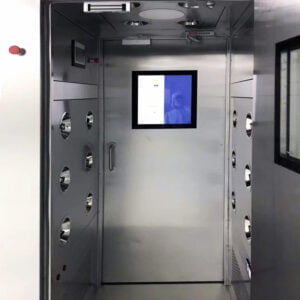
The physical configuration locks in long-term workflow patterns. Straight-through tunnel designs support linear, high-throughput processes. Right-angled or multi-door designs can fit into corner spaces or create more defined separation between “dirty” and “clean” sides. The choice must align with the cleanroom’s personnel flow philosophy and existing architecture. An incorrect layout choice can create bottlenecks or encourage procedural workarounds that compromise containment.
Strategic Maintenance Access
Design for maintenance is strategic. The modular philosophy, with front- or side-access panels and plug-and-play components, minimizes mean time to repair. Features like an integrated Clean-in-Place (CIP) system with a 360-degree spray ball facilitate routine chamber cleaning without manual wiping, supporting compliance and reducing labor. These features must be evaluated during facility planning; retrofitting for better maintenance access is often costly and disruptive.
Space and Utility Integration
Beyond the unit’s footprint, space must be allocated for maintenance access, and utilities must be planned. This includes water supply and drain connections, electrical power for the PLC and transducers, and potentially compressed air or chemical feed lines for advanced modules. Overlooking these integration requirements during the design phase is a common project delay. The drain system must handle not just water but potentially chemical residues, requiring appropriate materials and containment.
| Дизайнерський аспект | Configuration Options | Вплив |
|---|---|---|
| Personnel Flow | Straight-through tunnel | Linear process |
| Використання простору | Right-angled corner | Fits specific footprints |
| Maintenance Design | Модульні компоненти | Quick swap, minimal downtime |
| Прибирання камери | Integrated CIP system | 360-degree spray ball |
Source: Technical documentation and industry specifications.
Selecting the Right Mist Shower for Your Cleanroom
Establishing the Foundational Specification
The selection process must start with the non-negotiable: verified 5-10 micron droplet size performance. Request test data or performance qualification reports from the vendor. This specification is the core determinant of decontamination efficacy. Concurrently, the configuration must be chosen based on a clear analysis of cleanroom workflow and physical space constraints. A right-angled cleanroom personnel decontamination system may save space but could slow throughput compared to a straight-through design.
Aligning with Operational Protocols
The choice between standard fogging and optional rinse or chemical cycles must reflect the organization’s current and future needs. A facility using disposable garments may not need a rinse cycle, while one investing in reusable suits likely will. Similarly, operations handling biologics may require the chemical dosing option. This decision aligns capital investment with long-term safety and operational protocols, impacting training, validation, and daily use.
Evaluating the Total Lifecycle Package
The evaluation must extend beyond the unit to the vendor’s lifecycle support. Examine the comprehensiveness of PPM plans, the responsiveness of service networks, and the depth of validation support. As cross-industry adoption pressures standardization, engaging with a knowledgeable partner ensures the selected system meets both current regulatory demands and is adaptable to evolving standards. The quality of this support ecosystem directly impacts operational risk, uptime, and total cost of ownership.
| Критерій відбору | Key Question | Decision Driver |
|---|---|---|
| Core Efficacy | Verified 5-10 micron output? | Non-negotiable specification |
| Планування об'єкту | Matches workflow philosophy? | Операційна ефективність |
| PPE Strategy | Requires rinse cycle? | Reusable vs. disposable garments |
| Lifecycle Support | Vendor PPM plans? | Operational risk & TCO |
Source: ISO 14644-14:2016. Selecting suitable equipment requires an assessment of its impact on the cleanroom environment, tying core efficacy, layout, and operational support directly to maintaining ISO classification.
The decision to implement a mist shower system hinges on three priorities. First, insist on validated proof of 5-10 micron droplet performance—this is the linchpin of efficacy. Second, design the integration around personnel flow and maintenance access to avoid creating new bottlenecks. Third, select a vendor whose service and validation support mitigates long-term operational risk, turning the system into a reliable engineering control rather than a maintenance liability.
Need professional guidance on specifying and validating a mist shower system for your facility’s specific ISO class and workflow? The contamination control engineers at YOUTH can provide application-specific analysis and technical documentation review. Contact us to discuss your cleanroom’s decontamination requirements.
Поширені запитання
Q: Why is a 5-10 micron droplet size critical for personnel decontamination, and how is it achieved?
A: This specific size range is engineered to balance effective particle encapsulation with minimal suit wetting. Ultrasonic atomization uses high-frequency sound waves to generate a precisely calibrated fog within this band, ensuring droplets surround and weigh down contaminants without causing liquid runoff. This means facilities handling potent powders must verify this specification as the primary benchmark for decontamination efficacy, not just mist generation.
Q: How does a PLC transform a mist shower from simple equipment into a validated process step?
A: A Programmable Logic Controller automates cycle timing, monitors critical parameters like pressure for consistent mist quality, and provides an auditable data trail. This control enables the storage of validated fogging recipes and supports compliance documentation. For projects under regulatory scrutiny, you should plan for the PLC’s integration into quality management systems and ensure personnel are trained for its operation and data management.
Q: What are the key design factors for integrating a mist shower into an existing cleanroom layout?
A: The primary factors are the personnel flow pattern and available space, which dictate the choice between straight-through, corner, or multi-door chamber configurations. Maintenance access and a modular component design are equally critical to minimize operational downtime during service. This means your facility planning team must evaluate these physical and workflow constraints during the early design phase to avoid creating future bottlenecks.
Q: When should a facility consider adding chemical dosing or rinse cycle options to a basic mist shower?
A: A proportional dosing pump for disinfectants should be considered when microbial control is required alongside particulate removal, indicating a dual-purpose containment strategy. A separate rinse cycle using coarser spray is strategic for facilities using reusable garments, linking capital investment directly to PPE cost models. If your operation anticipates evolving biological safety requirements, these optional modules provide future-proofing but require upfront planning for utility connections.
Q: How is mist shower performance validated, and what role does vendor support play?
A: Validation confirms the system achieves its specified particle reduction, translating engineered droplet size into measurable results. The process relies on the PLC’s data logging and should be supported by the vendor’s Planned Preventative Maintenance (PPM) plans and service ecosystem. This means your vendor selection must heavily weigh their long-term support and validation assistance, as these factors directly impact total cost of ownership and regulatory readiness, per standards like ISO 14644-14:2016.
Q: What cleanroom standards are relevant for assessing and operating a mist shower system?
A: Mist showers must be suitable for the particulate classification of the environment they operate within, guided by ISO 14644-1:2015 for air cleanliness. The assessment of the equipment’s particle emission characteristics during operation falls under ISO 14644-14:2016. This means your qualification protocol should reference these standards to ensure the system maintains, rather than compromises, the integrity of your controlled environment.
Пов'язаний вміст:
- Повний посібник з туманного душу для дезінфекції фармацевтичної промисловості та чистих приміщень: галузеві стандарти та впровадження 2025 року
- Системи управління ПЛК для тестових ізоляторів стерильності
- Якість води в хімічних душах: Поради з управління
- Хімічні датчики активації душу: Останні інновації
- Аварійні хімічні душові кімнати: Посібник для швидкого реагування
- Закриті хімічні душові кімнати: Конфіденційність і безпека
- Водопостачання для хімічних душів: Посібник з проектування системи
- Хімічні душові з нержавіючої сталі: Посібник з довговічності
- Оптимізація планування кімнати хімічного душу: Ефективність використання простору


 UK
UK  EN
EN  AR
AR  FR
FR  KO
KO  ID
ID  IT
IT  PT
PT  RU
RU  RO
RO  ES
ES  PL
PL  NL
NL  DE
DE  TR
TR