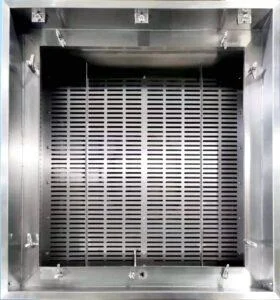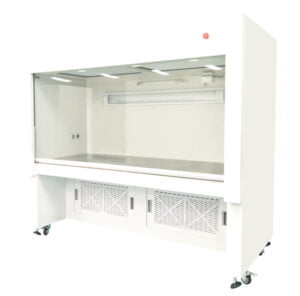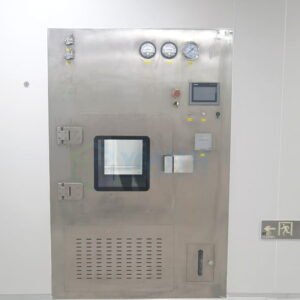
Supplier qualification decisions made on the basis of sales documentation alone are a recurring source of commissioning delays and regulatory exposure in GMP cleanroom projects. A supplier who presents a brochure claiming sterile product capability, Annex 1 alignment, or ISO-classified manufacturing environments may be entirely unable to produce the supporting validation reports, environmental monitoring records, or batch traceability documentation when asked. By that point, the gap typically surfaces during commissioning or a regulatory inspection — not during procurement — which shifts the burden onto the project team at exactly the wrong moment. The judgment that matters is understanding which questions, applied to which product families, create defensible evidence rather than a documented appearance of due diligence.
Vendor audit questions by product family
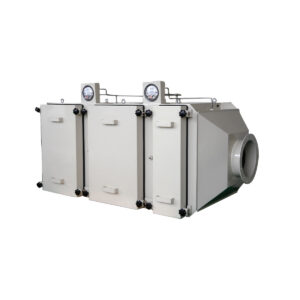
The starting point for any supplier audit is confirming that the quality system governing the product family under review actually covers that family. A QMS certificate with an ISO 9001 scope that excludes HEPA housing assemblies, fan filter units, or biosafety transfer equipment is not evidence of quality control for those products — it is evidence of a scoping gap. Verifying this before the on-site visit prevents the audit from being consumed by credential disputes.
Environmental monitoring data is the second structural check. Requesting six months of viable and non-viable particle data forces a distinction between a supplier who operates a classified environment and one who only claims to. Exceedances without investigation records are the critical signal: the absence of a deviation investigation is not a minor documentation shortfall, it is evidence that the monitoring programme functions as a recordkeeping exercise rather than a quality control tool.
For pharmaceutical equipment audits, the Grade-A and Grade-B background requirement under EudraLex Annex 1 is not a recommendation that can be waived by internal risk judgement without documentation. A supplier operating Grade-A aseptic filling areas against a Grade-C background without a documented risk justification is a major compliance finding, not a gap to be noted and revisited. Auditors should treat the absence of that justification as an immediate escalation point rather than a discussion item for the closeout report.
The probe positioning check during a facility walkthrough often reveals more than the monitoring data itself. Environmental monitoring sensors placed above working height rather than at working height produce data that does not represent the actual exposure zone. This is a common setup error, and one that invalidates the representativeness of monitoring records without requiring any deliberate falsification.
Each of these checks changes in weight depending on the product family. A HEPA housing terminal filter for a non-sterile application carries different audit depth requirements than a stainless-steel pass-through used in an aseptic filling line. The table below maps the core checks to their verification criteria and the consequence of a failed result.
| Audit Check | Apa yang harus diverifikasi | Mengapa Ini Penting |
|---|---|---|
| Klasifikasi ruang bersih | Certificate <12 months old, class matches claim | Confirms supplier environment meets stated cleanliness level |
| Pemantauan lingkungan | Six months viable/non‑viable data; flag exceedances without investigation records | Tests whether cleanroom performs to claimed class and deviations are investigated |
| Sterile equipment sterilization | Validation report with biological indicator results and SAL | Critical evidence supplier can deliver a sterile product as claimed |
| QMS certificate scope | Scope explicitly covers the equipment product family under audit | Ensures the quality system actually governs the products being reviewed |
| Grade‑A aseptic filling background | Grade‑B background per Annex 1, or documented risk justification | Missing justification is a major compliance finding for pharma equipment |
| EM probe positioning | Sensors placed at working height, not above | Captures representative data; common setup error that undermines monitoring |
The consequence of skipping the QMS scope check is that a supplier can satisfy every other audit row while remaining outside any governed quality system for the specific product being purchased. That outcome is not visible in the audit summary unless the scope verification was explicitly completed.
Material, component, drawing, and factory-test traceability
A real-time lot trace-back demonstration is the single most revealing on-site exercise in a supplier audit. Selecting a finished batch and asking the supplier to trace backward through production records to raw material lot numbers — live, without preparation — tests whether traceability is operational or merely documented. Suppliers who can perform this exercise without hesitation have functional traceability systems. Suppliers who need to locate the right person, find the relevant binder, or explain that the system works differently have told the auditor what needs to be in the findings.
The batch number structure check is a practical planning criterion rather than a mandated format, but its implications are concrete. A sequential batch number identifies which batch is in question; it does not help a quality team determine quickly which production line, which product type, or which date range to quarantine during a field deviation. Structured numbering that encodes production date, product type, and line reduces the containment window during a recall. This matters for peralatan kamar bersih procurement because the equipment shipped into a GMP facility carries that traceability — or lack of it — into the facility’s own supply chain records.
Incoming material inspection is where the upstream risk concentrates. A supplier who cannot demonstrate quarantine-until-release procedures, defined acceptance criteria, and documented non-conformance handling for incoming materials has a gap that affects every batch record downstream. The batch record review catches the downstream evidence; the incoming inspection check identifies whether the upstream control point exists at all.
Incomplete or unsigned batch records are a documentation control finding regardless of the physical quality of the product. The two are not interchangeable. A well-manufactured product with incomplete records creates exactly the same qualification problem as a poorly documented process: the quality team accepting the equipment cannot establish what it was made from, under what conditions, or who verified it at each stage.
The table below organises the four traceability elements with their on-site verification action and the risk created when each element is absent.
| Traceability Element | On-Site Verification | Risiko jika Hilang |
|---|---|---|
| Real‑time lot trace‑back | Select finished batch and trace to raw material lots live | Gaps indicate recall risk; inability to contain products fast |
| Batch number structure | Check if encoding includes production date, product type, line | Sequential‑only numbering delays containment during a recall |
| Batch record completeness | Review one record: lots, operators, in‑process checks, deviations, QC release | Unsigned or incomplete records are a documentation control finding |
| Incoming material inspection | Quarantine‑until‑release, defined accept/reject criteria, non‑conformance handling | Contaminated raw materials can enter production undetected |
The inability to complete the trace-back demonstration in real time is not just an audit finding — it is a signal about how that supplier would perform during a field deviation. A supplier who cannot trace a finished batch to its raw material lots under audit conditions will face the same constraint under recall pressure, and the project team that accepted that supplier qualification report will be managing the consequences.
Evidence depth tradeoffs for critical and noncritical equipment
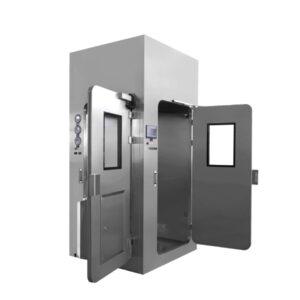
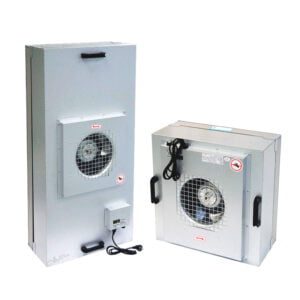
Applying the same audit depth to every product in a cleanroom procurement scope is both inefficient and poorly targeted. A unit filter kipas installed in a non-sterile electronics cleanroom and a stainless-steel dynamic pass box used in a Grade-A/B aseptic boundary do not carry equivalent risk profiles. Calibrating audit depth to product risk — drawing on the risk-tiering logic of ICH Q9(R1) — prevents audit resources from being diluted across low-risk items while critical sterile equipment receives insufficient scrutiny.
For non-sterile, low-risk equipment, particle test data and material data sheets are a proportionate evidence requirement. Accepting brochure claims without test data or material specifics is the failure pattern to avoid, but demanding sterilization validation reports for a non-contact airflow component wastes audit time and signals poor risk assessment to the supplier. The boundary condition is whether the equipment contacts the product, the process environment directly, or functions as an indirect infrastructure element. That distinction changes which evidence rows become mandatory versus supportive.
For sterile critical equipment, the minimum evidence requirement shifts substantially. Sterilization validation reports including biological indicator results and achieved sterility assurance level are not optional supporting documents — they are the primary evidence that the supplier can deliver what the product family claims. A supplier who cannot produce these reports before or during the audit has not demonstrated sterile product capability; they have demonstrated the existence of a packaging or marketing claim.
The dynamic-versus-static testing distinction matters across all classification levels and is framed in ISO 14644-4:2022 as a testing-framework consideration. Static-only classification data does not reveal how a facility performs under operational conditions — occupied, with equipment running, during production. Pressure differential performance, viable counts, clean-up rate, and air volume under dynamic conditions are the data that support qualification defensibility. Accepting static-only test data as the sole evidence of facility classification is an evidence gap, not a regulatory violation in itself, but it weakens the defensibility of any qualification that relies on it.
| Jenis Peralatan | Minimum Audit Evidence | Example of Unacceptable Shortcut |
|---|---|---|
| Non‑sterile, low‑risk | Particle test data, material data sheets | Accepting brochure claims without test data or material specifics |
| Sterile, critical | Sterilization validation, packaging validation reports | Supplier claims sterile but cannot produce a sterilization validation report |
| Facility classification (all levels) | Dynamic pressure differentials, viable counts, clean‑up rate, air volume | Relying on static‑only tests that miss operational performance |
| Grade‑A aseptic filling | Grade‑B background environment or documented risk justification | Grade‑C background without justification; immediate major finding |
The hidden trade-off in audit depth calibration is that a light audit is only acceptable when the risk assignment is explicitly documented. If the decision to accept particle test data and material data sheets for a given product family is not recorded as a deliberate risk-tiering choice, it reads in retrospect as an incomplete audit rather than a proportionate one.
Review bottlenecks when sales claims lack records
The most predictable audit stall is arriving on-site without pre-reviewed documents. When key records — sterilization validation reports, contamination control strategies, SOPs, cleaning logs — are requested at the start of the on-site visit rather than two to three weeks in advance, the auditor spends the first half of the day recovering documents rather than verifying substance. This is a planning failure, not a supplier failure, and it consistently shifts audit time away from the verification actions that require physical presence.
Requesting documents in advance also changes the quality of on-site questions. An auditor who has already reviewed a sterilization validation report arrives knowing which sections are incomplete or which biological indicator cycles are outside the claimed parameters. An auditor who receives the report on arrival is reading it for the first time while the supplier representative is present, which reduces the depth of scrutiny the document actually receives.
The four most common claim-to-evidence mismatches follow a consistent pattern: the claim exists in marketing materials or a sales call; the supporting document either does not exist, exists in draft form, or has not been reviewed since initial qualification. A supplier claiming Annex 1 alignment with no contamination control strategy and no dynamic testing data has described a compliance position that is not supported by evidence. Flagging this immediately — rather than treating it as a question for the closeout report — is the appropriate response, because the gap is not a minor documentation shortfall that can be closed with a revised procedure.
| Sales or Marketing Claim | Evidence to Request Pre‑Audit | Consequence if Missing |
|---|---|---|
| “Product is sterile” | Sterilization validation report | Bottleneck during audit; claim cannot be substantiated |
| “Annex 1 aligned” | Contamination control strategy, dynamic testing data | Immediate flag; mismatch between claim and regulatory evidence |
| “Compliant facility” | SOPs, cleaning logs, audit trails | Physically correct equipment without documentation invalidates the claim |
| “Ready for audit” | Key documents 2‑3 weeks ahead of visit | On‑site time wasted chasing missing records instead of verifying substance |
The consequence of discovering these gaps on-site rather than in pre-audit document review is not just wasted audit time. It shifts the audit from a substantive verification exercise to a document recovery exercise, and that shift rarely produces the depth of finding needed to make a qualified supplier decision. Bottlenecks that surface during commissioning or inspection — rather than during the audit — carry a significantly higher remediation cost.
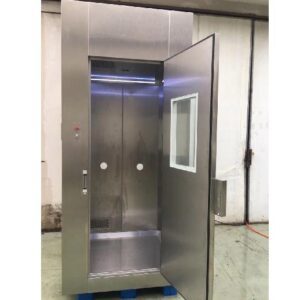
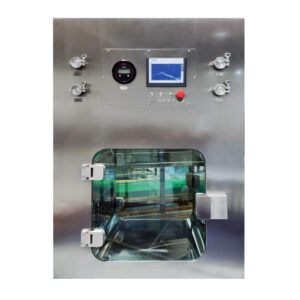
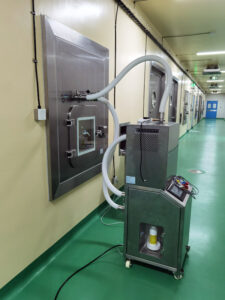
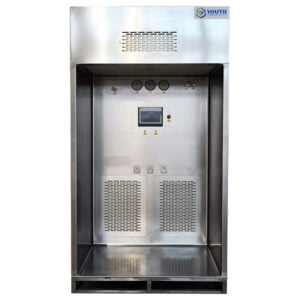
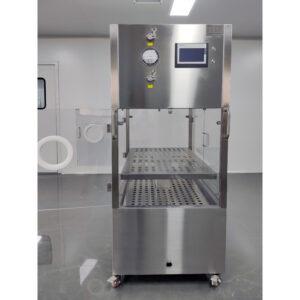
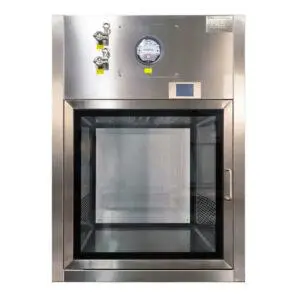
For teams evaluating cleanroom transfer equipment such as a kotak pass dinamis intended for use at a GMP grade boundary, pre-audit document review of the supplier’s pressure differential qualification data and change control records is a minimum preparatory step. The alternative is discovering on-site that the qualification was performed under static conditions against a standard that does not reflect the installation environment.
Closeout point after audit gaps are assigned
An audit that identifies findings but does not establish a structured completion gate provides limited protection. The appearance of audit closure — a report filed, findings listed, responses received — is not the same as confirmed compliance. The closeout point is the stage where each critical product family can demonstrate evidence across material control, factory tests, change control, and shipment records. Before that demonstration is complete, the audit is open regardless of what the report date says.
CAPA documentation for each finding should include root-cause investigation, corrective action, an effectiveness check, and a defined closure timeframe. These elements are consistent with the risk-based quality management approach described in ICH Q9(R1), though the specific fields are a planning criterion for audit teams rather than a mandated format from a single regulatory source. The function they serve is clear: a finding that is acknowledged but not root-caused has not been resolved, it has been recorded. The distinction matters because unresolved findings recur, and a supplier audit that closes without confirmed resolution leaves the project team holding the exposure.
For sterile equipment, a Certificate of Sterility per lot is the concrete deliverable that converts a finding about sterilization evidence into closed compliance evidence for each shipment. It is not universally sufficient for all regulatory contexts — its adequacy depends on the product, the jurisdiction, and the facility’s own quality requirements — but it closes the evidence loop in a way that a revised SOP or a general commitment to sterility assurance does not.
Change control notification is the closeout element most likely to be treated as complete when it is not. Confirming that the supplier’s change control log includes proactive notification to buyers for material or process changes converts a point-in-time audit into an ongoing compliance relationship. A supplier who made all the right representations during the audit but subsequently changed a seal material, a filter media grade, or a welding procedure without notification has not maintained the compliance state the audit confirmed. The change control log check at closeout is the mechanism that makes the audit result durable rather than dated.
| Closeout Requirement | Specific Evidence or Deliverable | Why It Closes the Loop |
|---|---|---|
| CAPA for each finding | Root‑cause investigation, corrective action, effectiveness check, closure timeframe | Gaps are resolved, not just acknowledged |
| Sterile product evidence | Certificate of Sterility per lot | Concrete deliverable that proves sterility for each shipment |
| Critical product families | Material control, factory test, change control, shipment records for each family | Comprehensive coverage before sign‑off; no blind spots |
| Ongoing change notification | Change control log showing proactive buyer notification of material/process changes | Ensures compliance continuity after audit, not a single‑point snapshot |
The risk in treating audit closeout as an administrative step is that the completion gate becomes a formality. Each critical product family should be explicitly confirmed against the four evidence categories — material control, factory test records, change control with proactive notification, and shipment traceability — before sign-off. An audit that closes before those elements are confirmed offers the appearance of assurance while leaving the downstream qualification exposure in place.
The practical implication of a well-structured vendor audit is that it reduces the surface area of downstream qualification uncertainty. Teams that enter IQ/OQ with traceable batch records, confirmed factory test data, and a supplier change control log in place are managing a defined evidence set. Teams that enter the same qualification phase with a filed audit report and unresolved evidence gaps are managing a liability with a known creation date.
Before using this audit framework for a specific procurement, confirm which product families carry critical risk designations, which evidence categories each family requires, and whether any open findings have closure timeframes that fall within the project schedule. An audit gap assigned but not closed before equipment shipment does not close itself during installation.
Pertanyaan yang Sering Diajukan
Q: What happens if the supplier’s QMS certificate covers the right product family but was issued under a third-party scheme that doesn’t require cleanroom-specific controls?
A: The certificate scope still needs to be verified against cleanroom-relevant controls — ISO 9001 alone does not require particle documentation, environmental monitoring programmes, or sterility assurance evidence. A certificate that lists the correct product family but was issued under a general manufacturing scope without cleanroom-specific audit criteria leaves the same evidence gap as a scoped exclusion. Confirm that the issuing body’s audit criteria actually tested cleanroom controls for that product line, not just generic process and documentation requirements.
Q: At what point does a light audit become indefensible, even for equipment the project team has classified as low-risk?
A: A light audit becomes indefensible when the risk classification is not explicitly recorded. Accepting particle test data and material data sheets for a product the team has assessed as low-risk is proportionate only when that assessment is documented as a deliberate decision under a risk-tiering framework such as ICH Q9(R1). If the classification is implicit — the team simply asked fewer questions — then the light audit reads retrospectively as an incomplete one, not a calibrated one. The documentation of the risk decision is what makes the audit depth defensible, not the depth itself.
Q: Once a supplier has been audited and findings have been assigned to a CAPA, what should the project team do if the supplier’s closure timeframe extends beyond the equipment shipment date?
A: Do not accept shipment as a de facto closure event. A CAPA with a confirmed root cause, corrective action, and effectiveness check still open at the time of shipment means the equipment is leaving the supplier before the quality gap has been resolved. The practical options are to delay shipment until CAPA closure is confirmed, establish a conditional acceptance protocol with a defined post-shipment closure deadline and hold on IQ/OQ sign-off, or escalate the finding to a critical designation that blocks qualification progression. Treating shipment as a natural endpoint for an open CAPA converts a quality control mechanism into a scheduling convenience.
Q: Is there a meaningful difference between auditing a supplier who manufactures cleanroom equipment and one who assembles it from purchased components?
A: Yes, and the difference concentrates in the incoming material inspection and component traceability checks. An assembler who purchases HEPA filter media, housings, or control components from sub-suppliers introduces traceability dependencies the assembler’s own QMS may not govern. The audit should confirm whether the assembler’s incoming inspection programme covers sub-supplier qualification, lot traceability for purchased components, and change notification from sub-suppliers — not just the assembler’s own production steps. A trace-back demonstration that terminates at a purchased component lot number without sub-supplier traceability documentation identifies where the evidence chain ends.
Q: If a supplier passes the audit but later makes an undisclosed change to a material or process, does the original audit result retain any compliance value?
A: Only if the supplier’s change control log includes proactive buyer notification and the project team verified that requirement at closeout. An audit confirms a point-in-time compliance state; its durability depends entirely on whether the supplier’s change control system is structured to inform buyers before material or process changes affect shipped product. An audit that did not confirm this at closeout provides no protection against undisclosed post-audit changes. The practical consequence is that the facility receiving the equipment may discover during a routine supplier review — or during a regulatory inspection — that the qualification basis no longer matches the product being delivered.