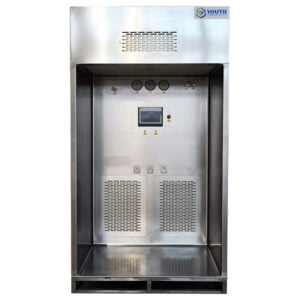
Assembling a cleanroom equipment list before the room layout and process flow are confirmed is one of the more avoidable sources of validation delay in pharmaceutical facility projects. The consequence is not just a scheduling problem — pass-through openings cut in the wrong wall, terminal HEPA filter positions that conflict with the intended airflow pattern, and booth footprints that block maintenance access all require layout rework after drawings are approved, and that rework carries qualification implications. The decision that prevents this is sequencing: room grade classification and process risk definition must precede equipment package assembly, not follow it. By the end of this article, you will be better positioned to assign each equipment family a clear contamination-control role, spot the coordination gaps that typically surface at validation, and judge when the package is ready for procurement.
Process flow before equipment package selection
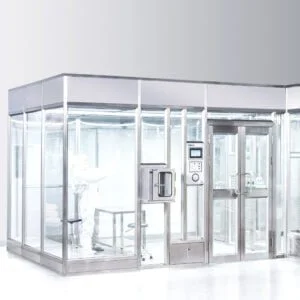
Room grade classification is the input that makes equipment package decisions possible. Until the process flow is mapped and each zone is assigned an ISO class — typically somewhere between ISO Class 5 and ISO Class 8 for pharmaceutical manufacturing — the equipment list is speculative. A room specified at ISO Class 5 requires a fundamentally different filtration density, airflow approach, and surface treatment than one operating at ISO Class 7 or Class 8. Selecting FFUs, LAF units, or pass boxes before that classification is confirmed means selecting equipment against assumptions that may not survive the contamination-control review.
The practical sequence starts with the process step, not the room. Map what is being handled, where exposure risk exists, where material crosses a zone boundary, and where personnel and product paths intersect. Each of those points represents a contamination-control obligation. The equipment package then becomes the answer to those obligations, not a pre-assembled list drawn from a standard configuration. A dispensing operation that occurs inside a Class 5 unidirectional airflow zone has different booth, filtration, and airflow requirements than the same operation positioned in a buffer zone with less stringent classification.
The risk in skipping this sequence is upstream ambiguity that compounds downstream. When the room layout is frozen before equipment roles are confirmed, the structural features of the room — wall penetrations, ceiling grid positions, transfer corridors — may no longer support the contamination-control logic the process actually requires. Correcting a pass-through opening that is positioned between the wrong pressure zones, or repositioning a terminal filter bank after ceiling coordination is complete, is significantly more disruptive than confirming the process flow first.
FFU, LAF, pass box, booth, and HEPA roles compared
These five equipment families are often grouped under the same procurement category, but they address different contamination-control points and should be specified with that separation in mind. Conflating their roles during package assembly is a reliable source of qualification ambiguity later.
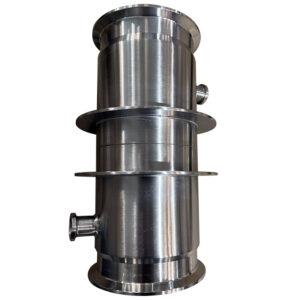
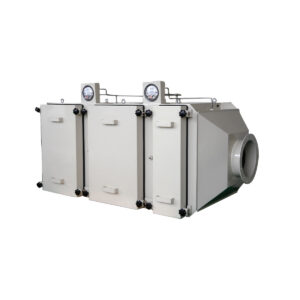
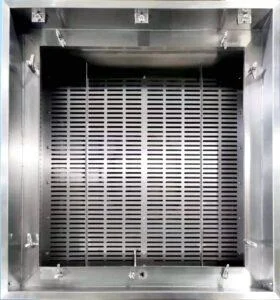
HEPA filtration — whether integrated into terminal filter housings, fan filter units, or laminar airflow systems — is the mechanism that sets air cleanliness at the point of use. HEPA filters are defined by their performance against particles at 0.3 microns, the size at which collection efficiency is at its minimum; actual performance against larger particles is higher. Air delivered through ceiling-level HEPA installations supports room-grade compliance at the zone level. This is the foundational layer: without confirmed HEPA efficiency matched to room grade, no downstream equipment can reliably sustain the contamination-control function it is supposed to perform.
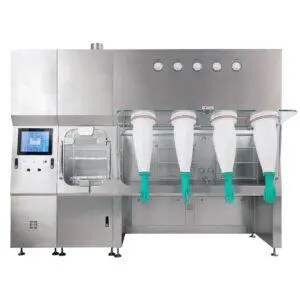
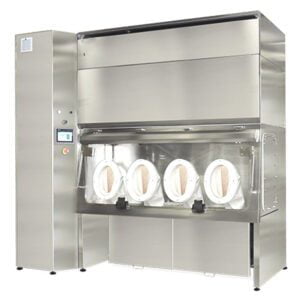
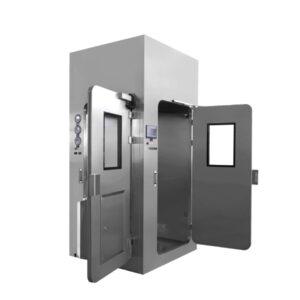
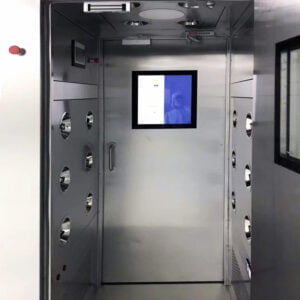
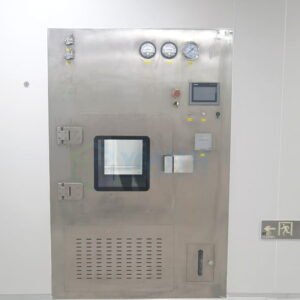
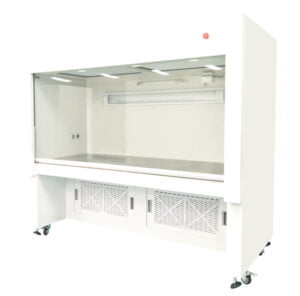
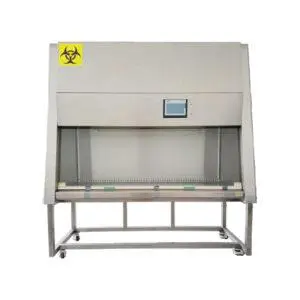
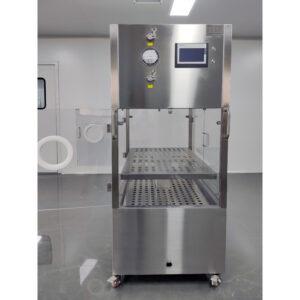
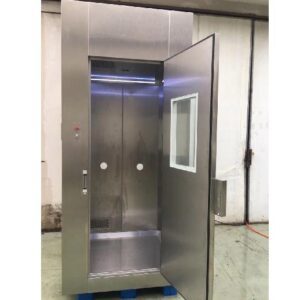
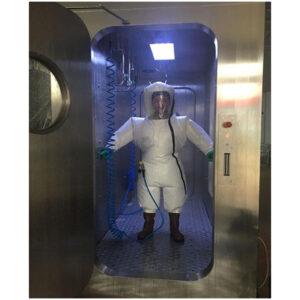
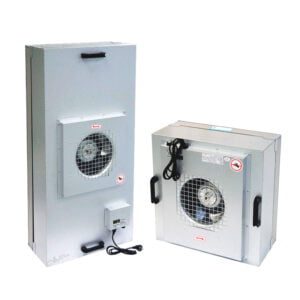
Unit filter kipas extend room-level clean air by distributing filtered airflow across ceiling coverage areas, allowing flexibility in room layout without requiring a central air handling system for every zone. They support room-level contamination control but do not replace local protection at exposure points. LAF units — horizontal or vertical laminar airflow benches and hoods — address local protection at those exposure points: open product, open containers, and any step where contamination contact with the product stream is possible. Pass boxes control material transfer between zones without requiring personnel to cross a zone boundary, maintaining the pressure cascade and preventing cross-contamination at the physical point where a transfer route intersects a zone wall. Booths — dispensing, sampling, and weighing configurations — create contained, unidirectional airflow environments for high-risk powder or potent compound handling steps that require both operator protection and product protection simultaneously.
The selection error to avoid is treating these as interchangeable coverage options. Specifying additional FFU coverage to compensate for the absence of a local LAF unit at an exposure point does not replicate the unidirectional protection that a correctly positioned LAF unit provides. Conversely, specifying a LAF unit where a booth is required for potency or containment reasons creates a gap that will not close during qualification. Assign each role to a contamination-control obligation before finalizing the package. For detailed guidance on compliance classification across these equipment types, ISO 14644 and GMP compliance standards for cleanroom equipment provides a useful reference for understanding certification requirements by equipment category.
Sterile manufacturing risks each equipment family controls
Sterile manufacturing environments amplify the consequence of contamination-control gaps because product cannot be terminally inspected in the same way as non-sterile dosage forms. Each equipment family in the package addresses a specific risk category, and understanding those categories helps identify where a gap in the package creates unacceptable exposure.
FFUs and centrally supplied HEPA systems manage the continuous airborne particle and microbial challenge across the room envelope. EU GMP Annex 1 specifies a positive pressure differential of at least 10 Pa relative to adjacent zones as the minimum threshold for preventing contaminant ingress. FFU and terminal filter specifications must be matched to sustain that differential under operating conditions — at maximum personnel occupancy, during door cycling, and through the pressure transients that occur during material transfers. A system that meets the 10 Pa threshold under static, unoccupied conditions but fails under dynamic conditions may satisfy a partial test while leaving the actual contamination-control function unconfirmed.
LAF units control the localized risk of direct product exposure during filling, assembly, or open-container handling. The risk they address is not the room-level background but the microenvironment immediately above and around the exposed product stream. If the LAF unit is positioned incorrectly relative to the work surface, or if its airflow is disturbed by adjacent equipment or personnel movement, the protection it is specified to provide does not function as intended. This is a placement and coordination issue, not just a specification issue, and it is one of the reasons process flow must inform equipment positioning before layout is fixed.
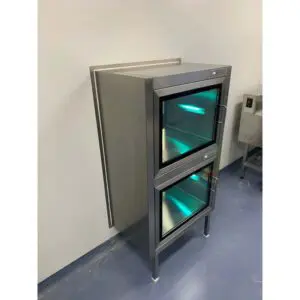
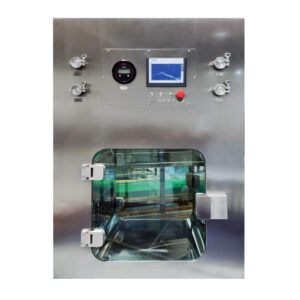
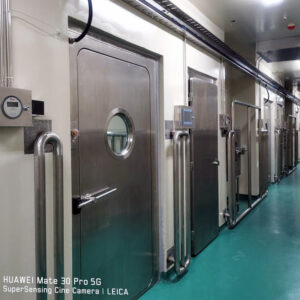
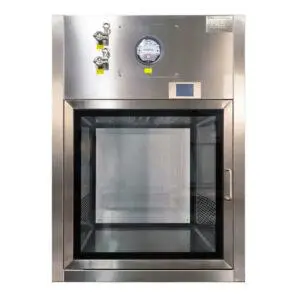
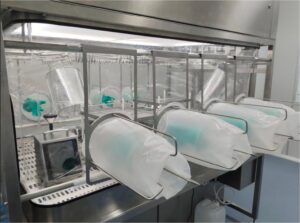
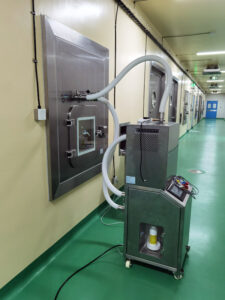
Pass boxes introduce a distinct risk category: the transfer route itself. Every time material crosses a zone boundary, there is an opportunity for pressure equalization across the pass-through opening, for surface contamination carried on packaging or containers, and for procedural lapses if the transfer protocol is not enforced by the physical design of the pass box. Kotak lulus VHP address the surface contamination risk directly by integrating vaporized hydrogen peroxide decontamination into the transfer step, which matters when materials entering a Grade A or B zone cannot carry bioburden from the outer packaging into the cleanest area of the facility. Booths manage the operator-product contamination interface during dispensing, sampling, or weighing of potent or sensitizing compounds, where both the direction of protection (inward containment versus outward product protection) and the airflow classification of the immediate environment must be specified to match the process risk.
A design requirement that applies across all of these families, and one that is easy to defer until qualification exposes it, is the requirement for seal-unbroken sanitation and filter changes. Concealed areas that cannot be cleaned without breaking a seal, filter housings that require room disruption to service, and internal ledges or crevices that harbor residual contamination are recurring compliance liabilities across the equipment’s lifecycle. FDA aseptic processing guidance reinforces cleanability and drainability as design considerations, not just operational preferences. Specifying equipment that meets the installation footprint but cannot be fully sanitized in place creates a recurring exposure that compounds across every cleaning cycle after initial qualification.
Package coordination problems that appear during validation
Validation reveals coordination failures that design reviews often miss because it tests the system under actual operating conditions rather than against drawings. The problems that surface at this stage tend to involve the boundaries between equipment families — the points where airflow ownership, pressure management, and maintenance access were assumed rather than confirmed.
These gaps do not appear because individual units are specified incorrectly. They appear because the package was assembled as a list of units rather than as a coordinated system. An FFU ceiling grid that was positioned for room coverage without accounting for booth exhaust direction, a pass box whose sealing specification was confirmed against the manufacturer’s data sheet but not against the pressure differential the adjacent rooms must sustain, or a LAF unit whose maintenance access requires partial dismantling of adjacent equipment — each of these is a coordination failure, not a component failure.
| Coordination Problem | Why It Appears During Validation | What to Clarify Before Drawings Are Approved |
|---|---|---|
| Design requirements (operability, cleanability, sterilizability, drainability, crevice-free finishes, repeatable control) not aligned with equipment footprints, access, and airflow | Validation reveals that equipment cannot be cleaned, maintained, or drained as required, forcing expensive rework and responsibility gaps. | Confirm each unit’s footprint, maintenance access, and airflow direction support cleanability, sterilizability, drainability, and crevice-free finishes, with repeatable control characteristics specified. |
| Pass box sealing and booth pressure balancing not confirmed to sustain ≥10 Pa differential relative to adjacent zones | Overpressure fails during validation when pass boxes or booths cannot hold the required pressure cascade, contradicting contamination control strategy. | Verify pass box sealing design and booth pressure balancing capability are documented to maintain at least 10 Pa overpressure relative to adjacent zones under operating conditions. |
The timing problem compounds the cost. Coordination gaps identified during commissioning or qualification require rework to equipment already installed, which may mean affecting adjacent systems, requalifying rooms that were otherwise complete, and reassigning responsibility for test failures between the equipment package, the HVAC system, and the facility contractor. The same gaps identified before drawings are approved are resolved by annotation — a note on the coordination drawing, a revised specification, or a clarification of airflow direction before installation. The practical implication is not that validation should be started earlier but that equipment coordination reviews should be tied to drawing approval, not to commissioning schedule.
Procurement trigger after room grade and process risk are fixed
The practical procurement trigger is the point at which room grade classification and process risk definition are both confirmed and stable. Before that point, equipment specifications are provisional. After it, they are executable. This sequencing is not a quality management preference — it is the condition under which the package can be coherently specified, coordinated, and validated.
Room grade drives HEPA filter efficiency specification directly. ISO Class 5 requires HEPA filtration capable of sustaining particle counts at or below defined thresholds under dynamic conditions, and the filter efficiency, coverage density, and airflow velocity needed to achieve that are meaningfully different from what ISO Class 7 or Class 8 requires. Procuring filter banks, FFU arrays, or LAF units before the room grade is fixed means procuring against an assumption that the contamination-control strategy has not yet confirmed. If the grade is later revised — which happens when process risk assessments change the intended use of a zone — the equipment specification may not match, and the cost of adjustment at procurement is lower than at installation.
Process risk adds the second dimension. Two rooms at the same ISO classification may require different pass box configurations, different booth specifications, and different LAF airflow orientations depending on what is being handled, how hazardous it is, and what the exposure routes are. A weighing step involving a potent active pharmaceutical ingredient in a Grade B environment requires a different booth specification than a labeling or packaging step in the same grade. Room grade sets the minimum threshold; process risk defines the specific equipment configuration within that threshold. Procurement decisions made before process risk is confirmed may satisfy the grade requirement on paper while missing the protection requirement in practice.
Treat the package as ready for procurement when each listed unit has a confirmed process role, a defined room relationship, a specified airflow expectation, and an identified document requirement. A unit that appears on the equipment list without all four of these attributes is not yet specified — it is a placeholder, and procuring against it carries validation risk.
Freezing a room layout before the equipment package is coordinated against the contamination-control logic the process actually requires is the mistake that consistently creates the most downstream cost — not because the individual units are wrong, but because the boundaries between them are undefined. Pass box sealing, booth pressure balancing, LAF unit placement relative to exposure points, and FFU coverage relative to terminal filter positions are coordination questions that must be resolved before drawings are approved, not during commissioning when the rework cost is at its highest.
The practical pre-procurement check is whether each unit in the package has been assigned to a specific contamination-control obligation that is traceable back to the process flow and the confirmed room grade. If that assignment has been made and documented, the package is coherent and the qualification basis is defensible. If the list was assembled from a standard configuration or a previous project without that assignment step, the gaps will surface — the question is only whether they surface at the drawing review or at the pressure mapping test.
Pertanyaan yang Sering Diajukan
Q: What happens if the room layout is already frozen before the equipment package has been coordinated?
A: Expect rework, not just a scheduling delay. Once wall penetrations, ceiling grid positions, and transfer corridors are fixed, any mismatch between structural features and contamination-control logic — a pass-through opening between the wrong pressure zones, a terminal filter position that conflicts with intended airflow direction, a booth footprint that blocks maintenance access — must be corrected after installation. That correction carries qualification implications and typically costs significantly more than resolving the same gap at the drawing annotation stage. If the layout is already frozen, the priority is an immediate coordination audit against the process flow before commissioning begins, so failures are identified before systems are tested rather than during pressure mapping or particle count qualification.
Q: Is a single ISO class designation enough to finalize the full equipment package, or does something else need to be confirmed first?
A: Room grade alone is necessary but not sufficient. ISO class sets the minimum threshold — HEPA filter efficiency, airflow velocity, and coverage density must all be matched to the assigned grade — but process risk defines the specific equipment configuration within that threshold. Two rooms at ISO Class 7 handling different materials may require different pass box decontamination specifications, different booth airflow orientations, and different LAF positioning depending on the hazard level and exposure routes of what is being handled. Procuring the package against grade classification without confirmed process risk means the units may satisfy the grade requirement on paper while missing the protection requirement in practice.
Q: At what point does adding more FFU coverage stop compensating for gaps at local exposure points?
A: FFU coverage addresses room-level air cleanliness and cannot replicate the unidirectional microenvironment that a correctly positioned LAF unit provides directly above and around an exposed product stream. Beyond a certain density, additional FFUs improve background particle counts but do not change the localized airflow behaviour at the work surface where product exposure occurs. If a local exposure point requires ISO Class 5 unidirectional protection, a LAF unit positioned relative to that specific work surface is the appropriate specification; no room-level FFU configuration substitutes for it. The threshold at which this distinction matters is any process step where open product, open containers, or filling operations are present — those steps require local protection that FFUs are not designed to deliver.
Q: How does the choice between a standard pass box and a VHP pass box affect the rest of the package coordination?
A: The choice changes both the pressure management requirement and the surface decontamination obligation at the transfer point. A standard pass box controls the zone-boundary crossing and maintains pressure cascade, but it does not address bioburden carried on outer packaging surfaces. A VHP pass box integrates a decontamination cycle into the transfer step, which is the relevant specification when materials entering a Grade A or B zone cannot carry external contamination into the cleanest area. The coordination implication is that a VHP pass box introduces a cycle time — the decontamination and aeration period — that must be accounted for in material transfer scheduling. If that cycle time was not factored into the room workflow when the layout was designed, it can create bottlenecks at the transfer corridor that affect the pressure differential performance of adjacent zones.
Q: How should a project team judge whether an equipment package assembled for a previous facility is reusable for a new one?
A: Treat it as a reference, not a specification. A package from a prior project may reflect a different room grade, a different process risk profile, a different pressure cascade logic, and a different set of validation obligations. The unit types may be the same, but the role assignments — which contamination-control obligation each unit is answering, in which zone, against which process risk — are specific to the facility and process they were originally specified for. The reuse test is whether each unit on the prior list can be mapped to a confirmed process role, room relationship, airflow expectation, and document requirement in the new facility. Any unit that cannot be mapped this way is a placeholder carrying validation risk, regardless of how well it performed in the previous installation.
Konten Terkait:
- Memastikan Kepatuhan GMP dengan Unit LAF: Panduan Komprehensif
- Seberapa Sering Anda Harus Menyervis Unit LAF Anda? Saran Ahli
- 5 Langkah Penting untuk Memasang Unit LAF dengan Benar
- Panduan Utama untuk Unit LAF: Semua yang Perlu Anda Ketahui
- Unit LAF vs Filter HEPA: Mana yang Tepat untuk Fasilitas Anda?
- Kontrol Tekanan Kotak Lulus VHP: Kepatuhan ISO 14644
- Panduan Peralatan Ruang Bersih GMP: Jenis Peralatan, Standar, Validasi, dan Pertanyaan Pemasok
- Kontrol Aliran Udara di Gerobak LAF Bergerak: Panduan Ahli
- Lemari Pakaian LAF: Memenuhi Standar ISO 14644