Inkoopteams keuren vaak een tafelmodel goed, wijzen het toe aan een open werkruimte en ontdekken tijdens de inbedrijfstelling dat de werkruimte te ondiep is, dat de uitlaat zich aan de verkeerde muur bevindt of dat een bovenliggende opslagplank direct in het retourpad zit. Tegen die tijd is de unit verzonden, is de testbank bezet en betekent het herstellen van de lay-out ofwel opnieuw werken of werken met een gecompromitteerde luchtstroomconfiguratie die misschien niet als een zichtbaar probleem aan de oppervlakte komt totdat een verontreinigingsincident of een validatie de vraag opdringt. De beslissing over de indeling - tafelmodel versus staand model - heeft reële gevolgen die na aankoop moeilijk terug te draaien zijn, en de installatiebeperkingen die deze beslissing bepalen zijn allemaal bekend voordat de aankooporder wordt afgegeven. Door een korte reeks bank- en procescontroles uit te voeren voordat het formaat wordt goedgekeurd, kan worden vastgesteld of een tafelmodel echt geschikt is of dat een staand model de enige configuratie is die echt bij het werk past.
Bench-layout vragen voor goedkeuring tafelformaat
De eerste fout die de meeste teams maken is dat ze een tafelmodel afzuigkap beschouwen als een extra accessoire die kan worden ingepast in de beschikbare werkbankruimte. In de praktijk moeten drie fysieke beperkingen worden bevestigd voordat het formaat wordt goedgekeurd: diepte van de werkbank ten opzichte van het werkgebied van de kap, stabiliteit en vlakheid van het oppervlak en elektrische toegang.
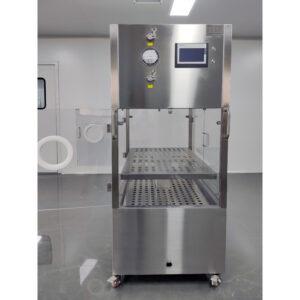
Wat de diepte van de werkbank betreft, heeft een typische tafelunit een werkgebied van ongeveer 27,5 inch diep - dat cijfer komt van de ontwerpspecificaties van de fabrikant, niet van een universele voorgeschreven afmeting, en het vertegenwoordigt alleen het werkoppervlak. De vrije ruimte aan de achterkant komt daar nog bij. Een werkbank die technisch gezien diep genoeg is om de voetafdruk van de kap te bevatten, kan het apparaat toch dicht genoeg tegen een muur duwen zodat het achterste aanzuigpad gedeeltelijk wordt geblokkeerd. Deze toestand kan de schone stroom verminderen zonder dat er bij de installatie een duidelijk alarm afgaat en het verschijnt eerder als een documentatieprobleem tijdens de kwalificatie dan als een operationeel probleem tijdens het routinegebruik.
Stabiliteit van het oppervlak is een minder voor de hand liggende, maar wel reële zorg. Een ongelijke werkbank kantelt de geometrie van het plenum van de kap ten opzichte van het werkoppervlak, en hoewel een lichte helling cosmetisch lijkt, verandert het de hoek van de luchttoevoer op een manier die de eenrichtingsstroom zoals beschreven in standaarden zoals IEST-RP-CC002 ondermijnt. Een kap die op een onvlak oppervlak staat, voldoet niet aan het ontworpen luchtstroomprofiel.
Elektrische toegang is de controle die het vaakst wordt overgeslagen tijdens locatiecontroles. De meeste tafelmodellen hebben een speciaal 110 V stopcontact nodig - meestal met UL-goedkeuring - dat zich dicht genoeg bij de installatieplaats bevindt zodat het netsnoer kan worden bereikt zonder dat het over het werkoppervlak moet worden omgelegd of aan de poten van de werkbank moet worden vastgemaakt. Een snoer dat over de werkbank loopt, vormt zowel een risico op verontreiniging als een belemmering voor de workflow. Bevestig de locatie van het stopcontact tijdens het onderzoek van de werkbank, niet nadat het apparaat is gearriveerd.
Elk van deze beperkingen is verifieerbaar voor de aankoop en elk heeft een duidelijk correctiepad in de planningsfase dat duurder wordt zodra de eenheid is geïnstalleerd.
| Controleer | Waarom het belangrijk is | Wat bevestigen? |
|---|---|---|
| Diepte bank vs. diepte motorkap + vrije ruimte achteraan | Onvoldoende diepte voorkomt juiste plaatsing en kan luchtstroom blokkeren | Controleer of de bestaande werkbankdiepte het werkgebied van 27,5 inch plus de vereiste vrije ruimte aan de achterkant dekt. |
| Stabiel en vlak oppervlak van de bank | Een ongelijk of gekanteld oppervlak verstoort de zuivere luchtstroom in één richting | Zorg ervoor dat de werkbank stabiel, horizontaal en vlak is over het oppervlak van de motorkap. |
| Toegang tot stopcontacten en snoerrouting | Over het hoofd geziene elektrische toegang leidt tot kostbaar herstelwerk of onveilige installaties | Controleer of er een speciaal 110 VAC stopcontact in de buurt van de installatieplaats is en of het netsnoer ongehinderd kan worden doorgevoerd. |
Ladingclassificatie en controles op speling aan de achterkant die de luchtstroom beschermen
Het draagvermogen van de tafel staat zelden op de checklist voor de aanschaf van een laminaire afzuigkap, maar het moet een van de eerste punten zijn die bevestigd worden. Een tafelmodel is geen lichte apparatuur. Als de kap op een standaard laboratoriumtafel staat die is beoordeeld op chemische bestendigheid maar niet op puntlastgewicht, kan doorbuiging onder de voet van de kast de behuizing subtiel kantelen en dezelfde luchtstroomvervorming introduceren die een zichtbaar ongelijke tafel zou veroorzaken - zonder dat iemand de doorbuiging als oorzaak herkent.
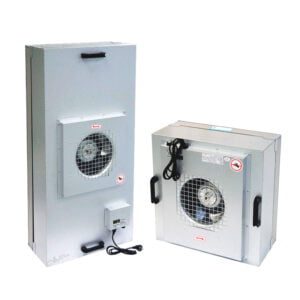
Speling aan de achterkant is de belangrijkste controle. Een recirculerende tafelmodel afzuigkap zuigt omgevingslucht aan de achterkant aan, filtert een deel door het HEPA en blaast de lucht terug door de werkzone. Een gangbaar ontwerppatroon recirculeert ongeveer 70% lucht door een achterste plenum en voert ongeveer 30% lucht af via een HEPA-filter achter of boven - hoewel deze verdeling een ontwerpkenmerk is van een bepaalde klasse apparaten, geen universele specificatie die geldt voor alle tafelmodellen. Wat consistent is bij alle recirculatieontwerpen, is dat zowel de inlaat als de uitlaat een vrije ruimte nodig hebben om te kunnen functioneren. Als het apparaat tegen een muur of in een hoek wordt geplaatst waardoor de vrije ruimte aan de achterkant ook maar een paar centimeter beperkt is, wordt het aanzuigpad beperkt. De laminaire stroom stopt niet, maar wordt turbulent en niet-uniform op manieren die moeilijk te detecteren zijn zonder luchtstroommeting en die mogelijk pas opgemerkt worden bij een onderzoek naar het aantal deeltjes tijdens validatie.
De foutmodus die we hier moeten begrijpen is dat een beperkte speling aan de achterkant niet direct een zichtbare vervuiling veroorzaakt. Het veroorzaakt een verminderde luchtstroomconditie die stilletjes voortduurt en aan de oppervlakte komt als een onverklaarbare validatiebevinding of een verontreinigingsincident dat wordt toegeschreven aan de techniek van de operator voordat de lay-out opnieuw wordt onderzocht. Om deze volgorde te voorkomen, moet de beschikbare vrije ruimte aan de achterkant worden gemeten tijdens het locatieonderzoek en worden vergeleken met de installatievereisten van de fabrikant voordat de unit wordt geplaatst.
Rekken boven het hoofd en wandnabijheid die retourpaden verstoren
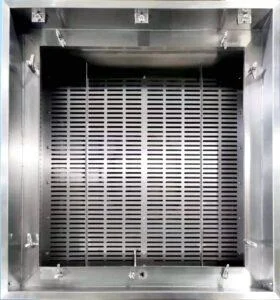
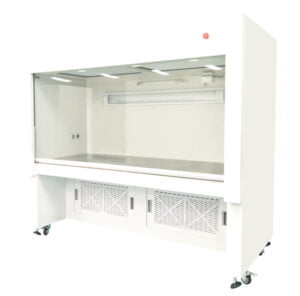
Bij tafelmodellen met horizontale stroming wordt het HEPA-filter op de verticale achterkant van het werkblad geplaatst. Door deze plaatsing is het filter toegankelijk voor vervanging en onderhoud, maar het is ook het eerste onderdeel dat beïnvloed wordt door slechte ruimtelijke ordening. Een plank die boven en achter de unit is gemonteerd, of een muur direct achter de achterkant, creëert twee verschillende problemen: het beperkt het luchtstroompad waar de unit van afhankelijk is en het plaatst het HEPA filter in een positie waar het fysiek kan worden geraakt tijdens aangrenzende opslag- of ophaalactiviteiten.
Fysieke schade aan een HEPA achterste filter is waarschijnlijker dan het klinkt in een druk laboratorium. Een plank met flessen, dozen of apparatuur die over de achterste zone van de afzuigkap hangt, introduceert de mogelijkheid dat items in de richting van of in contact met het filteroppervlak vallen. Een ingedeukt of doorboord filter geeft geen zichtbaar bewijs van schade aan de voorkant van het apparaat en een beschadigde filterafdichting veroorzaakt een filtratiestoring die onzichtbaar kan zijn tijdens routinewerkzaamheden. ISO 14644-7, die betrekking heeft op scheidingsapparaten waaronder cleanroombehuizingen en bijbehorende gecontroleerde omgevingen, biedt relevante context voor het gedrag dat scheidingswanden geacht worden te vertonen, maar is niet direct bepalend voor beslissingen over de indeling van werktafels. Het principe dat wordt versterkt, is dat de grens van de werkzone afhankelijk is van de integriteit van het filtratietraject en dat alles wat dat traject na het filter verstoort van belang is.
De praktische controle is eenvoudig: controleer voordat u de installatielocatie goedkeurt of er geen vaste plank, kast of muuroppervlak in de door de fabrikant gespecificeerde vrije zone aan de achterkant zit en controleer of de ruimte achter en boven de unit vrij genoeg is voor filterinspectie en -vervanging zonder andere apparatuur te verwijderen of te verplaatsen. Ontdekken dat een plank verplaatst moet worden nadat de unit geïnstalleerd is, is een beheersbaar probleem; ontdekken na een mislukte deeltjestelling tijdens de kwalificatie is dat niet.
Tafelgemak versus staande werkzone-diepte
Het gemak van een tafelmodel is echt. Het past op bestaande werkbankinfrastructuur, vereist geen speciale vloerruimte en plaatst het werkoppervlak op werkbankhoogte zonder extra structurele ondersteuning. Voor lichtere taken - monstervoorbereiding in kleine batches, assemblagewerk binnen handbereik of procedures met bescheiden ruimtelijke vereisten - is dat gemak een echt voordeel.
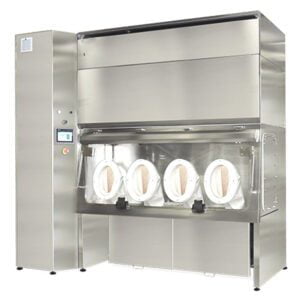
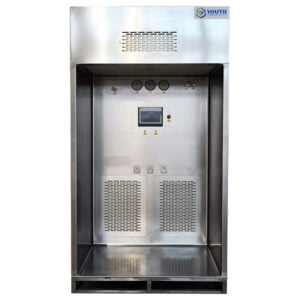
De beslissing wordt moeilijker als het proces fysieke diepte vereist. Met een werkdiepte van ongeveer 27,5 inch is een tafelmodel zeer geschikt voor taken waarbij de handen van de operator binnen het voorste derde deel van de werkzone werken. Wanneer voor een proces dieper in het werkgebied moet worden gereikt, grotere apparatuur in de kap moet worden geplaatst of met voorwerpen moet worden gewerkt die niet veilig dicht bij het HEPA-oppervlak kunnen worden gemanipuleerd, dan is de dieptebeperking diskwalificerend - en geen klein ongemak. Staande consolemodellen kunnen een werkdiepte tot 54 inch bieden en dat verschil kan niet worden overbrugd door de console te verplaatsen of door een accessoire aan te schaffen.
Het verschil onder de werkbank maakt de dieptebeperking nog groter. Tafelmodellen zitten op een tafelblad en laten geen bruikbare ruimte over onder het werkblad. Staande modellen bieden volledige beenruimte onder het werkblad en kunnen gootstenen, tanks, leidingen en andere voorzieningen bevatten die nodig zijn voor natte processen of geïntegreerde apparatuuropstellingen. Pogingen om leidingen aan te leggen naar een proces dat onder een tafelmodel afzuigkap werkt - of om een pomp of tank in de ruimte onder de werkbank te plaatsen - is een functionele mismatch, geen configuratie-optie.
| Functie | Tafelmodel kap | Staande kap |
|---|---|---|
| Typische diepte van het werkgebied | 27,5 in. | Tot 54 inch. |
| Beenruimte onder de bank / uitrusting | Geen; geen beenruimte, geen ruimte voor gootstenen, tanks of sanitair | Volledige beenruimte; ondersteunt gootstenen, tanks, sanitair en andere voorzieningen |
| Installatieoppervlak | Past op bijna elke stabiele bank; ruimtebesparend | Vereist speciale vloerruimte en structurele ondersteuning |
| Taakgeschiktheid | Lichte, nabije taken | Diep-proceswerk, natte processen en geïntegreerde utiliteitsbehoeften |
De tafelopstelling is zeer geschikt voor het beoogde gebruik. Het probleem ontstaat wanneer dat gebruik wordt verondersteld in plaats van geverifieerd aan de hand van echte procesvereisten. Teams die de procesdiepte, het volume van de apparatuur en de gebruiksbehoeften bevestigen voordat ze een formaat kiezen, voorkomen dat het formaat in de aankoopfase verandert in een gesprek en in de post-installatiefase in een project.
Retrofit ergonomie die de integratie van de bank bemoeilijkt
Ergonomische pasvorm wordt vaak gezien als een secundair aandachtspunt tijdens de aanschaf - iets om aan te passen nadat het apparaat is gearriveerd. In de praktijk zijn de beschikbare aanpassingen na installatie beperkt, en de twee factoren die het vaakst herwerk veroorzaken zijn de uitlijning van de zithoogte en de kabelgeleiding onder de werkbank.
De hoogte is het meest voor de hand liggende probleem. Sommige tafelmodellen zijn verkrijgbaar met optionele onderstellen die in hoogte verstelbaar zijn, wat klinkt als een oplossing voor hoogteverschillen, maar alleen als de hoogte van de bestaande werkbank wordt gecontroleerd voordat de hoogte van het onderstel wordt bepaald. Een team dat een in hoogte verstelbare standaard bestelt zonder eerst de werkbank en de zittende werkpositie van de operator te meten, krijgt vaak een configuratie die het werkoppervlak te hoog of te laag plaatst om comfortabel en langdurig te kunnen werken. De vermoeidheid van de operator als gevolg van een slechte hoogteafstelling is cumulatief en heeft niet alleen invloed op het comfort, maar ook op de nauwkeurigheid van het werk binnen de schone zone.
Kabel- en stroombeheer komen pas later aan bod tijdens de inbedrijfstelling. Dubbele stopcontacten van ziekenhuiskwaliteit en snoergeleiding onder de werkbank worden soms aangeboden als optionele configuraties en als ze worden toegevoegd zonder een routingplan, loopt het snoerpad meestal over de vloer, wordt het vastgeplakt aan een poot van de werkbank of wordt het zo geleid dat er struikelgevaar of een obstakel onder het apparaat ontstaat. Beide situaties kunnen worden vermeden met een kort onderzoek onder de werkbank tijdens het plannen van de aanschaf, maar dat onderzoek gebeurt zelden tenzij iemand het expliciet op de checklist zet.
| Factor | Wat te controleren | Risico als het over het hoofd wordt gezien |
|---|---|---|
| Uitlijning zithoogte bestuurder | Controleer de bestaande werkbankhoogte ten opzichte van de hoogte van de kap en de optionele standaard; zorg dat de opstelling overeenkomt met de zitpositie van de operator | Slechte ergonomie leidt tot vermoeidheid bij de operator en inefficiëntie van de workflow |
| Kabelgeleiding onder de bank | Plan het pad voor het netsnoer en een ziekenhuisstopcontact onder de bank | Een slechte geleiding kan de luchtstroom belemmeren, struikelgevaar opleveren en veiligheidsproblemen veroorzaken |
De faalwijze van de planning is hier dat beide problemen ontdekt worden tijdens de ingebruikname, wanneer het apparaat al geïnstalleerd is en de opstelling van de werkbank al vastligt. Het is een kwestie van een paar minuten om de hoogte van de werkbank en de routing van de uitgangen te controleren voordat de machine wordt aangeschaft; om dit achteraf te corrigeren is een servicebezoek, een bestelling van een aangepaste standaard of een elektricien nodig.
Eisen aan diepgaande processen waarvoor een staande afzuigkap nodig is
Er is een duidelijke drempel waarbij een tafelmodel wordt gediskwalificeerd op basis van procesvereisten en niet op basis van voorkeur. Als het werk voorzieningen onder de werkbank vereist - gootstenen, tanks, sanitairaansluitingen of procesapparatuur die onder het werkoppervlak moet worden geplaatst - kan een tafelbladafzuigkap niet geschikt zijn voor die configuratie, ongeacht hoe de werkbank is opgesteld. De eenheid zit op het werkblad en de ruimte eronder behoort toe aan de werkbank, niet aan het proces.
Werkdiepte is de tweede diskwalificerende voorwaarde. Als het proces een grotere diepte vereist dan de werkzone van het tafelblad kan bieden - waarbij verder dan het voorste deel van het werkgebied wordt gereikt, grote vaten in de kap worden geplaatst of met apparatuur wordt gewerkt die naar achteren in de richting van het HEPA-filter reikt - is de diepte die beschikbaar is in een tafelblad een functionele limiet. A laminaire stromingskap in een op de vloer staand consoleformaat neemt die beperking weg en biedt een werkzone die is afgestemd op het proces in plaats van op de werkbank.
Pogingen om een mismatch in diepte of bruikbaarheid te omzeilen met een tafelmodel - door apparatuur te verplaatsen, het werk uit te breiden tot buiten de schone zone of te improviseren met loodgieterswerk - introduceren het risico op besmetting en doen het doel van het gebruik van een gecontroleerde omgeving teniet. De beste beslissing is om deze procesvereisten te identificeren tijdens de specificatiefase, voordat een tafelmodel wordt besteld, en om het staande formaat te kiezen als het proces dit duidelijk vereist. A cleanroom LAF werkbank ontworpen voor diepere processen vermijdt het retrofitgesprek volledig door het formaat vanaf het begin af aan af te stemmen op het werk.
De beslissing over het formaat is geen kwaliteitsoordeel tussen tafel- en staande ontwerpen - beide vervullen hun beoogde functie goed als ze correct worden gespecificeerd. Het is een functioneel afstemmingsprobleem: het proces definieert de vereisten en het formaat voldoet eraan of niet.
De belangrijkste stap vóór de aankoop is bevestigen dat de tafel, het proces en de installatieomgeving allemaal compatibel zijn met het tafelbladformaat voordat de bestelling wordt geplaatst. De diepte van de werkbank met de vrije ruimte aan de achterkant, het laadvermogen, de vlakheid van het oppervlak, de elektrische toegang, de zithoogte van de operator en de routing onder de werkbank kunnen allemaal worden gecontroleerd tijdens een kort onderzoek ter plaatse. De diepte- en nutsbeperkingen zijn de factoren die het meest waarschijnlijk tot een formaatwijziging zullen leiden na de aanschaf, en het zijn de factoren die het meest waarschijnlijk worden verondersteld in plaats van gemeten.
Als de tafel de fysieke controles doorstaat en het proces past binnen een werkdiepte van 27,5 inch zonder dat er voorzieningen onder de tafel nodig zijn, dan is een tafelmodel een praktische en goed passende keuze. Als de tafel of het proces een beperking oplevert die het tafelmodel niet kan oplossen, dan bepaalt het identificeren van die beperking vóór de aanschaf of het project soepel verloopt of vastloopt bij de inbedrijfstelling.
Veelgestelde vragen
V: Wat gebeurt er als de belasting op de testbank onbekend of niet geverifieerd is voor installatie?
A: Sla de installatie over totdat de classificatie is bevestigd - doorgaan zonder classificatie introduceert een risico op doorbuiging dat moeilijk te diagnosticeren is nadat de eenheid op zijn plaats is gezet. Een werkbank met een classificatie voor chemische weerstand, maar niet voor het puntbelastingsgewicht van een laminaire stromingskap, kan doorbuigen onder de voet van de eenheid, waardoor de behuizing subtiel kantelt en het luchtstroomprofiel wordt verstoord zonder dat dit zichtbaar is. Neem contact op met de fabrikant van de werkbank of het facilitaire team voor de nominale capaciteit en vergelijk deze met het gepubliceerde gewicht van de kap voordat de plaatsing wordt goedgekeurd.
V: Wat is de eerste actie die moet worden ondernomen nadat het locatieonderzoek alle fysieke controles heeft doorstaan?
A: Documenteer de bevestigde metingen - diepte van de werkbank met speling aan de achterkant, laadcapaciteit, aflezing van het oppervlak, locatie van de uitlaat, hoogte van de zittende operator en het pad onder de werkbank - en voeg ze toe aan het inkoopdocument. Zo ontstaat een referentie die inbedrijfstellings- en validatieteams kunnen gebruiken om te controleren of de geïnstalleerde configuratie overeenkomt met wat is goedgekeurd. Zonder deze gegevens kan een afwijking die tijdens de kwalificatie wordt ontdekt niet worden vergeleken met een basislijn en wordt het aanzienlijk moeilijker om de bron van een luchtstroombevinding te herleiden naar een lay-outbeslissing.
V: Geldt het advies in dit artikel nog steeds als het tafelmodel wordt gebruikt in een gedeeld lab of een lab met meerdere gebruikers waar de benchconfiguraties vaak veranderen?
Antwoord: De controles worden kritischer in die context, niet minder. In een omgeving met gedeelde werkbanken is de kans groter dat er rekken boven het apparaat worden geplaatst, dat er items naar de vrije zone achterin verhuizen of dat het apparaat tussen de gebruiksperioden door tegen een muur wordt geplaatst. Elk van deze veranderingen kan de luchtstroom verslechteren zonder dat dit een duidelijk alarm veroorzaakt. In een omgeving met meerdere gebruikers moeten de lay-outcontroles die de vrije ruimte achterin en de ruimte boven het hoofd beschermen, geformaliseerd worden - gemarkeerde zones, aangegeven vrije ruimtevereisten of vaste banktoewijzingen - in plaats van behandeld te worden als een eenmalige installatiecontrole.
V: Is een staand model altijd de veiligste keuze, zelfs als de bank technisch gezien alle lay-outcontroles doorstaat?
A: Niet automatisch - een tafelmodel dat alle fysieke en procesmatige controles doorstaat is een geschikte keuze voor lichtere taken, en het selecteren van een staand model alleen als voorzorgsmaatregel brengt extra kosten en vloerruimte met zich mee zonder functioneel voordeel. Een staand model wordt de juiste keuze als het proces voorzieningen onder de werkbank vereist, een werkdiepte van meer dan ongeveer 27,5 inch of een uitrustingsvolume dat het werkgebied van het tafelblad niet kan bevatten. Als geen van deze voorwaarden van toepassing is en de werkbank voldoet aan alle belastings-, vrije ruimte- en stabiliteitscriteria, is de tafelopstelling geschikt en hoeft deze niet vervangen te worden door een complexere oplossing.
V: Als de procesdieptevereiste op de grens ligt - dichter bij 27,5 inch dan er duidelijk overheen - hoe moet die drempel dan worden geëvalueerd?
A: Behandel een grensdieptevereiste als een op de vloer staand geval, tenzij het proces betrouwbaar kan worden voltooid met handen en apparatuur die in het voorste gedeelte van de werkzone zijn geplaatst, weg van het HEPA-filtervlak. Het getal van 27,5 inch geeft de volledige diepte van het werkoppervlak weer, niet de bruikbare reikafstand onder normale werkomstandigheden. Door naar de achterkant van de zone te werken - vlakbij het filtervlak op een apparaat met horizontale stroming - ontstaat het risico op filtercontact en turbulentie door de nabijheid van de luchtstroombron. Als het proces regelmatig die diepte vereist, is het werkbereik van een tafelmodel functioneel kleiner dan de nominale afmetingen suggereren en is een staand model met een grotere binnendiepte de specificatie met het laagste risico.