Most procurement delays on laminar flow equipment do not originate in the factory — they originate in the first conversation between buyer and supplier, when a quote is requested before the most basic parameters have been agreed internally. The downstream cost of that sequencing error is rarely a single line item; it shows up as an electrical redesign request after the unit is built, a commissioning hold because no electrician was pre-arranged, or a compliance defensibility problem at audit when the hood’s certification standard does not match what the facility’s SOP actually requires. The decision that prevents most of this is simple in principle but frequently skipped in practice: freeze the purchase packet before the quote, not after it. By the end of this article, you will be able to identify which specification gaps are most likely to block your PO, extend your lead time, or create a risk that no revision loop can fully recover.
Purchase-prep items required before ordering a hood
The first sequencing checkpoint is deciding whether the order is a standard purchase or a custom quote — and that decision gates every step that follows. A standard hood ordered through an online channel carries a fixed configuration: one voltage option, one filter grade, one material, one width. If any of those parameters need to change, the process shifts to a custom quote with a different pricing cycle, a different lead time, and a different set of documentation requirements. Treating this as an obvious starting point would be reasonable; in practice, many buyers skip it and request a quote that implicitly assumes standard configuration while the actual requirement is custom, then absorb the rework when the discrepancy surfaces.
The practical preparation work before any supplier conversation is assembling what can be called the purchase packet: an approved internal spec sheet, the site layout with clearance dimensions, the facility’s power standard, a utility list covering airflow, electrical, and any process-specific exhaust requirements, and a defined set of acceptance test criteria. Each of these documents serves a specific function in preventing a downstream revision. The spec sheet tells the supplier what class and standard to certify to. The layout confirms the unit will physically reach its installation point. The power standard eliminates the single most common cause of electrical redesign. The utility list surfaces interface requirements that are rarely covered in a standard product datasheet. The acceptance test criteria define what “done” means so that handover is not disputed at commissioning.
None of this is administrative overhead in the bureaucratic sense. It is the mechanism that converts a commercially straightforward transaction into one that delivers without surprises. If even one of these elements is missing at the point of quote, the supplier will either guess at the right answer — often correctly, sometimes not — or flag the gap, pushing the quote cycle back to the buyer for clarification. Either outcome delays the process. The goal of purchase-prep is to make the quote a formality rather than a discovery exercise.
Approved specs and site data that suppliers need first
Suppliers need five categories of confirmed data before a quote can be treated as firm: power standard, cleanroom class and certification requirement, external and internal dimensions, filter grade, and construction material. Leaving any one of these unresolved at quote stage is not a minor administrative gap — each one maps to a specific failure risk at a specific project stage.
| بند المواصفات | ما الذي يجب تأكيده | المخاطر إذا كانت غير واضحة |
|---|---|---|
| Power standard | Voltage and frequency match site supply (e.g., 110 V/60 Hz or 230 V/50 Hz) | Unit incompatible with site electrical supply; delivery delays or reconfiguration |
| Cleanroom class & standard | Required class (e.g., ISO 5, FS209E, USP 797) is listed | Non-compliance and audit failure if certification does not match facility class |
| External & internal dimensions | Width, depth, height, and internal clearance fit doorways and installation space | Hood may not pass through openings or clear overhead obstructions |
| Filter grade | HEPA or ULPA is specified | Wrong filter can violate containment requirements or exceed budget |
| مواد البناء | Material (epoxy-coated metal, thermoplastic, static-dissipative PVC, stainless steel) suits site utilities and contamination needs | Corrosion, static buildup, or chemical resistance problems during installation and use |
The voltage specification deserves particular attention because it is the most commonly unfrozen variable at quote stage, and the consequences of leaving it open are structural rather than cosmetic. A unit built for 230V/50Hz cannot be field-converted to 115V/60Hz without redesigning the electrical subsystem. That redesign, if it happens after manufacture, adds cost that was not in the original quote and extends lead time in a way that is difficult to absorb mid-project. Confirming the site power standard before quoting costs nothing; resolving a voltage mismatch after production can cost significantly.
The cleanroom class and certification requirement functions as a compliance defensibility threshold rather than just a performance specification. ISO 5 and a FS209E Class 100 equivalent are often used interchangeably in informal conversation, but they are not identical in how they are measured, documented, or defended at audit under ISO 14644-3:2019 test methods. If a facility’s SOP references one standard and the hood’s certification documentation references the other, the gap may be defensible — or it may not be, depending on the auditor and the context. Resolving that ambiguity at the spec sheet stage, not after installation, is the practical threshold. Similarly, filter grade — HEPA versus ULPA — affects both the containment performance the unit can deliver and its cost. Specifying the wrong grade does not produce a slightly suboptimal outcome; it either violates containment requirements or wastes budget that could have been allocated elsewhere.
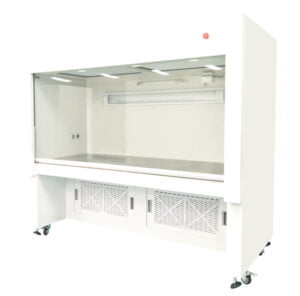
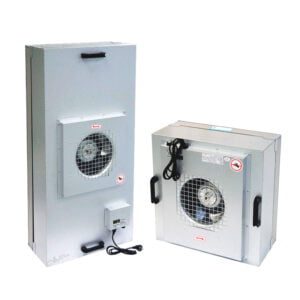
For facilities considering a شفاط التدفق الصفحي with specific dimensional or filter grade requirements, confirming these parameters against the actual installation space and regulatory context before requesting a quote is the practical starting point.
Early quotes that trigger costly revision loops later
A quote requested before voltage, filter grade, and opening size are internally agreed is not a quote in any useful sense — it is a placeholder that will require revision. The revision itself is rarely a single round-trip. Each unfrozen variable tends to generate its own correction cycle: voltage triggers an electrical redesign request, opening size triggers a dimensional recheck, filter grade triggers a performance and pricing recalculation. If all three are unfrozen simultaneously, the quote cycle can restart two or three times before a firm price is achieved, and each restart pushes the delivery date further out.
The voltage gap is the failure risk most likely to surface late, because buyers often assume that standard voltages are interchangeable or that an adapter will resolve the issue. They are not interchangeable at the component level, and adapters do not resolve a motor or control system designed for a different frequency. The practical implication is that a 230V unit arriving at a 115V/60Hz facility is not a unit that needs a minor adjustment — it is a unit that needs to go back, be rebuilt, or be replaced. Framing this as a worst-case scenario would be fair; framing it as unlikely would not be, because voltage mismatches are one of the most consistently reported causes of post-delivery rework in equipment procurement.
The less visible revision trigger is the acceptance test. If the buyer has not defined what tests will govern handover — airflow uniformity, particle count verification, or something more application-specific — the supplier will quote to a default standard that may not match what the facility’s validation team expects. When that mismatch surfaces at commissioning, it is too late for the quote to absorb the correction. For projects where lead time is a firm constraint, a pre-quote review of the LAF Unit Installation Guide can help identify commissioning requirements that should be in the spec sheet, not discovered at handover.
Fast buying versus documentation-led procurement discipline
The appeal of a fast purchase is real: a standard hood can be configured and ordered in a single online session, the lead time is visible before checkout, and the process involves no supplier back-and-forth. For a straightforward application with standard power, standard dimensions, and no regulatory compliance requirement, that path is genuinely efficient and appropriate. The problem is that it is also the path chosen by buyers with non-standard requirements who have not yet recognized that their situation is non-standard.
The hidden cost of a fast purchase in an ambiguous situation is not the purchase price — it is the installation scope gap. A standard online purchase typically does not include installation. The buyer receives a unit and assumes, reasonably, that connecting it to site power is a minor task. In practice, connecting the blower’s cord and plug to site electrical supply must be performed by a certified electrician, and that electrician must be pre-arranged separately from the equipment purchase. If the buyer’s project plan does not include this step as a distinct line item with a scheduled resource, the hood arrives and sits idle. That idle time is not a supplier failure; it is a procurement planning gap that a documentation-led process would have surfaced before the order was placed.
Documentation-led procurement is not slower because it adds regulatory overhead — it is occasionally slower because it requires internal agreement on scope before external commitment. The practical discipline is straightforward: the purchase packet is complete when the approved spec sheet, layout, power standard, utility list, and acceptance test criteria are all finalized internally. Until that point, the order should not advance. The time spent closing those gaps before the quote is consistently less than the time spent recovering from them after delivery.
Lead-time and SAT ownership points that cause delays
Two points in the procurement process generate a disproportionate share of schedule delays, and both are predictable if the buyer asks the right questions before placing the order.
| Delay Point | What Happens | ما الذي يجب توضيحه |
|---|---|---|
| SAT/commissioning ownership | If the buyer does not pre-arrange a certified electrician to connect the cord and plug to the blower, handover stalls and the hood sits idle | Clarify that site electrical installation is the buyer’s responsibility and plan the electrician’s schedule |
| Shipping quote manual verification | After payment, the shipping quote is manually reviewed for large items; the online estimate is not firm, creating lead-time uncertainty | Ask when a firm delivery date will be confirmed and what lead-time buffer to expect |
| Packaging risk from manual verification | Manual handling of large or valuable items raises the chance of inadequate packaging and transit damage | Clarify the packaging standard and how damage risk is managed during shipping |
The electrician responsibility point is worth expanding because it involves an assumption that is easy to make and costly to discover late. When a buyer purchases a laminar flow unit, the product arrives complete in terms of its core components — blower, filter, housing, controls. What it does not arrive with is a connection to site power that has been made by a licensed electrician. That step is the buyer’s responsibility, and it requires scheduling a qualified person at the right time in the project sequence. If that scheduling has not happened before delivery, the unit is physically present but functionally inert. Pre-arranging the electrician is not a complex task, but it is one that falls outside the supplier relationship and therefore outside what the supplier will flag as a risk at order stage.
The manual shipping verification point creates a different planning risk. Online shipping estimates for large or heavy equipment are typically generated algorithmically and are not firm commitments. After payment, the actual shipping cost and timeline for large items are manually reviewed, and the firm delivery date may differ from the estimate shown at checkout. Treating an online shipping estimate as a planning input for a project schedule is risky; treating it as a firm date is more so. Asking the supplier explicitly when a confirmed delivery date will be issued — and what buffer to build in for manual verification — converts an uncertain variable into a managed one.
Unfrozen specs that block PO release
There is one acceptance criterion that is more likely than any other to block a PO at the final stage: worker protection. Some laminar flow workstations, by design, do not protect the operator from emissions that originate at the work surface. The clean air flows horizontally or vertically across the work zone in a way that protects the product from contamination — which is the primary function — but that same airflow can carry surface emissions toward the operator rather than away. If the buyer’s application involves a substance that presents an inhalation or exposure risk, and the purchase is proceeding on the assumption that any laminar flow unit provides worker protection, the PO may be blocked at release when someone on the validation or safety team recognizes the capability gap.
Resolving this before PO release requires a single, explicit review check: confirm in writing whether the unit under consideration is intended to protect the product, the operator, or both, and match that answer against the facility’s acceptance test criteria and any applicable safety requirements. ISO 14644-7:2004 provides a useful process reference for understanding the performance expectations and capability limits of separative devices, and it can support that review without serving as a direct procurement mandate. The point is not that every buyer faces this issue — many laminar flow applications involve no worker exposure risk — but that the cost of discovering this gap after PO release is significantly higher than the cost of confirming it during spec review.
For applications that may involve both product protection and operator safety requirements, reviewing the distinction between standard وحدة تدفق الهواء الصفحي configurations and the specific protection claims associated with each is a practical step before finalizing the spec sheet. The worker-protection acceptance criterion should be in the purchase packet, agreed internally, before the supplier conversation begins.
The clearest practical implication of this entire process is that the purchase packet — approved spec sheet, confirmed power standard, dimensional clearance data, defined acceptance tests, and clarified SAT ownership — is what separates a procurement that closes cleanly from one that generates avoidable downstream costs. None of those elements are difficult to produce; they are difficult to produce when the internal agreement required to produce them has not yet happened.
Before advancing any laminar flow purchase to PO stage, confirm that voltage is frozen, cleanroom class is matched to the facility’s documented requirement, filter grade is specified against the application’s containment standard, and the worker-protection question has been explicitly reviewed. If any of those remain open, the order is not ready — and the cost of proceeding anyway is almost always absorbed by the buyer’s schedule, not the supplier’s.
الأسئلة الشائعة
Q: What happens if the facility’s SOP references FS209E Class 100 but the supplier certifies the hood to ISO 5 — is that gap defensible at audit?
A: It may or may not be defensible, depending on the auditor and the regulatory context, which is precisely why it should be resolved at the spec sheet stage rather than after installation. ISO 5 and FS209E Class 100 are not measured, documented, or defended identically under ISO 14644-3:2019 test methods, so if your SOP and your hood’s certification documentation reference different standards, you carry an ambiguity into every audit until it is formally reconciled. Confirm which standard governs your facility’s compliance requirement, write that into the approved spec sheet, and require the supplier to certify against that specific standard before the quote is treated as firm.
Q: If a mobile or trolley-mounted configuration is under consideration, does the same purchase packet apply, or are the preparation steps different?
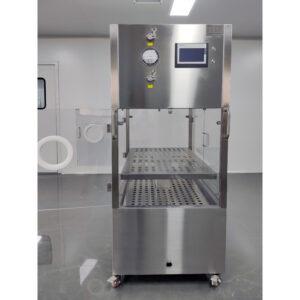
A: The same core packet applies — power standard, filter grade, cleanroom class, dimensional clearance, and acceptance test criteria all remain necessary — but a mobile configuration adds one category the body does not address: route planning. A mobile unit that fits through the installation room’s doorway may not fit through every corridor, airlock, or elevator on the path between storage and point of use. Confirming clearance dimensions for the full transit route, not just the destination room, is the additional preparation step specific to mobile configurations such as a عربة التدفق الهوائي الصفحي المتنقلة before the order advances.
Q: At what point in the project sequence should the certified electrician be scheduled relative to the equipment delivery date?
A: The electrician should be confirmed and scheduled before the purchase order is placed, not after a delivery date is received. Because online shipping estimates for large equipment are subject to manual verification after payment and may shift from the figure shown at checkout, a buyer who waits for a firm delivery date before engaging an electrician is already compressing the buffer. Treating the electrician as a pre-order logistics item — the same way the installation space and dimensional clearance are confirmed before ordering — eliminates the risk of the unit arriving and sitting idle while a qualified resource is sourced.
Q: Does a documentation-led procurement process still make sense when internal pressure to move quickly is high and the application appears straightforward?
A: Yes, because the applications that appear straightforward most often produce assumption-driven surprises — particularly on voltage, installation scope, and worker-protection expectations — rather than applications that are already known to be complex. The documentation-led process is not slower because it adds steps; it is occasionally slower because it requires internal agreement before external commitment. That agreement is less expensive to reach before the quote than after delivery. Fast purchasing saves time only when every variable in the purchase packet is already frozen; if any remain open, speed at quote stage converts directly into rework time after delivery.
Q: Is there a point at which the advice in this article stops applying — for example, for very small or low-cost benchtop units?
A: The voltage and dimensional checks apply regardless of unit size or price point, because a voltage mismatch on a small benchtop unit causes the same functional outcome as on a large floor unit — the equipment does not operate on site power. The worker-protection review and full SAT documentation may carry less formal weight for low-risk, non-regulated applications where no audit exposure exists, but the buyer still needs to confirm explicitly that the application falls into that category rather than assuming it does. The purchase packet scales in formality, not in the categories it covers; even a minimal version of the packet should confirm power standard, filter grade, and whether worker protection is a requirement.