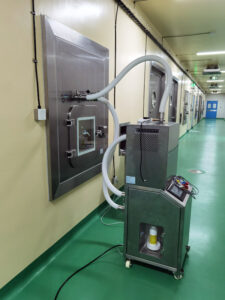
Specifying HEPA filtration housing for a BSL-3 project without first mapping the decontamination path is one of the more expensive sequencing errors a project team can make. Equipment schedules get frozen, ductwork gets routed, and corridor dimensions get finalized — then someone asks how the used filter actually gets out, and the answer exposes a housing that has no VHP injection port, a service corridor that cannot fit two people in full PPE, or a material specification that degrades under the chosen sterilant. Fixing any one of those problems after installation is not a configuration adjustment; it is a redesign that touches HVAC coordination, biosafety approval, and procurement simultaneously. The questions in this article will help you identify where that freeze point occurs on your project and what you need to confirm before the RFQ is released.
Containment Boundary Questions Before Selecting BSL-3 BIBO Housing
The first question is not about housing configuration. It is about whether the used HEPA filter can move through normal waste handling at all.
In a BSL-3 environment, that question has a specific decision gate: if the filter media may contain viable high-pathogenicity agents, it cannot be treated as standard maintenance waste. It requires a controlled removal path, documented exposure-control procedures, and a housing that keeps the used filter sealed until it is bagged, decontaminated, or both. Bag-In/Bag-Out housing exists to satisfy that requirement — the filter never needs to be directly handled in open air, and the surrounding duct system is not exposed to the filter face during replacement. If that removal path is not required because the filter serves a space where the contamination risk is categorically lower, standard housing may be appropriate. The BIBO question only enters the specification when normal filter access cannot be justified on risk grounds.
Where the decision becomes non-trivial is in the framing of consequence. A used HEPA filter from a high-containment exhaust system may have accumulated aerosolized agent over its service life. The risk is not hypothetical contamination — it is the practical certainty that the filter face is a concentrated hazard surface. A release during an uncontrolled filter change is not a local incident; the downstream consequence justifies treating the containment boundary question as a non-negotiable design entry point, not a project-phase discussion item. The CDC Biosafety in Microbiological and Biomedical Laboratories (BMBL) 6th Edition establishes this framing explicitly: primary and secondary containment must remain unbroken throughout filter service activities in BSL-3 and BSL-4 facilities.
Resolve this question before the housing type is entered on the equipment schedule. If the project team is uncertain whether BIBO is required, that uncertainty itself is an answer — it means the contamination control basis has not been formally established, and the biosafety officer needs to be in that conversation before any procurement document moves forward.
Decontamination Path Around The Used HEPA Filter
Once BIBO housing is confirmed as the correct approach, the next question is how decontamination actually reaches the used filter — and whether the housing as specified can support that process.
The choice of decontamination method is not interchangeable. Vaporised hydrogen peroxide (VHP), formaldehyde fumigation, chemical disinfection, and autoclaving each create different demands on the housing. VHP requires sealed injection and drainage ports at specific positions to achieve even distribution across the filter face; without them, the decontamination cycle may not reach the full filter medium. Fumigation requires gas-tight connections at all penetrations. Autoclaving applies to the removed filter only, which changes the sequencing logic of the bag removal step rather than the housing design itself. Chemical disinfection introduces compatibility questions about surface materials and drainage. If a project team specifies the housing before confirming which method the biosafety officer will approve, there is a real probability that the installed housing cannot support the approved method — and that the solution requires either a housing replacement or a decontamination protocol that was never the first choice.
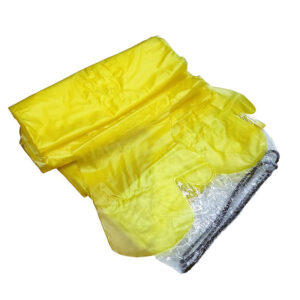
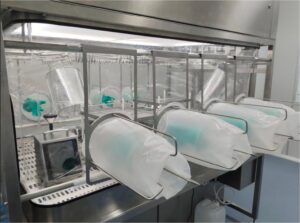
The bag removal and sealing procedure adds a layer of geometry constraint that is easy to underestimate at the specification stage. The practical standard for double-sealing — a heat seal combined with two nylon ties spaced approximately 5 cm apart, with the bag cut between the seals — places specific demands on the bag ring diameter, the clearance around the housing collar, and the accessibility of the sealing equipment. If the housing collar geometry does not accommodate the sealing tools without the operator contorting around the duct, the procedure becomes difficult to execute consistently. Inconsistent execution is where containment breaches in filter changes originate: a partially completed heat seal, ties that were applied at the right spacing but without adequate tension, or a bag that contacts the exterior housing surface during extraction and drags contamination into the service corridor.
Each of these design aspects has a direct failure mode if it is left unaddressed during specification.
| 디자인 측면 | What to Confirm in the Housing | 대응하지 않을 경우의 위험 |
|---|---|---|
| Decontamination method compatibility | Housing material and connection points are suitable for the intended sterilants (VHP, fumigation, autoclaving, chemical disinfection). | Material degradation or incomplete decontamination under repeated cycles. |
| Vaporised hydrogen peroxide (VHP) capability | Dedicated injection and drainage ports are included. | Inadequate decontamination of the filter medium. |
| Bag removal and sealing procedure | Bag ring and housing geometry accommodate double‑seal (heat seal plus two nylon ties 5 cm apart) and cutting between seals. | Inadequate sealing leads to potential pathogen release. |
| Bag extraction clearance | Housing design prevents the outer bag from contacting the housing exterior during removal. | Cross‑contamination of the service area. |
The sequencing implication is straightforward: the decontamination method must be confirmed before the housing is specified, not after. If the biosafety officer approves VHP and the specified housing has no injection or drainage ports, the project does not have a compliant installation — it has a housing that needs to be replaced or retrofitted. That conversation is significantly more expensive at the commissioning stage than at the equipment schedule stage.
Service-Corridor Access And Housing Orientation Constraints
Housing configuration and corridor sizing are a matched pair, and they are often specified on separate tracks until the conflict becomes visible in the field.
BIBO housings are available in multiple orientation options — horizontal or vertical, with inlet and outlet on the left, right, or end. Each configuration changes where the bag collar faces and where the operator must stand during filter extraction. The correct orientation is not determined by the housing manufacturer’s default; it is determined by the corridor geometry, the direction of airflow in the duct run, and the clearance available on the service side. An orientation selected to simplify duct routing may place the bag collar against a wall, directly above fixed equipment, or at a height that requires the operator to work above shoulder level in full PPE. None of those conditions are compliant in practice even if they are geometrically possible. The HVAC engineer and the specifier need to resolve this jointly while routing is still flexible.
The operational sizing requirement is concrete: a full filter replacement under BSL-3 conditions typically involves two to three operators, takes between 45 and 90 minutes, and requires enough floor space for personnel in supplied-air respirators or equivalent PPE, a wheeled cart or containment bin for the bagged filter, and adequate clearance for the bag to be extracted, sealed, and moved without contacting any uncontrolled surface. That is not a wide corridor — it is a dedicated, unobstructed service zone that has been planned for this specific activity. Treat the 2–3 operator and 45–90 minute figures as planning inputs for corridor sizing and maintenance scheduling, not as regulated minimums. The practical implication is that if the corridor is sized for normal HVAC access, it has probably not been sized for a BSL-3 BIBO change-out.
The proximity trade-off adds another dimension. Placing the BIBO housing close to the containment boundary shortens the contaminated duct run and simplifies the contamination control logic — the filter is as close as possible to the source, and the bag removal happens near the zone that is already controlled. But a housing close to the containment boundary may be in a space with limited corridor access, compressed ceiling height, or conflict with other BSL-3 envelope penetrations. A remote service location eases maintenance access and corridor sizing but introduces duct coordination risk: the longer the duct run between the containment zone and the housing, the more complex the pressure balance, the more difficult the leak detection, and the more penetrations and transitions that must meet containment integrity requirements. Neither location is automatically correct. The placement decision should be made with the biosafety officer, the HVAC engineer, and the maintenance team in the same conversation — and it should happen before the equipment schedule is frozen.
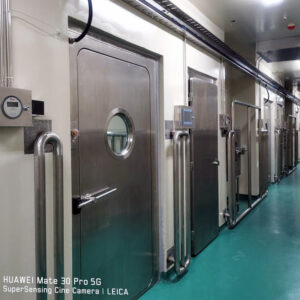
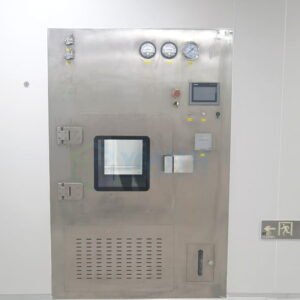
For projects where BIBO housing placement is being evaluated alongside other BSL-3 envelope decisions, the 생물학적 안전 밀폐 도어 configuration can influence the service corridor access options on the containment boundary side and should be coordinated at the same stage.
Verification Records Needed For Laboratory Maintenance Approval
Installation is not commissioning, and commissioning is not maintenance approval. The distinction matters because a housing that is mechanically installed and airtight at the duct connections still needs a documented verification record before it can be used in a BSL-3 maintenance protocol.
The verification sequence for a BIBO installation covers filter and housing integrity, airflow performance, pressure differential against design, and biological clearance after any decontamination cycle. Each of those activities produces a specific record type, and the maintenance approval process — whether it is governed by the facility’s biosafety committee, an institutional biosafety officer, or a regulatory body — will typically require all of them before the first filter change is authorized. The WHO Laboratory Biosafety Manual (4th Edition) frames this expectation broadly: verification that containment integrity is maintained at every maintenance interval is a core operational requirement for high-containment facilities. What that means in practice is that a housing installed without a complete verification record creates a maintenance approval problem, not just a documentation gap.
The practical implication is that scan-testability needs to be confirmed at the specification stage. Some housing designs integrate scan port access that allows the filter face to be tested in place using a PAO challenge without removing any panels or compromising the housing seal. If that access is not designed in, post-installation leak testing may require partial disassembly or an external scan fixture — either of which adds time and introduces the possibility of compromising the seal during the verification process itself.
Each verification activity produces a distinct record type with a specific function in the approval chain.
| Verification Activity | 이것이 확인하는 바 | Record for Approval |
|---|---|---|
| PAO scan test (leak test) | Filter and housing are free of leaks. | Leak‑free certification / test report. |
| 공기 흐름 테스트 | Airflow rates meet design specifications. | Airflow measurement record. |
| 필터 무결성 테스트 | Filter element is intact and performing correctly. | Integrity test certificate. |
| 압력 차동 확인 | Pressure across the filter matches the design value. | Pressure differential log. |
| Post‑decontamination sampling (swab, air, biological indicators) | Absence of viable contaminants after decontamination cycle. | 생물학적 제거율 보고서. |
제염 후 생물학적 시료 채취는 당연한 결과라기보다는 별도의 단계로서 주목할 필요가 있다. 면봉 채취, 공기 채취 및 생물학적 지표 검사는 단순히 제염제가 적용되었음을 확인하는 것이 아니라, 해당 제염 주기가 사용 중인 특정 병원체와 시설 구조에 대해 효과적이었음을 입증한다. 현장별 생물학적 지표 확인 없이 제염제의 일반적인 효능 데이터에만 의존하는 시설은 승인 근거가 취약하며, 감사 시 방어하기 어려운 위험에 노출된다. 이러한 기록은 첫 번째 주기부터 유지보수 프로토콜에 포함되어야 하며, 규정 준수 검토 후에 추가되어서는 안 된다.
견적 요청서(RFQ) 발송 전 확인해야 할 사양상의 문제점
격리 성능 기준을 다루지 않고 단지 하우징의 기하학적 구조만을 기술한 견적 요청서(RFQ)는 BSL-3 적합성을 실제로 결정하는 사양 요소가 누락되어 있습니다.
기밀성 요건이 가장 명확한 예입니다. ISO 10648-2의 Class 3 기밀성 기준에 부합하는 ≤0.5 Pa의 누출 등급은 BSL-3 BIBO 적용 분야에서 흔히 참조되는 설계 수치입니다. 견적 요청서(RFQ)에 누출 등급에 대한 명시적인 요구 사항이 기재되어 있지 않은 경우, 해당 기준을 충족하지 못하는 하우징을 거부할 계약상 근거가 없습니다. 공급업체의 표준 제품이 허용될 수도 있고 그렇지 않을 수도 있지만, 문서에 사양이 명시되어 있지 않으면 프로젝트 팀은 납품 시 이에 대해 이의를 제기할 근거가 없습니다. ISO 10648-2 Class 3은 설계 및 사양 수립을 위한 참고 사항일 뿐이며, 이것이 구속력 있는 요구 사항인지 여부는 프로젝트의 규제 체계에 따라 달라집니다. 이러한 결정은 RFQ가 최종 확정되기 전에 생물안전 담당자 및 관련 당국이 내리는 것입니다.
재료 호환성은 사양서에 마땅히 명시되어야 함에도 불구하고 종종 누락되는 관련 문제점입니다. 포름알데히드 훈증 처리에서는 우수한 성능을 보이는 동일한 하우징이라도 VHP에 반복적으로 노출되면 성능이 저하될 수 있으며, 에폭시 코팅된 탄소강 하우징은 특정 오염 제거 방식에는 적합할 수 있지만 다른 방식에는 적합하지 않을 수 있습니다. SUS304 및 SUS316L 스테인리스강은 산화성 살균제에 대해 더 폭넓은 호환성을 제공하지만, 사양서에는 재료 요구 사항을 암묵적인 품질 기준으로 남겨두지 말고 명시적으로 기재해야 합니다. 견적 요청서(RFQ)가 발송될 당시에도 오염 제거 방법이 아직 논의 중이라면, 이는 사양서가 시기상조임을 나타내는 신호입니다.
BIBO의 예산 책정은 조달 부서와 운영 부서 간에 종종 의견 차이가 발생하는 또 다른 부분입니다. BIBO 하우징의 단가는 일반적으로 표준 팬-필터 유닛의 약 3~5배 수준이며(이는 시장 기준이 아닌 계획상 추정치임), 필터 교체 시마다 필요한 특수 백은 표준 대체품이 없는 반복적인 소모품 비용입니다. 시설 유지보수 예산을 표준 HEPA 하우징 교체 비용을 기준으로 산정했다면, BIBO 운영의 수명 주기 비용이 제대로 반영되지 않았을 수 있습니다. 이러한 격차는 첫 번째 정기 필터 교체 시점에 드러나는데, 이때 격리 조건 하에서 진행되는 45~90분간의 절차에 소요되는 소모품 비용과 작업자 인건비가 명확히 드러나기 때문입니다.
실제 필터 교체 과정에서 발생하는 절차상의 오류 유형 역시 현장 교육에만 맡기지 말고 사양서에 명시해야 합니다. 장착 전에 검사되지 않은 백 손상, 충분한 장력을 주지 않고 조여진 타이, 불완전한 열 밀봉, 플랜지 칼라에 밀봉 그리스가 도포되지 않은 경우 등은 작업자 오류에 해당하며, 접근성이 불량한 하우징에서는 이러한 오류가 발생할 가능성이 높아지고, 검증 점검 항목이 없는 유지보수 절차로는 이를 포착할 수 없습니다.
이러한 결함 중 어느 하나라도 설치된 시스템에 영향을 미치게 되면 각각 뚜렷한 결과를 초래합니다.
| 무엇이 빠졌을까요? | 견적 요청서(RFQ)에서 확인해야 할 사항 | 조치를 취하지 않을 경우의 결과 |
|---|---|---|
| 봉지 밀봉 절차 세부 사항 | 장착 전 봉투 검사, 이중 밀봉(5cm 간격으로 두 개의 나일론 타이 사용 및 열 밀봉 확인) 및 플랜지에 밀봉 그리스 도포에 대한 요구 사항을 포함하십시오. | 작업자의 실수로 인해 백이 파손되거나 오염 물질이 유출될 수 있습니다. |
| 수명 주기 비용의 투명성 | BIBO 주거비 계수(표준의 3~5배)와 지속적으로 발생하는 특수 가방 비용이 예산에 포함되었는지 확인하십시오. | 예상치 못한 비용 초과나 소모품 교체에 필요한 자금 부족. |
| 기밀 등급 | 누출량을 ≤0.5 Pa로 지정하십시오(ISO 10648‑2 기준 3등급). | 이 시설은 BSL-3 격리 기준을 충족하지 못할 수 있습니다. |
| 재료 호환성 | 사용 예정인 오염 제거제에 적합한 SUS304, SUS316L 또는 에폭시 코팅 탄소강을 지정하십시오. | 반복적인 오염 제거 과정에 따른 재료의 열화 또는 고장. |
견적 요청서(RFQ)를 발송하기 전에 참고할 만한 유용한 지침은 다음과 같습니다. 백인/백아웃(BIBO) 시스템: 운영 및 유지보수 가이드, 이는 해당 사양이 지원해야 하는 운영 순서 및 유지보수 절차의 맥락을 다루고 있습니다.
BSL-3 BIBO 사양에서 가장 중요한 결정은 장비 선정 과정에서 내려지는 것이 아니라, 프로젝트 계획 단계에서 내려지거나 미뤄지는 결정들입니다. RFQ(견적 요청서)를 발송할 준비가 될 때까지는 오염 제거 방법이 확정되어야 하고, 외장재의 호환성 문제가 해결되어야 하며, 실제 필터 교체 시나리오에 맞춰 복도 크기가 검증되어야 하고, 기밀 등급 및 자재 요구 사항이 사양서에 명시되어야 합니다. RFQ가 발송될 때 이러한 요소 중 하나라도 여전히 미결 상태라면, 프로젝트는 생물안전 담당자의 요구 사항이나 시설의 격리 논리를 전혀 파악하지 못하는 공급업체에게 설계 결정을 떠넘기는 꼴이 됩니다.
견적 요청서(RFQ)가 발송되기 전에 가장 효율적인 검토 방법은 한 페이지 분량의 대조표를 작성하는 것입니다. 즉, 주택 사양서가 승인된 오염 제거 방법, 복도 형상, 기밀성 기준치, 자재 호환성 요건, 그리고 승인 절차에 필요한 검증 기록을 모두 반영하고 있는지 확인해야 합니다. 해당 항목 중 하나라도 공란으로 남아 있다면 사양서는 불완전한 것이며, 시공 후 이를 보완하는 데 드는 비용은 지금 바로 보완하는 것보다 훨씬 더 많이 듭니다.
자주 묻는 질문
Q: 장비 도입 일정이 확정되기 전에 생물안전 담당자와 공조 엔지니어가 오염 제거 방법에 대해 합의하지 못한 경우에는 어떻게 되나요?
A: 해당 계약이 체결되기 전까지는 견적 요청서(RFQ)를 발송해서는 안 됩니다. 하우징 재질의 호환성, 포트 구성, 씰 형상은 모두 오염 제거 방식에 따라 결정되는 하류 단계의 사항입니다. 만약 훈증 처리용으로 구성된 하우징을 발주한 후에 VHP가 승인된다면, 설치된 장치에는 균일한 오염 제거 주기를 위해 필요한 주입 및 배수 포트가 부족할 수 있으며, 설치 후 이를 개조하려면 덕트 작업, 생물안전 승인, 조달 문제가 동시에 발생하게 됩니다. 오염 제거 방식은 설계 시 고려해야 할 사항이지, 프로젝트 진행 단계에서 논의할 사항이 아닙니다.
Q: 공급업체의 표준 제품이 이미 고차단 용도로 시판되고 있는 경우, BSL-3 BIBO 하우징 사양에 대해 RFQ에 누출 등급을 명시적으로 기재해야 합니까?
A: 네 — 견적 요청서(RFQ) 문서에 명시된 누출 등급이 없는 경우, 납품된 하우징이 귀사의 프로젝트에서 요구하는 기준치에 미달하더라도 이를 거부할 계약상 근거는 없습니다. 공급업체의 마케팅상 분류는 사양에 대한 약속이 아닙니다. BSL-3 BIBO 적용 사례에서 일반적으로 인용되는 설계 수치는 ISO 10648-2 Class 3 기밀성 기준에 부합하는 ≤0.5 Pa이지만, 귀사의 프로젝트에 적용될 구체적인 요구 사항은 RFQ가 최종 확정되기 전에 생물안전 담당자 및 관련 규제 당국과 확인한 후, 사양서에 명확하게 명시해야 합니다.
Q: BSL-3 배기 시스템의 경우, BIBO 대신 표준 배기용 HEPA 하우징을 사용할 수 있는 경우는 언제인가요?
A: 표준 하우징은 사용된 필터를 밀봉된 봉투를 이용한 추출 과정이 필요 없는, 문서화된 노출 통제 방법을 통해 제거할 수 있는 경우에만 적합합니다. 즉, 해당 공간의 오염 위험이 필터 표면에서 생존 가능한 고병원성 위험을 초래하지 않는 것으로 공식적으로 평가된 경우를 의미합니다. 만약 생물안전 담당자가 이러한 위험 근거를 서면으로 확립하지 않았다면, 그 불확실성 자체만으로도 BIBO가 더 안전한 기본 옵션임을 시사합니다. 위험성 측면에서 일반적인 필터 접근이 정당화될 수 없고 필터 매체에 살아있는 병원체가 포함될 가능성이 있는 경우, BIBO 하우징은 타협의 여지가 없는 필수 조건이 됩니다.
Q: BIBO 하우징을 격납 경계 근처에 배치하는 것과 원격 정비 위치에 배치하는 것 사이에, 두 위치 모두 통로 접근 요건을 충족하는 경우, 안전상 의미 있는 차이가 있습니까?
A: 네, 그리고 오염 통제와 유지보수 위험 측면에서는 상반된 장단점이 존재합니다. 격리 경계 근처에 하우징을 설치하면 오염된 덕트 구간이 짧아지고, 백 제거 단계가 이미 통제된 구역 근처에서 이루어지므로 오염 관리 절차가 간소화됩니다. 반면, 하우징을 멀리 배치하면 복도 접근성과 작업자의 근무 환경은 개선되지만, 격리 무결성 요건을 충족해야 하는 덕트 길이가 늘어나고, 압력 균형 유지가 복잡해지며, 누출 감지 대상인 관통부 및 이음매가 증가합니다. 어느 위치가 본질적으로 옳다고 할 수는 없습니다. 따라서 장비 일정이 확정되기 전에 생물안전 담당자, HVAC 엔지니어, 유지보수 팀이 의견을 조율하여 배치 결정을 내려야 합니다. 덕트 배관이 완료된 후 잘못 배치된 하우징을 수정하려면 여러 분야의 전문가가 참여하는 재설계가 필요하기 때문입니다.
Q: 원래 유지보수 예산이 표준 HEPA 하우징을 기준으로 산정된 경우, 시설에서는 BIBO의 수명 주기 비용을 어떻게 예산에 반영해야 합니까?
A: 그 차이는 상당할 것으로 보이며, 첫 번째 예정된 필터 교체 시점에 명확히 드러날 것입니다. BIBO 하우징의 단가는 표준 팬-필터 장치의 약 3~5배에 달하며, 교체 시마다 필요한 특수 백은 저렴한 대체품이 없는 반복적으로 소모되는 소모품입니다. 자재 비용 외에도, BSL-3 조건 하에서 필터를 교체할 때마다 2~3명의 작업자와 45~90분의 밀폐된 환경 내 작업 시간이 소요되는데, 이는 표준 HEPA 유지보수 견적에는 반영되지 않는 인건비 및 일정 관리 비용입니다. 소모품 비용과 교체당 작업자의 총 소요 시간은 첫 번째 유지보수 주기가 끝난 후에 조정하는 것이 아니라, 조달 문서가 최종 확정되기 전에 수명 주기 예산에 반영되어야 합니다.