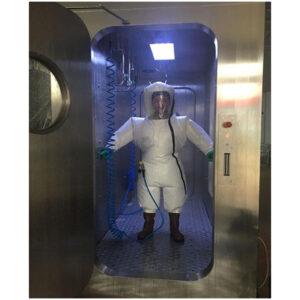
Especificar una carcasa de filtración HEPA para un proyecto de nivel de seguridad biológica 3 (BSL-3) sin haber definido previamente la ruta de descontaminación es uno de los errores de secuenciación más costosos que puede cometer un equipo de proyecto. Se fijan los calendarios de equipamiento, se traza el recorrido de los conductos y se definen las dimensiones de los pasillos; entonces, alguien pregunta cómo se retira realmente el filtro usado, y la respuesta pone de manifiesto una carcasa que carece de puerto de inyección de VHP, un pasillo de servicio en el que no caben dos personas con EPI completo o una especificación de materiales que se degrada con el esterilizante elegido. Solucionar cualquiera de esos problemas tras la instalación no es un simple ajuste de configuración; se trata de un rediseño que afecta simultáneamente a la coordinación del sistema de climatización, a la aprobación de bioseguridad y a la contratación. Las preguntas de este artículo le ayudarán a identificar en qué punto de su proyecto se produce ese «punto de congelación» y qué debe confirmar antes de que se publique la solicitud de presupuesto.
Preguntas sobre los límites de contención antes de seleccionar un recinto BIBO de nivel BSL-3
La primera pregunta no se refiere a la configuración de la carcasa. Se trata de saber si el filtro HEPA usado puede pasar por el proceso habitual de gestión de residuos.
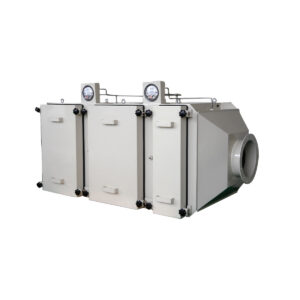
En un entorno BSL-3, esa cuestión tiene un criterio de decisión específico: si el material filtrante puede contener agentes viables de alta patogenicidad, no puede tratarse como residuo de mantenimiento estándar. Requiere una vía de retirada controlada, procedimientos documentados de control de la exposición y un contenedor que mantenga el filtro usado sellado hasta que se embolsa, se descontamina o ambas cosas. Las carcasas «Bag-In/Bag-Out» (BIBO) existen para cumplir ese requisito: el filtro nunca tiene que manipularse directamente al aire libre y el sistema de conductos circundante no queda expuesto a la superficie del filtro durante su sustitución. Si no es necesaria esa vía de retirada porque el filtro da servicio a un espacio en el que el riesgo de contaminación es claramente menor, puede ser adecuada una carcasa estándar. La cuestión del sistema BIBO solo entra en las especificaciones cuando el acceso normal al filtro no puede justificarse por motivos de riesgo.
Donde la decisión deja de ser trivial es en la valoración de las consecuencias. Un filtro HEPA usado procedente de un sistema de extracción de alta contención puede haber acumulado agente en forma de aerosol a lo largo de su vida útil. El riesgo no es una contaminación hipotética, sino la certeza práctica de que la superficie del filtro constituye una superficie de riesgo concentrado. Una fuga durante un cambio de filtro no controlado no es un incidente local; las consecuencias posteriores justifican que la cuestión de los límites de contención se trate como un punto de partida de diseño innegociable, y no como un tema de debate en la fase de proyecto. La guía «Bioseguridad en Laboratorios Microbiológicos y Biomédicos» (BMBL) de los CDC, 6.ª edición, establece explícitamente este enfoque: la contención primaria y secundaria debe permanecer intacta durante todas las actividades de mantenimiento de los filtros en instalaciones de nivel de seguridad biológica 3 (BSL-3) y 4 (BSL-4).
Resuelve esta cuestión antes de introducir el tipo de alojamiento en la lista de equipamiento. Si el equipo del proyecto no tiene claro si se requiere el BIBO, esa propia incertidumbre ya es una respuesta: significa que aún no se ha establecido formalmente la base para el control de la contaminación, y el responsable de bioseguridad debe participar en esa conversación antes de que se siga adelante con cualquier documento de contratación.
Procedimiento de descontaminación en torno al filtro HEPA usado
Una vez que se haya confirmado que la carcasa BIBO es la solución adecuada, la siguiente pregunta es cómo llega realmente la descontaminación hasta el filtro usado, y si la carcasa, tal y como está especificada, puede soportar ese proceso.
La elección del método de descontaminación no es intercambiable. El peróxido de hidrógeno vaporizado (VHP), la fumigación con formaldehído, la desinfección química y el tratamiento en autoclave plantean requisitos distintos para la carcasa. El VHP requiere orificios de inyección y drenaje sellados en posiciones específicas para lograr una distribución uniforme por toda la superficie del filtro; sin ellos, es posible que el ciclo de descontaminación no alcance la totalidad del medio filtrante. La fumigación requiere conexiones estancas al gas en todas las penetraciones. El tratamiento en autoclave solo se aplica al filtro extraído, lo que modifica la secuencia de la fase de extracción de la bolsa, más que el diseño de la carcasa en sí. La desinfección química plantea cuestiones de compatibilidad en cuanto a los materiales de las superficies y el drenaje. Si el equipo del proyecto especifica la carcasa antes de confirmar qué método aprobará el responsable de bioseguridad, existe una probabilidad real de que la carcasa instalada no sea compatible con el método aprobado, y de que la solución requiera bien la sustitución de la carcasa, bien un protocolo de descontaminación que nunca fue la primera opción.
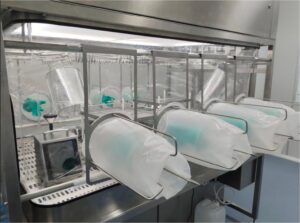
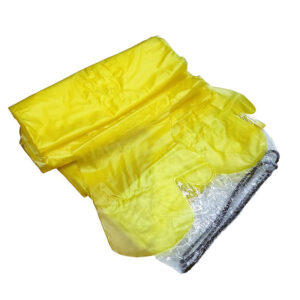
El procedimiento de extracción y sellado de la bolsa añade una serie de restricciones geométricas que es fácil subestimar en la fase de especificación. La norma práctica para el doble sellado —un sellado térmico combinado con dos bridas de nailon separadas aproximadamente 5 cm entre sí, con la bolsa cortada entre los sellos— impone requisitos específicos sobre el diámetro del anillo de la bolsa, el espacio libre alrededor del collarín de la carcasa y la accesibilidad al equipo de sellado. Si la geometría del collarín de la carcasa no permite el acceso de las herramientas de sellado sin que el operario tenga que contorsionarse alrededor del conducto, el procedimiento resulta difícil de ejecutar de forma sistemática. La ejecución inconsistente es el origen de las fugas de contención durante los cambios de filtro: un termosellado parcialmente completado, bridas colocadas con la separación correcta pero sin la tensión adecuada, o una bolsa que entra en contacto con la superficie exterior de la carcasa durante la extracción y arrastra la contaminación hacia el pasillo de servicio.
Cada uno de estos aspectos del diseño conlleva un modo de fallo directo si no se tiene en cuenta durante la fase de especificación.
| Aspecto del diseño | Qué hay que comprobar en la vivienda | Riesgo si no se aborda |
|---|---|---|
| Compatibilidad de los métodos de descontaminación | El material de la carcasa y los puntos de conexión son aptos para los métodos de esterilización previstos (VHP, fumigación, esterilización en autoclave y desinfección química). | Degradación del material o descontaminación incompleta tras ciclos repetidos. |
| Capacidad para utilizar peróxido de hidrógeno vaporizado (VHP) | Se incluyen puertos específicos para la inyección y el drenaje. | Descontaminación insuficiente del medio filtrante. |
| Procedimiento de retirada y sellado de bolsas | La geometría del anillo y la carcasa de la bolsa permite un doble sellado (sellado térmico más dos bridas de nailon separadas 5 cm entre sí) y el corte entre los sellados. | Un sellado inadecuado puede provocar la liberación de posibles agentes patógenos. |
| Espacio libre para la extracción de la bolsa | El diseño de la carcasa evita que la bolsa exterior entre en contacto con el exterior de la carcasa al retirarla. | Contaminación cruzada en la zona de servicio. |
Las implicaciones en cuanto al orden de los pasos son claras: el método de descontaminación debe confirmarse antes de especificar la carcasa, no después. Si el responsable de bioseguridad aprueba el VHP y la carcasa especificada no cuenta con orificios de inyección ni de drenaje, el proyecto no cumple con los requisitos de instalación: la carcasa debe sustituirse o adaptarse. Esa intervención resulta considerablemente más costosa en la fase de puesta en servicio que en la fase de planificación del equipamiento.
Acceso a los corredores de servicios y restricciones en la orientación de las viviendas
La configuración de las viviendas y las dimensiones de los pasillos van de la mano, y a menudo se especifican en planos distintos hasta que el conflicto se hace evidente sobre el terreno.
Las carcasas BIBO están disponibles en múltiples opciones de orientación: horizontal o vertical, con la entrada y la salida a la izquierda, a la derecha o en el extremo. Cada configuración modifica la orientación del collarín de la bolsa y la posición en la que debe situarse el operario durante la extracción del filtro. La orientación correcta no viene determinada por la configuración predeterminada del fabricante de la carcasa, sino por la geometría del pasillo, la dirección del flujo de aire en el recorrido del conducto y el espacio libre disponible en el lado de mantenimiento. Una orientación elegida para simplificar el trazado del conducto puede situar el collarín de la bolsa contra una pared, directamente sobre un equipo fijo o a una altura que obligue al operario a trabajar por encima del nivel de los hombros con el EPI completo. Ninguna de estas condiciones cumple con la normativa en la práctica, aunque sean geométricamente posibles. El ingeniero de climatización y el prescriptor deben resolver esto conjuntamente mientras el trazado aún sea flexible.
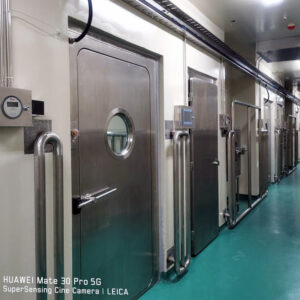
Los requisitos operativos de dimensionamiento son concretos: una sustitución completa del filtro en condiciones BSL-3 suele requerir entre dos y tres operarios, dura entre 45 y 90 minutos y exige espacio suficiente para el personal que utilice máscaras de aire suministrado o EPI equivalente, un carro con ruedas o un contenedor de contención para el filtro embolsado, y un espacio libre adecuado para que la bolsa pueda extraerse, sellarse y trasladarse sin entrar en contacto con ninguna superficie no controlada. No se trata de un pasillo amplio, sino de una zona de servicio específica y libre de obstáculos que se ha planificado para esta actividad concreta. Las cifras de 2 a 3 operarios y de 45 a 90 minutos deben considerarse datos de referencia para la planificación del dimensionamiento del pasillo y la programación del mantenimiento, no como mínimos reglamentarios. La implicación práctica es que, si el pasillo está dimensionado para el acceso normal al sistema de climatización, probablemente no lo esté para un cambio de BIBO en un entorno BSL-3.
La disyuntiva de la proximidad añade otra dimensión. Colocar la carcasa del BIBO cerca del límite de la zona de contención acorta el recorrido del conducto contaminado y simplifica la lógica de control de la contaminación: el filtro está lo más cerca posible de la fuente y la retirada de la bolsa se realiza cerca de la zona que ya está controlada. Sin embargo, una carcasa cercana al límite de la zona de contención puede encontrarse en un espacio con acceso limitado por los pasillos, altura de techo reducida o entrar en conflicto con otras penetraciones en la envolvente del BSL-3. Una ubicación de servicio remota facilita el acceso para el mantenimiento y el dimensionamiento de los pasillos, pero introduce un riesgo de coordinación de los conductos: cuanto más largo sea el recorrido de los conductos entre la zona de contención y la carcasa, más complejo será el equilibrio de presión, más difícil resultará la detección de fugas y más penetraciones y transiciones deberán cumplir los requisitos de integridad de la contención. Ninguna de las dos ubicaciones es automáticamente la correcta. La decisión sobre la ubicación debe tomarse en una misma reunión con el responsable de bioseguridad, el ingeniero de climatización y el equipo de mantenimiento, y debe producirse antes de que se fije definitivamente el calendario de instalación de los equipos.
En el caso de los proyectos en los que se está evaluando la ubicación de las instalaciones BIBO junto con otras decisiones relativas a la envolvente BSL-3, el Puerta hermética de bioseguridad La configuración puede influir en las opciones de acceso al corredor de servicio en el lado del límite de contención y debe coordinarse en la misma fase.
Documentación de verificación necesaria para la autorización del mantenimiento del laboratorio
La instalación no es lo mismo que la puesta en servicio, y la puesta en servicio no equivale a la aprobación para el mantenimiento. Esta distinción es importante porque una cabina que esté instalada mecánicamente y sea hermética en las uniones de los conductos sigue necesitando un registro de verificación documentado antes de que pueda utilizarse en un protocolo de mantenimiento de nivel de seguridad biológica 3 (BSL-3).
La secuencia de verificación de una instalación BIBO abarca la integridad del filtro y de la carcasa, el rendimiento del flujo de aire, la diferencia de presión respecto al diseño y la limpieza biológica tras cualquier ciclo de descontaminación. Cada una de estas actividades genera un tipo de registro específico, y el proceso de aprobación del mantenimiento —ya sea que lo regule el comité de bioseguridad del centro, un responsable de bioseguridad institucional o un organismo regulador— suele exigir todos ellos antes de que se autorice el primer cambio de filtro. El Manual de bioseguridad para laboratorios de la OMS (4.ª edición) enmarca esta expectativa de manera general: la verificación de que se mantiene la integridad de la contención en cada intervalo de mantenimiento es un requisito operativo fundamental para las instalaciones de alta contención. En la práctica, esto significa que una carcasa instalada sin un registro de verificación completo plantea un problema de aprobación del mantenimiento, no solo una laguna en la documentación.
La implicación práctica es que la capacidad de comprobación mediante escáner debe confirmarse en la fase de especificación. Algunos diseños de carcasas incorporan un acceso al puerto de escaneo que permite comprobar la superficie del filtro in situ mediante una prueba de PAO sin necesidad de retirar ningún panel ni comprometer la estanqueidad de la carcasa. Si no se ha previsto dicho acceso en el diseño, las pruebas de fugas posteriores a la instalación pueden requerir un desmontaje parcial o el uso de un dispositivo de escaneo externo, lo que en ambos casos añade tiempo e introduce la posibilidad de comprometer la estanqueidad durante el propio proceso de verificación.
Cada actividad de verificación genera un tipo de registro distinto con una función específica en la cadena de aprobación.
| Actividad de verificación | Lo que confirma | Expediente para su aprobación |
|---|---|---|
| Prueba de escaneo PAO (prueba de fugas) | El filtro y la carcasa no presentan fugas. | Certificado de estanqueidad / informe de ensayo. |
| Pruebas de flujo de aire | Los caudales de aire cumplen con las especificaciones de diseño. | Registro de medición del caudal de aire. |
| Pruebas de integridad de los filtros | El elemento filtrante está intacto y funciona correctamente. | Certificado de prueba de integridad. |
| Verificación de la presión diferencial | La presión a través del filtro coincide con el valor de diseño. | Registro de diferencia de presión. |
| Muestreo tras la descontaminación (hisopos, aire, indicadores biológicos) | Ausencia de contaminantes viables tras el ciclo de descontaminación. | Informe sobre el aclaramiento biológico. |
El muestreo biológico posterior a la descontaminación merece atención como un paso diferenciado, más que como un resultado que se da por sentado. El muestreo con hisopos, el muestreo del aire y los ensayos con indicadores biológicos confirman que el ciclo de descontaminación fue eficaz para el agente específico y la configuración de las instalaciones en cuestión, y no simplemente que se aplicó un agente de descontaminación. Una instalación que se base únicamente en los datos de eficacia general del agente de descontaminación, sin una confirmación mediante indicadores biológicos específicos del lugar, tiene una base de aprobación más débil y un mayor riesgo de ser objeto de una auditoría. Ese registro debe figurar en el protocolo de mantenimiento desde el primer ciclo, y no añadirse tras una revisión de cumplimiento.
Señales de alerta en las especificaciones antes de publicar la solicitud de presupuesto
Una solicitud de presupuesto que describa la geometría de la carcasa sin abordar los criterios de rendimiento en materia de contención carece de los elementos de especificación que realmente determinan la idoneidad para el nivel de seguridad biológica 3 (BSL-3).
El requisito de estanqueidad es el ejemplo más claro. Una clase de fugas de ≤0,5 Pa —que se ajusta a la estanqueidad de Clase 3 según la norma ISO 10648-2— es un valor de diseño al que se suele hacer referencia en aplicaciones BIBO de nivel de seguridad biológica 3 (BSL-3). Si la solicitud de presupuesto no establece un requisito explícito de clase de fugas, no existe fundamento contractual para rechazar una carcasa que no cumpla ese umbral. El producto estándar del proveedor puede ser aceptable o no, pero sin la especificación en el documento, el equipo del proyecto no tiene ningún margen de maniobra en el momento de la entrega. Cabe señalar que la Clase 3 de la norma ISO 10648-2 es un dato de diseño y especificación; que sea o no el requisito vinculante depende del marco normativo del proyecto, y esa determinación corresponde al responsable de bioseguridad y a la autoridad competente antes de que se finalice la solicitud de presupuesto.
La compatibilidad de los materiales es una laguna relacionada que aparece en las especificaciones con menos frecuencia de la que debería. La misma carcasa que ofrece un buen rendimiento bajo fumigación con formaldehído puede degradarse tras una exposición repetida al VHP, y una carcasa de acero al carbono con recubrimiento epoxi puede ser adecuada para un régimen de descontaminación, pero no para otro. Los aceros inoxidables SUS304 y SUS316L ofrecen una mayor compatibilidad con los esterilizantes oxidantes, pero la especificación debe indicar explícitamente los requisitos del material, sin dejarlo como un estándar de calidad implícito. Si el método de descontaminación aún se está debatiendo cuando se publica la solicitud de presupuesto, es señal de que la especificación es prematura.
La elaboración del presupuesto para el sistema BIBO es otro punto en el que las áreas de compras y operaciones suelen estar descoordinadas. Las carcasas del sistema BIBO suelen tener un coste unitario de entre tres y cinco veces superior al de una unidad estándar de ventilador y filtro —se trata de una estimación de planificación, no de un punto de referencia del mercado— y las bolsas especiales necesarias para cada cambio de filtro suponen un gasto recurrente en consumibles sin alternativa estándar. Si el presupuesto de mantenimiento de las instalaciones se hubiera basado en los costes estándar de sustitución de las carcasas HEPA, es posible que no se hubiera tenido en cuenta el coste del ciclo de vida del funcionamiento de las BIBO. Esa discrepancia sale a la luz en el primer cambio de filtro programado, cuando se hace evidente el coste de los consumibles y el tiempo que dedica el operario a un procedimiento de entre 45 y 90 minutos en condiciones de contención.
Los fallos de procedimiento que se producen durante los cambios reales de filtro también deberían abordarse en la especificación, en lugar de dejarlos para la formación in situ. Los daños en las bolsas que no se inspeccionan antes de su montaje, las bridas aplicadas sin la tensión suficiente, un sellado térmico incompleto y la falta de grasa de sellado en el collarín de la brida son errores del operario que una carcasa con una geometría de acceso deficiente hará más probables, y que un protocolo de mantenimiento sin puntos de control de verificación no detectará.
Cada una de estas vulnerabilidades tiene una consecuencia específica si llega al sistema instalado.
| ¿Qué podría faltar? | Qué hay que confirmar en la solicitud de presupuesto | Consecuencias si no se aborda el problema |
|---|---|---|
| Detalles del procedimiento de sellado de bolsas | Incluir los requisitos relativos a la inspección de las bolsas antes del montaje, el doble sellado (dos bridas de nailon separadas 5 cm entre sí, además de una comprobación del sellado térmico) y la aplicación de grasa de sellado en la brida. | Los errores del operario pueden provocar fallos en las bolsas y la liberación de sustancias contaminantes. |
| Transparencia en los costes del ciclo de vida | Confirma que el factor de coste de alojamiento de BIBO (entre 3 y 5 veces el estándar) y los costes corrientes de las bolsas especiales estén incluidos en el presupuesto. | Sobrecostes imprevistos o financiación insuficiente para la reposición de consumibles. |
| Clase de estanqueidad | Especificar una fuga ≤ 0,5 Pa (Clase 3 según la norma ISO 10648-2). | Es posible que la carcasa no cumpla con los requisitos de integridad de contención de nivel BSL-3. |
| Compatibilidad de materiales | Especifique acero SUS304, SUS316L o acero al carbono con recubrimiento epoxi, adecuado para los agentes de descontaminación previstos. | Degradación o fallo del material tras ciclos repetidos de descontaminación. |
Un punto de referencia útil antes de publicar la solicitud de presupuesto es el Sistemas Bag-In/Bag-Out (BIBO): Guía de funcionamiento y mantenimiento, que abarca el contexto de las secuencias operativas y los procedimientos de mantenimiento que debe cubrir la especificación.
Las decisiones más importantes en una especificación de BIBO de nivel BSL-3 no son las que se toman durante la selección de los equipos, sino las que se adoptan —o se aplazan— durante la planificación del proyecto. Para cuando la solicitud de presupuesto esté lista para su publicación, ya debería haberse confirmado el método de descontaminación, haberse resuelto la compatibilidad de los materiales de la estructura, haberse validado el dimensionamiento de los pasillos en función de un escenario realista de cambio de filtros, y haberse incluido en el documento de especificaciones la clase de estanqueidad y los requisitos de los materiales. Si alguno de estos elementos sigue sin resolverse cuando se envíe la solicitud de presupuesto, el proyecto estará trasladando una decisión de diseño a un proveedor que no tiene visibilidad sobre los requisitos del responsable de bioseguridad ni sobre la lógica de contención de la instalación.
Antes de publicar la solicitud de presupuesto, la revisión más eficaz consiste en una conciliación de una sola página: ¿reflejan las especificaciones de la vivienda el método de descontaminación aprobado, la geometría del pasillo, el umbral de estanqueidad, los requisitos de compatibilidad de los materiales y los registros de verificación que exigirá el proceso de aprobación? Si alguna de esas columnas está en blanco, las especificaciones están incompletas, y el coste de completarlas tras la instalación es considerablemente mayor que el de hacerlo ahora.
Preguntas frecuentes
P: ¿Qué ocurre si el responsable de bioseguridad y el ingeniero de climatización no han acordado el método de descontaminación antes de que se fije el calendario de instalación de los equipos?
R: La solicitud de presupuesto no debe publicarse hasta que se haya formalizado dicho acuerdo. La compatibilidad de los materiales de la carcasa, la configuración de los puertos y la geometría de las juntas dependen del método de descontaminación: si se aprueba el VHP después de haber encargado una carcasa configurada para fumigación, es posible que la unidad instalada carezca de los puertos de inyección y drenaje necesarios para un ciclo de descontaminación uniforme, y su adaptación tras la instalación afecta simultáneamente a los conductos, a la homologación de bioseguridad y a la adquisición. El método de descontaminación es un factor que debe tenerse en cuenta en la fase de diseño, no un tema de debate en las fases posteriores del proyecto.
P: ¿Es necesario indicar explícitamente una clase de estanqueidad en la solicitud de presupuesto (RFQ) para una carcasa BIBO de nivel BSL-3 si el producto estándar del proveedor ya se comercializa para aplicaciones de alta contención?
R: Sí; si en el documento de solicitud de presupuesto no se especifica una clase de estanqueidad concreta, no existe fundamento contractual para rechazar una carcasa en el momento de la entrega si no alcanza el umbral exigido por su proyecto. La clasificación comercial de un proveedor no constituye un compromiso de especificación. La cifra de diseño a la que se suele hacer referencia para aplicaciones BSL-3 BIBO es ≤0,5 Pa, en consonancia con la estanqueidad de clase 3 de la norma ISO 10648-2; sin embargo, el requisito aplicable a su proyecto debe confirmarse con el responsable de bioseguridad y la autoridad reguladora competente antes de finalizar la solicitud de presupuesto, para luego incluirlo explícitamente en las especificaciones.
P: ¿En qué casos es aceptable utilizar una carcasa HEPA estándar para el sistema de extracción de un laboratorio de nivel de seguridad biológica 3 (BSL-3) en lugar de un sistema BIBO?
R: El alojamiento estándar solo es adecuado cuando el filtro usado puede retirarse mediante un método documentado de control de la exposición que no requiera la extracción en bolsa sellada —lo que significa que se ha evaluado formalmente que el riesgo de contaminación del espacio atendido no supone un peligro viable de alta patogenicidad en la superficie del filtro—. Si el responsable de bioseguridad no ha establecido por escrito esa base de riesgo, la propia incertidumbre indica que el sistema BIBO es la opción predeterminada más segura. El sistema de alojamiento BIBO se convierte en ineludible cuando el acceso normal al filtro no puede justificarse por motivos de riesgo y el medio filtrante puede contener agentes vivos.
P: ¿Existe alguna diferencia significativa en materia de seguridad entre colocar la carcasa del BIBO cerca del límite de la contención y hacerlo en un punto de servicio remoto, siempre que ambas ubicaciones cumplan los requisitos de acceso al corredor?
R: Sí, y la disyuntiva se plantea en sentidos opuestos en lo que respecta al control de la contaminación y al riesgo de mantenimiento. Una carcasa situada cerca del límite de contención acorta el tramo de conducto contaminado y mantiene la fase de retirada de la bolsa cerca de una zona ya controlada, lo que simplifica la lógica de contención. Una ubicación alejada facilita el acceso al pasillo y mejora las condiciones de trabajo del operario, pero aumenta la longitud del conducto que debe cumplir los requisitos de integridad de la contención, complica el equilibrio de presión y multiplica las penetraciones y transiciones sujetas a la detección de fugas. Ninguna de las dos posiciones es intrínsecamente correcta: la decisión sobre la ubicación requiere que el responsable de bioseguridad, el ingeniero de climatización y el equipo de mantenimiento se pongan de acuerdo antes de que se fije el calendario de instalación del equipo, ya que corregir una carcasa mal situada una vez trazado el recorrido de los conductos supone un rediseño multidisciplinar.
P: ¿Cómo debería una instalación presupuestar los costes del ciclo de vida del sistema BIBO si el presupuesto de mantenimiento original se basó en una carcasa HEPA estándar?
R: Es probable que la diferencia sea significativa y que se haga evidente en el primer cambio de filtro programado. La carcasa BIBO tiene un coste unitario que oscila aproximadamente entre tres y cinco veces el de una unidad estándar de ventilador-filtro, y las bolsas especiales necesarias para cada sustitución son un consumible recurrente para el que no existe ningún sustituto más económico. Más allá de los materiales, cada sustitución de filtro en condiciones BSL-3 requiere de dos a tres operarios y entre 45 y 90 minutos de tiempo de procedimiento en entorno confinado —un coste de mano de obra y de planificación que las estimaciones de mantenimiento estándar de los filtros HEPA no tienen en cuenta—. Tanto el coste de los consumibles como el tiempo total de los operarios por cada sustitución deben incluirse en el presupuesto del ciclo de vida antes de que se finalice el documento de adquisición, y no ajustarse tras el primer ciclo de mantenimiento.