Inkoopteams die een offerteaanvraag doen waarin alleen een reinheidsklasse en nominale grootte worden genoemd, ontvangen routinematig offertes die functioneel verschillende apparatuur beschrijven tegen prijzen die niet te vergelijken zijn. Eén verkoper heeft een gemotoriseerd schuifraam, een andere laat de basisstandaard helemaal weg en een derde geeft een filterefficiëntie van 99,995% op terwijl de inkoper 99,999% aannam - verschillen die pas aan het licht komen wanneer de scorekaarten worden gemaakt, waardoor de cyclus opnieuw moet worden gestart vanaf de revisie. De vertraging wordt niet veroorzaakt door leveranciers die niet reageren; het wordt veroorzaakt door een RFQ die genoeg onduidelijkheid liet voor elke leverancier om redelijke maar onverenigbare aannames te doen. De onderstaande paragrafen helpen inkopers precies te identificeren welke hiaten in de specificatie offertes onvergelijkbaar maken voordat de RFQ wordt uitgegeven, en welke omissies kostenverrassingen opleveren na de gunning.
RFQ secties die kap offertes vergelijkbaar maken
Elk RFQ-veld dat open blijft, is een beslissing die de leverancier namens de koper neemt. Als verkopers deze beslissingen onafhankelijk van elkaar nemen, weerspiegelen de resulterende offertes verschillende scopes - en het laagste nummer vertegenwoordigt vaak de meest uitgeklede interpretatie, niet de meest concurrerende leverancier.
Vijf planningscriteria bepalen of offertes structureel vergelijkbaar zijn: constructiemateriaal, elektrische vereisten, type regelsysteem, vereiste accessoires en een geluidsdrempel. De materiaalkeuze is het meest bepalend voor de kosten en de reinigbaarheid op lange termijn. Een eenheid in 304 roestvrij staal en een eenheid in gepoedercoat staal kunnen dezelfde voetafdruk en filterklasse hebben, maar ze hebben verschillende kapitaalkosten, verschillende reinigingsprotocollen en verschillende corrosiebestendigheidsprofielen in agressieve chemische omgevingen. Het open laten van materiaal is niet neutraal - het is een uitnodiging voor elke leverancier om te optimaliseren voor hun eigen inventaris.
De elektrische vereisten en het type besturingssysteem volgen dezelfde logica. Een inkoper met een Noord-Amerikaanse faciliteit die een standaardofferte voor 220 V / 50 Hz ontvangt, heeft een compatibiliteitsprobleem dat niet kan worden opgelost zonder een wijzigingsopdracht. Op dezelfde manier “hebben” een microprocessorgestuurde eenheid met een LCD-display en een eenheid met een eenvoudige aan/uit-schakelaar allebei een besturing, maar ze verschillen in onderhoudslast, trainingseisen voor de operator en prijs. De geluidsdrempel - uitgedrukt als een maximum, zoals ≤62 dB - is minder intuïtief als vergelijkingscriterium, maar zonder een vaste akoestische norm weerspiegelen de offertes wat de standaardblower van de verkoper produceert, en over de akoestische prestaties kan na levering zelden opnieuw worden onderhandeld.
| Specificatie om te vergrendelen | Waarom het belangrijk is voor vergelijkbare offertes | Wat de RFQ moet specificeren |
|---|---|---|
| Bouwmateriaal | Zonder een vast materiaal bieden leveranciers verschillende opties aan (bijv. gepoedercoat staal vs. roestvrij staal), waardoor kosten en reinigbaarheid niet direct vergeleken kunnen worden. | Materiaalsoort (304 roestvrij staal, polypropyleen, gepoedercoat staal). |
| Elektrische vereisten | Verschillende spannings-/frequentieopties leiden tot incompatibele offertes en potentiële installatieproblemen. | Spanning en frequentie, bijvoorbeeld 115V 60Hz of 220V 50Hz. |
| Type besturingssysteem | De bedieningsinterface beïnvloedt de bruikbaarheid en de prijs; als je deze open laat staan, krijg je inconsistente offertes. | Type, bijv. microprocessor met LCD of basisschakelaar. |
| Benodigde accessoires | Accessoires worden vaak toegevoegd of weggelaten, wat leidt tot offertevariatie en scope creep. | Lijst met accessoires (voetstandaard, UV-licht, LED-verlichting, waterdichte stopcontacten). |
| Geluidsniveau | Geluid varieert per leverancier; zonder drempel voldoen offertes mogelijk niet aan een consistente akoestische norm. | Maximaal geluidsniveau, bijv. ≤62 dB. |
De accessoirelijst verdient bijzondere aandacht omdat dit de meest voorkomende bron is van "scope creep" na de gunning. UV-lampen, LED-taakverlichting, waterdichte contactdozen en voetsteunen worden vaak behandeld als optionele artikelen door leveranciers die niet te horen krijgen of ze moeten worden toegevoegd. Eén leverancier neemt de standaard mee; een andere prijst deze apart; een derde laat de UV-verlichting weg en geeft dit niet aan. Het resultaat is geen prijsverschil - het is een verschil in reikwijdte vermomd als een prijsverschil, dat inkoop niet kan ontdekken totdat iemand elke offerte regel voor regel leest.
Zuiverheid en bruikbare-dimensiegegevens die eerst moeten worden opgelost
De reinheidsklasse en de afmetingen van de interne werkzone zijn de twee inputs die moeten worden opgelost voordat enig ander specificatiewerk zinvol is. Dit zijn ook de twee inputs die het vaakst onvolledig worden opgegeven.
Het benoemen van een ISO-klasse zonder te specificeren hoe deze wordt geverifieerd, laat verkopers vrij om filterkwaliteit, luchtstromingspatroon en testmethode onafhankelijk te interpreteren. Dat is van belang omdat een verkoper een plausibele “ISO klasse 5” claim kan maken door HEPA filtratie te specificeren met 99,95% efficiëntie met een nominale luchtstroomsnelheid, terwijl een andere verkoper dezelfde klasse claim haalt met 99,999% efficiëntie bij 0,3 µm bevestigd door deeltjesaantaltests. Beide claims zijn verdedigbaar onder een losse klasse referentie; geen van beide is direct vergelijkbaar met de andere zonder te weten welke testmethode en welke efficiëntie drempel werden gebruikt.
De afmetingen van de interne werkzone moeten apart van de buitenmaten worden vermeld. Een apparaat dat aan de buitenkant 1.200 mm breed is, kan een interne werkzone van 1.000 × 500 × 600 mm hebben - en een concurrerend apparaat met dezelfde externe breedte kan die ruimte anders configureren, afhankelijk van de wanddikte van de behuizing en de plaatsing van het HEPA-filter. Als het proces van de koper een minimumdiepte of -hoogte binnen de werkzone vereist, beschermen alleen de binnenafmetingen tegen het ontvangen van een apparaat dat nominaal de juiste afmetingen heeft maar fysiek onverenigbaar is met het werk dat binnen moet gebeuren.
De hoogte van het werkoppervlak, meestal ongeveer 750 mm in standaardconfiguraties, en of voor de installatie een verstelbare voetsteun nodig is, bepalen de ergonomische compatibiliteit en de installatieplanning. Geen van beide waarden wordt voorgeschreven door een dimensionale norm; beide zijn configuratiebeslissingen die de koper moet nemen en vermelden voordat hij de RFQ uitgeeft. Van verkopers kan niet worden verwacht dat ze raden naar ergonomische vereisten of beperkingen met betrekking tot de hoogte van de ruimte.
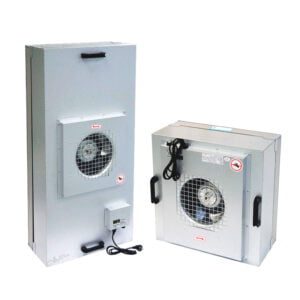
Voor kopers die gedetailleerde technische vereisten ontwikkelen, is het beoordelen van gepubliceerde Specificaties en technische parameters van LAF-unit voordat de RFQ wordt opgesteld, biedt een nuttige basis voor de velden die in dit stadium moeten worden opgelost.
Generieke specificatietaal die mismatch veroorzaakt bij aanbiedingen van leveranciers
De zinsnede “voldoet aan en overtreft ISO Klasse 5” verschijnt in veel RFQ's als een prestatieanker. Het functioneert slecht als een anker omdat het elke leverancier toestaat om de filterefficiëntie, luchtstroomuniformiteitsnorm en het testprotocol te kiezen dat het beste past bij hun bestaande productlijn en vervolgens een verklaring te schrijven die technisch nauwkeurig is maar structureel onvergelijkbaar met elke andere offerte.
De meest ingrijpende versie van dit probleem is de filterefficiëntie. “HEPA filter” is een categorie, geen prestatie specificatie. HEPA efficiëntieclassificaties variëren gewoonlijk van 99,95% tot 99,9995% bij 0,3 µm en het gat tussen 99,995% en 99,999% is niet triviaal in toepassingen waar verontreinigingscontrole een directe invloed heeft op het rendement of de naleving van validaties. Door de vereiste efficiëntie te vermelden als een specifiek percentage bij een specifieke deeltjesgrootte - bijvoorbeeld 99,999% bij 0,3 µm - wordt de discretie van de verkoper op dit punt weggenomen en wordt ervoor gezorgd dat elke offerte dezelfde filtratieprestatie weergeeft. ISO 14644-3:2019 biedt een testkader dat ondersteunt hoe dergelijke zuiverheidsclaims moeten worden geverifieerd, maar de efficiëntiedrempel zelf is een door de koper gespecificeerd ontwerpcriterium, geen waarde die de norm voorschrijft.
Het stroomafwaartse risico van algemene klassentaal is dat het de ontdekking vertraagt. Een inkoper die tijdens het hele inkoopproces uitgaat van 99,999% efficiëntie en een unit ontvangt die is gebouwd volgens 99,995%, heeft niet noodzakelijkerwijs reden tot afwijzing tenzij de RFQ anders vermeldde. Dubbelzinnigheid in het uitgegeven document wordt dubbelzinnigheid in de inkooporder, wat een onderhandelingsprobleem wordt na levering in plaats van een specificatieprobleem voor de gunning.
Het luchtstromingspatroon is een tweede gebied waar de algemene klasse-taal voor verschillen zorgt. Horizontale en verticale laminaire stroming ondersteunen beide ISO klasse 5 claims, maar ze zijn niet uitwisselbaar voor alle processen. Een RFQ die alleen de klasse specificeert zonder de vereiste luchtstroomrichting te noemen, nodigt uit tot offertes voor beide configuraties tegen prijzen die verschillende engineering, verschillende installatievereisten en verschillende procesgeschiktheid weerspiegelen.
Minimale gegevensbladen versus specificatiepakketten die klaar zijn voor aanschaf
Het productinformatieblad van een verkoper is een marketing- en selectiemiddel. Het is geen specificatiedocument en het als zodanig behandelen is een betrouwbare bron van hiaten na de gunning.
Minimale gegevensbladen vermelden meestal externe afmetingen en een aanduiding van de filterklasse. Deze twee velden stellen een koper in staat om te controleren of het apparaat fysiek in de beschikbare ruimte past en of het nominaal voldoet aan de vereisten van de vervuilingsklasse. Ze stellen een koper niet in staat om de luchtstroomconsistentie, installatievereisten, elektrische compatibiliteit, akoestische prestaties of structurele belasting te evalueren. De kloof tussen een gegevensblad en een aankoopklare specificatie is de kloof tussen weten dat een product bestaat en weten of het zal werken in een specifieke installatie onder specifieke bedrijfsomstandigheden.
Een compleet specificatiepakket bevat het luchtsnelheidsbereik met tolerantie (bijvoorbeeld 0,45 ± 0,05 m/s), filterefficiëntie bij een bepaalde deeltjesgrootte, een geluidsplafond, het volledige gewichtsbereik voor vloerbelastingsbeoordeling en stroomverbruik voor het plannen van de elektrische voeding. Het gewichtsbereik voor grotere afzuigkappen kan variëren van ongeveer 175 kg tot meer dan 300 kg, afhankelijk van de configuratie, en het stroomverbruik loopt meestal van 200 W tot 450 W - verschillen die van belang zijn wanneer een facilitair ingenieur de belastbaarheid van de vloer controleert of een speciaal circuit dimensioneert.
| Parameter | Minimaal gegevensblad | Inkoopklare RFQ |
|---|---|---|
| Afmetingen | Totale buitenafmetingen (L×B×H) | Buitenafmetingen plus interne werkzoneafmetingen en werkbladhoogte. |
| Filterkwaliteit | “HEPA-filter” zonder specifieke efficiëntie | Filterefficiëntie bij gespecificeerde deeltjesgrootte, bijv. 99,999% bij 0,3 µm. |
| Luchtsnelheidsbereik | Niet gespecificeerd | Doelbereik, bijv. 0,45 ±0,05 m/s. |
| Geluidsniveau | Niet gespecificeerd | Drempelwaarde, bijv. ≤62 dB. |
| Gewicht | Niet gespecificeerd | Bereik, bijv. 175-306 kg. |
| Stroomverbruik | Niet gespecificeerd | Range, e.g., 200–450 W. |
The procurement consequence of using a minimal data sheet is not that quotes are wrong — it is that they are incomplete in different ways. One vendor omits weight; another omits power consumption; a third does not specify velocity tolerance. Building a comparison table from those quotes requires going back to each vendor for missing data, which extends the sourcing timeline and often reveals that vendors are no longer quoting against the same scope they originally priced. A complete specification issued at the RFQ stage prevents that cycle.
Buyers evaluating multiple laminaire stromingskap configurations across different suppliers should treat the full parameter list in the table above as a minimum completeness check rather than a regulatory checklist.
Revision-control gaps that slow vendor comparison
Vendor comparison tables stall most predictably when the specification document that vendors quoted against has been revised informally between the time quotes were solicited and the time scores were assigned. This is not a technical problem; it is a process failure that is entirely preventable and surprisingly common.
The practical failure pattern is this: the buyer issues a draft RFQ, receives informal questions from two vendors, answers those questions by email, and does not update the formal document. Quotes arrive. One vendor incorporated the email clarifications; the other quoted the original document. The resulting comparison is between two different scopes — and unless the procurement team tracks the clarification chain, the discrepancy looks like a pricing anomaly rather than a specification mismatch.
Locking the drawing revision level and the accessory list before issuing the RFQ prevents most of these gaps. The revision level matters because vendors who provide FAT or SAT documentation will reference a drawing revision; if that revision changes after award, previously agreed test results may no longer map to the delivered unit. Accessories carry the same risk. A base stand or UV light added after award is not priced at the same rate it would have been had it been included in the original solicitation — scope additions after award consistently cost more than they would have in a competitive bid environment.
The practical threshold is straightforward: any field that is answered differently by email than it appears in the formal document should be treated as a revision trigger, not a clarification. Issuing a revised RFQ takes less time than resolving a post-award dispute about what the original document meant.
Unclear opening size and test scope that mean the RFQ is not ready
Two omissions more than any others indicate that an RFQ is not yet ready to solicit meaningful prices: an unspecified opening configuration and generic acceptance test language.
Opening size and sash type determine how the unit is used, not just how it is built. A maximum opening height of approximately 430 mm shapes what operators can practically access and what containment geometry the airflow must maintain. A motorized sash changes the cost, the electrical load, and the maintenance requirements compared to a fixed-opening or manually adjustable configuration. Vendors who are not told which sash type is required will default to their standard product, which may not match the buyer’s process requirements or room constraints. Quotes become incomparable because they describe different access configurations — differences that cannot be reconciled by price adjustment alone.
Load profile is the second omission that creates post-purchase problems. Weight and power consumption data are not interesting specifications in isolation; they are inputs that facility and electrical engineers need to verify before installation approval. A hood in the 175–306 kg weight range places meaningfully different demands on a raised-access floor than on a poured concrete slab. A unit drawing 450 W requires different circuit planning than one drawing 200 W. When buyers omit these figures from the RFQ, vendors are not obligated to supply them — and the gap surfaces only when the delivered unit cannot be installed without modification.
| RFQ Element | What to Fix | Risico indien onduidelijk |
|---|---|---|
| Opening size and sash type | Maximum opening height (e.g., 430 mm) and front sash type (motorized or none). | Suppliers will assume different access dimensions and sash configurations, making quotes incompatible for workspace fit. |
| Load profile | Weight (e.g., 175–306 kg) and power consumption (200–450 W). | Without weight and power data, buyers cannot evaluate floor loading, HVAC, or electrical supply requirements, leading to post-purchase surprises. |
| Acceptance tests | Specific test requirements (e.g., airflow velocity test, filter leak test) instead of generic “certification testing”. | Generic language leaves test scope to the vendor, risking acceptance of a hood that has not been verified to meet operational standards. |
Acceptance test scope is the most consequential gap because it determines what the buyer has the right to verify before accepting delivery. Generic language such as “unit must pass certification testing” leaves the test scope to the vendor. That means the vendor selects which tests are performed, at what conditions, and with what pass/fail criteria. Requiring named tests — an airflow velocity uniformity test, a filter leak test, a particle count — creates a defensible acceptance standard. ISO 14644-3:2019 provides a framework for how such named tests are structured and can be referenced in the RFQ to give vendors a shared methodological baseline. Without named tests, the buyer’s leverage at FAT or SAT is limited to whatever the vendor chose to document, which may or may not reflect the operational requirements that drove the purchase.
If the buyer cannot state the required opening configuration, load profile, and specific acceptance tests before issuing the RFQ, any price returned against that document is a placeholder based on assumptions the vendor made to fill the gaps — not a commitment against a defined scope.
An RFQ that names a cleanliness class and a nominal size gives vendors enough information to produce a number, but not enough information to produce a comparable one. The specification gaps most likely to cause procurement restarts are filter efficiency stated as a category rather than a percentage at a particle size, opening size and sash type left unspecified, and acceptance tests described generically. Each of these creates a different downstream problem: efficiency ambiguity surfaces at delivery, opening omissions surface at installation, and test language gaps surface when the buyer tries to reject a non-conforming unit and finds the purchase order does not support the position.
Before issuing the RFQ, confirm that internal work zone dimensions are stated separately from external envelope dimensions, that the accessory list and drawing revision level are locked, and that the required FAT or SAT tests are named rather than described. Vendors who receive a complete specification return quotes that reflect competitive pricing on a fixed scope — which is the only condition under which vendor comparison produces a defensible award decision. For buyers comparing multiple configurations, reviewing the vendor selection criteria for laminar flow cabinet suppliers before shortlisting can surface supplier-side questions worth resolving before quotes are solicited.
Veelgestelde vragen
Q: What should a buyer do immediately after issuing a complete RFQ to ensure vendor responses stay comparable?
A: Treat every vendor question received after issuance as a potential revision trigger rather than a casual clarification. If a vendor’s question reveals a gap — an unresolved sash type, an ambiguous accessory scope, a missing voltage standard — issue a formal revision to the document and distribute it to all vendors simultaneously before quotes are due. Answering questions by individual email without updating the formal document is the most common mechanism by which quotes end up reflecting different scopes, and it cannot be corrected through scoring adjustments after quotes arrive.
Q: Does this specification approach still apply if the buyer is procuring a horizontal laminar flow unit rather than a vertical one?
A: Yes, the same specification blocks apply, but airflow direction must be explicitly named as one of them. Horizontal and vertical laminar flow configurations both support ISO Class 5 claims and share the same categories — filter efficiency, opening dimensions, electrical requirements, load profile, and acceptance tests — but they involve different installation footprints, different process suitability, and different containment geometries. An RFQ that does not specify airflow direction will receive quotes for both types, which are not comparable on price, installation requirement, or process fit.
Q: At what point does adding more specification detail start working against the buyer by narrowing the field too aggressively?
A: Over-specification becomes a risk when requirements lock form-factor details that do not actually affect process outcome — for example, mandating a specific enclosure color, a proprietary control interface, or dimensional tolerances tighter than the process requires. The practical threshold is whether each specification field is driven by a verifiable process or installation requirement. Fields derived from process needs — filter efficiency, opening height, electrical standard, named acceptance tests — narrow the field appropriately. Fields derived from vendor familiarity or aesthetic preference narrow the field without improving comparability, and can reduce competitive tension without improving scope alignment.
Q: How does the specification approach change when comparing a new purchase against refurbishing or requalifying existing equipment?
A: For a refurbishment or requalification scenario, the specification logic inverts in one key area: acceptance tests become the primary anchor rather than a final checklist item. The buyer starts by defining which ISO 14644-3:2019 tests the unit must pass post-refurbishment — airflow velocity uniformity, filter leak test, particle count — and works backward to identify which components must be replaced or upgraded to reach those thresholds. Opening dimensions and load profile are typically fixed by the existing unit, so the RFQ narrows to scope of work and test deliverables rather than full configuration definition. Vendors who cannot commit to named test outcomes against defined criteria should be treated the same way as vendors who return quotes against an underspecified new-purchase RFQ.
Q: Is a single RFQ document sufficient for procuring multiple units of different sizes, or does each configuration need its own document?
A: Each distinct configuration requires its own specification block, though they can be packaged in a single RFQ document as separate line items or annexes. Internal work zone dimensions, opening configuration, weight, and power consumption are unit-specific values that differ meaningfully across sizes; a shared document that does not isolate these parameters per configuration gives vendors room to blend assumptions across line items. The accessory list and acceptance test requirements may be common across configurations if the process requirements are identical, but material, electrical standard, and dimensional fields must be stated independently for each unit to produce structurally comparable quotes on each line.
Gerelateerde inhoud:
- Beoordeling van leveranciers van bioveiligheidsapparatuur | Due Diligence | Selectieproces
- Koopgids voor laminaire stromingskap voor cleanroom- en laboratoriumprojecten
- Checklist voor leveranciers van cleanroomdouches | Criteria voor aanschaf
- Maattabel laminaire luchtstroomunit voor laboratoria 2025
- Luchtsnelheid laminaire stroming kap: wat te controleren voor goedkeuring
- NSF/ANSI 49 en EN 12469: Wat kopers van bioveiligheidskasten moeten controleren vóór fabrieksacceptatie
- BIBO-systemen (Bag-In/Bag-Out): Bedienings- en Onderhoudshandleiding
- Biosafety-kasten van klasse I: Eigenschappen en gebruik
- Uitgiftecabine: Wat onderscheidt een echte inperkingscabine van een standaard laminaire stromingscabine?