Procurement teams that treat a modular cleanroom as a product order rather than a scope definition exercise often discover the gap only at commissioning — when panel modules are on site, the HEPA units are installed, and no single party will accept accountability for the room’s classification performance. The delay that follows is not a delivery problem; it is a contract structure problem that was created weeks or months earlier when the quote was accepted without confirming which work the supplier actually owned. That exposure compounds quickly in regulated environments: a qualification timeline that slips because validation records were never part of the supplier’s scope carries real costs in delayed product release or failed audits. What resolves it is not finding a cheaper supplier — it is knowing how to read a supplier’s scope before the quote is accepted.
Supplier fit by application and modular room type
The first screen in supplier selection is not price or lead time — it is whether the supplier’s product line was designed for the construction type and contamination sensitivity your application actually requires.
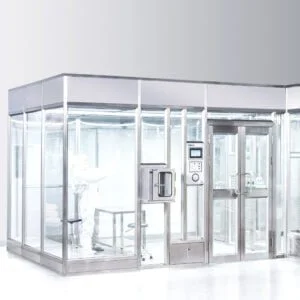
Pharmaceutical cleanrooms that demand permanent, heavy-duty fixed layouts are better served by monoblock construction, which offers the structural integrity and sealing characteristics suited to GMP-required installations. Semiconductor and microelectronics environments introduce a different set of demands: non-outgassing materials, anti-static wall surfaces, and hardwall systems capable of sustaining higher internal pressures than softwall alternatives. That pressure capability matters because maintaining positive or negative pressure differentials is central to contamination control and classification stability — a wall system that cannot hold design pressures under operational conditions creates a classification defense problem, not just a mechanical one.
The hardwall versus softwall choice should be treated as a design trade-off with downstream consequences for classification stability, not as a codified regulatory mandate. ISO 14644-4:2022 provides a testing and design framework for cleanroom construction decisions, but the wall type itself is a project-specific determination based on process sensitivity, pressure class, and application. A general laboratory or research cleanroom operating at ISO 6 through ISO 8 may function well with standard modular wall systems; a microelectronics facility at ISO 4 or ISO 5 will have stricter material compatibility requirements that narrow the viable supplier field considerably.
Treating standard dimension availability as a procurement planning factor is also worthwhile. Suppliers who maintain predefined standard configurations for common ISO classes allow buyers to specify and cost a room without entering a custom engineering cycle — which shortens procurement timelines and reduces the variables that need to be verified before supplier comparison begins.
| Приложение | Recommended Modular Construction | Key Characteristics |
|---|---|---|
| Фармацевтика | Monoblock systems | Heavy‑duty fixed layout; suits GMP‑required permanent installations |
| Semiconductor / Microelectronics | Modular wall systems (hardwall) | Higher internal pressure capability; FabLine with non‑outgassing, anti‑static walls |
| General cleanroom / Laboratory | CleanLine modular rooms (ISO 4–8) | Standard dimensions available; rapid specification and cost comparison |
The practical implication is that supplier screening by application type should happen before any price comparison. A supplier whose product line was built around general laboratory use may lack the materials certification, pressure ratings, or documentation infrastructure required for pharmaceutical GMP or semiconductor environments — and that gap will not be visible in a panel specification sheet.
Product coverage across pharma, biotech, semiconductor, and laboratory needs
Knowing what a supplier includes in scope is a more useful filter than knowing what they manufacture, because those two things are not always the same.
Some suppliers bundle factory-installed subsystems — pre-hung doors, electrical wiring, data runs, HVAC, and filtration units — as part of the modular package. Others supply panels and structural components, leaving mechanical, electrical, and HVAC integration to the buyer’s site contractor. Neither model is inherently wrong, but the second model carries coordination risk that is easy to underestimate during procurement. When different parties are responsible for the filtration package, the HVAC balancing, and the room envelope, the handoff between those parties becomes a source of qualification delay that no individual contract fully addresses.
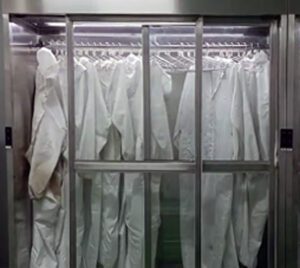
For pharmaceutical and biotech applications, the inclusion or exclusion of gowning anterooms is a planning-stage question with compliance implications. EU GMP Annex 1 requires clearly defined airlocks and personnel flow controls for sterile manufacturing environments. A supplier who offers anterooms as an optional add-on is not automatically disqualified, but a buyer who fails to specify this requirement at the quoting stage may receive a room that cannot support compliant personnel entry flow — and retrofitting an anteroom into a completed modular installation is expensive and time-consuming.
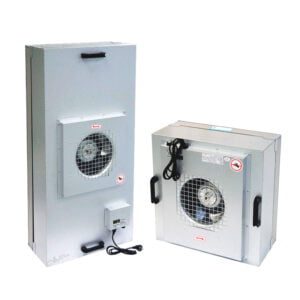
Biotech and laboratory buyers often have more flexibility on construction type than pharmaceutical or semiconductor buyers, but they should still verify that the supplier’s filtration and airflow components are specified for the target ISO class. A модульное чистое помещение package that includes HEPA filtration and fan filter units as integrated elements gives the buyer a cleaner scope boundary than one that requires sourcing filtration separately and integrating it with a third-party HVAC system. The integration work is not always complex, but it does require technical coordination that adds time and creates another party whose work must be tested and documented before qualification can proceed.
For semiconductor projects specifically, the material properties of wall panels and ceiling systems require a level of scrutiny that goes beyond structural adequacy. Outgassing from wall materials can contaminate wafer surfaces at process-critical ISO classes; anti-static properties are relevant wherever electrostatic discharge is a yield risk. A модуль для чистой комнаты в полупроводниковой промышленности that specifies panel materials against these properties reduces both the qualification burden and the risk of discovering a materials incompatibility after construction is complete.
Documentation and export support buyers should request
A supplier’s compliance statement and a supplier’s documented compliance evidence are not the same thing, and the difference becomes visible during qualification or audit.
Stating direct compliance with ISO 14644-1 across a product line is a meaningful commitment, but it is verifiable only when the supporting documentation — classification test records, airborne particulate measurements, and design basis records — accompanies the room delivery. Buyers should ask for these records explicitly in the RFQ stage, not after a purchase order is placed. When a supplier’s quote includes installation and validation by their own engineering team, the validation records that result become part of the qualification package the buyer submits to regulators or internal QA. That documentation chain has clear value: it reduces the scope of the buyer’s own IQ/OQ work and gives auditors a traceable path from design specification through room performance.
The absence of validation records from a supplier’s stated scope is a procurement risk that must be closed at the buyer’s expense if it is not addressed in the contract. ICH Q9(R1) frames documentation as an integral part of quality risk management — not a retrospective administrative task — which means that a room delivered without validation records leaves the buyer with undocumented risk that either gets funded as a separate post-delivery exercise or remains as a gap in the audit trail.
| Supplier | Documentation & Compliance Statement | Potential Documentation Gap |
|---|---|---|
| Cleanrooms By United | States direct compliance with ISO 14644‑1 for all modular cleanrooms | Need to confirm whether validation records are included |
| Cleanroomshop | Installation and validation by Connect 2 Cleanrooms engineers; validation records provided | Self‑install path excludes validation documentation |
| PortaFab | Design specification is provided early; no mention of validation records | Absence of validation records; buyer must close this gap separately |
For export projects, buyers should also confirm that the supplier’s documentation package includes country-of-origin certification, materials declarations, and compliance statements in the format required by the destination country’s regulatory authority. These requirements are not always visible in a domestic product catalogue and are best confirmed during supplier qualification rather than during customs clearance.
Scope gaps between supplied modules and site work
The most consequential question in a modular cleanroom quote is not what is listed — it is what is excluded without being explicitly stated.
A supplier that ships modules for self-assembly and relies on a third-party contractor network for installation support does not own the installation outcome. That distinction matters because a room that fails to reach its classified performance level during commissioning requires someone to accept accountability for diagnosing and correcting the problem. When the panel manufacturer, the installation contractor, and the HVAC subcontractor are three separate entities with three separate contracts, that accountability dispute can take weeks to resolve — weeks during which the facility is not qualified and not productive. This is not a product quality finding against the supplier; it is a contract structure risk that the buyer created by accepting a scope that split manufacture from installation.
Single-party responsibility — where design, manufacture, and installation are contracted to the same entity — eliminates that handoff gap. The downstream benefit is not only cleaner accountability during commissioning; it also simplifies the documentation trail. When one party oversaw all three phases, the design specification, construction records, and installation test results form a continuous package rather than separate documents from separate organizations that must be reconciled before qualification can proceed.
The self-install path deserves specific attention because it introduces a trade-off that is often underestimated at the quoting stage. Choosing self-assembly to reduce upfront cost is a legitimate procurement decision in non-regulated or lower-risk environments, but it typically excludes the validation documentation that comes with professionally installed and commissioned rooms. A pharmaceutical or biotech buyer who selects self-install to save on installation cost will generally need to fund a separate validation exercise to produce the records required for GMP qualification — an exercise that, when fully costed, may exceed the original installation cost savings.
| Supplier | Installation Approach | Scope Gap & Coordination Risk |
|---|---|---|
| PortaFab | Ships modules for self‑assembly; relies on a contractor network (not in‑house) | Supplier does not own installation; buyer coordinates site work, integration, and validation separately |
| Cleanrooms By United | Design, build, and installation from a single party | No handoff gap; single‑party responsibility for supply and site work |
| Cleanroomshop | Offers both self‑install and professional installation/validation options | Self‑install path excludes validation documentation; professional path includes validation records |
Buyers using оборудование для чистых помещений procurement frameworks should verify scope boundaries at the line-item level, not at the headline service description. “Full-service installation” from one supplier may include testing and documentation; the same phrase from another may mean delivery, assembly, and departure. For a more structured approach to these scope verification questions, the Руководство по оценке поставщиков оборудования для чистых помещений provides a framework for mapping supplier scope against project requirements before quotes are compared.
Shortlist trigger after exclusions and evidence are clear
Shortlisting should not begin until the supplier’s quote explicitly shows what is covered and what is not — because a quote that looks complete on product coverage can still leave the buyer responsible for every step that turns delivered modules into a classified, defensible, operating room.
The first verifiable filter is documentation: the supplier should be able to provide ISO 14644-1 compliance evidence and validation records, not just state compliance as a general product attribute. This check comes before price comparison because a lower-cost quote that excludes documentation may generate qualification costs that eliminate the price advantage entirely. Buyers who discover this after purchase order placement have limited options and reduced negotiating position.
The second filter is scope boundary: single-party responsibility for design, manufacture, and installation removes the coordination exposure that creates commissioning disputes and qualification delays. This does not mean every project requires single-party delivery — some buyers have the internal capability to manage multi-party coordination effectively — but it does mean the buyer should make that choice deliberately rather than discovering it from the contract structure during commissioning.
The third filter is installation flexibility with a documented validation path. A supplier who offers both self-install and professionally installed options — where the professional path includes validation records — preserves cost flexibility without creating an undocumented gap. The self-install path is a legitimate option when the buyer has internal validation capability; it becomes a risk when that capability is assumed but not confirmed before the installation choice is made.
The fourth filter is configuration fit: standard dimensions and product lines that match the target ISO class and application allow procurement to move faster and with fewer custom engineering variables. Custom configurations are sometimes necessary, but they introduce design lead time, approval cycles, and pricing uncertainty that standard configurations avoid.
| Критерии отбора | Что подтвердить | Почему это важно |
|---|---|---|
| Clear evidence of ISO 14644‑1 compliance and validation records | Supplier provides documented compliance statement and validation evidence | Documentation transparency is the first verifiable filter before comparing price |
| Single‑party responsibility for design, manufacture, and installation | Contract scope covers all three phases from one entity | Reduces integration delays and dispute risks during commissioning |
| Availability of both self‑install and professional installation/validation options | Supplier offers flexible installation paths with documented validation for regulated environments | Provides a clear evidence path for regulated industries while preserving cost flexibility |
| Standard dimensions and product lines matching required ISO class | Supplier offers predefined standard configurations for the target ISO class and application | Accelerates procurement and reduces custom engineering lead time |
None of these four triggers function as a formal regulatory qualification checklist. They are procurement judgment criteria that become useful after scope, documentation, and installation path have been examined. Applying them before price comparison — rather than after — is what prevents a quote that looks favorable from creating a project liability that was never costed.
The practical work of selecting a modular cleanroom supplier is a scope definition exercise before it is a vendor comparison exercise. Before any shortlist is finalized, the buyer needs clear answers to four questions: which party owns installation and accepts accountability for room performance; what documentation the supplier will deliver with the room; whether the room’s construction type and material specification match the application’s ISO class and process sensitivity requirements; and whether the validation path — self-install or professionally installed — is compatible with the qualification obligations the project carries.
A фармацевтическая модульная чистая комната project has different documentation and construction requirements than a laboratory or semiconductor installation, and the supplier screening process should reflect those differences from the first qualification step. What to confirm before requesting quotes is which scope items — design, manufacture, delivery, installation, testing, and documentation — are covered by one party, and which require the buyer to coordinate separate contractors, produce separate validation work, or accept a gap in the qualification record.
Часто задаваемые вопросы
Q: What happens if a supplier offers self-install but our project requires GMP qualification — can we still use that path?
A: Only if your team has internal validation capability sufficient to produce the IQ/OQ documentation independently. The self-install path typically excludes the validation records that come with professionally installed and commissioned rooms. When that documentation gap is closed through a separately funded validation exercise, the total project cost often exceeds what the original installation saving was worth — so the decision should be costed in full before the installation path is chosen, not after the purchase order is placed.
Q: Our project doesn’t fit neatly into pharmaceutical, semiconductor, or biotech — it’s a research environment with mixed ISO class requirements. Does the supplier screening logic still apply?
A: Yes, but the screening weight shifts. Research and laboratory environments generally have more flexibility on construction type and materials certification than regulated pharmaceutical or semiconductor applications, so the hardwall versus softwall and outgassing-sensitivity screens matter less. The documentation and single-party scope filters still apply: a room delivered without traceable design and classification records creates a qualification burden for the buyer regardless of industry. The practical starting point is confirming which ISO classes the project requires and whether the supplier’s product line was tested and documented for those classes.
Q: At what point in procurement should scope gaps be negotiated — before the RFQ goes out, or during quote review?
A: Before the RFQ goes out. Scope gaps that are identified during quote review leave the buyer in a weaker negotiating position because the supplier has already invested time in a response and the buyer’s alternatives are narrower. Requiring suppliers to respond with explicit line-item scope declarations — covering design, manufacture, delivery, installation, testing, and documentation separately — as part of the RFQ structure forces the gap to surface before any price comparison begins. Discovering that validation records are excluded after a purchase order is placed gives the buyer limited options and no pricing leverage.
Q: Is single-party responsibility always worth the cost premium over a multi-party model where we coordinate our own contractors?
A: Not always — it depends on the buyer’s internal coordination capability and the qualification risk the project carries. A buyer with experienced project management, internal validation resources, and established contractor relationships can manage a multi-party model effectively without the commissioning disputes that make single-party delivery attractive. The premium for single-party scope is most justified when internal coordination capacity is limited, when the qualification timeline is compressed, or when a documentation dispute between separate contractors would carry high cost — such as in a pharmaceutical or biotech environment where a delayed qualification directly affects product release.
Q: If a supplier lists ISO 14644-1 compliance on their product page, is that sufficient to proceed to shortlist?
A: No. A compliance statement on a product page is a marketing claim, not a qualification record. What matters for shortlisting is whether the supplier can provide the underlying evidence — classification test records, airborne particulate measurement data, and design basis documentation — as part of the room delivery package. Asking for this evidence explicitly at the RFQ stage, rather than after order placement, is the only way to confirm that the stated compliance is backed by traceable records that will hold up during a regulatory inspection or internal audit.