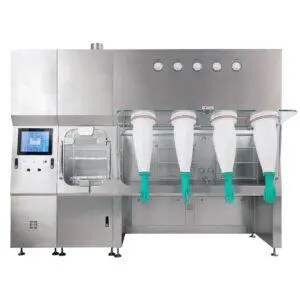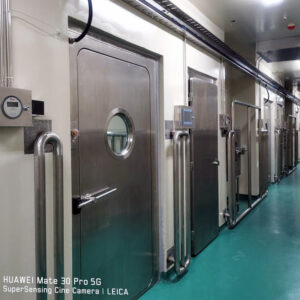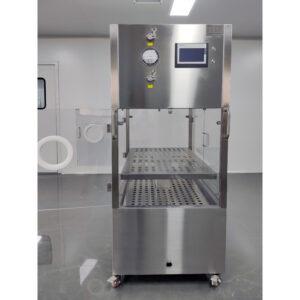
Qualification failures in cleanroom projects rarely originate in the testing lab. They originate in protocol design decisions made weeks before the equipment arrives on-site — and they surface during FDA inspections of qualification records, at which point remediation is far more disruptive than any testing delay would have been. A common example: an OQ protocol written to challenge a HEPA system only at its nominal airflow setpoint passes testing cleanly, then draws an observation during audit because it never demonstrated performance at minimum airflow, where filter bypass is most likely to occur. The difference between a defensible qualification package and one that requires remediation comes down to a small number of protocol decisions — acceptance criteria defined before testing begins, occupancy states matched to each qualification phase, and instrument calibration status confirmed before a single test run starts. What follows gives qualification engineers and QA leads the planning framework to make those decisions correctly across all three phases and across the equipment types most commonly subject to qualification scope.
IQ (Installation Qualification): Documentation, Utility Verification, and Baseline Calibration
IQ is less about verifying what the equipment does and more about confirming that everything needed for it to perform correctly has been put in place — and that there is documentation to prove it. The protocol must confirm that installed equipment matches approved design specifications: model numbers, serial numbers, material of construction where it matters for contamination risk, and physical configuration. Any deviation from the approved design is a documented exception, not an informal field adjustment.
The baseline condition for IQ is the “As Built” state — the cleanroom functional, equipment installed, but no production personnel or materials present. This matters because the IQ baseline must be free of the variables that OQ and PQ will later introduce. Establishing it correctly prevents the common problem of having to re-execute IQ documentation after OQ testing has already started, because the installation record doesn’t reflect what was actually installed.
Two IQ-specific failure risks deserve particular attention. First, ductwork cleaning verification: improperly cleaned ductwork introduces particulate debris that can compromise HEPA filter integrity before the system has even been tested. This is a downstream consequence that won’t necessarily appear during IQ itself — it surfaces during filter integrity testing in OQ, at which point the root cause may require invasive investigation. Documenting ductwork cleanliness during IQ, rather than assuming it was addressed during construction, removes that ambiguity. Second, calibration certificates for installed instruments — pressure gauges, flow meters, and particle counters installed by the equipment supplier — must be current and traceable to national standards before IQ can be closed. In practice, supplier-installed instruments often arrive without current certificates, and this single gap has halted qualification programs entirely while certificates were sourced, reviewed, and accepted by QA.
The procurement trade-off here is real. Supplier-generated IQ protocols typically include factory acceptance test (FAT) data, which appears to reduce the verification burden at the installation site. FAT data is genuinely useful — it establishes a pre-shipment baseline — but it does not substitute for site-level IQ. Supplier protocols are written to the supplier’s standards, not the site’s SOPs, and they frequently require substantial revision before local QA will accept them. Teams that treat FAT documentation as a shortcut to IQ completion often discover the mismatch late, when the revision cycle competes with the project schedule.
OQ (Operational Qualification): Performance Testing Parameters and Acceptance Criteria by Equipment Type
OQ confirms that installed equipment performs as designed across its full operating range — not just at the single setpoint that day-to-day operation will use. This distinction shapes everything about how an OQ protocol should be written, and it is where the most consequential protocol errors are made.
The occupancy state for OQ is “At Rest” — all equipment installed and functioning, no personnel present. This controlled condition establishes the operational baseline before human activity introduces the additional particulate and microbial load that PQ will test. The full scope of parameters to be tested at this stage spans a range that reflects both physical performance and environmental control.
| Test Parametresi | Condition (State) | Risk-Based Consideration |
|---|---|---|
| Filtre Bütünlüğü | At Rest | |
| Airflow Volume/Velocity | At Rest | |
| Air Pressure Difference | At Rest | |
| Airflow Direction Visualization | At Rest | |
| Mikrobiyal Kirlenme | At Rest | |
| Sıcaklık | At Rest | |
| Nem | At Rest | |
| Recovery Test | At Rest | |
| Containment Leak Test | At Rest | |
| Particle Evaluation | At Rest | Must be performed at critical processing locations in Grade A/B areas based on risk assessment. |
Two parameters in the table above require planning decisions beyond simply adding them to the test list. The recovery test is sequence-sensitive: it should follow airflow and pressure verification, because recovery performance depends on those parameters being within specification. Running it earlier produces a data point that cannot be reliably interpreted. The particle evaluation for Grade A and B areas is not a fixed positional test — EU GMP Annex 1 requires that critical processing locations, such as the point of fill, be identified through a documented risk assessment, and that risk assessment must justify both the sample locations and the sampling volume. The protocol writer must be able to show that reasoning, not just the test result.
The most documented OQ failure pattern is testing HEPA systems only at the nominal airflow setpoint. A system that passes integrity testing at 0.45 m/s face velocity may exhibit filter bypass at minimum airflow conditions — typically the lower specification limit — because the pressure drop across the filter changes in ways that a single-point test does not detect. Acceptance criteria must be defined against both the nominal and the boundary conditions, and those criteria must be written into the protocol before testing begins. Acceptance criteria added after test results are available are not defensible under FDA inspection of qualification records.
PQ (Performance Qualification): Worst-Case Condition Testing and Ongoing Monitoring Integration
PQ answers a question that OQ cannot: does this system perform correctly when the cleanroom is actually in use? The occupancy state shifts to “In-Operation,” with equipment running and personnel present. For worst-case PQ design, the site’s own risk assessment should establish what constitutes the maximum personnel load for a given process area — this is a planning criterion derived from site conditions, not a codified regulatory headcount figure. The point is to test the system at the conditions most likely to challenge its performance, not at a comfortable midpoint.
For cleanroom classification “In-Operation,” EU GMP Annex 1 Table 1 provides the particle concentration limits against which results must be evaluated — particles ≥0.5 μm and ≥5 μm for each grade. These limits are specific to that regulatory framework and apply to pharmaceutical cleanrooms operating under EU GMP. Teams working under that framework should use those figures directly as the acceptance criteria; teams in other regulatory contexts should confirm the applicable standard before writing acceptance criteria into the protocol.
The PQ completion criterion is where qualification packages most often fail to withstand scrutiny. The defensible standard is three consecutive successful test runs at the most challenging operating condition identified during risk assessment. A single successful run — even at the correct worst-case condition — is not a complete PQ. A series of runs at nominal conditions, however many, does not satisfy the requirement either. Both patterns appear in qualification records that are subsequently challenged during regulatory review. The three-run standard is practitioner-established rather than a fixed statutory rule, but it reflects the logic that a single run cannot demonstrate consistency, and that consistency at the most challenging condition is the point of PQ.
A structural boundary that must be made explicit in PQ documentation is the distinction between PQ release and ongoing environmental monitoring. After PQ closes and the cleanroom is released for production use, the routine monitoring program — particles, viable particles, temperature, and relative humidity — continues on a defined schedule. That ongoing monitoring is not requalification, and it is not an extension of PQ. Conflating the two creates compliance exposure: PQ documents must show the point of release, and the monitoring program must be governed by a separate procedure with its own alert and action limits. The protocol writer should not leave this boundary implicit.
Equipment-Specific Qualification Scope: LAF Units, FFUs, BIBO Systems, and Pass Boxes
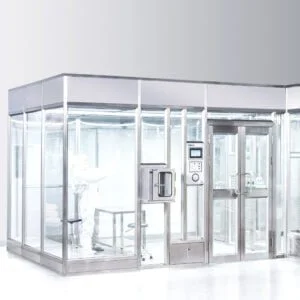
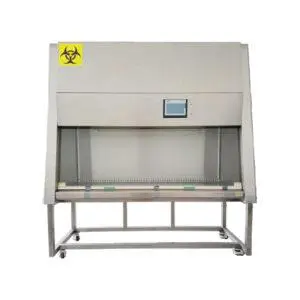
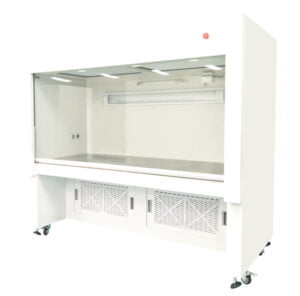
Not every piece of temi̇z oda eki̇pmanlari carries the same qualification scope, and the risk classification of the process area it serves is the primary variable that determines depth. A laminer hava akış ünitesi installed in a Grade A aseptic processing zone faces qualification requirements that are materially more demanding than an identical unit installed in a Grade C support corridor, because the consequence of performance failure differs by orders of magnitude.
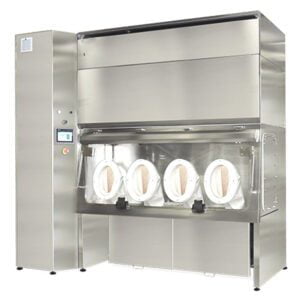
For LAF units and fan filter units in Grade A processing areas, airflow visualization using smoke studies is a qualification execution requirement, not a general recommendation. EU GMP Annex 1 specifically requires that unidirectional airflow be demonstrated in Grade A zones during qualification, and smoke studies are the method used to produce that visual and documented evidence. The study must show that airflow protects the critical zone without turbulence patterns that could transport contamination toward open product. A smoke study that reveals turbulent behavior near a fill needle or open container is a failed study, even if all quantitative airflow parameters are within specification — the visual evidence is independently interpretable.
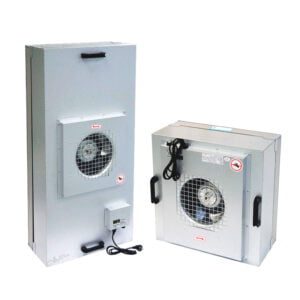
Fan filter units (FFUs) introduce a qualification consideration that LAF units with centralized air handling do not: each FFU contains its own motor and fan, and each one requires individual verification of airflow velocity and filter integrity. In a ceiling array with multiple FFUs, this is a logistical scope decision that must be addressed in the protocol — testing a representative sample is a risk-based judgment that requires documentation to justify, not an informal shortcut.
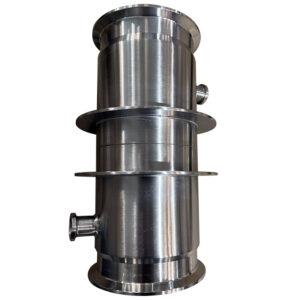
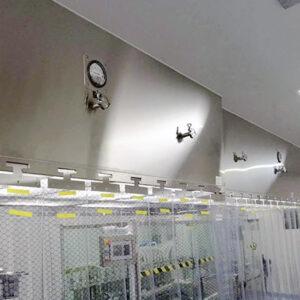
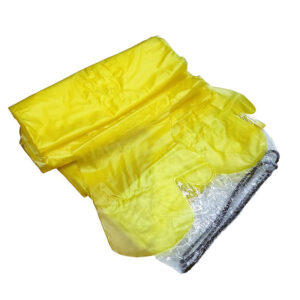
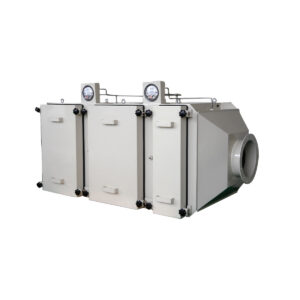
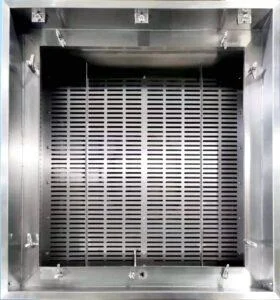
For BIBO (bag-in/bag-out) filter housings, IQ must confirm that the containment mechanism is installed and functional before any filter handling occurs. The IQ record for a BIBO system should include verification that the housing seals correctly, that the bag attachment points are undamaged, and that the safe-change procedure has been reviewed against the installed configuration. The OQ test scope then confirms containment integrity and airflow performance through the housing under operating pressure conditions. A BIBO housing that passes airflow testing but has an unverified containment mechanism at the bag attachment points is a documented gap in the IQ record that creates exposure during any subsequent filter change operation.
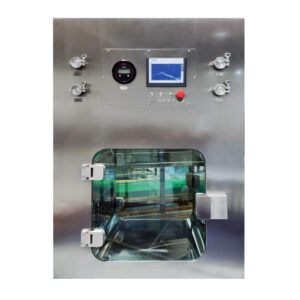
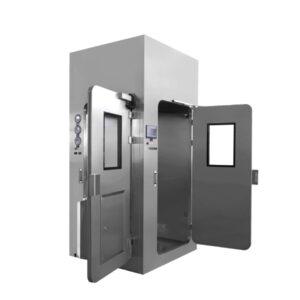
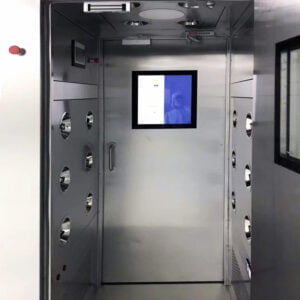
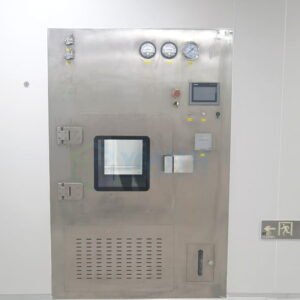
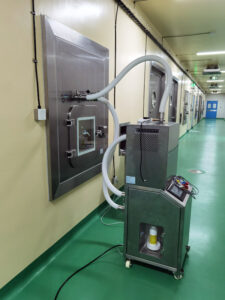
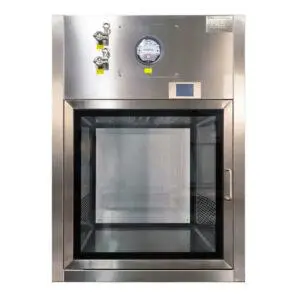
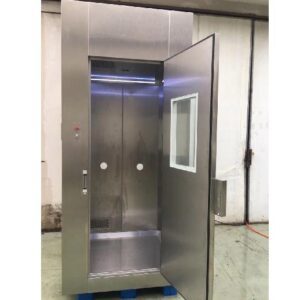
Pass-through units present a different qualification challenge: their primary function is to maintain a pressure differential boundary between two cleanroom grades while allowing material transfer. Qualification must confirm that the interlocking mechanism prevents simultaneous opening of both doors, that the pressure differential is maintained during the transfer cycle, and that any decontamination cycle integrated into the unit performs to specification. The common error in pass-through qualification is treating the unit as purely mechanical — verifying the interlock and leaving the environmental parameters to room-level monitoring rather than unit-specific testing. If the pass-through has an integrated HEPA supply, that filter requires its own integrity test within the unit’s qualification scope.
Regulatory Cross-Reference: FDA 21 CFR Part 211, EU GMP Annex 1, and ICH Q10 Requirements
FDA 21 CFR Part 211 and EU GMP Annex 1 both establish that equipment used in pharmaceutical manufacturing must be qualified and that qualification status must be maintained. The framework these regulations establish is not simply a one-time event — it is a lifecycle obligation, and the mechanism that governs ongoing qualification status is change control.
The relationship between change control and requalification is a GMP integration point, not a procedural formality. Under both FDA 21 CFR Part 211 and EU GMP Annex 1, any change to a qualified system that could affect its validated state must pass through the formal change management process, and that process determines whether requalification is required and to what scope. A HEPA filter replacement that uses an identical replacement filter may require only a filter integrity test. A change to the air handling configuration may trigger full requalification. The change management review is where that determination is made and documented — and the requalification scope flows from that decision, not from a standing protocol that assumes every change triggers the same response.
Periodic requalification, separate from change-triggered requalification, runs on a defined schedule established during the original qualification program. The minimum scope is structured by regulatory expectation.
| Requalification Requirement | Trigger | Açıklığa Kavuşturulması Gerekenler |
|---|---|---|
| Temiz Oda Sınıflandırması | Periodic & After Change | |
| Filtre Bütünlük Testi | Periodic & After Change | |
| Airflow Volume Measurement | Periodic & After Change | |
| Basınç Diferansiyel Doğrulaması | Periodic & After Change | |
| Hava Hızı Testi | Periodic & After Change | |
| Appropriate Requalification | After any Change | Must be triggered through the formal change management process. |
The interaction between the two triggers — periodic and change-driven — requires protocol design attention. A cleanroom that undergoes a filter change three months before its scheduled periodic requalification has generated filter integrity test data through the change-triggered process. The periodic requalification protocol must address whether that recent data satisfies the periodic test requirement or whether a separate test run is needed. This is a documentation decision, not a testing decision, but leaving it unresolved creates an ambiguity in the qualification record that is difficult to explain during an inspection.
ICH Q10 provides the broader quality system context in which both FDA and EU GMP qualification requirements operate — its Pharmaceutical Quality System model frames requalification and change control as elements of continual improvement and lifecycle management. For qualification engineers, the practical implication is that requalification records are not isolated technical reports; they are part of the quality system documentation that inspectors use to evaluate whether a facility maintains control over its processes across time and across changes.
Qualification packages that survive regulatory scrutiny share one structural characteristic: every acceptance criterion was defined before the first test run, at every operating condition that the risk assessment identified as relevant. The documentation gap that creates the most difficult inspection findings is not missing test results — it is acceptance criteria that were added after results were known, or test conditions that skimped on boundary cases because nominal performance was already sufficient to pass. Both patterns are detectable in the record, and neither can be remediated by repeating the test.
Before committing to a qualification scope, the decisions that most directly determine whether the program will hold up are: which operating conditions define the boundary cases for OQ, what constitutes the most challenging condition for PQ and how many consecutive successful runs are required, whether supplier-provided FAT documentation actually meets the site’s IQ protocol requirements, and whether all installed instruments carry current calibration certificates before testing begins. Getting clarity on those four points before qualification execution starts removes the majority of the failure risk that typically surfaces at the wrong moment.
Sıkça Sorulan Sorular
Q: When does a HEPA filter replacement trigger full requalification versus a single filter integrity test?
A: The scope is determined by the formal change management review, not by a standing requalification protocol. A like-for-like replacement using an identical filter model typically requires only a filter integrity test to confirm the reinstalled filter performs to specification. Changes to the air handling configuration, filter grade, or housing type will likely require broader requalification. The change management record must document that determination explicitly — leaving it to informal judgment creates an ambiguity that is difficult to defend during inspection.
Q: Can supplier-provided FAT documentation replace site-level IQ, or does it only reduce the verification scope?
A: FAT documentation supplements IQ but cannot replace it. FAT data establishes a useful pre-shipment baseline, but supplier protocols are written to the supplier’s standards, not the site’s SOPs. Local QA must review supplier-generated protocols against site requirements before they can be accepted, and revision cycles are common. Teams that treat FAT documentation as a shortcut to IQ completion typically discover the mismatch late in the project schedule, when revision time competes directly with the qualification timeline.
Q: What happens if periodic requalification is due shortly after a change-triggered filter integrity test has already been completed?
A: The periodic requalification protocol must explicitly address whether the recent change-triggered test data satisfies the periodic test requirement or whether a separate test run is needed. This is a documentation decision, not a testing decision — but leaving it unresolved creates an ambiguity in the qualification record. The clearest approach is to reference the change-triggered test data within the periodic requalification report and include a documented rationale for accepting it, so the record is self-explanatory to an inspector without additional context.
Q: Is the three-consecutive-run PQ completion standard a regulatory requirement or a practitioner convention, and does it apply outside pharmaceutical cleanrooms?
A: It is a practitioner-established standard rather than a fixed statutory rule, but it reflects the regulatory logic that a single run cannot demonstrate consistency and that consistency at the most challenging condition is the purpose of PQ. In pharmaceutical contexts under FDA 21 CFR Part 211 and EU GMP Annex 1, it is the broadly accepted defensible standard. For cleanrooms in semiconductor or other non-pharmaceutical industries, the applicable qualification standard and its acceptance criteria should be confirmed before adopting this criterion — the underlying logic is sound, but the specific requirement may differ by regulatory framework.
Q: If a smoke study reveals turbulent airflow near a critical zone but all quantitative airflow parameters pass, does the LAF unit qualification fail?
A: Yes — the smoke study result is an independent qualification finding, not a secondary check. Visual evidence of turbulence near an open product container or fill point constitutes a failed study under EU GMP Annex 1 requirements for Grade A areas, even when velocity, volume, and filter integrity measurements are all within acceptance criteria. The two types of evidence address different aspects of performance: quantitative parameters confirm the system is moving the correct volume of air, while the smoke study confirms that air is moving in a pattern that actually protects the critical zone. Both must pass for the qualification to be complete.
İlgili İçerikler:
- LAF Kabin Kalifikasyonu | IQ OQ PQ Validasyon Protokolleri
- Sterilite Testi İzolatörleri için PQ: En İyi Uygulamalar
- Temiz Oda Ekipmanları için ISO 14644 ve GMP Uyumluluk Standartları: Eksiksiz Sertifikasyon Gereklilikleri ve Test Protokolleri
- HEPA Filtre Testi: Optimum Performansın Sağlanması
- Sterilite Testi İzolatörleri için IQ: Validasyon Temelleri
- Sterilite Testi İzolatörleri için OQ: Temel Prosedürler
- Tartım Kabini Hava Hızı Test Prosedürleri: Adım Adım Kalifikasyon Protokolü
- Sterilite Testi İzolatörleri ile Tıbbi Cihaz Testi
- Temiz Oda Ekipman Kurulumu için IQ OQ PQ Kalifikasyonu Nasıl Yürütülür?