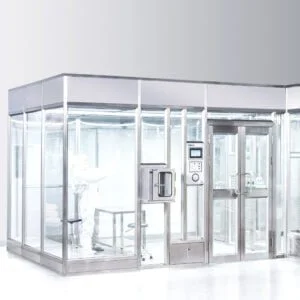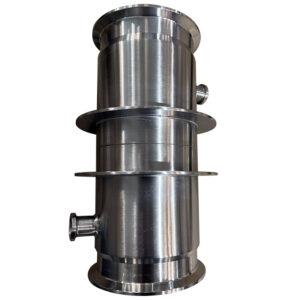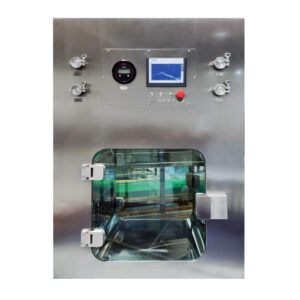
Equipment arrives on schedule, clears incoming inspection, and gets moved into position—then the validation team opens the documentation package and finds wiring diagrams missing, no material certificates for wetted surfaces, and HEPA filter efficiency records that reference a model number inconsistent with what was shipped. At that point, the project is not behind by a few days; it is behind by however long it takes to reconstruct or formally request records that should have been contractual deliverables. The failure pattern is consistent: document scope is treated as an administrative formality rather than a defined procurement item, and the gap only becomes visible during IQ execution when the consequences are hardest to absorb. Understanding which records a supplier is responsible for producing—and naming those records explicitly before purchase—is what separates a clean handover from a validation stall.
GMP document support before equipment purchase
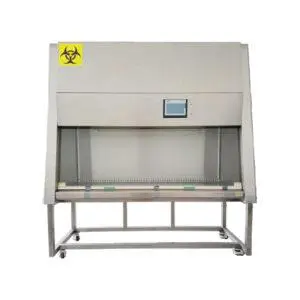
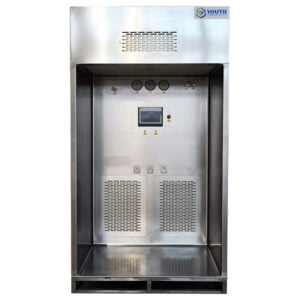
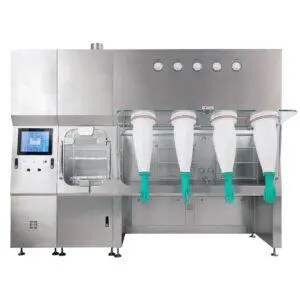
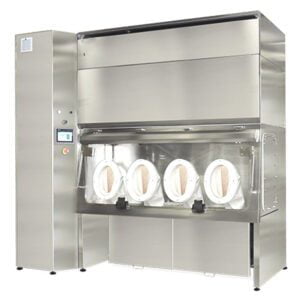
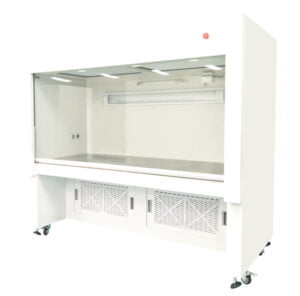
The decision to review supplier documentation before purchase is not primarily about due diligence in the abstract—it is about whether the validation team will have everything needed to execute IQ without chasing down records under schedule pressure. Equipment specifications carry parameters that directly determine whether a piece of equipment is qualifiable for its intended grade. For laminar flow workbenches intended for Grade A environments, for instance, the supplier’s technical specification should document the airflow velocity range the unit is designed to deliver—typically 0.36–0.54 m/s at the working zone—because that figure is what the OQ protocol will test against. If the supplier has not documented it, the buyer has no pre-purchase basis for confirming equipment suitability, and the validation team has no specification anchor for the test.
The framework in EudraLex Volume 4 Annex 15 is useful here not as governing purchase language, but as a testing-logic reference: qualification relies on documented design intent, and that intent must exist before installation. Pre-purchase document review should therefore focus on whether the supplier can produce the specification evidence the validation sequence will need—not whether the hardware looks correct on a brochure. That means asking for technical datasheets, material declarations, filter certifications, and where applicable, existing FAT/SAT protocols before the order is placed, not after delivery.
The practical threshold is straightforward: if a supplier cannot indicate which documents will be included in the delivery package before purchase, that is a procurement signal worth acting on. Gaps in documentation scope are far easier to resolve through negotiation before an order is placed than through deviation procedures after equipment has been accepted.
Drawings, manuals, FAT/SAT records, and qualification inputs
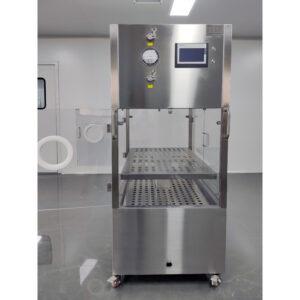
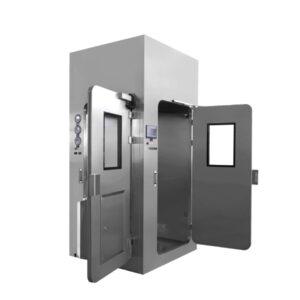
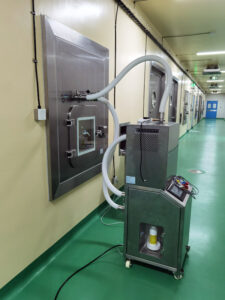
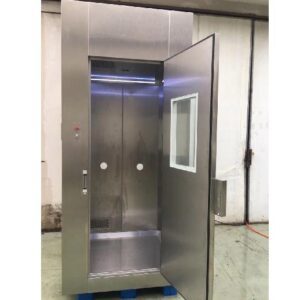
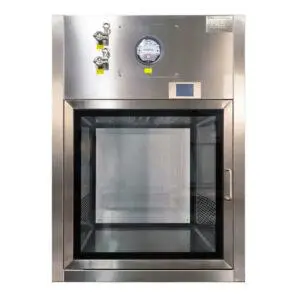
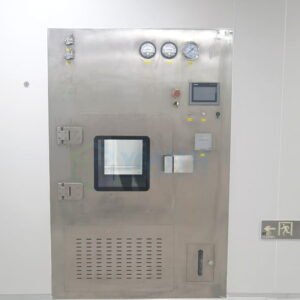
Each stage of qualification—IQ, OQ, PQ—requires specific evidence that the supplier is in the best position to produce, and which the buyer cannot easily reconstruct after the fact. For a dynamic pass box, IQ verification depends on construction records: material certificates confirming SUS304 or equivalent, dimensional drawings, and electrical wiring diagrams. OQ depends on functional test records covering interlock logic, internal downflow velocity, and HEPA filter integrity confirmed by aerosol challenge—typically PAO or DOP. PQ draws on performance data: active particulate counts and, where applicable, microbial surface sampling against class limits. Each stage also depends on documented physical parameters: EU GMP Annex 1 identifies a positive pressure differential of 10–15 Pa between adjacent cleanroom grades as a critical design criterion, and the supplier’s documentation should confirm how the equipment was designed and tested to support that differential. Similarly, H14 HEPA filter efficiency at ≥99.995% MPPS is the filter grade required for GMP-compliant pass box applications, and that rating must be traceable to a supplier-issued filter certificate.
The table below maps each qualification stage to its corresponding document type and specification parameter.
| Qualification Step | Document Type / Deliverable | Specification / Parameter |
|---|---|---|
| IQ (Installation Qualification) | Construction drawings, material certificates, wiring diagrams | SUS304 construction, accurate dimensions, electrical wiring diagrams |
| OQ (Operational Qualification) | Functional test records (FAT/SAT) | Electromagnetic door interlock logic test, internal downflow velocity, PAO/DOP HEPA leak test |
| PQ (Performance Qualification) | Performance validation results | Active particulate counting, surface microbial swab testing per class limits |
| Pressure differential documentation | Room/pass box pressure test reports | Positive pressure differential of 10–15 Pa between adjacent grades as per EU GMP Annex 1 |
| HEPA filter documentation | Filter certificates and efficiency test results | H14 HEPA filters with ≥99.995% efficiency at MPPS |
What the table cannot show is what happens when any of these deliverables is missing at IQ execution. A wiring diagram gap means the engineer cannot verify electrical installation correctness against a documented standard—they can observe the installation, but they cannot qualify it. A missing HEPA filter certificate means the H14 rating cannot be confirmed, which puts the filter integrity test result in an evidentiary gap: the leak test may pass, but the baseline specification cannot be traced. FAT/SAT records that were never created cannot be reconstructed from memory or from engineering estimates. Qualification evidence is almost always harder and more expensive to produce after installation than before it.
For procurement teams specifying dynamic pass-through equipment with integrated HEPA filtration, the practical step is to request a document deliverable list from the supplier at the RFQ stage—before the commercial discussion closes—so that IQ/OQ inputs are scoped into the order rather than assumed.
Supplier templates versus site-specific qualification protocols
Supplier-provided qualification templates—pre-formatted IQ/OQ/PQ protocol documents that reference the supplier’s own equipment specifications—can meaningfully accelerate validation preparation. They provide a starting structure, pre-populate equipment-specific parameters, and reduce the time a validation engineer spends drafting test steps from scratch. That is a real benefit, particularly when a project involves multiple equipment types and a compressed qualification timeline.
The trade-off that teams consistently underestimate is the gap between a supplier template and an executed, site-specific qualification protocol. A supplier template documents what the equipment was designed to do and how the supplier tested it at the factory. It does not document site-specific installation conditions, the buyer’s utility connections, room classification context, or the SOP-level acceptance criteria the regulated manufacturer applies. The regulated manufacturer—not the supplier—is responsible for executing qualification protocols under their own quality system, and the executed protocol must reflect site conditions, not factory conditions.
The audit risk is specific: using a supplier template as though it were an executed IQ/OQ without layering site-specific execution on top creates a documentation record that may be internally consistent but is difficult to defend when an inspector asks how the qualification reflects the actual installed state. The template may show correct design parameters; it cannot show that the unit was installed correctly in this facility, connected to this electrical panel, and performing within specification under this facility’s operational conditions. That evidence can only come from site-executed protocols, which are the buyer’s responsibility to produce regardless of how complete the supplier’s template is.
The practical implication is that supplier templates should be treated as inputs that reduce drafting effort, not as substitutes that reduce execution effort. The planning question is not whether to use the template, but whether the validation team has mapped clearly which sections require site-specific execution and which can be adopted directly from supplier-provided data.
QA handover friction from missing document deliverables
Hardware quality does not resolve documentation gaps. Equipment that arrives physically correct, passes incoming inspection, and installs without incident can still block IQ sign-off if the evidence package is incomplete. The friction is not about equipment performance—it is about whether the validation record can be built from available evidence.
The most common late-discovery gaps follow a recognizable pattern. Construction records are absent because material certificates and dimensional drawings were not scoped into the order. OQ test data is missing because no FAT/SAT protocol was executed or, if one was, it was not included in the contractual delivery package. HEPA filter certificates reference a part number that does not match the installed filter, requiring the supplier to be re-engaged under time pressure to issue corrected documentation. In each case, the gap surfaces during IQ execution—after delivery, after acceptance, and often after project timelines have been committed.
Each missing deliverable creates a specific downstream consequence.
| Missing Document Deliverable | Resulting QA Gap | Impact on Equipment Handover |
|---|---|---|
| IQ construction verification records (SUS304, dimensions, wiring) | QA cannot confirm material compliance or installation correctness | IQ cannot be signed off; equipment remains in quarantine, delaying release |
| OQ test records for door interlock and downflow velocity | No evidence safety logic works or airflow meets spec | OQ is incomplete; validation phase stalled, production readiness postponed |
| PAO/DOP HEPA leak test data from OQ | Missing proof of filter integrity under aerosol challenge | Filter integrity cannot be validated; cleanroom classification at risk |
| PQ particulate counting and microbial swab results | Cannot demonstrate real-world cleanroom performance | Equipment cannot be released for commercial production under GMP |
| HEPA filter efficiency documentation (H14 ≥99.995%) | Supplier cannot confirm filter rating meets GMP requirements | QA may reject entire equipment batch if core filtration evidence is absent |
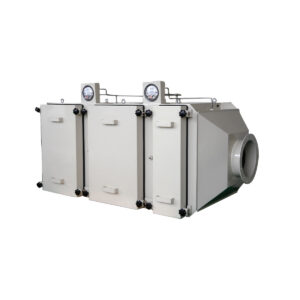
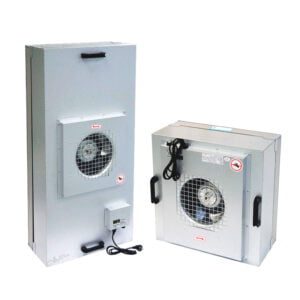
The broader pattern the table reflects is that document gaps do not compress evenly. Some can be resolved by requesting supplementary records from the supplier—wiring diagrams can often be reissued, filter certificates can be corrected. Others are effectively irreversible: if FAT/SAT testing was not performed and no records exist, the functional test data cannot be produced after the fact without repeating the test under documented conditions, which typically means a site-level OQ exercise that was not planned or budgeted. For وحدات تصفية المروحة and other airflow-critical equipment where filter integrity and velocity uniformity are central OQ parameters, that gap translates directly to cleanroom classification uncertainty until the test is completed.
A useful pre-IQ review check is to map the documentation package against the qualification protocol before IQ initiation, identify missing deliverables by stage, and determine whether gaps are resolvable through supplementary supplier requests or whether they require additional on-site testing. That review is far less costly before IQ starts than during it.
Purchase threshold after records and reviewers are named
The purchase order is the last practical intervention point before documentation gaps become deviation events. Once equipment is accepted—commercially and physically—any missing deliverable requires a formal gap-resolution process: deviation documentation, supplementary requests logged against the project record, and potentially a qualification hold that delays production readiness. The same resolution that takes one email before purchase may require a formal corrective action after it.
The three items that most often go unnamed in purchase orders are the specific document deliverables the supplier is responsible for, the reviewer roles that determine who accepts those documents, and the equipment acceptance points that define when handover formally occurs. Leaving any of these undefined does not mean the project will fail—it means that when a gap appears, no one has a prior written agreement to reference, and resolution depends on goodwill and urgency rather than contractual clarity.
The table below maps each purchase order item to its specific handover risk.
| Purchase Order Item | ما أهمية ذلك | Risk If Left Unstated |
|---|---|---|
| Named document deliverables (drawings, manuals, FAT/SAT, qualification inputs) | Ensures QA receives the complete evidence package needed for IQ/OQ/PQ | Hardware may arrive correctly, but QA cannot start validation, creating handover friction |
| Reviewer roles (who signs off on documents and acceptance) | Clarifies approval responsibilities and avoids sign-off ambiguity | Delays occur when no one is designated to accept or reject documents |
| Equipment acceptance points (when formal handover occurs) | Defines the moment liability and responsibility transfer | Premature acceptance may occur before all documentation is delivered and reviewed |
The practical pre-commitment review check is to read the purchase order draft and confirm that the document deliverable list is specific enough that a QA reviewer could use it as an acceptance checklist, that reviewer roles are assigned rather than left to be determined post-delivery, and that acceptance criteria are stated rather than implied. Generic language—”documentation to be provided”—does not satisfy this check. Named deliverables, assigned reviewers, and defined acceptance points do.
The validation team is frequently not involved in purchase order drafting, which is one reason document scope ends up undefined. Where validation is not in the procurement conversation, QA should be consulted specifically on the document deliverable schedule before the order is finalized—not as a process formality, but because they are the group that will execute against whatever the order commits the supplier to provide.
For project teams working across multiple equipment categories and qualification protocols, the GMP-compliant cleanroom equipment documentation and validation checklist covers the deliverable categories relevant across equipment types and can serve as a reference for building a supplier document scope list before purchase order finalization.
The most consequential decision in GMP equipment procurement is not which equipment to purchase—it is what documentation the supplier is contractually required to deliver, who is responsible for reviewing it, and when formal acceptance occurs. Hardware arriving correctly does not resolve an incomplete evidence package, and a supplier-issued template does not substitute for a site-executed qualification protocol. Both limitations are predictable and avoidable, but only if they are addressed before the order is placed.
Before finalizing any GMP equipment purchase, confirm that named document deliverables are listed in the order, that reviewer assignments are explicit, and that acceptance points are defined in a way that prevents premature sign-off before the evidence package is complete. Those three items determine whether the validation sequence starts from a position of readiness or from a position of recovery.
الأسئلة الشائعة
Q: What happens if our validation team is not involved in procurement — can QA step in at the purchase order stage instead?
A: Yes, and that is the recommended fallback. The article identifies validation team exclusion from procurement as one of the main reasons document deliverables go unnamed in purchase orders. If validation is not in the conversation, QA should be consulted specifically on the document deliverable schedule before the order is finalized — not as a sign-off formality, but as the group accountable for executing against whatever the order commits the supplier to produce. The risk of late QA involvement is not process inefficiency; it is arriving at IQ with a documentation package that no one with authority reviewed before acceptance.
Q: If a supplier produces a complete document package but FAT was not performed because the equipment type doesn’t typically require it, does that create a qualification gap?
A: It depends on whether the OQ protocol has an alternative evidence path for the functional parameters FAT would have covered. FAT is not mandatory for every equipment category, but the absence of factory test records shifts the evidentiary burden entirely to site-level OQ. For airflow-critical equipment — laminar flow units, pass boxes with integrated HEPA — velocity uniformity and filter integrity data that would normally come from FAT must then be generated on-site under documented conditions. That is a planned qualification scope, not automatically a gap, but it must be recognized as additional site work before purchase rather than discovered during OQ preparation.
Q: Is a supplier with strong documentation support worth a higher unit price compared to one that offers equivalent hardware with minimal documentation?
A: The cost comparison changes significantly once post-delivery recovery effort is included. A supplier that delivers named documents — filter certificates, wiring diagrams, material declarations, FAT/SAT records — removes work that the validation team would otherwise have to initiate through deviation requests, supplementary supplier engagements, or unplanned on-site testing. For single equipment purchases on long timelines, a documentation gap may be manageable. For multi-equipment projects with committed qualification schedules, each missing deliverable carries schedule risk that compounds across items. The article’s framing is precise: the same resolution that takes one email before purchase may require formal corrective action after it.
Q: Can supplier-provided templates be submitted directly into a regulatory inspection as part of the qualification record?
A: No — not without site-executed documentation layered on top. A supplier template reflects factory design intent and factory test conditions. An inspector reviewing an IQ/OQ record will expect evidence that the equipment was installed and performing correctly in the specific facility, connected to that site’s utilities, and tested under the site’s operational conditions. A template that has not been executed against site-specific parameters creates a record that may be internally consistent but cannot demonstrate actual installed state. The template is a legitimate input that reduces drafting effort; the executed site protocol is what enters the qualification record.
Q: At what point in a cleanroom build is it too late to address documentation gaps without triggering a formal deviation?
A: The threshold is equipment acceptance — commercial and physical. Once the equipment has been accepted, any missing deliverable requires formal gap resolution: deviation documentation, supplementary requests logged against the project record, and potentially a qualification hold. Before acceptance, gaps are negotiation items. After acceptance, they are corrective actions. The article identifies the purchase order as the last practical intervention point, which means the pre-acceptance window for resolving document scope without formal consequences closes at the moment the order terms are finalized — not at delivery, and not at IQ initiation.