Qualification delays rarely originate in equipment performance. They originate in documentation gaps that were never anticipated at the RFQ stage — missing material certificates, absent FAT records, or drawing packages that arrive without a clear revision history. By the time a QA team flags the gap, lead time has already started and the supplier is under no contractual pressure to respond quickly. The practical cost is a commissioning hold that could have been avoided by asking the right questions before the purchase order was issued. What this article helps you judge is which manufacturer-side capabilities, document commitments, and post-shipment responsibilities need to be confirmed before the RFQ goes out — not after equipment arrives on site.
Manufacturer capability checks before RFQ
The first mistake buyers make is treating equipment specification as a procurement formality rather than a qualification prerequisite. If a manufacturer cannot demonstrate fabrication capability against the specific thresholds your cleanroom grade requires, no amount of supplier communication after PO issuance will close that gap cleanly.
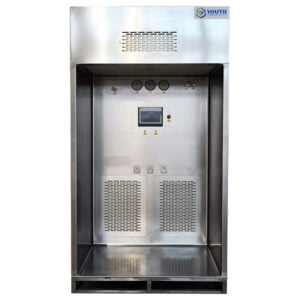
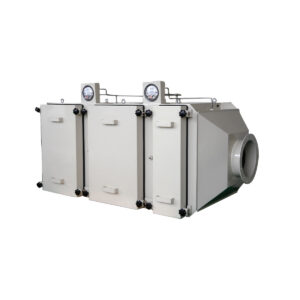
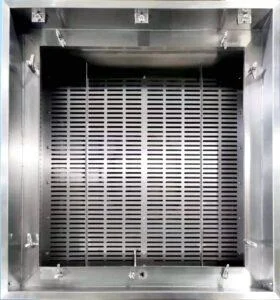
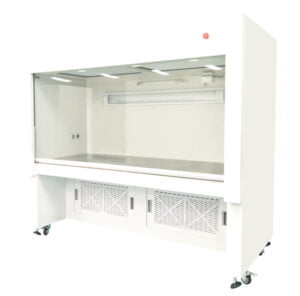
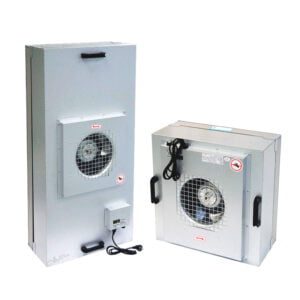
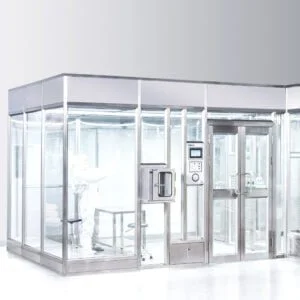
HEPA filter efficiency is the baseline. A filter capturing at least 99.97% of particles at 0.3 microns is the accepted efficiency benchmark for pharmaceutical cleanroom applications. That figure is not a negotiable target — it is the minimum performance threshold a buyer should verify the manufacturer tests and certifies against before shortlisting. Similarly, equipment must be specified against the ISO classification range relevant to your application. ISO Class 5 environments used for sterile filling carry significantly tighter particle concentration limits than ISO 7 or 8 support areas, and the equipment supplied — from Ventilator-Filtereinheiten to pass-throughs — must be designed and tested to the correct class from the outset. Retrofitting a unit specified at the wrong grade is not a minor correction.
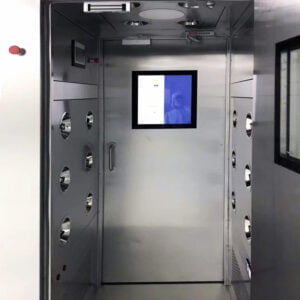
Surface finish and cleanability are where fabrication quality becomes directly visible. Product-contact surfaces should be smooth, hard, and crevice-free. This is a planning criterion that reflects the manufacturer’s actual fabrication standards, not a regulatory verdict — but equipment with rough welds, recessed fasteners, or inaccessible internal geometry will create persistent contamination risk that no cleaning protocol compensates for reliably. Equipment that requires disassembly for effective cleaning introduces an operational vulnerability that accumulates over time. Pressure differential performance — particularly for airlocks and pass-through configurations — must be demonstrable under functional test conditions, not just stated in a brochure. These checks belong before the RFQ because discovering a mismatch during factory acceptance wastes time and creates contractual awkwardness that rarely resolves in the buyer’s favor.
Each of these areas has a direct bearing on whether the equipment you receive can be qualified without re-engineering or supplemental justification.
| Artikel prüfen | Anforderung | Warum es wichtig ist |
|---|---|---|
| HEPA-Filter-Effizienz | At least 99.97% of particles ≥0.3 µm captured | Assures compliance with pharmaceutical cleanroom air quality benchmarks. |
| Cleanroom Classification Range | Capable of meeting ISO 5–8 particle concentration limits | Equipment must match the target cleanroom grade (e.g., ISO 5 for sterile filling). |
| Surface Finish on Product‑Contact Areas | Smooth, hard, crevice‑free finish | Demonstrates fabrication quality and reduces particle shedding. |
| Cleanability & Sterilizability | Automatic cleanability and sterilizability without disassembly | Supports sanitation protocols and lowers contamination risk. |
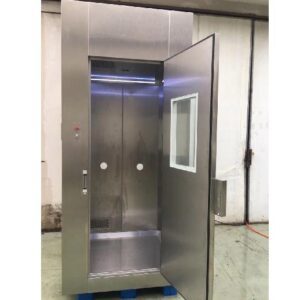
| Pressure Differential Control | Airlocks and pass‑throughs maintain intended pressure differentials | Prevents cross‑contamination and preserves controlled environment integrity. |
Drawings, materials, factory records, and export packaging evidence
A supplier’s willingness to produce documentation before the RFQ closes is one of the more reliable signals of operational discipline. Suppliers who treat documentation as an afterthought — assembling it only when an audit or regulatory submission demands it — consistently create downstream risk for the buyer’s QA team.
Material certificates should be available for all product-contact and structural components, traceable to the specific batch used in fabrication. If a manufacturer cannot produce these records on request during the evaluation stage, the likelihood of receiving complete documentation at delivery drops significantly. Factory records covering cleaning activities, environmental monitoring results, maintenance operations, and operator training are a reasonable expectation from any manufacturer operating under GMP-adjacent discipline. Their absence does not mean the equipment is non-conforming, but it does suggest the manufacturer’s internal controls are weaker than their marketing may indicate — and weaker internal controls are a risk that transfers directly to the buyer during qualification.
Third-party certification test reports deserve particular attention. Air particle count results, airflow pattern mapping, filter integrity test data, pressure differential measurements, and room recovery times — when conducted by an accredited agency and documented in a traceable format — provide verifiable evidence that the equipment has been formally qualified. EudraLex Volume 4 Annex 15 establishes the expectation that qualification activities produce documented, reviewable evidence; applying that same standard to evaluating a manufacturer’s test record quality is a practical way to filter out suppliers who cannot support the buyer’s validation program. Asking for sample FAT protocols and completed test reports from comparable prior projects at the evaluation stage, rather than at delivery, shifts the documentation risk from the buyer to the supplier where it belongs.
Export packaging is a frequently overlooked verification point. Equipment shipped internationally without adequate vibration protection, humidity control, or labeled handling instructions can arrive with filter integrity compromised or calibrated controls displaced. Confirming that the manufacturer has documented packaging specifications — and has prior experience with the transport routes relevant to your shipment — is a concrete capability check, not a courtesy inquiry.
Direct manufacturer versus reseller-style supplier tradeoffs
The distinction between a direct manufacturer and a reseller-style supplier is not always obvious at the RFQ stage, and suppliers do not always volunteer the information. The procurement consequence of misidentifying a reseller as a manufacturer typically surfaces during customization requests, deviation responses, or documentation reviews — at exactly the points in the project where speed and clarity matter most.
Direct manufacturers carry design and fabrication authority in-house. When a specification needs adjustment — a non-standard face velocity, a modified interlock sequence, or a surface treatment change — the turnaround depends only on internal scheduling. Documentation, including drawing revisions and test records, originates from a single source and follows a traceable change-control path. Reseller-style suppliers can offer a broader apparent portfolio at quote stage, which has real value when a buyer is sourcing multiple equipment categories from a single vendor. The tradeoff is that customization requests must pass through an intermediary, drawing revisions may reflect the reseller’s interpretation rather than the manufacturer’s intent, and any technical question that requires a substantive answer may cycle through one or more communication layers before reaching someone with actual design authority.
For pharmaceutical buyers, the traceability dimension is the most consequential. A fragmented documentation chain — where material certificates come from one party, test records from another, and drawing revisions from a third — creates audit exposure that is difficult to close retrospectively. The question is not whether a reseller-supplied product can be high quality; it often can be. The question is whether the buyer can assemble a complete, traceable qualification package from a multi-party supply chain without significant effort. In many cases, the answer requires an honest assessment of internal QA capacity as much as supplier assessment.
| Aspekt | Direct Manufacturer | Reseller-Style Supplier |
|---|---|---|
| Customization Speed | Faster; direct design and fabrication control | Slower; customization must pass through a third party |
| Product Range | Typically a focused portfolio | Aggregated options from multiple manufacturers |
| Rückverfolgbarkeit | Clear, single‑source documentation | More complex chain; higher risk of traceability gaps |
| Communication Risk | Lower; direct technical contact | Higher; intermediate reseller may delay or distort information |
Revision and warranty risks after shipment
Post-shipment risk is where the least preparation tends to meet the highest consequence. Most buyers negotiate price, lead time, and delivery terms with reasonable rigor. Fewer negotiate drawing revision authority, deviation response timelines, warranty scope conditions, or replacement parts commitments with the same discipline — and the omissions tend to surface at the worst possible project moment.
Drawing revision ownership is a specific contractual question, not a general goodwill assumption. If the supplier holds revision authority and a change is made after shipment — to address a manufacturing deviation, a material substitution, or a regulatory query — the buyer needs a clear, documented path to receive and approve that revision before it affects installed equipment. Absent that path, commissioning teams can find themselves working from drawing packages that no longer match the physical equipment, which is a traceability gap that is difficult to explain during inspection without detailed change records.
Deviation response timelines deserve the same treatment. When an installation reveals a non-conformance — a pressure differential that cannot be achieved, a seal that does not meet specification, a filter integrity failure during initial testing — the practical question is how quickly the manufacturer can investigate, respond, and propose resolution. ICH Q9(R1) frames systematic risk identification as a process discipline; applying that logic to supplier qualification means identifying the deviation response pathway before it is needed, not after a commissioning hold has already begun. Warranty claims follow the same logic: scope ambiguity and undocumented exclusion conditions are the most common reasons valid claims are delayed or denied. Replacement parts availability — particularly for custom or long-lead components — should carry an explicit commitment, because sourcing alternatives under delivery pressure is expensive and time-consuming.
Confirming these terms before shipment is a form of change-control discipline on the buyer’s side.
| Risk Area | Risiko bei Unklarheit | Was zu bestätigen ist |
|---|---|---|
| Drawing Revisions Ownership | Conflicting versions or delayed updates after shipment | Who holds revision authority and how changes will be communicated. |
| Deviation Response | Unresolved deviations may compromise compliance | The process and timeline for investigating deviations post‑delivery. |
| Warranty Claims | Claims denied due to ambiguous terms | Scope, duration, and specific conditions applicable to Reinraumausrüstung. |
| Ersatzteile | Extended lead times or part unavailability | Commitments on parts availability and supply chain responsibility. |
RFQ trigger after technical ownership is confirmed
Issuing an RFQ before technical ownership is confirmed is one of the more predictable ways to inherit specification drift. Once the RFQ closes and a PO is issued, the buyer’s leverage to clarify document responsibility, drawing authority, or post-shipment support terms drops sharply. Suppliers who were vague during evaluation tend to remain vague after payment.
The practical trigger point is confirmation across four dimensions: manufacturing ownership (who fabricates and holds design authority), technical contact (a named person with access to design records and test data, not a sales representative), document responsibility (who produces, maintains, and revises the qualification package), and change-control path (how deviations, drawing updates, and warranty claims are handled procedurally). These are not items that can be reasonably assumed or inferred from a product catalog. They require direct, documented responses from the supplier during evaluation.
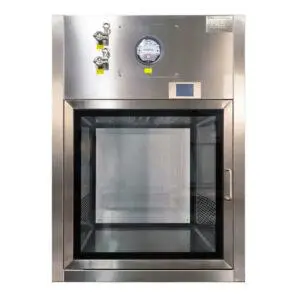
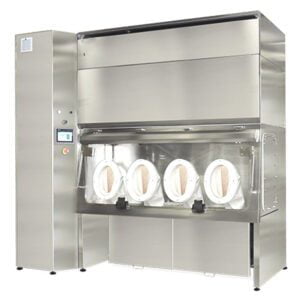
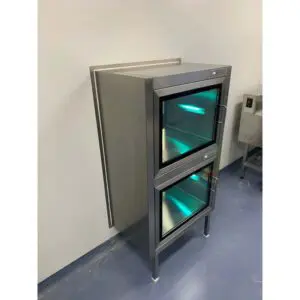
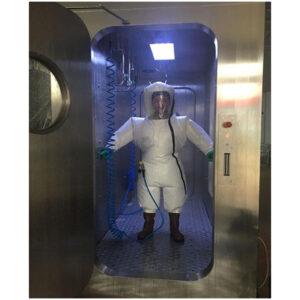
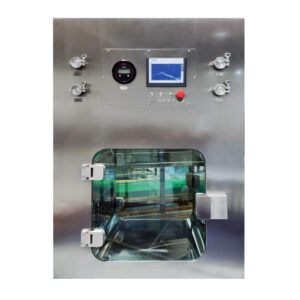
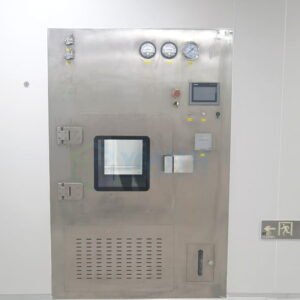
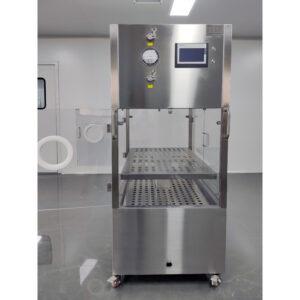
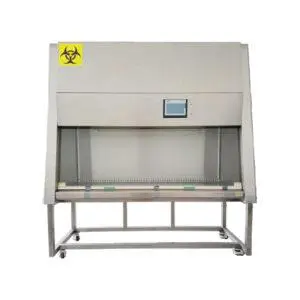
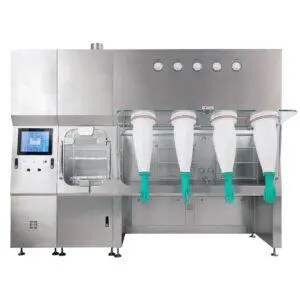
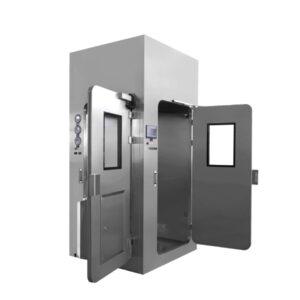
For buyers assessing dynamic pass-box configurations or containment-critical units like Schank- und Probenahmekabinen, the functional performance specifications — interlocking sequences, pressure differential maintenance, airflow uniformity — should be confirmed against the manufacturer’s own test data, not inferred from product category descriptions. A supplier who can answer these questions precisely during evaluation, and commit to the documentation path in writing, is the appropriate trigger condition for proceeding to RFQ. A supplier who deflects, generalizes, or routes technical questions through non-technical contacts is signaling a traceability risk that will not improve after the order is placed.
Die cleanroom equipment procurement supplier assessment guide provides additional structure for formalizing this evaluation before shortlisting, including how to document supplier responses for later QA review.
The decisions that determine qualification defensibility — drawing ownership, material certificate completeness, factory record depth, post-shipment change-control paths — are not visible in a product catalog and rarely volunteered during early supplier conversations. They are confirmed through direct, specific questions asked before the RFQ is issued. Equipment that clears a formal capability review against classification thresholds, surface finish standards, and documentation depth is equipment that supports a qualification program rather than complicating it.
Before proceeding to RFQ, confirm in writing: who holds drawing revision authority, what documentation will be delivered at shipment, how deviations will be investigated and communicated, and what warranty scope and replacement parts commitments apply to your specific equipment configuration. Those four confirmations, more than any product specification, determine whether commissioning proceeds on schedule or stalls at a documentation gap that was always avoidable.
Häufig gestellte Fragen
Q: What if our facility operates across multiple ISO classes — does the manufacturer need to be verified separately for each grade?
A: Yes, verification should be grade-specific for each equipment category, not treated as a single blanket check. A manufacturer capable of producing units that meet ISO 7 or 8 requirements may not carry the fabrication precision, filter certification, or test data to support ISO Class 5 sterile filling environments. When your facility spans multiple grades, your capability checklist should map each equipment type to its target classification and confirm that the manufacturer’s test records and design specifications correspond to that specific grade — not to a looser class used as a proxy.
Q: After confirming manufacturing ownership and document responsibility in writing, what is the immediate next step before issuing the RFQ?
A: Request sample FAT protocols and completed test reports from comparable prior projects before the RFQ closes. Once those four confirmations — manufacturing ownership, technical contact, document responsibility, and change-control path — are documented, the next action is stress-testing the supplier’s documentation quality against real project output, not marketing claims. Reviewing actual test records from prior deliveries reveals whether the manufacturer’s documentation practices match their stated capabilities and gives your QA team a concrete basis for evaluating qualification risk before the purchase order creates contractual momentum.
Q: At what point does sourcing from a reseller-style supplier become acceptable rather than a traceability liability?
A: A reseller becomes acceptable when the buyer has sufficient internal QA capacity to actively manage a fragmented documentation chain and when no customization is required. The traceability risk associated with reseller-style suppliers — certificates from one party, test records from another, drawing revisions from a third — does not disappear; it transfers to the buyer’s team to reconcile. If your qualification program requires a single, traceable documentation source and your QA team cannot absorb the overhead of multi-party coordination, a direct manufacturer with in-house design authority is the lower-risk path regardless of the reseller’s product range.
Q: Is third-party certification by an accredited agency a strict requirement, or can a manufacturer’s own test records satisfy pharmaceutical qualification?
A: Manufacturer-generated test records alone are generally insufficient to satisfy pharmaceutical qualification without independent verification. EudraLex Volume 4 Annex 15 establishes that qualification activities must produce documented, reviewable evidence — and regulators scrutinize whether that evidence originates from a party with a conflict of interest in the outcome. Third-party certification from an accredited agency provides the independence that makes test data defensible during inspection. Manufacturer self-certification can supplement third-party results but should not substitute for them in a formal IQ/OQ/PQ sequence.
Q: How do you evaluate whether a manufacturer’s warranty terms represent genuine protection or mostly paper coverage for pharmaceutical buyers?
A: Genuine warranty protection is distinguishable by three concrete commitments: a defined deviation response timeline, explicit scope conditions stated in writing rather than implied by silence, and a confirmed replacement parts availability period for custom or long-lead components. Warranty terms that omit response timelines, contain broad exclusion language without definitions, or make no commitment to parts availability beyond a vague “reasonable efforts” clause carry a high probability of delay or denial when a valid claim arises. Before accepting warranty terms, request a worked example of how a prior deviation claim was handled — the specificity of that response will indicate whether the process is structured or improvised.