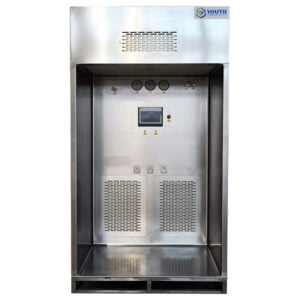
Treating the room label as the containment decision is the most common and most defensible-looking mistake in BSL-2 lab planning. The facility carries a BSL-2 designation, the team assumes standard controls apply uniformly, and the cabinet specification gets written around the average task rather than the highest-risk one. The gap only becomes visible during an incident review or compliance audit — at which point the SOP language that seemed broad enough turns out to be a liability rather than a safeguard. Understanding which manipulations actually require enclosed cabinet protection, and why that determination follows the workflow rather than the room classification, is what separates a defensible containment plan from one that looks complete on paper.
Which BSL-2 manipulations truly need enclosed cabinet protection
The containment requirement at BSL-2 is not uniform across all procedures performed in the lab. The specific trigger that shifts handling from open bench to enclosed cabinet is whether a given procedure has the potential to create splashes, sprays, or aerosols. That distinction is procedural, not agent-based, and it applies even when the agent involved is not typically considered aerosol-transmissible.
This matters because many BSL-2 labs run a mix of manipulations — some of which are genuinely low-risk at the bench and some of which are not. Pipetting into open tubes, vortexing samples, uncapping containers, and performing transfers between vessels all carry aerosol-generation potential that is not eliminated by the room’s physical controls. None of those steps is inherently unusual for a BSL-2 workflow, which is precisely why they are easy to underestimate. The aerosol potential is not dramatic; it is routine. That is the risk.
The practical implication is that a lab cannot determine its cabinet needs by reviewing its agent list alone. It needs to review its procedure list, step by step, and identify which specific manipulations cross the aerosol-generation threshold. If the SOP inventory has not been reviewed at that level of resolution, the cabinet specification that follows it is likely underdefined — covering the typical case rather than the procedurally driven one.
How aerosol-generating steps change the cabinet requirement
Once a procedure is classified as aerosol-generating, cabinet use shifts from advisable to operationally required for personnel protection. This is not a judgment call that varies by lab culture or available bench space — it is a direct consequence of what aerosol generation means for exposure risk.
The distinction has a practical consequence that teams often underweight: the aerosol-generating classification is assigned to the step, not to the agent. That means a vortexing step with a relatively low-risk BSL-2 agent carries the same procedural containment requirement as a more sensitive manipulation with a higher-concern organism. The step is what generates the exposure pathway, and the step is what the cabinet is meant to intercept.
This also means that labs which perform aerosol-generating steps only occasionally — not as the primary workflow but as part of preparation or processing — cannot treat those steps as edge cases that fall outside the cabinet plan. A manipulation that happens once per run and generates aerosol exposure risk every time it happens is a routine risk, not an exceptional one. The cabinet specification needs to reflect that. For labs working through the decision of which enclosure class applies to their specific workflow, the Cabine di sicurezza biologica di Classe II: Guida completa provides a useful reference for understanding functional differences between enclosure types.
Why cabinet selection should follow workflow mapping rather than room label alone
A BSL-2 room designation tells you the facility meets a defined set of physical and procedural baseline requirements. It does not tell you which specific manipulations inside that room require enclosed handling — and for some workflows, it does not fully account for the agent risk embedded in the samples themselves.
One planning gap that surfaces regularly is the handling of human-derived materials where the presence of an infectious agent may be unknown. The sample type, not a confirmed agent identification, drives the containment need. If a workflow involves processing materials that could plausibly carry an uncharacterized infectious agent, the room label is an insufficient basis for deciding that open bench work is acceptable. The workflow — what is being done with those materials, at what volume, and using which specific steps — has to carry that determination.
The failure risk here is not hypothetical. Labs that base cabinet selection on the room’s BSL-2 designation without mapping which steps within the workflow actually require enclosed handling often write SOP language that is broad but imprecise: “procedures should be conducted in a biosafety cabinet where appropriate.” That language sounds adequate at the time of writing. It is difficult to defend if a specific aerosol-generating step — one that should have been explicitly assigned to the cabinet — was being performed at the bench. Workflow mapping before cabinet specification is what closes that gap.
What SOP waste and cleaning assumptions buyers should review
Cabinet selection discussions rarely include a structured review of waste decontamination and surface cleaning requirements, but both have direct implications for how the cabinet needs to be configured and integrated into the workflow. Discovering after procurement that the waste handling process requires in-cabinet staging, or that the cleaning protocol is incompatible with the cabinet’s interior materials, forces operational workarounds that add friction without adding protection.
The two baseline checks — work surface decontamination frequency and waste decontamination method before disposal — are not novel requirements, but they are frequently treated as SOP details rather than procurement inputs.
| What to Review in SOPs | Why This Influences Cabinet Selection/Planning |
|---|---|
| Work surface decontamination frequency (e.g., at least daily) | Determines the cabinet’s required accessibility, material compatibility, and workflow integration for routine cleaning. |
| Waste material decontamination method and location (before disposal) | Influences the need for in-cabinet waste handling, pass-through capabilities, and workflow staging within the cabinet. |
The consequence of skipping these checks at the procurement stage is not usually a safety failure — it is an operational one. A cabinet that was selected without accounting for the waste handling workflow may require personnel to move materials outside the enclosure before decontamination, which reintroduces the exposure risk the cabinet was meant to prevent. A cleaning protocol that requires specific surface materials or drain configurations needs to match what the cabinet actually provides. These are straightforward to align at the specification stage and difficult to fix after installation.
When Class II coverage is sufficient for routine BSL-2 work
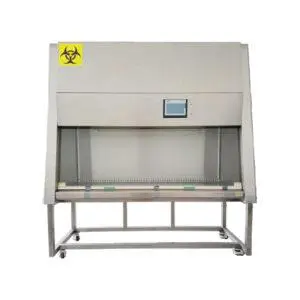
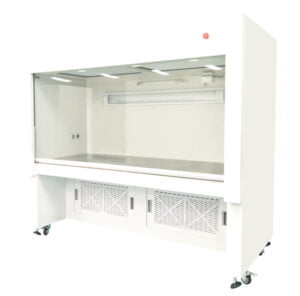
For the large majority of routine BSL-2 workflows — work that does not involve volatile chemicals, does not require higher classification based on agent risk, and is conducted at standard sample volumes — a Class II, Type A2 cabinet provides a practical and well-characterized level of protection. The sufficiency condition is not universal, but it is reliable when the workflow parameters stay within what this cabinet class is designed to address.
The Class II A2 design provides three distinct protective functions, each targeting a different exposure pathway.
| Protective Function (Class II A2) | What It Guards Against | Key Performance Consideration |
|---|---|---|
| Personnel Protection (Inward Airflow) | Exposure to aerosols, splashes, or sprays generated inside the cabinet. | Minimum inward airflow velocity (e.g., 100 fpm / 0.51 m/s) to create a protective air curtain. Must be validated during certification. |
| Product Protection (HEPA-filtered Downflow) | Sample contamination from room particulates. | Requires proper filter integrity and balanced airflow. |
| Environmental Protection (HEPA-filtered Exhaust) | Release of contaminants from the cabinet into the lab environment. | Requires proper filter integrity and, for some models, connection to building exhaust. |
The 100 fpm (0.51 m/s) inward airflow figure that defines personnel protection in this context is a design and performance benchmark, not a value that can be assumed at installation. It must be validated during cabinet certification, because inward velocity is affected by room conditions, placement relative to HVAC supply and return vents, foot traffic patterns, and the position of equipment at and inside the cabinet opening. A cabinet that meets its design specification in isolation may not maintain that airflow profile once placed in its actual operating environment. This is why annual certification matters: it confirms performance under real conditions, not factory conditions.
For labs evaluating specific cabinet models and their airflow characteristics, reviewing verified specifications through a armadio di sicurezza biologica product resource can help teams understand the design benchmarks relevant to their workflow before making procurement decisions.
Which protection threshold should trigger specification review
Standard Class II A2 selection is the right starting point for most BSL-2 workflows. There are specific operational thresholds, however, where that selection becomes insufficient and where specifying against the standard model without review creates a gap that will need to be addressed — either through a retrofit or through operational restrictions that limit what the lab can actually do.
Two thresholds warrant a formal specification review rather than a default selection.
| Threshold / Scenario | Why It Triggers a Review | What to Clarify During Planning |
|---|---|---|
| Handling small quantities of volatile chemicals | Requires a canopy connection to the building’s exhaust system for safe vapor removal. | Cabinet type (e.g., B2) and exhaust connection requirements. |
| Annual cabinet certification requirement | Impacts long-term operational planning, validation schedules, and compliance maintenance. | Responsibility, scheduling, and cost for recertification services. |
The volatile chemical threshold is the one most frequently encountered mid-project. A workflow that begins as a purely biological procedure may incorporate chemical fixatives, solvents, or other volatile reagents as the protocol develops. A Class II A2 cabinet without a canopy connection to the building’s exhaust system is not designed to handle vapor removal — and adding that connection after installation is structurally straightforward in concept but logistically and financially costly in practice. If there is any reasonable probability that the workflow will include small quantities of volatile chemicals, the exhaust connection requirement should be defined at the design stage, not treated as a future modification.
Annual certification is a different kind of threshold — it is not a workflow trigger, but it has direct compliance and validation consequences that need to be built into the operational plan before procurement is finalized. Certification is not self-executing. It requires scheduling, access, qualified personnel or contracted services, and documentation that supports the lab’s compliance position. Facilities that have not confirmed whether their maintenance schedule and exhaust infrastructure can support the certified cabinet’s requirements have not completed their specification — they have only completed part of it. The guidance in Garantire la sicurezza del rischio biologico: Migliori pratiche per l'uso delle cabine di sicurezza biologica covers operational and maintenance practices that are directly relevant to sustaining certified cabinet performance over time.
The clearest pre-procurement confirmation a BSL-2 lab team can make is not which cabinet class they need — it is which specific procedural steps in their workflow generate aerosol, splash, or spray risk and whether those steps have been explicitly assigned to enclosed handling in the written SOP. That mapping exercise defines the cabinet requirement with far more precision than the room designation does, and it surfaces the downstream variables — volatile chemical exposure, waste decontamination staging, cleaning protocol compatibility, and certification scheduling — before they become retrofit problems.
If the workflow mapping has not been completed, the cabinet selection that follows it is working from an incomplete input. The specification should follow the procedure inventory, with the cabinet type and configuration matched to the highest-risk routine step rather than the median one. Any threshold that falls outside the standard Class II A2 design envelope — particularly volatile chemical handling — needs to be confirmed against infrastructure capabilities before the procurement decision is made, not after commissioning begins.
Domande frequenti
Q: What if our BSL-2 lab only handles human-derived samples with no confirmed infectious agent — do we still need a cabinet?
A: Yes, the absence of a confirmed agent does not eliminate the cabinet requirement. The containment need is driven by the possibility that an infectious agent may be present in the sample, not by a confirmed identification. If your workflow involves processing human-derived materials where the agent status is unknown, that uncertainty itself is the risk basis — and manipulations with aerosol-generation potential in that context require enclosed handling regardless of whether an agent has been characterized.
Q: After workflow mapping is complete, what should happen before procurement is finalized?
A: The mapped workflow should be checked against the lab’s physical infrastructure before a cabinet is selected. Specifically, teams need to confirm whether any identified steps involve volatile chemicals — because that determines whether a canopy exhaust connection is required — and whether the planned installation location can sustain the 100 fpm inward airflow velocity under real room conditions, accounting for HVAC placement, foot traffic, and adjacent equipment. Those infrastructure checks belong in the specification stage, not the commissioning stage.
Q: At what point does a BSL-2 workflow outgrow Class II A2 coverage entirely?
A: The Class II A2 design envelope ends when the workflow involves volatile chemical handling or when agent risk warrants a higher containment classification. For volatile chemicals, even small quantities introduce vapor exposure that a cabinet without an exhaust canopy connection cannot safely manage — the cabinet design does not provide vapor removal without that infrastructure link. If either condition applies to even a subset of routine steps, the specification needs to reflect that threshold rather than defaulting to the standard model.
Q: Is a biosafety cabinet or an isolator the better containment choice for high-sensitivity BSL-2 procedures?
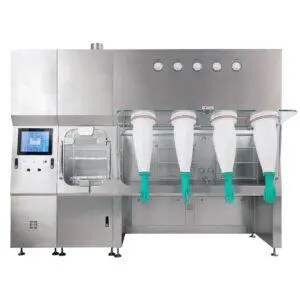
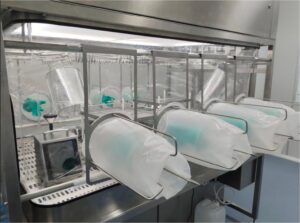
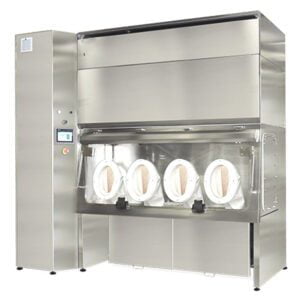
A: It depends on whether the priority is personnel protection during open manipulation or near-absolute separation between operator and material. A Class II cabinet provides robust personnel, product, and environmental protection for the large majority of BSL-2 workflows involving aerosol-generating steps. Isolator technology provides a physically closed barrier that eliminates the shared air boundary entirely, which becomes relevant when the manipulation requires a higher assurance of separation — such as sterility testing — rather than simply managing aerosol risk within an open-front enclosure. The workflow’s contamination risk profile, not the BSL-2 label alone, determines which architecture is appropriate.
Q: How do you decide whether an occasional aerosol-generating step — one that happens only once per run — justifies assigning a dedicated cabinet to that procedure?
A: Frequency does not reduce the exposure risk that occurs each time the step is performed. A manipulation that generates aerosol once per run creates a repeatable exposure pathway on every run — it is a routine risk by operational definition, even if it occupies a small fraction of total procedure time. The decision to assign enclosed handling to that step should be based on whether it crosses the aerosol-generation threshold, not on how often it appears in the protocol. If it does cross that threshold, it belongs inside the cabinet regardless of its frequency.
Contenuti correlati:
- Cabine di biosicurezza di Classe I: Caratteristiche e usi
- Come scegliere una cabina di sicurezza biologica per il controllo qualità farmaceutico, la coltura cellulare e il lavoro con farmaci pericolosi
- Cabine di sicurezza biologica di Classe II A2: Caratteristiche e usi
- Livelli di biocontenimento: Da BSL-1 a BSL-4
- Quando ha senso una cabina di sicurezza biologica di Classe III invece di un sistema di Classe II?
- Cosa rende una cabina di sicurezza biologica adatta alla coltura cellulare e al lavoro di laboratorio asettico
- Cabine di sicurezza biologica di Classe III: Massima protezione
- Flusso d'aria della cabina di biosicurezza: Comprendere i modelli
- Navigazione nelle classi delle cabine di biosicurezza: Una panoramica completa