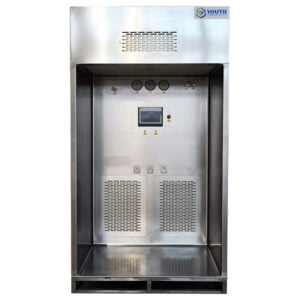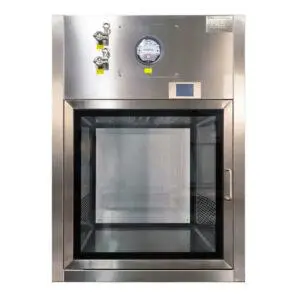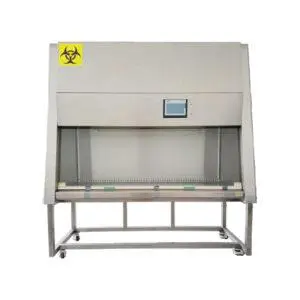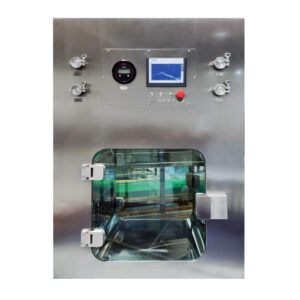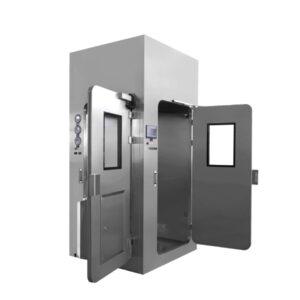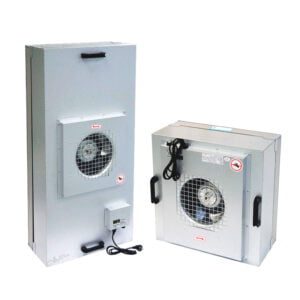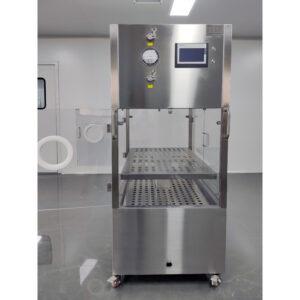
A cleanroom envelope that passes factory inspection and then leaks at pressure test during qualification is not an anomaly — it is a predictable consequence of treating two distinct verification stages as interchangeable. The transport from factory to site, the field cuts made to fit structural imperfections, and the utility rough-ins that connect the envelope to building services all introduce failure modes that no factory check can anticipate. When those failure modes surface during IQ or the first pressure differential test, resolving them requires cross-party negotiation between client, manufacturer, and third-party engineers at the worst possible point in the schedule. Understanding which acceptance checks belong at the factory and which can only be confirmed on site is the judgment that prevents a clean FAT record from becoming a false qualification baseline.
Factory checks that belong in FAT records
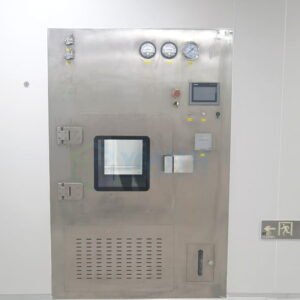
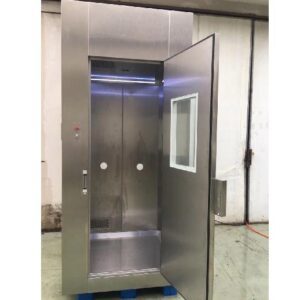
The factory acceptance stage exists because some deficiencies are cheapest, fastest, and most traceable to resolve before components leave the controlled environment of the production facility. For modular door, wall, and ceiling systems, that means the FAT scope should focus on what can be physically and documentarily verified independent of site conditions: panel dimensions and tolerances, surface finish and material integrity, weld quality, door hardware operation, window fit and frame alignment, and panel labeling against the project drawing set.
Documentation is equally factory-verifiable and equally important. FAT records should include design drawings matched to as-built components, material certificates for panel skins and core materials, operation and maintenance manuals, and any third-party test certificates for fire rating or acoustic performance that are material to the specification. ISO 14644-4:2022 treats design and construction verification as foundational to cleanroom envelope integrity, and the FAT stage is where that verification is most practically achievable — before transport and installation introduce variables the supplier cannot control.
The most common accountability gap at this stage is a FAT protocol that was not built against the project’s User Requirement Specification. Suppliers frequently submit generic plans with vague acceptance criteria, which means a misaligned door frame, an inadequate weld finish, or an unlabeled panel passes through unchallenged. Those deficiencies become significantly harder to assign liability for once components are installed. A URS-aligned FAT protocol, with dimensional tolerances, finish standards, and labeling requirements stated as explicit pass/fail criteria, is the supplier’s primary obligation — not a courtesy that buyers can assume is already in place.
Resolving a dimensional deviation at the factory typically means a correction, re-inspection, and updated record within the same visit. The same deviation found at SAT requires the installer to halt work, the supplier to decide whether to replace or rework on site, and QA to assess whether the installed condition still meets the acceptance criteria. The cost differential is not marginal.
Site conditions that must wait for SAT
No matter how thorough the FAT, there is a defined category of acceptance checks that cannot be performed until the system is installed in its permanent location. This is not a procedural formality — it reflects the reality that transport, site assembly, and utility connection each introduce new failure modes that change what the installed envelope actually does.
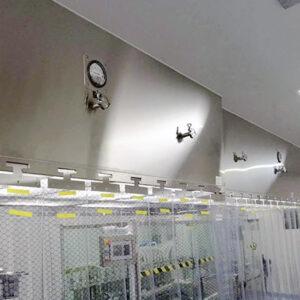
Frame-to-panel sealing, for example, cannot be meaningfully verified at the factory. It depends on how the frame was installed into the structural opening, whether the substrate was prepared to specification, and whether field cuts were made cleanly and sealed correctly. Ceiling penetrations for HEPA housings, light fittings, and services are similarly site-determined: the ceiling grid is assembled on site, penetrations are cut to fit, and the integrity of those junctions depends entirely on installation workmanship that happened after the FAT record was closed. Pressure differential behavior across the envelope is another SAT-only condition — it requires the HVAC system to be operational and the envelope to be in its final assembled state before any meaningful test result can be recorded.
| SAT Check Area | What It Includes | Reason It Must Wait for SAT |
|---|---|---|
| Verificatie nutsaansluiting | Compressed air, steam, demineralized water connections confirmed operational | Site-specific utility supplies and hook‑ups are not available at the factory |
| Installed condition integrity | Visual inspection of installation, internal pressure, and ventilation performance | Transport, cutting, and site assembly can alter sealing, pressure, and airflow behavior |
| System interface testing | Integration with other systems and peripherals | Cross‑system communication and physical interfaces can only be validated after full site assembly |
The practical risk created by scope drift in this area is that buyers or project managers, under schedule pressure, attempt to carry FAT evidence forward to cover installed conditions. A FAT record showing that individual panels met dimensional tolerances does not confirm that the assembled envelope holds pressure. These are different properties verified under different conditions, and conflating them creates a compliance gap that is difficult to defend against an auditor who asks for evidence of installed performance.
Transport, field cuts and utilities that change acceptance risk
Between a signed FAT record and the start of SAT, several things happen to a modular cleanroom system that the factory inspection cannot account for. Understanding this interval as a structured source of acceptance risk — rather than a logistical formality — is what prevents gaps from accumulating silently.
Transport exposes panels to mechanical stress, vibration, and handling that can affect surface finish, damage corner joints, or shift prefabricated door frames out of square. These effects may be minor individually, but a panel that arrives with a compromised edge seal or a door frame that has shifted even a few millimetres will require field correction. If the FAT record does not clearly document the pre-shipment condition — including photographic evidence and dimensional confirmation — it becomes difficult to determine whether damage occurred in transit or was present at the factory.
Field cuts represent a more significant risk category. Modular systems are designed to standard module dimensions, but site conditions — structural columns, drainage runs, existing wall penetrations, and floor level variations — routinely require cuts and modifications that were not part of the original factory scope. How those cuts are made, how the exposed edges are treated, and how penetrations are sealed determines whether the envelope performs to the specified cleanroom classification. None of this is captured in the FAT record, and none of it can be. The SAT protocol must explicitly address field modifications as inspection items, not treat them as installer discretion.
Utilities add a third layer. Compressed air connections for door interlocks, electrical supplies for door controls and pass-through indicators, and ventilation tie-ins for pressurized rooms all depend on site infrastructure that may not have been finalized when the FAT was conducted. Unclear or missing FAT evidence about utility interface specifications creates a handover gap where the installer and HVAC contractor cannot confirm what they are connecting to. That gap tends to surface as SAT re-testing or, worse, as a punch-list item that remains disputed because no party documented the original intent.
Responsibility matrix for supplier, installer, HVAC and QA
When responsibilities are clearly assigned at the start of the project, most deviation disputes at SAT become straightforward: the evidence exists, the responsible party is named, and the closure path is defined. When responsibilities are ambiguous, the same deviation becomes an open-ended negotiation between parties who each have schedule pressure and limited tolerance for rework costs.
The table below captures role-by-role assignments across FAT and SAT phases.
| Rol | FAT Phase Responsibility | SAT Phase Responsibility | Key Evidence / Standard |
|---|---|---|---|
| Supplier (Manufacturer) | Develops URS‑aligned FAT protocol; performs factory‑verifiable checks; documents deviations and resolutions | Provides technical support if deviations trace to manufacturing; collaborates with site team on resolution | FAT records, material certificates, deviation logs |
| Installer (Site Contractor) | May witness FAT for familiarization; no primary FAT obligations | Installs components; handles field cuts and sealing; conducts visual inspection per SAT protocol; manages punch‑list closure | SAT installation reports, punch‑list records |
| HVAC Contractor | Reviews FAT documentation for utility interface specifications | Connects and verifies site utilities (compressed air, steam, demineralized water); performs ventilation and pressure tests | Utility test reports, ventilation performance data |
| QA | Defines acceptance criteria aligned with ISO 14644 and GMP Annex 15; attends or reviews FAT evidence | Reviews SAT evidence; verifies closure of all deviations and punch‑list items; approves final sign‑off | Traceable acceptance evidence package, final compliance statement |
The point at which responsibility transfers most often creates disputes is at the boundary between supplier and installer. If a door frame arrives at site out of square and the installer makes a field adjustment without documenting it, the question of whether the final installed condition is within specification — and who is accountable if it is not — has no clean answer. Preventing this requires the handover documentation from FAT to site to include a clear statement of as-shipped condition, and the SAT protocol to require the installer to inspect and record field modifications before sealing.
QA’s role here is not passive review. GMP Annex 15 frames qualification as requiring documented evidence that systems perform consistently with their intended use, and that evidence must be traceable. For modular envelope systems, that means QA must define acceptance criteria before the FAT — not after — and must confirm that both the FAT and SAT records are structured to produce the kind of evidence that survives audit scrutiny. A QA team that only reviews documentation at the end of SAT has no leverage over the quality of FAT records and cannot reliably close the gap between them.
For projects where the installer and HVAC contractor are different parties — which is common — the SAT protocol should explicitly assign which party is responsible for each interface condition. Utility connections, penetration seals, and pressure test witnessing all sit at those interfaces, and if the protocol is silent, the punch-list will not be.
Buyers who want to understand what a well-structured qualification workflow looks like for cleanroom equipment can refer to the IQ OQ PQ qualification framework for cleanroom equipment installation as a useful reference for how acceptance evidence maps to qualification stages.
FAT/SAT evidence table before final sign-off
The practical function of an evidence table is not to summarize what happened — it is to make acceptance decisions defensible and deviation closure non-negotiable. Without explicit accept, reject, and conditional-accept thresholds defined in advance, the final sign-off stage becomes a negotiation rather than a verification.
The critical design decision for this table is that FAT and SAT acceptance are treated as independent determinations. A conditional accept at FAT — where a surface finish imperfection was noted with a rework commitment — does not automatically become an accept at SAT unless the rework was completed and re-inspected on site. If that confirmation step is missing, the conditional accept remains open, and QA has no basis to close it.
| Stadium | Status | Definition | Voorbeeld |
|---|---|---|---|
| FAT | Accept | All test results meet acceptance criteria; no open deviations | Dimensions within tolerance, all material certificates verified |
| FAT | Conditional Accept | Critical deviations resolved; minor deviations documented with a closure plan | Surface finish imperfection noted; rework agreed for post‑delivery |
| FAT | Reject | Critical deviations not resolved or acceptance evidence incomplete | Weld integrity failure not corrected; mandatory certificate missing |
| SAT | Accept | All installed system tests meet criteria; all punch‑list items closed | Pressure test passes, no seal leaks, ventilation data within spec |
| SAT | Conditional Accept | Minor punch‑list items remain open with a closure plan; no safety or performance impact | Cosmetic door panel scratch to be repaired within agreed schedule |
| SAT | Reject | Major functional failure, safety risk, or unresolved deviations | Pressure test fails; utility connection leaks |
Conditional accepts require particular discipline. They are appropriate when a deviation has a clear, bounded closure plan — a specific rework action, a responsible party, and a deadline. They become a liability when they are used to defer genuinely critical issues past the FAT stage on the assumption that site conditions will somehow resolve them. A weld integrity failure that is carried forward as a conditional accept and then discovered to have been inadequately repaired after installation is the clearest example of how this category is misused under schedule pressure.
The punch-list at SAT serves the same structural function as the deviation log at FAT: it makes open items visible, assigns ownership, and sets closure conditions. A punch-list without closure rules — specifying what evidence is required to close each item and who must sign off — tends to accumulate items that are never formally resolved, leaving the final sign-off dependent on informal agreement rather than documented evidence. That is the condition that creates the most exposure during a regulatory inspection or a handover dispute.
Projects using Youth Filter modular cleanroom systems of cleanroom door and window assemblies should confirm with their supplier that FAT protocols are built against the project URS and that the deviation log format is compatible with their SAT punch-list structure — inconsistencies between the two create gaps that are difficult to close at the sign-off stage.
The most defensible position at final sign-off is one where FAT records document the as-shipped condition of every component against defined criteria, SAT records document the as-installed condition of the assembled envelope against site-specific acceptance criteria, and every deviation — at either stage — has a traceable closure record with a named responsible party. That is a different document set from a single combined acceptance report, and it requires planning the evidence structure before the FAT, not after the SAT.
Before committing to a FAT protocol from any supplier, confirm that it identifies specific acceptance criteria tied to the project URS, not generic checks that could apply to any cleanroom panel order. And before the SAT protocol is drafted, confirm that the responsibility matrix identifies who is accountable for each interface condition — particularly penetrations, seals, and utility connections — so that punch-list disputes have a defined resolution path rather than becoming the last obstacle between project completion and qualification.
Veelgestelde vragen
Q: Our project uses a single contractor for both supply and installation — does the FAT/SAT split still apply when one party owns both stages?
A: Yes, and arguably the discipline matters more in this scenario. When the same party conducts both FAT and SAT, the incentive to carry conditional accepts forward rather than resolve them at the factory increases. The FAT record and SAT record must still be treated as independent documents with independent acceptance criteria — a single contractor does not change the fact that transport and installation introduce failure modes the factory check cannot anticipate. Require the contractor to submit separate protocols with distinct acceptance criteria for each stage before work begins, not a combined report produced after the fact.
Q: At what point does a field cut void the FAT acceptance record for a panel or door frame?
A: A field cut does not automatically void the FAT record, but it does create a gap in the acceptance chain that must be closed through SAT documentation. The FAT record covers the component in its as-shipped condition; any post-delivery modification falls outside that record’s scope. If a panel is cut on site to accommodate a structural column or drainage run, the SAT protocol must treat the modified component as a new inspection item — covering edge treatment, seal integrity, and dimensional conformance — regardless of whether the unmodified version passed FAT without deviation.
Q: Is a third-party certifier required to witness SAT, or can the client QA team sign off independently?
A: Whether a third-party certifier is required depends on the regulatory classification of the cleanroom and the client’s own quality system requirements, not on anything intrinsic to the SAT process itself. For GMP-regulated environments, Annex 15 requires documented evidence that the installed system performs consistently with its intended use, but it does not mandate external witnesses. However, where pressure differential performance and penetration seal integrity are being verified for the first time on site, having an independent witness provides an audit defense that internal sign-off alone cannot. Projects seeking classification under ISO 14644-4:2022 should confirm witnessing requirements with their QA team before the SAT protocol is finalized.
Q: How does the FAT/SAT evidence structure compare to a standard IQ/OQ approach — can one replace the other?
A: They address overlapping but distinct concerns and should not be treated as substitutes. FAT and SAT are envelope-specific acceptance stages focused on physical condition, workmanship, and installation interfaces. IQ and OQ are qualification stages that confirm the installed system was built to its design specification and operates within defined parameters. In practice, strong FAT and SAT records feed directly into IQ documentation, but FAT is not IQ — it does not confirm installed performance, and a completed IQ does not retroactively close a gap left by a weak or missing FAT record. Projects should plan the evidence structure so that FAT handover documentation is explicitly formatted to support IQ, rather than treating the two as parallel tracks that can be reconciled at the end.
Q: If schedule pressure forces SAT to begin before all FAT conditional accepts are formally closed, what is the actual qualification risk?
A: The risk is that a conditional accept from FAT remains permanently open, because once installation proceeds the rework confirmation step has no natural trigger and no assigned party to enforce it. Under Annex 15, qualification evidence must be traceable and complete before final sign-off — a conditional accept without a documented closure record is an open deviation, not a resolved one. If an auditor reviews the qualification package and finds a conditional accept at FAT with no corresponding closure entry, the entire sign-off becomes difficult to defend regardless of how well the SAT records are structured. The safer approach is to define in the FAT protocol that no conditional accept advances to site without a named closure deadline and a responsible party, and that SAT sign-off is explicitly conditional on confirmation that all FAT deviations have been formally resolved.