Selecting equipment across multiple product families from a single supplier feels like a sourcing advantage until commissioning reveals that the units purchased for Grade A or B areas lack the documentation baseline needed to support qualification. That discovery—missing filter certificates, no material traceability, IQ/OQ templates that reference a different product version—can delay handover by weeks and force renegotiation with a supplier who has already moved to the next order. The judgment that prevents this is not about product breadth; it is about whether each equipment family a supplier lists has been configured and documented for the specific process zone it will protect. What follows gives engineering and procurement a shared framework for mapping FFU, LAF, pass box, booth, and HEPA housing to use cases, document expectations, and shortlist conditions before equipment is ordered.
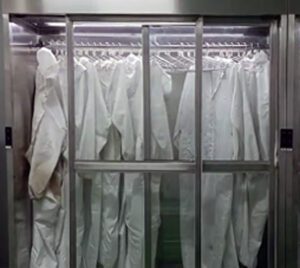
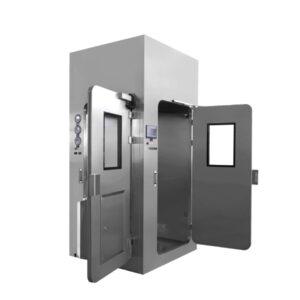
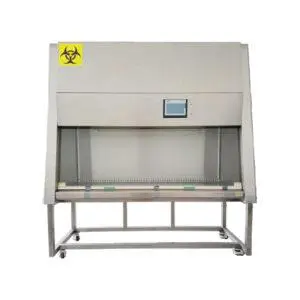
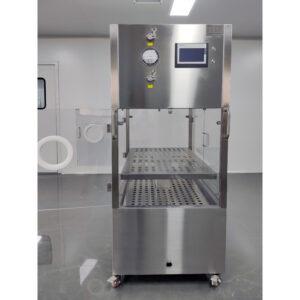
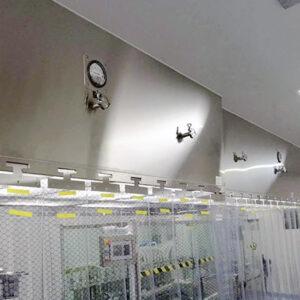
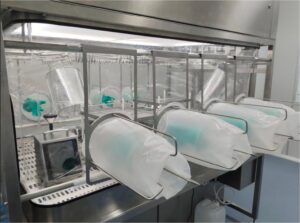
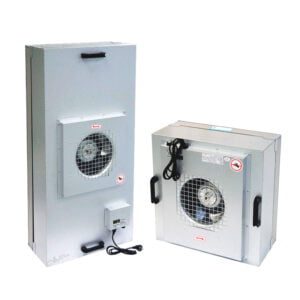
Pharmaceutical equipment scope across FFU, LAF, pass box, booth, and HEPA housing
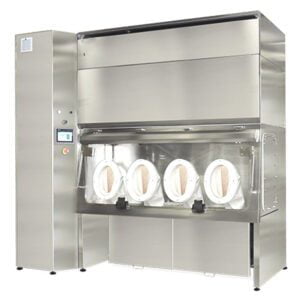
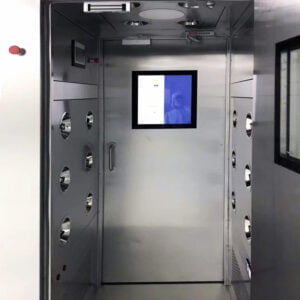
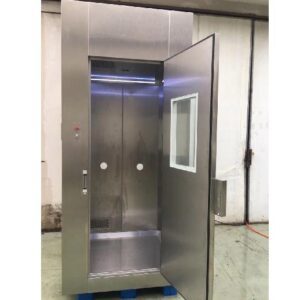
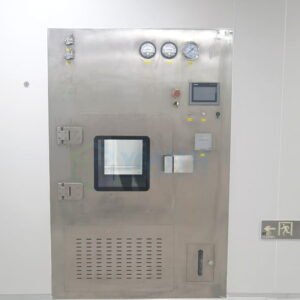
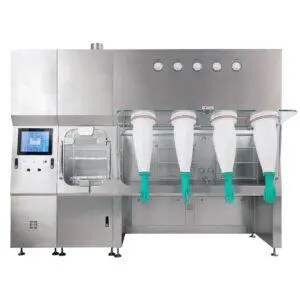
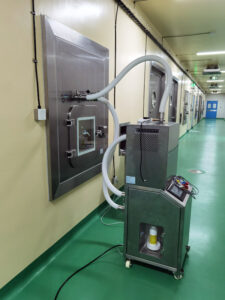
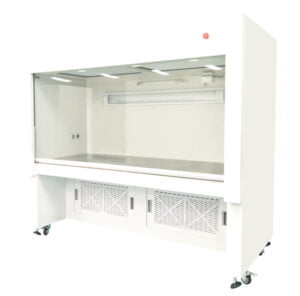
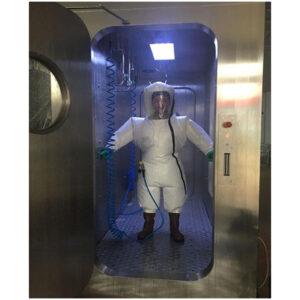
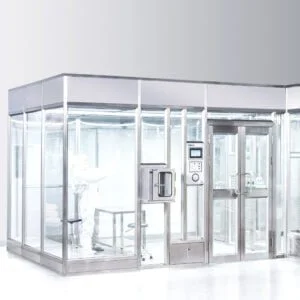
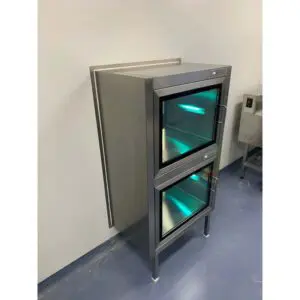
These five equipment families cover the major contamination-control points in a pharmaceutical facility, but they do not serve the same process function and should not be evaluated on the same criteria. FFUs and HEPA housings address room-level or duct-level air supply and recirculation. LAF units and booths create localized unidirectional airflow zones at the point of product exposure or powder handling. Pass boxes manage material transfer between classified zones without breaking the pressure differential or introducing an uncontrolled corridor.
The relevant planning figure for these families is ISO Class 5, which is the cleanliness level that most critical-area equipment targets at the work surface or airstream. ISO 14644-1 provides the classification framework but does not prescribe which class applies to which process step—that determination belongs to the facility design and risk assessment. Treating Class 5 capability as a universal floor for all five equipment types will misdirect procurement: a HEPA housing serving a Grade C corridor has different performance and documentation requirements than an LAF unit positioned over an exposed product operation in a Grade B background.
The more useful planning exercise is to map each equipment type to the process zone it will occupy and then define what configuration boundaries that zone imposes—airflow pattern, pressure relationship, surface finish, connection type, and sanitation compatibility. Doing that mapping before issuing a purchase inquiry separates a workable supplier scope from a catalog selection that looks complete on paper but creates fit problems during installation.
GMP use cases each product family supports
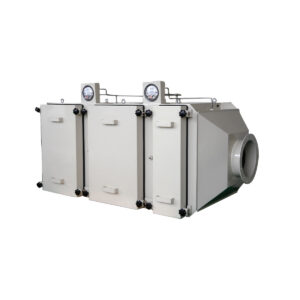
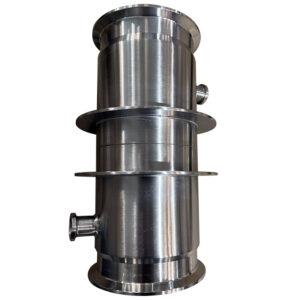
FFUs and HEPA housings carry the filtration load. HEPA filters in these units are designed to capture particles at very high efficiency across a range that includes submicron sizes, which is what maintaining Grade A or B air quality in an aseptic environment requires. The operational consequence of this capability is that it only holds when the unit runs continuously and when the filter-to-housing seal stays intact. A filter that meets the efficiency specification at factory test but is installed into a housing with a compromised gel seal or a worn gasket will allow bypass—and bypass in a Grade A zone is not a maintenance issue, it is a contamination event.
The seal integrity point extends to every product family on this list, not just filtration units. An LAF unit or dispensing booth that maintains target airflow at baseline but loses seal integrity when a cleaning agent contacts the gasket material has introduced a contamination risk at exactly the moment when the cleaning cycle is supposed to reduce it. This is the constraint that generic equipment often fails to satisfy: adequate baseline performance, poor maintenance-cycle durability.
| Vereiste | Applicable Equipment | Waarom het belangrijk is |
|---|---|---|
| HEPA filtration to 0.1 microns and continuous operation | FFU, HEPA housing | Maintains Grade A/B clean air conditions for pharmaceutical processing |
| Unbroken seals during sanitation cycles and filter changes | All listed product families (FFU, LAF, pass box, booth, HEPA housing) | Prevents contamination ingress and loss of cleanroom integrity during maintenance and cleaning |
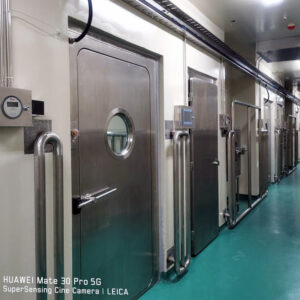
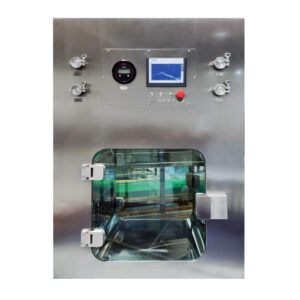
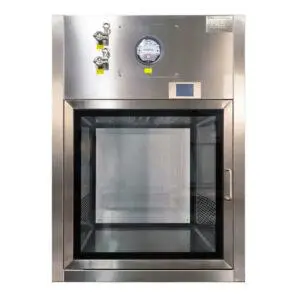
Pass boxes occupy a different risk position. Their primary contamination-control function is zone separation during material transfer, and that function depends on interlock integrity and surface cleanability rather than filter performance. An interlock failure that allows both doors to open simultaneously collapses the pressure differential between classified zones—a failure mode that is straightforward to prevent with proper design but easy to overlook when a pass box is selected on dimensions alone.
Documentation expected from a pharma cleanroom equipment supplier
The documentation gap is where supplier selection errors become validation problems. For equipment placed in critical or directly adjacent areas, a buyer should expect a defined set of deliverables before factory acceptance: filter efficiency test certificates linked to the specific filter serial numbers installed in the unit, material declarations or certificates of conformance for product-contact and cleanroom-facing surfaces, and dimensional or configuration drawings that match what was actually manufactured. For qualification support, IQ/OQ protocol templates referenced to the actual equipment model—not a generic template that predates the current design—are the baseline expectation.
What makes this difficult in practice is that suppliers vary significantly in how they treat documentation as part of their scope. Some include it as standard; others treat it as a custom deliverable with lead time and additional cost. Neither position is inherently disqualifying, but both need to be surfaced and agreed before order placement. The risk of discovering this gap after delivery is that rework—retrofitting documentation to already-installed equipment—requires the supplier’s active cooperation and often takes longer than the procurement team budgets.
EU GMP Annex 1 provides the process-reference basis for why qualification documentation is necessary in sterile manufacturing contexts, and FDA’s aseptic processing guidance reinforces the expectation that equipment in critical areas be qualified with appropriate records. Neither source specifies the exact format of supplier deliverables, which means the buyer must define the documentation scope explicitly in the purchase specification rather than assuming it is covered by a general GMP compliance claim.
For teams building a documentation checklist, useful categories to define in advance include: filter test records, surface finish specifications with Ra values where relevant, weld inspection records for fabricated components, leak test reports, and the version of the IQ/OQ template relative to the manufactured unit. Leaving these undefined at inquiry stage creates negotiating friction later and can delay FAT sign-off.
Supplier-fit risk from generic cleanroom catalog claims
A catalog that lists FFU, LAF, pass box, booth, and HEPA housing across multiple page categories creates the impression of capability without demonstrating it. The downstream risk is not that the equipment will necessarily fail—it is that the supplier may not be able to support the documentation and configuration requirements that pharmaceutical applications impose on each of those families.
| Catalog Claim | Hidden Risk | Wat bevestigen? |
|---|---|---|
| Emphasis on wide product variety | May lack pharma-specific documentation (IQ/OQ, material certificates, test reports) | Ask for sample documentation packages and pharmaceutical project references |
| Emphasis on low price | May indicate limited design depth for GMP environments (e.g., no crevice-free finish, poor drainability) | Verify design attributes against GMP cleanability, sterilizability, and drainability criteria |
The practical consequence surfaces in two project stages. The first is specification review: a supplier offering broad product variety without pharmaceutical project references often cannot provide sample documentation packages that match what a validation engineer will need to reference. The second is commissioning: when a team discovers mid-qualification that the pass box installed in a Grade B/C transfer location was designed for a general laboratory application and lacks the interlock documentation or cleanability specification needed to satisfy the protocol, resolution requires either re-qualification on reduced scope or equipment replacement. Both outcomes are avoidable if supplier depth—not just supplier breadth—is confirmed before order.
For critical and transfer equipment, the verification questions that reduce this risk are direct: request a sample IQ/OQ template for the specific model being considered, ask for at least one pharmaceutical facility reference where that model was qualified, and confirm that the filter certificates provided are unit-specific rather than batch-level. A supplier that can answer these requests promptly and with matching documentation is signaling a different level of preparation than one that defers or offers substitutes. That signal is more useful than a product list at this stage of evaluation.
A practical resource for teams working through GMP documentation expectations in this context: GMP-conforme cleanroomapparatuur | Gids met FDA vereisten.
Shortlist condition after process role and documents are mapped
Shortlisting a pharmaceutical cleanroomapparatuur supplier is not a function of how many product families they offer. It is a function of whether each family they are being asked to supply has a confirmed use case, a configuration boundary appropriate to the grade it will occupy, and a documentation scope that is agreed before order—not assumed after delivery.
The design attributes that matter most at shortlist stage are the ones that affect long-term GMP compliance rather than initial performance: cleanability, sterilizability, drainability, surface finish quality, and controllable functions. These are not abstract quality criteria; they are the attributes that determine whether a piece of equipment can be maintained in a validated state through its operational life, or whether it becomes progressively harder to clean and document as production cycles accumulate.
| Design Criterion | Waarom het belangrijk is | Wat bevestigen? |
|---|---|---|
| Reinigbaarheid | Enables effective residue removal between batches | Verify accessible surfaces, no hidden crevices, and smooth finishes |
| Sterilizability | Allows equipment to withstand sterilization without degradation | Confirm compatibility with common sterilization methods and availability of validation data |
| Drainability | Prevents liquid pooling and microbial growth | Check for sloped surfaces, drain ports, and no dead legs |
| Smooth, crevice-free finishes | Eliminates particle traps and facilitates cleaning | Inspect surface finish specifications (e.g., Ra measurement) and weld quality |
| Controllable functions | Ensures consistent operation and monitoring in critical steps | Confirm presence of integrated controls, alarms, and data logging capabilities |
The threshold for shortlisting should be that every equipment group in the supplier’s proposed scope can be mapped to a specific process role with a specific grade requirement, and that the supplier can demonstrate—with documentation rather than catalog claims—that their design for that product family supports both the use case and the maintenance requirements of that role. If a supplier can satisfy this for FFU and HEPA housing but cannot demonstrate it for pass boxes or booths, the shortlist decision should reflect that gap rather than average it out.
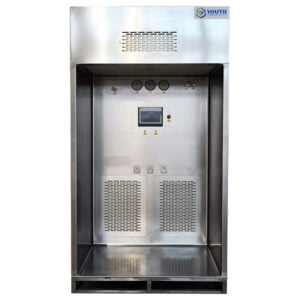
For teams evaluating dispensing or sampling booths specifically, configuration boundaries around containment level, airflow direction, and connection to room exhaust are the variables that most often require supplier-specific confirmation rather than catalog specification review. Doseercabine, monsternamecabine, weegcabine shows how these configurations are structured across different powder-handling scenarios, which can help define the right specification questions before engaging a supplier.
The most useful output from a supplier evaluation at this stage is not a confirmed product list—it is a confirmed documentation scope and a confirmed configuration boundary for each equipment family against the grade it will occupy. Those two confirmations, made before purchase order, are what separate a supplier that can fulfill a procurement milestone from one that can support a qualification program. Where either confirmation is missing or deferred, the downstream cost typically lands on the validation team, not the supplier. Building that check into the shortlist condition rather than the commissioning checklist is the decision that changes the project risk profile most reliably.
Veelgestelde vragen
Q: Does this supplier selection framework still apply if the facility is operating under a risk-based approach rather than strict Grade A/B/C/D zoning?
A: Yes, but the mapping exercise becomes more demanding, not less. A risk-based approach requires the same confirmation of configuration boundaries and documentation scope for each equipment family — it just means the grade-equivalent exposure classification must be derived from the facility’s own risk assessment rather than a standard zone label. The absence of a fixed grade designation does not reduce the documentation expectation; it shifts the burden of defining that expectation entirely onto the buyer’s specification.
Q: If a supplier satisfies the documentation requirements for FFU and HEPA housing but cannot demonstrate pharmaceutical depth for pass boxes, is it workable to split the scope across two suppliers?
A: Split sourcing is a legitimate option, but it introduces interface risk that a single-supplier scope avoids. The practical friction points are coordination of FAT schedules, reconciling documentation formats across suppliers for a single qualification package, and resolving accountability when a commissioning issue spans both scopes. Splitting is workable when the equipment families genuinely serve separate process zones with no shared qualification protocol — it becomes harder to manage when the same validation engineer must close IQ/OQ records across two suppliers under a single timeline.
Q: At what point in the project schedule should documentation scope be confirmed with the supplier — at RFQ, at technical review, or at purchase order?
A: Documentation scope should be confirmed no later than technical review, before purchase order is issued. Raising it only at RFQ risks receiving a catalog-level response that doesn’t reflect actual supplier capability. Waiting until purchase order means the scope becomes a renegotiation rather than a condition of award, which removes most of the buyer’s leverage. The practical checkpoint is to request sample documentation — a filter test certificate and an IQ/OQ template for the specific model under consideration — during technical review and treat the response as a qualification criterion before order placement.
Q: How does the advice here apply to a facility expansion that is adding classified zones rather than building a new cleanroom from the ground up?
A: Expansion scenarios carry an additional constraint the article does not address: equipment added to existing classified zones must be compatible with the validated state of the surrounding environment. This means configuration boundaries — surface finish, seal material, sanitation compatibility — need to be matched not just to the target grade but to the cleaning agents, sanitization cycles, and airflow patterns already validated in the adjacent space. A supplier selected purely on grade-level performance may still create a revalidation burden if the new equipment introduces incompatible materials or maintenance requirements into an already-qualified zone.
Q: Is a supplier with strong pharmaceutical documentation support worth a significant price premium over a catalog supplier if the equipment is going into a Grade C or D area rather than a critical zone?
A: For Grade C and D areas, the premium is harder to justify on documentation grounds alone, since qualification requirements and contamination-event consequences are less severe than in Grade A or B zones. The more relevant variable is maintenance-cycle durability — specifically whether the equipment’s seals, surface finish, and cleanability hold up over time in a production environment. A catalog supplier may meet initial performance specifications in a lower-grade zone but create accumulated maintenance burden that erodes the cost advantage. The worth assessment should be built on total cost across the equipment lifecycle, not unit price versus documentation package.