Pressure loss that climbs faster than expected after commissioning is rarely a terminal filter problem. It is almost always a prefiltration problem — one that was invisible during specification because the coarse and medium stages were never sized to carry their share of the particle load. By the time the HEPA terminal shows elevated differential pressure, the service interval has already been compressed, and the replacement schedule that was planned for years is running on months. The judgment that prevents this happens early, before device selection: mapping the full filtration chain so that each stage has a defined role, a sized capacity, and a realistic service interval. What follows gives engineers and procurement teams the information needed to evaluate whether a proposed filtration system is genuinely staged or just expensively terminal-heavy.
Filtration Planning Starts With The Whole Chain
A filtration system that only specifies the terminal HEPA is not a system — it is a single device with undefined upstream conditions. The terminal filter will perform to its rated efficiency on day one, but its service life depends almost entirely on what the coarse and medium stages upstream are removing before air reaches it. If those stages are underspecified, undersized, or maintained infrequently, the particle burden shifts forward, terminal pressure drop climbs prematurely, and the replacement frequency that procurement costed at one interval arrives at a significantly shorter one.
The planning case for staged filtration is fundamentally economic before it is technical. Targeted grading — coarse filters handling gross particulate, fine dust filters bridging the midrange, and HEPA terminals addressing sub-micron particles — means each replacement event is relatively low-cost and low-disruption. Collapse that into a single terminal stage and the same total particle load is absorbed by the most expensive filter in the chain, with replacement costs and shutdown frequency to match. This is not a regulatory requirement imposed by any cited standard; it is an engineering and procurement judgment that determines whether the terminal filter’s rated service life is achievable in practice.
The consequential planning error is treating device selection as the starting point. FFU selection, LAF unit configuration, and terminal housing specification all follow from understanding what each stage upstream is expected to capture, at what interval it will be replaced, and what residual load reaches the terminal. Getting that sequence right before issuing an RFQ is what separates a filtration system that performs at audit from one that generates unplanned maintenance events inside its first year of operation.
Pre-Filters And Medium Filters Protect Final HEPA Life
The coarse pre-filter and the medium fine dust filter are not protective in a vague sense — they are protective because they intercept specific particle size ranges that would otherwise be absorbed entirely by the terminal. Coarse G-class filters handle particles above 10 µm: fibres, insects, and coarse dust that would physically load a HEPA pack quickly if admitted. Fine dust F/ePM-class filters in the AHU or air handling path address the 1–10 µm range, which represents a significant share of the ambient particle burden in most facility air supplies. What reaches the HEPA terminal after both upstream stages have done their work is a much narrower, lower-concentration residual — predominantly sub-micron particles that HEPA media is specifically designed to capture efficiently at low concentration.
| مرحلة التصفية | حجم الجسيمات الملتقطة | عمر الخدمة الموصى به |
|---|---|---|
| Coarse (G) pre-filter | >10 µm | 12 شهراً |
| Fine dust (F/ePM) filter | 1–10 µm | 24 شهرًا |
| HEPA terminal filter | Remaining particles <1 µm | 3–5 years |
The service interval differential in that table is the operational consequence of this particle size division. Coarse pre-filters accumulate loading quickly because they intercept the highest-volume fraction of airborne particles; they are expected to be replaced roughly annually under normal operating conditions. Fine dust medium filters follow at approximately two-year intervals. The HEPA terminal, protected by both upstream stages functioning as intended, can realistically reach a 3–5 year service life. These are design figures from industry practice, not regulatory minimums — actual intervals depend on facility air quality, room classification, and how consistently upstream stages are serviced on schedule.
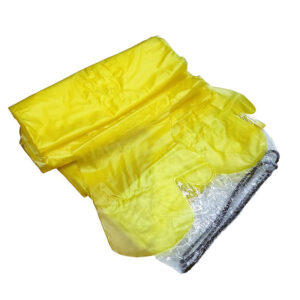
The failure mode to anticipate is not pre-filter neglect in isolation; it is the combination of late pre-filter replacement and an unchanged HEPA inspection schedule. A coarse pre-filter that is two months past its service interval is already loading the fine dust stage with particles it was not sized to handle. A fine dust filter that is running saturated is passing its residual load forward to the HEPA terminal. By the time a scheduled HEPA inspection occurs, the terminal may be months away from triggering a pressure-loss replacement — an event that was not in the maintenance budget and that requires a cleanroom shutdown. For panel pre-air filters used in upstream pre-filter positions, specifying the replacement interval alongside the terminal filter at the procurement stage — not as a separate afterthought — is the planning action that keeps HEPA service life achievable.
Terminal HEPA And ULPA Device Selection
The decision between HEPA and ULPA is not primarily about capture efficiency. Both classify under ISO 29463-1:2024, and both will meet terminal filtration requirements for most cleanroom applications. The decision is about whether the application genuinely demands sub-0.2 µm capture at the efficiency levels only ULPA delivers, or whether the cleanliness target is achievable with HEPA at lower energy draw, lower maintenance frequency, and significantly lower annual cost.
HEPA filters at H13–H14 capture 99.95% to 99.995% at their most penetrating particle size. ULPA filters at U15–U17 extend that to 99.9995%–99.999995%, at particles in the 0.12–0.2 µm range. For ISO Class 1–4 environments — semiconductor fabs, nanotechnology applications — that extended efficiency range is the operational requirement, and ULPA is the correct specification. For ISO 5–8 environments covering pharmaceutical manufacturing, medical device production, and most biotech laboratory spaces, HEPA suffices under ISO 14644-1:2015 classification guidance, and the ULPA penalty is cost without corresponding benefit.
| المعلمة | HEPA (H13–H14) | ULPA (U15–U17) |
|---|---|---|
| Capture Efficiency at MPPS | 99.95%–99.995% | 99.9995%–99.999995% |
| استهلاك الطاقة | Baseline (lower pressure drop) | ~25–30% higher than HEPA |
| تكلفة الصيانة السنوية | خط الأساس | 60–75% higher than HEPA |
| دورة الاستبدال | 3–5 years | 2–3 years |
| Suitable ISO Classes | ISO 5–8 (pharma, medical) | ISO 1–4 (semiconductor, nano) |
| Environmental Operating Limits | 25–75% RH, 4.4–37.8°C | 20–60% optimal RH, 4–38°C (avoid >38°C) |
| Max Face Velocity (FFU) | 0.5 m/s | <0.45 m/s |
| طريقة الاختبار | DOP at 0.3 µm (annual/semi-annual) | PAO at 0.12 µm (quarterly) |
The figures in that table represent design tradeoffs, not regulatory penalties — but they are decision-relevant in a concrete way. A 40–50% higher energy draw for ULPA compounds across every operating hour. A 1.5× replacement frequency against a 2–3 year cycle, compared to 3–5 years for HEPA, means more shutdown events, more maintenance labor, and more procurement activity. Annual maintenance costs running 60–75% higher than HEPA are not recoverable through filtration efficiency gains in an ISO 5 pharmaceutical environment. The common mistake is specifying ULPA as a default for high-cleanliness spaces without confirming whether the process actually generates or is sensitive to particles in the 0.12–0.2 µm range.
Two operational constraints deserve attention during selection. Face velocity at the terminal matters: FFU configurations should hold below 0.5 m/s for HEPA applications; ULPA systems should operate below 0.45 m/s to prevent particle bypass at the filter face. Humidity is a second boundary condition — HEPA handles 25–75% RH across its operating range; ULPA performs optimally between 20–60% RH and is more sensitive to temperatures above 38°C. Neither of these is a specification note to add at commissioning; both should be confirmed against facility environmental conditions before the terminal filter type is finalized. For applications where mini pleat HEPA/ULPA filter pack depth and face area need to be matched to housing dimensions, filter pack depth options at 53, 70, and 100 mm carry real consequences for housing collar length and plenum clearance — dimensions that need to be resolved in the equipment schedule before procurement.
Maintenance Access As A Specification Requirement
Maintenance access is the specification requirement most frequently left to the installation contractor. The consequence is that terminal housings and FFUs get selected for airflow and efficiency characteristics, then positioned in ceiling plenums or interstitial spaces where replacing the filter safely is either structurally constrained or operationally disruptive. In an operating cleanroom, that means scheduling shutdowns for access that should have been routine, or attempting replacement under conditions that risk both the filter and the room classification.
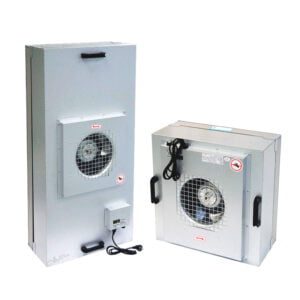
The design intervention that prevents this is straightforward but must happen before the equipment schedule is finalized. Fan filter units with room-side access and quick-release latch mechanisms allow HEPA media replacement from within the cleanroom without needing interstitial access. In retrofit conditions where existing ceiling construction limits interstitial clearance, low-profile FFU modules designed for constrained ceiling spaces — with profiles in the range of 9.5 inches height for installations with approximately 24 inches of total overhead space — resolve access problems that cannot be addressed through any other means once the ceiling is built. These are specification inputs, not field adaptations. If the housing or FFU selection does not account for access before procurement, it is rarely recoverable without structural intervention.
Testing frequency adds a second dimension to access planning. HEPA terminals on annual or semi-annual DOP testing schedules at 0.3 µm allow reasonable access planning around facility maintenance windows. ULPA terminals requiring quarterly PAO testing at 0.12 µm impose a significantly higher access frequency — roughly four times per year versus once or twice — which directly affects how much operational disruption the access arrangement will generate over a filter’s 2–3 year lifecycle. For facilities where the shift from HEPA to ULPA is being considered, the access and testing schedule consequence should appear in the maintenance cost estimate alongside the energy and replacement figures.
Premature replacement risk belongs in access planning as well. A terminal filter can reach the end of its service life through three distinct paths: reaching its maximum recommended pressure loss, sustaining mechanical damage during an unrelated maintenance event, or triggering a risk-based decision related to potential microorganism growth in biological or pharmaceutical environments. The third scenario is the least predictable and can require replacement well inside the nominal service interval. Designing access for worst-case replacement frequency — not average frequency — is the planning posture that prevents an unexpected replacement from becoming a cleanroom shutdown.
Filter System Readiness Checklist For RFQ
An RFQ for a filtration system is only defensible at audit if every stage has documentation that procurement can actually retrieve and engineering can actually verify. The purpose of a readiness checklist at this stage is not to add administrative work — it is to close the gaps between what the filtration system is specified to do and what can be confirmed when validation teams, QA reviewers, or regulatory auditors ask for evidence.
The documentation starting point is individual filter certification. Every HEPA filter from H13 class upward should carry an individual test certificate per EN 1822, including a leak-proof proof test. A batch certificate that covers a production lot is not a substitute — it cannot confirm that the specific filter unit installed in a specific housing position passed its individual integrity test. This distinction matters at installation qualification (IQ) and becomes critical if a post-installation DOP scan reveals a penetration. Test method alignment between the certificate and the application is the adjacent check: HEPA certification testing uses DOP at 0.3 µm; ULPA certification testing uses PAO at 0.12 µm. Mixing these in a specification document, or accepting a certificate that does not match the installed filter class, creates a qualification gap that is difficult to close retroactively.
| Checklist Item | ما الذي يجب تأكيده | ما أهمية ذلك |
|---|---|---|
| Individual filter certification | Each HEPA filter meets EN 1822 class H13 with leak-proof test certificate | Ensures performance and compliance |
| Test method | DOP (0.3 µm) for HEPA; PAO (0.12 µm) for ULPA | Matches filter media to correct acceptance criteria |
| Replacement schedule | Coarse 12 mo, fine 24 mo, HEPA 3–5 yr; final pressure loss signal | Prevents premature failure and unplanned downtime |
| Operating environment limits | Temperature and humidity ranges: HEPA 4.4–37.8°C / 25–75% RH; ULPA 4–38°C / 20–80% RH (optimal 20–60%) | Avoids out-of-spec conditions that degrade filter life |
| Filter dimensions & module airflow | Standard sizes 610×610, 1220×1220 mm; airflow 450–900 m³/h (HEPA), 250–750 m³/h (ULPA) | Ensures physical fit and sufficient air volume |
| Pressure drop & qualification | Nominal drop ~300 Pa; final pressure loss trigger; qualification per ISO 14644-3 | Confirms energy efficiency and lifecycle verification |
The checklist items in that table represent the confirmation points that close the most common pre-procurement gaps. Dimensional and airflow confirmation — standard sizes at 610×610 mm and 1220×1220 mm, airflow capacity at 450–900 m³/h for HEPA modules and 250–750 m³/h for ULPA — prevents housing-filter mismatches that are only discovered at installation. Pressure drop confirmation, with a nominal terminal figure around 300 Pa at rated flow, gives commissioning teams a baseline against which early-life performance can be assessed and replacement triggers can be understood as design signals rather than compliance thresholds. Qualification per ISO 14644-3 — measuring air velocity and volume distribution across the filter array — closes the loop between filter specification and cleanroom class verification.
The readiness check this checklist is designed to catch is the one that arrives at handover: a filtration system that was correctly specified at the terminal but incompletely specified upstream, with no defined replacement paths for coarse or medium stages and no spare-part references in the procurement record. That gap does not create an immediate performance failure — it creates a maintenance gap that surfaces six to twelve months into operation when the first upstream filter replacement is due and there is no confirmed supply chain to execute it against.
A filtration system that is specified at the terminal filter only is not a system ready for validation or long-term operation — it is a device with undeclared upstream dependencies. The concrete pre-procurement judgment is whether every stage in the chain has a defined particle capture role, a realistic service interval that reflects the facility’s ambient air quality, and a documented replacement path that procurement can execute. Where the HEPA versus ULPA decision remains open, confirming the ISO class requirement and the actual process sensitivity to sub-0.2 µm particles closes that choice more reliably than efficiency specifications alone.
Before issuing an RFQ, confirm that individual EN 1822 test certificates are required per filter unit, that dimensional and airflow figures are matched to the actual housing or FFU configuration in the equipment schedule, and that maintenance access has been evaluated against the testing frequency the selected filter type will impose. Those three confirmations resolve the majority of procurement and handover risks that otherwise surface at commissioning or first-year audit.
الأسئلة الشائعة
Q: What happens if the facility’s ambient air quality is significantly worse than a typical cleanroom supply — does the staged filtration model still hold?
A: The staged model still applies, but the service intervals compress across every stage. The replacement schedules cited in the article — coarse at 12 months, fine dust at 24 months, HEPA at 3–5 years — are design figures based on normal ambient conditions. In facilities with high industrial particulate, coastal salt-laden air, or construction activity nearby, coarse pre-filters may load in six months or less, which shifts the burden forward to the medium stage ahead of schedule. The planning response is to baseline the local air quality before fixing replacement intervals, not to assume published figures will hold. If upstream stages are not resized or rescheduled to match actual particle load, the HEPA service life projections in the procurement cost model will not be achievable.
Q: After the RFQ is issued and equipment is confirmed, what is the first validation step that confirms the filtration chain is performing as specified?
A: The first confirmation is a post-installation integrity scan of each terminal HEPA or ULPA unit, followed by air velocity and volume distribution measurement across the filter array per ISO 14644-3. The integrity scan — DOP at 0.3 µm for HEPA, PAO at 0.12 µm for ULPA — establishes that no individual filter unit has a seal or media defect introduced during shipping or installation. The velocity mapping then confirms that the upstream ductwork and plenum conditions are delivering the airflow the terminal was sized for, not a maldistributed profile that would cause localized bypass or premature loading. Both steps should occur before occupancy or process introduction, because a penetration or velocity deviation found after commissioning is significantly more disruptive to resolve.
Q: Is HEPA still the right terminal specification for an ISO 5 pharmaceutical environment if the process handles viral vectors or other sub-micron biological agents?
A: Not necessarily — this is the boundary condition where ISO class alone is insufficient to settle the HEPA versus ULPA decision. ISO 14644-1 classification addresses inert particle concentration, not biological agent capture requirements. If the process involves viral vectors, bacteriophages, or other sub-0.2 µm biological materials where terminal filtration is a containment barrier rather than only a cleanliness control, the process risk assessment — not the room classification — should drive the terminal filter choice. In that context, ULPA’s extended efficiency range at 0.12–0.2 µm carries process-protection value that justifies the 40–50% energy penalty and higher maintenance frequency. The mistake to avoid is treating the ISO class as the sole decision input when the actual process sensitivity operates at a particle size below what ISO classification is designed to resolve.
Q: How does the maintenance cost difference between HEPA and ULPA change if the cleanroom operates continuously rather than on a standard shift schedule?
A: Continuous operation amplifies every ULPA cost penalty cited in the article. The 40–50% higher energy draw accumulates across all operating hours rather than a fraction of them, so the annual energy cost differential widens in direct proportion to uptime. More consequentially, continuous operation reduces the available windows for the quarterly PAO testing ULPA requires — four access events per year against a facility that rarely shuts down means either scheduling unplanned process interruptions or accepting a testing backlog that creates a compliance gap. HEPA’s annual or semi-annual DOP schedule is far easier to align with planned maintenance windows in a continuous operation environment. Unless the process genuinely requires ULPA-class efficiency, continuous-operation facilities have a stronger operational case for HEPA than the base cost figures alone suggest.
Q: If upstream pre-filter positions were not included in the original equipment procurement and only terminal HEPA units were purchased, what is the realistic remediation path?
A: The remediation depends on whether suitable pre-filter positions exist in the air handling path. If the AHU or ductwork has accessible filter sections upstream of the terminal, retrofitting coarse and fine dust stages into those positions is technically straightforward and should be prioritized before the first HEPA replacement cycle arrives. If no upstream filter positions exist — as can happen in systems where terminals feed directly from unfiltered plenum air — the options narrow to either modifying the ductwork to introduce filter housings or accepting compressed HEPA service intervals and budgeting replacement frequency accordingly. The second option is not a long-term solution; it transfers the cost of missing upstream filtration directly into terminal filter replacement and cleanroom shutdown frequency. Addressing it at the first major maintenance event, rather than waiting for a pressure-loss trigger at the terminal, is the decision that limits cumulative cost exposure.