Para los responsables de las instalaciones y los ingenieros de validación de los sectores farmacéutico y biotecnológico, dimensionar un generador VHP para una sala blanca de 500-800 metros cúbicos es un cálculo crítico con consecuencias operativas y financieras directas. La idea errónea más extendida es que la potencia nominal de un generador se traduce directamente en capacidad de descontaminación, lo que conduce a sistemas con especificaciones insuficientes que no consiguen garantizar la esterilidad o a un exceso de capitalización en hardware innecesario. Este error se debe a que no se tiene en cuenta la interacción dinámica entre la física del vapor y las variables específicas de la instalación.
El dimensionamiento preciso es ahora un imperativo estratégico. El reconocimiento oficial por parte de la FDA en 2024 del VHP como método de esterilización de categoría A acelera su adopción, lo que aumenta las exigencias de una validación perfecta. En este panorama competitivo, un error de cálculo no sólo supone el riesgo de un ciclo fallido, sino que pone en peligro los calendarios de lanzamiento del producto y el cumplimiento de la normativa. Conseguir la capacidad correcta a la primera controla los costes de validación a largo plazo y garantiza la resistencia operativa.
Principios básicos del dimensionamiento de generadores VHP para salas blancas
La base: Capacidad de retención de vapor
La biodescontaminación eficaz con VHP se rige por la capacidad del aire para retener vapor, cuantificada como Saturación Relativa (RS). El objetivo del proceso es mantener una concentración biocida de VHP -típicamente 200-400 ppm- dentro de un intervalo óptimo de RS de 70-85%. Superar 100% RS provoca condensación, que es ineficaz y corrosiva. Esta capacidad es un recurso finito consumido dinámicamente tanto por el esterilizante como por la humedad de fondo existente. Una humedad relativa inicial más alta deja menos “margen” para H₂O₂, lo que hace que el preacondicionamiento ambiental mediante deshumidificación activa sea un primer paso no negociable. En consecuencia, el dimensionamiento del generador consiste fundamentalmente en alcanzar un equilibrio de vapor preciso, no simplemente en seleccionar la unidad de mayor potencia.
La distinción crítica: Producción vs. Capacidad
La potencia nominal de un generador no equivale a su capacidad de descontaminación utilizable. La métrica esencial es la tasa de generación de vapor (gramos/hora) necesaria para alcanzar y mantener los niveles de ppm objetivo dentro de sus condiciones psicrométricas específicas. Los expertos del sector subrayan que un generador debe compensar la descomposición continua del H₂O₂ en agua y oxígeno durante el ciclo, lo que aumenta gradualmente la humedad y consume capacidad. Este principio subraya por qué dos instalaciones con volúmenes idénticos pueden necesitar generadores de distinta capacidad en función de sus perfiles de temperatura y humedad de partida.
Implicaciones estratégicas
Este enfoque basado en la física desplaza la carga de la validación hacia arriba. Cada configuración de sala única se convierte en un proyecto de validación distinto. Invertir en una caracterización inicial precisa del entorno es una necesidad estratégica que informa todos los cálculos posteriores y controla los costes del ciclo de vida. Hemos observado que los equipos que dominan este principio evitan el costoso ciclo de ensayo y error durante la cualificación.
Paso 1: Defina los parámetros básicos de su sala blanca
Mapa de la envolvente física
El dimensionamiento exacto comienza con una caracterización precisa de las instalaciones. Los datos no negociables son el volumen interno neto de la sala blanca, el intervalo de temperatura operativa (normalmente 20-25 °C) y la temperatura y humedad relativa iniciales medidas antes de la deshumidificación. La temperatura es un factor primordial, ya que con ella aumenta la capacidad de retención de vapor. Estos datos constituyen la base empírica de todos los modelos.
Contabilización de la dinámica HVAC
El sistema de tratamiento de aire de la sala es una importante variable de validación que a menudo se trata como una caja negra. La dinámica de su sistema de climatización (tasas de cambio de aire, ubicación de los filtros HEPA y posibles desviaciones) influye directamente en la distribución y pérdida de vapor. Según una investigación del PDA Informe técnico nº 51, La validación del proceso debe basarse en los parámetros físicos específicos y en las características de tratamiento del aire del recinto. Esto hace que el perfil de climatización de sus instalaciones sea un factor crítico, no una ocurrencia tardía.
Establecimiento de la línea de base de validación
En la tabla siguiente se describen los parámetros fundamentales que deben fijarse antes de iniciar cualquier cálculo. La omisión o aproximación de cualquiera de estos parámetros puede dar lugar a errores importantes en el modelo de capacidad.
| Parámetro | Rango / Valor típico | Criticidad para el dimensionamiento |
|---|---|---|
| Volumen | 500 - 800 m³ | Entrada de cálculo principal |
| Temperatura de funcionamiento | 20 - 25 °C | Define la capacidad de retención de vapor |
| Humedad relativa inicial | Variable (medida) | Consume espacio libre de vapor |
| Dinámica HVAC | Único por habitación | Variable principal de validación |
Fuente: PDA Informe técnico nº 51: Esterilización por vapor de gas. Este informe subraya que el desarrollo y la validación del proceso deben basarse en los parámetros físicos específicos del recinto, incluidos el volumen, la temperatura y las características de tratamiento del aire, que son los datos fundamentales para el cálculo de la capacidad.
Paso 2: Calcular la capacidad de vapor teórica necesaria
Aplicación de modelos psicrométricos
El modelado teórico traduce los parámetros de referencia en una tasa de inyección necesaria utilizando principios psicrométricos. El proceso calcula la presión de vapor de saturación para el agua y el H₂O₂ a la temperatura del ciclo, determina la presión parcial del agua a partir de la HR inicial e identifica el margen de presión restante disponible para el H₂O₂. A continuación, esta presión parcial de H₂O₂ admisible se convierte en una concentración (mg/m³ o ppm). Si se tiene en cuenta el volumen de la sala y el tiempo de aceleración deseado, se obtiene una tasa de salida teórica del generador (por ejemplo, g/min).
Utilización de herramientas especializadas
Debido a la complejidad de estos cálculos, se emplean programas informáticos de ingeniería especializados o calculadoras en línea validadas para garantizar la precisión. Entre los detalles que se pasan por alto con facilidad se incluye la necesidad de utilizar la temperatura más baja del intervalo operativo para un dimensionamiento conservador, ya que el aire más frío retiene menos vapor. Este paso define rigurosamente el requisito de “cámara vacía”.
Interpretación de las métricas de salida
El resultado de este modelo es un conjunto de parámetros objetivo, no una especificación final del equipo. Define lo que el proceso debe alcanzar en un estado ideal.
| Métrica clave | Objetivo / Resultado | Unidad |
|---|---|---|
| Concentración objetivo de VHP | 200 - 400 | ppm |
| Saturación relativa óptima | 70 - 85 | % |
| Punto crítico de condensación | 100 | % RS |
| Salida del generador Métrica | Tasa de generación de vapor | g/hora o g/min |
Nota: La potencia teórica es para una cámara vacía y sellada y debe ajustarse.
Fuente: Documentación técnica y especificaciones industriales.
Paso 3: Aplicar los factores de ajuste críticos del mundo real
La necesidad de un margen de seguridad
El modelo teórico representa el mejor de los casos y debe ampliarse considerablemente. Un margen de seguridad operativa de 20-50% es estándar para tener en cuenta la deriva de los sensores, las pequeñas fluctuaciones ambientales y la variabilidad operativa. Este margen no es arbitrario; se trata de un amortiguador que garantiza la fiabilidad en condiciones rutinarias.
Compensación de la pérdida de agentes
En el funcionamiento real, el H₂O₂ se descompone continuamente, y el flujo de aire a través de los filtros HEPA adsorbe VHP, actuando como un sumidero de vapor constante. El generador debe compensar esta pérdida para mantener la concentración objetivo. Además, cualquier fuga en la sala aumenta el volumen efectivo a tratar. El impacto acumulativo significa que la capacidad instalada a menudo debe ser sustancialmente superior a la producción teórica.
Construcción del modelo ajustado
Estos factores deben aplicarse sistemáticamente para crear un requisito de capacidad sólido. La norma ISO 14937 exige que los procesos de esterilización se validen en condiciones nominales definidas y en el peor de los casos, lo que requiere tener en cuenta la pérdida de agentes.
| Factor de ajuste | Ampliación típica | Impacto primario |
|---|---|---|
| Margen de seguridad operativo | 20 - 50% | Aumenta la capacidad necesaria |
| H₂O₂ Descomposición | Compensación continua | Mantiene la concentración deseada |
| Adsorción del filtro HEPA | Sumidero de vapor constante | Aumenta la carga efectiva |
| Fugas en la habitación | Aumenta el volumen efectivo | Exige un mayor rendimiento |
Fuente: ISO 14937: Esterilización de productos sanitarios. Esta norma exige que el proceso de esterilización se valide en condiciones nominales definidas y en el peor de los casos, lo que requiere la aplicación de márgenes de seguridad y la contabilización de factores como la pérdida de agente (por ejemplo, por descomposición o adsorción) para garantizar una eficacia constante.
Cómo influyen la sorptividad y las fugas en las necesidades de capacidad
El sumidero dominante: Materiales porosos
La sorptividad del material es el factor dominante que infla los requisitos de capacidad. Los sustratos porosos como el hormigón, los paneles de yeso y los azulejos del techo absorben VHP, creando un sumidero continuo que el generador debe alimentar. Esto crea un gradiente de eficacia de descontaminación, en el que las tasas de eliminación esporicida pueden variar drásticamente en función de la superficie subyacente. La selección del material de la sala limpia es, por tanto, un factor determinante del éxito y la eficacia del protocolo.
El impacto del suelo y las fugas
La carga biológica orgánica, como los residuos de suero, impide directamente la eficacia del fumigante; la suciedad puede reducir hasta en 2 registros la destrucción y la recuperación de esporas, lo que hace que los datos de los cupones de laboratorio limpios sean optimistas. Al mismo tiempo, las fugas a través de las juntas de las puertas o de penetraciones no selladas diluyen constantemente la atmósfera, lo que exige un mayor rendimiento del generador para mantener la concentración. Una envolvente hermética no es sólo una buena práctica; es un multiplicador directo de la eficiencia.
Cuantificación del impacto en el rendimiento
El efecto combinado de estos factores puede ser significativo, haciendo que la reducción del logaritmo pase de un logaritmo teórico de 6 a un ciclo potencialmente fallido si no se tiene en cuenta.
| Factor | Impacto en el rendimiento | Log Reducción Varianza |
|---|---|---|
| Materiales porosos (por ejemplo, paneles de yeso) | Crea un sumidero de vapor continuo | 0,8 a 6,1 log |
| Suelo orgánico (por ejemplo, suero) | Impide la eficacia de los fumigantes | Pérdida de reducción de hasta 2 logaritmos |
| Fuga de aire | Dilución en atmósfera constante | Requiere un mayor rendimiento del generador |
| Integridad de la envolvente de la sala limpia | La estanqueidad es fundamental | Principal factor determinante de la eficiencia |
Fuente: Documentación técnica y especificaciones industriales.
Validación de los cálculos con el desarrollo y seguimiento del ciclo
Del anteproyecto a la prueba empírica
Los cálculos no son más que un anteproyecto; es obligatorio validarlos mediante el desarrollo de ciclos físicos. Esto requiere una supervisión en tiempo real mediante sondas calibradas que midan simultáneamente la concentración de H₂O₂, la temperatura y la humedad relativa para calcular y controlar la RS. Este proceso empírico es la única forma de validar su modelo de capacidad ajustado frente a la carga de material y el perfil de fugas específicos de la instalación.
Despliegue de indicadores biológicos
Los indicadores biológicos (BI) colocados en los peores lugares -dentro de materiales porosos, en el interior de equipos o después de filtros HEPA- proporcionan la prueba definitiva de garantía de esterilidad. La complejidad de gestionar estas variables interactivas en tiempo real está impulsando la demanda de sistemas integrados de control de sensores que automaticen el proceso basándose en datos en tiempo real, garantizando los resultados.
Herramientas de validación
Un planteamiento de validación riguroso emplea un conjunto específico de componentes para poner a prueba el proceso y demostrar su eficacia, como se indica en normas como ANSI/AAMI ST58.
| Componente de validación | Finalidad / Métrica | Ubicación crítica |
|---|---|---|
| Sondas calibradas | Mide H₂O₂, T, HR en tiempo real. | En todo el volumen |
| Indicadores biológicos (IB) | Prueba de garantía de esterilidad | Ubicaciones en el peor de los casos |
| Cupones para materiales porosos | Validar los índices de destrucción de material | En sustratos porosos |
| Control de bucle cerrado | Automatizaciones basadas en datos en tiempo real | Garantiza los resultados |
Fuente: ANSI/AAMI ST58: Esterilización química y desinfección de alto nivel en centros sanitarios. Esta norma describe los requisitos para validar los procesos de esterilización, incluido el uso de indicadores biológicos y dispositivos de desafío del proceso en las peores ubicaciones para demostrar la actividad microbicida efectiva en condiciones reales de uso.
Consideraciones clave para los estudios de laboratorio y validación
Vinculación de los datos de laboratorio con el rendimiento sobre el terreno
Los datos procedentes de estudios de laboratorio controlados deben informar directamente la planificación de la capacidad sobre el terreno. Estos estudios confirman que lograr una reducción de 6 logs en materiales porosos requiere valores de CT (Concentración x Tiempo) más altos que en el acero inoxidable. Por lo tanto, los protocolos de validación deben incorporar la carga biológica pertinente y utilizar cupones de material representativos de la instalación real para evitar una especificación insuficiente del sistema. Confiar en datos optimistas sobre superficies limpias es un error habitual.
Navegar por el panorama normativo
La actualización de 2024 de la FDA proporciona un respaldo normativo formal para VHP, reduciendo las barreras de adopción. Este impulso normativo convierte al VHP en un método de referencia, aumentando la presión competitiva para su adopción. También aumenta la importancia de las estrategias de validación sólidas y defendibles que tienen en cuenta los retos específicos de los materiales y las superficies sucias desde el principio.
Implicaciones estratégicas para la capacidad
Este cambio normativo significa que el cálculo de la capacidad y la estrategia de validación forman ahora parte del expediente de presentación de la solicitud. El generador que elija no sólo debe cumplir los requisitos técnicos, sino que además debe contar con el respaldo de un fabricante que conozca a fondo la carga que supone la cualificación. La capacidad del sistema para proporcionar registros de datos detallados y auditables se convierte en un criterio de selección fundamental.
Selección y cualificación de su sistema VHP definitivo
Adecuación de la capacidad a las necesidades validadas
La selección final implica ajustar la producción de vapor probada de un generador a sus requisitos de capacidad validados, teniendo en cuenta la flexibilidad futura. La gama de 500-800 m³ es un segmento estratégico en el que las soluciones modulares y escalables son fundamentales. Busque sistemas que ofrezcan margen sin un sobredimensionamiento excesivo y asegúrese de que el fabricante proporciona datos de rendimiento claros en condiciones que reflejen su modelo ajustado, no sólo pruebas de cámara ideales.
Ejecutar la cualificación formal
La cualificación (IQ/OQ/PQ) demuestra que el sistema instalado funciona según lo especificado y garantiza la esterilidad en su espacio exclusivo. La OQ debe poner a prueba el rendimiento del generador en toda su gama, y la PQ debe reproducir los retos que plantean el material y la ubicación en el peor de los casos. En esta fase es donde los cálculos iniciales y el trabajo de desarrollo del ciclo convergen en un estado validado.
Proteja su inversión de cara al futuro
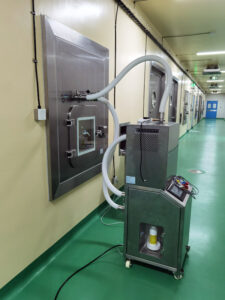
Una consideración de futuro es la resiliencia operativa. Para entornos críticos, la posible aparición de sistemas híbridos que proporcionen tanto energía de reserva como energía para la descontaminación independiente de la red aborda dos modos de fallo clave con un solo activo. Al evaluar una unidad de generador VHP portátil de descontaminación, dé prioridad a las diseñadas con la arquitectura de conectividad y control para integrarse en estos ecosistemas de instalaciones inteligentes, garantizando que su inversión siga siendo relevante a medida que evolucionan las normas.
El marco de decisión da prioridad a la caracterización precisa de las instalaciones frente a las reglas empíricas, exige la aplicación de factores de ajuste reales y requiere una validación empírica a través del desarrollo del ciclo. La capacidad de su generador no es una especificación aislada, sino el resultado de un riguroso proceso de modelización que tiene en cuenta la física del vapor, la carga de material y la seguridad operativa. La selección de un sistema sin este trabajo de base pone en riesgo tanto el capital como el cumplimiento de la normativa.
¿Necesita asesoramiento profesional para especificar un sistema VHP para su espacio de 500-800 m³? Los expertos de YOUTH puede ayudarle a traducir estos principios en un protocolo de descontaminación validado y eficaz. Para una consulta directa sobre sus requisitos específicos, también puede Póngase en contacto con nosotros.
Preguntas frecuentes
P: ¿Cómo afecta la humedad inicial de nuestra sala blanca a la capacidad del generador de VHP que necesitamos?
R: Una mayor humedad relativa inicial consume más capacidad de retención de vapor del aire, dejando menos “espacio libre” disponible para el vapor esterilizante. Esto reduce directamente la concentración biocida efectiva que puede alcanzar sin riesgo de condensación. Debe deshumidificar activamente el espacio como paso previo al acondicionamiento para crear la ventana psicrométrica necesaria. Esto significa que las instalaciones con humedad ambiental variable o elevada deben presupuestar tanto un generador más potente como sistemas de control ambiental robustos para garantizar ciclos fiables.
P: ¿Por qué el cálculo teórico de la potencia de la VHP es insuficiente para dimensionar un sistema en el mundo real?
R: Los modelos teóricos suponen una cámara ideal vacía, pero las salas blancas reales tienen importantes sumideros y pérdidas de vapor. Los materiales porosos absorben continuamente VHP, el flujo de aire del filtro HEPA lo adsorbe y cualquier fuga de la sala diluye la atmósfera, lo que requiere una compensación constante. Además, debe compensarse la descomposición natural del H₂O₂ durante el ciclo. En los proyectos en los que la sorptividad del material es alta o la envolvente no está perfectamente sellada, hay que aplicar un margen de seguridad de 20-50% o superior a la tasa de salida calculada para garantizar el rendimiento.
P: ¿Qué método de validación es necesario para demostrar que la capacidad de VHP calculada es correcta para nuestras instalaciones?
R: Debe validar los cálculos mediante el desarrollo de ciclos físicos utilizando sondas calibradas que midan la concentración de H₂O₂, la temperatura y la humedad relativa en tiempo real para calcular la Saturación Relativa. Los Indicadores Biológicos colocados en los peores lugares, como dentro de materiales porosos, proporcionan una prueba definitiva de eficacia. Este proceso, guiado por PDA Informe técnico nº 51, confirma que su capacidad ajustada satisface la carga de material específica de la instalación. Si su operación requiere una reducción de 6 logs en superficies difíciles, planifique un desarrollo de ciclo ampliado para tener en cuenta los valores de CT específicos del material.
P: ¿Cómo afectan las superficies de los materiales al protocolo de descontaminación VHP requerido y a la capacidad del sistema?
R: Los materiales porosos como el hormigón o los paneles de yeso actúan como un sumidero de vapor continuo, creando un gradiente de eficacia y exigiendo un mayor rendimiento del generador para mantener la concentración objetivo. El suelo orgánico, como el suero, puede reducir la eliminación de esporas hasta en 2 logs en comparación con los datos de laboratorios limpios. Esto hace que la selección del material de la sala blanca sea un factor determinante para el éxito del protocolo. Las instalaciones con construcciones heredadas o una elevada carga biológica deben dar prioridad a la caracterización de los materiales durante la planificación y dimensionar su sistema con una reserva de capacidad significativa para superar estos retos de absorción.
P: ¿Cuáles son las principales consideraciones de conformidad a la hora de cualificar un sistema VHP para una sala blanca de 500-800 m³?
R: La cualificación debe demostrar que el sistema proporciona la concentración de vapor requerida y garantiza la esterilidad en su espacio exclusivo, siguiendo un enfoque de ciclo de vida de IQ, OQ y PQ. Su estrategia de validación debe tener en cuenta los requisitos generales de ISO 14937 y los principios de seguridad de las instalaciones en ANSI/AAMI ST58. Esto significa que los datos iniciales de caracterización de sus instalaciones -volumen, dinámica HVAC, temperatura- se convierten en la base de una presentación reglamentaria defendible, controlando los costes de validación a largo plazo.
P: ¿Deberíamos elegir un generador VHP independiente o un sistema inteligente integrado para una instalación nueva?
R: Los sistemas integrados de control de sensores en bucle cerrado se están convirtiendo en una necesidad competitiva frente a las unidades independientes. Estos ecosistemas inteligentes automatizan la inyección de vapor en función de los datos de los sensores de concentración, temperatura y humedad, gestionando dinámicamente el complejo equilibrio para garantizar el rendimiento. Esto reduce la variabilidad del ciclo y el riesgo operativo. Si su proyecto exige una alta fiabilidad y tasas de eliminación constantes en condiciones variables, debe dar prioridad a los proveedores que ofrezcan estas plataformas de control automatizado.
Contenidos relacionados:
- Dimensionamiento del generador de peróxido de hidrógeno vaporizado para clasificaciones de salas limpias
- Optimización de ciclos: Eficiencia de los generadores portátiles VHP
- Concentraciones óptimas de VHP: Guía de eficacia de la esterilización
- Validación del rendimiento del generador portátil VHP
- Instalación de su generador portátil VHP: Paso a paso
- VHP Pass Box 6-Reducción Log: Métodos y datos de validación
- Monitorización de generadores portátiles VHP: Buenas prácticas
- Validación de VHP Passbox: Garantizar la eficacia de la esterilización
- Sensores avanzados en generadores portátiles VHP