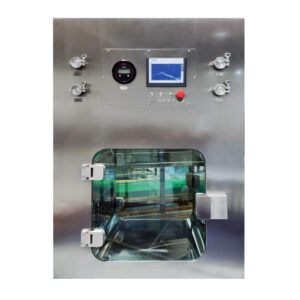
Elegir la capacidad de caudal incorrecta para una carcasa de filtro Bag-In/Bag-Out (BIBO) es un error que requiere mucho capital y tiene importantes consecuencias para la seguridad y el funcionamiento. La elección entre un sistema de 50 m³/h y otro de 300 m³/h no es un simple ejercicio de escalado lineal; es una decisión de ingeniería fundamental que dicta la estrategia de contención, el coste del ciclo de vida y los protocolos de seguridad de las instalaciones. Valorar mal esta especificación puede llevar a una protección insuficiente, a fallos en el cumplimiento de la normativa o a un exceso de ingeniería que suponga un despilfarro.
Esta decisión requiere ir más allá de los cálculos básicos del flujo de aire. Los profesionales deben evaluar el coste total de propiedad, integrar los principios de diseño modular y alinear el sistema con el perfil de riesgo específico y los requisitos de validación de su operación. Los datos de rendimiento y las implicaciones estructurales entre estos dos niveles de capacidad revelan compensaciones críticas que afectan directamente a la rentabilidad de la inversión a largo plazo y a la seguridad de los procedimientos.
Diferencias clave: Carcasas de filtro de 50 m³/h frente a 300 m³/h
Definición de la escala de aplicación
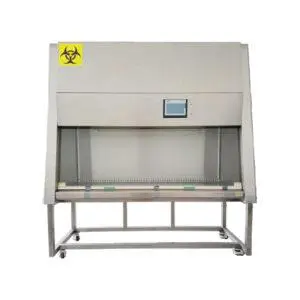
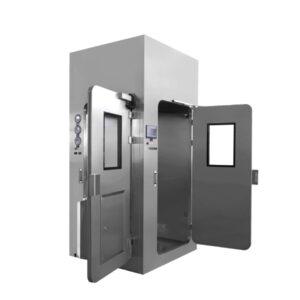
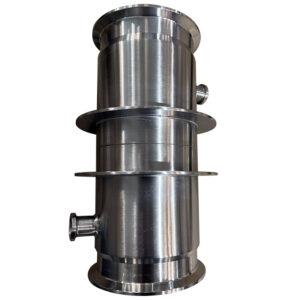
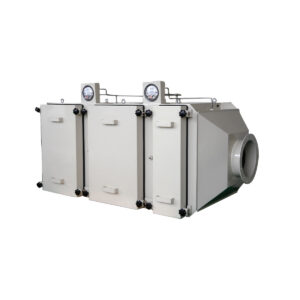
La principal diferencia radica en su diseño. Una carcasa de 50 m³/h (~30 CFM) es un sistema compacto de un solo módulo diseñado para la contención de fuentes puntuales. Su aplicación típica es aislar el escape de una única cabina de bioseguridad, campana extractora o pequeña ventilación de proceso. Por el contrario, una unidad de 300 m³/h (~180 CFM) es un componente de gran capacidad, a menudo construido como un conjunto modular de carcasas estándar o un recipiente fabricado a medida. Está diseñada para la manipulación centralizada de gases de escape, como la extracción de toda una sala o la salida combinada de varios flujos de proceso. Esta diferencia de capacidad dicta toda la filosofía de diseño, desde los puntos de tensión del material hasta la integración de puertos de validación de seguridad.
Impacto en el diseño y la integración del sistema
La divergencia de diseño afecta directamente a la complejidad de la integración. Una unidad de 50 m³/h suele presentar problemas de integración de bajos a moderados, ya que a menudo se conecta a un conducto específico. Un sistema de 300 m³/h presenta una gran complejidad, ya que requiere un sistema de distribución diseñado para combinar flujos, un soporte estructural para un peso significativo y puertos de prueba integrados para la validación in situ. Los expertos del sector recomiendan que la adquisición se integre en los primeros estudios de peligrosidad (HAZOP) para evitar desajustes en las especificaciones, ya que adaptar un sistema de mayor capacidad resulta prohibitivamente caro.
| Parámetro | 50 m³/h (~30 CFM) | 300 m³/h (~180 CFM) |
|---|---|---|
| Escala de aplicación | Contención de fuentes puntuales | Escape centralizado de gran volumen |
| Diseño típico | Módulo individual compacto | Montaje modular o recipiente a medida |
| Caso de uso principal | Escape único de la cabina de bioseguridad | Extracto de sala o múltiples flujos de proceso |
| Complejidad de la integración | Bajo a moderado | Alta, con puertos de validación de seguridad |
Fuente: Documentación técnica y especificaciones industriales.
Comparación de costes: Inversión de capital y rentabilidad operativa
Análisis de los gastos de capital y selección de materiales
El gasto de capital no es lineal. Un sistema de 300 m³/h requiere una inversión inicial mucho mayor debido a los mayores volúmenes de material, los requisitos estructurales más estrictos y la complejidad de la fabricación. Sin embargo, el verdadero factor de coste es la selección del material. Según los análisis del sector, especificar acero inoxidable 316L resistente a la corrosión en lugar del 304 estándar para ciclos de descontaminación agresivos conlleva un mayor coste inicial, pero evita fallos prematuros catastróficos. Una carcasa más barata que se corroe obliga a una sustitución completa, disruptiva y costosa, anulando cualquier ahorro inicial.
Cálculo del coste total de propiedad (TCO)
Un análisis financiero significativo debe modelar el coste total de propiedad a lo largo del ciclo de vida del activo. Entre los detalles que se pasan por alto con facilidad se encuentra la logística de residuos peligrosos, que suele dominar los costes recurrentes. El cambio de varios filtros más pequeños de varias unidades de 50 m³/h conlleva mayores costes acumulados de mano de obra, embalaje y eliminación certificada que el mantenimiento de menos filtros más grandes de un sistema de 300 m³/h. Comparamos modelos operativos y descubrimos que la frecuencia de los cambios y el papeleo de cumplimiento asociado pueden hacer que una red distribuida de pequeñas carcasas sea más cara de operar que una solución centralizada de gran capacidad.
| Factor de coste | 50 m³/h Sistema | 300 m³/h Sistema |
|---|---|---|
| Gastos de capital | Menor inversión inicial | Significativamente superior |
| Impacto del material (por ejemplo, 316L frente a 304 SS) | Menor riesgo de coste del ciclo de vida | Más alto por adelantado, evita fallos prematuros |
| Coste recurrente de eliminación de residuos | Mayor volumen por unidad (más cambios) | Menor volumen por unidad (menos cambios) |
| Controlador del coste total de propiedad (TCO) | Frecuencia de eliminación laboral y certificada | Sólida selección de estructuras y materiales |
Fuente: Documentación técnica y especificaciones industriales.
Datos de rendimiento: Caudal de aire, eficacia de filtración y consumo de energía
Comprender la dinámica del flujo de aire y el consumo de energía
El rendimiento se rige por la interacción del caudal de aire, la caída de presión y el consumo de energía. Una carcasa de 50 m³/h comienza con una menor caída de presión estática a través de un filtro limpio. Sin embargo, su menor superficie filtrante provoca un aumento más rápido de la presión a medida que se cargan las partículas, lo que obliga al extractor a trabajar más y aumenta el consumo de energía con el tiempo. Una unidad de 300 m³/h, con su mayor superficie filtrante, suele mantener una caída de presión media más baja, lo que ofrece un ahorro potencial de energía e intervalos de servicio más largos entre cambios. Esto se ajusta a marcos de rendimiento como el ANSI/AHAM AC-1 Método para medir el rendimiento de los purificadores de aire eléctricos portátiles para uso doméstico, que hace hincapié en la relación entre la resistencia al flujo de aire y la eficiencia.
Clarificación de las normas de eficacia de filtración
La eficacia de filtración -como HEPA H14 a 99,995% en MPPS de 0,3 µm- es una función del filtro, no de la carcasa. Ambas carcasas deben combinarse con el filtro correcto para cumplir la norma de seguridad exigida, como la EN 1822. El factor crítico de selección es el tamaño de partícula más penetrante (MPPS) del peligro. Un error común es especificar una carcasa basándose sólo en el caudal y olvidarse del MPPS del filtro, lo que puede comprometer la integridad de la contención.
| Métrica de rendimiento | 50 m³/h Carcasa | 300 m³/h Carcasa |
|---|---|---|
| Caída de presión del filtro limpio | Menor presión estática | Presión media normalmente más baja |
| Aumento de presión durante la carga | Aumento más rápido | Aumento más lento |
| Consumo de energía a lo largo del tiempo | Aumenta más rápidamente | Potencial de ahorro energético |
| Eficacia de filtración (por ejemplo, H14) | 99,995% en 0,3µm (en función del filtro) | 99,995% en 0,3µm (en función del filtro) |
Fuente: ANSI/AHAM AC-1 Método para medir el rendimiento de los purificadores de aire eléctricos portátiles para uso doméstico. Esta norma establece métodos de prueba uniformes para la tasa de suministro de aire limpio (CADR) y el rendimiento, proporcionando un marco básico para evaluar el flujo de aire y las métricas de eliminación de contaminantes relevantes para el diseño del sistema de carcasa del filtro.
¿Qué sistema se adapta mejor al tamaño de sus instalaciones?
Más allá de los metros cuadrados
El tamaño de las instalaciones es una medida engañosa. El factor decisivo es el volumen total de extracción que requiere contención peligrosa. Un gran campus de investigación con docenas de campanas de laboratorio independientes puede estar mejor equipado con varias unidades de 50 m³/h, que proporcionan zonificación, redundancia y una programación simplificada del mantenimiento. Por el contrario, una instalación farmacéutica compacta con un flujo de gases de escape de reactor centralizado y de gran volumen necesita un sistema de 300 m³/h o más, independientemente del tamaño del edificio.
La ventaja del diseño modular
El principio del diseño modular es clave en este caso. El uso de módulos estándar paralelos (por ejemplo, varias unidades de 100 m³/h) para alcanzar una capacidad total de 300 m³/h ofrece una mayor flexibilidad de disposición, un menor riesgo de ingeniería personalizada y una ampliación futura más sencilla. En nuestra planificación, a menudo comprobamos que un enfoque modular simplifica la documentación de conformidad y permite el funcionamiento parcial del sistema durante el mantenimiento, algo que una sola unidad monolítica no puede ofrecer.
Comparado: Requisitos de instalación, espacio y mantenimiento
Instalación y ordenación territorial
La complejidad de la instalación aumenta drásticamente con la capacidad. Una carcasa de 50 m³/h suele ser un componente manejable de elevación in situ. Un sistema de 300 m³/h puede requerir un soporte de acero estructural, importantes modificaciones en los conductos y aparejos especializados. El espacio debe planificarse no sólo para la huella de la carcasa, sino también para el procedimiento seguro de cambio de bolsa, que para una unidad grande requiere un espacio sustancial para el acceso del técnico y la manipulación de la bolsa. Estos requisitos se rigen por códigos como el CCI Código Internacional de la Edificación, que dicta la seguridad estructural y de salida.
Rigor de los procedimientos de mantenimiento
El mantenimiento de un sistema de mayor capacidad implica la manipulación de filtros más grandes y pesados, lo que exige controles de procedimiento más rigurosos, posibles equipos de elevación y protocolos de cambio detallados. Ambos sistemas deben disponer de puertos de prueba integrados para la validación in situ mediante pruebas de caída de presión o escaneo de aerosoles, un requisito innegociable para la verificación de la seguridad posterior al mantenimiento y el cumplimiento de normas como ASME N510.
| Requisito | 50 m³/h Carcasa | 300 m³/h Carcasa |
|---|---|---|
| Complejidad de la instalación | Componente de elevación in situ | Soporte estructural y conductos principales |
| Espacio para el cambio | Se necesita una autorización sustancial | Se requiere una autorización importante |
| Manipulación de filtros | Tamaño y peso manejables | Filtros más grandes y pesados |
| Controles de procedimiento | Protocolos estándar | Equipos más rigurosos y especializados |
Fuente: CCI Código Internacional de la Edificación. El IBC regula los requisitos estructurales, los medios de evacuación y las disposiciones de seguridad, que informan directamente de las especificaciones de espacio, soporte y separación para instalar y mantener componentes de ingeniería de gran tamaño, como las carcasas de filtros de alta capacidad.
Casos de uso específicos: Laboratorios, fabricación y salas blancas
Adecuación de la capacidad al perfil de riesgo
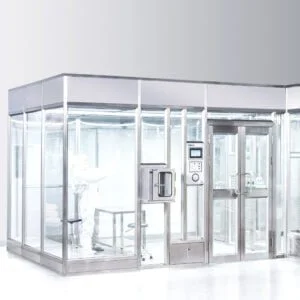
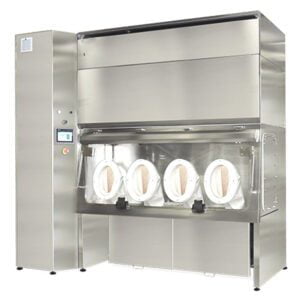
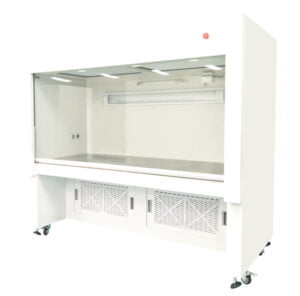
La aplicación dicta el nivel de capacidad. En los laboratorios, las carcasas de 50 m³/h son estándar para las líneas de extracción de campanas extractoras individuales o cabinas de bioseguridad. La fabricación farmacéutica puede utilizar sistemas de 300 m³/h para los gases de escape de grandes reactores o para la extracción general del conjunto. En las salas blancas, la selección depende de la fuente: una unidad de 50 m³/h puede servir para un pequeño aislador, mientras que un sistema de 300 m³/h se encarga de toda la extracción de la sala. Es fundamental adaptar el perfil de riesgo a la competencia del proveedor; un proveedor de equipos de laboratorio puede carecer de experiencia en la contención de tóxicos industriales de gran capacidad.
El papel de las normas de ventilación
La determinación de los volúmenes de escape necesarios comienza con normas como Norma ANSI/ASHRAE 62.1 Ventilación para una calidad del aire interior aceptable, que especifica los índices mínimos de dilución de contaminantes. Este cálculo proporciona los datos básicos del flujo de aire necesarios para dimensionar correctamente el sistema de contención, ya sea para una sola campana o para toda una planta de fabricación.
| Tipo de instalación | Aplicación típica de 50 m³/h | Aplicación típica de 300 m³/h |
|---|---|---|
| Laboratorio | Extracción individual de la campana extractora | N/A (normalmente arroyos más pequeños) |
| Fabricación farmacéutica | Aislador de ventilación pequeño | Grandes gases de escape del reactor, escape de la suite |
| Salas blancas | Fuente de peligro localizada | Tratamiento de gases de escape en toda la sala |
| Coincidencia de perfil de riesgo | Biodefensa, a escala de laboratorio | Tóxicos industriales, procesos a granel |
Fuente: Norma ANSI/ASHRAE 62.1 Ventilación para una calidad del aire interior aceptable. Esta norma especifica las tasas mínimas de ventilación para la dilución y eliminación de contaminantes, proporcionando la base para determinar los volúmenes de aire de escape necesarios en diferentes tipos de instalaciones, lo que informa directamente a la selección de la capacidad de alojamiento.
Marco de decisión: Cómo seleccionar la capacidad de caudal adecuada
Un proceso de seguridad crítica en seis pasos
La selección requiere un equipo interfuncional que siga un marco disciplinado. En primer lugar, cuantifique el peligro y el flujo: identifique el MPPS del contaminante y mida el volumen total de aire de escape. En segundo lugar, integrar la adquisición con los estudios HAZOP para evitar desajustes en las especificaciones. Tercero, evaluar la modularidad: ¿pueden los módulos estándar paralelos satisfacer mejor la necesidad que una unidad personalizada? Cuarto, modelizar el coste total de propiedad, incluidos los materiales de primera calidad y los costes de eliminación de residuos. Quinto, exigir características de diseño como puertos de prueba integrados para la validación de la conformidad. Sexto, planifique la integración digital especificando disposiciones para sensores IIoT que permitan el mantenimiento predictivo.
Validación del régimen operativo
Un detalle que a menudo se pasa por alto es el punto de ajuste de la presión operativa. El sistema debe mantener un régimen de presión negativa verificada, garantizando que cualquier fuga arrastre aire hacia dentro, no hacia fuera. Este punto de ajuste no es arbitrario; es un parámetro de seguridad calculado que se convierte en un indicador de rendimiento supervisado continuamente durante la puesta en servicio y el funcionamiento.
Pasos siguientes: Validación de la elección y aplicación
Tras la selección, la atención se centra en la validación holística del sistema. La puesta en servicio debe verificar el régimen de contención de presión negativa y la integridad del filtro mediante pruebas in situ. Documentar todos los procedimientos -instalación, pruebas de integridad, cambio de filtros y eliminación- como parte del caso de seguridad permanente de la instalación. Garantizar contratos de servicio a largo plazo para la eliminación certificada de los filtros a fin de asegurar la continuidad del cumplimiento.
¿Necesita asesoramiento profesional para especificar y validar la carcasa BIBO correcta para su reto de contención? Los ingenieros de YOUTH se especializan en traducir perfiles de riesgo complejos en soluciones de seguridad diseñadas, desde unidades de laboratorio compactas hasta sistemas industriales de gran capacidad. Póngase en contacto con nuestro equipo técnico para analizar las características específicas de su aplicación y revisar los datos de rendimiento detallados para sistemas modulares de contención. Para consultas directas, también puede Póngase en contacto con nosotros.
Preguntas frecuentes
P: ¿Cómo se calcula el verdadero ROI operativo al comparar un pequeño sistema BIBO de 50 m³/h con una unidad mayor de 300 m³/h?
R: El verdadero retorno de la inversión va mucho más allá del precio de compra inicial e incluye el coste total de propiedad. Aunque una unidad de 300 m³/h tiene un coste de capital más elevado, su mayor superficie filtrante puede reducir la caída de presión media y el consumo de energía. Y lo que es más importante, el mantenimiento de un filtro grande suele conllevar menos costes de mano de obra y eliminación de residuos peligrosos que el cambio de varias unidades más pequeñas. Esto significa que las instalaciones con procesos centralizados de gran volumen deben modelar los costes del ciclo de vida, ya que un sistema más grande puede ofrecer un mejor resultado financiero a largo plazo a pesar de la mayor inversión inicial.
P: ¿Cuáles son los requisitos críticos de validación de seguridad de una carcasa Bag-In/Bag-Out durante la instalación y el mantenimiento?
R: La validación de seguridad crítica requiere puertos de pruebas integrados para la caída de presión in situ y pruebas de escaneado de aerosoles para confirmar la integridad de la carcasa y el filtro, algo innegociable para el cumplimiento de la normativa. Este paso de la puesta en servicio debe verificar el régimen operativo de presión negativa, garantizando que cualquier fuga atraiga aire hacia el interior para su contención. En los proyectos en los que haya materiales peligrosos, es obligatorio prever estos puertos de validación como una característica de diseño desde el principio, ya que adaptarlos posteriormente suele ser poco práctico y compromete la seguridad.
P: ¿Cuándo debe una instalación utilizar varias carcasas modulares de 50 m³/h en lugar de un único sistema de 300 m³/h?
R: La decisión depende de la zonificación de riesgos y de la distribución de las fuentes de extracción, no sólo del tamaño total de la instalación. Las unidades múltiples de 50 m³/h son óptimas para instalaciones con numerosas fuentes puntuales aisladas, como campanas de laboratorio individuales, ya que proporcionan redundancia y aíslan los fallos. Un único sistema grande es adecuado para procesos centralizados de gran volumen. Esto significa que las instalaciones con un perfil de riesgo distribuido deben evaluar un enfoque modular para obtener una mayor flexibilidad operativa y reducir la complejidad de la ingeniería personalizada, como sugieren los principios del diseño modular.
P: ¿Cómo interactúa la selección del filtro con la capacidad de flujo de la carcasa para garantizar la seguridad del confinamiento?
R: La capacidad de la carcasa y la selección del filtro son independientes, pero deben ajustarse al peligro específico. La eficacia de la filtración (por ejemplo, HEPA H14) depende del medio filtrante, no de la carcasa. Sin embargo, el filtro debe elegirse en función del tamaño de partícula más penetrante (MPPS) del contaminante para cumplir normas como las siguientes ES 1822. Esto significa que, en primer lugar, debe definir el MPPS y la eficiencia requerida y, a continuación, seleccionar tanto el filtro con la clasificación correcta como una carcasa con la capacidad de flujo adecuada para manejar el volumen total de escape del sistema.
P: ¿Cuáles son los principales retos a la hora de planificar el espacio y la instalación de una carcasa BIBO de 300 m³/h?
R: La instalación de una unidad de 300 m³/h es una tarea estructural importante, que a menudo requiere soportes de acero, importantes modificaciones en los conductos y aparejos especializados. La planificación del espacio debe tener en cuenta el procedimiento completo de entrada y salida de bolsas, que requiere un espacio considerable para la manipulación y el cambio seguros de los filtros. Si su empresa necesita un sistema de gran capacidad, contrate con antelación a ingenieros de instalaciones y estructuras para que se encarguen de estos requisitos de espacio, acceso y soporte de carga, que son mucho más complejos que los de una unidad compacta de 50 m³/h.
P: ¿Cómo se adapta un proveedor de carcasas BIBO a los riesgos de una aplicación específica, como la biodefensa frente a los tóxicos industriales?
R: La experiencia de los proveedores está muy estratificada según el mercado y el perfil de riesgo. Un proveedor especializado en bioseguridad en el laboratorio puede carecer de experiencia con los retos corrosivos y de alta capacidad de la contención de tóxicos industriales. Hay que encontrar el proveedor con la competencia demostrada en el ámbito del riesgo específico, definido por sus propiedades químicas, físicas y biológicas. Esto evita la peligrosa infraingeniería o la derrochadora sobreingeniería y es un paso crítico en el proceso de adquisición tras un estudio HAZOP de la instalación.
P: ¿Por qué la selección de materiales como el acero inoxidable 316L frente al 304 es una decisión sobre el coste del ciclo de vida de las carcasas BIBO?
R: La elección del material determina la durabilidad a largo plazo y el coste total. Mientras que el acero inoxidable 304 puede tener un coste inicial inferior, el 316L ofrece una resistencia a la corrosión superior para ciclos de descontaminación agresivos o entornos difíciles. Una carcasa fabricada con un material inadecuado puede fallar prematuramente, obligando a una sustitución completa y costosa. En los proyectos en los que se utilicen agentes de limpieza agresivos o productos químicos de proceso, dé prioridad a los materiales de primera calidad resistentes a la corrosión para evitar costes catastróficos en el ciclo de vida y garantizar la integridad del sistema.
Contenidos relacionados:
- Cajas de alojamiento HEPA en la fabricación farmacéutica: Usos
- Requisitos de la caja de alojamiento HEPA aeroespacial y normas de la NASA
- Tendencias emergentes en tecnología de cajas de alojamiento HEPA para 2025
- ¿Cuál es el grado de eficacia de las cajas de alojamiento HEPA?
- Guía definitiva sobre las cajas de alojamiento HEPA: Aplicaciones y ventajas
- Guía completa de carcasas de filtros Bag In Bag Out (BIBO) para instalaciones farmacéuticas y de bioseguridad: Edición técnica 2025
- Aumento de la productividad con sistemas avanzados de carcasas HEPA
- Sistemas HVAC para hospitales: Guía de implantación de la caja de alojamiento HEPA
- ¿Qué son las configuraciones de prefiltro y postfiltro en los sistemas Bag In Bag Out?