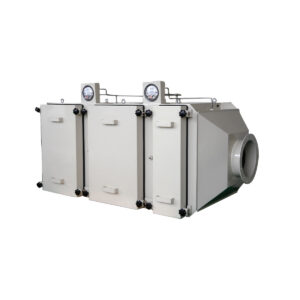
La selección de la capacidad de flujo correcta de la carcasa del filtro Bag In Bag Out (BIBO) es una decisión de ingeniería crítica y de alto riesgo. Un desajuste entre la demanda volumétrica de su sistema y la capacidad nominal de la carcasa puede provocar fallos de contención, costes operativos excesivos o una degradación prematura del filtro. La elección entre una unidad de 50 m³/h y otra de 300 m³/h no es una cuestión de preferencias, sino de adecuación precisa a la aplicación.
Esta decisión requiere ir más allá de las especificaciones básicas de calefacción, ventilación y aire acondicionado. Exige una revisión interfuncional que integre la evaluación de riesgos, la ingeniería de las instalaciones y la logística operativa a largo plazo. Comprender los datos de rendimiento, las implicaciones del coste total y la escalabilidad de estos sistemas es esencial para garantizar la seguridad, el cumplimiento de la normativa y la eficiencia financiera en el tratamiento de partículas peligrosas.
Diferencias clave: 50 m³/h frente a 300 m³/h Diseño de la carcasa BIBO
Filosofía de diseño para distintos volúmenes
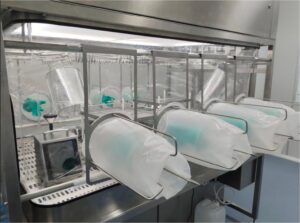
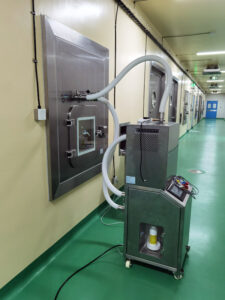
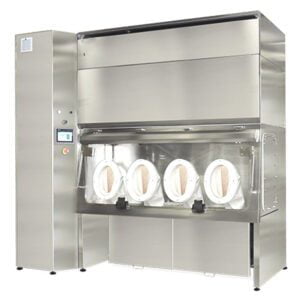
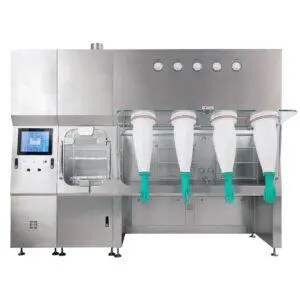
La diferencia fundamental radica en la filosofía de diseño para diferentes demandas volumétricas. Un sistema de 50 m³/h está diseñado como un módulo compacto y autónomo para aplicaciones precisas de bajo caudal. Es ideal para la extracción puntual de pequeñas cajas de guantes, equipos de laboratorio especializados o procesos aislados en los que los gases de escape peligrosos son limitados. Su diseño prioriza la integración en diseños con limitaciones de espacio sin comprometer la seguridad de la contención.
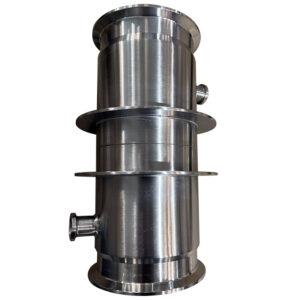
Por el contrario, una carcasa de 300 m³/h es un caballo de batalla de uso medio construido para aisladores más grandes o estaciones de trabajo múltiples. Sus mayores dimensiones físicas son necesarias para dar cabida a un mayor volumen de aire, manteniendo al mismo tiempo una velocidad de paso adecuada a través del medio filtrante. Esto evita una caída de presión excesiva y garantiza la eficacia de la filtración. La evolución del diseño se centra cada vez más en las mejoras geométricas, como las carcasas circulares, que mejoran la estanqueidad y la seguridad de fijación de la bolsa durante el vulnerable procedimiento de cambio del filtro.
Implicaciones materiales y constructivas
El paso de un caudal bajo a uno medio también influye en la selección de materiales y la robustez de la construcción. Aunque ambos sistemas deben cumplir estrictas normas de contención, la unidad de 300 m³/h, que suele servir para aplicaciones más críticas o de mayor escala, puede tener una mayor especificación de materiales como el acero inoxidable 316L para soportar ciclos de descontaminación agresivos. La integridad estructural para soportar presiones estáticas más elevadas también es un factor diferenciador clave. Según nuestro análisis de las especificaciones de las carcasas, un detalle que se suele pasar por alto es el diseño interno de los deflectores y la distribución del flujo de aire, que es más complejo en una unidad de 300 m³/h para garantizar una carga uniforme de la mayor superficie filtrante.
Comparación de costes: Coste de capital, operativo y total de propiedad
Desglose de los gastos de capital
Un análisis financiero exhaustivo debe ir más allá del precio de compra inicial. Aunque una sola unidad de 300 m³/h suele tener un coste de capital superior al de una unidad de 50 m³/h, esta comparación es engañosa para un caudal total equivalente del sistema. Para una instalación que requiera 600 m³/h, dos módulos de 300 m³/h en paralelo pueden ofrecer un mejor coste total de propiedad que doce unidades de 50 m³/h, debido a la reducción del espacio ocupado, la simplificación de los conductos y la reducción de la mano de obra de instalación.
El principal factor del coste total de propiedad es la selección del material. Optar por acero inoxidable 316 en lugar de 304 o acero al carbono revestido, aunque inicialmente más costoso, suele ser obligatorio para los procesos que implican el uso frecuente de peróxido de hidrógeno vaporizado (VHP) u otros descontaminantes corrosivos. Los materiales inferiores corren el riesgo de sufrir picaduras y grietas por corrosión bajo tensión, lo que puede provocar un fallo catastrófico de la contención y una costosa sustitución completa de la carcasa, un riesgo que supera con creces el ahorro inicial.
El predominio de los costes operativos
Los gastos operativos dominan sistemáticamente el coste total de propiedad de los sistemas BIBO. El mayor coste recurrente es la eliminación de los filtros. Cada cambio genera residuos peligrosos que requieren una manipulación especializada y certificada, transporte e incineración a alta temperatura. Los presupuestos deben garantizar contratos de eliminación a largo plazo; no tener esto en cuenta en las previsiones operativas es un error común de planificación financiera.
Comparación de costes
En la tabla siguiente se resumen los componentes clave de los costes para diferentes capacidades de caudal.
Análisis del coste total de propiedad
| Componente de coste | 50 m³/h Sistema | 300 m³/h Sistema |
|---|---|---|
| Coste de capital | Menor gasto inicial | Mayor gasto inicial |
| Impacto del material (por ejemplo, acero inoxidable 316 frente a 304) | Importante impulsor del coste total de propiedad | Importante impulsor del coste total de propiedad |
| Costes operativos | Logística de eliminación de filtros | Logística de eliminación de filtros |
| Necesidad de un presupuesto a largo plazo | Contratos de eliminación seguros | Contratos de eliminación seguros |
| Mayor riesgo | Corrosión por descontaminación | Corrosión por descontaminación |
Fuente: Documentación técnica y especificaciones industriales.
¿Qué caudal es mejor para su aplicación específica?
Adecuación de la capacidad a la demanda calculada
La selección de la capacidad de flujo óptima es una adecuación sistemática a una demanda calculada, no una elección especulativa. El proceso debe comenzar con una revisión interfuncional de los riesgos durante la fase conceptual del proyecto. De este modo, se integran las aportaciones de EHS, ingeniería de procesos y gestión de instalaciones para garantizar que las especificaciones del alojamiento se ajustan al caso de seguridad específico y a la realidad operativa.
Un módulo de 50 m³/h es inequívocamente mejor para la contención de fuentes puntuales de bajo volumen. Una unidad de 300 m³/h es adecuada para aplicaciones de caudal medio, como el escape de una sala para un aislador de tamaño medio o el escape combinado de varios flujos de proceso. Para demandas que superen la capacidad de una sola unidad, la solución correcta es una configuración modular en paralelo. Esta decisión también afecta al panorama de proveedores; le recomendamos que adapte su clase de riesgo específica y sus requisitos de validación a un proveedor con experiencia documentada y auditable en ese nicho para evitar una peligrosa infraingeniería.
Consecuencias del desajuste
Los riesgos de una selección incorrecta son graves. Una carcasa de tamaño insuficiente crea un cuello de botella que obliga al extractor a hacer pasar el aire a una velocidad excesiva. Esto puede comprometer la eficacia nominal del filtro, causar daños en el medio filtrante y provocar una brecha en la contención. Una carcasa sobredimensionada para una aplicación de bajo caudal conlleva un coste de capital innecesariamente elevado, un mayor espacio ocupado y puede dar lugar a una baja velocidad frontal, lo que podría afectar a la eficacia de captura de partículas y provocar una carga desigual del filtro.
Comparación de datos de rendimiento: Eficacia de filtración y caída de presión
Eficacia: Una función del tamaño adecuado
Eficacia de filtración de los filtros HEPA/ULPA, definida por normas como ISO 29463-5, está certificado para una velocidad de paso específica. Tanto los sistemas de 50 como los de 300 m³/h, cuando se dimensionan adecuadamente para su aplicación, pueden alcanzar una eficiencia del 99,99% o superior en el filtro final. La carcasa en sí no determina la eficacia del filtro, sino que debe estar diseñada para mantener el filtro dentro de sus parámetros de funcionamiento validados.
El factor crítico que diferencia el rendimiento es la caída de presión del sistema. Un sistema de 300 m³/h generará un perfil de presión estática diferente -tanto cuando esté limpio como cuando se cargue el filtro- en comparación con una unidad de 50 m³/h. El ventilador de extracción debe dimensionarse para suministrar el caudal volumétrico necesario frente a esta resistencia total del sistema. El ventilador de extracción debe dimensionarse para suministrar el caudal volumétrico necesario frente a esta resistencia total del sistema. Un ventilador de tamaño insuficiente combinado con un filtro cargado puede colapsar el caudal del sistema, mientras que un ventilador sobredimensionado puede resultar ineficiente desde el punto de vista energético y ruidoso.
La validación como imperativo normativo
La validación del rendimiento no es negociable. Los puertos de escaneado DOP/PAO integrados y los accesorios de prueba de caída de presión no son accesorios opcionales, sino esenciales para la verificación in situ. Se trata de un imperativo normativo para todo el sistema instalado, no sólo para el filtro. La carcasa debe facilitar estas pruebas sin comprometer la contención. Los expertos del sector subrayan que el descuido más común es especificar el filtro y la carcasa por separado sin asegurarse de que el conjunto integrado pueda validarse como un sistema sellado según los protocolos pertinentes.
Comparación de parámetros de rendimiento
En la tabla siguiente se comparan los principales parámetros de rendimiento de las dos capacidades de carcasa.
Parámetros de rendimiento del sistema
| Parámetro de rendimiento | 50 m³/h Carcasa | 300 m³/h Carcasa |
|---|---|---|
| Eficacia de filtración (filtro final) | 99,99%+ (HEPA/ULPA) | 99,99%+ (HEPA/ULPA) |
| Diferenciador clave | Perfil de caída de presión del sistema | Perfil de caída de presión del sistema |
| Factor crítico del tamaño del ventilador | Resistencia total del sistema | Resistencia total del sistema |
| Riesgo de subdimensionamiento | Velocidad excesiva de la cara | Velocidad excesiva de la cara |
| Requisito de validación | Puertos de exploración DOP/PAO | Puertos de exploración DOP/PAO |
| Imperativo normativo | Verificación del rendimiento in situ | Verificación del rendimiento in situ |
Fuente: EN 1822-5: Filtros de aire de alta eficacia (EPA, HEPA y ULPA). Parte 5: Determinación de la eficacia de los elementos filtrantes.. Esta norma define el método de ensayo para determinar la eficiencia del elemento filtrante, que es el dato de rendimiento fundamental utilizado para especificar y validar la capacidad de flujo y el sellado de la carcasa BIBO en el sistema instalado.
Impacto en la vida útil del filtro y frecuencia de mantenimiento: 50 frente a 300 m³/h
Dictado por la carga de partículas
La vida útil del filtro depende principalmente de la carga de partículas, que es una función de la concentración de contaminantes y del caudal volumétrico de aire que pasa a través del medio filtrante. Suponiendo que los niveles de contaminantes sean idénticos, un sistema de 300 m³/h hará pasar seis veces el volumen de aire de un sistema de 50 m³/h, por lo que el filtro se cargará más rápidamente y será necesario cambiarlo con más frecuencia.
Esto hace que un cálculo preciso de la demanda y la carga contaminante sea vital para establecer programas de mantenimiento prácticos y rentables. Un error común es utilizar factores de seguridad demasiado conservadores que dan lugar a la especificación de una capacidad de flujo mucho mayor de lo necesario, aumentando inadvertidamente el consumo de filtros y los costes de eliminación.
El cambio hacia el mantenimiento predictivo
La mejor práctica emergente es la integración digital para el mantenimiento predictivo. Las carcasas preparadas para IIoT con sensores digitales de presión diferencial incorporados permiten la supervisión en tiempo real. Estos datos proporcionan una señal directa de la carga del filtro, lo que permite predecir las ventanas de mantenimiento y facilita el cambio de los cambios rígidos basados en el calendario al mantenimiento basado en el estado. Esto reduce el tiempo de inactividad imprevisto, optimiza el uso de los filtros y refuerza el cumplimiento de las normativas mediante registros de auditoría digitales del rendimiento del sistema.
Factores que influyen en la vida útil del filtro
En la tabla siguiente se indican los principales factores que afectan a la vida útil del filtro para diferentes caudales.
Vida útil del filtro y factores de mantenimiento
| Factor | 50 m³/h Caudal | 300 m³/h Caudal |
|---|---|---|
| Dictador de vida primaria | Carga de partículas | Carga de partículas |
| Tasa de carga (mismo contaminante) | Más lento | Más rápido |
| Intervalo de cambio | Potencialmente más largo | Potencialmente más corto |
| Facilitador del mantenimiento predictivo | Sensores de carcasa preparados para la IIoT | Sensores de carcasa preparados para la IIoT |
| Datos controlados | Presión diferencial en tiempo real | Presión diferencial en tiempo real |
| Turno de mantenimiento | De programado a condicionado | De programado a condicionado |
Fuente: Documentación técnica y especificaciones industriales.
Requisitos de espacio e integración de los sistemas de bajo caudal frente a los de caudal medio
Planificación de la huella y el trazado
El espacio ocupado es un factor diferenciador fundamental. Un sistema de 50 m³/h ofrece una solución compacta para su integración directa en equipos de proceso a pequeña escala o junto a ellos. Una unidad de 300 m³/h requiere más espacio, pero representa una huella eficiente para su capacidad. La solución estratégica a las limitaciones de espacio es una filosofía de diseño modular.
El uso de módulos estandarizados en configuraciones paralelas permite alcanzar el caudal necesario, al tiempo que ofrece flexibilidad para diseños de instalaciones únicos. Este enfoque evita el gasto y los largos plazos de entrega de las carcasas individuales fabricadas a medida para caudales elevados. Los ingenieros pueden diseñar tanto para alta capacidad como para eficiencia espacial mediante la disposición de múltiples unidades estandarizadas.
Integración más allá del espacio físico
La planificación de la integración debe ir más allá de las dimensiones físicas. Debe tener en cuenta la necesidad de establecer y verificar un régimen de presión negativa dentro del recipiente de contención. La carcasa del BIBO y sus conductos asociados forman parte de este sistema de seguridad crítico. El punto de consigna para esta presión negativa debe determinarse durante el análisis de riesgos, alcanzarse durante la puesta en servicio y su mantenimiento debe tenerse en cuenta en la disposición del sistema y la filosofía de control. Esto garantiza que cualquier fuga extraiga aire en la contención, actuando como un respaldo de seguridad pasivo.
Escalabilidad: Cuándo utilizar configuraciones modulares en paralelo o en serie
La ventaja modular
La escalabilidad es uno de los puntos fuertes del enfoque estandarizado de BIBO. Los módulos individuales suelen tener una capacidad nominal de hasta ~4.000 m³/h. Para aplicaciones que requieren un caudal fuera del rango de una sola unidad, las configuraciones de ingeniería proporcionan la solución. Esta estrategia modular ofrece una enorme flexibilidad, ya que permite a las instalaciones satisfacer requisitos volumétricos y de filtración exactos utilizando unidades certificadas y validadas previamente, lo que optimiza el gasto de capital y simplifica futuras ampliaciones.
Lógica en paralelo frente a lógica en serie
Una configuración en paralelo emplea varias carcasas una al lado de la otra para dividir el caudal de aire total del sistema. Es el método estándar para aplicaciones de gran volumen, como el escape de una gran línea de llenado o un conjunto de aisladores. Una configuración en serie secuencia las carcasas, con todo el caudal del sistema pasando por cada etapa; por ejemplo, una carcasa de prefiltro seguida de una carcasa HEPA final. Esto se utiliza para la filtración en varias etapas cuando se requieren diferentes grados de filtración para la protección del proceso o para prolongar la vida útil del filtro final más caro.
Casos prácticos de configuración
La tabla siguiente aclara las aplicaciones típicas de las distintas configuraciones modulares.
Guía de configuración de la escalabilidad
| Tipo de configuración | Caso típico | Principio de manejo del flujo |
|---|---|---|
| Módulo único | Hasta ~4.000 m³/h de demanda | Capacidad de alojamiento individual |
| En paralelo | Aplicaciones de gran volumen | Divide el caudal de aire total del sistema |
| Serie | Filtración multietapa | Secuencias de flujo completo por etapas |
| Ejemplo Necesidad | 600 m³/h a partir de módulos de 300 m³/h | Utiliza la configuración en paralelo |
| Beneficio clave | Flexibilidad para demandas exactas | Utiliza unidades probadas y validadas |
Fuente: Documentación técnica y especificaciones industriales.
Marco de decisión: Selección de la capacidad de caudal adecuada a sus necesidades
Un proceso de selección en cinco pasos
Un marco de decisión sólido integra el cálculo técnico con la supervisión estratégica. En primer lugar, calcule con precisión el caudal volumétrico de aire necesario (m³/h) basándose en los índices de escape del proceso, la velocidad frontal necesaria para la contención y la pérdida de presión estática total del sistema. En segundo lugar, compare esta demanda con las capacidades normalizadas: 50 m³/h para necesidades precisas de bajo caudal, 300 m³/h para caudales medios. Para demandas superiores, planifique inmediatamente una configuración paralela de módulos estándar.
En tercer lugar, exigir funciones de validación integradas. La carcasa seleccionada debe tener puertos de prueba y amortiguadores de aislamiento integrados para permitir pruebas de integridad in situ continuas, tratando el BIBO como un activo crítico para la seguridad que requiere auditorías de rendimiento periódicas. En cuarto lugar, realice un análisis del coste total de propiedad que priorice la integridad del material para sus métodos de descontaminación y calcule el coste total de la logística de eliminación del filtro a largo plazo.
La selección de proveedores como medida de reducción de riesgos
Por último, seleccione un proveedor con experiencia documentada en su clase de peligro específica y requisitos de validación. Esto garantiza que el diseño de la carcasa, desde el material de la junta hasta el mecanismo de sellado de la bolsa, esté probado para su aplicación. Este marco hace que el proceso de selección pase de una simple compra de componentes a la especificación de un sistema de seguridad de contención verificable.
La correcta selección de la capacidad de caudal equilibra el rendimiento inmediato con la resistencia operativa a largo plazo. Requiere pasar de especificaciones genéricas a cálculos específicos para cada aplicación, con una perspectiva de coste total de propiedad que destaque la logística operativa. Dé prioridad a los diseños que permitan una validación de conformidad sencilla y asóciese con proveedores cuyo enfoque de ingeniería se ajuste a su perfil de riesgo.
¿Necesita orientación profesional para especificar el sistema BIBO adecuado para su reto de contención? Los ingenieros de YOUTH se especializan en traducir complejos requisitos de proceso y seguridad en soluciones de filtración validadas. Revise las especificaciones detalladas y las consideraciones de diseño para carcasas de filtros de contención modulares para su próximo proyecto. Para consultas directas, también puede Póngase en contacto con nosotros.
Preguntas frecuentes
P: ¿Cómo se determina con exactitud la capacidad de caudal de BIBO necesaria para una nueva aplicación de contención?
R: La capacidad de caudal correcta es una correspondencia sistemática con la demanda calculada, no una preferencia. Debe llevar a cabo una revisión interfuncional de los peligros desde la fase conceptual del proyecto, integrando la evaluación de riesgos y la ingeniería de las instalaciones para calcular el caudal volumétrico de aire necesario en función de los gases de escape del proceso y la presión estática del sistema. Esto garantiza que la carcasa se ajusta al caso de seguridad específico. En los proyectos en los que la adquisición se basa en especificaciones genéricas de HVAC, se corre el riesgo de que el sistema de contención no se diseñe lo suficiente o se diseñe en exceso.
P: ¿Cuál es el verdadero factor de coste del Coste Total de Propiedad de las viviendas BIBO más allá de la compra inicial?
R: El principal factor de coste a largo plazo es la selección del material para el cuerpo de la carcasa, seguido de la eliminación recurrente de residuos peligrosos. Optar por acero inoxidable 316 en lugar de materiales de calidad inferior, aunque supone un mayor gasto de capital, suele ser esencial para soportar ciclos de descontaminación agresivos y evitar una corrosión catastrófica. Además, cada cambio de filtro genera residuos que requieren una incineración especializada contratada. Esto significa que las instalaciones con procesos corrosivos o protocolos de descontaminación estrictos deben dar prioridad a la integridad de los materiales en su análisis del coste total de propiedad para evitar costosas sustituciones completas de la carcasa.
P: ¿En qué se diferencia la caída de presión del sistema entre una carcasa BIBO de 50 m³/h y otra de 300 m³/h?
R: Un sistema de 300 m³/h generará un perfil de presión estática distinto, tanto limpio como cargado, en comparación con una unidad de 50 m³/h. El ventilador de extracción debe dimensionarse para suministrar el caudal volumétrico necesario frente a esta resistencia total del sistema, que es función del diseño de la carcasa y de la resistencia al flujo del filtro determinada por normas como EN 1822-5. Si su operación requiere un punto de ajuste de presión negativa específico para la contención, planifique el dimensionamiento detallado del ventilador para superar la caída de presión de la carcasa seleccionada y evitar un cuello de botella en el sistema.
P: ¿Cuándo debemos utilizar una configuración modular paralela en lugar de una única carcasa BIBO de mayor tamaño?
R: Una configuración en paralelo que utilice varias carcasas estandarizadas es la solución para demandas de caudal total que superen la capacidad de un solo módulo, normalmente por encima de ~4.000 m³/h, o cuando la flexibilidad espacial sea crítica. Este enfoque divide el caudal total del sistema entre varias unidades. Para aplicaciones que requieren una correspondencia volumétrica exacta, como la obtención de 600 m³/h a partir de módulos de 300 m³/h, esta estrategia modular optimiza el gasto de capital. Esto significa que las instalaciones que prevean futuras ampliaciones o que tengan limitaciones de distribución específicas deben diseñarse desde el principio con unidades estandarizadas capaces de funcionar en paralelo.
P: ¿Cómo podemos predecir los intervalos de cambio de filtros y pasar a un mantenimiento basado en el estado de los sistemas BIBO?
R: La vida útil del filtro depende de la carga de partículas, que es una función de la concentración de contaminantes y del caudal volumétrico. Los sistemas de mayor caudal suelen cargarse más rápido. La implementación de carcasas preparadas para IIoT con sensores digitales de presión diferencial permite la monitorización en tiempo real, prediciendo las ventanas de mantenimiento mediante el seguimiento de la carga del filtro con respecto a las líneas de base establecidas durante la puesta en marcha, como las verificadas por... ASHRAE 52.2 pruebas. Si su actividad requiere un tiempo de inactividad imprevisto mínimo, debe dar prioridad a las carcasas con sensores para pasar de los cambios programados a los cambios en función de los datos.
P: ¿Qué características de validación no son negociables para garantizar la conformidad y el rendimiento continuos del sistema BIBO?
R: Los puertos de prueba de escaneado DOP/PAO integrados y los puertos de prueba de caída de presión son esenciales para la verificación in situ del rendimiento del sistema instalado. Estas características permiten realizar auditorías periódicas de la eficacia de la filtración y la estanqueidad de la carcasa, que son imperativos normativos. La eficacia del filtro, clasificada por normas como ISO 29463-5, deben validarse dentro de la carcasa en condiciones operativas. Esto significa que debe exigir estos puertos de validación integrados durante la adquisición para tratar el BIBO como un activo crítico para la seguridad que requiere auditorías de rendimiento periódicas.
P: ¿En qué difieren los requisitos de espacio entre la integración de un sistema BIBO de caudal bajo y uno de caudal medio?
R: Un módulo de 50 m³/h ocupa poco espacio y puede integrarse directamente en equipos de proceso a pequeña escala, como cajas de guantes. Una unidad de 300 m³/h tiene unas dimensiones físicas mayores para manejar un mayor volumen de aire, pero representa una huella equilibrada para su capacidad. La solución estratégica para las necesidades de grandes caudales en espacios reducidos es un diseño modular paralelo que utilice unidades estándar. En los proyectos en los que las limitaciones de diseño son muy estrictas, se pueden utilizar configuraciones paralelas de módulos más pequeños para conseguir el caudal necesario sin necesidad de una costosa fabricación a medida.
Contenidos relacionados:
- Cajas de alojamiento HEPA en la fabricación farmacéutica: Usos
- BIBO frente a la contención tradicional: ¿Cuál es mejor?
- Carcasa de filtro BIBO | Principios de diseño y componentes
- Comprender BIBO | Contención de materiales peligrosos
- Guía completa de carcasas de filtros Bag In Bag Out (BIBO) para instalaciones farmacéuticas y de bioseguridad: Edición técnica 2025
- ¿Cuál es el grado de eficacia de las cajas de alojamiento HEPA?
- Las 5 mejores soluciones de contención BIBO para 2025
- Tendencias emergentes en tecnología de cajas de alojamiento HEPA para 2025
- Hospital BIBO Systems | Contención sanitaria