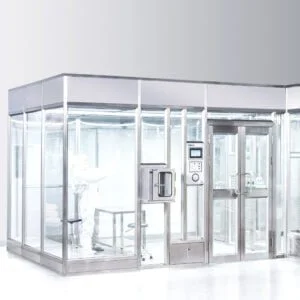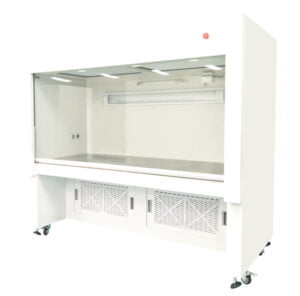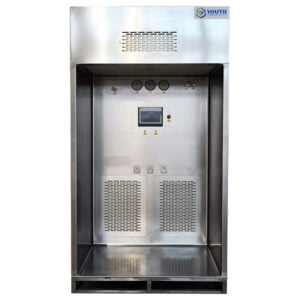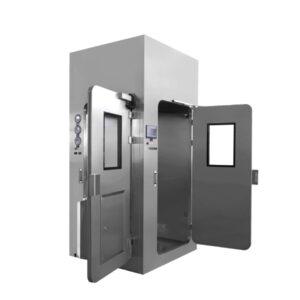
En la fabricación farmacéutica, la clasificación ISO 5 o de sala blanca de clase 100 es una especificación innegociable para pesar compuestos potentes. Sin embargo, los equipos de compras a menudo confunden esta clasificación con una simple característica del producto, lo que conduce a costosos descuidos en la contención y el cumplimiento. El verdadero reto consiste en especificar un sistema de ingeniería que ofrezca este rendimiento de forma fiable en condiciones operativas dinámicas, no sólo en reposo.
La evolución de las normas GMP mundiales y la creciente potencia de los API modernos han hecho que esta distinción sea fundamental. Seleccionar una cabina de pesaje basándose únicamente en su clasificación ISO 5 sin comprender la ingeniería subyacente compromete la seguridad a largo plazo, el éxito de la validación y el coste total de propiedad. Este análisis aclara los requisitos a nivel de sistema para un verdadero rendimiento ISO 5 en operaciones de pesaje activo.
ISO 5 frente a clase 100: definición de la clasificación de sala limpia
Las normas sinónimas
La norma ISO 14644-1 y la ya retirada FS 209E definen límites idénticos de concentración de partículas para el grado más alto de manipulación de polvos no estériles. La clasificación ISO 5 no permite más de 3.520 partículas ≥0,5 micrómetros por metro cúbico, lo que equivale matemáticamente al límite FS 209E Clase 100 de 100 partículas por pie cúbico. Este umbral es la línea de base para proteger los materiales sensibles de la contaminación atmosférica.
Un resultado, no una característica
Un detalle crítico que a menudo se pasa por alto es que esta clasificación certifica el entorno “en reposo”, es decir, con el equipo instalado y en funcionamiento pero sin personal ni actividad presentes. La certificación no garantiza la misma calidad del aire durante el pesaje activo, cuando la dispersión de polvo crea el mayor riesgo de contaminación. Por tanto, la clasificación es un resultado proporcionado por los sistemas integrados de la cabina, no una propiedad intrínseca.
Implicaciones estratégicas de la contratación pública
Tratar la norma ISO 5 como una casilla de verificación conduce a errores de especificación. Hay que centrarse en la ingeniería que consigue el resultado: eficacia de la filtración HEPA, control del flujo de aire laminar y mantenimiento de los diferenciales de presión. Los expertos del sector recomiendan evaluar los datos de las pruebas y los protocolos de validación que respaldan la afirmación del fabricante, no sólo la afirmación en sí. Comparamos las especificaciones de los proveedores y descubrimos variaciones significativas en la forma en que definen y prueban el rendimiento “operativo”, que afecta directamente a la eficacia de la contención.
| Estándar | Tamaño de partícula medido | Número máximo de partículas |
|---|---|---|
| ISO 14644-1 (ISO 5) | ≥0,5 micrómetros | 3.520 por metro cúbico |
| FS 209E (Clase 100) | ≥0,5 micrómetros | 100 por pie cúbico |
| Equivalencia | Umbral idéntico | Normas sinónimas |
Fuente: ISO 14644-1:2015. Esta norma define los límites de concentración de partículas para las clasificaciones de salas limpias, incluida la Clase 5 de ISO, proporcionando la base cuantitativa oficial para la clasificación.
Cómo consigue una cabina de pesaje la clasificación ISO 5
El microentorno diseñado
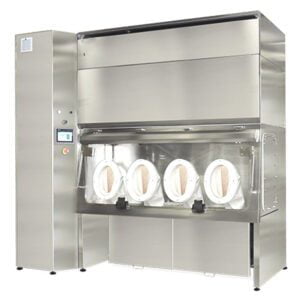
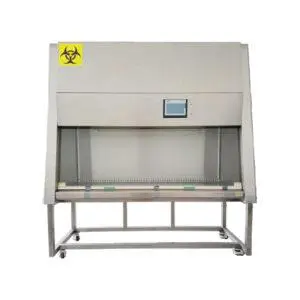
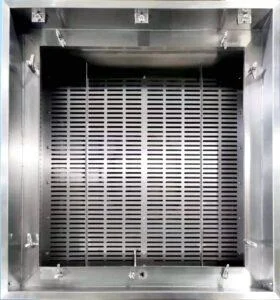
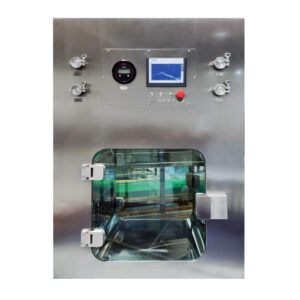
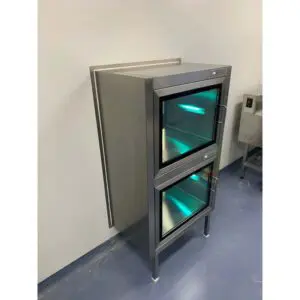
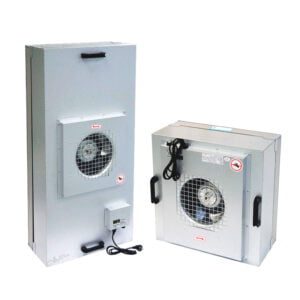
Una cabina de pesaje crea una zona ISO 5 mediante un flujo de aire unidireccional vertical controlado. El aire ambiente pasa por un tren de filtración de varias etapas, que culmina en un filtro HEPA final de grado H13 como mínimo. A continuación, este aire filtrado se envía uniformemente hacia abajo a través de la superficie de trabajo a una velocidad frontal de entre 0,3 y 0,6 m/s. Este flujo laminar actúa como una barrera de partículas, capturando y evacuando los contaminantes generados durante el proceso de pesaje.
El mandato de la triple protección
El diseño del sistema cumple tres objetivos de protección simultáneos. El flujo descendente protege el producto de la contaminación externa. Un diferencial de presión negativa mantenido con respecto a la sala circundante contiene los aerosoles peligrosos dentro de la cabina, garantizando la seguridad medioambiental. La estructura física de la propia cabina proporciona una barrera para la protección del operario. Este enfoque integrado transforma la unidad de un simple purificador de aire en un sistema de contención certificado.
Validación del rendimiento del flujo de aire
Para lograr la clasificación es necesario verificar estos parámetros. Según los métodos de ensayo descritos en ISO 14644-3:2019, Los técnicos miden la velocidad y la uniformidad del flujo de aire para garantizar que el flujo laminar no sea ni demasiado débil (con riesgo de contaminación) ni demasiado turbulento (dispersión del polvo). Según nuestra experiencia de validación, es esencial trazar el perfil de velocidad en toda la superficie de trabajo para identificar las zonas muertas que podrían comprometer la contención.
| Componente del sistema | Parámetro clave / Grado | Función principal |
|---|---|---|
| Filtro final HEPA | H13 (99.95%) o H14 | Eficacia de eliminación de partículas |
| Tipo de flujo de aire | Vertical unidireccional (laminar) | Descenso a través de la zona de trabajo |
| Velocidad de la cara | 0,3 a 0,6 m/s | Captura y supresión de partículas |
| Presión diferencial | Negativo con respecto a la habitación | Contención de aerosoles |
Fuente: ISO 14644-3:2019. Esta norma especifica los métodos de ensayo para salas blancas, incluidas las mediciones de velocidad y uniformidad del flujo de aire, fundamentales para verificar el rendimiento de un sistema de flujo laminar.
Características de diseño clave para el cumplimiento de la norma ISO 5 y la seguridad
Materiales y facilidad de limpieza
Los materiales de construcción influyen directamente en la facilidad de limpieza y la integridad a largo plazo. La norma del sector es el acero inoxidable austenítico (304 o 316) con soldaduras interiores lisas y redondeadas. Esto evita la acumulación de partículas y permite una descontaminación eficaz. La elección del grado -304 para la mayoría de las aplicaciones frente a 316 para entornos corrosivos- es una decisión fundamental basada en los productos químicos utilizados en los regímenes de limpieza.
Jerarquía de seguridad de filtración
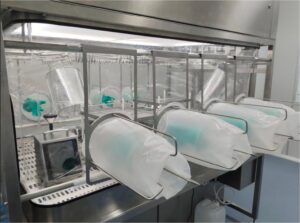
La carcasa de filtración representa un punto de decisión de seguridad crítico. Para materiales no peligrosos, puede bastar con un mecanismo estándar de cambio seguro. Para compuestos potentes, es obligatorio el uso de una carcasa Bag-In/Bag-Out (BIBO). Este sistema permite la retirada sellada de filtros HEPA contaminados sin exposición del operario, definiendo el perfil de riesgo operativo a largo plazo durante el mantenimiento. No se trata de un accesorio, sino de una característica de seguridad fundamental.
Sistemas de control inteligentes
El sistema de control es el centro neurálgico del funcionamiento. Los sistemas modernos utilizan motores EC para un control preciso y energéticamente eficiente de la velocidad del ventilador con el fin de mantener los diferenciales de presión establecidos. Supervisan continuamente la carga del filtro mediante sensores de presión diferencial y activan alarmas en caso de condiciones fuera de especificación. Esta sofisticación influye directamente en la fiabilidad operativa y la calidad de los datos de conformidad listos para auditoría, por lo que es un factor decisivo en la selección.
| Característica | Especificación / Tipo | Propósito |
|---|---|---|
| Material de construcción | Acero inoxidable austenítico (304/316) | Facilidad de limpieza, resistencia a la corrosión |
| Carcasa de filtración | Cambio seguro o BIBO | Seguridad en el mantenimiento de materiales peligrosos |
| Iluminación de la superficie de trabajo | ≥500 lux (LED) | Visibilidad del operador |
| Sistema de control | Control de velocidad del ventilador del motor EC | Gestiona la presión, activa las alarmas |
Fuente: Documentación técnica y especificaciones industriales.
Validación y mantenimiento para un rendimiento ISO 5 sostenido
Protocolo de cualificación
La validación inicial sigue una secuencia formal IQ/OQ/PQ. La cualificación de la instalación verifica el correcto montaje y las utilidades. La cualificación operativa comprueba el rendimiento funcional: velocidad del flujo de aire, uniformidad y diferenciales de presión. La Cualificación del Rendimiento prueba que el sistema cumple la norma ISO 5 de recuento de partículas en reposo. Un protocolo completo, definido por ISO 14644-3:2019, también incluye pruebas de integridad del filtro HEPA mediante un desafío DOP/PAO para detectar cualquier fuga.
“Realidad ”En reposo“ frente a ”En funcionamiento
Un error frecuente es calificar únicamente el estado “en reposo”. El período de mayor riesgo es durante el pesaje activo. Por lo tanto, un PQ sólido debe incluir pruebas de contención dinámica, como una prueba de polvo sustitutivo (por ejemplo, lactosa, manitol) en condiciones de pesaje simuladas. Esto demuestra la capacidad de la cabina para contener los aerosoles generados, que es la verdadera medida de su capacidad de protección.
Coste del ciclo de vida
El rendimiento sostenido depende de un programa de mantenimiento riguroso. Los cambios de filtro dependen de las lecturas del diferencial de presión, no de un calendario fijo. Las superficies deben limpiarse periódicamente con agentes autorizados. Todos los instrumentos de control deben calibrarse periódicamente. El gasto de capital suele ser una fracción del coste total de propiedad, que se define cada vez más por los contratos de servicio y la disponibilidad de piezas de repuesto patentadas. Es esencial planificarlo desde el principio.
| Prueba de validación | Método típico | Estado de rendimiento verificado |
|---|---|---|
| Recuento de partículas | Contador de partículas discretas | “Clasificación ”en reposo |
| Integridad HEPA | Prueba de provocación DOP/PAO | Detección de fugas en filtros |
| Velocidad del flujo de aire | Anemómetro transversal | Uniformidad del flujo laminar |
| Presión diferencial | Medidor magnetohélico | Integridad de la barrera de contención |
Fuente: ISO 14644-3:2019. Describe los métodos de ensayo normalizados necesarios para la cualificación del rendimiento, incluido el recuento de partículas y las pruebas de integridad del filtro, para demostrar el cumplimiento de la norma ISO Clase 5.
Comparación de los diseños de flujo de aire de paso único frente a los de recirculación
El compromiso fundamental
La elección entre un flujo de aire de paso único o de recirculación es una decisión estratégica primordial que se toma en el momento de la compra. Los sistemas de paso único aspiran el aire de la sala, lo filtran, lo pasan por la zona de trabajo y lo expulsan por completo al exterior. Esto proporciona la máxima contención de los compuestos potentes o tóxicos al garantizar que no se produzca el retorno de aire potencialmente contaminado.
Selección en función de la aplicación
Los sistemas de recirculación filtran el aire y lo devuelven a la sala circundante. Esto supone un importante ahorro de energía, ya que el sistema de calefacción, ventilación y aire acondicionado de la instalación no necesita acondicionar grandes volúmenes de aire de sustitución. Este diseño sólo es adecuado para polvos no peligrosos y no potentes en los que la contaminación cruzada no sea un problema. La decisión depende fundamentalmente de una evaluación formal del riesgo de los materiales manipulados.
Impacto operativo a largo plazo
Esta elección tiene consecuencias duraderas. Un sistema de paso único puede requerir conductos de extracción específicos y una integración más compleja de las instalaciones. Un sistema de recirculación reduce los costes energéticos, pero puede limitar la flexibilidad futura si la cartera de productos de la instalación cambia e incluye más compuestos peligrosos. La tendencia del mercado es hacia diseños específicos para cada aplicación, alejándose de las soluciones genéricas.
| Tipo de diseño | Trayectoria del flujo de aire | Aplicación principal |
|---|---|---|
| Una sola pasada | HEPA → Zona de trabajo → Extractor externo | Compuestos potentes o tóxicos |
| Recirculación | HEPA → Zona de trabajo → Retorno al local | Polvos no peligrosos |
| Compromiso clave | Contención máxima vs. Eficiencia energética | Definido por peligro material |
Fuente: Documentación técnica y especificaciones industriales.
Consideraciones operativas y opciones de configuración habituales
La modularidad y su dilema
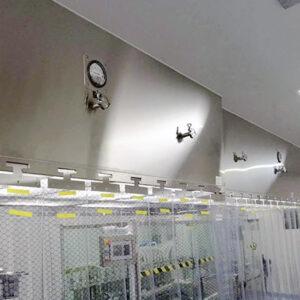
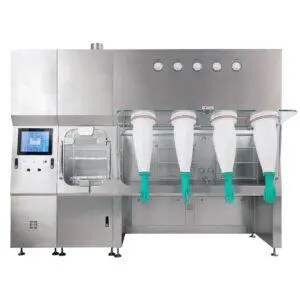
Las necesidades operativas se satisfacen mediante configuraciones modulares: tamaño, nivel de contención (frontal abierto, cortinas de tiras de PVC o interfaces de aisladores) y diseños especializados para disolventes o atmósferas explosivas (ATEX). Aunque esto permite un ajuste a medida, introduce complejidad en el proyecto. Las configuraciones personalizadas suelen implicar plazos de entrega más largos, costes más elevados y protocolos de validación más exhaustivos. Las organizaciones deben sopesar el ajuste operativo perfecto frente a estos riesgos tangibles del proyecto.
Características para el futuro
Ciertos elementos de diseño señalan una inversión con visión de futuro. Los paneles de acceso sin herramientas facilitan el mantenimiento y el cambio de filtros. Las interfaces digitales que registran todos los parámetros operativos simplifican la preparación de auditorías y el análisis de tendencias. Tal vez lo más estratégico sea que los diseños que permiten la integración con sistemas de dosificación robotizados preparan el activo para la próxima ola de automatización en la fabricación farmacéutica.
Flujo de trabajo de integración
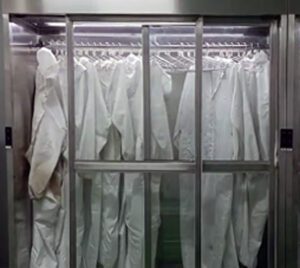
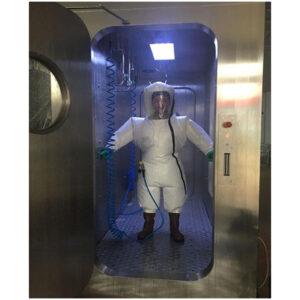
El éxito depende de la planificación previa del flujo de trabajo. Esto incluye la definición de los procedimientos de colocación de batas en la antezona, el establecimiento de procedimientos normalizados de trabajo para la entrada y la salida, y la planificación de la logística de transferencia de material. Las alarmas de control de la cabina deben integrarse en el sistema de supervisión central de la instalación. A medida que las normas mundiales como ISO 14644-5:2025 armonizar los requisitos operativos, esta planificación se vuelve más crítica para la coherencia en varios sitios.
Integración de una cabina ISO 5 en sus instalaciones GMP
Servicios públicos y ordenación territorial
La integración física requiere conexiones de servicios verificadas: energía estable y, en el caso de las unidades de un solo paso, escape dedicado con el tratamiento adecuado. La planificación espacial debe tener en cuenta el acceso de servicio alrededor de la cabina para el cambio de filtros y el mantenimiento. El área circundante debe soportar la clasificación de bata requerida, normalmente ISO 7 o ISO 8, para mantener la integridad de la zona de pesaje.
Integración procesal y sistémica
La cabina debe integrarse en el sistema de calidad del centro. Esto implica la redacción de PNT para el funcionamiento, la limpieza, la supervisión y la respuesta a las alarmas. Los planes de control medioambiental deben incluir recuentos de partículas y comprobaciones del diferencial de presión con frecuencias definidas. Los datos de rendimiento de la cabina pasan a formar parte de la revisión continua de la calidad de la instalación, tal y como exigen directrices como Anexo 1 de las PCF de la UE.
El modelo de servicio global
Para operaciones globales, considere la red de servicios del proveedor. ¿Pueden dar soporte a la validación y suministrar piezas de repuesto en sus instalaciones? La adopción de las normas ISO y GMP en todo el mundo permite la transferencia de tecnología, pero también siembra la competencia futura. Negociar por adelantado un acuerdo claro de servicio durante el ciclo de vida controla los costes operativos a largo plazo y garantiza una asistencia constante.
Selección de la cabina de pesaje adecuada para su aplicación
Comience con una evaluación de riesgos
La selección no es una comparación técnica; comienza con una evaluación científica del riesgo de los materiales. Defina el Límite de Exposición Profesional (LEP) o la Banda de Potencia del compuesto. Esto dicta directamente el nivel de contención requerido, el mecanismo de cambio de filtro (BIBO frente a cambio seguro) y el diseño del flujo de aire (paso único frente a recirculación). Este paso alinea la especificación con las expectativas normativas para un enfoque de gestión de riesgos de calidad.
Evaluar el sistema integrado
Una vez definido el peligro, evalúe la cabina como sistema. Evalúe la solidez de los controles y las características de integridad de los datos. Examine la facilidad de limpieza del diseño interior. Verifique la disponibilidad y el plazo de entrega de las piezas de repuesto críticas. La especificación inicial tiene consecuencias a largo plazo para la seguridad, la conformidad y la eficacia operativa. Un sistema diseñado para facilitar la descontaminación, por ejemplo, reduce el tiempo de inactividad entre cambios de lote.
Aprovisionamiento estratégico y visión de futuro
Por último, considere la experiencia del proveedor en su área de aplicación específica y su hoja de ruta para futuros desarrollos. ¿Están invirtiendo en diseños compatibles con la fabricación continua o la integración robótica? El proveedor cabina de pesaje de contención es aquella que cumple los estrictos requisitos de rendimiento de la norma ISO 5 actuales y, al mismo tiempo, se adapta a los procesos de fabricación del futuro.
| Factor de selección | Elección de materiales de alto riesgo | Elección de materiales de bajo riesgo |
|---|---|---|
| Diseño del flujo de aire | Paso único (escape) | Recirculación |
| Mecanismo de cambio de filtro | Bolsa de entrada/salida (BIBO) | Cambio seguro estándar |
| Nivel de contención | Interfaz aislante o cortinas | Diseño frontal abierto |
| Enfoque a largo plazo | Seguridad operativa, contención | Eficiencia energética, coste |
Fuente: Anexo 1 de las PCF de la UE. Esta directriz impone una estrategia de control de la contaminación basada en la evaluación de riesgos, que informa directamente sobre la selección de los niveles de contención y los diseños de los sistemas para la manipulación de los distintos peligros materiales.
La clasificación ISO 5 es el punto de partida, no la meta. Los puntos críticos de decisión son la evaluación del peligro de los materiales que dicta el diseño de paso único frente al de recirculación, la elección de la carcasa del filtro que define la seguridad del mantenimiento a largo plazo y el protocolo de validación que debe demostrar la contención dinámica, no sólo la limpieza estática. Dé prioridad a la ingeniería del sistema frente a las clasificaciones declaradas, y al coste operativo del ciclo de vida frente al gasto de capital inicial.
¿Necesita asesoramiento profesional para especificar una cabina de pesaje ISO 5 que se ajuste a su estrategia de contención específica y a sus requisitos de conformidad? El equipo de ingeniería de YOUTH se especializa en traducir complejas normas farmacopeicas y GMP en soluciones de contención fiables y validadas. Póngase en contacto con nosotros para analizar el perfil de riesgo de su aplicación y sus necesidades de integración.
Preguntas frecuentes
P: ¿Cuál es la diferencia práctica entre una clasificación ISO 5 y una clasificación de sala limpia de clase 100?
R: ISO 5 y Clase 100 son normas equivalentes para la concentración de partículas en el aire, con un máximo de 3.520 partículas ≥0,5µm por metro cúbico. Este estricto límite es fundamental para proteger los polvos farmacéuticos potentes. El aspecto operativo clave es que esta clasificación define el rendimiento del sistema “en reposo”, no su funcionamiento activo durante el pesaje. Esto significa que su adquisición debe centrarse en el flujo de aire y el sistema de filtración diseñados para obtener este resultado, no sólo en la etiqueta de clasificación en sí.
P: ¿Cómo se valida que una cabina de pesaje mantenga sus prestaciones ISO 5 durante su uso real?
R: La validación requiere una Cualificación Inicial del Rendimiento (IQ/OQ/PQ) que va más allá de los recuentos estándar de partículas “en reposo”. También debe realizar pruebas de contención dinámica durante operaciones de pesaje simuladas, que abordan el período de mayor riesgo de contaminación. Esto implica verificar la uniformidad del flujo de aire (0,3-0,6 m/s), la integridad del filtro HEPA con DOP/PAO y los diferenciales de presión de acuerdo con las normas de la UE. ISO 14644-3. En los proyectos en los que la seguridad del operario y del producto es primordial, incluya estas pruebas dinámicas de funcionamiento en su protocolo de validación desde el principio.
P: ¿Cuándo debemos elegir un diseño de flujo de aire de paso único en lugar de un sistema de recirculación para una cabina ISO 5?
R: La elección es una decisión de seguridad fundamental basada en el peligro del material. Un sistema de paso único expulsa todo el aire filtrado al exterior, proporcionando la máxima contención para compuestos potentes o tóxicos. Un diseño de recirculación limpia y devuelve el aire a la sala, ofreciendo una mayor eficiencia energética para materiales no peligrosos. Esto significa que las instalaciones que manipulan ingredientes farmacéuticos altamente activos (HPAPI) deben dar prioridad a los diseños de paso único, ya que esta decisión garantiza la seguridad operativa y los perfiles de cumplimiento a largo plazo.
P: ¿Cuáles son las principales características de diseño que influyen en el coste a largo plazo de una cabina de pesaje ISO 5?
R: Los costes a largo plazo dependen del diseño del sistema de filtración y del modelo de servicio. Las carcasas de los filtros de cambio seguro o Bag-In/Bag-Out (BIBO) definen la seguridad del mantenimiento y la complejidad del protocolo. La sofisticación del sistema de control para la supervisión y las alarmas repercute directamente en la fiabilidad operativa y la preparación para auditorías. Esto significa que el gasto de capital es sólo una fracción del coste total; debe negociar por adelantado los contratos de servicio y la disponibilidad de piezas de repuesto para controlar los costes del ciclo de vida.
P: ¿Cómo afecta la integración de una cabina de pesaje ISO 5 al funcionamiento general de nuestras instalaciones GMP?
R: Para que la integración tenga éxito es necesario planificar las conexiones de los servicios públicos, definir los procedimientos de colocación de batas en la zona adyacente y establecer procedimientos normalizados de trabajo para el funcionamiento y la supervisión. Lo ideal sería que el sistema de control de la cabina se integrara con la central de gestión de alarmas de sus instalaciones. El cumplimiento de normas como Anexo 1 de las PCF de la UE garantiza que la cabina respalda su estrategia global de control de la contaminación. Esto significa que su plan de proyecto debe ir más allá de la instalación física e incluir actualizaciones de procedimientos y formación.
P: ¿Qué debemos priorizar a la hora de seleccionar una cabina ISO 5 para una futura compatibilidad con la automatización?
R: Dé prioridad a los diseños con interfaces de control digital, paneles de acceso sin herramientas y construcción modular. Estas características facilitan la integración con sistemas de dispensación robotizados al permitir una conectividad mecánica y de datos más sencilla. Aunque las configuraciones modulares ofrecen un ajuste a medida, pueden aumentar la complejidad de la validación. Si su empresa tiene previsto adoptar la automatización durante la vida útil del activo, debe evaluar estas características de cara al futuro de forma tan crítica como el rendimiento inmediato de la contención.
Contenidos relacionados:
- Cabinas de pesaje de precisión para la industria farmacéutica
- Cabina de pesaje o sala de pesaje: ¿Cuál es la mejor opción para usted?
- ¿Qué es una cabina de pesaje? Explicación de los hechos esenciales
- Aumente la productividad con cabinas de pesaje automatizadas
- Tendencias emergentes: El futuro de la tecnología de cabinas de pesaje
- 7 pasos para calibrar perfectamente su cabina de pesaje
- La guía definitiva de las cabinas de pesaje [2025 Edición]
- Sopesar el ROI de la cabina: Cómo maximizar su inversión
- 5 características de seguridad esenciales de las cabinas de pesaje modernas