Elegir entre filtros HEPA y ULPA es una decisión de diseño fundamental con consecuencias técnicas y económicas en cascada. La elección determina la capacidad de control de partículas de su sala blanca, el presupuesto operativo y la flexibilidad de las instalaciones a largo plazo. Un error estratégico común es considerar esta decisión como una simple comparación entre “mejor y peor”, lo que conduce a una costosa especificación excesiva o a un rendimiento inferior al exigido.
La distinción se ha vuelto más crítica a medida que sectores como la fabricación de semiconductores y la biotecnología avanzada amplían los límites del control de la contaminación. Seleccionar el tipo de filtro adecuado no consiste solo en cumplir una clase ISO; se trata de alinear su sistema de filtración con la sensibilidad del proceso, los costes del ciclo de vida y los objetivos de sostenibilidad energética desde el principio.
HEPA frente a ULPA: Explicación de la principal diferencia de eficiencia
Definición de la norma de eficiencia
La diferencia fundamental es un umbral de rendimiento certificado. Los filtros HEPA (High Efficiency Particulate Air) deben capturar un mínimo de 99,97% de partículas con un tamaño de 0,3 micrómetros (µm). Los filtros ULPA (aire de penetración ultrabaja) deben alcanzar una eficacia mínima de 99,999%, medida normalmente con un tamaño de partícula más pequeño de 0,12 µm. Esta diferencia en decimales representa una reducción de 30 veces en la penetración de partículas permitida.
La importancia del MPPS
El tamaño de partícula de prueba se conoce como tamaño de partícula más penetrante (MPPS), en el que la eficacia del filtro es mínima. Los filtros HEPA se prueban a 0,3 µm, mientras que los ULPA se prueban a aproximadamente 0,12 µm. Se trata de un parámetro de diseño crítico, no de una elección arbitraria. La eficacia mejora para partículas tanto mayores como menores que el MPPS debido a los diferentes mecanismos de captura. Los expertos del sector recomiendan centrarse en el tamaño de partícula más problemático de su proceso y no sólo en el porcentaje de eficiencia del titular.
Cuantificación de las diferencias de rendimiento
Los porcentajes de eficiencia se traducen directamente en recuentos de partículas permitidos. Por cada millón de partículas en el MPPS respectivo, un filtro HEPA deja pasar hasta 300, mientras que un filtro ULPA deja pasar 10 o menos. Esta ganancia absoluta marginal es la raíz de profundas compensaciones operativas. En nuestro análisis de los diseños de sistemas, descubrimos que la selección de filtros requiere un modelado a nivel de sistema de los cambios de aire por hora (ACH) frente a los recuentos de partículas objetivo, no sólo la comparación de certificados de eficiencia.
| Parámetro | Filtro HEPA | Filtro ULPA |
|---|---|---|
| Eficiencia mínima | 99.97% | 99.999% |
| Tamaño de las partículas de prueba | 0,3 µm (MPPS) | 0,12 µm (MPPS) |
| Partículas permitidas (por millón) | Hasta 300 | 10 o menos |
| Clasificación de la eficiencia | Aire con partículas de alta eficacia | Aire de penetración ultrabaja |
Fuente: EN 1822-1:2019. Esta norma europea define la clasificación, las pruebas de rendimiento y el marcado de los filtros EPA, HEPA y ULPA, estableciendo los umbrales oficiales de eficiencia y los tamaños de partículas de prueba que los diferencian.
Comparación de costes: Capital, funcionamiento y propiedad total
Gastos de capital iniciales
La diferencia de costes empieza por el propio filtro. Los filtros ULPA tienen un coste inicial 45-60% más elevado debido a la precisión necesaria para fabricar sus medios más densos. Esta prima se extiende a la infraestructura de apoyo. La mayor resistencia al flujo de aire de los materiales ULPA requiere ventiladores más potentes y, a menudo, un sistema de calefacción, ventilación y aire acondicionado más robusto, lo que aumenta considerablemente el gasto inicial.
Costes operativos recurrentes
Los gastos operativos revelan la verdadera carga de costes. El aumento de la presión estática de los filtros ULPA suele traducirse en un consumo energético 40-50% mayor del sistema de tratamiento de aire. La vida útil de los filtros también es más corta (2-3 años para los ULPA frente a 3-5 para los HEPA) debido a que se obstruyen más rápidamente al capturar más partículas. Además, las pruebas de integridad de los filtros ULPA son más rigurosas y costosas, ya que a menudo requieren aerosoles sensibles como el PAO y añaden 60-75% a los presupuestos anuales de mantenimiento en comparación con las pruebas DOP HEPA estándar.
La perspectiva del coste total de propiedad
El análisis del coste del ciclo de vida no es negociable. La presupuestación de salas blancas de alta clasificación debe tener en cuenta los gastos operativos, que superarán con creces la inversión inicial en filtros a lo largo de un periodo de 10 años. Entre los detalles que se pasan por alto con facilidad figuran el coste de cambiar los filtros con más frecuencia y la posible necesidad de mano de obra especializada para su manipulación y comprobación. Estas pruebas consolidan que la decisión es un compromiso financiero a largo plazo.
| Factor de coste | Sistema de filtro HEPA | Sistema de filtrado ULPA |
|---|---|---|
| Prima del coste inicial del filtro | Línea de base | 45-60% superior |
| Coste energético operativo | Línea de base | 40-50% superior |
| Vida útil del filtro | 3-5 años | 2-3 años |
| Coste anual de las pruebas | Pruebas DOP estándar | 60-75% superior |
Fuente: Documentación técnica y especificaciones industriales.
Rendimiento comparado: Eficacia de filtración y tamaño de las partículas
Comprender los mecanismos de captura
Ambos filtros capturan partículas mediante tres mecanismos físicos: impactación inercial (partículas grandes), interceptación (partículas medianas) y difusión (partículas ultrafinas mediante movimiento browniano). El rendimiento no es lineal en todo el espectro de tamaños de partículas. La eficacia es más baja en el MPPS y mejora a ambos lados del mismo. Esto significa que un filtro HEPA con un valor nominal de 99,97% a 0,3 µm puede capturar virus (<0,1 µm) con eficiencias superiores a 99,99% mediante el mecanismo de difusión.
El rango crítico de partículas
La implicación estratégica está en identificar el tamaño crítico del contaminante para su proceso. Los filtros HEPA son excepcionalmente eficaces para partículas ≥0,3 µm. Los filtros ULPA proporcionan una captura superior en el rango inferior a 0,3 µm, lo que resulta esencial para aplicaciones en las que la contaminación a nanoescala provoca fallos críticos, como en la fotolitografía de semiconductores o en determinados procesos farmacéuticos estériles. Según las investigaciones de los estudios de control de la contaminación, asumir una eficiencia lineal es un error común que conduce a una especificación inadecuada de los filtros.
Curvas de eficiencia en el mundo real
Para seleccionar un filtro es necesario examinar su curva de eficacia en función del tamaño de las partículas, y no sólo la clasificación MPPS. La mayor eficacia del ULPA en el MPPS de 0,12 µm indica generalmente un mejor rendimiento en toda la gama submicrónica. Este rendimiento no lineal se detalla formalmente en normas como IEST-RP-CC001.6, que proporciona el marco para probar y comprender estas curvas.
| Característica | Filtro HEPA | Filtro ULPA |
|---|---|---|
| Tamaño de partícula más penetrante (MPPS) | 0,3 micrómetros | 0,12 micrómetros |
| Eficiencia en MPPS | Punto más bajo | Punto más bajo |
| Captura de virus (<0,1 µm) | >99,99% (por difusión) | >99,999% (por difusión) |
| Rango crítico de partículas | ≥0,3 µm | Sub-0,3 µm |
Fuente: IEST-RP-CC001.6. Esta Práctica Recomendada de IEST detalla los niveles de rendimiento y las pruebas para filtros HEPA/ULPA, proporcionando el marco para comprender la eficiencia a través de diferentes tamaños de partículas, incluyendo el MPPS.
¿Qué filtro es mejor para la clase ISO de su sala blanca?
El motor normativo
La elección viene dictada en gran medida por el cumplimiento de ISO 14644-1:2015, que establece límites de concentración de partículas para cada clase de sala limpia. Esto crea un límite de aplicación claro. Los filtros HEPA son la solución estándar y rentable para entornos ISO 5 (Clase 100) a ISO 8 (Clase 100.000). Son suficientes para productos farmacéuticos, dispositivos médicos y fabricación en general, donde el tamaño crítico de las partículas suele ser superior a 0,5 µm.
El mandato de la ULPA
Los filtros ULPA son obligatorios para las clasificaciones ISO 3 (Clase 1) e ISO 4 (Clase 10) más estrictas. También son necesarios para determinadas aplicaciones ISO 5 en las que el control por debajo de 0,3 µm es fundamental, como en las fábricas de semiconductores avanzados y las zonas centrales del procesamiento aséptico farmacéutico. Esta bifurcación define un mercado de dos niveles: HEPA para el cumplimiento de normativas sensibles a los costes y ULPA para procesos ultrasensibles de alta calidad.
La zona gris y las buenas prácticas
En las aplicaciones ISO 5, la decisión depende de la sensibilidad del proceso. Aunque un filtro HEPA puede cumplir técnicamente el límite de recuento de partículas, un filtro ULPA ofrece un mayor margen de seguridad y suele especificarse para zonas críticas. El factor principal debe ser el entorno normativo del producto final y la sensibilidad del rendimiento, no una preferencia genérica por una filtración “mejor”. El cumplimiento es la base, pero la garantía del proceso es el objetivo.
| Clase ISO 14644-1 | Aplicación típica | Filtro recomendado |
|---|---|---|
| ISO 3 (Clase 1) | Fábricas de semiconductores | ULPA (Obligatorio) |
| ISO 4 (Clase 10) | Procesado aséptico farmacéutico | ULPA (Obligatorio) |
| ISO 5 (Clase 100) | Relleno estéril, óptica | HEPA o ULPA |
| ISO 6-8 (Clase 1K-100K) | Productos sanitarios, fabricación general | HEPA (Estándar) |
Fuente: ISO 14644-1:2015. Esta norma define los límites de concentración de partículas para cada clasificación de sala limpia, lo que dicta directamente la eficacia de filtración requerida y, por tanto, el límite para la aplicación de HEPA frente a ULPA.
Construcción y mecanismo: cómo funcionan los filtros HEPA y ULPA
Composición y estructura de los medios de comunicación
Ambos filtros utilizan una estera de fibras de vidrio o sintéticas dispuestas aleatoriamente. La diferencia estructural clave es la densidad. El medio filtrante ULPA es significativamente más denso, con fibras más finas y poros intersticiales más pequeños, para lograr su mayor eficacia frente a un MPPS más pequeño. Esta construcción densa es la causa directa de su mayor caída de presión inicial. El medio filtrante suele ser plisado para maximizar la superficie dentro de una carcasa de filtro estándar.
Diseño de sistemas integrados
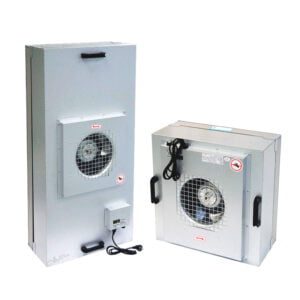
Las salas blancas modernas utilizan cada vez más estos filtros en unidades de filtro de ventilador integradas (FFU). Las FFU se están convirtiendo en la plataforma por defecto debido a su modularidad. Simplifican la instalación, el mantenimiento y la reconfiguración futura de ambos tipos de filtro. A la hora de seleccionar un sistema, es fundamental asegurarse de que el ventilador de la FFU está dimensionado para superar la caída de presión del medio filtrante específico instalado, especialmente cuando se considera una actualización de HEPA a ULPA.
Validación y sellado
La construcción del filtro es sólo una parte de la ecuación. Una fuga en la junta o la carcasa del filtro compromete todo el sistema. Ambos tipos requieren rigurosas pruebas de estanqueidad en la instalación. Los sistemas ULPA suelen exigir protocolos de sellado más estrictos debido a su aplicación en salas blancas de categoría superior. El rendimiento definido por normas como ISO 29463-1:2017 se aplica a la unidad de filtrado tal como está instalada, no sólo al medio filtrante aislado.
Compromisos operativos: Flujo de aire, energía y mantenimiento
La penalización por resistencia al flujo de aire
La filtración superior de los filtros ULPA introduce una contrapartida fundamental: una mayor resistencia al flujo de aire. El medio filtrante más denso genera una mayor caída de presión estática. Esto reduce el volumen de aire que puede pasar un solo filtro. Para mantener los cambios de aire por hora (ACH) requeridos, el diseño de una sala blanca puede necesitar una mayor cantidad de filtros ULPA o bancos de filtros más grandes, lo que afecta al diseño inicial y a la planificación espacial.
Consumo energético y sostenibilidad
Una mayor caída de presión exige ventiladores más potentes, lo que se traduce directamente en un mayor consumo energético de la 40-50%. Esto tiene importantes implicaciones en los costes operativos y entra en conflicto con los crecientes objetivos ESG (medioambientales, sociales y de gobernanza). Las instalaciones están sometidas a presiones para reducir la huella de carbono, por lo que la penalización energética de los ULPA es una consideración seria que va más allá del mero coste.
Frecuencia de mantenimiento y rigidez del sistema
Los filtros ULPA se obstruyen más rápidamente porque capturan más partículas, lo que se traduce en una vida útil más corta y una mayor frecuencia y coste de sustitución. Además, la decisión de filtrado es una limitación fundamental de la infraestructura. Adaptar un sistema existente basado en HEPA a ULPA suele ser estructural y mecánicamente prohibitivo debido a la necesidad de ventiladores y conductos más potentes. La decisión debe tomarse en las primeras fases del diseño de las instalaciones.
| Métrica operativa | Impacto del filtro HEPA | Filtro ULPA Impacto |
|---|---|---|
| Resistencia al flujo de aire | Línea de base | 20-50% superior |
| Consumo de energía | Línea de base | 40-50% superior |
| Índice de obstrucción del filtro | Estándar | Más rápido |
| Viabilidad de la adaptación del sistema | Más fácil | A menudo prohibitivo |
Fuente: Documentación técnica y especificaciones industriales.
Criterios clave para elegir entre HEPA y ULPA
Conductores no negociables
En primer lugar, la clasificación ISO requerida y la sensibilidad del proceso a partículas inferiores a 0,3 µm son primordiales. Si su producto o proceso falla debido a la contaminación a nanoescala, es probable que necesite ULPA, independientemente de la clase ISO. En segundo lugar, el presupuesto operativo debe tener en cuenta honestamente el coste total de propiedad drásticamente superior de los sistemas ULPA. Un presupuesto limitado únicamente a los gastos de capital fracasará.
Infraestructuras y garantía de futuro
En tercer lugar, hay que evaluar la infraestructura de calefacción, ventilación y aire acondicionado existente o prevista. ¿Puede soportar la mayor presión estática y demanda energética de los ULPA? Un criterio de futuro es la trayectoria de miniaturización de los productos. A medida que los nodos de los semiconductores se reducen por debajo de los 5 nm y la biotecnología avanzada evoluciona, el tamaño crítico de las partículas causantes de defectos disminuye. Esto puede impulsar la futura adopción de ULPA en nuevos sectores, lo que requerirá una planificación proactiva de las instalaciones que permita una mayor demanda de filtración.
El imperativo de la sostenibilidad
Cada vez más, la sostenibilidad es un criterio clave. El mayor consumo energético y la menor vida útil de los ULPA plantean un conflicto. Esto incentiva la optimización de los sistemas HEPA mediante etapas avanzadas de prefiltración y una supervisión inteligente para mantenerse dentro de las clases ISO más bajas siempre que sea posible, retrasando o evitando así el paso a ULPA. La selección ya no es puramente técnica, sino también medioambiental.
Marco de decisión: Adecuación del tipo de filtro a su aplicación
Requisitos del mapa para el límite binario
Empiece por trazar un mapa definitivo del tamaño crítico del contaminante de su proceso y del requisito de clase ISO con el límite HEPA/ULPA. Consulte la tabla ISO 14644-1 y las especificaciones internas de calidad de su producto. Este paso elimina la ambigüedad y alinea al equipo en el suelo de rendimiento no negociable.
Modelar el sistema de tratamiento de aire completo
A continuación, modele todo el sistema de tratamiento de aire con ambas opciones de filtro. Utilice cálculos de ingeniería o software de simulación para asegurarse de que puede alcanzarse el ACH objetivo con la resistencia al flujo de aire del filtro elegido sin comprometer los objetivos energéticos. Esta etapa revela a menudo la necesidad de más filtros ULPA o de un ventilador más grande, cuantificando los costes de capital ocultos.
Análisis del coste del ciclo de vida
A continuación, realice un análisis completo de los costes del ciclo de vida durante un periodo de 10 años. Incluya los costes de capital (filtros, ventiladores, actualizaciones de HVAC), los costes energéticos, el mantenimiento, la sustitución de filtros y las pruebas. Este modelo financiero mostrará claramente la prima por el rendimiento ULPA e informará de la rentabilidad de la inversión basada en el rendimiento del producto o la mitigación del riesgo normativo.
Sopesar los resultados con la sostenibilidad
Por último, integre las presiones de la sostenibilidad en la decisión. ¿Pueden satisfacer sus necesidades los sistemas HEPA avanzados con prefiltración optimizada? ¿Podrían una supervisión inteligente y un control más estricto de otras variables reducir la dependencia de la filtración final? El objetivo es seleccionar el filtro más eficiente que cumpla los requisitos sin una carga operativa o medioambiental innecesaria, garantizando su equipos para salas blancas es eficaz y sostenible.
La decisión entre filtros HEPA y ULPA depende de una alineación precisa de los requisitos de control de la contaminación con la economía del ciclo de vida. Dé prioridad a las necesidades definitivas de la clase ISO y a los datos de sensibilidad del proceso sobre las afirmaciones genéricas de rendimiento. Modele la capacidad de su sistema HVAC para manejar las compensaciones operativas de una filtración de mayor eficiencia antes de la especificación.
¿Necesita asesoramiento profesional para especificar el sistema de filtración adecuado para su sala blanca? Los expertos de YOUTH proporcionan análisis centrados en las aplicaciones y suministran soluciones de filtrado certificadas que equilibran el rendimiento con el coste total de propiedad.
Si desea una consulta detallada sobre sus requisitos específicos en materia de salas blancas, también puede Póngase en contacto con nosotros.
Preguntas frecuentes
P: ¿Cuál es la diferencia real de eficacia entre los filtros HEPA y ULPA en términos prácticos?
R: La principal diferencia radica en la captura certificada de partículas a su tamaño de partícula más penetrante (MPPS). Un filtro HEPA tiene una eficiencia nominal de 99,97% a 0,3 µm, mientras que un filtro ULPA debe alcanzar 99,999% a 0,12 µm. Esto significa que para un millón de partículas, HEPA deja pasar hasta 300, mientras que ULPA deja pasar 10 o menos. Esta norma se define en ISO 29463-1:2017. Esta ganancia marginal conduce a importantes compensaciones del sistema, por lo que la selección requiere modelar los cambios de aire por hora, no sólo comparar porcentajes.
P: ¿Cuánto más caro es un sistema ULPA en comparación con HEPA a lo largo de su ciclo de vida total?
R: Los sistemas ULPA tienen unos costes totales de propiedad mucho más elevados. Los costes iniciales de los filtros son 45-60% más elevados, y la mayor densidad del medio aumenta la resistencia al flujo de aire, lo que exige equipos de calefacción, ventilación y aire acondicionado más potentes. Desde el punto de vista operativo, el consumo de energía aumenta 40-50%, y los ciclos de sustitución de los filtros se acortan a 2-3 años frente a los 3-5 de los HEPA. Las rigurosas pruebas de integridad también añaden 60-75% al mantenimiento anual. Esto significa que el presupuesto de las salas blancas de alta clasificación debe basarse en el ciclo de vida, ya que los gastos operativos superarán con creces la inversión de capital inicial.
P: ¿La clasificación de 0,3 µm de un filtro HEPA significa que no es eficaz contra partículas más pequeñas, como los virus?
R: No, los filtros HEPA son muy eficaces contra partículas inferiores a 0,3 µm. La eficacia no es lineal y mejora tanto para las partículas más grandes como para las más pequeñas debido a diferentes mecanismos de captura como la difusión. Un filtro HEPA puede capturar virus de menos de 0,1 µm con eficiencias superiores a 99,99%. Este matiz de rendimiento se contempla en normas como IEST-RP-CC001.6. Esto significa que la especificación del filtro debe identificar el tamaño de partícula más problemático de su proceso, no asumir un rendimiento lineal a partir de la clasificación MPPS.
P: ¿Qué clasificaciones ISO de salas limpias suelen requerir filtros ULPA en lugar de HEPA?
R: La elección del filtro viene dictada principalmente por el cumplimiento de la norma ISO 14644-1. Los filtros HEPA son estándar para ISO 5 (Clase 100) a ISO 8 (Clase 100.000). Los filtros ULPA son obligatorios para los entornos más estrictos: ISO 3 (Clase 1) e ISO 4 (Clase 10), y determinadas aplicaciones críticas ISO 5 en fábricas de semiconductores o procesos asépticos. Esto crea un claro mercado de dos niveles. Esto significa que el entorno normativo de su producto y los límites de recuento de partículas son los principales impulsores, no una preferencia subjetiva por una filtración “mejor”.
P: ¿Cuáles son las principales ventajas operativas de utilizar un filtro ULPA en lugar de HEPA?
R: La filtración superior de ULPA presenta importantes contrapartidas: sus medios más densos crean una 20-50% mayor resistencia al flujo de aire, lo que reduce el volumen de aire por filtro y puede requerir más unidades para mantener los cambios de aire por hora. Esta mayor caída de presión obliga a 40-50% un mayor consumo de energía. Los filtros ULPA también se obstruyen más rápidamente, acortando la vida útil y aumentando la frecuencia de sustitución. Esto significa que la decisión sobre la filtración es una limitación fundamental de la infraestructura que debe ultimarse durante las primeras fases del diseño de las instalaciones, ya que la adaptación a ULPA suele ser prohibitivamente difícil.
P: ¿Qué criterios debemos priorizar a la hora de elegir entre HEPA y ULPA para una nueva instalación?
R: Base su decisión en tres criterios clave. En primer lugar, la clase ISO requerida y la sensibilidad del proceso a partículas inferiores a 0,3 µm no son negociables. En segundo lugar, lleve a cabo un análisis completo del coste del ciclo de vida que tenga en cuenta los gastos operativos drásticamente superiores del ULPA. En tercer lugar, verifique que su infraestructura de calefacción, ventilación y aire acondicionado puede soportar la mayor presión estática y carga energética, tal como se define en normas de ensayo como EN 1822-1:2019. Esto significa que los proyectos con visión de futuro también deben tener en cuenta las tendencias de miniaturización de los productos que pueden reducir los tamaños críticos de las partículas, lo que influirá en las futuras necesidades de filtrado.
P: ¿En qué se diferencia la construcción de un filtro ULPA de la de un filtro HEPA para lograr una mayor eficacia?
R: Ambos filtros utilizan esteras de fibras de vidrio o sintéticas y capturan las partículas mediante los mismos tres mecanismos físicos. La diferencia clave es que el medio filtrante ULPA es significativamente más denso, con fibras más finas y poros más pequeños, para lograr su eficacia de 99,999% frente a un tamaño de partícula más penetrante más pequeño de 0,12 µm. Esta construcción más densa es la causa directa de la mayor caída de presión inicial. Esto significa que las Unidades de Filtro de Ventilador (FFU) integradas son a menudo la plataforma de despliegue preferida para ambos tipos debido a su modularidad, que simplifica el manejo de estas diferencias de diseño durante el mantenimiento.
Contenidos relacionados:
- Filtros HEPA vs ULPA: Elegir la opción correcta
- Filtros ULPA frente a HEPA para unidades de flujo laminar
- ULPA frente a HEPA para unidades laminares 2025
- Eficacia de los filtros HEPA: Maximizar la purificación del aire
- Principios técnicos y mecanismos de filtración de los filtros HEPA: Comprensión de las pruebas MPPS, índices de eficiencia y ciencia de la captura de partículas para aplicaciones industriales
- ¿Qué es el MPPS (tamaño de partícula más penetrante) en las pruebas de filtros HEPA y por qué es importante?
- Filtros de aire HEPA frente a ULPA | Guía de normas de eficacia para salas blancas
- Qué son los filtros de aire para salas blancas | Conceptos básicos de HEPA vs ULPA
- Cajas de alojamiento ULPA frente a HEPA: Datos de rendimiento en salas limpias