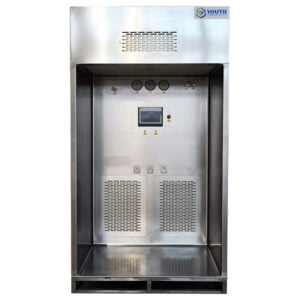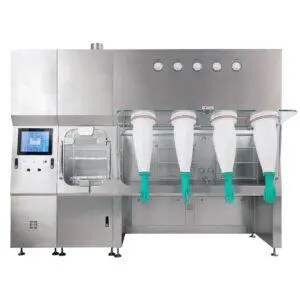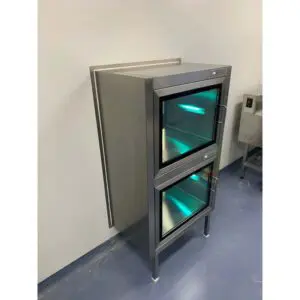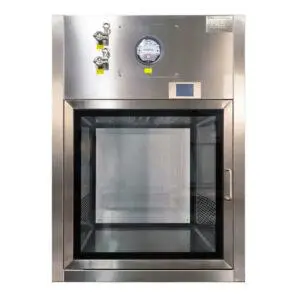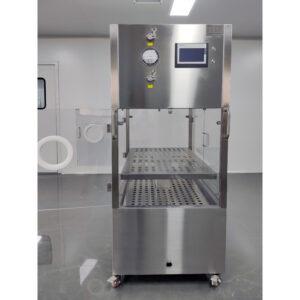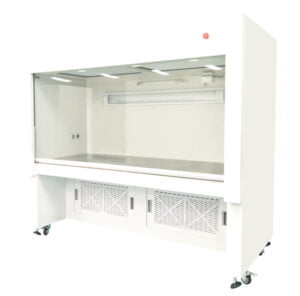
Especificar el tipo de campana incorrecto para un proceso rara vez se hace evidente hasta la puesta en marcha, cuando llega una unidad horizontal con una altura interior de 106,6 cm y los recipientes altos que debía proteger simplemente no caben. En ese momento hay que elegir entre un cambio de última hora, un retraso en los plazos de cualificación o una solución operativa que pone en peligro la protección. La decisión que impide que esto ocurra no tiene que ver con el espacio ocupado ni con el presupuesto, sino con la geometría del proceso: la altura, el método de carga y el perfil espacial de lo que se encuentra en la superficie de trabajo. Comprender en qué casos el flujo descendente vertical supera al barrido horizontal y en qué casos no, proporciona a los compradores una justificación defendible antes de la fase de presupuesto, en lugar de una costosa corrección después de la instalación.
Patrones de carga que justifican primero el flujo vertical descendente
La señal de proceso más clara para el flujo vertical descendente es la carga superior intermitente, es decir, cualquier flujo de trabajo en el que el operario se acerque desde arriba en lugar de desde delante. El flujo vertical también es adecuado para aplicaciones que generan subproductos en suspensión en el aire a nivel de la superficie de trabajo, como polvos finos o humos de soldadura, porque la trayectoria descendente del aire aleja esos contaminantes de la zona de respiración del operario en lugar de barrerlos horizontalmente hacia la abertura frontal. Este beneficio direccional es de carácter operativo: reduce la probabilidad de exposición del operario durante la actividad normal, aunque no elimina por completo el riesgo aéreo y depende de una técnica coherente.
La geometría del proceso es tan importante como el tipo de contaminante. Cuando el flujo de trabajo implica acceder al interior de un recipiente, colocar el equipo a varias profundidades dentro del recinto o girar elementos que tienen una extensión vertical significativa, el patrón de flujo descendente crea una envoltura protectora que un barrido horizontal no puede reproducir en todo el volumen de trabajo. El flujo horizontal funciona bien en un plano de profundidad cerca de la cara abierta; el flujo vertical funciona en toda la altura del recinto. Cuando la carga es intermitente o cuando los artículos entran y salen con frecuencia desde arriba, una trayectoria de aire de techo a banco restablece continuamente el estado de limpieza del interior en lugar de depender de un único barrido ininterrumpido de atrás hacia delante.
Zonas de trabajo de entrada superior que se benefician del aire de techo a banco
El flujo vertical desplaza las partículas hacia abajo, hacia la superficie de trabajo o hacia la vía de retorno a nivel del suelo, lo que limita la posibilidad de que las partículas permanezcan suspendidas dentro del recinto durante y después de la carga por la parte superior. Para los procesos en los que los elementos se colocan desde arriba -placas de pocillos múltiples, contenedores abiertos, conjuntos de matraces altos- este comportamiento es útil en la práctica porque el acto de carga no requiere que el operario alcance la cara de suministro desde la parte frontal e interrumpa potencialmente la vía de aire de protección en el proceso.
El mecanismo que importa aquí es el control de la resuspensión. Cada vez que se coloca o retira un elemento de la zona de trabajo, se altera el flujo de aire local. En una configuración vertical, el impulso descendente del aire de suministro tiende a restablecer la capa protectora sobre la superficie de trabajo relativamente rápido después de una perturbación, dirigiendo cualquier partícula desplazada hacia abajo en lugar de permitir que migren lateralmente a través de la zona de trabajo. Esto no es una garantía de rendimiento (el comportamiento real de recuperación depende de la velocidad de la superficie, la geometría del recinto y la forma en que se realiza el proceso de carga), pero explica por qué los procesos con carga superior se adaptan habitualmente a configuraciones verticales en instalaciones diseñadas en torno a los siguientes criterios ISO 14644-7:2004, que proporciona el marco para evaluar los dispositivos de separación en función de su capacidad para mantener unas condiciones controladas durante su uso operativo. Para profundizar en el modo en que esto encaja en la clasificación de salas limpias, el Normas ISO 5 de clasificación de flujo laminar merece la pena revisar el contexto antes de especificar una u otra orientación.
Artículos voluminosos que crean sombras bajo la cara de suministro
El apilamiento de objetos debajo de la cara del filtro HEPA es uno de los patrones de fallo más habituales en las instalaciones verticales de flujo descendente, y tiende a surgir no durante la cualificación inicial, sino durante el funcionamiento rutinario, a medida que los técnicos añaden equipos, almacenan suministros dentro del recinto o colocan objetos por comodidad. Cuando los objetos más altos rompen la trayectoria del flujo descendente, el aire se desvía a su alrededor en lugar de continuar descendiendo uniformemente, creando zonas muertas de baja velocidad en el lado descendente. Estas zonas acumulan partículas en lugar de eliminarlas.
La consecuencia práctica es que el recinto puede superar una cualificación en estado vacío y luego tener un rendimiento inferior durante el uso real porque nunca se evaluó la configuración con carga. Las cajas de cartón voluminosas, las botellas verticales colocadas una al lado de la otra o los antebrazos apoyados en la superficie de trabajo durante períodos prolongados pueden crear zonas de sombra que empujen la contaminación hacia el producto en lugar de alejarla de él. La disciplina correctiva -mantener los artículos por debajo de un umbral de altura y mantener el espacio entre los objetos- debe definirse en los procedimientos operativos en el momento de la puesta en marcha, y no dejarse al criterio de cada operario. Cuando el proceso implica intrínsecamente equipos que no pueden mantenerse de perfil bajo, es una señal clara para reexaminar si la geometría del recinto y el patrón de flujo de aire seleccionados son realmente compatibles con la configuración de trabajo.
Flexibilidad vertical frente a barrido horizontal de primer paso
La principal disyuntiva técnica entre el flujo vertical y el horizontal no es cuál produce un aire más limpio -ambos, si se especifican y cualifican adecuadamente, pueden mantener las condiciones ISO 5-, sino cuál es estructuralmente compatible con el proceso y cuál sitúa al operario en una posición más controlable en relación con la trayectoria del flujo de aire.
El flujo horizontal conlleva una ventaja de protección significativa para el operario: las manos entran en el recinto aguas abajo de la cara de suministro, lo que significa que los contaminantes introducidos por las superficies de los guantes o el contacto de los manguitos son barridos lejos del producto en lugar de hacia él. En una configuración vertical, las manos del operario se encuentran aguas arriba de la trayectoria del flujo en relación con la superficie de trabajo inferior, lo que significa que la disciplina técnica no es negociable. Una mala colocación de las manos o una posición elevada sobre un recipiente abierto pueden introducir partículas que el flujo descendente transporta directamente a la superficie de trabajo. Esto no es un defecto del diseño vertical; es una característica que requiere un control explícito del procedimiento. Los equipos que tratan las campanas verticales como equivalentes a las horizontales en cuanto a los requisitos técnicos del operario tenderán a obtener peores resultados en las mediciones de la contaminación durante el uso real.
La acomodación en altura y profundidad es donde las campanas verticales son inequívocamente más fuertes, y donde las especificaciones desajustadas crean las correcciones más costosas en las últimas etapas.
| Consideración | Comportamiento vertical descendente | Comportamiento del barrido horizontal | Qué significa esto para la selección |
|---|---|---|---|
| Acomodación de equipos altos o profundos | Altura y profundidad adicionales; puede adaptarse a recipientes grandes y conjuntos profundos | La altura interior limitada (por ejemplo, 106,6 cm / 42 in) puede excluir artículos altos. | La vertical es obligatoria cuando la altura del proceso supera los límites de la campana horizontal |
| Riesgo de contaminación de las manos del operario | Las manos están delante del flujo de aire; posibilidad de introducir contaminantes en la superficie de trabajo. | Las manos están aguas abajo; minimiza la contaminación del operario | La posición horizontal requiere menos disciplina manual para controlar la contaminación |
La distinción entre la colocación de las manos rara vez aparece en las especificaciones de adquisición, pero es importante desde el punto de vista operativo. Si el programa de formación de la instalación no aborda la técnica de la campana vertical como una competencia específica, esa laguna no aparecerá en las pruebas de cualificación y sólo saldrá a la luz a través de sucesos de contaminación o datos de tendencias durante la supervisión rutinaria.
Altura del armario y problemas de retorno de aire que retrasan el montaje
Los problemas de ajuste con campanas verticales tienden a agruparse en torno a tres cuestiones que son fáciles de comprobar individualmente y fáciles de pasar por alto colectivamente: la altura de acceso al filtro, la configuración de montaje y las limitaciones de altura interior de las alternativas que impulsan el cambio a vertical en primer lugar.
Una campana vertical apoyada en el suelo coloca el filtro HEPA en la parte superior de la unidad. En una instalación en la que el espacio libre del techo es más reducido de lo previsto, o en la que no se han estudiado los servicios públicos aéreos en relación con la envolvente de servicio completa de la campana, los programas de cambio del filtro pueden retrasarse porque el acceso por escalera necesario para alcanzar la cara del filtro de forma segura no está disponible sin mover el equipo adyacente. Se trata de un riesgo de mantenimiento diferido que reduce la ventana de cumplimiento entre la cualificación y la siguiente prueba de integridad del filtro requerida. Confirmar que la altura del techo coincide con la dimensión máxima de servicio de la campana, y no sólo con la altura de la huella instalada, debería ser un paso en la comprobación de la instalación, y no una suposición.
La configuración del montaje es un segundo punto en el que las decisiones tempranas evitan reprocesamientos tardíos. Las campanas verticales están disponibles como unidades portátiles, de sobremesa o de pie, y la elección afecta no sólo a la distribución de la sala, sino también a la conducción del aire de retorno por debajo de la superficie de trabajo, el acceso a la corriente y la facilidad de reubicación si cambia la distribución de la sala. Los equipos que optan por una unidad de pie sin comprobar si una unidad de sobremesa podría servir para el proceso y superar las limitaciones del techo a veces descubren el problema cuando llega la unidad.
| Punto de control / Problema | Por qué es importante | Qué confirmar |
|---|---|---|
| Acceso para cambiar el filtro | Las campanas verticales colocan los filtros en la parte superior de la unidad; pueden requerir una escalera y espacio libre en el techo. | Altura del techo, disponibilidad de escaleras y espacio de acceso para mantenimiento |
| Configuración de montaje | Disponibles como unidades portátiles, de suelo o de sobremesa; la elección del montaje afecta al acondicionamiento de la sala y puede evitar retrasos si se planifica con antelación. | Qué opción de montaje se adapta al espacio; verifique las dimensiones y los requisitos de soporte |
| Limitación de la altura interior de las campanas horizontales | Una campana horizontal típica (p. ej., Labconco Xpert) tiene una altura interior de ~106,6 cm; los objetos altos pueden no caber, lo que obliga a cambiar a una campana vertical. | Altura máxima del artículo frente a la altura interior vertical de la campana para evitar cambios de última hora |
La cifra de altura interior de una campana horizontal -aproximadamente 106,6 cm en al menos un modelo ampliamente referenciado- es un umbral ilustrativo útil, no una especificación universal. Pero indica el tipo de limitación que obliga a hacer sustituciones de última hora. Cuando el proceso requiera elementos más altos que la altura interior de la unidad horizontal considerada, el cambio a vertical debe producirse durante la revisión de la geometría del proceso, no durante la instalación.
Frontal de perfil bajo que favorece el flujo de aire horizontal
El caso del flujo horizontal es más fuerte cuando el trabajo es poco profundo, centrado en el frente, y no involucra equipos altos o voluminosos. En esas condiciones, el barrido horizontal puede mantener niveles de turbulencia generalmente más bajos en toda la superficie de trabajo porque no hay masa de equipo que desvíe la trayectoria del aire, y la zona del producto recibe aire filtrado de primera pasada directamente de la cara de suministro. Esta ventaja es significativa para los ensamblajes sensibles en los que cualquier perturbación del flujo de aire supone un riesgo de resuspensión de partículas.
La profundidad del espacio de trabajo también es una consideración estructural. Las campanas verticales imponen una restricción de profundidad que puede limitar la cantidad de equipos o la anchura de un diseño de proceso que quepa cómodamente en la zona de trabajo. Cuando el proceso requiere un espacio significativo de delante hacia atrás (varios instrumentos en secuencia, una zona de preparación adyacente a la zona de trabajo activa), las campanas horizontales suelen ofrecer más profundidad útil sin la misma limitación.
| Factor | Característica de la campana horizontal | Por qué es importante para el trabajo de bajo perfil |
|---|---|---|
| Profundidad de la superficie de trabajo | Mayor disponibilidad de espacio de trabajo; las campanas verticales imponen un límite de profundidad | Permite disposiciones más anchas para montajes poco profundos que necesitan más espacio de delante hacia atrás. |
| Turbulencias en la superficie de trabajo | Niveles de turbulencia más bajos cuando no hay equipos grandes o voluminosos. | Reduce la resuspensión de partículas, crítica para montajes sensibles de perfil bajo. |
| Visibilidad y acceso | Mejor línea de visión, facilidad de acceso y mayor espacio libre por encima de la cabeza para tareas centradas en la parte delantera. | Mejora la ergonomía y la precisión de los procesos centrados cerca de la abertura frontal |
La implicación de la planificación es directa: si el proceso es ancho y de perfil bajo, centrado cerca de la abertura frontal, y no implica carga superior intermitente ni artículos altos, el flujo de aire horizontal suele proteger el producto de forma más consistente y con menos dependencia de la técnica del operario. Elegir la vertical en ese escenario no produce necesariamente mejores resultados de contaminación y puede introducir riesgos de colocación de manos que el flujo horizontal evita por diseño. El criterio de selección es, en primer lugar, la geometría del proceso, después el flujo de trabajo del operario y, por último, la adecuación de la instalación, en ese orden.
Lo más útil que puede hacer un comprador antes de especificar una u otra orientación es determinar la configuración real de trabajo: la altura máxima de los elementos en la superficie de trabajo, cómo cargan y descargan los operarios el armario, cuánta profundidad de delante hacia atrás requiere el proceso y qué espacio libre hay en el techo de la sala. Estos cuatro datos resuelven la mayor parte de la ambigüedad entre la selección vertical y horizontal antes de presupuestar ningún equipo. A campana de flujo laminar especificado con respecto a la geometría real del proceso se calificará más rápidamente, funcionará de forma más uniforme en operaciones supervisadas y requerirá menos compensación de procedimiento por parte de los operarios que uno seleccionado únicamente por la huella o el coste.
Cuando un proceso se sitúa en el límite -altura moderada de los elementos, dirección de carga mixta, disposición poco profunda-, el factor decisivo suele ser el acceso para el mantenimiento y el ajuste de la sala. Confirmar la envolvente de servicio completa, incluido el espacio de acceso al filtro, la configuración de montaje y el enrutamiento del aire de retorno, antes de emitir la orden de compra es lo que separa una instalación limpia de un retraso en la puesta en marcha.
Preguntas frecuentes
P: ¿Qué ocurre si el proceso incluye tanto trabajo de carga superior como de carga frontal superficial?
R: La decisión debe basarse en la geometría del proceso con mayores consecuencias de contaminación. Si los eventos de carga superior implican contenedores abiertos o polvos finos en los que un barrido descendente protege activamente el producto, el flujo vertical tiene prioridad incluso si también se produce algún trabajo centrado frontalmente. Lo contrario no es cierto: un proceso centrado en la parte frontal y poco profundo no se beneficia lo suficiente del flujo vertical descendente como para compensar la disciplina de colocación manual que requiere, por lo que el flujo horizontal sigue siendo el más seguro por defecto cuando la carga superior es incidental y no estructural.
P: Si la técnica de campana vertical aún no es una competencia definida en nuestro programa de formación, ¿qué debe abordarse antes de que la unidad entre en funcionamiento supervisada?
R: La disciplina de colocación de las manos del operario debe formalizarse en procedimientos escritos antes de la cualificación, no después de que aparezca la primera tendencia a la contaminación. En concreto, los procedimientos deben definir el tiempo máximo de suspensión sobre superficies de trabajo abiertas, prohibir el apoyo de los antebrazos sobre la superficie de trabajo durante las operaciones activas y establecer límites de altura para los objetos del banco. Estos controles deben validarse durante la fase de cualificación operativa para que el funcionamiento supervisado comience con la configuración entrenada, y no con un arrastre por defecto de la técnica de campana horizontal.
P: ¿Cambia el consejo sobre el flujo vertical que gestiona la resuspensión si la velocidad frontal está en el extremo inferior del intervalo especificado?
R: Sí. El beneficio del control de la resuspensión descrito para las campanas verticales depende de un impulso de aire descendente suficiente para restablecer la capa protectora después de una perturbación de la carga. A velocidades frontales cercanas a la tolerancia inferior del rango cualificado, el tiempo de recuperación tras una perturbación se alarga y la ventaja direccional sobre el flujo horizontal se estrecha. Los compradores que especifiquen procesos con eventos de carga frecuentes deben confirmar que la especificación de velocidad y la tolerancia de control de la campana se ajustan a la frecuencia de perturbación de su flujo de trabajo, y consultar IEST-RP-CC002 para obtener orientación sobre las expectativas de rendimiento del dispositivo de flujo unidireccional.
P: ¿Significa una campana vertical de sobremesa una diferencia significativa en el rendimiento del aire de retorno en comparación con una unidad de pie?
R: La configuración de montaje afecta al recorrido del aire de retorno en formas que no son estéticas. Una unidad de pie dirige el aire de retorno al nivel de la mesa, lo que requiere un espacio libre bajo la superficie de trabajo y puede entrar en conflicto con los armarios adyacentes o los conductos de servicios públicos. Una unidad de sobremesa se coloca sobre una superficie existente, desplazando la ruta del aire de retorno con respecto a la infraestructura de extracción de la habitación. Ninguno de los dos es intrínsecamente superior, pero la elección debe confirmarse en función de la distribución real de los gases de escape de la habitación antes de la compra: si se descubre un desajuste en el momento de la instalación, se producirá un retraso en el montaje, no un ajuste menor.
P: ¿En qué momento la diferencia de coste por unidad entre las campanas verticales y horizontales deja de ser relevante para la decisión de selección?
R: El coste pasa a ser un factor secundario una vez que la revisión de la geometría del proceso identifica una clara incompatibilidad con una orientación. Una unidad horizontal con una altura interior de 106,6 cm que no puede alojar físicamente un conjunto de recipiente alto no resulta viable a un precio inferior. La cuestión presupuestaria más útil es si el coste total de la campana correcta -incluida la verificación de la altura del techo, la planificación del acceso a los filtros y cualquier actualización del programa de formación para la técnica vertical- se ha incluido en el proyecto antes de la orden de compra, ya que son las partidas que con mayor probabilidad aparecerán como costes imprevistos durante la puesta en servicio si se ignoran en la fase de especificación.