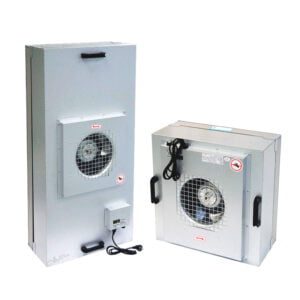
Pour les installations de production pharmaceutique fonctionnant 24 heures sur 24 et 7 jours sur 7, le choix d'une unité de filtration par ventilateur (FFU) basé uniquement sur le coût initial ou la capacité de débit d'air est une erreur stratégique. Le véritable fardeau opérationnel réside dans la consommation perpétuelle d'énergie, un coût qui s'alourdit silencieusement au fil des décennies d'utilisation continue. Un mauvais choix d'unité de filtration par ventilateur peut entraîner des dépenses d'énergie excessives et compliquer la mise en conformité avec les réglementations, transformant ainsi un atout essentiel pour le contrôle de la contamination en une responsabilité financière.
L'accent mis par l'industrie sur la durabilité et le contrôle rigoureux des coûts exige aujourd'hui une approche légale de l'approvisionnement en FFU. L'efficacité énergétique n'est plus une caractéristique secondaire, mais un critère de performance primaire qui a un impact direct sur les dépenses opérationnelles et les objectifs de surveillance environnementale. Cette analyse va au-delà des affirmations marketing pour s'intéresser aux mesures quantifiables et aux décisions d'ingénierie qui définissent la valeur à long terme dans les opérations de salles blanches pharmaceutiques.
Principaux indicateurs d'efficacité énergétique pour les UFA pharmaceutiques
Définition des indicateurs de performance de base
L'évaluation de l'efficacité d'une FFU nécessite l'analyse de paramètres spécifiques et quantifiables plutôt que d'affirmations génériques. Le principal facteur de consommation d'énergie est la pression statique totale que le ventilateur doit surmonter. Par conséquent, la puissance requise pour fournir un débit spécifique en pieds cubes par minute (CFM) à une résistance de filtre donnée est la mesure ultime. Les experts de l'industrie recommandent de comparer la puissance en watts et l'ampérage en fonctionnement pour obtenir la prévision la plus directe des dépenses opérationnelles.
L'impact de la conception du système sur le prélèvement d'énergie
La conception d'un système à faible résistance est essentielle pour minimiser la charge de travail du moteur dès le premier jour. Cette conception englobe le média filtrant, la géométrie du boîtier et des mécanismes d'étanchéité efficaces tels que les joints en gel. D'après les recherches menées par Norme ANSI/AMCA 208 Calcul de l'indice énergétique des ventilateurs, L'indice énergétique des ventilateurs (FEI) fournit la méthodologie standardisée pour cette comparaison. Un détail facilement négligé est qu'une perte de charge initiale légèrement plus élevée peut entraîner une augmentation significative des coûts énergétiques sur la durée de vie de l'unité.
Quantifier le critère d'efficacité
Les modèles à haut rendement pour les unités standard de 2’x4′ fonctionnent aujourd'hui à partir de 42 watts. Cette valeur de référence est en train de devenir une attente de base. Nous avons comparé les spécifications de plusieurs fournisseurs et constaté que les unités dépassant 60 watts pour des performances équivalentes entraînaient une pénalité substantielle et évitable sur le coût de la durée de vie. Ces critères de performance sont en train de passer du statut d'avantages concurrentiels à celui de normes attendues pour les installations qui se concentrent sur les rapports ESG.
| Métrique | Valeur typique / Gamme | Moteur principal / Note |
|---|---|---|
| Puissance de fonctionnement | A partir de 42W | Pour les unités standard 2’x4′ |
| Principal facteur de consommation | Pression statique totale | Le ventilateur surmonte la résistance du filtre |
| Mesure de performance de base | CFM à une résistance donnée | Indicateur d'efficacité ultime |
| Objectif de la conception du système | Faible perte de charge initiale | Minimise la charge de travail du moteur |
Source : Norme ANSI/AMCA 208 Calcul de l'indice énergétique des ventilateurs (https://www.federalregister.gov/documents/2023/05/01/2023-08696/energy-conservation-program-test-procedure-for-fans-and-blowers). Cette norme définit l'indice énergétique du ventilateur (FEI), la mesure clé pour évaluer l'efficacité du ventilateur. Cette méthodologie permet d'évaluer directement la puissance en watts et les performances CFM/résistance du ventilateur d'une unité de ventilation.
Moteurs EC vs. moteurs PSC : Comparaison directe des performances
La fracture technologique fondamentale
Le choix entre les moteurs à commutation électronique (EC) et les moteurs à condensateur divisé permanent (PSC) définit le niveau d'efficacité de l'ensemble du système FFU. Les moteurs PSC assurent un fonctionnement de base à une vitesse fixe, en consommant une puissance totale constante, quelle que soit la demande de débit d'air réelle. Cette conception gaspille de plus en plus d'énergie au fur et à mesure que la charge du filtre augmente la résistance du système. Lors de nos audits d'installations, nous constatons systématiquement que les systèmes basés sur des moteurs PSC fonctionnent bien au-delà de leur efficacité nominale, et ce uniquement au moment de la validation initiale.
Comment les moteurs EC atteignent-ils l'efficacité dynamique ?
Les moteurs EC sont des moteurs à courant continu sans balais avec variateur de vitesse intégré. Ils ajustent dynamiquement la vitesse et le couple pour maintenir un débit constant, en réagissant en temps réel à la charge du filtre et aux changements de pression dans le plénum. Cette capacité permet de réduire la consommation d'énergie jusqu'à 50% par rapport aux moteurs PSC équivalents. Le taux de conversion électrique-cinétique plus élevé réduit également la chaleur résiduelle et le bruit acoustique, contribuant ainsi à un meilleur contrôle de l'environnement de l'installation.
La justification stratégique de l'investissement
Pour les opérations 24/7, la prime d'investissement pour la technologie EC est justifiée par les économies d'énergie perpétuelles. Le moteur représente un changement fondamental dans le coût total de possession. Sa précision permet une intégration avancée avec les systèmes de gestion des bâtiments, alors que les moteurs PSC restent des composants autonomes et rigides. Le cadre décisionnel est clair : toute installation fonctionnant en continu devrait considérer les moteurs EC comme une base non négociable pour une utilisation efficace de l'énergie. unités de filtrage des ventilateurs de salles blanches.
| Fonctionnalité | Moteur CE | Moteur PSC |
|---|---|---|
| Contrôle de la vitesse | Ajustement variable et dynamique | Vitesse fixe |
| Consommation d'énergie | Jusqu'à 50% inférieur | Pleine puissance constante |
| Réponse à la charge du filtre | Maintien d'un CFM constant | Les déchets augmentent l'énergie |
| Technologie clé | CC sans balais avec VSD | Condensateur permanent divisé |
| Bruit opérationnel | Fonctionnement plus bas et plus souple | Plus élevé |
Source : Documentation technique et spécifications industrielles.
Évaluation du coût total de possession (TCO) pour les opérations 24/7
Changer le paradigme de l'analyse des coûts
Un modèle complet de coût total de possession révèle que le coût récurrent dominant est passé du remplacement périodique des filtres à la consommation continue d'énergie. Le prix d'achat représente souvent moins de 15% du coût du cycle de vie de 10 ans. Les installations doivent modéliser la consommation d'électricité comme la principale variable financière, en utilisant les tarifs des services publics locaux et les calendriers opérationnels prévus.
Calculer le délai de récupération des gains d'efficacité
Les économies d'électricité substantielles réalisées par les moteurs EC compensent rapidement leur coût initial plus élevé. Pour les grandes installations, cela peut représenter des milliers de dollars d'économies annuelles, ce qui fait que la période d'amortissement est souvent inférieure à deux ans. En outre, les caractéristiques qui réduisent le travail de maintenance, telles que les filtres amovibles côté salle (RSR), contribuent à un retour sur investissement opérationnel significatif en minimisant les interruptions de production coûteuses lors des changements de filtres obligatoires.
S'aligner sur le bon écosystème de fournisseurs
Le marché a évolué en deux niveaux distincts. Les fournisseurs généralistes proposent des unités standardisées et rentables, adaptées aux applications moins critiques. Les sociétés d'ingénierie spécialisées fournissent des solutions personnalisées à haut niveau d'assurance, avec une assistance technique et une documentation de validation plus approfondies. Il est essentiel d'aligner vos besoins en matière de performance et de conformité avec le fournisseur approprié pour obtenir une évaluation précise du coût total de possession et des risques.
| Élément de coût | Caractéristique | Impact sur le TCO |
|---|---|---|
| Coût récurrent dominant | Consommation d'énergie en continu | Principales dépenses à long terme |
| Économies sur le moteur de la CE | Milliers par an (grandes installations) | Compense rapidement l'augmentation des dépenses d'investissement |
| Fonctionnalité de maintenance (par exemple, RSR) | Réduction de la main-d'œuvre et des temps d'arrêt | Un retour sur investissement opérationnel significatif |
| Niveau du marché des vendeurs | Large gamme ou spécialisée | Affecte le coût de la solution et l'assurance |
Source : ANSI/ASHRAE Standard 90.1 Energy Standard for Buildings Except Low-Rise Residential Buildings (norme énergétique pour les bâtiments à l'exception des bâtiments résidentiels de faible hauteur) (https://doi.org/10.3390/buildings12081141). Cette norme établit le cadre fondamental de la conservation de l'énergie pour les bâtiments. La consommation continue d'énergie des UFA, qui est le principal facteur de coût total de possession, doit être évaluée dans le contexte de la conformité globale du bâtiment à cette norme.
Quelles sont les caractéristiques des UFA qui sont essentielles à la conformité réglementaire ?
Permettre la validation et les essais de routine
La conformité réglementaire impose des caractéristiques spécifiques aux unités de filtration qui permettent une validation reproductible et des pistes d'audit. Les unités doivent faciliter les tests d'intégrité des filtres, tels que les défis PAO, grâce à des ports de pression intégrés permettant de mesurer la pression différentielle à travers le filtre. L'absence de ces orifices ajoute à la complexité et au risque d'erreur lors des cycles de test obligatoires. Le système de contrôle doit fournir des journaux de données vérifiables et horodatés pour la durée de fonctionnement, la vitesse du moteur et le débit d'air, afin de démontrer aux organismes de réglementation que l'appareil fonctionne de manière cohérente.
Certifications obligatoires pour l'approbation de l'installation
La certification sismique n'est pas facultative dans de nombreuses régions. Les produits testés selon des normes reconnues telles que HCAI/OSHPD sont des éléments essentiels pour l'approbation des installations dans les zones sismiques. Cet investissement dans la certification par une tierce partie est un facteur décisif pour les clients qui construisent selon des normes résistantes. De même, les certifications de matériaux garantissant des surfaces compatibles avec les salles blanches et ne laissant pas de traces ne sont pas négociables pour prévenir la contamination.
Conception d'une documentation prête pour l'audit
La conformité dépend de la documentation. Les fonctions qui soutiennent l'intégrité des données, telles que la journalisation à témoin d'intégrité et les protocoles de communication sécurisés pour l'intégration BMS, sont de plus en plus importantes. La possibilité de générer des rapports de performance historiques directement à partir du contrôleur FFU simplifie la préparation de l'audit et démontre un engagement en faveur de l'intégrité des données, une préoccupation croissante dans les systèmes de qualité pharmaceutiques.
Intégration des UFA dans les systèmes de gestion des bâtiments (GTB)
Du composant autonome au nœud en réseau
Les FFU modernes à haut rendement évoluent pour devenir des nœuds intelligents et interopérables au sein de l'écosystème numérique d'une installation. Les protocoles de communication BACnet natifs, en particulier avec l'inscription BTL, permettent une intégration transparente dans un système de gestion des bâtiments. Cette intégration permet une surveillance et un contrôle centralisés et en temps réel du CFM, du RPM et de l'état des filtres dans l'ensemble de la salle blanche.
Mise en œuvre de stratégies de contrôle avancées
Les FFU en réseau permettent des stratégies sophistiquées de contrôle par zone. Les installations peuvent réduire dynamiquement le débit d'air et la consommation d'énergie dans les zones inoccupées ou de classification inférieure tout en maintenant les zones critiques. Cette capacité exige que la conception de l'installation prenne en compte l'architecture réseau pour les contrôles des salles blanches dès les premières étapes de la planification, et non pas en tant que modernisation. Les données fournies par ces systèmes permettent également une maintenance prédictive, en programmant les changements de filtres sur la base des données de pression réelles plutôt qu'à des intervalles de temps fixes.
L'impératif d'intégrité des données
Les données environnementales granulaires fournies par les FFU en réseau sont précieuses pour la vérification continue de la qualité et les tendances en matière de surveillance de l'environnement. Cela positionne les installations pour les futurs mandats d'intégrité des données, en fournissant un enregistrement défendable des conditions contrôlées tout au long du cycle de vie du produit. Le passage à l'industrie 4.0 dans la fabrication pharmaceutique fait de cette intégration une considération stratégique pour la conception de nouvelles installations.
Maintenir une efficacité maximale : Remplacement et validation des filtres
Le lien direct entre la maintenance et l'efficacité
L'efficacité énergétique durable est intrinsèquement liée à une maintenance rigoureuse. Au fur et à mesure que les filtres se chargent de particules, la résistance du système augmente. Cela oblige le moteur à consommer plus d'énergie pour maintenir le débit d'air requis. La surveillance régulière de la pression différentielle n'est donc pas seulement une activité de mise en conformité, mais un outil de gestion de l'énergie. En programmant les changements avant que l'efficacité ne se dégrade excessivement, on optimise à la fois les performances et les coûts.
Optimiser le processus de remplacement grâce à la conception
La conception du filtre amovible côté salle (RSR) est une amélioration opérationnelle essentielle. Il permet un remplacement sûr et sans outil à l'intérieur de la salle blanche, sans perturber le plenum ou le châssis du FFU. Cette conception réduit considérablement les temps d'arrêt du système et les risques de contamination lors des changements obligatoires. Elle permet à la salle blanche de revenir plus rapidement à son état validé, protégeant ainsi les calendriers de production. Parmi les détails facilement négligés, il convient de s'assurer que le nouveau filtre est correctement installé et scellé pour éviter toute dérivation, ce qui peut compromettre l'intégrité et l'efficacité du système.
Validation des performances après le changement
Le processus de validation après un changement de filtre s'appuie sur les ports de test intégrés du FFU et sur les performances stables et contrôlables de la technologie des moteurs EC. Un débit d'air constant et reproductible est nécessaire pour assurer la réussite des tests d'intégrité. D'après le ISO 16890 Filtres à air pour la ventilation générale, La perte de charge à travers un filtre est une fonction directe de son efficacité et de son état de charge, ce qui a un impact direct sur la consommation d'énergie de l'unité de ventilation après l'installation.
| Activité | Exigence clé | Activation de la fonctionnalité |
|---|---|---|
| Contrôle de l'efficacité | Contrôles réguliers de la pression différentielle | Changements programmés |
| Conception du remplacement du filtre | Amovible du côté de la pièce (RSR) | Accès sans outil, côté salle blanche |
| Principal avantage de la RSR | Minimise les temps d'arrêt du système | Réduction du risque de contamination |
| Test de validation | Test d'intégrité post-changement (par exemple, PAO) | Ports de test intégrés |
| Des performances stables pour la validation | Flux d'air constant et contrôlable | Technologie des moteurs EC |
Source : ISO 16890 Filtres à air pour la ventilation générale (https://www.iso.org/obp/ui/#iso:std:iso:16890:-1:ed-1:v1:en). Cette norme classe l'efficacité des filtres en fonction de l'élimination des particules. La chute de pression à travers un filtre, qui est surveillé pour la maintenance, est une fonction directe de son efficacité et de son état de charge, ce qui a un impact sur la consommation d'énergie de l'unité de traitement des fumées.
Considérations sismiques et acoustiques pour la conception des installations
L'intégrité structurelle comme condition préalable
La conception des installations pharmaceutiques doit tenir compte de l'intégrité structurelle dans les régions à activité sismique. Les FFU doivent rester solidement montées et opérationnelles pendant un événement afin de protéger le personnel et d'assurer la continuité des processus de fabrication critiques. Pour ce faire, les unités doivent être soumises à des tests rigoureux sur table vibrante, conformément à des normes certifiées telles que HCAI/OSHPD. La spécification de produits certifiés sismiques est une condition préalable non négociable pour l'approbation de l'installation dans ces zones, et non une mise à niveau optionnelle.
Gestion de l'environnement sonore professionnel
Pour les opérations 24/7, la performance acoustique contribue directement à l'environnement professionnel. Les moteurs EC à haut rendement sont intrinsèquement plus silencieux que les moteurs PSC en raison de leur conception sans balais et de leur fonctionnement plus souple à des vitesses optimisées. La gestion des niveaux de bruit réduit la fatigue des travailleurs et favorise la communication dans la salle blanche. Les concepteurs d'installations doivent demander des données sur la puissance acoustique ou le niveau de pression acoustique au CFM opérationnel afin de modéliser l'acoustique générale de la salle.
L'approche de la conception intégrée
Ces considérations mettent en évidence le fait que le choix de l'UFA a un impact sur des paramètres plus larges de l'installation. Les exigences en matière de contreventement sismique influencent la conception des plafonds et les charges structurelles. Le rendement acoustique affecte la stratégie globale de contrôle du bruit. Traiter l'UFA comme un élément intégré au sein d'une conception architecturale et MEP plus large, plutôt que comme une pièce d'équipement isolée, permet d'obtenir des résultats plus cohérents et plus conformes.
Choisir la meilleure UFA : un cadre décisionnel pour l'industrie pharmaceutique
Adaptation des performances aux besoins réels
La première étape consiste à adapter le profil de performance du FFU à la classe ISO et aux besoins opérationnels. Une sur-spécification pour un CFM maximum entraîne des coûts d'investissement et d'énergie inutiles. La base doit être un moteur EC associé à une roue de soufflerie courbée vers l'arrière pour une efficacité et une fiabilité optimales. Cette combinaison permet d'obtenir les performances nécessaires tout en consommant le moins d'énergie possible.
Superposition d'éléments de conformité et d'éléments opérationnels
Ensuite, il convient d'exiger des caractéristiques qui garantissent la conformité : ports de validation, enregistrement des données et certification sismique appropriée. Enfin, évaluez les caractéristiques opérationnelles telles que les filtres RSR et l'intégration native de BACnet pour l'efficacité et le contrôle du cycle de vie. Cette approche stratifiée permet de s'assurer que l'unité répond à la fois aux exigences réglementaires et à celles de l'utilisation quotidienne. Je recommande de créer une matrice de notation pondérée qui attribue des points en fonction de la criticité de chaque caractéristique pour votre opération spécifique.
Finaliser la sélection par une analyse holistique
Sur le plan financier, modéliser le coût total de possession en prenant la consommation d'énergie comme principale variable et en utilisant le coût sur 10 ans comme principal élément de comparaison. Enfin, considérez le FFU comme une plate-forme multifonctionnelle potentielle. Évaluez si l'intégration des UV-C, de l'éclairage LED ou de la surveillance des particules pourrait consolider les systèmes de plafond et réduire la complexité globale de l'installation. Ce cadre de décision holistique permet d'équilibrer les besoins de performance immédiats avec la résilience opérationnelle à long terme et le contrôle des coûts.
La sélection optimale d'un FFU repose sur trois piliers : l'efficacité énergétique quantifiable (priorité à la technologie des moteurs EC), la conformité réglementaire démontrable (caractéristiques sismiques et de validation) et la praticité opérationnelle (conception RSR, intégration de la GTB). L'analyse financière doit être basée sur le cycle de vie, la consommation d'énergie continue étant modélisée comme le principal facteur de coût. Ainsi, l'accent n'est plus mis sur le prix initial, mais sur la performance perpétuelle.
Vous avez besoin de conseils professionnels pour spécifier des unités de filtration à ventilateur conformes et à haute efficacité pour votre installation pharmaceutique ? L'équipe d'ingénieurs de JEUNESSE est spécialisée dans les solutions de flux d'air pour salles blanches adaptées à la fabrication 24 heures sur 24 et 7 jours sur 7, vous aidant à optimiser les performances et le coût total de possession. Pour une consultation technique directe, vous pouvez également Nous contacter.
Questions fréquemment posées
Q : Quels sont les paramètres d'efficacité énergétique les plus importants à spécifier lors de l'achat d'unités de production pharmaceutiques ?
R : La mesure définitive est la puissance nécessaire pour fournir un débit d'air requis à une résistance de filtre donnée, mesurée en watts de fonctionnement et en ampérage de fonctionnement. Les appareils à haut rendement de 2’x4′ peuvent fonctionner à partir de 42 watts. La Indice Fan Energy (FEI) fournit un taux d'efficacité normalisé pour le composant du ventilateur. Cela signifie que vos spécifications d'achat doivent exiger ces points de données électriques quantifiables, et non des affirmations génériques, afin de prévoir avec précision les dépenses opérationnelles.
Q : Quel est l'impact du choix entre les moteurs EC et PSC sur le coût total de possession d'une installation fonctionnant 24 heures sur 24 et 7 jours sur 7 ?
R : Les moteurs EC réduisent la consommation d'énergie jusqu'à 50% par rapport aux moteurs PSC en ajustant dynamiquement la vitesse pour maintenir le débit d'air, alors que les moteurs PSC fonctionnent à une puissance constante et inutile. Dans le cadre d'un fonctionnement continu, les économies d'énergie perpétuelles réalisées grâce à la technologie EC compensent rapidement son prix d'achat initial plus élevé. Cela signifie que toute analyse crédible du coût total de possession d'une usine pharmaceutique doit donner la priorité aux moteurs EC, car l'énergie est désormais le principal coût récurrent, et non les changements de filtres.
Q : Quelles sont les caractéristiques du FFU qui ne sont pas négociables pour maintenir la conformité réglementaire et la préparation à l'audit ?
R : Les caractéristiques essentielles comprennent des ports de pression intégrés pour tester l'intégrité des filtres, des systèmes de contrôle qui génèrent des journaux de données horodatés pour la durée de fonctionnement et le débit d'air, et une certification sismique selon des normes telles que HCAI/OSHPD, le cas échéant. Ces caractéristiques soutiennent directement les protocoles de validation et fournissent les preuves vérifiables exigées par des organismes tels que la FDA. Si votre installation se trouve dans une zone sismique ou est soumise à des règles strictes en matière d'intégrité des données, vous devez exiger ces certifications et ces fonctions d'enregistrement des données de la part de vos fournisseurs.
Q : Comment l'intégration des FFU à un système de gestion des bâtiments (BMS) améliore-t-elle le contrôle opérationnel ?
R : Les FFU dotés d'un protocole BACnet natif, en particulier ceux listés BTL, deviennent des nœuds intelligents dans votre réseau d'installations, permettant une surveillance et un contrôle centralisés et en temps réel du flux d'air et de l'état des filtres. Cela permet de mettre en place des stratégies par zone qui réduisent la consommation d'énergie dans les zones inoccupées tout en préservant les zones critiques. Pour les projets où les futurs mandats de données ou la maintenance prédictive sont des priorités, vous devez planifier l'architecture du réseau pour les contrôles des salles blanches lors de la conception initiale de l'installation, et non lors d'une mise à niveau.
Q : Quel est l'avantage opérationnel des filtres amovibles côté pièce (RSR) ?
R : Les filtres RSR peuvent être remplacés sans outil à l'intérieur de la salle blanche sans accéder au plenum, ce qui réduit considérablement le temps d'arrêt du système et le risque de contamination lors des changements obligatoires. Cette conception garantit un retour plus rapide de la salle blanche à son état validé, protégeant ainsi les calendriers de production. Les installations qui accordent la priorité à la continuité opérationnelle et à la minimisation des coûts de main-d'œuvre devraient spécifier le RSR comme une caractéristique essentielle du cycle de vie, car il offre un retour sur investissement significatif en réduisant les interruptions de production coûteuses.
Q : Comment évaluer les spécifications des médias filtrants par rapport à la consommation d'énergie de la FFU ?
R : La perte de charge du filtre détermine directement la consommation d'énergie du ventilateur. La spécification de filtres classés sous ISO 16890 offre un taux d'efficacité réaliste pour l'élimination des particules. Un filtre à faible résistance, combiné à une étanchéité efficace, minimise la pression statique initiale que le moteur doit surmonter. Cela signifie que votre choix doit équilibrer les performances de filtration par rapport à la résistance, car un filtre trop restrictif obligera le moteur à consommer plus d'énergie en continu pour maintenir le débit.
Q : À quoi ressemble un cadre décisionnel structuré pour la sélection d'une FFU pharmaceutique ?
R : Tout d'abord, faites correspondre le CFM du FFU à votre classe ISO actuelle afin d'éviter toute surspécification. Le cœur du système devrait être un moteur EC avec un ventilateur incurvé vers l'arrière. Ensuite, exigez des caractéristiques de conformité telles que des ports d'essai et des certificats sismiques, puis des caractéristiques opérationnelles telles que RSR et BACnet. Sur le plan financier, modélisez le coût total de possession en considérant l'énergie comme la principale variable. Ce cadre signifie que vous devez considérer le FFU comme une plate-forme environnementale à long terme, et non comme un simple ventilateur, en équilibrant les performances immédiates avec la résilience réglementaire et opérationnelle.
Contenu connexe :
- Top 3 des applications de l'unité de filtration du ventilateur dans la fabrication de produits pharmaceutiques
- Tendances émergentes : L'avenir de la technologie des unités de filtration par ventilateur
- Unités de filtration à ventilateur ou hottes à flux laminaire : Lequel choisir ?
- Optimisation des flux d'air dans les systèmes d'unités de ventilation et de filtrage
- Unité de filtration des ventilateurs pour salles blanches - Spécifications et comparaisons techniques
- Conseils d'entretien éprouvés pour prolonger la durée de vie des UFA
- Comment les unités de filtration par ventilateur créent un flux d'air laminaire dans les salles blanches ISO de classe 5
- Unités de filtration de ventilateurs à moteur EC ou à moteur AC : Analyse de la consommation d'énergie et du retour sur investissement à partir de données réelles
- Le guide complet des unités de ventilation et de filtration pour les responsables de salles blanches : Sélection technique, installation et optimisation des performances 2025 Edition