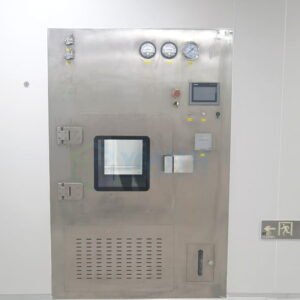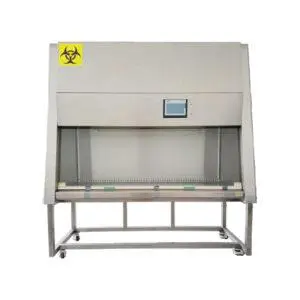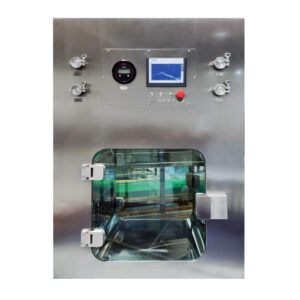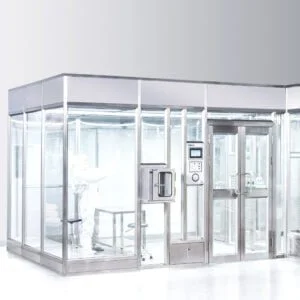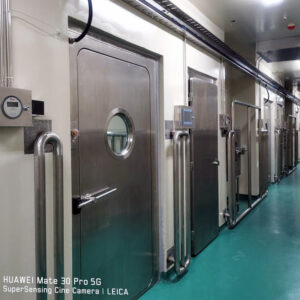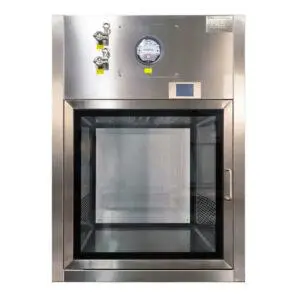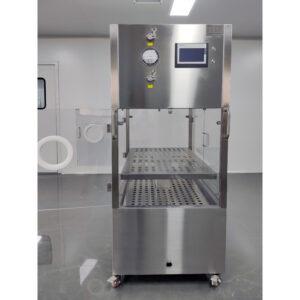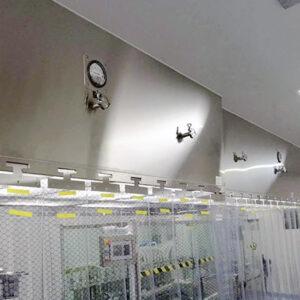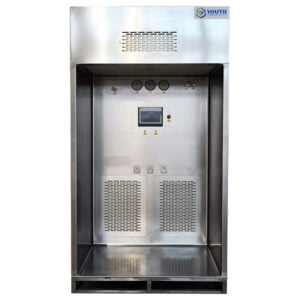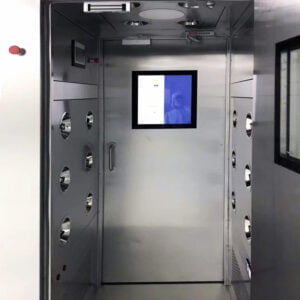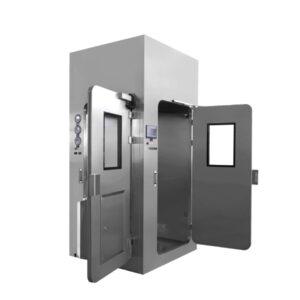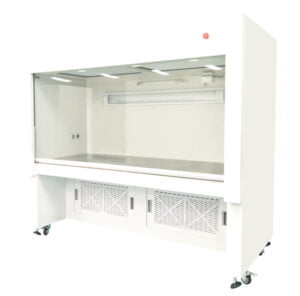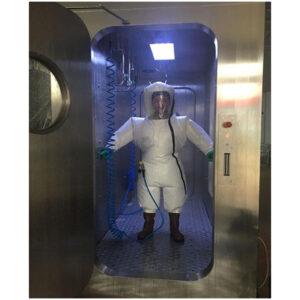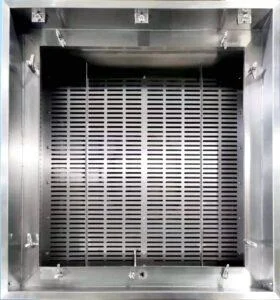
Dans la conception des salles blanches modulaires, la chambre de passage est souvent le goulot d'étranglement critique. Elle détermine l'efficacité du flux de matériaux tout en défendant la cascade de pression. Les erreurs de dimensionnement et de configuration entraînent des risques de contamination persistants et des retards dans le déroulement des opérations. Ce guide aborde le défi principal : la sélection d'une chambre de passage qui équilibre le débit opérationnel avec un contrôle de la contamination sans compromis.
La décision est encore plus importante aujourd'hui. Comme la construction modulaire accélère les délais des projets, la spécification des composants intégrés tels que les passages doit être précise dès le départ. Une unité mal configurée devient une contrainte permanente, difficile et coûteuse à rénover. Il est essentiel de comprendre les compromis techniques entre les conceptions statiques et actives, la logique de dimensionnement et les exigences de validation pour assurer l'efficacité du capital et l'intégrité opérationnelle à long terme.
Différences essentielles : Chambres de passage statiques ou actives
Définition du mécanisme de contrôle de la contamination du noyau
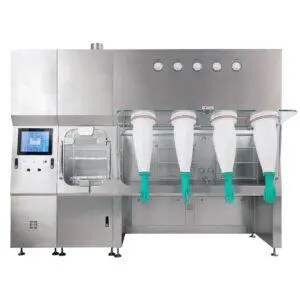
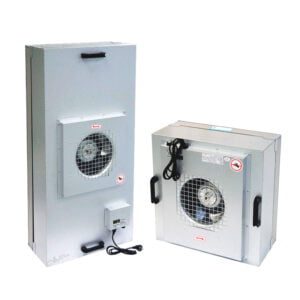
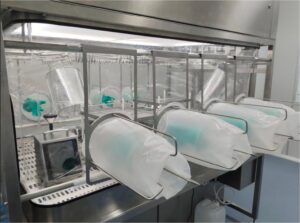
Le choix fondamental porte sur la source du flux d'air de protection. Les passages statiques sont des barrières passives. Elles dépendent entièrement de la différence de pression établie entre les deux pièces connectées pour fournir un flux d'air à travers des ouvertures de débordement intentionnelles. Cette conception dépend intrinsèquement de la stabilité et de l'équilibre des systèmes de chauffage, de ventilation et de climatisation des pièces. Les passages actifs intègrent un ventilateur autonome et une unité de filtration HEPA (FFU). Cela crée une cascade de pression positive indépendante à l'intérieur de la chambre elle-même, isolant le processus de transfert des fluctuations de pression de la pièce.
Matrice d'application et d'adéquation
Cette bifurcation dicte l'adéquation de l'application. Les unités statiques sont généralement spécifiées pour les transferts entre des zones à faible différentiel de propreté, telles que les environnements de classe ISO 7 à 8. Leur simplicité est leur avantage. Les unités actives sont obligatoires pour protéger les zones de qualité supérieure (classe ISO 5 ou 6), où l'intégrité de l'environnement critique ne peut dépendre de la seule pression ambiante. Les experts de l'industrie recommandent de remettre en question l'hypothèse par défaut de la filtration active. Dans les environnements stables en cascade, les conceptions statiques à “flux continu” correctement conçues peuvent permettre une récupération rapide des particules, offrant ainsi un paradigme validé et rentable, le cas échéant.
Implications stratégiques pour la conception du système
Le choix représente un compromis stratégique entre la dépendance du système et le coût d'investissement. En choisissant un modèle statique, la salle blanche s'engage à maintenir une pression différentielle précise et stable à cet endroit. Il réduit l'investissement initial mais augmente la dépendance à l'égard des performances générales du système CVC. Opter pour une unité active offre une indépendance opérationnelle et une plus grande assurance pour les transferts critiques, mais à un coût d'investissement plus élevé et avec une maintenance continue des filtres. Cette décision doit s'aligner sur le profil de risque des matériaux transférés et sur les conséquences d'une éventuelle contamination.
Comment dimensionner votre passage pour les matériaux et les chariots ?
Établissement des exigences dimensionnelles
Le dimensionnement commence par le plus grand article, chariot ou conteneur qui doit passer, y compris toutes les protubérances telles que les poignées ou les roues. À cette dimension maximale, ajoutez un minimum de 2 à 4 pouces de dégagement interne par côté. Ce tampon n'est pas un luxe ; il est essentiel pour que les opérateurs gantés puissent manipuler les articles sans contaminer les surfaces ou endommager les emballages stériles. Pour les transferts de chariots, la profondeur devient la dimension non négociable. La chambre doit être suffisamment profonde pour permettre au chariot de rouler complètement à l'intérieur, de sorte que les deux portes puissent se fermer hermétiquement contre une surface propre.
L'énigme du transfert de panier
Les unités de la taille d'un chariot présentent des contraintes uniques. Un passage de chariot standard peut mesurer 36″L x 54″H x 42″D. Cette exigence de profondeur consomme directement un espace au sol précieux. Le compromis est explicite : le choix d'un modèle plus large pour la capacité nécessite souvent une plus grande profondeur pour maintenir l'intégrité structurelle, ce qui amplifie l'empreinte au sol. Cette décision oblige les planificateurs à donner la priorité à la capacité de transfert maximale ou à l'efficacité spatiale dès le début du processus d'aménagement de la salle blanche. En outre, l'interface avec le sol doit être sans seuil pour permettre l'entrée en douceur des chariots, un détail souvent négligé dans les spécifications.
Impact sur les opérations et les flux de travail
La taille choisie dicte le flux logistique. Un passage sous-dimensionné crée un goulot d'étranglement perpétuel, obligeant à désassembler les charges ou compromettant les protocoles de transfert. Une unité surdimensionnée gaspille de l'espace en salle blanche et peut augmenter le temps de purge nécessaire pour retrouver la propreté après un cycle de porte. D'après mon expérience, le fait d'impliquer les équipes chargées des installations et des processus dans l'examen des maquettes physiques des articles volumineux par rapport aux dimensions proposées pour la chambre permet d'éviter des compromis coûteux en matière de flux de travail après l'installation. L'investissement dans une unité de la taille d'un chariot témoigne d'un engagement en faveur d'une logistique rationalisée des matériaux, qui doit s'accompagner de la planification d'une largeur d'allée adéquate et éventuellement d'un revêtement de sol renforcé.
Choix entre les verrouillages mécaniques et électromécaniques
Le rôle de l'interverrouillage
Le mécanisme de verrouillage est le principal dispositif de sécurité, conçu pour empêcher l'ouverture simultanée des deux portes. Cela permet de maintenir l'intégrité de la pression de la salle blanche et d'éviter la contamination croisée entre les zones. Sa fiabilité n'est pas négociable. Une défaillance à ce niveau représente une voie directe de contamination.
Simplicité du verrouillage mécanique
Les verrouillages mécaniques utilisent un lien physique - généralement un système de boulons ou de barres - qui rend physiquement impossible le déverrouillage simultané des deux portes. Ils offrent une solution robuste, à sécurité intégrée, qui ne dépend pas de l'alimentation électrique. Ils sont donc idéaux pour les applications de base où l'exigence principale est de garantir la séparation. Leur simplicité se traduit par un coût réduit et une maintenance minimale.
Avantages du système électromécanique
Les verrouillages électromécaniques utilisent des capteurs de position de porte et des serrures électroniques contrôlées par un panneau logique programmable. Cela permet des fonctions avancées : des voyants d'état (indiquant “En service”, “Propre”, etc.), des minuteries de cycle de purge programmables qui imposent un temps d'attente avant que la porte opposée ne puisse être ouverte, et des pistes d'audit. Ils peuvent s'intégrer à un système de gestion des bâtiments (GTB) pour une surveillance centralisée. Le portillon de passage passe ainsi d'une simple barrière à un portillon de processus intégré et intelligent, doté de protocoles exécutoires.
Intégration et installation avec les systèmes de cloisons modulaires
Le paradigme du "prêt à l'emploi
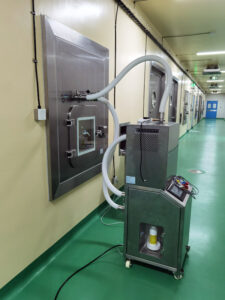
Les passages modernes sont conçus pour être intégrés dans des panneaux muraux modulaires pour salles blanches, qu'il s'agisse de panneaux en acier peint, en acier inoxydable ou de panneaux sandwiches composites. Ils sont dotés de cadres à bride ou de kits de finition qui se fixent solidement aux bords du panneau, créant ainsi un joint étanche à l'air sans nécessiter de renforcement structurel du mur lui-même. Cela contraste fortement avec la construction traditionnelle, où les unités sont encadrées sur mesure dans des cloisons sèches ou des blocs, ce qui rend les modifications futures difficiles et désordonnées.
Compatibilité et alignement des achats
Cette flexibilité nécessite une coordination proactive. L'épaisseur du panneau et le matériau de l'âme doivent être spécifiés au fabricant de la traversée pour garantir la compatibilité du matériel de montage et des joints. Une erreur fréquente consiste à ne pas tenir compte du profil de finition ; un cadre à brides conçu pour un panneau standard peut ne pas être étanche à un système à bord apparent ou à vitrage affleurant. Nous avons comparé les délais d'approvisionnement et constaté que le fait de s'approvisionner en passe-plats et en systèmes muraux auprès d'un seul fournisseur ou de partenaires bien alignés élimine la plupart des risques d'intégration et des modifications sur le terrain.
Implications stratégiques pour le cycle de vie des installations
L'avantage stratégique est la pérennité. Les passages modulaires compatibles peuvent être démontés et réinstallés à un nouvel endroit en cas de reconfiguration de la salle blanche. Cela favorise l'évolutivité et permet de s'adapter à l'évolution des besoins du processus sans avoir à payer le coût du remplacement de l'unité. Cependant, pour y parvenir, la spécification du passe-plat doit être fixée en même temps que la sélection du système mural, et non pas après coup.
Analyse des coûts : Investissement initial vs. efficacité opérationnelle
Évaluer le coût total de possession
Une décision d'achat intelligente va au-delà du prix d'achat. Le coût total de possession comprend l'installation, la consommation d'énergie, la maintenance et l'impact opérationnel sur l'efficacité du flux de travail. Les chambres statiques ont des coûts d'investissement et de maintenance plus faibles, mais elles imposent une charge énergétique permanente au système de chauffage, de ventilation et de climatisation de la pièce pour maintenir le différentiel de pression requis. Les unités actives répercutent les coûts sur la puissance de leur ventilateur dédié et sur le remplacement périodique du filtre HEPA.
Facteurs de coût des matériaux
Le matériau de construction est l'un des principaux facteurs de coût. Si l'acier inoxydable 304 ou 316 avec une finition brossée #4 est la norme durable, les applications spécialisées exigent d'autres matériaux. Le polypropylène ou l'acier au carbone revêtu par poudre pour la résistance chimique, ou les variantes à faible dégagement gazeux pour les applications sensibles dans le domaine des semi-conducteurs ou de l'aérospatiale, peuvent entraîner un surcoût de 20 à 30%. Cet investissement est essentiel pour des profils de risque de contamination spécifiques, mais représente une ingénierie excessive pour une utilisation pharmaceutique ou biotechnologique générale.
| Facteur de coût | Statique / flux continu | Unités actives (FFU) |
|---|---|---|
| Coût du capital | Plus bas | Plus élevé |
| Maintenance | Minimal (pas de filtres) | Changements de filtres nécessaires |
| Matière première | Polypropylène : +20-30% | Polypropylène : +20-30% |
| Consommation d'énergie | Aucun (passif) | Fonctionnement continu du ventilateur |
| Dépendance opérationnelle | Pression ambiante stable | CVC indépendant |
Source : Documentation technique et spécifications industrielles.
L'impératif du juste dimensionnement
L'opportunité la plus importante de réduction des coûts est le redimensionnement. La spécification excessive d'une unité active et surdimensionnée pour une application de transfert à faible risque gaspille le capital et augmente les coûts d'exploitation pendant toute la durée de vie de l'installation. Investir dans une expertise interne ou externe pour modéliser le flux d'air et la récupération des particules pour une conception statique peut valider une solution plus efficace en termes de capital. Le succès avéré des conceptions passives correctement dimensionnées remet en question la tendance à surestimer les risques perçus.
Validation des performances et considérations de conformité
Définition du protocole de validation
La validation prouve que le passage installé remplit sa fonction de contrôle de la contamination. Le protocole diffère selon le type d'appareil. Pour les unités statiques, le test clé est le temps de récupération des particules, vérifiant que le flux d'air conçu à travers les ouvertures de débordement atteint une réduction requise (par exemple, 100:1) dans un temps spécifié sous la pression différentielle réelle de la pièce. Pour les unités actives, le test d'intégrité du filtre HEPA via un défi DOP/PAO et la vérification de la vitesse du flux d'air sont standard.
Test de verrouillage et de scellement des portes
Quel que soit le type, l'essai de fonctionnement du verrouillage est obligatoire. La validation doit fournir une preuve documentée que les deux portes ne peuvent pas être ouvertes simultanément. Les contrôles de l'intégrité du joint de la porte, souvent effectués à l'aide d'une sonde de vitesse ou d'un test qualitatif à la fumée, garantissent l'absence de fuite lorsque la porte est fermée. Ces tests sont à la base de tout protocole de qualification de salle blanche et ne sont pas négociables pour la conformité réglementaire dans le domaine des sciences de la vie.
La tendance à la vérification intelligente
Une tendance stratégique est l'évolution des passages vers des composants contrôlés. L'inclusion de ports de contrôle intégrés pour les jauges magnétiques ou les sondes de comptage de particules facilite les contrôles de routine. Cela laisse présager un avenir où ces unités seront des nœuds générateurs de données au sein d'un système de qualité. Les critères d'achat doivent maintenant évaluer la facilité de validation et le potentiel d'intégration dans les systèmes de surveillance de l'environnement.
| Test de validation | Paramètre / Exigence | Méthode typique / Norme |
|---|---|---|
| Test unitaire statique | Temps de récupération des particules | <2 min pour une réduction de 100:1 |
| Test d'unité actif | Intégrité du filtre HEPA | Test de provocation DOP/PAO |
| Vitesse du flux d'air | Pour les unités actives | Vérification de la vitesse |
| Fonction de verrouillage | Sécurité non négociable | Preuve : les portes ne sont pas simultanées |
| Tendance en matière d'intégration des données | Portes de processus intelligentes | IoT pour l'enregistrement des événements |
Source : ISO 14644-4:2022 Salles propres et environnements maîtrisés apparentés - Partie 4 : Conception, construction et mise en service. Cette norme décrit les exigences de mise en service et de qualification des systèmes de salles blanches, y compris la nécessité de vérifier les performances des composants intégrés, tels que les chambres de passage, pour s'assurer qu'ils répondent aux objectifs spécifiés en matière de contrôle de la contamination.
Caractéristiques essentielles en option : Éclairage UV et surveillance
Eclairage germicide UV-C
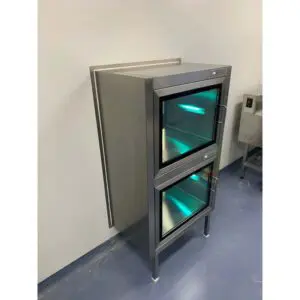
Les lampes UV-C fournissent une couche supplémentaire de décontamination biocide pour les objets se trouvant à l'intérieur de la chambre. Elles sont particulièrement utiles dans les applications de traitement stérile ou de confinement biologique où la charge microbienne de surface est un problème. La spécification clé est le temps de séjour ; le cycle UV doit être synchronisé avec le protocole opérationnel pour délivrer un dosage suffisant. Il s'agit d'une fonction optionnelle qui transforme la chambre en une station de décontamination active plutôt qu'en une simple barrière physique.
Éclairage interne et visibilité
L'éclairage LED interne est souvent considéré comme un accessoire, mais il s'agit d'une nécessité pratique. Un éclairage adéquat et sans ombre est essentiel pour que les opérateurs puissent inspecter visuellement les articles et s'assurer qu'ils sont correctement placés sans se pencher dans la chambre et perturber le flux d'air. Ce détail facilement négligé a un impact direct sur la précision des opérations et l'ergonomie.
Surveillance et ports de données
Les ports de contrôle sont essentiels pour la validation des performances et les contrôles opérationnels de routine. Une prise de pression permet de connecter un manomètre magnétique pour vérifier la cascade de pression dans la chambre. Un port de test DOP est essentiel pour tester le filtre HEPA in situ dans les unités actives. D'un point de vue stratégique, le choix d'inclure ces caractéristiques signale une évolution vers un contrôle vérifiable de la contamination et une maintenance basée sur les données, ce qui correspond aux attentes des systèmes de qualité modernes.
Spécifications finales et liste de contrôle pour la passation des marchés
Élaboration de la spécification technique
Une spécification précise permet d'éviter les erreurs. Commencez par définir l'application : dimensions maximales de l'article (avec les dégagements), fréquence de transfert et temps de séjour requis. Précisez les classifications de propreté (grade ISO/GMP) des deux côtés pour déterminer le type de chambre (statique, active, à flux continu). Indiquer les dimensions internes exactes (L x H x P). Sélectionner le type de verrouillage et le matériau de construction (par exemple, acier inoxydable 304, finition #4) en fonction du profil de risque de désinfection et de corrosion.
Détails de l'installation et de l'intégration
Fournir des informations détaillées sur l'installation des murs : type de panneau, épaisseur précise et profil de finition. Préciser la finition requise sur les faces intérieures et extérieures. Énumérer toutes les caractéristiques spéciales obligatoires : classe du filtre HEPA (s'il est actif), contrôle du cycle d'éclairage UV-C, éclairage LED interne, et type et emplacement des ports de surveillance. Ce document complet sert de base à l'établissement de devis précis par les fournisseurs et garantit la comparabilité des offres.
Approvisionnement stratégique et planification du calendrier
Pour les projets dont le calendrier est serré, s'approvisionner auprès de fabricants régionaux peut offrir un avantage décisif en termes de chemin, en minimisant les délais d'expédition de ces articles souvent fabriqués sur mesure. En outre, l'alignement des spécifications sur les nouvelles tailles standard “prêtes pour l'automatisation” permet de protéger l'investissement contre la prolifération des véhicules guidés automatisés (AGV) ou des systèmes de manutention robotisés, en garantissant une compatibilité à long terme avec l'évolution de la logistique de l'installation.
| Dimension | Objectif | Gamme typique / Ligne directrice |
|---|---|---|
| Apurement interne | Espace de manipulation ganté | 2-4 pouces par côté |
| Profondeur du chariot (critique) | Enceinte complète pour l'étanchéité | 36″ - 54″ |
| Exemple de taille de chariot standard | Largeur x Hauteur x Profondeur | 36″L x 54″H x 42″D |
| Impact matériel | Capacité du chariot par rapport à l'espace au sol | Compromis direct |
| Exigences en matière de conception des sols | Pour l'introduction des chariots | “Lipless”, sans seuil |
Source : IEST-RP-CC012.3 : Considérations sur la conception des salles blanches. Cette pratique recommandée couvre l'aménagement des salles blanches et la conception des flux de travail, en fournissant des conseils essentiels sur l'espacement, les dégagements et l'intégration des dispositifs de transfert, qui sont essentiels pour déterminer le dimensionnement correct des chambres de passage pour les matériaux et les équipements.
Le cadre décisionnel de base donne la priorité au niveau de contrôle de la contamination, aux exigences en matière de flux de matériaux et au coût total du cycle de vie. Tout d'abord, déterminez si la stabilité de votre cascade de pression permet une conception statique ou exige une UFA active, en vous basant sur la classification ISO des zones connectées. Deuxièmement, dimensionnez la chambre avec précision pour votre article le plus volumineux, en acceptant les compromis spatiaux pour les transferts de chariots. Troisièmement, choisissez un verrouillage et des caractéristiques optionnelles qui appliquent vos protocoles de transfert spécifiques et vos besoins de validation.
Vous avez besoin de conseils professionnels pour spécifier et intégrer les chambres de passage appropriées à votre projet de salle blanche modulaire ? Les experts de JEUNESSE peut vous aider à prendre ces décisions techniques, en veillant à ce que votre cahier des charges pour la passages modulaires pour salles blanches s'aligne à la fois sur les exigences de performance et sur les délais du projet. Pour une consultation détaillée, vous pouvez également Nous contacter.
Questions fréquemment posées
Q : Comment déterminer si une chambre de passage statique est suffisante pour une application de classe ISO 5 ?
R : Une unité statique ne peut généralement pas supporter un environnement de classe ISO 5, qui nécessite un passage actif avec sa propre unité de ventilation filtrée HEPA. Les conceptions statiques reposent sur les différentiels de pression de la pièce et sont validées pour des classifications inférieures telles que ISO 7 ou 8. Pour une zone de classe 5, vous avez besoin du contrôle indépendant et de haute qualité de la propreté d'une chambre active. Cela signifie que les installations destinées à des environnements de haute pureté doivent prévoir, dès le début du projet, les coûts initiaux et de maintenance plus élevés de la filtration active.
Q : Quelles sont les dimensions critiques à spécifier lors du dimensionnement d'un passage pour les chariots de manutention ?
R : Vous devez prendre en compte les dimensions complètes du plus grand chariot, y compris les poignées, avec un minimum de 2 à 4 pouces de dégagement interne sur tous les côtés pour la manipulation par l'opérateur. La profondeur est la dimension la plus critique ; la chambre doit être suffisamment profonde (souvent de 36 à 54 pouces) pour que le chariot entier puisse rouler à l'intérieur et que les deux portes puissent se fermer complètement. Cela nécessite une conception de plancher sans joint. Pour les projets d'automatisation des flux de matériaux, il faut prévoir très tôt cette empreinte plus importante, car elle détermine la largeur des allées de la salle blanche et peut nécessiter un revêtement de sol renforcé.
Q : Quand faut-il choisir un verrouillage électromécanique plutôt qu'un verrouillage mécanique ?
R : Choisissez un verrouillage électromécanique lorsque vous avez besoin de fonctions programmables telles que des minuteries de purge, des indicateurs d'état ou l'intégration avec un système de gestion des bâtiments pour les pistes d'audit. Un verrouillage mécanique offre une prévention physique de base, à sécurité intégrée, de l'ouverture simultanée des portes sans alimentation électrique. L'option électronique transforme le passage en une porte de processus gérée. Si vos protocoles exigent des cycles de transfert documentés ou une intégration future de l'automatisation, les capacités supplémentaires du système électromécanique en matière de contrôle et de données justifient sa complexité et son coût.
Q : Quel est l'impact de l'intégration d'un passe-plat dans les systèmes de cloisons modulaires sur la planification à long terme des installations ?
R : L'utilisation d'un passage conçu pour les panneaux modulaires permet de reconfigurer, d'agrandir ou de déplacer la salle blanche sans démolition coûteuse. Ces unités sont dotées de cadres à brides pour assurer l'étanchéité entre les panneaux, ce qui permet de les brancher et de les utiliser. Cette intégration assure la pérennité de votre investissement. Cependant, elle nécessite d'aligner les achats avec votre fabricant de systèmes muraux dès le départ pour garantir la compatibilité de l'épaisseur des panneaux et des méthodes d'étanchéité, afin d'éviter des modifications coûteuses sur le terrain pendant l'installation.
Q : Qu'est-ce qui est inclus dans la validation des performances d'une chambre de passage statique ?
R : La validation d'une unité statique consiste essentiellement à prouver que le débit d'air prévu permet d'atteindre le taux d'élimination des particules requis, par exemple une réduction de 100:1 en moins de deux minutes, dans les conditions spécifiques de pression de la pièce. Vous devez également tester physiquement le verrouillage des portes pour confirmer que les deux portes ne peuvent pas s'ouvrir simultanément. Ce processus est guidé par des normes de conception et de performance des salles blanches telles que ISO 14644-4:2022. Si votre établissement est soumis à des BPF strictes, prévoyez un test quantitatif des performances lors de la mise en service, et non une simple inspection visuelle.
Q : Pourquoi spécifier l'éclairage UV en tant que caractéristique optionnelle pour un passage ?
R : Les lampes germicides UV-C ajoutent une couche de décontamination de surface au contrôle des particules de la chambre, ciblant les micro-organismes présents sur les articles pendant leur séjour à l'intérieur. Cette fonction est essentielle pour les applications dans le domaine des sciences de la vie ou des produits pharmaceutiques, où la réduction de la charge biologique est cruciale. Elle fait passer l'unité du rôle de simple barrière à celui de station de décontamination active. Si votre processus implique le transfert de composants qui ne peuvent pas être désinfectés par voie humide, vous devez budgétiser et valider cette capacité biocide optionnelle.
Q : Quelles informations clés doivent figurer dans les spécifications finales d'une passation de marché sur mesure ?
R : Votre cahier des charges doit détailler l'application (dimensions de l'élément, fréquence), les classifications ISO des deux côtés, la taille interne exacte avec les dégagements, le type de verrouillage choisi et le matériau de construction (par exemple, l'acier inoxydable 304). Indiquez également le type et l'épaisseur des panneaux de votre système mural, ainsi que les caractéristiques requises telles que les filtres HEPA, les lampes UV ou les ports de surveillance. Pour les projets dont le calendrier est serré, il est possible de s'approvisionner auprès d'un fabricant régional afin de réduire les délais logistiques pour ces éléments souvent fabriqués sur mesure.
Contenu connexe :
- Explication des principes de fonctionnement de la Pass Box : Mécanismes de verrouillage, dynamique du flux d'air et conception du cycle de stérilisation UV pour les applications en salle blanche
- Le guide complet de sélection et de mise en œuvre des boîtes de passage pour le contrôle de la contamination en salle blanche : édition 2025 avec cadre de conformité aux BPF et à l'ISO 14644
- Contrôle de la pression de la boîte de passage VHP : Conformité à la norme ISO 14644
- Validation du chariot LAF mobile cGMP : Conseils d'experts
- Exigences en matière de pression différentielle de la boîte de passage : Comment maintenir un flux d'air optimal entre les zones de la salle blanche ?
- Surveillance de la pression de la chambre VHP : Conseils essentiels
- Validation de la boîte de passage VHP : Liste de contrôle de la conformité IQ/OQ/PQ
- Verrouillage électronique ou verrouillage mécanique dans les boîtes de passage : Quel système permet un meilleur contrôle de la contamination ?
- VHP et boîtes à passes traditionnelles : Comparaison des principales différences