Les défaillances de confinement de la poudre dans les environnements pharmaceutiques se manifestent rarement lors de la sélection des équipements. Elles apparaissent lors de la qualification des changements de production, lorsqu’une équipe de nettoyage découvre que l’intérieur de la cabine présente des résidus dans des recoins inaccessibles sans démonter des composants que personne n’avait prévu de démonter. Elles apparaissent également lors des audits, lorsque les hypothèses concernant la direction de la pression, formulées de manière informelle lors de l’approvisionnement, s’avèrent en contradiction avec la stratégie de confinement écrite. La décision qui permet d’éviter la plupart de ces retouches est simple en principe, mais mal mise en œuvre dans la pratique : définir les variables du processus — niveau d’exposition à la poudre, type de tâche, dimensions des conteneurs et fréquence des lots — avant d’évaluer tout modèle de cabine. À la fin de cet article, vous serez en mesure d’identifier les paramètres du processus qui doivent être fixés en priorité, de comprendre comment les différences opérationnelles entre les types de cabines affectent les performances de confinement dans l’utilisation quotidienne, et de repérer les compromis entre l’intégrité du flux d’air et l’ergonomie de l’opérateur avant qu’ils ne deviennent un problème après l’installation.
Quel est le niveau de confinement que la cabine est censée assurer concrètement ?
Le niveau de confinement qu’une cabine doit assurer n’est pas une caractéristique à vérifier après la sélection : il s’agit de la contrainte de conception qui détermine quelle cabine peut être choisie. Avant même d’entamer toute comparaison entre les différents modèles, l’équipe doit consigner par écrit deux éléments : la classification ISO de la salle blanche que l’intérieur de la cabine doit respecter, et le sens de la pression que la cabine doit maintenir par rapport à la pièce environnante.
Conformément à la norme ISO 14644-1:2015, la classification des salles blanches s’exprime en termes de concentration cible de particules d’une taille spécifiée, allant de la classe ISO 4 (la plus stricte, avec moins de 10 particules ≥ 0,1 µm par mètre cube) à la classe ISO 8. Préciser où se situent les conditions de fonctionnement de la cabine dans cette plage n’est pas une simple formalité réglementaire : cela définit les exigences en matière de pile de filtres, de vitesse d’écoulement de l’air et de temps de récupération, qui influencent toutes les décisions de conception en aval. Une équipe qui reporte cette spécification jusqu’à la phase d’approvisionnement a, en réalité, reporté l’ensemble de la conception du système de confinement.
Le sens de la pression est la variable le plus souvent considérée comme un paramètre par défaut plutôt que comme un choix. Une pression positive par rapport à la pièce environnante protège le produit en empêchant l’air ambiant de pénétrer dans l’espace de travail de la cabine. La dépression protège l'opérateur et l'environnement en garantissant que toutes les particules mises en suspension soient aspirées vers l'intérieur et capturées, plutôt que rejetées vers l'extérieur. Ces deux priorités ne sont pas interchangeables, et la direction ne peut pas être modifiée après l'installation sans revoir le circuit d'évacuation, la configuration des filtres et le protocole de mise en service. La manipulation de poudres pharmaceutiques place presque toujours la protection de l'opérateur en conflit avec celle du produit, et ce conflit doit être résolu — par écrit — avant la rédaction du cahier des charges de la cabine.
| Paramètres de conception | Options / Cible | Pourquoi c'est important |
|---|---|---|
| Classification des salles blanches selon la norme ISO | ISO 4 à ISO 8 | Définit l'objectif de concentration des particules de béton à atteindre en matière de confinement et de propreté. |
| Direction de la pression | Positif ou négatif par rapport à la pièce | Détermine si la priorité est accordée à la protection du produit (valeur positive) ou à la protection de l'opérateur et de l'environnement (valeur négative). |
Les équipes qui négligent cette étape se rendent souvent compte, lors de la phase de validation, que la cabine installée a été conçue en se basant sur une priorité erronée. La modification a posteriori du sens de la pression après l'installation nécessite généralement la mise en place d'un nouveau réseau de conduits, un rééquilibrage du système CVC et la répétition des essais de qualification environnementale — un coût qui fait paraître la discussion initiale sur le cahier des charges comme une dépense modique.
Quels paramètres de processus doivent être fixés avant de commencer la comparaison entre les cabines ?
Les modèles de cabines ne constituent pas des plateformes interchangeables. Les dimensions internes utiles, les configurations des portes et les circuits d'écoulement d'air sont conçus en fonction de conditions de processus spécifiques ; évaluer ces modèles avant que ces conditions ne soient définies ne permet donc pas d'établir une comparaison pertinente.
La dimension la plus souvent sous-estimée est celle du conteneur. Les dimensions intérieures standard des cabines varient d’environ 900 × 850 × 1 950 mm pour les modèles compacts à 4 000 × 2 500 × 2 000 mm pour les configurations plus grandes. Cette fourchette est suffisamment large pour couvrir des échelles de processus fondamentalement différentes, mais les contraintes ne ressortent pas clairement des seules dimensions indiquées dans les catalogues. Un conteneur qui passe par l’ouverture d’accès à l’arrêt peut ne pas laisser suffisamment d’espace libre pour effectuer un mouvement complet de prélèvement ou de transfert pendant le fonctionnement. Si les dimensions maximales du conteneur ne sont pas vérifiées par rapport à l’enveloppe de travail interne de la cabine — et pas seulement par rapport aux dimensions intérieures nominales —, l’équipe risque de se retrouver face à une incompatibilité qui ne pourra être corrigée qu’en remplaçant la cabine.
L’intégration de l’automatisation est le deuxième facteur qui détermine la conception de la cabine au niveau architectural, mais elle est souvent considérée comme une préoccupation pour l’avenir. Si le processus nécessite un passage de convoyeur, un port de transfert automatisé ou un système de pesage en ligne, le type de porte de la cabine, la hauteur du seuil et le chemin de retour de l’air doivent être conçus dès le départ en fonction de cette exigence. L'ajout d'un système d'automatisation à une cabine qui n'a pas été conçue à cet effet compromet souvent la géométrie du rideau d'air, génère des turbulences au niveau du plan de travail et peut nécessiter des modifications structurelles qui invalident les données de mise en service d'origine.
| Données d'entrée du processus | Pourquoi il faut y remédier rapidement | Exemple / Preuve |
|---|---|---|
| Dimensions maximales des conteneurs | Détermine la taille de travail interne requise | Les dimensions intérieures varient de 900 x 850 x 1 950 mm à 4 000 x 2 500 x 2 000 mm. |
| Intégration avec des systèmes automatisés de manutention (par exemple, des convoyeurs) | Définit la disposition des stands, les types de portes et les mesures de contrôle de la contamination pour optimiser le débit | Ce point doit être défini dans le cadre de la phase de pré-conception en vue de l'intégration de l'automatisation. |
À ce stade, il est utile de considérer toute donnée d’entrée du procédé encore marquée “ À déterminer ” comme un critère rédhibitoire lors de la comparaison des cabines. Chaque variable non définie correspond à une hypothèse de conception formulée implicitement par le fournisseur de l’équipement, et cette hypothèse peut ne pas correspondre aux exigences réelles du procédé.
En quoi les cabines d'échantillonnage, de distribution et de pesage diffèrent-elles dans la pratique ?
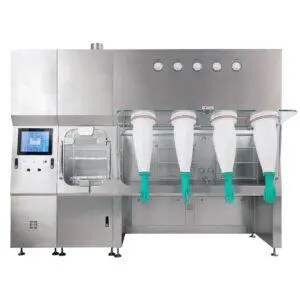
Les trois types de cabines se ressemblent sur les photos et partagent des composants communs — filtration HEPA, circulation d'air en boucle fermée ou à évacuation, intérieur en acier inoxydable — mais leur principe de fonctionnement diffère sur des points qui ont une incidence sur les performances de confinement, le flux de travail de l'opérateur et le coût quotidien.
Une cabine de dosage est conçue autour du transfert de matière : le transfert d’une quantité définie de matière en vrac depuis un conteneur source vers un conteneur de travail, généralement à l’échelle de la production avec des cycles de lots répétés. La vitesse frontale cible d’une cabine de dosage — généralement comprise entre 0,38 et 0,58 m/s — reflète la nécessité de maintenir un rideau d’air continu au niveau d’une ouverture susceptible d’être franchie fréquemment tout au long d’un poste de travail. Cette large plage de vitesses permet de s'adapter aux variations de la géométrie de l'ouverture et de la fréquence d'accès sans descendre en dessous du seuil nécessaire pour retenir la poudre en suspension.
Un poste d’échantillonnage remplit une fonction différente. Le processus est ponctuel plutôt que continu : une petite quantité de matière est prélevée d’un conteneur de vrac à des fins de contrôle qualité, souvent à partir de conteneurs de tailles et de niveaux de remplissage différents au cours d’une même session. La vitesse frontale cible pour une configuration d’échantillonnage — environ 0,45 m/s avec une tolérance de ±20% — est plus stricte, car la tâche exige un accès précis et contrôlé plutôt qu’un débit soutenu. La turbulence au niveau du plan de travail est plus gênante dans un contexte d’échantillonnage, où la quantité manipulée est suffisamment faible pour que la moindre perturbation de l’air puisse disperser le matériau et compromettre l’intégrité de l’échantillon.
Une cabine de pesée privilégie la stabilité de la balance et l'isolation contre les vibrations, parallèlement au confinement. Un flux d’air bien adapté à la fonction de rideau d’air peut s’avérer inadapté à une tâche de pesée s’il crée des turbulences localisées directement au-dessus du plateau de la balance — un problème qui n’apparaît pas dans les spécifications de vitesse frontale, mais qui se manifeste immédiatement au niveau de la reproductibilité des mesures. Ces trois types de tâches sont parfois regroupés dans les discussions d’achat sous l’appellation “ cabines de manipulation de poudres ”, mais cette appellation masque les différences opérationnelles qui font qu’une cabine choisie pour une tâche donnée peut s’avérer peu performante pour une autre.
La consommation électrique ajoute une dimension pratique à la planification. Les charges motrices des cabines varient d’environ 0,35 kW pour les modèles compacts à fonction unique à 7,5 kW pour les grandes configurations à plusieurs unités. Cette fourchette est suffisamment large pour influencer les calculs des coûts d’exploitation sur toute la durée de vie de la cabine, en particulier dans les environnements à fréquence de production élevée où la cabine fonctionne en continu sur plusieurs équipes. Une équipe qui évalue les cabines uniquement en fonction de leur coût d’investissement risque de sous-estimer considérablement le coût total de possession.
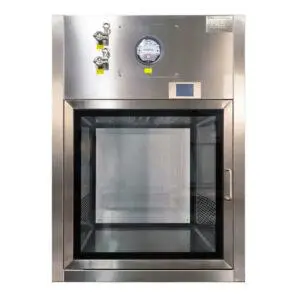
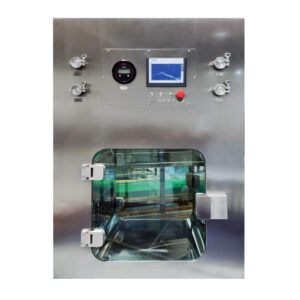
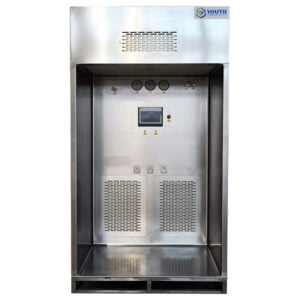
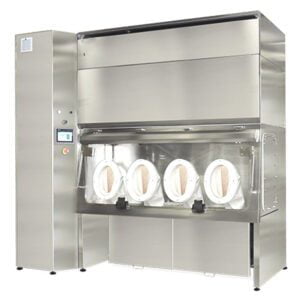
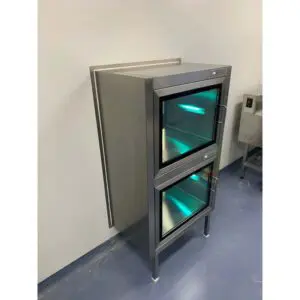
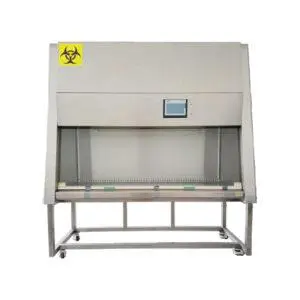
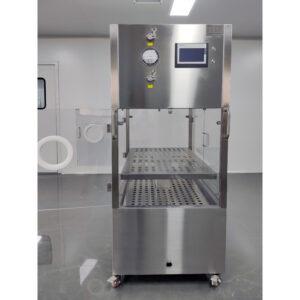
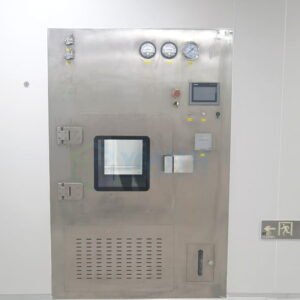
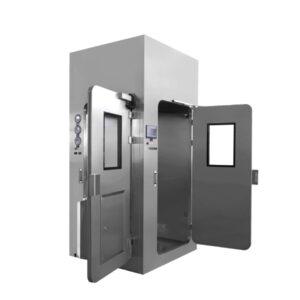
Pour une comparaison technique détaillée des spécifications et du mode de construction de ces trois configurations de stands, le stand de distribution, stand d'échantillonnage et stand de pesage La gamme de produits illustre les différences de configuration au niveau matériel.
Lorsque le flux d'air de confinement et l'ergonomie de l'opérateur s'opposent
Les performances de confinement et l’ergonomie pour l’opérateur constituent, plus que toute autre paire d’exigences de conception, deux critères qui s’opposent de manière constante lors du choix d’une cabine. Comprendre où cette tension est la plus forte aide les équipes à éviter de faire un choix qui optimise l’un au détriment de l’autre sans s’en rendre compte.
La profondeur interne d’une cabine standard — généralement d’environ 850 mm — est calibrée pour maintenir l’intégrité du flux d’air sur l’ensemble du plan de travail. Une enceinte plus profonde réduirait l’uniformité de la vitesse frontale ; une moins profonde limiterait l’espace de manutention des matériaux. Mais une profondeur de travail de 850 mm constitue une véritable contrainte lorsque la tâche implique de grands conteneurs, des outils à long manche ou des opérations qui exigent que l’opérateur s’étire sur toute la surface de travail. Les opérateurs qui ne parviennent pas à effectuer confortablement la séquence de tâches dans l’enveloppe de portée de la cabine ont tendance à contourner cette contrainte — en ouvrant davantage la barrière, en se penchant plus en avant ou en plaçant les récipients à la périphérie de la cabine — et chacune de ces adaptations altère le rideau d’air que la spécification de vitesse était censée maintenir.
La hauteur intérieure obéit à une logique similaire. Les configurations standard comprises entre 1 950 et 2 000 mm s’adaptent à la plupart des tailles d’opérateurs pour le travail debout, mais c’est la combinaison de la hauteur et de la profondeur qui détermine si les tâches impliquant des conteneurs de grande hauteur ou un accès en hauteur peuvent être réalisées sans compromettre la posture ni l’intégrité du flux d’air. Si le processus comporte une étape quelconque exigeant que l’opérateur place son torse au-dessus du plan de travail, cela doit être vérifié par rapport à l’enveloppe intérieure de la cabine avant la sélection, et non après l’installation.
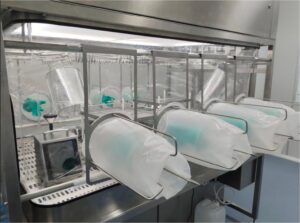
La méthode d’isolation — qu’il s’agisse d’un rideau d’air, d’un rideau souple ou d’un panneau en plexiglas — constitue la troisième variable de ce compromis, et elle est rarement abordée explicitement lors des discussions relatives aux marchés publics. Un rideau d’air offre la meilleure vitesse d’accès et le moins d’obstacles physiques, mais son efficacité de confinement dépend entièrement d’un flux d’air soutenu et calibré sur toute l’ouverture. Un rideau souple ajoute une barrière physique qui compense en partie les perturbations momentanées du flux d’air, mais ralentit l’accès et peut être déplacé par les mouvements liés à la manutention des matériaux. Un panneau en plexiglas constitue la barrière de confinement physique la plus fiable, mais il restreint la géométrie d’accès et peut empêcher l’opérateur d’effectuer certaines tâches sans retirer partiellement le panneau. Chaque méthode représente un point différent sur la courbe de compromis entre accès et confinement, et le choix approprié dépend de la séquence de tâches spécifique, et non de la méthode la plus couramment utilisée dans un secteur d’activité donné.
Le choix de la méthode d'isolation a également une incidence sur les actions concrètes des opérateurs pendant leur service. Si la barrière ralentit suffisamment l'accès au point de créer des frictions dans le flux de travail, les opérateurs trouveront des moyens de la contourner — et ce sont précisément ces solutions de contournement qui, dans la pratique, compromettent l'efficacité du confinement.
Quelles interfaces et quels équipements techniques doivent être coordonnés avant l'obtention de l'agrément ?
La coordination de l’interface avec les locaux constitue systématiquement le point de friction qui retarde la mise en service, et c’est toujours l’étape de coordination qui intervient en dernier dans le déroulement du projet. Lorsque les responsables des installations sont associés à la réflexion sur le choix des cabines, les équipements sont souvent déjà définis — et l’inadéquation entre les exigences physiques des cabines et les conditions disponibles dans les locaux devient alors un problème de retouche plutôt qu’une décision de conception.
L'encombrement extérieur d'un grand stand peut atteindre 4 100 × 3 300 × 2 570 mm. Ce chiffre ne correspond pas aux dimensions une fois le stand installé dans un espace dégagé ; il s'agit de l'enveloppe qui doit pouvoir passer par les couloirs, les embrasures de porte et les voies de service lors de la livraison et de l'installation. Une cabine qui s'adapte à l'espace au sol alloué peut ne pas passer par les voies d'accès permettant d'atteindre cet espace, et s'en rendre compte lors de la livraison constitue un problème coûteux et évitable. La vérification doit porter sur les dimensions d'expédition, et non sur les dimensions une fois installée.
Les spécifications d’alimentation électrique constituent le deuxième point de coordination susceptible de générer des problèmes après l’installation si elles ne sont pas validées suffisamment tôt. Les configurations de stands de grande envergure nécessitent généralement une alimentation triphasée de 380 V/50 Hz — une spécification courante dans les environnements industriels, mais qui n’est pas systématique dans les sites de production pharmaceutiques, en particulier dans les bâtiments anciens ou les installations ayant fait l’objet de rénovations progressives. Si l’infrastructure électrique disponible à l’emplacement prévu pour la cabine ne correspond pas à ses besoins en alimentation électrique, la mise en conformité nécessite des travaux d’électricité réalisés par des professionnels agréés, d’éventuelles mises à niveau des tableaux électriques et entraîne des répercussions sur le calendrier qui repoussent les délais de mise en service de manière difficilement rattrapable.
| Zone d'interface | Ce qu'il faut confirmer | Pourquoi c'est important |
|---|---|---|
| Surface de la pièce et voie d'accès | Tenir compte de l'encombrement extérieur total du stand et de ses dimensions d'expédition | Un dysfonctionnement peut empêcher l'installation ou nécessiter des modifications coûteuses (dimensions extérieures jusqu'à 4 100 × 3 300 × 2 570 mm). |
| Caractéristiques techniques de l'alimentation électrique | Vérifiez les caractéristiques techniques requises (par exemple, triphasé 380 V/50 Hz ou monophasé 220 V) | Permet d'éviter les problèmes électriques après l'installation (Exemple : courant alternatif triphasé 380 V/50 Hz) |
Ces deux vérifications doivent être effectuées dans le cadre d'une étape de révision formelle avant la validation définitive du modèle de cabine — et non à titre de confirmation a posteriori des spécifications. La révision structurée doit également porter sur le tracé des conduits d'évacuation pour les configurations en dépression, la capacité de charge au sol pour les grandes cabines chargées à pleine capacité, ainsi que les implications en termes d'équilibrage du système CVC liées à l'ajout d'une unité de recirculation ou d'évacuation à une zone de salle blanche existante.
Comment les procédures de nettoyage et de changement de production influencent le choix des cabines
Le nettoyage et le changement de production sont les activités opérationnelles qui mettent en évidence les choix de conception qui n’ont jamais été abordés lors des discussions relatives à l’approvisionnement. Une cabine qui fonctionne bien dans des conditions d’exploitation normales peut poser d’importantes difficultés d’entretien lors du changement de production, et ces difficultés n’apparaissent qu’une fois la cabine installée et dès le début de la première qualification de changement de production.
La géométrie intérieure de la cabine détermine le degré de fiabilité de la décontamination de sa surface. Les cabines présentant des angles internes marqués créent des zones d’accumulation où la poudre se dépose et est difficile à atteindre avec des outils de nettoyage standard, en particulier dans les angles en retrait près de la base, du circuit d’air de retour et de la jonction entre les parois et la surface de travail. Les cabines conçues avec des profils en arc intégrés — où les angles sont remplacés par des transitions courbes continues — éliminent structurellement ces zones mortes plutôt que de compter sur une procédure de nettoyage pour les compenser. La conséquence opérationnelle est significative : une cabine dotée d'une géométrie nettoyable peut être qualifiée pour le changement de lot grâce à un protocole de validation du nettoyage plus court et à un cycle de nettoyage physique plus court, ce qui a un impact direct sur le temps de cycle d'un lot à l'autre.
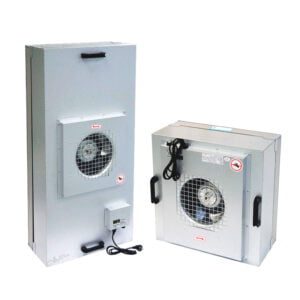
L'accès aux composants constitue la deuxième dimension mise en évidence par les procédures de changement de production. Les orifices de retour d'air et les boîtiers de filtres doivent être accessibles pour l'inspection et le nettoyage entre les cycles de production, et le mécanisme permettant d'y accéder détermine le temps et le nombre d'étapes nécessaires à ce processus. Les conceptions qui utilisent un système de retenue par aimants puissants pour les panneaux ou grilles critiques — plutôt que des fixations nécessitant des outils — permettent aux techniciens de retirer et de remplacer les composants rapidement et de manière reproductible, sans introduire la variation liée au resserrage des fixations à des niveaux différents. Le même principe s’applique aux boîtiers de filtres : si l’élément HEPA H14 nécessite un démontage important pour être inspecté ou remplacé, cette intervention sera effectuée moins fréquemment et de manière moins approfondie que ne l’exige le programme de maintenance.
| Caractéristiques de la conception | Objectif | Conséquences sur le nettoyage et le changement de production |
|---|---|---|
| Aménagement intérieur (par exemple, arc intégré) | Éliminez les recoins où la poussière peut s'accumuler | Empêche l'accumulation de poussière et facilite considérablement le nettoyage et la décontamination. |
| Démontage aisé des composants essentiels (par exemple, les orifices d'air de retour équipés d'aimants puissants) | Faciliter l'accès au filtre et son nettoyage | Indispensable pour un nettoyage efficace et un changement rapide entre les lots ou les produits. |
Ni les arcs intégrés ni le système de fixation magnétique des panneaux ne constituent des exigences réglementaires. Il s'agit de critères de sélection pratiques dont l'absence engendre un risque lié à la maintenance et au changement de production qui s'accumule tout au long de la durée de vie de la cabine. Le moment approprié pour les évaluer se situe lors de la sélection de la cabine — en examinant les données de validation du nettoyage ou les dossiers de qualification des changements de production pour des cabines installées comparables — et non lors de la première campagne de production.
Quel parcours de stands vaut-il la peine de réserver pour votre processus pharmaceutique ?
Fixer la configuration de la cabine revient à s'engager sur une pile de filtres spécifique, un débit d'air cible précis et une stratégie de confinement bien définie, conformément à une description écrite du processus. Les équipes qui reportent cet engagement — en considérant les spécifications de la cabine comme provisoires jusqu'à la validation — constatent généralement que ces spécifications provisoires génèrent des données de mise en service provisoires, difficiles à justifier lors d'un audit et coûteuses à refaire.
La pile de filtres est l’élément de configuration qui assure la cohérence entre la classification ISO visée et les performances réelles de confinement de la cabine. Une pile à trois étages — préfiltre G4, filtre intermédiaire F8, filtre HEPA H14 — offre une efficacité d’environ 99,9951 TP10T pour les particules de 0,3 µm. La suffisance de ce niveau d’efficacité pour atteindre la classe ISO visée dépend de la classification spécifique recherchée, du débit d’air traversant la cabine et du taux de génération de particules du processus confiné. Conformément à la norme ISO 14644-1:2015, l’obtention et la démonstration de la classification nécessitent des essais par rapport à des seuils de concentration de particules définis dans des conditions opérationnelles — et non pas uniquement la certification des filtres au niveau des composants. La configuration des filtres doit être validée par rapport à la classification visée lors de la phase de conception ; on ne peut pas simplement supposer qu’elle est adéquate du fait de la présence d’une filtration HEPA.
Le document décrivant la séquence des opérations constitue le point d’ancrage pratique de cette confirmation. Il doit décrire, avec suffisamment de détails pour permettre de le tester, ce que fait l’opérateur à chaque étape, quels sont les conteneurs concernés, quelle est la perturbation attendue de la poudre à chaque étape, et quelles sont les attentes en matière de confinement pour chaque phase de la tâche. Une spécification de poste rédigée sur la base de ce document peut être validée par rapport à un résultat défini. Une spécification de cabine rédigée sans ce document est validée par rapport à une hypothèse — et les hypothèses sont la première chose qu’un auditeur demande à voir documentée.
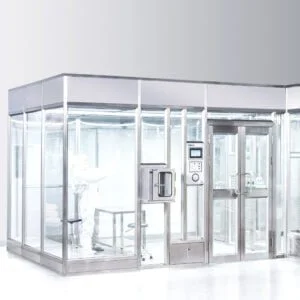
Pour les équipes chargées de mettre en place ou d'améliorer un environnement contrôlé autour du stand, il est utile de vérifier si les zones environnantes salle blanche modulaire L'infrastructure est conçue pour répondre aux mêmes exigences de classification que l'intérieur de la cabine, notamment lorsque celle-ci est destinée à constituer une zone de catégorie supérieure au sein d'une pièce de catégorie inférieure.
Le choix de la cabine le plus justifiable est celui effectué une fois que le processus a été décrit avec suffisamment de clarté pour définir une exigence de confinement spécifique. Cette exigence — exprimée sous la forme d’une classification ISO, d’une direction de pression, d’une plage de vitesse frontale adaptée au type de tâche et d’une configuration de filtre confirmée comme permettant de respecter la classe cible — détermine alors la conception de la cabine, et non l’inverse. Toute comparaison de cabines effectuée avant que ces paramètres ne soient figés revient à comparer du matériel à un objectif de performance indéfini, ce qui aboutit presque toujours à un cahier des charges devant être revu après l’installation.
Avant de valider un modèle de cabine, assurez-vous que le document décrivant la séquence des opérations et le cahier des charges de la cabine ont été comparés et validés par les personnes responsables à la fois des performances de confinement et de l’exploitation quotidienne. Si l’équipe chargée des installations n’a pas validé l’encombrement et l’alimentation électrique, et si l’équipe d’exploitation n’a pas confirmé que les procédures de nettoyage et de changement de production sont adaptées à la géométrie intérieure de la cabine, le cahier des charges n’est pas prêt à être validé définitivement — quelles que soient les performances de la cabine dans une installation de référence ailleurs.
Questions fréquemment posées
Q : Que se passe-t-il si la cabine d'échantillonnage est installée dans une pièce qui dispose déjà d'une classification de salle blanche définie ? La cabine doit-elle tout de même disposer de sa propre cible ISO distincte ?
R : Oui, la cabine doit disposer de sa propre classification ISO, distincte de celle de la salle environnante, car elle est généralement destinée à créer une zone de classe supérieure au sein d’un environnement ambiant de classe inférieure. La classification de la salle environnante définit la concentration de particules de fond que la cabine doit surpasser, et non le niveau de confinement que la cabine elle-même doit garantir. Si la salle est de classe ISO 7 et que le processus nécessite des conditions de classe ISO 5 au niveau du plan de travail, la pile de filtres, la vitesse frontale et le temps de récupération du débit d’air de la cabine doivent tous être spécifiés afin de maintenir cet objectif de classe 5 dans les conditions d’exploitation — ce qui doit être confirmé par des essais réalisés conformément aux seuils de concentration de particules de la norme ISO 14644-1:2015, et non pas simplement supposé sur la base de la certification des filtres.
Q : Une fois que les spécifications du stand sont validées et que l'installation est terminée, quelle est la première étape de qualification à ne pas négliger ?
R : La première étape permettant de déterminer si les spécifications validées reflètent réellement les conditions d’installation consiste à réaliser un test opérationnel de comptage de particules pendant l’exécution d’une séquence de tâches représentative — et non lors d’un test de référence en salle vide. La certification des filtres et la mesure de la vitesse frontale confirment les performances des composants ; elles ne confirment pas les performances de confinement en cas de perturbation réelle par de la poudre. La réalisation d’une qualification au cours de laquelle un opérateur effectue la séquence réelle d’échantillonnage ou de distribution, à l’aide de récipients représentatifs, permet de déterminer si la turbulence au niveau du plan de travail, le déplacement de la barrière ou les adaptations de portée compromettent le rideau d’air d’une manière qu’un test statique ne pourrait jamais détecter.
Q : Ces recommandations s'appliquent-elles également aux principes actifs pharmaceutiques hautement actifs (HPAPI), ou cette catégorie d'exposition nécessite-t-elle une approche totalement différente ?
R : En ce qui concerne les HPAPI, les recommandations formulées dans cet article couvrent les bases nécessaires, mais ne suffisent pas à elles seules. Les paramètres du processus — type de tâche, taille du conteneur, vitesse frontale, pile de filtres — doivent tout d’abord être définis, mais la manipulation des HPAPI nécessite généralement une évaluation de la fourchette d’exposition professionnelle (OEB) qui fixe un objectif de performance de confinement exprimé en microgrammes par mètre cube, et pas seulement une classification ISO des particules. Cet objectif peut orienter la conception vers des configurations à pression négative avec évacuation par conduits rigides, des systèmes de revêtement continu ou un confinement de type isolateur plutôt que vers une cabine d’échantillonnage à façade ouverte, en fonction de la limite d’exposition spécifique du composé. Une cabine d’échantillonnage constitue une solution appropriée pour une plage définie de niveaux d’exposition ; vérifier si le composé se situe dans cette plage est une condition préalable que l’article ne résout pas.
Q : Faut-il privilégier une cabine d'échantillonnage ou une unité à flux laminaire dédiée lorsque la priorité est la protection du produit plutôt que celle de l'opérateur ?
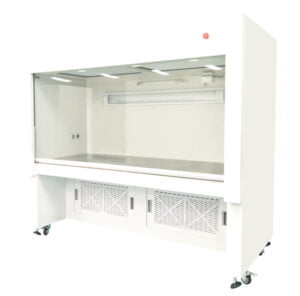
R : Lorsque la protection du produit est la priorité absolue et que le risque d’exposition de l’opérateur est faible, une unité à flux laminaire peut s’avérer le choix le plus approprié, car elle est optimisée pour un flux d’air unidirectionnel en surpression à la surface du produit plutôt que pour le confinement de la poudre en suspension. Une cabine d’échantillonnage configurée pour fonctionner en surpression peut protéger le produit, mais sa géométrie à façade ouverte et sa conception en rideau d’air reposent sur l’hypothèse que la manutention des matériaux générera une perturbation des particules — un compromis de conception qui ajoute de la complexité sans apporter d’avantage si l’objectif est simplement de protéger un produit stérile ou sensible contre la contamination environnementale. La décision dépend de la présence ou non d’une perturbation active de la poudre au cours du processus : si c’est le cas, la géométrie de confinement d’une cabine d’échantillonnage se justifie ; dans le cas contraire, une unité à flux laminaire assure la protection requise du produit grâce à une architecture de circulation d’air plus simple.
Q : Si la fréquence des lots est faible — disons, moins de cinq prélèvements par semaine —, l'analyse du coût total de possession change-t-elle suffisamment pour influencer le choix de la configuration de cabine à retenir ?
R : Oui, une faible fréquence de production modifie sensiblement la structure des coûts, mais ne doit pas servir à justifier le choix d'une cabine aux spécifications inférieures si les exigences en matière de confinement restent inchangées. L’avantage en termes de coûts d’exploitation d’une configuration compacte et de faible puissance devient plus pertinent lorsque la cabine fonctionne par courtes périodes plutôt qu’en continu sur plusieurs équipes : la différence entre une charge moteur de 0,35 kW et une charge de 7,5 kW est négligeable sur cinq courtes sessions par semaine, mais substantielle en cas de fonctionnement continu sur trois équipes. Cependant, la pile de filtres, le sens de la pression et la classification ISO visée sont déterminés par le niveau d’exposition à la poudre et les exigences réglementaires en matière de confinement, et non par la fréquence. Choisir une cabine moins performante sous prétexte que son utilisation est faible constitue une erreur de conception du confinement, et non une optimisation des coûts.