Dans les salles blanches, le transfert de matériaux constitue un défi permanent en matière de contrôle de la contamination. Le choix d'un mauvais type de boîte de transfert peut compromettre l'intégrité du produit, entraîner une non-conformité aux réglementations et nécessiter des modifications coûteuses. Le choix entre les systèmes statiques et dynamiques n'est pas simplement une décision budgétaire, mais un élément fondamental de votre stratégie de contrôle de la contamination.
Cette distinction a gagné en importance avec l'évolution des attentes réglementaires, telles que celles de l'annexe 1 révisée des BPF de l'UE, qui met l'accent sur une approche basée sur le risque pour les processus de transfert. Il est essentiel que les concepteurs d'installations, les professionnels de l'assurance qualité et les responsables opérationnels comprennent les huit principales différences en matière de conception, de performance et d'application pour pouvoir réaliser un investissement conforme et adapté qui protège à la fois le produit et le processus.
Boîte de passage statique ou dynamique : La différence de conception fondamentale
Définir la philosophie de l'ingénierie
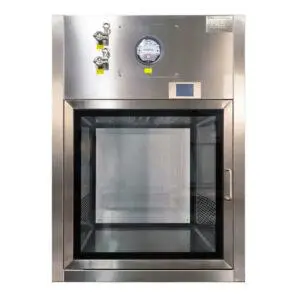
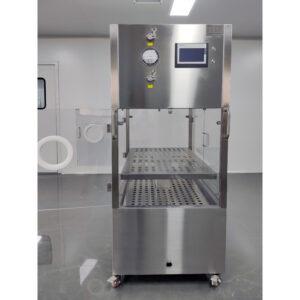
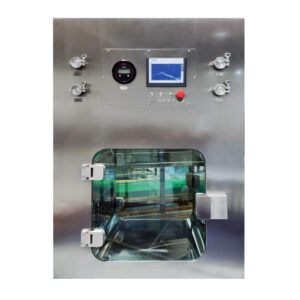
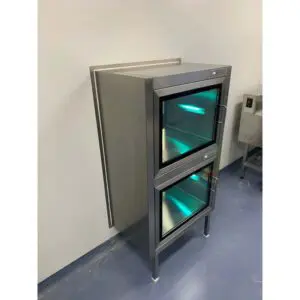
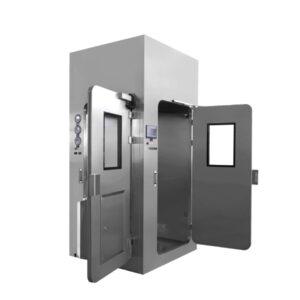
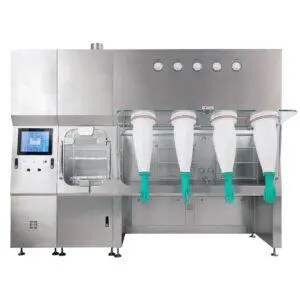
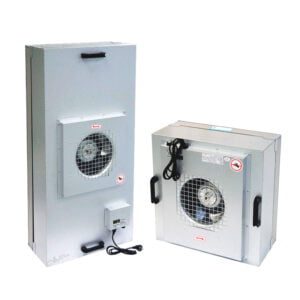
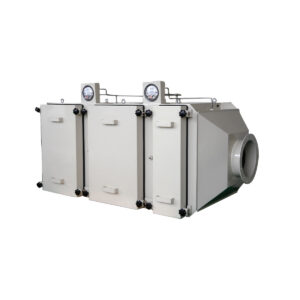
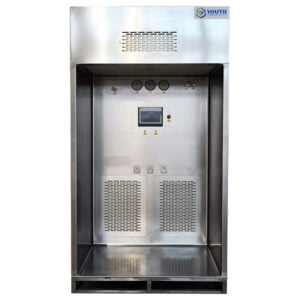
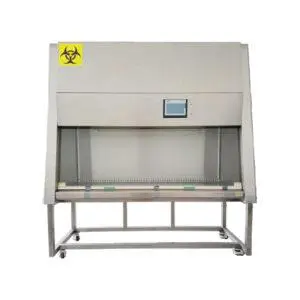
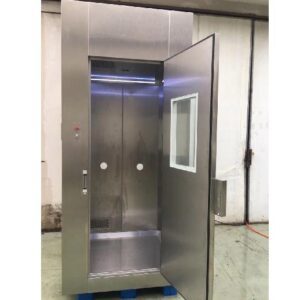
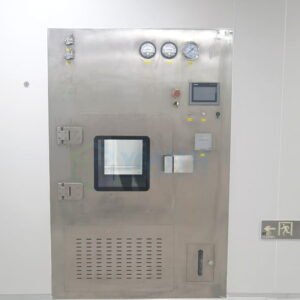
La divergence fondamentale est le contrôle passif par rapport au contrôle actif. Une boîte de passage statique est une chambre scellée et verrouillée. Elle agit comme une barrière physique, en s'appuyant sur des contrôles procéduraux tels que les cycles de décontamination UV-C entre les transferts. Il n'y a pas de système de circulation d'air intégré. À l'inverse, une boîte de passage dynamique est un système électromécanique actif. Il intègre une soufflerie et une filtration HEPA/ULPA pour générer un flux d'air laminaire unidirectionnel à l'intérieur de la chambre, purgeant continuellement les particules en suspension dans l'air.
L'impact sur la fonction et la forme
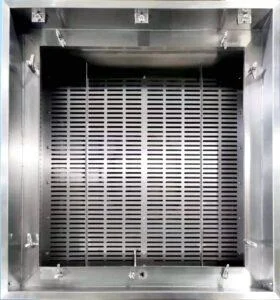
Cette philosophie de conception fondamentale dicte tous les aspects opérationnels. La simplicité de l'unité statique se traduit par un encombrement réduit et moins de composants. La complexité de l'unité dynamique nécessite de l'espace pour l'ensemble du ventilateur, les batteries de filtres et souvent un panneau de commande. Les performances de la boîte statique sont discontinues, liées à l'achèvement du cycle. Le caisson dynamique assure un lavage actif et continu, créant un micro-environnement prévisible de classe ISO 5. Il ne s'agit pas d'un simple détail technique, mais d'un changement fondamental dans la manière dont l'appareil s'intègre dans votre flux de travail et le protège.
De la conception aux performances attendues
Le choix de la conception fixe le plafond des performances. Un caisson statique ne peut pas créer un rideau d'air protecteur ou empêcher activement l'entrée de particules lors de l'ouverture des portes - son efficacité est procédurale. Un caisson dynamique est conçu précisément pour cela, fonctionnant comme un sas matériel miniature. Les experts de l'industrie recommandent de faire correspondre cette différence de conception directement à votre évaluation des risques : passive pour les transferts à faible risque et de même classe ; contrôle technique actif en cas de limites de classification ou de matériaux à haut risque.
Comparaison des coûts : Coût d'investissement, coût d'exploitation et coût total de possession
Analyse des dépenses d'investissement (CAPEX)
L'investissement initial varie considérablement. Les boîtes de passage statiques ont des coûts d'investissement plus faibles en raison de leur construction plus simple - essentiellement une boîte en acier inoxydable avec des verrouillages et des lampes UV. Les caissons dynamiques nécessitent un investissement initial plus important pour couvrir le moteur de soufflerie intégré, les filtres HEPA/ULPA, les systèmes de contrôle sophistiqués et les instruments tels que les jauges de pression différentielle. Nous avons comparé plusieurs modèles et constaté que le CAPEX d'une unité dynamique peut être deux à trois fois supérieur à celui d'une unité statique de taille comparable, ce qui reflète directement sa capacité de performance technique.
Comprendre les coûts d'exploitation et de maintenance
Les coûts d'exploitation divergent après l'installation. Les boîtes statiques consomment peu d'énergie, principalement pour les lampes UV et les dispositifs de verrouillage des portes. Leur entretien est simple et se limite au remplacement périodique des lampes UV. Les caissons dynamiques ont des coûts énergétiques permanents plus élevés en raison du fonctionnement continu du moteur de la soufflerie. La maintenance est plus rigoureuse et prédictive, centrée sur la surveillance de la charge du filtre via la pression différentielle et la programmation du remplacement des filtres HEPA avant qu'ils ne tombent en panne. Cela nécessite un personnel formé et des temps d'arrêt planifiés.
Calculer le coût total de possession (TCO)
Une véritable comparaison financière doit s'étendre au coût total de possession, qui inclut la validation. Selon les recherches menées par les principaux fournisseurs de services de validation, la qualification de la boîte de passage dynamique est nettement plus coûteuse. Elle nécessite des tests d'intégrité HEPA (DOP/PAO), une cartographie de la vitesse et de l'uniformité de l'air, ainsi qu'une vérification du nombre de particules, par ISO 14644-3. La validation des boîtes statiques est moins complexe. Cependant, le risque le plus important en termes de coûts, souvent négligé, est de choisir une boîte statique là où une boîte dynamique est obligatoire - une décision qui peut entraîner une non-conformité, des arrêts de production et des pertes de lots dépassant de loin les économies de capital.
Quel système offre des performances supérieures en matière de contrôle de la contamination ?
Le mécanisme de contrôle
La performance est dictée par la conception de base. Les boîtes de passage statiques permettent de contrôler la contamination grâce à l'isolement des procédures et à la désinfection programmée. Leur efficacité est discontinue et dépend fortement de l'adhésion de l'opérateur aux protocoles de cycle. Les boîtes de passage dynamiques utilisent un flux d'air laminaire continu filtré par HEPA comme principal contrôle technique. Ce système actif permet de nettoyer les particules en temps réel et d'établir un rideau d'air protecteur à travers l'ouverture de la chambre pendant les transferts.
Performance validée et automatisée
L'un des principaux avantages du système dynamique est l'automatisation des étapes critiques. Parmi les détails facilement négligés, on peut citer la façon dont les boîtes dynamiques utilisent des minuteries programmables pour imposer un cycle de purge obligatoire - généralement de 2 à 5 minutes - entre les opérations de la porte. Cette étape automatisée supprime la dépendance à la discipline de l'opérateur, garantissant une période de décontamination cohérente et validée à chaque fois, ce qui constitue la pierre angulaire des attentes modernes en matière d'intégrité des données dans les environnements GMP.
Comparaison des performances dans la pratique
Le tableau ci-dessous résume la comparaison directe des performances entre les deux systèmes, en soulignant pourquoi les boîtes dynamiques sont spécifiées pour les transferts critiques.
| Aspect performance | Boîte de passage statique | Boîte de passage dynamique |
|---|---|---|
| Contrôle primaire | Isolement procédural | Contrôle de l'ingénierie |
| Débit d'air | Aucun (passif) | Unidirectionnel, laminaire |
| Élimination des particules | Discontinu (cycles UV) | Lavage HEPA en continu |
| Environnement interne | Chambre d'ambiance | Microenvironnement de la classe ISO 5 |
| Automatisation des étapes critiques | Manuel | Purge programmée (2-5 min) |
Source : Annexe 1 des BPF de l'UE : Fabrication de médicaments stériles. Cette directive traite explicitement de l'application et de la qualification des boîtes de passage statiques et dynamiques, en définissant leur rôle dans le cadre d'une stratégie de contrôle de la contamination et les attentes en matière de performances pour chaque type.
Application Fit : Correspondance entre le type de boîte de passage et les transferts de classe de salle blanche
La règle de décision primaire
Le facteur le plus critique et non négociable est la classification de propreté des zones connectées. Les boîtes de passage statiques ne conviennent que pour les transferts entre des zones adjacentes de l'usine. même Classification ISO, par exemple ISO 7 à ISO 7. Ils sont conçus pour les articles à faible risque, tels que les marchandises emballées ou les outils, pour lesquels le contrôle des procédures est suffisant. Les boîtes de passage dynamiques sont obligatoires pour les transferts entre zones de différents Les produits peuvent être classifiés, par exemple d'ISO 8 à ISO 6 ou d'un couloir à une ligne de remplissage ISO 5.
Justification basée sur le risque de contamination
Cette règle a pour but d'empêcher l'entrée de particules. Le flux d'air laminaire d'un caisson dynamique agit comme une barrière, protégeant la zone de classification supérieure de la charge particulaire de la zone moins propre. Il est donc essentiel pour le transfert de matières premières, de composants ou de travaux en cours dans des environnements critiques. L'utilisation d'un caisson statique dans ce scénario enfreint les principes fondamentaux de contrôle de la contamination énoncés dans des normes telles que USP <797> Préparations pharmaceutiques - Préparations stériles, qui impose des contrôles pour maintenir la stérilité de l'environnement des préparations magistrales.
Scénarios d'application et recommandations
Une cartographie claire des applications pendant la phase de conception est essentielle pour éviter le piège de la conformité et de la sous-spécification. Le tableau suivant fournit une matrice de décision claire basée sur le scénario de transfert et le risque.
| Scénario de transfert | Type recommandé | Raison d'être |
|---|---|---|
| Même classification (par exemple, ISO 7 à ISO 7) | Boîte de passage statique | Risque faible, contrôle procédural suffisant |
| Classification différente (par exemple, ISO 8 à ISO 6) | Boîte de passage dynamique | Obligatoire pour la prévention de la pénétration des particules |
| Articles à faible risque (produits emballés) | Boîte de passage statique | Convient pour les transferts de même classe |
| Matières à haut risque (composants bruts) | Boîte de passage dynamique | Essentiel pour les environnements critiques |
Source : Annexe 1 des BPF de l'UE : Fabrication de médicaments stériles. La ligne directrice fournit des exigences pour les dispositifs de transfert, faisant de la différence de classification entre les zones d'émission et de réception un facteur principal et non négociable dans la sélection du type de boîte de passage approprié.
Comparaison des exigences en matière de validation, de conformité et de maintenance
Rigueur et portée de la validation
La complexité de la validation est directement liée à la complexité du système. La validation de la boîte de passage statique est relativement simple et se concentre sur la fonctionnalité du verrouillage de la porte, l'étalonnage de l'intensité de la lumière UV et la précision de la minuterie, ainsi que sur l'étanchéité de la chambre. La validation du caisson de passage dynamique est très poussée. Elle doit démontrer l'intégrité du filtre HEPA par des tests DOP/PAO, confirmer la vitesse et l'uniformité de l'air sur la face du filtre, vérifier le nombre de particules pour atteindre la classe ISO interne spécifiée, et souvent inclure des tests de récupération.
Le rôle des instruments critiques
Chaque système repose sur des instruments différents pour la vérification et le contrôle des performances. Pour les boîtes statiques, un appareil de mesure de la lumière UV calibré est essentiel. Pour les caissons dynamiques, la jauge de pression différentielle sur le filtre HEPA est l'outil de maintenance prédictive le plus important. D'après notre expérience, la surveillance de la tendance de la chute de pression permet de programmer de manière proactive le remplacement du filtre, évitant ainsi des défaillances inattendues susceptibles d'interrompre la production et de compromettre l'intégrité des lots.
Comparaison des régimes d'entretien
La charge d'entretien reflète la différence de conception. La maintenance des boîtes statiques est peu fréquente et simple, et consiste principalement à remplacer la lampe UV. La maintenance de la boîte dynamique est une activité programmée et rigoureuse. Elle comprend le remplacement des filtres, la vérification du moteur du ventilateur et l'étalonnage des capteurs et des minuteries. Le tableau suivant compare les exigences de base, soulignant la nécessité d'une planification appropriée des ressources.
| Exigence | Boîte de passage statique | Boîte de passage dynamique |
|---|---|---|
| Focus sur la validation de base | Verrouillage, intensité des UV | Intégrité HEPA, vitesse de l'air |
| Norme du test clé | Spécifications du fabricant | ISO 14644-3 |
| Instrument critique | Compteur de lumière UV | Manomètre différentiel |
| Complexité de la maintenance | Minime | Rigoureuse, prédictive |
| Tâche principale de maintenance | Remplacement de la lampe | Calendrier de remplacement des filtres |
Source : ISO 14644-3 : Salles propres et environnements contrôlés apparentés - Partie 3 : Méthodes d'essai. Cette norme spécifie les méthodes d'essai, telles que l'essai d'intégrité du filtre HEPA (DOP/PAO) et la mesure de la vitesse de l'air, nécessaires à la validation complète des caissons de passage dynamiques.
Considérations relatives à l'espace, à l'intégration et au flux de travail opérationnel
Complexité de l'intégration des installations
L'intégration physique et utilitaire diffère sensiblement. Les boîtes de passage statiques ont un faible encombrement et des besoins simples - généralement une alimentation électrique pour les verrouillages et les lampes UV. Les unités dynamiques sont plus complexes. Leur conception, qu'elles soient à recirculation (autonomes) ou à passage unique (évacuation dans la pièce ou connexion au système CVC de l'établissement), a un impact sur les charges électriques, la dissipation de la chaleur et les exigences potentielles en matière de conduits. Il est donc nécessaire de collaborer avec les ingénieurs de l'établissement dès la phase de conception.
Impact sur le déroulement des opérations
Le type de boîte de passage influence directement les procédures opérationnelles standard (POS). Les boîtes statiques dépendent des opérateurs pour lancer et achever les cycles UV, ce qui introduit une variable dépendant de facteurs humains. Les boîtes dynamiques dotées de cycles de purge automatisés normalisent le temps de transfert. Cette automatisation améliore non seulement la cohérence, mais permet également l'enregistrement des cycles, ce qui favorise les pistes d'audit et s'inscrit dans la tendance des systèmes “intelligents” et de l'intégrité des données dans la fabrication pharmaceutique.
Planification de l'installation et des besoins futurs
Il est prudent d'envisager une certaine flexibilité pour l'avenir. Alors qu'un boîtier statique est relativement simple à installer, une unité dynamique peut nécessiter un emplacement plus stratégique en ce qui concerne l'accès pour le remplacement des filtres et l'entretien. En outre, lors de l'évaluation d'options telles qu'un unité de filtration du ventilateur de recirculation pour les zones propres localisées, Les mêmes principes de circulation de l'air, de validation et d'intégration s'appliquent, ce qui souligne l'importance d'un fournisseur qui comprend l'intégration totale du système.
Statique ou dynamique : Avantages, inconvénients et critères de décision clés
Résumé des avantages et des limites
Les avantages et les inconvénients découlent directement de la philosophie de base de la conception. Les boîtes de passage statiques offrent un faible coût d'investissement, une simplicité de fonctionnement et une maintenance minimale. Leur limite est de ne fournir qu'un contrôle discontinu et procédural de la contamination. Les boîtes de passage dynamiques offrent un contrôle technique actif et validé, ainsi qu'une protection supérieure pour les transferts interclassifications. En contrepartie, les coûts d'investissement et d'exploitation sont plus élevés et le système est plus complexe.
Critères de décision essentiels
La sélection doit se faire sur la base d'une hiérarchie de critères. Le premier et le plus important est la différence de classification entre les zones. Le deuxième est une évaluation formelle des risques liés aux matériaux transférés. Troisièmement, le budget disponible pour la validation initiale et la maintenance à long terme. Quatrièmement, la stratégie opérationnelle et de conformité à long terme de l'installation. Un cinquième critère émergent est la nécessité d'une décontamination avancée, certaines boîtes dynamiques offrant désormais des cycles VHP intégrés pour les applications à haut risque.
Aperçu comparatif pour les parties prenantes
Pour faciliter les discussions entre les équipes chargées de l'ingénierie, de la qualité et des achats, il est essentiel de disposer d'une vue d'ensemble comparative claire. Le tableau ci-dessous résume les principaux facteurs de décision.
| Critères | Boîte de passage statique | Boîte de passage dynamique |
|---|---|---|
| Contrôle de la contamination | Discontinu, procédural | Ingénierie active et validée |
| Coût opérationnel | Faible | Plus élevé |
| Maintenance | Simple, basse fréquence | Complexe, programmé |
| Meilleure application | Transferts de même classe | Transferts inter-classification |
| Complexité de l'intégration | Faible (puissance simple) | Élevée (CVC/charge électrique) |
Source : Documentation technique et spécifications industrielles.
Choisir la bonne boîte de passage : Un cadre de sélection étape par étape
Étape 1 : Cartographier les flux de matières et les classifications
Commencez par dresser une carte définitive de tous les points de transfert de matières dans votre établissement. Pour chaque point, documentez la classification ISO des zones d'expédition et de réception. Cette première étape permettra de classer immédiatement chaque transfert dans la catégorie “même classe” (candidat statique) ou “classification croisée” (dynamique requise), conformément à la règle principale établie dans les lignes directrices réglementaires.
Étape 2 : Procéder à une évaluation formelle des risques
Pour chaque point de transfert, évaluez le profil de risque des matériaux. Tenez compte de facteurs tels que la production de particules, l'état de stérilité et la criticité du processus de réception. Cette évaluation permettra de valider ou de remettre en question la sélection initiale basée sur la classification, en veillant à ce que le niveau de contrôle corresponde au risque.
Étape 3 : Évaluer les coûts des installations et du cycle de vie
Analyser les contraintes pratiques d'intégration : espace disponible, capacité électrique et interactions entre les systèmes de chauffage, de ventilation et de climatisation. Modélisez ensuite le coût total de possession. Utilisez les données de comparaison des coûts pour prévoir non seulement les dépenses d'investissement, mais aussi les coûts à long terme de validation, d'énergie, de remplacement des filtres et de main-d'œuvre d'entretien pour chaque option.
Étape 4 : Évaluation des fournisseurs et des technologies
Enfin, lors de l'évaluation des fournisseurs, il faut aller au-delà des spécifications de base. Évaluez leur capacité de personnalisation, la qualité de leur support d'intégration et la robustesse de leurs services de cycle de vie. Tenez compte des besoins futurs, tels que les capacités d'enregistrement des données ou la compatibilité avec les méthodes de décontamination avancées, afin de vous assurer que votre investissement reste viable à mesure que les processus et les réglementations évoluent.
Le choix entre les boîtes de passage statiques et dynamiques est fondamental pour l'intégrité de la salle blanche. Donnez la priorité au différentiel de classification en tant que point de départ non négociable, puis ajoutez le risque matériel et l'analyse du coût total du cycle de vie. Cette approche structurée fait passer la sélection d'un simple achat d'équipement à une décision stratégique de conformité et de contrôle de la contamination.
Vous avez besoin de conseils professionnels pour spécifier et valider la bonne solution de boîte de passage pour vos transferts en salle blanche ? Les ingénieurs en contrôle de la contamination de JEUNESSE peut vous aider à appliquer ce cadre à l'agencement spécifique de vos installations et à vos flux de matières. Contactez-nous pour discuter des exigences de votre projet et vous assurer que vos processus de transfert sont à la fois conformes et optimisés.
Questions fréquemment posées
Q : Quand une boîte de passage dynamique est-elle obligatoire pour assurer la conformité réglementaire ?
R : Une boîte de passage dynamique est une exigence stricte pour les transferts entre salles blanches de différentes classifications ISO, comme le déplacement de matériaux d'une zone ISO 8 à une zone ISO 6. Il s'agit d'une limite réglementaire fondamentale pour empêcher l'entrée de particules dans la zone plus propre. Pour les transferts de même classe, une unité statique peut être autorisée. Cela signifie que votre cartographie des flux de matières doit identifier avec certitude la classification des deux zones connectées avant qu'une sélection puisse être faite.
Q : En quoi l'effort de validation diffère-t-il selon qu'il s'agit de boîtes de passage statiques ou dynamiques ?
R : La rigueur de la validation dépend directement de la complexité du système. La validation des caissons statiques se concentre sur le verrouillage des portes, l'intensité des UV et l'intégrité de la chambre. La validation des caissons dynamiques est beaucoup plus poussée et exige des tests d'intégrité des filtres HEPA, des vérifications de la vitesse et de l'uniformité du flux d'air, le comptage des particules et des tests de récupération selon des normes telles que ISO 14644-3. Cela signifie que les installations planifiant des unités dynamiques doivent allouer beaucoup plus de budget et de temps à la qualification initiale et à la revalidation périodique dans leur plan opérationnel.
Q : Quels sont les principaux facteurs de coût dans le coût total de possession d'une boîte de passage dynamique ?
R : Outre le coût d'investissement plus élevé pour les soufflantes et les commandes, le coût total de possession d'une unité dynamique comprend la consommation d'énergie continue, le remplacement périodique des filtres HEPA et les dépenses substantielles liées à son protocole de validation plus rigoureux. En revanche, les coûts d'exploitation et de maintenance d'un caisson statique sont minimes. Pour les projets où le budget opérationnel à long terme est une contrainte, vous devriez modéliser ces coûts récurrents de validation et de remplacement des filtres sur une période de 5 à 10 ans.
Q : Comment une boîte de passage dynamique peut-elle améliorer la cohérence du flux de travail opérationnel ?
R : Il utilise un cycle de purge automatisé et programmable (par exemple, 2 à 5 minutes) qui doit être terminé avant que la porte intérieure ne se déverrouille. Cela permet d'appliquer une étape de décontamination obligatoire, de ne plus dépendre de la discipline de l'opérateur et de s'assurer que chaque transfert répond à une norme validée. Ce contrôle automatisé soutient les initiatives d'intégrité des données en fournissant un événement enregistré pour les pistes d'audit. Si votre entreprise a du mal à respecter les procédures, ce contrôle technique normalise le processus de transfert.
Q : Quels sont les problèmes d'intégration des installations auxquels il faut s'attendre avec une boîte de passage dynamique ?
R : Les unités dynamiques nécessitent une intégration plus complexe que les boîtiers statiques. Vous devez déterminer si une conception à recirculation ou à passage unique (avec conduit) est nécessaire, ce qui a un impact sur les charges électriques, la dissipation de la chaleur et les éventuels conduits de chauffage, de ventilation et de climatisation. Des conseils sur l'intégration de ces équipements dans la conception des salles blanches sont donnés dans les documents suivants ISO 14644-4. Cela signifie qu'une collaboration précoce avec les ingénieurs des installations est essentielle pour planifier l'espace, les services publics et les interactions entre les systèmes.
Q : Quelle pratique d'entretien est essentielle pour prévenir les défaillances de la boîte de passage dynamique ?
R : Il est essentiel de surveiller de manière proactive la jauge de pression différentielle du filtre HEPA. Cette jauge indique la charge du filtre et sert d'outil de maintenance prédictive pour programmer les remplacements avant qu'un filtre obstrué ne tombe en panne, ce qui pourrait interrompre la production ou compromettre l'intégrité du lot. Les boîtes statiques n'ont pas de composant critique équivalent. Pour les installations qui accordent la priorité au temps de fonctionnement, il convient d'établir un calendrier de maintenance préventive strict basé sur les tendances de la pression différentielle plutôt que sur des intervalles de temps fixes.
Q : Comment les lignes directrices de l'UE en matière de BPF abordent-elles l'utilisation des boîtes de passage pour la fabrication stérile ?
A : Annexe 1 des BPF de l'UE traite explicitement de la conception et de la qualification des dispositifs de transfert tels que les boîtes de passage dans le cadre d'une stratégie de contrôle de la contamination. Elle décrit les attentes pour les types statiques et dynamiques, en insistant sur le fait que leur sélection et leur utilisation doivent être justifiées par une évaluation des risques. Cela signifie que votre protocole de qualification et votre contrôle de routine doivent s'aligner sur les principes de cette directive pour protéger la stérilité des produits pendant les transferts de matériaux.
Contenu connexe :
- VHP et boîtes à passes traditionnelles : Comparaison des principales différences
- Prévisions du marché de la boîte de passage VHP : Analyse de la croissance 2025-2030
- Validation de la boîte de passage VHP : Liste de contrôle de la conformité IQ/OQ/PQ
- Exigences relatives aux boîtiers HEPA pour l'aérospatiale et normes de la NASA
- Lignes directrices pour la fabrication de caissons HEPA sur mesure
- Contrôle de la pression de la boîte de passage VHP : Conformité à la norme ISO 14644
- Le guide complet de sélection et de mise en œuvre des boîtes de passage pour le contrôle de la contamination en salle blanche : édition 2025 avec cadre de conformité aux BPF et à l'ISO 14644
- Applications de la boîte de passage VHP en laboratoire : Meilleures pratiques en matière de recherche
- Systèmes CVC d'hôpitaux : Guide de mise en œuvre du boîtier HEPA