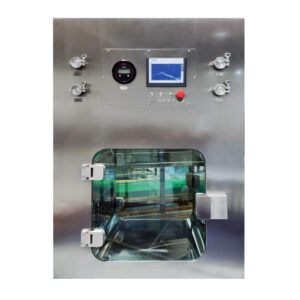
Le choix d’une orientation de flux d’air inadaptée pour un processus en paillasse n’est que rarement évident jusqu’à ce qu’un problème survienne : un incident de contamination d’un lot, un comptage de particules non conforme lors de la qualification, ou encore une unité qui ne peut physiquement pas être installée contre le mur prévu sans bloquer l’accès pour la maintenance. Ces défaillances ne sont pas fortuites ; elles trouvent leur origine dans des choix géométriques effectués avant même que quiconque ait vérifié la hauteur des cuves, mesuré l’espace libre à l’arrière ou cartographié les zones que les opérateurs seraient amenés à atteindre lors de la tâche proprement dite. Le choix entre un flux laminaire horizontal et vertical revêt une importance capitale précisément parce que ces deux orientations gèrent différemment la géométrie du produit, le positionnement de l’opérateur et l’agencement de la salle ; les considérer comme des options interchangeables conduit à des solutions de contournement chroniques plutôt qu’à une solution unique au moment de l’achat. En prenant connaissance des considérations ci-dessous, vous serez mieux à même d’adapter la direction du flux d’air à la géométrie spécifique de votre tâche avant l’arrivée de l’unité sur site.
Tâches à façade ouverte qui tirent parti d'un flux d'air horizontal
Le flux laminaire horizontal est particulièrement adapté à une catégorie spécifique de tâches de laboratoire : celles où le produit ou l’échantillon présente une grande surface horizontale et une section transversale étroite perpendiculaire à la direction du flux d’air. Cette géométrie permet au flux d’air de balayer la face la plus large du produit plutôt que d’être contraint de le contourner, ce qui garantit une élimination constante des particules dans toute la zone de travail. Les travaux sur boîtes de Pétri, la manipulation de plaquettes plates, la préparation de lames et autres tâches similaires à profil bas répondent directement à ce critère.
La règle pratique à suivre est simple : si le travail reste à faible hauteur, centré sur l'établi, et réparti latéralement plutôt qu'empilé verticalement, le flux horizontal s'impose. Lorsque la tâche consiste à saisir, repositionner ou manipuler des objets à hauteur d'établi sans avoir à s'enfoncer profondément dans la zone de travail, les mains de l'opérateur restent en aval de l'échantillon, ce qui constitue un avantage structurel en termes d'accès par rapport aux configurations verticales.
Ce critère perd de sa pertinence lorsque l'acheteur le considère comme une préférence générale en matière de salle blanche plutôt que comme une adaptation spécifique à une géométrie donnée. Le flux horizontal n'offre pas un avantage universel en termes de protection ; il offre un avantage géométrique pour un profil de tâches bien défini. Tenter de l'étendre à des charges plus hautes, à des tâches nécessitant une grande profondeur d'intervention ou à des processus générant des sous-produits en suspension dans l'air introduit des risques pour lesquels la conception n'a pas été pensée.
Emplacement arrière du filtre HEPA assurant la protection des chargements de produits à profil bas
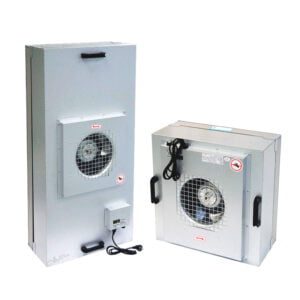
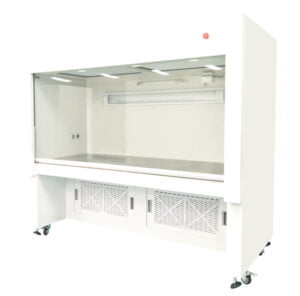
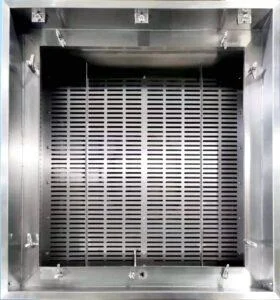
C'est l'emplacement du filtre HEPA à l'arrière qui rend le flux horizontal efficace pour les tâches nécessitant une grande précaution vis-à-vis du produit et un encombrement réduit. L'air filtré circulant depuis le filtre arrière directement vers l'opérateur, tout objet posé sur la surface de travail de l'établi est en permanence baigné d'air pur avant que cet air n'atteigne les mains de l'opérateur. Aucun flux d'air ne traverse d'abord l'opérateur avant d'atteindre le produit : la géométrie du système assure la protection du produit de manière structurelle, sans dépendre d'une discipline stricte de la part de l'opérateur.
Cette protection est également rapide. Dans des conditions normales d’exploitation, le taux de renouvellement de l’air sur la profondeur d’un établi standard est suffisamment élevé pour éliminer les particules en bien moins de deux secondes ; c’est pourquoi les unités horizontales donnent de bons résultats dans les processus où de brèves perturbations — mise en place d’outils, légers repositionnements — doivent être résolues rapidement sans risque de contamination résiduelle.
| Caractéristique | Détail | Quelles sont les implications pour la planification ? |
|---|---|---|
| Balayage de flux d'air | Le flux d'air de l'arrière vers l'avant garantit un flux constant d'air pur entre le filtre HEPA et le produit, ce qui permet de maintenir l'objet à traiter en amont des mains de l'opérateur. | La protection des produits est optimale lorsque les charges sont légères, peu profondes et centrées sur le banc. |
| Taux de renouvellement de l'air | Avec un débit d'air standard de 90 LFPM et une zone de travail de 30 pouces, le renouvellement complet de l'air s'effectue en moins de deux secondes. | Élimination extrêmement rapide des particules ; particulièrement utile pour les procédés sensibles à la contamination atmosphérique. |
| Vulnérabilité liée au filtre | Le filtre HEPA arrière risque d'être endommagé par des objets volumineux ou par un chargement imprudent. Une grille de protection supplémentaire est parfois nécessaire. | La planification de l'installation et de l'utilisation doit tenir compte d'un éventuel blindage des filtres sans perturber la circulation de l'air. |
Ce que la ligne du tableau consacrée à la vulnérabilité du filtre indique concrètement, c’est que la position du filtre arrière, bien qu’elle soit bénéfique pour la direction du flux d’air, l’expose à des manipulations imprudentes lors du chargement. Le fait de faire glisser un plateau lourd directement contre la face du filtre, ou de placer un objet volumineux sur le plan de travail sans vérifier sa profondeur, peut endommager le média HEPA d’une manière qui n’est pas immédiatement visible, mais qui apparaîtra lors des tests de comptage de particules. Une grille de protection secondaire réduit ce risque, mais il s’agit d’une mesure d’atténuation à envisager au moment de la configuration ou de l’installation, plutôt que d’y penser après coup lorsque l’unité est déjà en service.
Les obstacles situés à l'avant qui empêchent un balayage complet
L'efficacité du flux horizontal sur un produit de faible hauteur dépend entièrement du maintien d'un flux d'air ininterrompu de l'arrière vers l'avant. Tout objet placé dans ce flux — en particulier un article volumineux, haut ou large situé près du bord avant du banc — peut perturber cette continuité de manière plus grave qu'il n'y paraît.
Les obstacles de grande taille présents dans le trajet horizontal du flux d’air peuvent créer des sillages turbulents en aval qui aspirent l’air ambiant de la pièce plutôt que l’air filtré provenant de l’arrière. Cette aspiration va à l’encontre de l’objectif de la filtration HEPA et introduit des particules non contrôlées directement au-dessus de la zone de production. Cet effet n’est ni systématique ni instantané dans tous les cas de figure, mais il s’agit d’un risque de défaillance réaliste qui s’accumule au fil des tâches répétées, et qui passe souvent inaperçu jusqu’à ce qu’un comptage de particules ou une enquête sur la contamination oblige à revoir les pratiques au poste de travail.
La solution pratique est simple : utiliser des outils de petite taille, placer les objets à hauteur basse et éviter de positionner à l’avant de l’établi tout élément formant une surface d’obstacle perpendiculaire à la direction du flux d’air. L'utilisation d'instruments plus petits et le repositionnement des objets de manière à ce que leur face la plus étroite soit tournée vers l'air entrant permettent de réduire les turbulences. Il s'agit là d'une question de discipline opérationnelle, et non d'une exigence de conformité, mais c'est un domaine où des habitudes négligentes dégradent progressivement la protection — et où un incident de contamination peut ne pas être attribuable à une seule infraction, mais à une perturbation chronique de faible ampleur du nettoyage.
C'est également sur le bord avant que les opérateurs posent instinctivement les objets qu'ils s'apprêtent à utiliser ou qu'ils viennent de finir d'utiliser. Cette habitude, courante sur les bancs encombrés, est précisément ce qui perturbe la fluidité du mouvement lorsque des boîtes, des bouchons de bouteille ou des coffrets à outils se retrouvent sur le chemin de déchargement, même brièvement.
Avantages de l'accès horizontal par rapport à la flexibilité du chargement vertical
La comparaison entre les flux horizontaux et verticaux est souvent présentée comme une question de préférence, mais les différences entre les deux relèvent en réalité de compromis techniques ayant des conséquences spécifiques à chaque tâche. Chaque configuration permet de mieux répondre à un ensemble différent de contraintes physiques, et aucune n'est universellement supérieure à l'autre.
| Aspect | Écoulement laminaire horizontal | Écoulement laminaire vertical |
|---|---|---|
| Risque de contamination des mains de l'opérateur | Les mains et les gants restent en aval de l'échantillon, ce qui réduit le risque d'introduire une contamination dans le produit. | Les mains se trouvent généralement en amont, ce qui augmente le risque de contamination à moins de respecter scrupuleusement le positionnement. |
| Hauteur libre et profondeur de l'espace de travail | Permet un dégagement supérieur plus important et un espace de travail utile plus profond, ce qui permet de s'adapter à un plus grand nombre de configurations d'établi. | Encombrement et profondeur réduits ; mieux adapté aux situations où une manutention verticale compacte est acceptable. |
La différence de position des mains a pour conséquence, en aval, que le flux horizontal allège la contrainte de discipline imposée aux opérateurs pour les tâches de routine. Les mains pénétrant dans la zone de travail par l’avant et restant en aval, une erreur momentanée de position des mains est moins susceptible de déposer des contaminants directement sur le produit. Le flux vertical exige une discipline spatiale plus stricte pour maintenir le même niveau de protection, en particulier lorsque l’opérateur prélève des articles au centre ou à l’arrière de la table de travail.
L'avantage en termes de hauteur libre et de profondeur est particulièrement important lorsque le travail implique des équipements qui ne rentrent pas parfaitement sous le déflecteur d'une unité verticale ou lorsque la configuration de l'établi doit offrir une certaine flexibilité pour s'adapter à différents types de tâches. Les unités horizontales n'imposent pas de limite de hauteur à la zone de travail, ce qui peut simplifier la mise en place des instruments et des accessoires. En contrepartie, cet espace libre en hauteur n'offre aucune protection aux récipients de grande hauteur : le flux d'air ne peut tout simplement pas circuler de manière uniforme autour d'une charge qui dépasse la géométrie du flux. Pour un hotte à flux laminaire Dans les applications où le profil du navire doit rester bas et où l'accès aux bancs constitue la principale contrainte, une géométrie horizontale permet souvent de résoudre le problème d'agencement de manière plus élégante que les alternatives verticales.
Les limites d'espace libre à l'arrière qui compliquent la planification de l'installation
L'emplacement du ventilateur et du filtre à l'arrière d'un appareil horizontal impose une contrainte d'encombrement souvent sous-estimée lors de l'achat. Contrairement à une armoire verticale, cet appareil ne peut pas être placé directement contre un mur ; il nécessite un espace libre à l'arrière pour l'admission d'air et, selon le modèle, peut également nécessiter un accès latéral pour l'entretien et le remplacement du filtre.
Cela pose un véritable problème d'installation lorsqu'un acheteur choisit un appareil horizontal destiné à s'intégrer dans un plan de travail existant ou contre un mur de laboratoire sans tenir compte de ce retrait. L'unité est livrée, ses dimensions sont vérifiées par rapport au plan de travail, et l'espace libre requis à l'arrière entre en conflit avec la position du mur — ce qui nécessite soit de repositionner le plan de travail, soit de modifier le mur, soit de trouver une solution de contournement opérationnelle qui implique souvent que l'unité soit placée en avant, ce qui perturbe l'organisation prévue du flux de travail. Ces modifications sont évitables, mais elles nécessitent de vérifier les exigences d'espace libre à l'arrière et sur les côtés dès la phase de spécification, plutôt qu'à la livraison.
Cette contrainte a également des implications en termes d’encombrement au sol. Étant donné que le boîtier du ventilateur et l’ensemble filtre dépassent derrière la surface de travail, la profondeur totale de la paillasse nécessaire pour accueillir un appareil horizontal est supérieure à ce que laisse supposer la profondeur visible de la surface de travail. Dans les laboratoires exiguës ou les pièces où les rangées de paillasses ont déjà été dimensionnées, cette profondeur supplémentaire peut ne pas être disponible. Les acheteurs qui considèrent la dimension interne de la surface de travail comme l’encombrement total constatent systématiquement ce décalage une fois la commande passée. La planification de l’accès pour l’entretien, notamment pour le remplacement du filtre, constitue un point à vérifier séparément : les modèles à accès arrière nécessitent un espace libre derrière l’unité qui peut ne pas s’aligner avec les équipements ou les rayonnages adjacents.
Manutention de charges de grande hauteur qui privilégie le flux descendant vertical
L'avantage géométrique qui rend l'écoulement horizontal efficace pour les opérations à faible hauteur devient un inconvénient dès que la hauteur de la cuve ou le volume de la charge augmente. Il s'agit là du seuil le plus évident dans le choix entre un écoulement horizontal et un écoulement vertical, et il convient de le considérer comme un critère strict plutôt que comme une simple préférence.
| Condition entraînant un choix vertical | Risques liés à l'écoulement laminaire horizontal | Pourquoi le flux descendant vertical est-il préférable ? |
|---|---|---|
| Les objets hauts ou volumineux qui gênent la zone de travail | Les objets volumineux perturbent le flux d'air de l'arrière vers l'avant, créant des zones de turbulence qui aspirent les particules en suspension dans l'air et compromettent la protection des produits. | L'air pur circule vers le bas tout autour de l'objet, ce qui réduit les zones non couvertes et garantit une propreté homogène. |
| Le procédé génère des fumées, des vapeurs ou des poudres fines | Le flux horizontal est conçu pour les matières non dangereuses ; les contaminants en suspension dans l'air peuvent être entraînés dans la zone respiratoire de l'opérateur ou se propager dans toute la zone de travail. | Le flux vertical offre une meilleure confinement des substances dangereuses en suspension dans l'air, ce qui contribue à la sécurité des opérateurs et à la protection de l'environnement. |
La première condition du tableau a pour conséquence pratique que le flux horizontal ne s'adapte pas aux charges hautes : il se dégrade autour de celles-ci. Aucun réglage opérationnel ne permet de rétablir de manière fiable un balayage complet lorsqu’un grand flacon, un récipient profond ou une charge empilée occupe la zone de travail, car l’obstacle crée une turbulence que le flux d’air horizontal ne peut contourner. Pour ces tâches, le flux vertical descendant est, de par sa conception, mieux adapté à la géométrie. Si votre processus implique régulièrement des récipients situés au-dessus d’un plan de travail de hauteur modeste, ou si le chargement par le haut fait partie intégrante du flux de travail, le placement horizontal réduit activement la protection au moment même où elle doit être la plus efficace.
La deuxième condition relative à la table — fumées, vapeurs ou poudres fines — définit une limite de sélection stricte. Le flux horizontal fait circuler l’air de l’arrière vers l’avant, en direction de la zone respiratoire de l’opérateur. Les procédés générant des risques chimiques ou biologiques en suspension dans ce flux d’air ne doivent pas être menés dans une unité à paillasse ouverte à flux horizontal, quelle que soit la hauteur de la cuve, car la direction du flux d’air achemine ces risques vers l’opérateur plutôt que de les éloigner. Un flux descendant vertical offre une géométrie de confinement plus favorable dans ces conditions. Il s’agit d’un critère seuil, et non d’une considération mineure : si le procédé génère un sous-produit en suspension dans l’air présentant un risque d’inhalation, le flux horizontal est exclu de la liste des options envisageables.
Pour les équipes qui envisagent ces deux options, le critère de décision qui s'applique dans la pratique est le suivant : si la charge est haute, si la tâche nécessite un chargement par le haut, si la zone de travail s'étend profondément dans le banc de travail ou si le processus génère des particules dangereuses en suspension dans l'air, un flux vertical descendant est le choix approprié. Le unité à flux laminaire LAF La configuration doit être adaptée aux contraintes réelles de la tâche, et non choisie par défaut ou en fonction de la seule surface disponible. Vous pouvez également consulter le Comparaison directe entre les unités à écoulement laminaire horizontal et vertical pour obtenir une ventilation plus détaillée, orientation par orientation.
Le choix d’une hotte à flux laminaire horizontal se justifie lorsque la géométrie de la tâche s’y prête : charges de faible encombrement, travail latéral, profondeur de portée minimale et matériaux non dangereux. Cette combinaison permet au filtre HEPA placé à l’arrière de remplir au mieux sa fonction : maintenir une enveloppe propre et constante entre le filtre et le produit sans que les mains ne se trouvent en amont. En dehors de cette configuration de travail, cette même géométrie devient un risque structurel.
Avant de finaliser le choix, vérifiez trois éléments de manière indépendante : la hauteur maximale du récipient ou de la charge par rapport à la zone de travail, les dégagements arrière et latéraux disponibles à l’emplacement d’installation prévu, et si une partie quelconque du processus génère des particules en suspension que le flux horizontal risquerait d’entraîner vers l’opérateur. Ces trois vérifications permettent d’éviter la plupart des cas de retouches d’installation et des défaillances liées à la contamination qui, a posteriori, sont attribuées à la géométrie de la hotte. Si l’une de ces trois conditions n’est pas remplie, le choix d’un flux horizontal n’est pas justifié, et la réflexion doit s’orienter vers un flux vertical descendant avant de passer commande.
Questions fréquemment posées
Q : Peut-on utiliser une hotte à flux laminaire horizontal si le processus implique parfois l'utilisation de récipients plus hauts, en plus des travaux habituels ne nécessitant qu'un faible encombrement ?
R : Non — même la présence occasionnelle de charges hautes rend le flux horizontal inapproprié pour cette session. Un récipient haut placé dans le flux d’air horizontal crée un sillage turbulent qui aspire l’air ambiant de la pièce en aval, compromettant ainsi la protection sur l’ensemble de la zone de travail, et pas seulement autour de l’obstacle. Si des récipients hauts apparaissent suffisamment souvent pour que le réaménagement du plan de travail devienne une solution de contournement systématique, le flux vertical descendant constitue le choix le plus fiable à long terme pour cette application.
Q : Quels éléments faut-il vérifier auprès de l'équipe chargée des installations dès qu'on a choisi un appareil horizontal ?
R : Vérifiez les exigences en matière d'espace libre à l'arrière et d'accès latéral pour l'entretien avant de passer la commande, et non pas au moment de la livraison. La présence du ventilateur et du filtre à l'arrière empêche l'appareil d'être placé à fleur de mur, et la profondeur totale requise pour le plan de travail dépasse ce que la dimension visible de la surface de travail laisse supposer. Le fait de régler les questions relatives à l'emplacement contre le mur, aux conflits avec les étagères adjacentes et à l'accès pour le remplacement du filtre dès la phase de définition du cahier des charges permet d'éviter les travaux de repositionnement qui surviennent souvent après l'arrivée de l'appareil sur site.
Q : Quelles sont les différences entre le flux horizontal et le flux vertical dans les processus où l'opérateur doit fréquemment tendre le bras vers l'arrière de l'établi ?
R : Le flux vertical vers le bas permet de mieux gérer les tâches nécessitant de tendre le bras en profondeur. Dans le cas d’un flux horizontal, tendre le bras vers l’arrière de la table de travail implique que le bras de l’opérateur traverse le flux d’air, ce qui perturbe le balayage et peut placer la main en amont du produit — à l’opposé de l’avantage « main en aval » que cette orientation est censée offrir. Si l’accès en profondeur fait régulièrement partie du flux de travail, le flux vertical assure une protection plus constante, quelle que soit la position des mains de l’opérateur dans la zone de travail.
Q : Une hotte à flux laminaire horizontal est-elle adaptée à une paillasse partagée où différents opérateurs mettent en œuvre des protocoles différents lors de quarts de travail alternés ?
R : Uniquement si tous les protocoles utilisés en rotation répondent aux mêmes critères de géométrie des tâches : charges de faible encombrement, absence de sous-produits dangereux en suspension dans l’air, et travaux restant peu profonds et étendus latéralement. Un banc partagé sur lequel une équipe effectue la mise en place de plaquettes à profil plat et une autre travaille sur des flacons hauts crée une inadéquation : l’unité est correctement adaptée à un protocole, mais structurellement inadaptée à l’autre. Dans les environnements à usage mixte, c’est le processus présentant la géométrie la plus exigeante ou le risque le plus élevé qui doit déterminer l’orientation du banc.
Q : À partir de quel moment l'avantage offert par la protection du filtre HEPA arrière ne justifie-t-il plus, d'un point de vue économique, le choix d'un appareil horizontal plutôt qu'un modèle vertical ?
R : Lorsque le site d’installation nécessite des modifications structurelles — retrait de murs, déplacement de bancs ou démontage d’étagères — pour respecter les exigences d’espace libre à l’arrière et sur les côtés, la comparaison des coûts s’en trouve modifiée. L’avantage de l’unité horizontale en matière de protection des produits est réel pour une géométrie de tâches adaptée, mais il n’est pas suffisamment significatif pour compenser les coûts importants de réaménagement des locaux lorsqu’une unité verticale pourrait occuper le même emplacement au sol sans conflit d’espace libre. Si l’emplacement prévu nécessite plus que des ajustements mineurs pour permettre l’accès arrière, il est plus judicieux, avant de finaliser la commande, de refaire la comparaison des coûts par rapport à une configuration verticale sur ce même site.