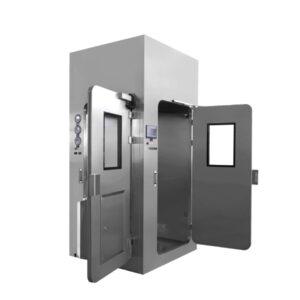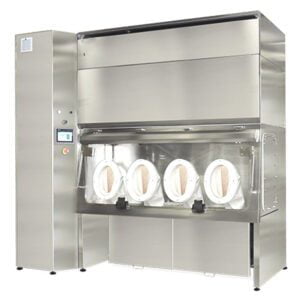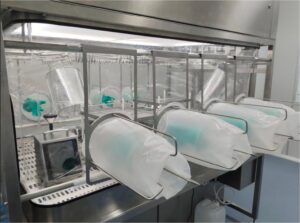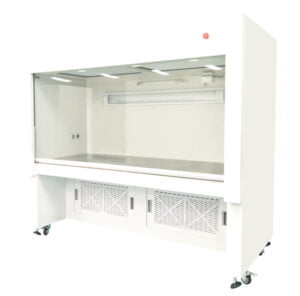
A contaminação cruzada durante a transferência de materiais continua sendo o principal ponto de violação em ambientes controlados. Um único evento de transferência comprometido pode invalidar lotes inteiros de produção, desencadear descobertas regulatórias e comprometer as operações de fabricação estéril. As caixas de passagem servem como barreira crítica, mas sua eficácia depende inteiramente de três sistemas de engenharia integrados: projeto de intertravamento mecânico, otimização do padrão de fluxo de ar e calibração do ciclo de UV-C. A maioria dos incidentes de contaminação se deve à falta de compreensão de como esses sistemas interagem durante as sequências operacionais.
A lacuna entre a especificação do equipamento e o desempenho real aumenta quando os operadores não têm conhecimento técnico dos mecanismos subjacentes. As instalações investem em sistemas avançados de caixa de passagem, mas falham na validação porque o tempo de intertravamento entra em conflito com os requisitos de cascata de pressão ou os cálculos de exposição a UV ignoram as variáveis de geometria da superfície. A compreensão dos princípios de funcionamento - e não apenas dos procedimentos operacionais - determina se o seu protocolo de transferência de materiais protege ou compromete a integridade da sala limpa. Este detalhamento técnico examina a lógica de engenharia por trás de cada componente do sistema e seus requisitos de integração para GMP e ISO 14644-1:2015 conformidade.
O núcleo do controle de contaminação: Entendendo os sistemas de intertravamento de caixas de passagem
Barreira física vs. arquitetura de lógica de controle
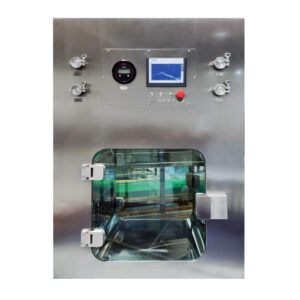
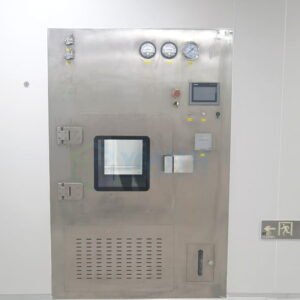
Duas abordagens distintas de engenharia impedem a operação simultânea das portas. Os intertravamentos mecânicos usam mecanismos de ligação física - quando uma porta se abre, uma haste ou came conectado bloqueia fisicamente o mecanismo de travamento da porta oposta. O sistema não requer nenhuma entrada elétrica. Uma porta deve retornar à posição totalmente fechada antes que a barreira mecânica se desengate da fechadura oposta. As travas eletrônicas substituem a ligação física por travas eletromagnéticas controladas por circuitos integrados. Os sensores de posição da porta fornecem dados de status a um painel de controle que gerencia os estados de ativação da fechadura. As luzes indicadoras fornecem feedback em tempo real sobre qual porta está operável.
A escolha entre os sistemas afeta a flexibilidade operacional. Os sistemas mecânicos oferecem simplicidade e risco zero de falha devido a interrupções de energia. Os sistemas eletrônicos permitem ciclos de purga programados - um recurso essencial em que ambas as portas permanecem travadas por um intervalo programado após o fechamento, permitindo que o fluxo de ar filtrado purgue possíveis contaminantes antes que a porta oposta seja destravada. Em aplicações farmacêuticas que exigem trilhas de auditoria, os sistemas eletrônicos registram cada operação da porta com carimbos de data e hora.
Tipos e aplicações do sistema de bloqueio de caixa de passagem
| Tipo de intertravamento | Componentes do mecanismo | Cenário do aplicativo principal |
|---|---|---|
| Mecânica | Ligação de barreira física | Transferências para salas limpas da mesma classe, instalações com custos reduzidos |
| Eletrônico | Travas eletromagnéticas, circuitos de controle, luzes indicadoras | Transferências entre graus, aplicações farmacêuticas que exigem trilhas de auditoria |
Fonte: ISO 14644-1:2015, Boas práticas de fabricação - Wikipédia
Função do intertravamento na manutenção do diferencial de pressão
As cascatas de pressão da sala limpa criam um fluxo de ar direcional das áreas de limpeza mais altas para as mais baixas. Um diferencial de 15 Pa entre as zonas adjacentes evita a migração de contaminantes. A abertura simultânea das portas cria um caminho de ar direto que equaliza a pressão instantaneamente. Observamos instalações em que a recuperação da pressão leva de 8 a 12 minutos após uma violação de porta dupla - durante os quais a zona protegida opera sem barreiras de contaminação. O sistema de intertravamento não é meramente uma imposição processual; é a salvaguarda mecânica que preserva o gradiente de pressão que sustenta toda a sua estratégia de controle de contaminação.
As caixas de passagem estáticas se baseiam inteiramente nesse princípio. A câmara selada mantém a pressão intermediária entre as salas conectadas. As caixas de passagem dinâmicas adicionam fluxo de ar ativo, mas ainda dependem da integridade do intertravamento para evitar o desvio do sistema de filtragem durante a janela crítica de transferência.
Dinâmica de fluxo de ar e integração de UV-C para integridade de salas limpas
Classificação do fluxo de ar estático vs. dinâmico
As caixas de passagem estáticas funcionam como câmaras de transferência seladas. Não há ventiladores, filtros ou movimento de ar ativo. O controle da contaminação depende da vedação da câmara e do diferencial de pressão entre os espaços conectados. O material colocado em seu interior permanece em ar essencialmente estagnado até a retirada. Esse projeto é adequado para transferências do mesmo nível em que ambas as salas mantêm classificações de limpeza idênticas.
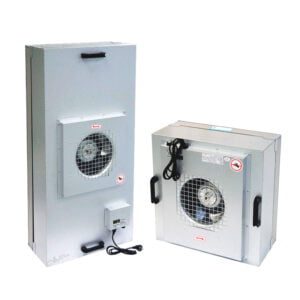
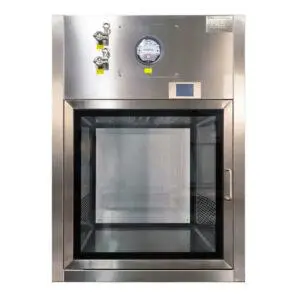
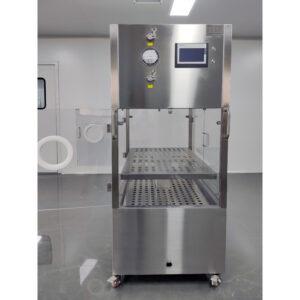
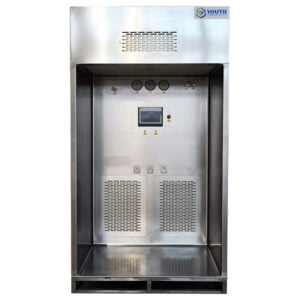
As caixas de passagem dinâmicas introduzem o controle ativo da contaminação. Um ventilador aspira o ar por meio de uma cascata de pré-filtro (normalmente com classificação de resistência G4) seguida pela filtragem HEPA H13 ou H14. O ar filtrado entra na câmara em velocidade controlada - a especificação alvo é 0,45 m/s de fluxo descendente. Isso cria um ambiente ISO Classe 5 dentro da câmara, independentemente das classificações das salas ao redor. O sistema pode operar no modo de recirculação (o ar passa continuamente pelo filtro e volta para a câmara) ou no modo de passagem única (o ar filtrado é exaurido após uma passagem).
Especificações de desempenho e filtragem da caixa de passagem dinâmica
| Componente | Especificação | Padrão de desempenho |
|---|---|---|
| Pré-filtro | G4 (≥90% arrestance) | EN 779:2012 |
| Filtro HEPA | H13 (99,97% @ 0,3µm) ou H14 (>99,995% @ MPPS) | EN 1822:2009 |
| Lâmpada UV-C | Vida útil de 4000 horas | É necessária a validação do usuário |
| Limpeza interna | ISO Classe 5 / Grau A durante a operação | ISO 14644-1, Anexo 1 das BPF da UE |
Fonte: EN 1822:2009 Classes de filtro, ISO 14644-1:2015
Integração da lâmpada UV-C para descontaminação de superfícies
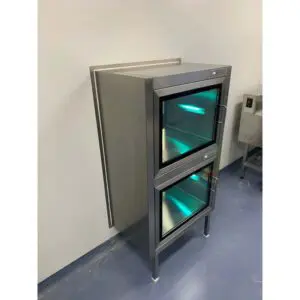
As lâmpadas UV-C são montadas nos tetos das câmaras para irradiação germicida dos materiais transferidos. O comprimento de onda de 254 nm interrompe o DNA microbiano, impedindo a replicação. A integração operacional vincula a ativação da UV ao sistema de intertravamento - as lâmpadas só são ativadas quando ambas as portas confirmam o status de fechadas e travadas. Isso evita a exposição do operador. Os ciclos padrão duram de 15 a 30 minutos, dependendo dos requisitos de dose validados para tipos de materiais específicos.
A eficácia dos raios UV depende da exposição direta à linha de visão. As superfícies sombreadas recebem dosagem reduzida. Itens de geometria complexa exigem rotação ou várias posições da lâmpada. A vida útil da lâmpada de 4.000 horas significa que a produção se degrada com o tempo; as instalações devem validar se os níveis de irradiância permanecem acima dos limites exigidos durante todo o intervalo de serviço. Algumas operações substituem as lâmpadas em 3.000 horas para manter o fornecimento consistente da dose.
Projeto de padrão de fluxo laminar em câmaras dinâmicas
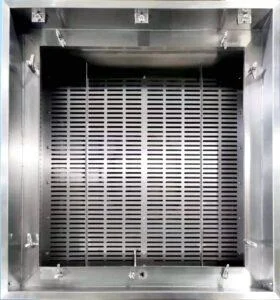
O fluxo vertical descendente unidirecional minimiza o tempo de permanência das partículas. O ar entra por um difusor HEPA montado no teto, flui para baixo pelo material e sai por grades laterais perfuradas ou retornos no piso. Essa ação de varredura remove continuamente as partículas geradas durante a abertura da porta ou das superfícies do material. Os sistemas de recirculação direcionam o ar de retorno de volta para o filtro; alguns projetos incluem uma opção de bocal de alta velocidade que substitui o difusor padrão para remover as partículas das superfícies do material antes da retomada do fluxo laminar normal.
Garantindo a transferência segura de materiais: Um mergulho profundo nos mecanismos de intertravamento mecânico versus eletrônico e sua função na manutenção de cascatas de pressão
Princípios operacionais do intertravamento mecânico
Os intertravamentos físicos usam braços de alavanca, cames giratórios ou hastes deslizantes que conectam os dois mecanismos de trava da porta. A abertura da Porta A move um elemento mecânico que obstrui fisicamente o desengate da trava da Porta B. A barreira permanece no lugar até que a Porta A retorne à posição fechada e sua trava seja totalmente engatada. O projeto é inerentemente à prova de falhas - a falha mecânica normalmente resulta no travamento de ambas as portas, e não no destravamento de ambas.
A instalação requer um alinhamento preciso. O desalinhamento causa engate incompleto, criando cenários em que força suficiente pode contornar o intertravamento. Os testes de funcionamento trimestrais devem incluir a tentativa de abertura forçada da porta travada enquanto a porta oposta permanece aberta. Qualquer movimento indica a necessidade de ajuste.
Sequências de controle de intertravamento eletrônico
Os sistemas eletrônicos usam reed switches magnéticos ou sensores de proximidade para detectar a posição da porta. Quando a Porta A se abre, seu sensor sinaliza à placa de controle para energizar a trava eletromagnética da Porta B. A trava permanece energizada até que o sensor da Porta A confirme o fechamento. Somente então a lógica de controle desenergiza a Trava B e acende o indicador que mostra que a Porta B está disponível para abertura.
Comparação funcional entre intertravamento mecânico e eletrônico
| Recurso | Intertravamento mecânico | Intertravamento eletrônico |
|---|---|---|
| Método de travamento | Envolvimento com barreiras físicas | Trava eletromagnética com lógica de controle |
| Feedback do operador | Nenhum (somente resistência tátil) | Luzes indicadoras, tela de status |
| Integração do ciclo de purga | Não disponível | Purga temporizada programável antes do desbloqueio |
| Perfil de custo | Menor investimento inicial | Custo mais alto, capacidade de controle aprimorada |
Observação: Os sistemas eletrônicos permitem a integração com ciclos de UV e temporizadores de fluxo de ar de acordo com o Anexo 1 revisado BPF DA UE.
Fonte: Guia de BPF da UE - Parte 1
Integração do ciclo de purga com gerenciamento de pressão
As travas eletrônicas avançadas incluem temporizadores de purga programáveis. Após o fechamento da porta A, as duas travas permanecem acionadas por um intervalo predefinido, normalmente de 30 a 120 segundos. Durante esse período, o ventilador da caixa de passagem dinâmica opera em sua capacidade total, trocando o ar da câmara pela filtragem HEPA várias vezes. Isso limpa as partículas introduzidas quando a Porta A é aberta. Somente após a conclusão da purga é que a Trava B é desengatada, permitindo que a Porta B se abra para o espaço do limpador.
Essa sequência cronometrada suporta diretamente a integridade da cascata de pressão. O período de purga permite que o sistema de tratamento de ar da sala limpa recupere os diferenciais de pressão interrompidos pela abertura da Porta A. Implementamos ciclos de purga sincronizados com os tempos de recuperação da pressão da sala medidos durante o comissionamento - isso evita que a Porta B seja aberta antes que a zona protegida restabeleça sua barreira de pressão.
Otimização do projeto de fluxo de ar: Fluxo unidirecional, recirculação e taxas de troca de ar para controle de partículas em câmaras de passagem
Especificações de velocidade de fluxo unidirecional
A velocidade alvo de fluxo descendente de 0,45 m/s representa o equilíbrio entre a eficácia da remoção de partículas e a minimização da turbulência. Velocidades mais baixas reduzem a eficiência da varredura de partículas. Velocidades mais altas criam redemoinhos turbulentos que suspendem as partículas em vez de removê-las. A uniformidade da velocidade na seção transversal da câmara é tão importante quanto a velocidade média - variações superiores a ±20% criam zonas mortas onde as partículas se acumulam.
Os controladores de velocidade do ventilador mantêm a velocidade apesar da carga do filtro. À medida que o filtro HEPA captura as partículas, a resistência aumenta. Sem compensação, a velocidade do fluxo de ar cai. As unidades de frequência variável (VFDs) aumentam automaticamente a velocidade do ventilador para manter a velocidade desejada à medida que a resistência do filtro aumenta. Os medidores de pressão diferencial monitoram a carga do filtro; leituras próximas a 200-250 Pa indicam a necessidade de substituição.
Parâmetros de configuração do fluxo de ar para câmaras de passagem
| Tipo de configuração | Velocidade do fluxo de ar | Padrão de fluxo de ar | Sequência de filtros |
|---|---|---|---|
| Caixa de passe estática | 0 m/s (passivo) | Apenas diferencial de pressão | Nenhum (câmara selada) |
| Recirculação dinâmica | 0,45 m/s de fluxo descendente alvo | Unidirecional vertical com retorno lateral/base | Pré-filtro G4 → H13/H14 HEPA |
| Passagem única dinâmica | 0,45 m/s de fluxo descendente alvo | Vertical unidirecional com exaustão | Pré-filtro G4 → H13/H14 HEPA |
Fonte: ISO 14644-1:2015, Guia de BPF da UE - Parte 1
Recirculação vs. gerenciamento de ar de passagem única
Os sistemas de recirculação puxam o ar de retorno do fundo ou das laterais da câmara de volta para a entrada do ventilador. O mesmo ar passa continuamente pela filtragem. Esse projeto opera como uma unidade autônoma que requer apenas conexão elétrica - sem dutos para os sistemas de exaustão da instalação. O consumo de energia permanece moderado, pois o sistema condiciona apenas o volume da câmara. A maioria das aplicações farmacêuticas utiliza projetos de recirculação para aclusas de ar de materiais entre espaços classificados.
Os sistemas de passagem única exaurem o ar filtrado após uma passagem pela câmara. Isso requer conexão com o duto de exaustão da instalação. As aplicações incluem a transferência de materiais que geram fumaça, compostos voláteis ou calor que devem ser removidos em vez de recirculados. O projeto proporciona a máxima remoção de contaminação, mas aumenta os custos de energia e exige a integração do sistema HVAC.
Cálculos da taxa de troca de ar e da liberação de partículas
A Classe 5 da ISO exige ≤3.520 partículas/m³ a ≥0,5 µm. Atingir isso em uma câmara de caixa de passagem depende de taxas de troca de ar suficientes para diluir e remover as explosões de partículas das aberturas das portas. Uma câmara típica de 0,9 m × 0,6 m × 0,6 m (volume de 0,324 m³) com fluxo de ar de 0,45 m/s através de uma face de filtro de 0,6 m × 0,6 m (0,36 m²) fornece 0,162 m³/s ou 583 m³/h. Isso resulta em 1.800 trocas de ar por hora, proporcionando a eliminação de partículas em segundos após os eventos de contaminação.
Calculamos o tempo de recuperação usando fórmulas de decaimento exponencial. A 1.800 ACH, a concentração de partículas cai para 1% dos níveis iniciais em aproximadamente 2,5 minutos. Essa rápida recuperação permite tempos de ciclo curtos entre as transferências de material, mantendo a classificação.
Engenharia do ciclo de esterilização por UV: Cálculo da dose (mJ/cm²), tempo do ciclo e protocolos de segurança para uma descontaminação eficaz da superfície
Fundamentos do cálculo da dose de UV-C
A dose de UV é igual à irradiância (potência por unidade de área) multiplicada pelo tempo de exposição. Uma lâmpada que fornece 1000 µW/cm² por 15 minutos fornece 900 mJ/cm² (1000 µW/cm² × 900 segundos ÷ 1000). As doses necessárias variam de acordo com o organismo-alvo - os esporos bacterianos exigem doses significativamente mais altas do que as bactérias vegetativas. A maioria das aplicações farmacêuticas visa à redução de 99,9% (3-log), exigindo doses validadas que normalmente variam de 400 a 2000 mJ/cm², dependendo do organismo.
A irradiância diminui com a distância seguindo a lei do inverso do quadrado. A posição da superfície em relação à montagem da lâmpada afeta drasticamente a dose fornecida. Os itens colocados a 30 cm de uma lâmpada recebem um quarto da irradiância dos itens a 15 cm. A geometria da câmara deve garantir que todas as superfícies que exigem descontaminação estejam dentro dos intervalos de distância validados onde os cálculos de dose se aplicam.
Parâmetros do ciclo de esterilização UV-C e recursos de segurança
| Parâmetro | Valor do ciclo padrão | Protocolo de segurança | Requisito de validação |
|---|---|---|---|
| Tempo de exposição | 15 a 30 minutos | O bloqueio impede a abertura da porta durante o ciclo | Medição de irradiância (mJ/cm²) |
| Posição da lâmpada | Montagem fixa no teto | Luz indicadora de atividade UV visível externamente | Cálculo de dose por geometria de superfície |
| Acionador operacional | Ambas as portas estão fechadas e trancadas | Desligamento automático na ativação do sensor da porta | Verificação da potência da lâmpada após 4000 horas |
Fonte: ISO 14644-1:2015
Integração da segurança da temporização do ciclo e do intertravamento
Os ciclos UV são ativados somente depois que os dois sensores de porta confirmam o status de fechado e travado. O sistema de controle impede o destravamento da porta enquanto as lâmpadas UV estiverem em funcionamento. Luzes indicadoras externas - geralmente âmbar ou vermelha - sinalizam a operação UV ativa. Os operadores que tentam abrir uma das portas durante o ciclo encontram ambas as travas acionadas, independentemente da sequência normal de intertravamento.
Os botões de parada de emergência fornecem desligamento imediato da lâmpada e capacidade de desbloqueio para cenários de pessoas presas, embora a operação adequada nunca deva criar tais situações. O projeto do circuito de segurança segue os princípios de segurança contra falhas - qualquer falha no sensor, interrupção de energia ou erro na placa de controle tem como padrão lâmpadas apagadas e portas destravadas.
Degradação da saída da lâmpada e programação de manutenção
A saída de UV-C diminui ao longo da vida útil da lâmpada. Uma lâmpada com capacidade para 4000 horas pode fornecer 80-85% da potência inicial no final da vida útil. As instalações enfrentam uma decisão: estender os tempos de ciclo para compensar a redução da produção ou substituir as lâmpadas antes de 4.000 horas para manter ciclos consistentes. Descobrimos que a substituição de lâmpadas em intervalos de 3.500 horas mantém a consistência da dose sem exigir ajustes no tempo de ciclo ou revalidação.
A medição da irradiância usando radiômetros calibrados deve ocorrer após a instalação, após a substituição da lâmpada e anualmente. As medições em várias posições da câmara verificam se toda a área de transferência recebe a dose adequada. As leituras decrescentes entre as substituições de lâmpadas informam os ajustes de programação de manutenção antes que a produção caia abaixo dos níveis efetivos.
Integração das operações da caixa de passagem: Alinhando sequências de intertravamento, padrões de fluxo de ar e ciclos de UV com POPs de salas limpas e fluxos de trabalho de materiais
Requisitos de POP para operação sequencial de portas
A regra fundamental: as portas nunca abrem simultaneamente. O fluxo de trabalho do material define a sequência de abertura. Os itens entram pelo lado menos limpo, passam por processos de descontaminação (exposição a UV, purga de fluxo de ar) e, em seguida, são retirados pelo lado mais limpo. A porta A (lado sujo) abre para colocar o material, fecha para selar a câmara, os processos são executados até a conclusão e, em seguida, a porta B (lado limpo) abre para a retirada. A inversão dessa sequência introduz a contaminação diretamente no ambiente protegido.
Os procedimentos escritos devem especificar o tempo exato de cada etapa. Os sistemas de intertravamento eletrônico com ciclos de purga exigem que os operadores aguardem as luzes indicadoras que sinalizam a conclusão antes de tentar abrir a porta. As caixas de passagem estáticas com ciclos de UV precisam de tempos de exposição claramente registrados. Os operadores que apressam a sequência criam os desvios de protocolo mais comuns.
Integração do fluxo de trabalho da operação da caixa de passagem sequencial
| Etapa | Status da porta | Ação do sistema | Requisito de SOP |
|---|---|---|---|
| 1. Entrada de material | Porta externa aberta | Porta interna trancada | Pré-desinfecção de itens antes da colocação |
| 2. Processamento | Ambas as portas fechadas | Ciclo de UV (15-30 min) e/ou temporizador de purga ativo | Conclusão do ciclo do documento |
| 3. Estabilização do fluxo de ar | Ambas as portas fechadas | O ventilador continua, a pressão se iguala | Aguardar o sinal do indicador |
| 4. Recuperação de material | Porta interna aberta | Porta externa trancada | Higiene das mãos do pessoal, transferência de registros |
Observação: Devem ser designadas caixas de passagem separadas para os materiais que entram e para os resíduos que saem por GMP princípios de controle de contaminação.
Fonte: ISO 14644 - Wikipédia, Boas práticas de fabricação - Wikipédia
Estratégias de segregação do fluxo de materiais
O fluxo unidirecional de materiais evita a contaminação cruzada entre os suprimentos que entram e os produtos ou resíduos que saem. Caixas de passagem dedicadas atendem a categorias de transferência específicas: entrada de matérias-primas, saída de produtos acabados, remoção de resíduos, transferência de equipamentos. O código de cores e a rotulagem clara evitam o uso indevido. Uma caixa de passagem usada para remoção de resíduos nunca deve transferir materiais recebidos - mesmo após a limpeza, o risco de contaminação continua inaceitável.
As operações de alto volume implementam salas de passagem ou airlocks em vez de caixas de passagem simples, mas os mesmos princípios se aplicam. O material nunca inverte a direção pelo mesmo ponto de transferência.
Protocolos de limpeza e desinfecção de interiores
As superfícies internas da caixa de passagem requerem limpeza regular separada dos ciclos de UV. A UV proporciona a desinfecção da superfície, mas não remove a contaminação por partículas ou resíduos. Os protocolos de limpeza normalmente especificam soluções de ácido peroxiacético 0,5% ou iodofórmio 5% aplicadas a todas as superfícies internas diariamente ou entre as campanhas de transferência. A limpeza ocorre pelo lado sujo para evitar a introdução de materiais de limpeza no ambiente limpo.
As caixas de passagem dinâmicas precisam de atenção adicional às grelhas de ar e às faces dos filtros. Os pré-filtros precisam ser substituídos a cada 6 meses; os filtros HEPA precisam ser substituídos a cada 6-12 meses com base nas leituras de pressão diferencial. Mantemos os filtros em cronogramas de substituição preventiva, em vez de operá-los até a falha - a quebra inesperada do filtro cria riscos imediatos de contaminação.
Validação de desempenho e conformidade: Protocolos de teste para funcionalidade de intertravamento, visualização de fluxo de ar e irradiância UV para atender às normas ISO 14644 e GMP
Procedimentos de teste da função de intertravamento
Testes trimestrais verificam se a abertura simultânea da porta continua impossível. Protocolo de teste: Abra totalmente a Porta A e tente abrir a Porta B usando força normal. A Porta B não deve se mover. Tente desengatar o mecanismo de trava da Porta B manualmente - ele deve resistir ao desengate. Feche a porta A, verifique se a trava A está engatada e confirme se a porta B está abrindo livremente. Repita a sequência no sentido inverso. Qualquer movimento da porta travada durante o teste indica falha no intertravamento que requer reparo imediato antes de retornar a caixa de passagem ao serviço.
As travas eletrônicas exigem verificação adicional das luzes indicadoras, do acionamento da trava eletromagnética e da função do temporizador de purga. O teste de precisão do temporizador garante que a duração da purga programada corresponda ao período real de bloqueio. Desvios superiores a ±5 segundos exigem recalibração da placa de controle.
Verificação da integridade do filtro HEPA e do fluxo de ar
O teste de aerossol DOP (dioctil ftalato) ou PAO (polialfaolefina) valida a integridade do filtro após a instalação e, posteriormente, anualmente. O aerossol introduzido pela porta de teste a montante deve apresentar penetração zero a jusante ao examinar a face do filtro e a vedação da estrutura com um fotômetro. A penetração superior a 0,01% indica caminhos de vazamento que exigem a substituição do filtro ou o reparo da vedação.
A medição da velocidade do fluxo de ar utiliza grades de anemômetro que cobrem a face do filtro. As leituras em 9 a 16 pontos (dependendo do tamanho da câmara) verificam se a velocidade média atende à especificação de 0,45 m/s e se a uniformidade está dentro de ±20%. Identificamos instalações em que as velocidades nos cantos mediram 40% abaixo dos valores centrais, o que indica um projeto inadequado do difusor ou problemas de compressão da junta do filtro, criando caminhos preferenciais de fluxo.
Protocolos de teste de validação e intervalos de conformidade
| Parâmetro de teste | Método de teste | Critérios de aceitação | Frequência de teste |
|---|---|---|---|
| Função de intertravamento | Tentativa de acionamento manual em ambas as portas | Impossibilidade de abertura simultânea | Trimestral |
| Integridade do filtro HEPA | Varredura de aerossol DOP/PAO na porta de teste | Zero vazamentos >0,01% de penetração | A cada 6-12 meses |
| Velocidade do fluxo de ar | Medição da grade do anemômetro | 0,45 m/s ±20% uniformidade | Semestralmente |
| Contagem de partículas | Protocolo de amostragem ISO 14644-3 | ≤3520 partículas/m³ @ ≥0,5µm para ISO 5 | Anualmente ou após a troca do filtro |
| Irradiância UV | Medição do radiômetro no plano da superfície | Atende ao requisito de dose calculada (mJ/cm²) | Após a substituição da lâmpada, anualmente |
| Pressão diferencial | Leitura do medidor magnético | <250 pa across hepa; replace if>200 Pa | Monitoramento contínuo |
Fonte: ISO 14644-1:2015, EN 1822:2009 Classes de filtro
Verificação da classificação da contagem de partículas
A contagem de partículas transportadas pelo ar valida que a caixa de passagem atinge a classe de limpeza especificada durante a operação. Para a verificação da Classe 5 da ISO, os locais de amostragem incluem o centro e os cantos da câmara. A caixa de passagem opera com o fluxo de ar ativo por pelo menos 15 minutos antes do início da amostragem. O volume e a duração da amostragem seguem os protocolos da ISO 14644-3 - normalmente, um mínimo de 28,3 litros por local para partículas de 0,5 µm.
Os resultados devem mostrar ≤3.520 partículas/m³ a ≥0,5 µm. As contagens que excedem esse limite indicam comprometimento do filtro, fluxo de ar inadequado ou fontes de partículas dentro da câmara. As investigações examinam a integridade do filtro, as vedações das gaxetas, os perfis de velocidade e a limpeza da superfície interna antes de considerar a unidade aceitável para uso contínuo.
Requisitos de documentação e trilha de auditoria
Os relatórios de validação documentam todos os resultados de testes, desvios, ações corretivas e certificados de calibração de equipamentos para instrumentos de medição. A GMP exige que essa documentação permaneça disponível para inspeção durante toda a vida útil do equipamento. Os sistemas de intertravamento eletrônico com recursos de registro de dados fornecem registros automáticos de operações de portas, conclusões de ciclos e condições de alarme - criando trilhas de auditoria que dão suporte a investigações de possíveis eventos de contaminação.
O controle de contaminação da caixa de passagem depende de três sistemas sincronizados que trabalham em coordenação precisa. Os mecanismos de intertravamento evitam o colapso da cascata de pressão. Os sistemas de fluxo de ar proporcionam a remoção ativa de partículas. Os ciclos de UV proporcionam a descontaminação da superfície. Cada sistema segue princípios específicos de engenharia que determinam a eficácia. A implementação requer a compreensão não apenas dos procedimentos operacionais, mas da lógica técnica que rege a função dos componentes, a interação do sistema e os requisitos de validação. As falhas no protocolo de transferência de material estão relacionadas a lacunas nesse entendimento - quando as sequências de tempo entram em conflito com os requisitos de purga ou quando as durações dos ciclos não fornecem doses validadas.
Precisa de soluções de controle de contaminação projetadas que integrem sequenciamento de intertravamento, filtragem HEPA e ciclos UV validados em sistemas de unidade de filtro de ventilador para aplicações críticas de transferência de materiais? YOUTH fornece soluções tecnicamente validadas equipamentos para salas limpas projetados para conformidade com GMP e verificação de classificação ISO. Visite youthfilter.com para obter especificações técnicas e suporte de engenharia de aplicativos.
Perguntas sobre protocolos de validação, otimização do fluxo de ar ou integração do sistema com a infraestrutura de sala limpa existente? Entre em contato conosco para consultoria técnica sobre seleção de caixas de passagem e estratégias de qualificação de desempenho.
Perguntas frequentes
P: Quais são as principais diferenças operacionais e de conformidade entre os sistemas de intertravamento mecânico e eletrônico para caixas de passagem?
R: Os intertravamentos mecânicos usam uma barreira física para impedir a abertura simultânea da porta, oferecendo confiabilidade simples e econômica para transferências de baixo risco. Os intertravamentos eletrônicos usam travas eletromagnéticas com lógica de controle e luzes indicadoras, fornecendo controle processual aprimorado, orientação ao operador e integração com ciclos de purga cronometrados para proteger cascatas de pressão, o que é fundamental para aplicações de alto risco sob Padrões GMP.
P: Como o ambiente interno ISO Classe 5 é alcançado e validado em uma caixa de passagem dinâmica?
R: Uma caixa de passagem dinâmica cria um ambiente ISO Classe 5 (Grau A) usando um ventilador para puxar o ar por meio de um pré-filtro G4 e um filtro HEPA H13 (99,97%) ou H14 (>99,995%), produzindo um fluxo descendente vertical unidirecional em uma velocidade alvo de 0,45 m/s. A validação requer a contagem de partículas por ISO 14644-3 e testes regulares de integridade do filtro HEPA por meio de portas DOP/PAO para confirmar que o nível de limpeza classificado é mantido durante a operação.
P: Por que apenas o tempo de ciclo de UV é insuficiente para validar a descontaminação da superfície e, em vez disso, o que deve ser medido?
R: A eficácia da UV depende da dose fornecida (mJ/cm²), que é o produto da irradiância e do tempo de exposição. Um ciclo de 15 minutos com uma lâmpada degradada pode não fornecer uma dose letal. A qualificação de desempenho deve medir a irradiância UV na superfície do material com um medidor para calcular a dose real, garantindo que ela atenda ao requisito validado do usuário para a carga biológica específica.
P: Qual é o cronograma de manutenção e teste recomendado para os componentes críticos da caixa de passagem para garantir a conformidade contínua?
R: Uma programação de manutenção em conformidade inclui verificações diárias da função de intertravamento, monitoramento do medidor de pressão diferencial do filtro HEPA e substituição das lâmpadas UV após a vida útil de 4.000 horas. As tarefas periódicas envolvem a substituição dos pré-filtros G4 a cada 6 meses, a realização de testes anuais de vazamento do filtro HEPA (PAO/DOP) e a revalidação trimestral da velocidade do fluxo de ar e da contagem de partículas para atender às exigências do sistema. BPF DA UE Requisitos de monitoramento do Anexo 1.
P: Quando deve ser usado um projeto de recirculação de fluxo de ar em vez de um projeto de passagem única em uma caixa de passagem dinâmica?
R: Use um projeto de recirculação (circuito fechado) para aplicações autônomas em que a conservação de energia e a manutenção de um ambiente estável e filtrado são prioridades. Um projeto de passagem única, que expele o ar externamente, pode ser especificado ao transferir materiais que liberam gases ou geram partículas, evitando a recirculação de contaminantes dentro da câmara. A escolha afeta os requisitos de dutos e a carga do filtro.
P: Como a integração de um ciclo de purga programado em uma sequência de intertravamento eletrônico melhora o controle de contaminação?
R: O ciclo de purga é ativado depois que uma porta é fechada, mantendo as duas portas travadas eletromagneticamente por um período definido. Isso permite que o ventilador interno e o sistema de filtragem HEPA limpem a câmara com ar limpo, removendo as partículas introduzidas durante o carregamento. Essa função é essencial para manter a integridade da cascata de pressão e está alinhada com o Anexo 1 revisado da EU GMP orientação sobre o uso de Material Airlocks (MAL) com descarga eficaz.
Conteúdo relacionado:
- Guia completo de seleção e implementação de caixas de passagem para controle de contaminação de salas limpas: Edição 2025 com estrutura de conformidade com GMP e ISO 14644
- Controle de pressão da caixa de passagem VHP: Conformidade com a ISO 14644
- Previsão do mercado de caixas de passagem VHP: Análise de crescimento 2025-2030
- Transferência de material para salas limpas: Melhores práticas
- VHP versus caixas de passe tradicionais: Comparação das principais diferenças
- Sistemas de aeração VHP Pass Box: Guia completo de tecnologia
- Aplicações de caixas de passagem VHP em laboratório: Melhores práticas de pesquisa
- Caixa de passe VHP: Definição e funções principais explicadas
- Validação da caixa de aprovação do VHP: Lista de verificação de conformidade IQ/OQ/PQ