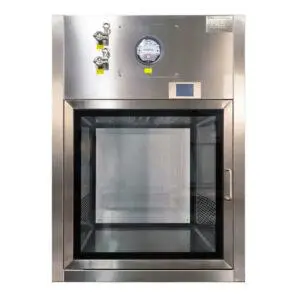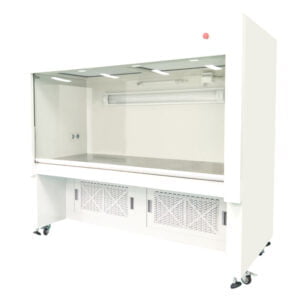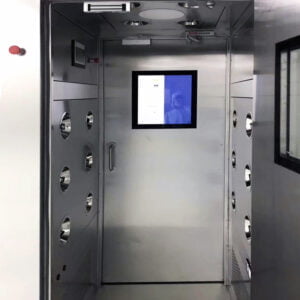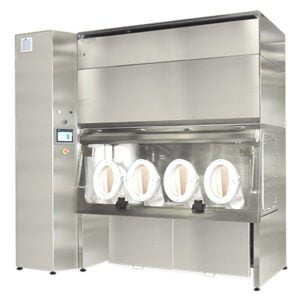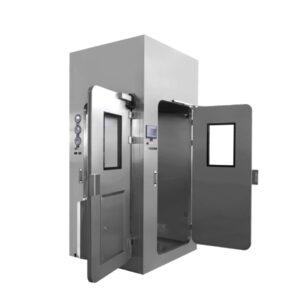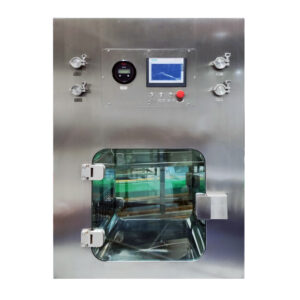
Which cleanroom class to specify is the wrong first question for a medical-device project. The more useful starting point is the device itself: what it is, how it fails, what touches it, and where it is exposed to the surrounding environment during manufacture. Classification, airflow design, and equipment selection are consequences of that analysis, not substitutes for it. A buyer who can state the product-and-process risk case clearly is positioned to request a configuration instead of a guess.
Start With the Device and Its Exposed Process Steps
| Risk-case element | What to define | Использование решений |
|---|---|---|
| Device sensitivity | How contamination could affect the device | Establishes the product-risk basis for cleanroom needs |
| Exposed surfaces | Which device surfaces are exposed during each relevant step | Shows where contamination control or local protection may be needed |
| Process steps | Where exposure, release, or introduction can occur in the process | Locates the operations that require control and verification inputs |
| Contact materials | Which materials contact the device or its exposed surfaces | Connects material contact to possible particles or residues |
| Contamination-related defects | Which defects contamination could cause | Keeps control objectives tied to defined product consequences rather than a room class alone |
Перед тем как cleanroom parameter is discussed, the project needs a clear description of the device, which of its surfaces are exposed during manufacture, which process steps create that exposure, what materials contact the device at each step, and which defects contamination could actually cause. This sequence matters because cleanroom classification without this foundation tends to default to a conventional figure borrowed from a similar-looking product, which may overstate or understate what the device needs.
Device sensitivity is the first variable, and it is not uniform across a product line. A device with an open lumen, an implantable coating, or an unsealed electronic interface carries different contamination consequences than a device that is fully housed before any cleanroom step begins. Where the device has no process step that exposes a sensitive surface, the contamination-control case shifts toward packaging and handling rather than airborne particle control in the room itself. Where sensitive surfaces remain open across multiple sequential operations, the case for sustained environmental control across those operations strengthens.
Exposed surfaces and process steps have to be mapped together, because exposure is not constant through a manufacturing sequence. A surface exposed only briefly during a single operation presents a different control problem than one exposed continuously across assembly, inspection, and packaging. This distinction changes whether the buyer is evaluating room-level air supply for an extended zone or local protection for a single workstation.
Contact materials deserve the same scrutiny as surfaces, because every material that touches the device is a potential source of particles or residues, independent of the room’s classification. A fixture, a tool, or a component that contacts the device introduces its own contamination profile, which means material selection and cleaning procedure are part of the same risk case as room air quality, not a separate concern addressed afterward.
Finally, the defects contamination could cause are what tie this analysis to patient and product outcomes. A particulate inclusion, a residue-driven function failure, or a packaging-debris defect each points toward a different combination of controls. Keeping the defect definition explicit prevents the project from drifting toward a cleanliness target that is disconnected from what actually matters for that specific device.
Translate Product Risk Into Contamination-Control Objectives
Once the device-and-process risk case is defined, it has to be translated into directional control objectives rather than a single number. This translation is where many projects either gain clarity or lose it, because a risk case can point toward several different controls at once, and the project has to decide which combination addresses the identified exposure.
Zoning is one direction this translation can take. Where the risk case shows that only certain steps involve exposed, sensitive surfaces, the project can concentrate control at those steps rather than extending uniform treatment across an entire room or line. Where exposure is distributed across many sequential operations, zoning the same way becomes less useful, and a broader environmental approach becomes the more coherent response.
Airflow direction and pattern follow a similar logic. The purpose of directing air in a particular way is to carry particles away from the exposed surface rather than across it, and that principle holds regardless of the classification eventually assigned. Where a process step introduces materials or motion near an exposed surface, the flow pattern at that location matters more than the general room classification, because a well-classified room with a poorly directed local airflow can still allow contamination at the point of exposure.
Cleaning protocols translate risk differently: they address what has already been introduced rather than preventing introduction in the first place. A contact material or a tool identified in the risk case as a contamination source needs a cleaning approach suited to what it actually contributes, which may differ meaningfully between a residue-generating process and a particle-generating one.
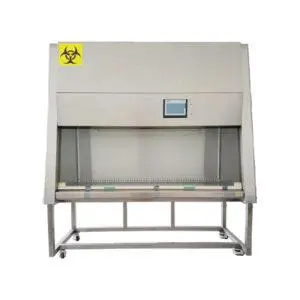
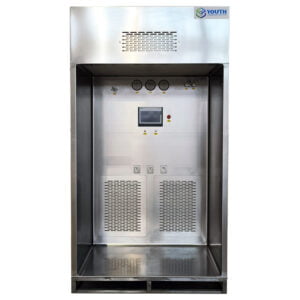
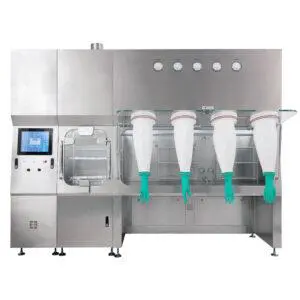
Local protection — whether through enclosure, barrier, or workstation-level equipment — becomes the relevant objective where the risk case shows that a specific operation, rather than the general environment, is the dominant contamination pathway. This is a different design decision than room-level air supply, because it addresses the point source directly instead of diluting the surrounding environment.
Monitoring and maintenance close the loop: they confirm, over time, whether the implemented controls perform as the risk case anticipated. None of these five directions is universal; each is selected because the risk case points to it, and a project that cannot explain why a given control was chosen has likely skipped the risk analysis that should have produced that choice.
Identify Sources, Transfers, Cleaning, and Operator Interactions
| Source or interaction | What to trace at each operation | Control decision informed |
|---|---|---|
| Particles and residues | Whether the operation releases or introduces them and whether exposed surfaces are affected | Flow, cleaning, or local-protection direction |
| Packaging debris | Where it is introduced in relation to the product and exposed process steps | Cleaning and local-protection direction |
| Операторы | Which operations include operator interaction with the device, exposed surfaces, or process | Zoning, flow, local-protection, and monitoring direction |
| Инструменты | Where tools enter the process and interact with the device or exposed surfaces | Cleaning and local-protection direction |
| Incoming components | Where components enter and become part of the exposed process | Flow, cleaning, and zoning direction |
With control objectives established in direction, if not yet in detail, the next task is tracing where contamination actually originates and moves within the process. This is a distinct exercise from defining risk, because a source can exist without yet being connected to a control decision, and a transfer path can exist without an identified source at either end.
Particles and residues are the most direct category to trace, and the trace has to ask two separate questions at each operation: does this operation release or introduce particulate or residue, and does it do so near an exposed, sensitive surface? An operation can generate particles without affecting the device at all, if no exposed surface is present at that point in the sequence, which is why source identification cannot be separated from the exposure map built earlier.
Packaging debris is often treated as a late-stage concern, but its relevant question is positional: where does packaging material enter relative to the exposed process steps, not just relative to the end of the line. Where packaging operations occur after all exposure has ended, the contamination pathway is limited. Where packaging materials or packaging-adjacent handling occur before exposure has fully ended, the same debris source becomes a more direct contamination path.
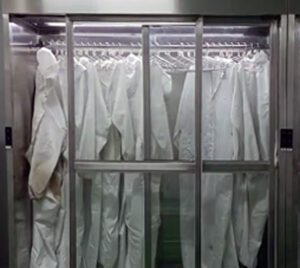
Operators are a source category that spans multiple control types at once, because an operator’s presence can affect zoning, airflow, local protection requirements, and monitoring design simultaneously. The determining variable is not whether an operator is present in the room, but whether a given operation puts the operator in direct interaction with the device, an exposed surface, or the process at a point where exposure exists.
Tools introduce contamination through contact and through the environment they bring with them — surface residue from prior use, for example — so tracing where tools enter the process and what they touch is a distinct exercise from tracing operator movement, even when the two coincide.
Incoming components carry their own contamination history from before they enter this process, which means the trace has to extend backward to the point where a component becomes part of the exposed process, not only forward from that point.
Set Environmental and Monitoring Needs Without Assuming a Class
| Reference | Рекомендуемое использование | Граница |
|---|---|---|
| ISO 14644-1:2015 | Classify air cleanliness by airborne-particle concentration at designated sampling locations | Does not characterize viable, chemical, radiological, or other particle nature |
| ISO 14644-4:2022 | Address cleanroom requirements, design, construction, start-up, and verification | Does not prescribe a cleanroom technology or process-equipment requirement |
| ISO 13485:2016 | Frame medical-device quality-system responsibilities for customer and applicable regulatory requirements | Does not assign a cleanroom class, airflow value, HEPA grade, or equipment acceptance criterion |
The temptation at this stage is to assign a classification and consider the environmental question settled. That approach skips a necessary step: establishing what a given classification actually measures and what it leaves unaddressed, so the buyer does not treat one piece of evidence as the whole answer.
ISO 14644-1:2015 defines how airborne particle cleanliness is classified at designated sampling locations. This classification addresses particle concentration by size and count at specified points in the room; it does not characterize whether those particles are viable, chemical, or radiological in nature. For a device where the dominant contamination concern identified in the risk case is biological rather than purely particulate, an airborne particle classification alone does not close that gap, and the project needs a separate basis — often tied to the process and materials analysis already performed — to address viable contamination.
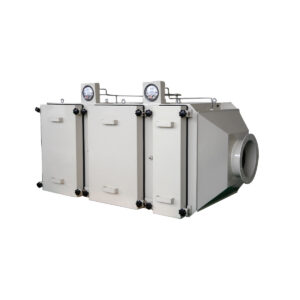
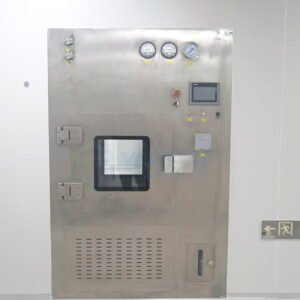
ISO 14644-4:2022 operates at a different level: it addresses cleanroom design, construction, start-up, and verification as a facility matter. This standard does not prescribe a particular cleanroom technology or a specific process-equipment requirement, which means it can guide how a facility is built and verified without dictating which equipment family — room-level air handling, local enclosures, or transfer equipment — the project should select. That selection still depends on the risk case and source trace developed earlier.
Monitoring needs follow the same logic as the controls they verify: a monitoring plan built around a single classification number, without reference to the specific exposure points identified in the risk case, can miss the location or parameter that actually matters for that device. Where the risk case identifies a specific operation as the dominant contamination pathway, monitoring concentrated at that operation carries more diagnostic value than a room-average measurement taken elsewhere.
None of this environmental and monitoring planning substitutes for the medical-device quality-system obligations that sit above it. ISO 13485:2016 frames the quality-management responsibilities for meeting customer and applicable regulatory requirements, but it does not itself assign a cleanroom class, an airflow value, a HEPA grade, or an equipment acceptance criterion. Those specific figures have to come from the project’s own risk case, translated through the facility design and verification process, not from the quality-system standard directly.
Convert the Risk Case Into Design and Verification Inputs
At this point, the project has a device-and-process risk case, a set of directional control objectives, a traced map of contamination sources and interactions, and a clear sense of what each environmental standard does and does not establish. The remaining task is converting that accumulated analysis into design inputs a supplier can act on and verification inputs a quality system can check against.
Design inputs drawn from this process look different from a specification sheet built around a classification target alone. They identify which process steps require zoning or local protection and why, based on the exposure map; which flow pattern is needed near specific exposed surfaces, based on the source trace; which materials and cleaning protocols apply at which stations, based on the contact-material analysis; and which monitoring points carry diagnostic value, based on where the risk case located the dominant contamination pathways. A supplier working from this kind of input can propose a configuration suited to the actual exposure pattern, rather than a generic room built to a single number.
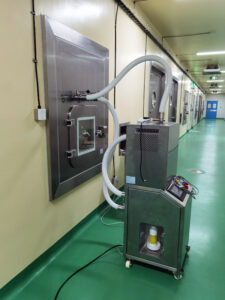
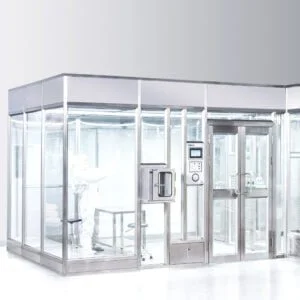
This is also the stage at which the specific information a customer provides becomes usable in a supplier’s configuration or quotation review. A risk case expressed only as a target classification gives a supplier little to configure against beyond a standard room package. A risk case expressed as exposed process steps, contact materials, operator interactions, and identified defect types gives the supplier the detail needed to propose zoning, flow direction, and equipment placement suited to that specific process — whether that means a modular cleanroom structure sized to the exposure map, or local protection equipment positioned at a specific operation.
Verification inputs follow the same translation. Where the risk case identified a specific operation as the dominant contamination pathway, the verification plan should test performance at that operation, not only at a generalized room-level sampling point. Where the quality system requires records connecting environmental performance to product risk, those records are more defensible when they trace back to the documented risk case rather than to a classification chosen without that documentation.
The open question a project team still needs to resolve, if it has not already, is whether the facility’s physical configuration — room envelope, airflow equipment, local protection, and transfer points — has been selected to match this specific risk case or inherited from a prior project with a different device and a different exposure pattern. That comparison is what determines whether the next conversation with a supplier is a configuration discussion or a corrective one.
Часто задаваемые вопросы
Q: Does selecting an ISO airborne-particle class fully define medical-device cleanroom requirements?
A: No. ISO 14644-1 classifies airborne-particle cleanliness at designated sampling locations, while the project must separately define contamination risks, control objectives, verification needs, and medical-device quality-system responsibilities.
Q: Can the same contamination controls be assumed for every assembly and packaging operation?
A: Do not assume they can. Review each operation for exposed device surfaces, released or introduced particles and residues, packaging debris, and interactions with operators, tools, and incoming components; use the differences to set zoning, flow, cleaning, local-protection, and monitoring directions.
Q: What information should be prepared before evaluating a modular or hardwall modular cleanroom?
A: Prepare a process map showing the device, exposed surfaces, contact materials, relevant operations, contamination-related defects, and where materials, people, tools, and components enter. Add the required cleaning, monitoring, maintenance, and verification outcomes so the proposed design can be checked against the actual risk case.
Q: How should monitoring locations be chosen without assuming a universal cleanroom class?
A: Start with the exposed process steps and the points where contamination can be released, introduced, or transferred. Define the exact locations and evidence needed as project-specific verification inputs, rather than treating a room-class label as the complete monitoring plan.
Q: When should the cleanroom requirements be reviewed again?
A: Review them when a change alters an exposed surface, process step, contact material, packaging source, operator interaction, tool entry, or incoming-component route. Recheck whether the existing zoning, flow, cleaning, local protection, monitoring, maintenance, and verification inputs still address the revised risk case.