Procuring equipment for a controlled environment without first mapping each unit to its process step and grade boundary is one of the more reliable ways to delay qualification. The failure typically doesn’t surface during selection — it surfaces during commissioning, when airflow interfaces haven’t been assigned, controls integration hasn’t been owned, and the IQ/OQ evidence is split across three vendors with no single party responsible for the package. By the time that becomes visible, the schedule pressure makes it harder, not easier, to resolve cleanly. The judgment that prevents it is straightforward in principle but easy to skip in practice: before comparing suppliers or requesting drawings, name the contamination-control function each equipment family serves, confirm the grade it must support, and settle who owns the interfaces that connect it to site systems. After reading this, you will be better positioned to define that scope clearly enough to make an RFQ meaningful rather than premature.
Equipment families included in a GMP cleanroom package
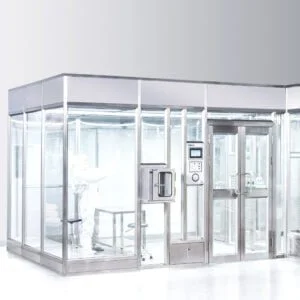
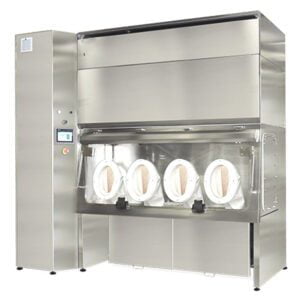
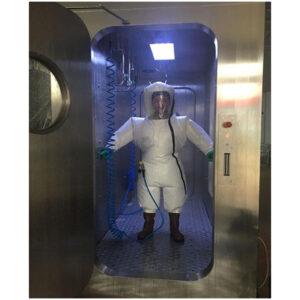
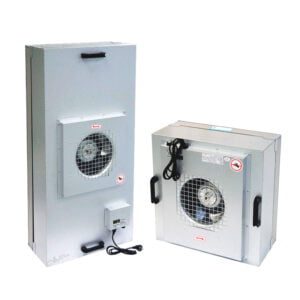
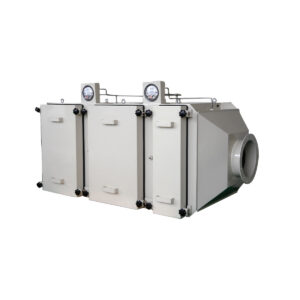
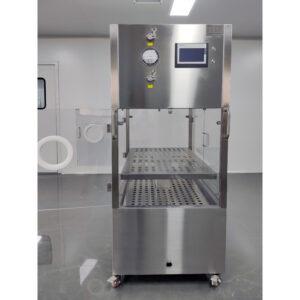
The first planning mistake is treating fan filter units, laminar airflow benches, pass boxes, weighing booths, and HEPA housings as a product catalog to browse rather than as a set of contamination-control functions to map. Each family addresses a distinct risk at a distinct process boundary. Conflating them during early procurement doesn’t just create specification confusion — it scatters validation evidence across vendors in ways that are difficult to reconcile later.
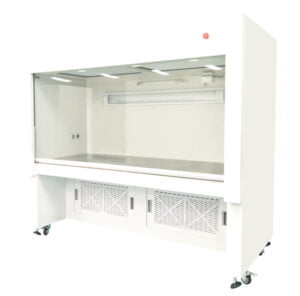
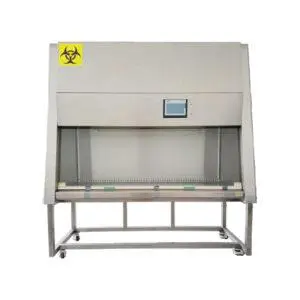
A Блок вентиляторних фільтрів (FFU) provides recirculated or supplemental HEPA-filtered airflow within a defined space, typically ceiling-mounted to maintain a cleanliness class across a zone. Its qualification evidence is tied to room-level air change rates and particle counts, which means its scope boundary touches site HVAC directly. A Ламінарна вентиляційна установка serves a different function: it creates a localized unidirectional airflow envelope at the point of product exposure, protecting a defined work zone rather than an entire room. Those two functions are not interchangeable, and purchasing one to partially substitute for the other leaves a process step without a validated protection mechanism.
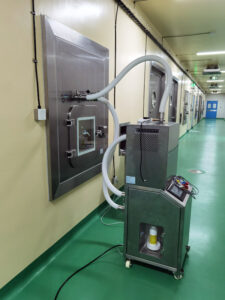
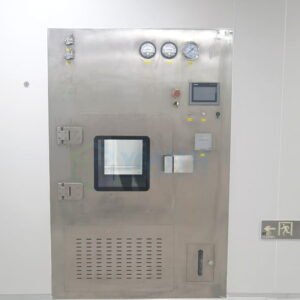
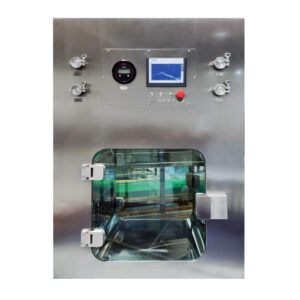
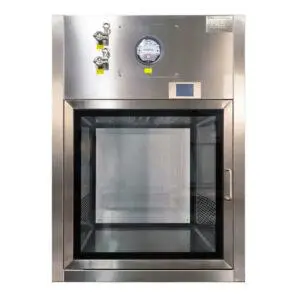
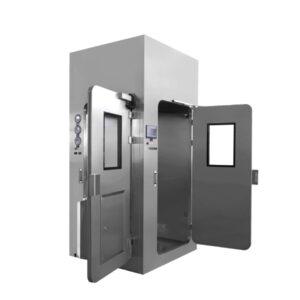
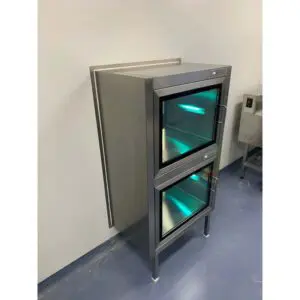
Pass boxes and transfer hatches control contamination at grade boundaries — the moment materials move from a lower-cleanliness zone into a higher one. A standard interlocked pass box prevents simultaneous door opening; a Пропускна коробка VHP adds biodecontamination for material transfer into aseptic environments where surface bioburden is a defined risk. Selecting between them without reference to the specific grade boundary being crossed — and the contamination type being controlled — produces a specification that may be structurally correct but functionally wrong for the process it is meant to protect.
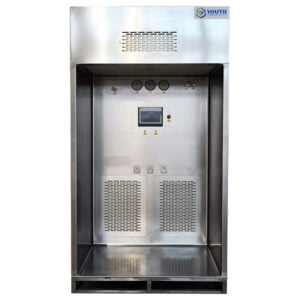
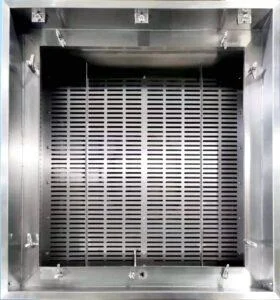
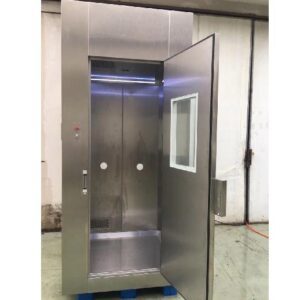
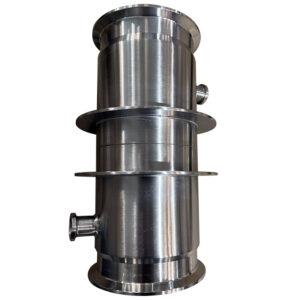
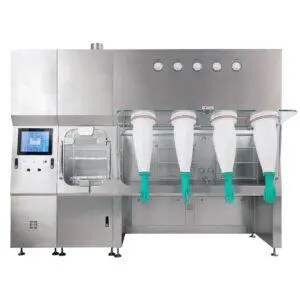
Weighing and dispensing booths, by contrast, are primarily personnel and product protection devices, managing particulate and potent compound exposure during open-weighing operations. HEPA housings sit at the infrastructure layer, supporting the filtration terminal points in ducted systems. Neither replaces the other, and neither substitutes for an FFU or LAF bench in the contexts those units serve.
The practical implication: before any supplier conversation, list each process step that requires contamination control, assign it a contamination type (particulate, microbial, cross-contamination at transfer, potent compound dispersion), and identify the grade boundary at which it occurs. That mapping determines the equipment family. The equipment family then determines the validation evidence the supplier must be able to provide. Starting with a catalog shortlist instead of that map is what causes validation evidence to be distributed unpredictably across the project.
Standards that shape air, transfer, and booth decisions
Standards in this space function as design inputs, not just audit checkboxes. The specification choices made during equipment selection — airflow velocity, filter efficiency, particle count threshold, interlocking logic for transfer devices — all carry forward into the qualification phase. If a specification is set without reference to the applicable cleanliness class, there is no stable basis for the IQ/OQ acceptance criteria that QA will need to sign off on.
ISO 14644-1:2015 establishes the particle concentration thresholds that define cleanroom air cleanliness classes. For equipment selection, the relevant question is which ISO class each installation area must achieve and maintain, because that class determines the filtration and airflow performance the equipment must demonstrate. A unit installed in an ISO 5 zone carries a higher airflow uniformity and particle recovery burden than one in an ISO 7 environment — and the test methods used to verify classification under ISO 14644-1 are specific enough that equipment not designed to the right class threshold can fail particle count verification even if it looks functionally correct on paper.
For pharmaceutical applications, Додаток 1 до GMP ЄС maps its Grade A through D classifications onto ISO equivalents and sets additional expectations around unidirectional airflow, air velocity at critical zones, and microbial monitoring. Equipment operating in Grade A conditions — the most critical zone for aseptic processing — must demonstrably maintain the airflow characteristics Annex 1 specifies at rest and in operation, which is more demanding than the at-rest particle count alone. That distinction matters at the specification stage: a unit sized for at-rest compliance may not sustain the required protection under operational conditions when personnel and process activities are present.
The CFR 209E standard is referenced in some specifications, particularly for U.S.-market projects, but its applicability and regulatory weight vary by jurisdiction. Where it appears in a specification, treat it as a parallel reference rather than a governing rule unless the project is explicitly operating under that framework.
For transfer devices, the standard inputs are grade boundary classification and the contamination type being controlled. An interlocked pass box must be validated for the pressure differential it will operate across and the airflow direction at the access point — not just for the mechanical interlock function. A VHP pass box adds a decontamination cycle validation requirement, including cycle development data, that a standard interlocked unit does not carry. Specifying transfer equipment without confirming both the grade boundary and the decontamination requirement means the validation scope is undefined at the point of purchase, which typically surfaces as a scope gap during commissioning.
Validation evidence buyers should request before quotation
Asking for validation documentation after purchase is one of the more predictable causes of QA handover delay. By that point, the scope has been set, the supplier relationship is transactional, and there is limited leverage to request evidence that wasn’t built into the original deliverable. The correction is to specify the required document package in the quotation request, not in a follow-up after purchase order.
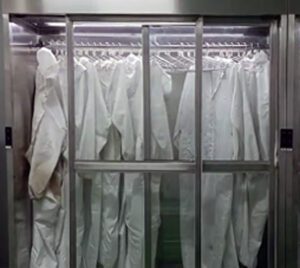
The baseline document set for GMP обладнання для чистих приміщень typically includes installation qualification (IQ) and operational qualification (OQ) evidence, filter test certificates traceable to the specific unit, airflow and particle count test reports, and where applicable, calibration records for instruments used in factory acceptance testing. For HEPA-filtered units, scan test data (DOP/PAO test results) confirming filter integrity at the installed efficiency rating should be available for each filter element, not as a generic product certificate. For VHP devices, decontamination cycle validation data — including log reduction evidence for the applicable sporicidal challenge — forms part of the qualification basis and cannot be substituted with a general statement of capability.
The EU GMP Annex 1 and FDA aseptic processing guidance documents establish the documentation expectations that underlie IQ/OQ frameworks for sterile product environments. Neither document prescribes exactly how a supplier must structure its commercial offering, but both establish the testing and evidence basis that a manufacturer’s qualification team will need to satisfy. Requesting documentation that aligns with that framework before purchase reduces the risk of discovering post-delivery that the supplier’s standard document package doesn’t support the site’s validation protocol.
Bundled validation and commissioning services — where the supplier takes responsibility for delivering a documented, qualified scope rather than just a tested unit — significantly reduce the coordination burden during qualification. This is a planning criterion and a practical recommendation, not a regulatory mandate. Whether it fits a specific project depends on scope, site capability, and procurement model. The point is that the question of who will generate, hold, and defend the qualification evidence should be answered before the purchase order is placed, not after the equipment arrives on site.
Supplier boundaries between equipment and turnkey cleanroom scope
The boundary between what a supplier provides and what the site must integrate is rarely defined clearly in early procurement conversations, yet it is exactly the line that determines who owns IQ/OQ evidence and who answers during an audit. Interface gaps — between supplier-provided equipment, site HVAC, controls integration, and qualification ownership — are the primary coordination risk in cleanroom projects, and they are structurally more likely when equipment is purchased as isolated units from multiple vendors without a defined integration owner.
The trade-off is real and neither option is universally correct.
| Аспект | Turnkey Equipment Scope | Isolated Unit Purchase |
|---|---|---|
| Scope coverage | Design, HVAC, electrical, equipment, furniture, validation, commissioning | Individual units (FFU, LAF, pass box, etc.) without site integration |
| Interface ownership | Supplier manages airflow, controls, and coordination | Buyer must integrate site HVAC, controls, and documentation |
| Validation evidence delivery | Bundled validation and commissioning services provided | Validation evidence distributed across vendors; QA handover delayed |
| Handover speed | Faster qualification handover due to fewer gaps | Slower; coordination failures possible |
A turnkey scope concentrates risk with one supplier, which creates dependency. If that supplier’s timeline slips, everything slips together. Isolated unit purchasing preserves flexibility: the buyer can optimize each equipment selection independently and maintain competitive tension across vendors. The cost of that flexibility is that airflow interface ownership, controls integration, and document coordination all return to the buyer. For organizations with strong internal project engineering capability and experienced QA teams, that is a manageable trade-off. For organizations without that internal resource, it often results in commissioning delays when no single party has clear accountability for the interface between an FFU array, the room HVAC, and the BMS controls point.
A less visible version of this problem occurs even within a single-supplier equipment scope when the supplier’s scope ends at the unit boundary and site HVAC is handled by a separate contractor. In that scenario, the supplier can qualify the unit in isolation, but the installed performance in the actual room — under real pressure differentials and actual air change rates — remains unverified until integrated testing begins. If that integration testing reveals that the room HVAC and the equipment airflow interact in a way that degrades the local ISO classification, the rework occurs at the most schedule-sensitive point in the project. Defining the interface owner during procurement, not during commissioning, is the structural prevention.
RFQ readiness after grade, process, interface, and documents are defined
Issuing an RFQ before the fundamental parameters are defined doesn’t accelerate procurement — it generates responses that are difficult to compare, specifications that will need to be renegotiated, and a document package that often reflects the supplier’s standard offering rather than the project’s actual validation requirements. The RFQ becomes a meaningful document only after five things have been named for each equipment item.
| Що визначати | Чому це важливо | What to Confirm Before RFQ |
|---|---|---|
| Room grade (cleanliness class) | Ensures equipment meets ISO class and avoids non-compliance rework | Confirm target ISO 14644-1 class for each installation area |
| Protected process step | Aligns equipment type to specific contamination risk | Specify whether unit protects product, personnel, or process |
| Equipment family | Prevents treating FFU, LAF, booths as interchangeable; avoids scattered validation | Assign each item to its correct family before comparing suppliers |
| Interface owner | Defines who handles site HVAC, controls, and qualification to reduce gaps | Agree whether supplier, site contractor, or buyer owns each interface |
| Required document set | Mandates validation documents (IQ/OQ, etc.) to avoid QA handover delays | Request specified document package in quotation, not after purchase |
The consequence of skipping the definition steps is not always immediately visible. A supplier will often respond to an incomplete RFQ with a capable, well-priced proposal — and the gap only becomes apparent during design review, when the room grade doesn’t match the unit’s test certification, or during qualification, when the IQ protocol requires documentation the supplier never committed to providing. By that stage, the project is already in execution, and renegotiating scope is significantly more expensive than defining it correctly before quotation.
The interface owner definition deserves particular attention because it is the most commonly omitted item. Most RFQ processes specify the equipment, the room grade, and a general document expectation. Fewer explicitly assign responsibility for site HVAC connection, controls integration, and qualification ownership to a named party. When that assignment is missing, the assumption on the supplier’s side is typically that the buyer owns it; the assumption on the buyer’s side is often that the supplier will handle it as part of installation. That gap is not a contract dispute — it is an engineering coordination failure that produces unverified interfaces at commissioning. For a deeper look at how standards interact with procurement planning across equipment types, the Типи обладнання для чистих приміщень | Класифікація | Посібник з вибору covers the classification logic that should precede supplier comparison.
The strongest pre-procurement action in a GMP cleanroom project is completing the process-step-to-equipment-family mapping before reviewing supplier catalogs or requesting pricing. That mapping determines the contamination-control function each unit must serve, which determines the specification, which determines the validation evidence the supplier must be able to deliver. Everything downstream — qualification timelines, interface ownership, audit defensibility — depends on how clearly that foundation was set.
Before issuing any RFQ, confirm that room grade, protected process step, equipment family, interface owner, and required document set are explicitly defined for each item in the scope. If any of those five remain unresolved, the RFQ will produce responses that cannot be directly compared and a qualification scope that cannot be reliably planned. That is the check that separates procurement that closes cleanly from procurement that generates rework at commissioning.
Поширені запитання
Q: What if our facility uses a design-build contractor who is already managing HVAC and controls — does the equipment supplier boundary still need to be defined separately?
A: Yes, and arguably more carefully in that arrangement. When a design-build contractor owns HVAC and controls, the cleanroom equipment supplier’s scope ends at the unit boundary, which means integrated performance — actual particle counts and airflow behavior under real pressure differentials — remains unverified until the two scopes meet during commissioning. Defining exactly which party owns interface testing, BMS controls points, and the installed IQ/OQ evidence before either contract is signed prevents the most common coordination failure in design-build cleanroom projects: each party qualifying their own scope in isolation while the interface between them stays unvalidated until the worst possible moment.
Q: At what point does buying isolated units from multiple vendors become genuinely unmanageable rather than just less convenient?
A: The threshold is internal project engineering and QA capacity. Organizations with experienced in-house teams can absorb airflow interface ownership, controls coordination, and document consolidation across vendors without significant risk — the flexibility benefit is real. The arrangement becomes unmanageable when no single internal role has clear accountability for resolving conflicts between vendor-provided equipment performance and site HVAC behavior, or when the QA team lacks the bandwidth to chase qualification evidence across multiple supplier relationships simultaneously. If those internal resources aren’t confirmed before procurement starts, the isolated-unit model shifts coordination risk onto the project at the point where schedule pressure is highest.
Q: Does the VHP cycle validation requirement apply even if the aseptic zone it transfers into is already Grade A with positive pressure?
A: Yes. Positive pressure and Grade A air classification control airborne particulate contamination; they do not eliminate surface bioburden on incoming materials. EU GMP Annex 1’s material transfer requirements for aseptic environments are based on the contamination type being controlled at the grade boundary, not solely on the receiving zone’s air classification. A VHP pass box used at that boundary requires decontamination cycle validation — including log reduction evidence against an appropriate sporicidal challenge — regardless of the receiving room’s pressure regime. Specifying a standard interlocked pass box instead, on the assumption that Grade A conditions provide sufficient protection, leaves a contamination pathway unaddressed and will be challenged during a sterility assurance audit.
Q: Is it worth requesting bundled validation and commissioning services if our site already has an established qualification team?
A: It depends on where your team’s capacity constraint actually sits. If your qualification team is capable but stretched across multiple concurrent projects, bundling shifts the evidence-generation burden to the supplier and reduces the internal coordination load during the most schedule-sensitive phase. If your team is resourced specifically for this project, the stronger argument for keeping validation in-house is control over protocol structure and audit defensibility — your QA team knows how to write to your site’s existing validation framework. The real planning question is not capability but accountability: whoever generates the IQ/OQ evidence will be the party defending it during inspection, and that ownership should be explicitly assigned in the contract, not assumed after delivery.
Q: How do you handle an RFQ when the process step mapping is partially complete — some equipment families are defined but the grade boundary for one transfer device is still under design review?
A: Hold that line item until the grade boundary is confirmed. Issuing an RFQ for a transfer device before the grade boundary is defined produces a response that reflects the supplier’s standard offering rather than the project’s actual validation requirement — and the difference between specifying a standard interlocked pass box and a VHP unit is not a minor line-item adjustment; it is a fundamentally different qualification scope. The practical approach is to issue the RFQ in two stages: proceed for the equipment families whose process step, grade, and interface owner are fully defined, and treat the unresolved transfer device as a separate package to be issued once design review closes the grade boundary question. Combining incomplete and complete items in a single RFQ typically results in the incomplete item being quoted to a default assumption that may not survive the design review outcome.
Пов'язаний вміст:
- Специфікація корпусу BIBO: Що інженери повинні запитати перед подачею запиту на участь у тендері
- Технічні характеристики ламінарної витяжної шафи для запиту цінових пропозицій та порівняння постачальників
- Контрольний список BIBO HEPA для житлових приміщень URS для EU GMP Додаток 1 Стратегія контролю забруднення
- Кваліфікація обладнання для чистих приміщень - як планувати протоколи IQ, OQ і PQ для систем HEPA, повітряних душів і прохідних установок
- Спеціальні системи мішок-вхід-вихід для GMP, BSL та небезпечних вихлопних газів
- Лабораторне очисне обладнання | Протоколи валідації | Підготовка до аудиту
- Повітряні фільтри, що відповідають вимогам GMP | Вимоги FDA до чистих приміщень
- Порт для передачі стерильних рідин проти пропускної коробки - як вибрати правильний метод передачі для вашої межі контейнера та ризику контакту з продуктом
- Кваліфікація кабінету LAF | Протоколи валідації IQ OQ PQ