
Hardwall Modular Cleanroom with Rigid Panel Construction
YOUTH hardwall modular cleanrooms use rigid wall panels, sealed structures and integrated cleanroom components to create stable controlled environments for pharmaceutical, medical device, electronics, laboratory and precision manufacturing applications.
- Rigid panel cleanroom structure
- Better sealing and long-term durability
- Custom wall, ceiling, door and flooring options
- Configurable for ISO-class cleanroom applications
- Suitable for permanent or semi-permanent cleanroom projects
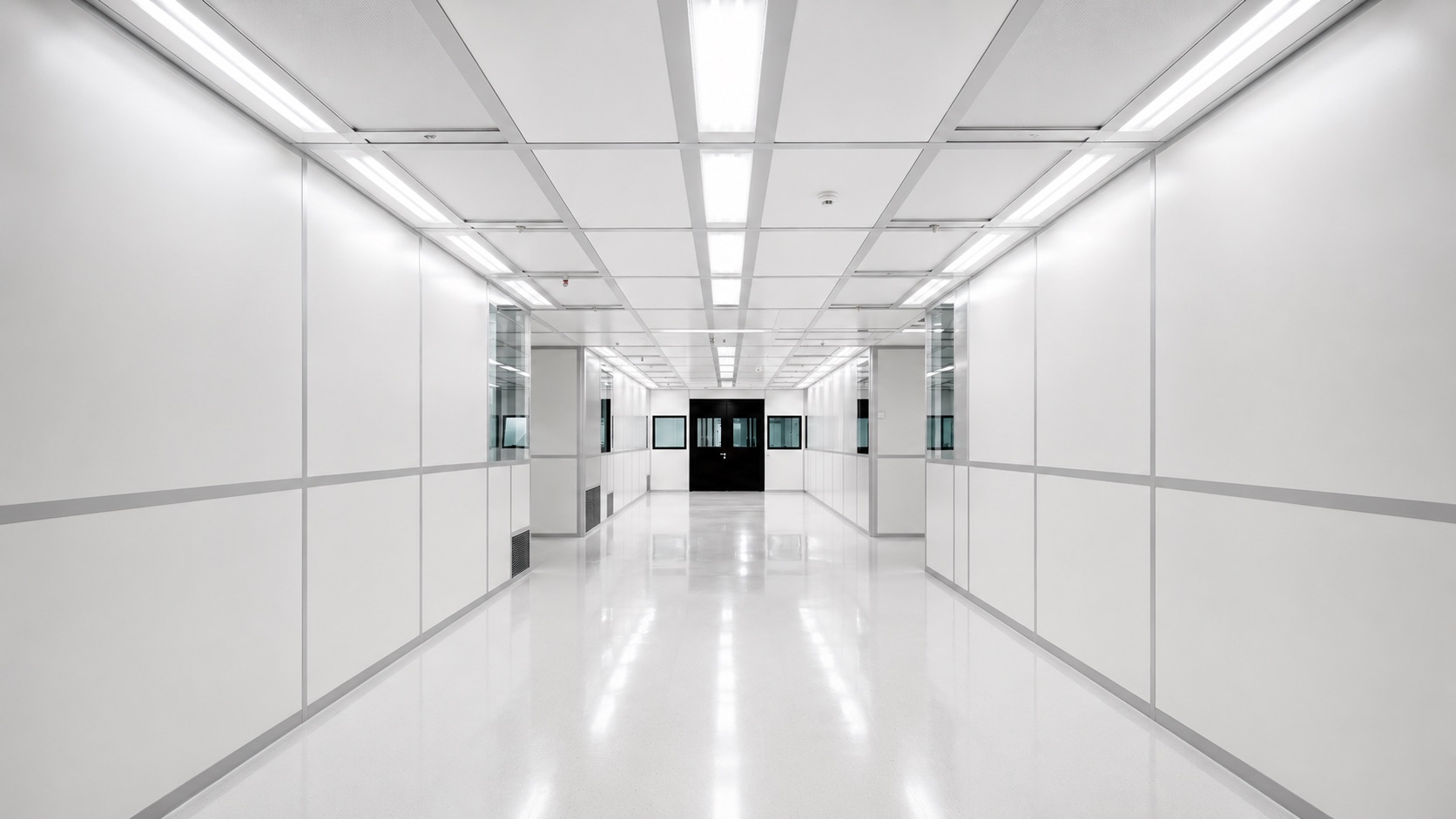
What Is a Hardwall Modular Cleanroom?
A hardwall modular cleanroom is a cleanroom enclosure built with rigid wall panels instead of flexible curtains. It provides a stronger structure, better sealing performance and a more permanent cleanroom environment than a softwall cleanroom.
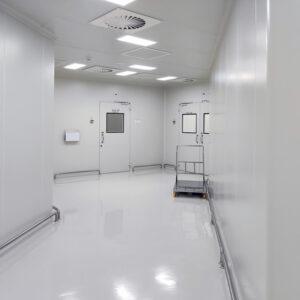
Hardwall cleanrooms are commonly used when the project requires stable airflow control, pressure control, better durability, cleaner appearance and long-term production use. They can be designed as freestanding rooms or integrated into an existing building area.
Rigid Wall Panels, Ceiling Systems and Structural Configurations
YOUTH hardwall modular cleanrooms can be configured with different cleanroom-compatible wall and ceiling materials according to the required cleanliness level, chemical resistance, durability and project budget.
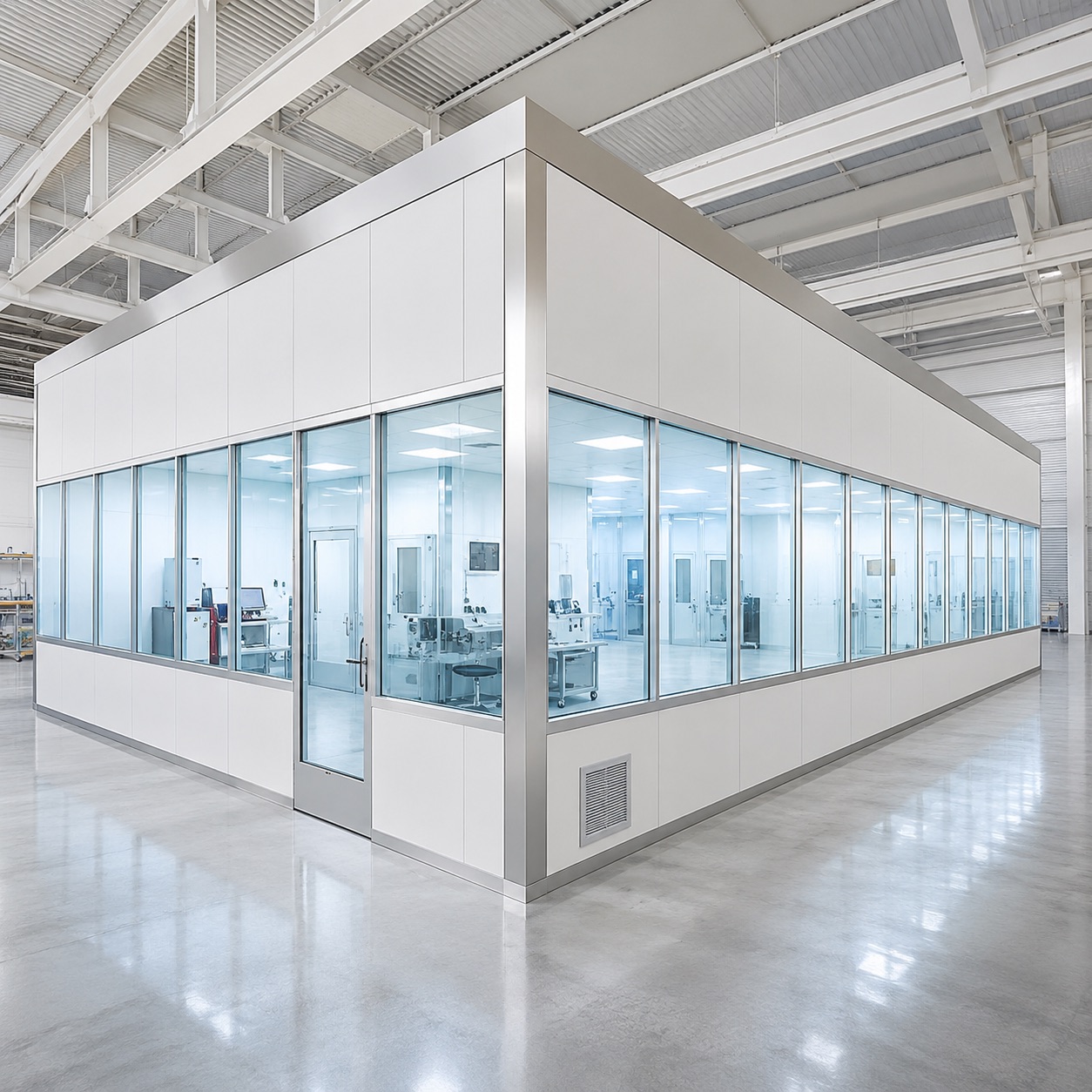
Стінові панелі
Options may include sandwich panels, steel panels, stainless steel panels, glass panels or other cleanroom-compatible wall systems.
Ceiling System
The ceiling can be designed to support FFUs, HEPA boxes, lighting, return air paths and maintenance requirements.
Cleanroom Doors
Swing doors, sliding doors, automatic doors or interlocked cleanroom doors can be selected according to personnel and material flow.
Підлога
Cleanroom flooring can be selected based on anti-static performance, chemical resistance, cleaning requirements and load capacity.
Frame and Support
The cleanroom can be designed as a freestanding structure or connected to the existing building structure.
ISO Class 5–8 Design Options for Hardwall Cleanrooms
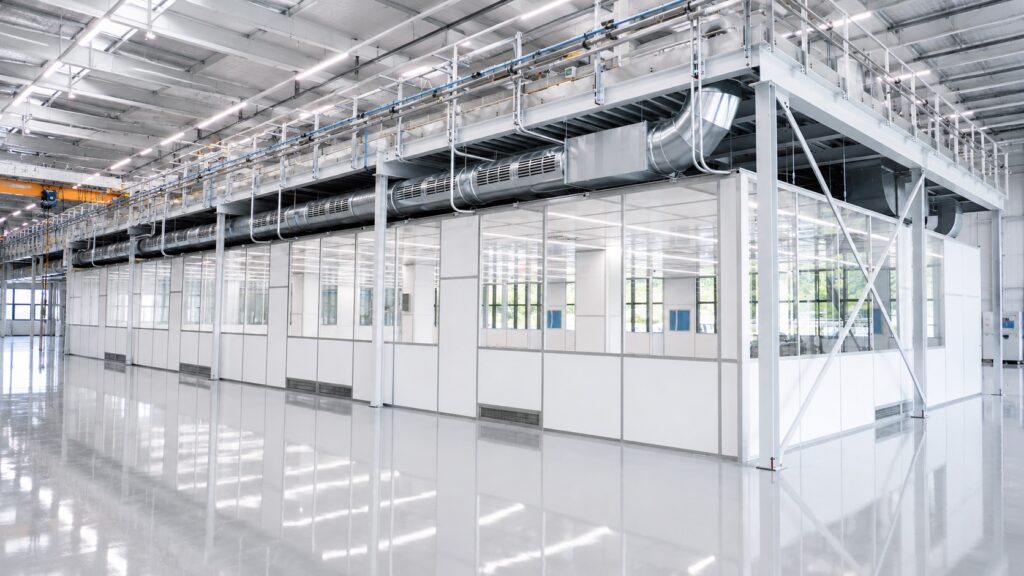
Hardwall modular cleanrooms can be configured for different ISO-class environments by adjusting air supply volume, HEPA filtration coverage, return air design, room sealing, pressure control and internal layout.
| Клас чистих приміщень | Typical Hardwall Application |
|---|---|
| Клас ISO 5 | Critical clean zones, local high-cleanliness work areas |
| Клас ISO 6 | Precision manufacturing and sensitive assembly |
| Клас ISO 7 | Pharmaceutical, medical device and electronics clean production |
| Клас ISO 8 | General controlled manufacturing and packaging areas |
The final ISO-class design should be confirmed based on room size, process contamination load, equipment heat load and operating conditions.
Hardwall Modular Cleanroom Specification Fields
| Specification Field | What To Define |
|---|---|
| Target ISO class | ISO Class 5, 6, 7 or 8 target and whether it applies to the full room or a local zone |
| Wall panel system | Panel material, surface finish, cleanability, chemical resistance and installation method |
| Ceiling system | Ceiling grid, FFU layout, lighting and maintenance access |
| Door and window | Door type, observation window, sealing, access control and traffic flow |
| Підлога | ESD, epoxy, vinyl or other floor system depending on industry and cleaning needs |
| FFU / HEPA configuration | Filter coverage, replacement access, airflow path and testing needs |
| Pressure / airflow | Room-to-room pressure, air return, leakage control and balancing responsibility |
| Документація | Drawings, component list, FAT / SAT support, operation manual and maintenance records |
Core Components of a Modular Cleanroom System
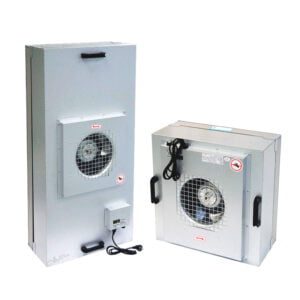
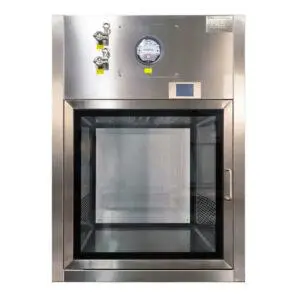
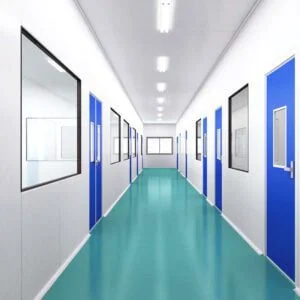
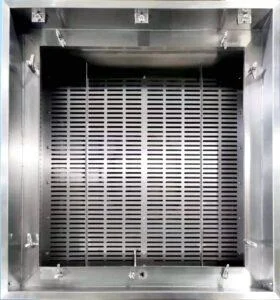
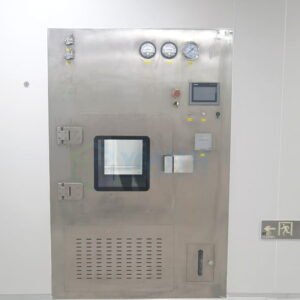
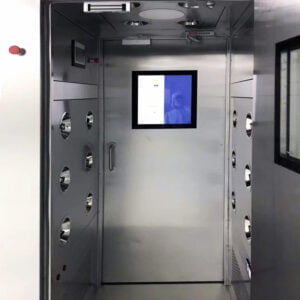
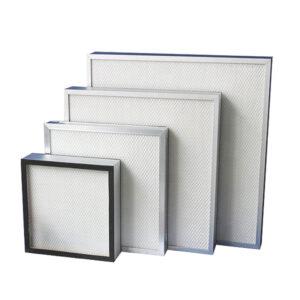
A modular cleanroom is not only a room enclosure. It is a complete controlled-environment system built from cleanroom-compatible components. YOUTH can supply the main cleanroom structure and related equipment according to your project requirements.


Applications of Hardwall Modular Cleanrooms
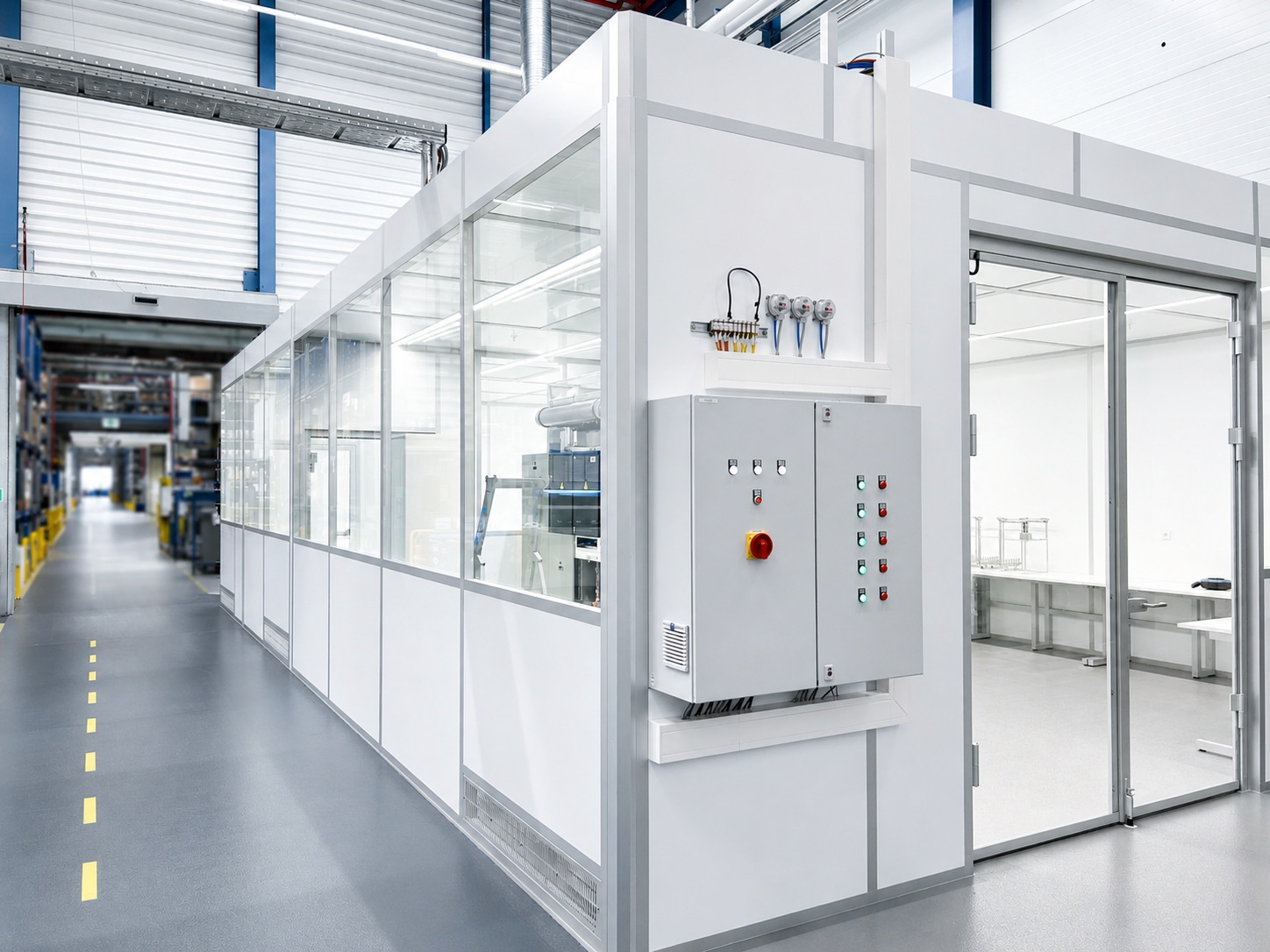
Hardwall modular cleanrooms are suitable for projects that require stable structure, clean appearance and long-term environmental control.
- Medical device assembly and packaging
- Pharmaceutical auxiliary clean areas
- Прецизійне виробництво
- Aerospace component handling
- Збірка електроніки
- Laboratory clean areas
- Optical and instrument manufacturing
- Quality inspection rooms
Hardwall vs Softwall Cleanrooms: Which One Should You Choose?
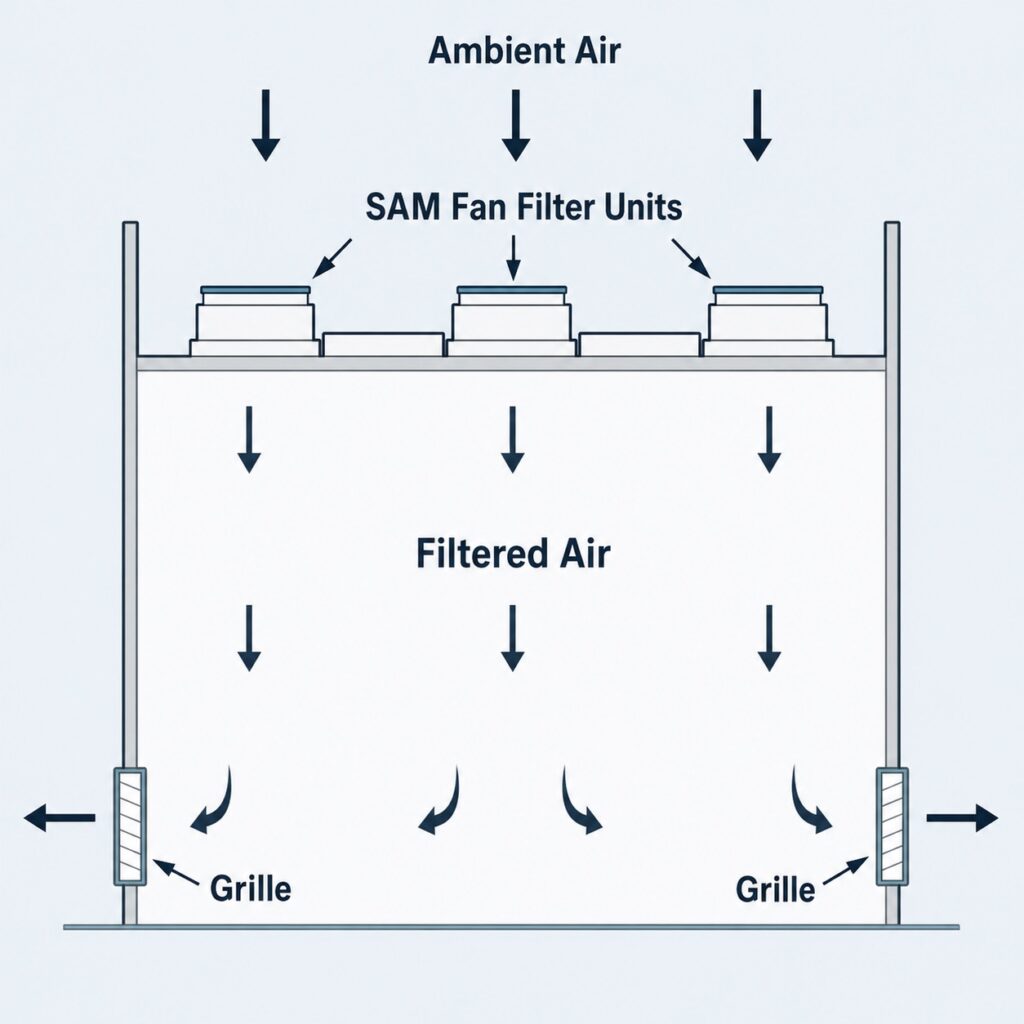
Choose a hardwall cleanroom when your project requires stronger sealing, long-term use, better durability, higher cleanliness stability or a more professional cleanroom appearance.
Choose a softwall cleanroom when your project requires lower cost, faster relocation, temporary production space or flexible cleanroom expansion.
Hardwall is usually recommended for:
- Long-term production
- Higher cleanliness requirements
- More stable temperature, humidity or pressure control
- Pharmaceutical, medical device or precision manufacturing projects
Softwall is usually recommended for:
- Temporary clean areas
- Pilot production
- Budget-sensitive projects
- Mobile or expandable cleanroom needs
When Hardwall Is the Better Starting Point
A hardwall modular cleanroom is usually the better starting point when the project requires long-term production, better sealing, stable pressure control, frequent cleaning, stronger cleanability documentation or a higher-confidence route toward ISO / GMP-style qualification.
Hardwall construction is especially useful for pharmaceutical support areas, medical device manufacturing, electronics production, precision assembly, clean packaging and applications where the cleanroom will remain in place for a long operating period.
Common RFQ Mistakes for Hardwall Modular Cleanrooms
| Помилка. | Наслідок |
|---|---|
| Requesting only room size | Supplier cannot correctly estimate FFU, panel, ceiling, door and airflow needs |
| Not defining ISO class | Quotations may not be comparable and testing expectations remain unclear |
| Ignoring material flow | Pass box, door and zoning requirements may be added too late |
| Ignoring cleaning access | QA or production may reject surfaces, corners or maintenance access after installation |
| Missing document requirements | FAT, SAT, IQ / OQ support or certificates may not be included in the original scope |
| Treating supplier scope as full EPC scope | HVAC, utilities, civil works and final validation responsibilities may remain unclear |
Information Needed for a Modular Cleanroom Quote
Please tell us:
- Required room size or available installation area
- Target ISO class
- Application industry and production process
- Hardwall or softwall preference
- Required temperature and humidity control
- Number of operators inside the cleanroom
- Main equipment installed inside the room
- Material and personnel flow requirements
- Country or project location
ПОШИРЕНІ ЗАПИТАННЯ
What is the main advantage of a hardwall cleanroom?
A hardwall cleanroom provides stronger structure, better sealing and better long-term durability than a softwall cleanroom.
Can the wall panels be customized?
Yes. Wall material, thickness, panel type, window position, door type and room layout can be customized.
Can a hardwall cleanroom be freestanding?
Yes. Hardwall modular cleanrooms can be designed as freestanding cleanroom structures or integrated into existing buildings.
What ISO class is suitable for a hardwall cleanroom?
Hardwall cleanrooms are commonly configured for ISO Class 5 to ISO Class 8 applications, depending on airflow, filtration and process requirements.
Can YOUTH provide the complete cleanroom components?
Yes. YOUTH can provide wall panels, ceiling systems, doors, flooring, FFU, HEPA filters, pass boxes, air showers and related обладнання для чистих приміщень.
Is hardwall always better than softwall?
No. Hardwall is better when the buyer needs stronger structure, better sealing, long-term stability, cleaner surfaces, pressure control or stronger qualification support. Softwall may be more practical when the project is temporary, lower-risk, portable or cost-sensitive.