Scope disputes on cleanroom projects rarely announce themselves early. They surface at site acceptance testing, when a buyer expects a room pressure cascade to hold within ±5 Pa and the equipment supplier has no contracted basis to balance it — because the HVAC engineer was never formally assigned that responsibility either. By then, ceilings are closed, commissioning schedules are tight, and everyone is pointing at language in the original specification that was never precise enough to assign the work to anyone. The procurement decision that prevents this happens before a single unit is quoted: separating what the equipment supplier is delivering from what the facility contractor and HVAC engineer are responsible for, in writing, before document approval. What follows will help you identify where that line sits, what specification language creates unintended commitments, and what conditions must be satisfied before an equipment specification is ready to approve.
Scope boundaries before cleanroom equipment specification starts
The most consequential specification error is not a wrong filter efficiency figure or a missing drawing revision. It is absorbing HVAC scope into equipment supply language before a contracted HVAC partner exists to own it.
Air handling units typically account for more than 60% of total site power consumption in cleanroom facilities. That single figure illustrates how large the HVAC scope is relative to the filtration and cabinet equipment a supplier like Youth provides. Temperature and humidity conditioning — typically targeting ranges around 18–24°C and 45–60% RH in pharmaceutical environments — is delivered by the air handling system, not by standalone cleanroom units. Air change rates, often designed at 20–40 ACH for pharmaceutical-grade rooms, are a sizing parameter for the HVAC system, not a performance output of a fan filter unit or biosafety cabinet in isolation. Pressure differential cascades between clean and dirty corridors depend on product type, room layout, and door specifications — all facility-level design decisions.
Cleanroom certification is equally outside equipment supply scope. Particle count testing, airflow visualization, and room recovery testing are performed by a competent third-party tester under a separate contract. No equipment supplier can complete or guarantee this work without operational HVAC, functional interlocks, and a finished room envelope. Expecting certification as a deliverable from an equipment purchase is a planning error that routinely delays validation timelines by weeks.
The practical implication: before the first specification clause is written, the project team should be able to answer who owns each of the following parameters.
| Cleanroom Parameter | Why It Falls Outside Equipment Supply Scope | Typically Owned By |
|---|---|---|
| Air handling (AHU power >60% of site total) | AHU energy scale confirms HVAC is a separate major system, not part of filtration or cabinet supply. | HVAC / EPC |
| Pressure differentials and cascade design | Cascade strategy is a facility-level decision driven by product type, not determined by supplied equipment. | HVAC / EPC |
| Temperature and humidity control (18–24 °C, 45–60 % RH) | Environmental conditioning is performed by the HVAC system, not by standalone cleanroom units. | HVAC / EPC |
| Cleanroom certification (particle counts, airflow visualization, recovery tests) | Certification requires a competent tester operating outside the equipment supplier’s contract. | Third‑party tester / Validation team |
| Air change rates (20–40 ACH) | ACH is a design parameter for HVAC system sizing, not a characteristic of the supplied filtration unit alone. | HVAC / EPC |
If any cell in that table reads “unassigned,” the specification is not ready to proceed. Writing equipment supply language before those responsibilities are allocated is the most reliable way to absorb scope the supplier cannot deliver.
Claims Youth should avoid when EPC or HVAC remains outside supply
Ambiguous phrasing in a quotation or datasheet does not need to be technically false to create a damaging buyer expectation. Three phrases appear with enough frequency in معدات غرف الأبحاث documentation that they deserve specific attention.
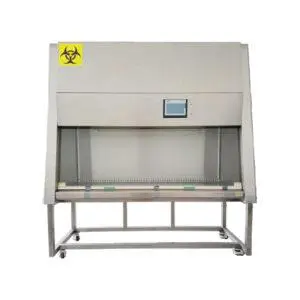
Describing a unit as providing “laminar airflow” over a workstation implies, to many buyers, that the entire airflow system is included — AHU, ductwork, pressure control, and all. In practice, the equipment supplier is furnishing a local airflow unit. Room-level airflow delivery remains dependent on ductwork and air handling equipment the HVAC contractor furnishes. When particle counts outside the unit fail after installation, buyers who read “laminar airflow” as a turnkey airflow delivery commitment will dispute the equipment supplier’s scope before they question their HVAC contractor’s layout.
Stating that a biosafety cabinet is “ISO 5 compliant” is accurate for the cabinet’s internal work zone — the zone the cabinet is designed and tested to protect. It does not mean the room surrounding the cabinet will achieve ISO 5 classification. Room classification requires HVAC design sized for the target class, correct supply and return placement, an appropriate air change rate, a sealed room envelope, and third-party certification testing. An equipment datasheet that omits this distinction can lead a buyer to defer room-level HVAC investment on the assumption that the cabinet purchase has satisfied the classification requirement.
Listing “HEPA filter supply” without scope breakdown creates a third layer of ambiguity. The filter medium is supplied; integrity testing, frame sealing, and terminal housing installation are not automatically included. Each of those is a separate work package that requires site access, trained technicians, and coordination with ceiling and ductwork installation sequences.
Each of these failure patterns has the same structure: accurate technical language used without scope context creates unintended buyer expectations.
| Claim That Creates Ambiguity | Unintended Buyer Expectation | Clarification to Include in Specification |
|---|---|---|
| “Laminar airflow” over a workstation | The entire airflow system, including AHU, ductwork, and pressure control, is included in the supply. | Local airflow unit is supplied; room‑level airflow delivery depends on HVAC/EPC‑furnished ductwork and AHU. |
| “ISO 5 compliant” for a biosafety cabinet | The whole room will be certified to ISO 5. | Only the cabinet’s internal work zone meets ISO 5; room classification requires separate HVAC design and certification. |
| “HEPA filter supply” without further breakdown | Filter integrity testing, frame sealing, and terminal housing installation are part of the same work package. | HEPA filter units are supplied; integrity testing, sealing, and housing installation are separate work packages to be arranged by site/EPC. |
The clarification column in that table is not a legal disclaimer — it is specification language. Including it directly in the quotation document removes the ambiguity before it becomes a contract dispute.
Specification language for supplied units, interfaces, and documents
A well-bounded equipment specification does three things: it defines what is supplied, it defines what is not supplied, and it provides the interface data that the HVAC designer and EPC contractor need to do their work correctly.
For supplied filtration units, the specification should state filter efficiency at a defined particle size — 99.97% at 0.3 µm is a commonly cited figure for HEPA-grade filters — and should identify dispersed oil particle (DOP) integrity testing as a separate deliverable, not an assumption. Treat the efficiency figure as a design reference appropriate for the project standard, not as a universally mandated minimum across all applications. What matters is that the specification names a figure rather than relying on “HEPA” as a shorthand that different parties interpret differently.
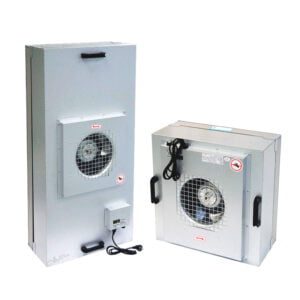
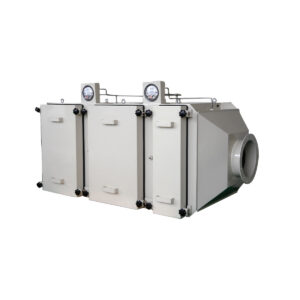
Interface data is where many specifications fall short. For a وحدة تصفية المروحة (FFU) or terminal HEPA housing box, the specification should include the required air volume in CFM, the pressure drop across the filter at design airflow, and the ceiling cutout dimensions. These are not decorative figures — they are the planning criteria the HVAC designer uses to size supply and exhaust capacity. If those values are absent from the equipment specification, the HVAC designer must assume them, and a mismatch discovered during commissioning means either re-ducting or accepting underperforming airflow distribution.
Control signal wiring points and power connection locations must also appear in interface drawings. The handoff risk sits precisely at the ceiling penetration: the equipment supplier finishes at the unit; the EPC contractor finishes at the ceiling structure. Without a drawing that assigns each penetration, power termination, and signal wire to one scope or the other, both parties may reasonably assume the other has completed the work. ISO 14644-4:2022 supports the principle that interface coordination between equipment supply and facility construction should be defined at the design stage — which in practice means those drawings must exist before installation begins, not as a punch-list item discovered during commissioning.
The document deliverables list should be explicit. Factory acceptance test records, filter test certificates, interface drawings, installation clearance dimensions, and operation and maintenance manuals are each a named deliverable. An open-ended phrase like “documentation package” leaves the buyer uncertain about what they will receive and the supplier uncertain about what they are obligated to produce.
Coordination risk when turnkey and equipment supply are mixed
When a project has no clear separation between equipment supply and turnkey scope — or when a buyer assumes turnkey delivery from an equipment quotation — performance failures that originate in facility design get attributed to equipment. This is not a hypothetical; it is one of the most consistent patterns in cleanroom commissioning disputes.
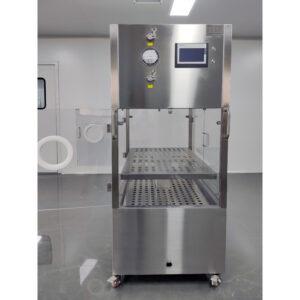
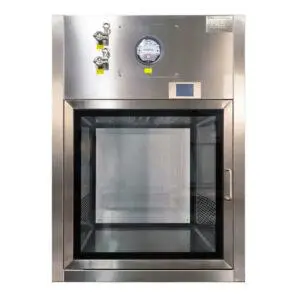
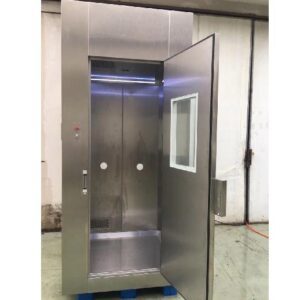
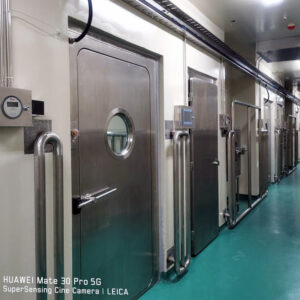
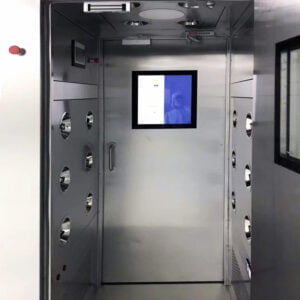
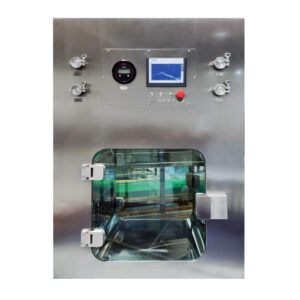
Consider a كشك توزيع العينات أو كشك توزيع العينات installed in a room where pressure cascade management was never formally assigned. If the room’s double-leaf door springs weaken over 18 months of operation, the pressure differential between the booth’s surrounding room and the corridor will drift. The booth’s airflow unit continues to operate correctly. Particle counts inside the booth remain controlled. But the room fails its periodic pressure verification, and without a written scope separation, the equipment supplier becomes the first call — despite having no contractual basis or physical mechanism to fix door hardware calibration.
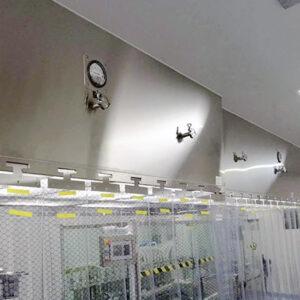
Poor supply and return air grille placement creates a related misattribution pattern. Dead zones that allow particle accumulation near workstations are an HVAC layout problem. No filtration unit can compensate for a return grille positioned in a way that creates recirculating airflow on the opposite side of the room. When particle counts fail in those zones, the blame often lands on the equipment before anyone reviews the air distribution design.
Room recovery rate — the time required to return to classified cleanliness after a contamination event — is perhaps the most frequently misunderstood performance metric. Recovery depends on air change rate and total filtration efficiency across the room, both of which are HVAC system parameters. A filtration unit that meets its individual specification cannot shorten recovery time in a room with a lower-than-designed ACH, regardless of unit-level filter efficiency.
| Performance Issue | Possible Misattribution to Equipment | Underlying Facility Design or HVAC Factor |
|---|---|---|
| Room pressure cascade drifts over time | Equipment is thought to be faulty or losing performance. | Double‑leaf door springs weaken, altering pressure balance; a facility‑design coordination issue, not an equipment fault. |
| Dead zones and particle accumulation | Equipment is blamed for failing to maintain cleanliness. | Poor supply/return air grille placement creates stagnant areas; this is an HVAC layout risk, not repairable by filtration units alone. |
| Slow room recovery after a contamination event | Supplied filtration units are considered insufficient. | Recovery rate depends on HVAC air change rate and overall filter efficiency, not solely on the supplied filtration units. |
The consequence column in that table points consistently toward the same root cause: scope ambiguity allows facility-design risks to become equipment disputes. Proper HVAC design mitigates each of these failure patterns; the problem arises when it is unclear who is responsible for ensuring that design is correct.
Approval trigger after site and supplier scopes are separated
Approving a GMP cleanroom equipment specification before scope boundaries are formally separated is a procurement risk, not a scheduling efficiency. The downstream cost — rework during commissioning, unresolved accountability at site acceptance testing, or unassigned validation obligations surfacing at regulatory inspection — consistently exceeds the time cost of resolving the separation before approval.
Two conditions should be satisfied in writing before the specification is signed off.
The first is a written separation document that lists, by item: the units and documents the equipment supplier is contracted to deliver; the works explicitly excluded from that supply (HVAC, controls integration, installation, site balancing, validation execution); and the interface drawing deliverables that define the boundary between the two scopes. This is not a formal regulatory requirement under any single standard — it is a practical review check that removes ambiguity from the contract before it creates a dispute. Without this document, excluded works remain tacit, and tacit exclusions rarely survive a site acceptance disagreement intact.
The second condition is that pressure cascade strategy, ceiling penetration locations, and power and control signal interfaces are each assigned, by name, to either equipment supply scope or site/EPC scope. These four items represent the specific handoff points where scope disputes concentrate: the ceiling opening that one party expects the other to frame and seal; the pressure target that HVAC is supposed to maintain but nobody formally assigned; the 24V control signal that the equipment supplier terminates at the unit but nobody ran back to the BMS. A specification that resolves each of these assignments before approval removes the conditions under which those disputes arise.
Treating this sign-off as a quality management checkpoint — consistent with the documented scope control principles underlying ISO 9001:2015 — is a practical way to frame the internal approval process. The point is not certification compliance; it is that scope separation documented before approval is evidence, and scope separation assumed after the fact is a liability.
For a useful reference on what compliance and testing documentation the equipment side of this boundary requires, ISO 14644 and GMP compliance standards for cleanroom equipment provides a framework for mapping certification requirements to equipment supply deliverables.
The core discipline of GMP cleanroom equipment specification is not technical — it is structural. A specification that names filter efficiency, CFM values, and ceiling cutout dimensions but leaves pressure cascade ownership, filter integrity testing responsibility, and validation execution unassigned will generate disputes at the worst possible project stage: after installation, during commissioning, or at first regulatory inspection.
Before approving any equipment specification, confirm that a written separation document exists, that interface drawings assign every penetration and signal to a named scope, and that performance metrics like room recovery rate and air change delivery are explicitly assigned to HVAC rather than absorbed into equipment supply language. The specification work required to produce those documents takes days; the rework that follows an ambiguous approval routinely takes months.
الأسئلة الشائعة
Q: What happens if the HVAC contractor is not yet appointed when the equipment specification needs to go out?
A: Delay specification approval until HVAC ownership is assigned, even informally in a project responsibility matrix. Without a named HVAC party, the interface drawings cannot assign ceiling penetrations, pressure targets, or control signal routing to anyone — which means those items default to the equipment supplier by silence. A provisional scope separation document with placeholder HVAC assignment is preferable to an approved specification with unresolved handoff points.
Q: Once the equipment specification is approved and the separation document is signed, what should the project team do next?
A: Issue the interface drawings to the HVAC designer and EPC contractor immediately and confirm in writing that each party has accepted their assigned scope items. Approval of the separation document only closes the specification risk; the coordination risk remains open until the HVAC designer has used the CFM values and pressure drop data to size supply and exhaust, and until the EPC contractor has acknowledged ceiling cutout dimensions and power connection responsibilities. That written acknowledgement is the next concrete deliverable.
Q: Does this scope separation approach still apply when a single contractor is handling both HVAC and equipment procurement?
A: Yes — and the risk of scope ambiguity is arguably higher in that situation. A single contractor managing both workstreams has an incentive to keep scope language broad, which makes it easier to absorb or disclaim individual items later. The written separation document and interface drawing assignment should still exist as distinct internal deliverables within that contractor’s package, so that performance disputes during commissioning can be traced to a defined scope rather than treated as a shared liability across the entire contract.
Q: Is a Fan Filter Unit or HEPA housing box ever the right product to specify if the HVAC system has not been sized for the room’s target classification?
A: No. A Fan Filter Unit or terminal HEPA housing box delivers local filtration at the ceiling plane, but room classification depends on the HVAC system delivering the correct air change rate and maintaining the designed pressure differential. Specifying filtration equipment before HVAC sizing is confirmed creates a sequencing mismatch — the equipment may be installed and tested to its own specification while the room never achieves the target ISO class because the underlying air change rate is insufficient.
Q: How does mixing turnkey language into an equipment quotation affect the buyer’s validation timeline, even if no formal dispute arises?
A: It typically delays validation by forcing a scope clarification at the worst possible stage. When a buyer enters the validation phase expecting room certification as part of the equipment purchase, the realisation that particle count testing, recovery testing, and room pressure verification require separate contracts and a fully operational HVAC system arrives after installation is complete. At that point, the buyer must procure a qualified third-party tester, confirm HVAC operational status, and produce the written scope evidence that should have existed at specification approval — all while commissioning timelines are already running. EU GMP Annex 1 requires that qualification activities are planned and executed systematically; discovering unassigned validation responsibilities during execution is precisely the condition that planning is meant to prevent.