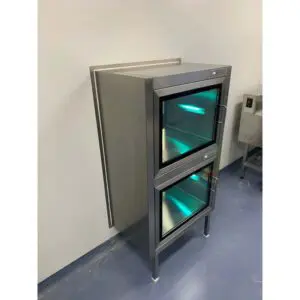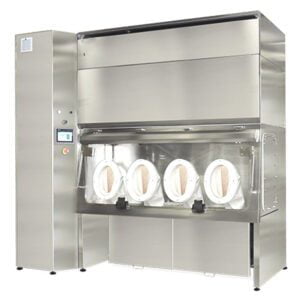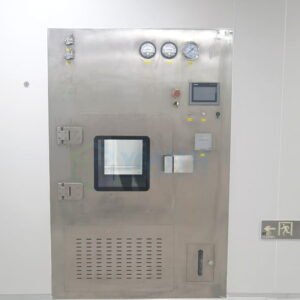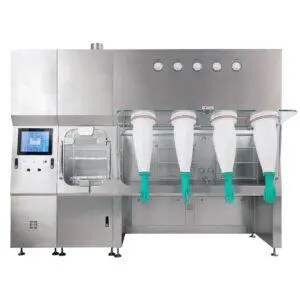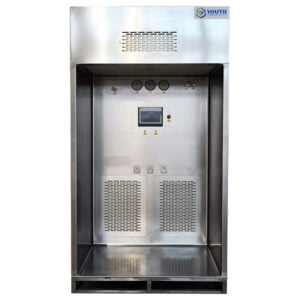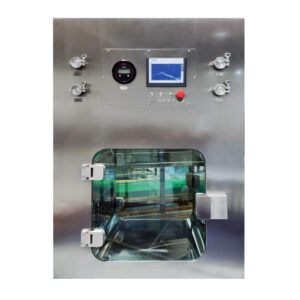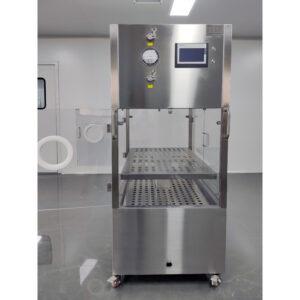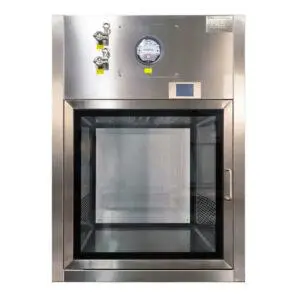
Many sterile manufacturing sites procured and installed barrier systems, pass-through units, and HEPA filtration long before they formalized their Contamination Control Strategy under Anhang 1—and the gap between what the equipment does and what the CCS documents claim it does has become a recurring audit liability. When an inspector asks for evidence that a specific device prevents a specific contamination route, a qualification report that describes equipment function without referencing the CCS risk scenario is difficult to defend. The cost shows up as inspection observations, validation replanning, and delayed product release, not at commissioning. The judgment that resolves this is not whether the equipment was correctly installed, but whether its role in the contamination control chain is explicitly documented and justified through Qualität Risikomanagement before that question is asked.
Annex 1 Should Be Translated Into Equipment Roles
The CCS is not a design specification—it is a risk accountability document that must name each engineering control, explain what contamination risk it addresses, and identify what evidence demonstrates it is working. That distinction matters for procurement because it changes what you need from a supplier before equipment is ordered, not after it arrives on site.
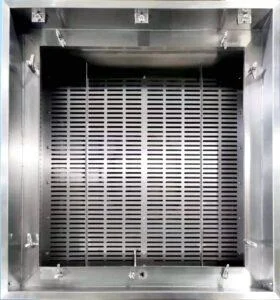
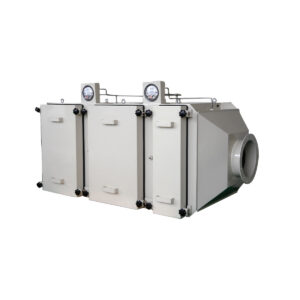
The most immediate translation error is treating HEPA filtration integrity testing, pass-through interlocking, or continuous particle monitoring as isolated compliance checks rather than as elements that must each link back to a contamination risk identified in the CCS. Annual HEPA or ULPA integrity testing, for example, is only useful as CCS evidence if the test frequency, acceptance criteria, and failure response are written into the strategy before the filter is qualified. A test certificate that exists independently of the CCS cannot be used by QA to justify ongoing filter performance within that framework without additional work.
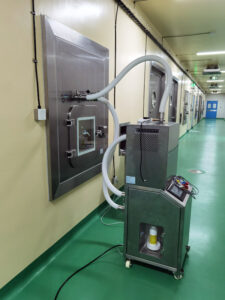
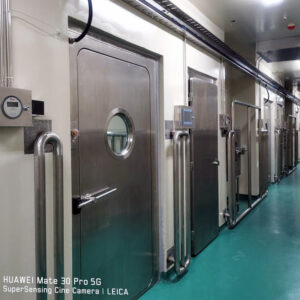
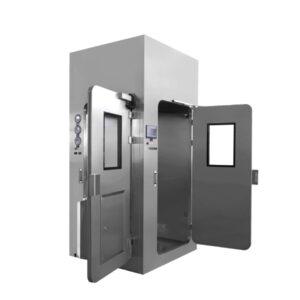
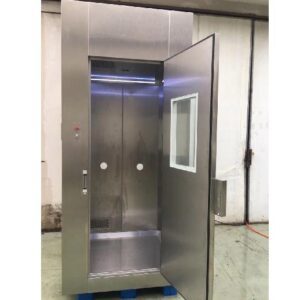
The same logic applies to material transfer controls. Pass-through systems with interlocking, flushing, and validated disinfection procedures fulfill an Annex 1 expectation, but that expectation is only met when the interlock function and disinfection protocol are validated against the specific contamination separation requirement between the adjacent zones—not when the hardware is present and the interlock activates.
The following table maps the four equipment categories most commonly implicated in CCS planning to their expected Annex 1 roles and the verification evidence that QA will need to use them.
| Kategorie Ausrüstung | Annex 1 Role / Expectation | What to Verify / Evidence |
|---|---|---|
| HEPA/ULPA-Filterung | Annual integrity test; part of CCS engineering controls | Integrity test records and test frequency |
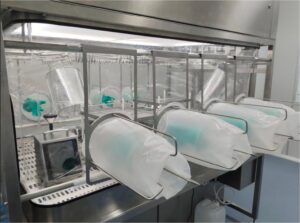
| Barrier & Isolator Systems | Reduce human intervention risk; require qualification, operating procedures, maintenance | Qualification documentation, cleaning/decontamination validation |
| Material Pass-Through & Transfer | Interlocking, flushing, validated disinfection to maintain separation | Interlock function test, disinfection procedure validation |
| Environmental Monitoring Systems | Real-time continuous monitoring for Grade A/B, automated data for early detection | Data export capability, alarm management records |
The table columns point to a pattern: for each equipment category, there is a CCS role and a corresponding evidence type. If either is absent at the time of inspection, the equipment’s contribution to contamination control becomes an assertion rather than a documented control. Equipment selection should begin with the CCS role already defined.
Contamination Control Strategy And Device Evidence
The gap between equipment installation and CCS evidence is rarely obvious at project handover. It becomes visible when QA tries to build the CCS lifecycle review and finds that device performance data does not connect to the contamination risk it was intended to control.
Airflow visualization during OQ creates CCS-usable evidence only when the test scenario is tied to a specific contamination risk identified in the strategy.
Airflow visualization during operational qualification is one of the clearer examples of this problem. The test provides documentary evidence that unidirektionaler Luftstrom protects a critical zone under defined conditions—but only if the OQ protocol was written to address the contamination risk scenario in the CCS, not just to confirm that air moves in the correct direction. Sites that run airflow visualization as a standard OQ task without connecting the test design to CCS risk scenarios end up with qualification reports that describe airflow behavior but do not demonstrate protection of a named critical zone. The difference matters when the CCS is reviewed or when a regulatory inspector asks what evidence supports the claim that the critical zone is protected during this specific operation.
Particle monitoring for Grade A and Grade B areas carries a harder boundary: Annex 1 requires continuous real-time monitoring in ISO 5 / Grade A areas, and this requirement directly drives the technical specification of the monitoring system rather than leaving it as a design preference. The consequence is that a monitoring system that logs data without real-time alarming, or that requires manual export for review, does not meet the functional requirement even if the particle counter itself performs to specification. When selecting or specifying automated environmental monitoring systems, the question is not whether the system counts particles, but whether it can provide the real-time data output and alarm management that feeds the CCS lifecycle review. Data export compatibility with site BMS and CCS documentation systems should be verified at procurement, not discovered at qualification.
Barrier And Local Protection Tradeoffs
Annex 1’s preference for isolators and RABS over open processing reflects a clear directional judgment: reducing direct operator-to-product contact reduces the largest single variable in contamination risk for aseptic operations. But the preference for barrier systems does not resolve the engineering decision—it shifts the decision toward qualification complexity, intervention management, and operational procedure depth.
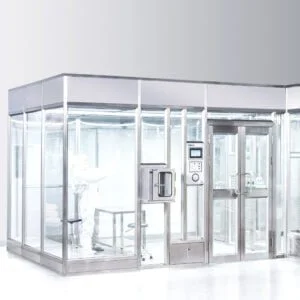
The practical choice between a closed isolator, a RABS, and a local unidirectional airflow unit is an engineering trade-off that risk assessment should drive, not historical preference or capital budget alone. Closed isolators provide the highest reduction in operator-product contact but introduce decontamination cycle development, integrity testing, and tightly controlled intervention procedures that many sites underestimate during procurement. A site that selects a closed isolator without planning for decontamination cycle validation and rigorous intervention control has made a capital expenditure without accounting for the operational infrastructure needed to make the barrier credible under scrutiny.
| Barrier Type | Risk Reduction Profile | Qualification & Operating Demand | Trade-Off to Consider |
|---|---|---|---|
| Isolator (closed) | Highest reduction; complete operator-product separation | Decontamination cycle development, integrity testing, rigorous interventions control | Higher capital investment, more complex interventions |
| RABS | High reduction; limited operator access, still relies on controlled openings | Gowning procedures, intervention protocols, airflow validation | Balances operator flexibility with containment, higher procedural dependency |
| Local Unidirectional Airflow (no full barrier) | Moderate reduction; relies on cleanroom conditions and aseptic technique | Cleanroom qualification, continuous monitoring, staff training | Lower upfront cost, but greater open-process contamination risk |
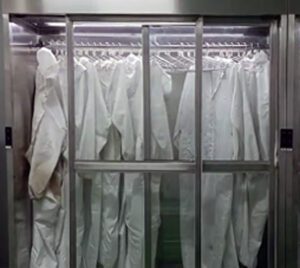
RABS offers a middle position that preserves some operator flexibility while still limiting access. The trade-off is higher procedural dependency: gowning procedures, intervention protocols, and airflow validation must all be operational and documented for the barrier to function as a CCS control rather than a physical enclosure. Sites that install RABS without developing and validating the intervention procedures have a containment hardware investment that is not yet a contamination control.
Local unidirectional airflow without a full barrier carries the most exposure risk in aseptic operations and depends heavily on cleanroom qualification, continuous monitoring, and operator aseptic technique discipline. It remains an option where the risk assessment supports it—but the risk assessment must justify it explicitly rather than selecting it because it has lower upfront cost.
The risk is not which barrier type is installed, but whether the qualification evidence and operating procedures make it function as a documented contamination control.
The isolator design consideration that current practice emphasizes—design for cleaning, decontamination, and minimized interventions—has direct consequences for equipment specification. Surface geometry, material compatibility with decontamination agents, and the accessibility of internal surfaces for cleaning validation are criteria that should appear in supplier RFQs, not be discovered during cleaning validation.
Supplier Documents That QA Can Actually Use
The most persistent friction in Annex 1 project execution is not that suppliers fail to provide documentation—it is that supplier documentation almost never maps to the site’s specific CCS framework in a form QA can use directly. The result is that QA rewrites or reconstitutes device evidence after procurement and installation, adding lifecycle cost and delaying CCS readiness.
The problem is structural. Suppliers issue HEPA integrity test certificates, qualification reports, interlock function records, and EMS configuration specifications against their own formats and reference frameworks. Those documents describe equipment performance, but they do not describe the equipment’s role in the site CCS, the contamination risk it addresses, or how its data feeds the CCS lifecycle review. When an inspector asks for evidence linking the pass-through system to the contamination separation claim between Grade B and Grade C zones, a generic interlock test record does not answer the question.
The decision at procurement is whether to require supplier documents that are structured to support CCS integration from the start, or to accept standard format documents and plan for post-procurement adaptation. The second path is not wrong, but the adaptation work must be scoped, resourced, and scheduled. Sites that treat supplier documentation as a handover deliverable rather than a CCS input often find that validation timelines extend because QA cannot use the documentation received without additional bridging work.
| Supplier Document | CCS Integration Point | What QA Should Verify | Risk if Not Aligned |
|---|---|---|---|
| HEPA/ULPA filter integrity test certificates | Filter performance data feeding CCS risk assessment | Test frequency, acceptance criteria, data traceability | QA cannot use certs without re-validation; audit finding risk |
| Isolator/RABS qualification protocol & report | Barrier effectiveness justification and cleaning/decontamination validation | Qualification tests match site CCS risk scenarios | Mismatched qualification approach undermines audit defense |
| Pass-through system validation documentation | Transfer control evidence in CCS | Interlock test records, disinfection procedure alignment with site SOPs | Undocumented transfer contamination risks |
| EMS configuration & data export specifications | Real-time monitoring data feed for CCS lifecycle review | Data format compatibility with site BMS and CCS documentation | Manual data handling increases errors and inspection gaps |
| Single-use component sterilization records | Vendor and materials control integration in CCS | Sterilization process validation and supply-chain traceability | Inspection gap in material control evidence |
Three documents from the table deserve particular attention at procurement. EMS configuration and data export specifications determine whether real-time particle monitoring data can feed the CCS lifecycle review or must be manually extracted—a distinction with direct inspection risk. Pass-through system validation documentation must align with site SOPs for disinfection, not just confirm that the interlock works in isolation. And single-use component sterilization records must carry supply-chain traceability that QA can integrate into vendor and materials control within the CCS, not just demonstrate that the sterilization process was validated in general.
Supplier documents that cannot be directly referenced in the CCS without rewriting create an unscheduled QA workload that shows up as inspection gaps if not resolved before product release.
Equipment Supports Annex 1 Only With Documented CCS Role
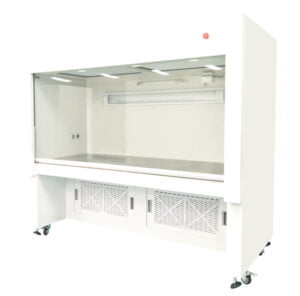
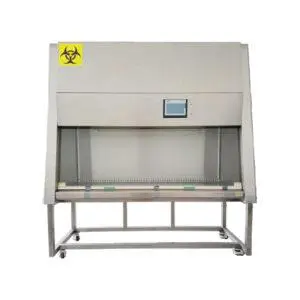
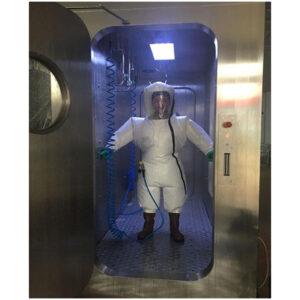
The threshold is simple and easily missed: equipment supports Annex 1 only when its role in contamination prevention, monitoring, or transfer control is explicitly documented within the CCS and justified through Quality Risk Management. A biosafety cabinet, a BIBO system, or a Passbox does not become an Annex 1 control by being installed in a cleanroom—it becomes one when the CCS identifies the contamination risk it addresses, explains why it was selected as the control, and links it to the monitoring and procedural measures that confirm it is working.
This threshold has a direct consequence for how equipment purchases are framed internally. Procurement decisions made on the basis of product category rather than CCS role create a later validation problem: QA must retroactively justify why the device was selected and what risk it controls, which is harder to document convincingly than a prospective justification made at the design stage. Regulators expect the CCS to show that contamination risks were identified first, controls were selected to address those risks, and equipment specifications followed from that analysis.
The QRM requirement embedded in this expectation is not bureaucratic formality. It determines whether the documented CCS role can withstand scrutiny when a contamination event or deviation occurs. If a contamination event implicates a material transfer route and the pass-through system has no documented CCS role, the site cannot demonstrate that the transfer control was part of a rational contamination control strategy—it can only show that a pass box was installed. That is a weaker position than most QA teams would choose to be in.
Practically, this means that every equipment category in the sterile manufacturing environment should have a CCS entry that names the contamination risk controlled, the QRM justification for the control selection, and the evidence framework that demonstrates the control is performing as intended. The entry does not have to be lengthy, but it must exist and must be traceable to the equipment qualification and operational monitoring records. Where those links are missing, the equipment’s contribution to contamination control remains an assumption rather than a documented control.
Vor jeder Annex 1 project moves from equipment selection into procurement, the CCS should already define the contamination risk each device is intended to address and the evidence that will demonstrate it is working. That sequence—risk identification first, equipment role second, supplier document requirements third—reduces the rework that occurs when qualification reports and supplier certificates arrive in formats that QA cannot reference without bridging documentation.
For teams currently reviewing equipment specifications or supplier shortlists, the most useful check is whether each candidate device has a named CCS role, whether the supplier can provide documentation structured to support that role, and whether the data outputs from monitoring and transfer control systems are compatible with the site’s CCS lifecycle review process. Gaps in any of these three areas represent work that will need to happen before product release—the question is whether it is planned and resourced, or discovered under time pressure.
Häufig gestellte Fragen
Q: Our cleanroom was commissioned years ago and equipment like pass-throughs and barrier systems were installed before we had a formal CCS. Can we align them with Annex 1 without replacing everything?
A: Yes, retroactive alignment is possible. You don’t need to replace functioning equipment; you need to document its existing role within the CCS. Start by performing a risk assessment that identifies the contamination route each device controls, then link existing qualification records to that risk scenario. The resulting CCS entry gives QA the traceability it needs without hardware changes, provided the original performance data is still valid and the device meets current operational requirements.
Q: We’ve identified that our supplier documents don’t map to our site CCS. What’s the immediate next step before we finalize a new equipment purchase?
A: Create a supplier document specification that names the CCS risk each device will address and the evidence format QA needs to integrate directly. Send that specification to shortlisted suppliers before ordering and ask them to confirm which of their standard documents meet it and where gaps remain. This transforms a post-delivery documentation issue into a procurement-stage alignment exercise, preventing unscheduled rework later.
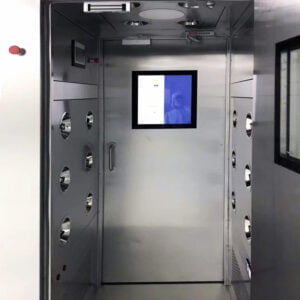
Q: Does this expectation for a documented CCS role apply to non-aseptic Reinraumausrüstung such as air showers or cleanroom furniture?
A: The requirement for a fully documented CCS role comes from EU GMP Annex 1, which targets sterile medicinal product manufacturing. For non-sterile or lower-grade cleanrooms, Annex 1 is not the governing standard, but the principle of linking engineering controls to contamination risks is still good practice. Non-aseptic equipment may not need the same depth of QRM justification, but should still be traceable to your environmental control rationale.
Q: When selecting between a closed isolator and a RABS for a new filling line, which one typically results in less documentation rework during CCS integration?
A: Neither is immune, but RABS often generate more rework if intervention procedures and operator dependency are underestimated. A closed isolator demands extensive decontamination cycle validation and integrity testing, yet once those are documented, the operator interaction risk is mechanically limited. RABS retain more procedural dependency, so gaps in gowning protocols and intervention documentation become a greater source of retroactive CCS retrofits. The key is to assess which system your team has the operational discipline to document rigorously from the start.
Q: As a contract manufacturer with many legacy filling lines, is it worth retroactively writing individual CCS entries for every single piece of equipment, or can we document by system?
A: Worth it—but system-level documentation can be acceptable if a risk assessment justifies that the group of devices together controls a specific contamination route. Grouping cannot simply be a convenience; it must demonstrate that failure of any single device within the group would not create an unaddressed risk. The cost of missing documentation during an inspection typically exceeds the investment in structured, traceable CCS entries, so the effort pays for itself in audit defense and avoided release delays.