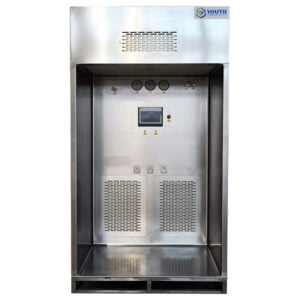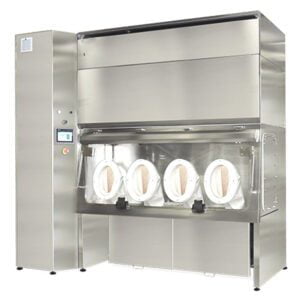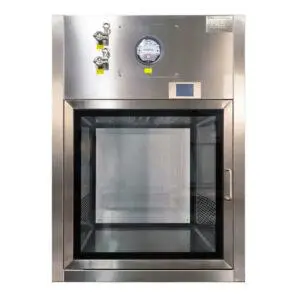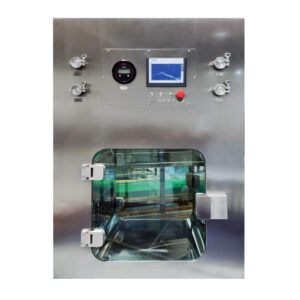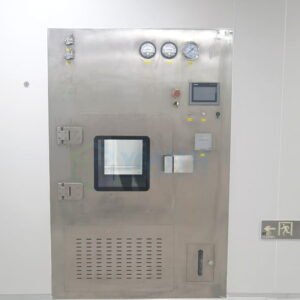
Les équipes chargées des achats qui substituent une enceinte à flux laminaire à recirculation à une véritable unité de confinement découvrent rarement la lacune lors de l'examen du devis. Cette lacune apparaît lors de la validation - souvent après l'installation, la mise en service et le premier contrôle environnemental - lorsque le comptage des particules ou les données d'échantillonnage de l'air révèlent que la poudre dispersée migre vers la zone respiratoire de l'opérateur au lieu d'être capturée et évacuée. Pour remédier à cette situation, il faut soit installer des conduits d'extraction qui n'ont jamais été conçus dans l'unité, soit remplacer entièrement l'enceinte, soit accepter un contrôle procédural qui ne peut pas être vérifié de manière fiable. La décision qui permet d'éviter tout cela est étonnamment précoce : il s'agit de définir, par écrit, si l'enceinte doit protéger uniquement la propreté du produit ou si elle doit également capturer activement la poudre en suspension dans l'air libérée lors de l'écopage, du chargement et du transfert de la cuve, avant que le premier devis du fournisseur ne soit établi.
Ce que les acheteurs doivent définir avant d'appeler une enceinte une cabine de distribution
Le problème de terminologie commence avant l'appel d'offres. La production, les services d'hygiène et de sécurité et les services d'approvisionnement utilisent fréquemment l'expression “cabine de distribution” pour désigner des choses différentes - et dans de nombreux cas, cette expression s'applique à toute enceinte dotée d'un filtre HEPA et d'une surface de travail, qu'elle assure ou non un confinement actif. Cette ambiguïté n'est pas un inconvénient sur le plan de la communication ; c'est le mécanisme par lequel une unité moins performante entre dans un processus validé.
Deux définitions doivent être consignées par écrit avant le début de tout engagement avec un fournisseur. La première est l'objectif principal : l'installation doit-elle fournir de l'air pur à la surface de travail ou doit-elle également capturer et évacuer le nuage de poudre qui se forme lors de la décharge d'un sac ouvert, du chargement d'une cuve ou d'un écopage manuel ? Il s'agit d'exigences différentes sur le plan fonctionnel. Une enceinte optimisée pour la propreté du produit déplace l'air filtré vers le bas à travers la zone de travail ; une enceinte conçue pour le confinement actif doit simultanément aspirer ce même air - désormais contaminé par des particules fines - loin de l'opérateur et hors de la pièce. La confusion des deux objectifs signifie que toute enceinte satisfaisant à la première exigence semblera satisfaire à la seconde, même si ce n'est pas le cas.
La deuxième définition est la caractéristique du flux d'air requis : plus précisément, il s'agit de savoir si un flux vertical unidirectionnel vers le bas sur l'ensemble de la zone de travail est requis ou si un modèle non unidirectionnel est acceptable. Il s'agit d'un détail fondamental de la spécification, car il régit la géométrie de la protection. Un flux descendant vertical crée un rideau cohérent qui dirige les particules vers les grilles de retour au niveau du sol ; un flux turbulent ou mixte n'offre pas le même contrôle directionnel, ce qui a pour conséquence un comportement imprévisible des particules près des mains et du visage de l'opérateur pendant le transfert de la poudre.
| Que définir ? | Pourquoi c'est important |
|---|---|
| Objectif principal (propreté du produit uniquement vs. capture active de la poudre en suspension dans l'air) | C'est la décision essentielle qui détermine si une enceinte à flux laminaire de base ou une véritable cabine de confinement est nécessaire. |
| Caractéristique du débit d'air requis (modèle d'écoulement vertical unidirectionnel vers le bas) | Il s'agit d'une spécification fondamentale pour le contrôle des poussières et des particules lors de la manutention des matériaux. |
Se tromper sur ces deux définitions au stade de la planification ne crée pas seulement une lacune dans les spécifications, mais rend les offres des fournisseurs structurellement incomparables, car les vendeurs fixeront correctement le prix et la conception en fonction de l'objectif énoncé par l'acheteur. Si l'objectif déclaré est uniquement la propreté du produit, l'enceinte HEPA la moins chère peut techniquement satisfaire à tous les critères écrits tout en n'offrant aucune protection significative à l'opérateur.
En quoi les cabines de confinement diffèrent-elles des enceintes à flux laminaire de base ?
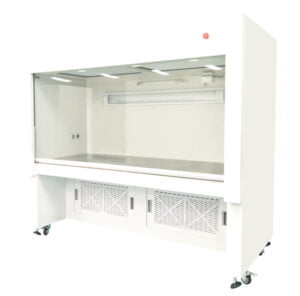
Une enceinte à flux laminaire de base fait exactement ce que son nom décrit : elle déplace l'air filtré selon un schéma laminaire contrôlé sur la surface de travail, assurant ainsi une propreté conforme à la norme ISO pour le produit. Ce qu'elle ne fait pas, dans la plupart des configurations, c'est éloigner activement les particules dispersées de la zone de travail. Lors de la manipulation de poudres ouvertes, l'alimentation en air propre et le panache de poudres dispersées occupent le même espace et, sans mécanisme d'extraction pour éloigner l'air contaminé, le panache peut se déplacer horizontalement vers l'opérateur ou verticalement vers le haut, hors de l'enceinte, dans la pièce environnante.
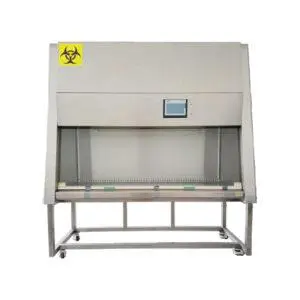
Une véritable cabine de confinement résout ce problème en combinant l'alimentation en air descendant avec une logique d'extraction active - une voie d'échappement dédiée qui aspire l'air hors de la zone de travail à un taux suffisant pour maintenir une pression négative par rapport à la pièce d'arrière-plan. Cette relation de pression négative est la distinction fonctionnelle qui sépare le confinement de la propreté. La pression négative signifie que tout mouvement d'air à la limite de l'enceinte s'écoule vers l'intérieur et non vers l'extérieur, ce qui empêche la poudre de s'échapper dans l'environnement de la salle blanche, même lors d'opérations très perturbantes telles que le chargement d'un récipient à partir d'un sac ouvert.
| Fonctionnalité | Enceinte à flux laminaire de base | Stand True Containment |
|---|---|---|
| Logique d'extraction | Absence d'extraction active ; fournit principalement de l'air pur. | Combine le flux descendant et l'extraction active pour éloigner les particules dispersées de l'opérateur et de la pièce. |
| Pression dans la zone de travail | Peut ne pas maintenir une pression négative par rapport à la pièce d'arrière-plan. | Maintient une pression négative par rapport à la salle d'arrière-plan afin d'éviter toute contamination croisée. |
Le risque de substitution n'est pas toujours évident au moment de l'achat. Les deux types d'enceintes peuvent disposer d'un air d'alimentation filtré HEPA, les deux peuvent afficher des résultats de comptage de particules ISO 5 dans une salle vide, et les deux peuvent sembler visuellement similaires dans le catalogue d'un fournisseur. La différence devient apparente dans des conditions opérationnelles, en particulier lors de la manipulation de poudre ouverte, lorsque l'enceinte n'est pas à l'arrêt. Le fait de ne spécifier que la classification de salle blanche et l'efficacité du filtre sans exiger d'extraction active constitue l'écart de spécification qui permet à une unité de flux laminaire de base d'apparaître comme équivalente à une véritable cabine de confinement sur un devis.
Quelles sont les caractéristiques du retour d'air qui comptent lors de l'évacuation des poudres ?
L'extraction active est la caractéristique fonctionnelle qui distingue le confinement pendant la décharge de poudre, mais la conception spécifique de ce système d'extraction détermine s'il fonctionne de manière fiable dans toute la gamme de poudres et d'intensités de processus qu'une cabine rencontrera.
Le volume d'extraction par rapport au volume total d'air fourni est la référence la plus pratique. Un chiffre de conception couramment utilisé dans les spécifications des praticiens vise un rapport entre l'extraction et l'alimentation de l'ordre de 10% à 15% du volume d'alimentation total, le reste étant recirculé à travers la filtration HEPA interne. Il ne s'agit pas d'un seuil réglementaire universellement codifié, mais d'un paramètre de conception mesurable qui représente l'équilibre entre une extraction suffisante pour capturer la poudre dispersée et les coûts d'énergie et de filtration liés à l'évacuation d'une fraction trop importante de l'air conditionné. Si le rapport d'extraction est trop faible, la pression différentielle négative devient insuffisante pour contenir de manière fiable la dispersion des poudres énergétiques ; un rapport trop élevé augmente à la fois les coûts d'exploitation et la charge thermique sur le système CVC de la salle blanche environnante.
L'implication pratique de ce ratio est qu'il doit être vérifiable. Un volume d'échappement qui n'existe que dans le document de conception d'un fournisseur, mais qui ne peut être mesuré ou ajusté pendant la mise en service, n'est pas une spécification de confinement - c'est une hypothèse. C'est pourquoi un mécanisme d'échappement réglable, tel qu'un registre ou une plaque de réglage de l'extraction, est une caractéristique de conception fonctionnelle plutôt qu'une option de commodité. Il permet à l'équipe de mise en service d'adapter l'extraction au processus réel et donne à l'équipe de validation un point de consigne quantifiable à documenter, à contester et à retester si le processus change. Une cabine sans moyen d'ajuster et de confirmer le volume d'échappement rend difficile la défense de l'allégation de confinement dans un dossier de validation.
La géométrie de la voie de retour est également importante. Les grilles de retour au niveau du sol ou au niveau le plus bas, placées à l'avant de la zone de travail - entre l'opérateur et la zone active de manipulation des poudres - sont conçues pour capturer l'air chargé de particules avant qu'il ne remonte dans la zone de respiration. Si la voie de retour est mal positionnée ou si la surface de la grille est sous-dimensionnée par rapport au volume d'air fourni par la cabine, le système d'extraction peut être nominalement fonctionnel tout en fournissant une capture pratique inadéquate aux points où la dispersion de la poudre se produit réellement.
Position des opérateurs par rapport au rideau d'air de protection
Le positionnement de l'opérateur n'est pas une réflexion ergonomique après coup ; c'est la condition dans laquelle la géométrie du flux d'air fonctionne comme prévu ou échoue silencieusement. Une cabine de confinement à flux descendant crée son effet protecteur dans une zone spécifique - généralement à l'arrière de la zone de travail, où la vitesse verticale de l'air est la plus élevée et la plus uniforme. Lorsqu'un opérateur effectue des tâches de manipulation de poudre dans cette zone de flux descendant à haute vitesse, le rideau d'air dirige les particules fines vers le bas et vers les grilles de retour, les maintenant à l'écart de la zone de respiration. Lorsque l'opérateur travaille au bord extérieur de la cabine, ou partiellement à l'extérieur de celle-ci, cette relation de protection est rompue.
Ceci est important lors de l'approvisionnement car les dimensions de largeur et de profondeur de la cabine déterminent si le point de transfert réel de la poudre - l'endroit où le sac est coupé, la cuve est chargée ou la pelle est chargée - se trouve à l'intérieur ou à l'extérieur de la zone de flux descendant effective. Une cabine dimensionnée pour une cuve donnée peut ne pas laisser suffisamment de profondeur de travail pour que l'opérateur puisse manipuler le produit à l'arrière de la surface de travail. La conséquence pratique est que les opérateurs s'adaptent en travaillant près de l'avant de la cabine, qui est généralement la zone où la vitesse est la plus faible et où le flux d'air est le plus perturbé par la respiration et le mouvement des bras.
L'implication de l'approvisionnement en aval est simple : les dimensions internes de la cabine doivent être spécifiées sur la base de la géométrie réelle de la tâche, et non sur la seule empreinte de l'équipement. La portée de l'opérateur, la hauteur à laquelle se produit le transfert de poudre et l'emplacement de la zone de respiration par rapport au rideau à flux descendant doivent tous être cartographiés avant que les dimensions internes de la cabine ne soient fixées. Pour les applications impliquant les opérations de pesage et de distribution, La distinction entre la profondeur de travail requise pour la protection du produit uniquement et la profondeur requise pour le confinement actif lors d'une décharge de poudre peut modifier de manière significative les spécifications de la cabine en matière d'encombrement au sol.
Quel langage de spécification permet d'éviter les citations faussement équivalentes ?
Une formulation vague des spécifications est le mécanisme par lequel deux équipements structurellement différents arrivent sur la même feuille de comparaison de devis à des prix similaires. Lorsque les acheteurs spécifient uniquement “enceinte filtrée HEPA avec flux laminaire descendant” et un objectif de classification de salle blanche, ils ont créé une spécification qu'une unité de flux laminaire de base et une véritable cabine de confinement peuvent toutes deux satisfaire - sur le papier.
Trois éléments de spécification, rédigés avec des valeurs concrètes plutôt qu'avec des descriptions générales, comblent la plupart des lacunes. La classification de la salle blanche au repos dans la zone de travail - ISO 5 ou classe 100 - établit un critère de comptage de particules mesurable que les fournisseurs doivent démontrer, et non simplement revendiquer. L'efficacité des filtres HEPA doit être indiquée à 0,3 µm, la taille de particule la plus pénétrante pour les filtres en profondeur, avec une exigence explicite d'efficacité de 99,995% ou 99,999% en fonction de la sensibilité de l'application. Ces valeurs ne sont pas interchangeables ; une différence de 0,004 point de pourcentage dans l'efficacité nominale se traduit par une différence significative dans le nombre de particules qui passent au travers sous charge. La vitesse de l'air dans la zone de travail doit être définie comme une fourchette - de 0,35 à 0,65 m/s, réglable - plutôt que comme un chiffre nominal unique, car la possibilité d'ajuster la vitesse dans une fourchette spécifiée est ce qui permet d'optimiser la cabine à la fois pour le confinement et le confort de l'opérateur, sans dépasser l'enveloppe de performance. Le cadre général de la vérification s'aligne sur l'approche structurée de la mise en service et de la qualification des performances décrite dans la norme ASTM E2500-22, qui constitue une référence utile pour la conception des critères d'acceptation auxquels ces éléments de spécification se réfèrent.
| Élément de spécification | Exemple/Valeur requise | Pourquoi c'est important |
|---|---|---|
| Classification des salles blanches (à l'arrêt dans une zone de travail) | ISO 5 / Classe 100 | Il s'agit d'une norme de performance concrète et mesurable que les fournisseurs doivent respecter, ce qui permet une comparaison équitable. |
| Efficacité du filtre HEPA (à 0,3 µm) | 99,995% ou 99,999% | L'efficacité des filtres varie et constitue une mesure de performance clé qui a un impact direct sur la capacité de confinement. |
| Vitesse de l'air dans la zone de travail | 0,35-0,65 m/s, réglable | La vitesse de l'air est un paramètre opérationnel critique qui affecte à la fois le confinement et la protection des produits. |
Ce que ces trois éléments ne couvrent pas à eux seuls, c'est l'exigence d'extraction. Un document de spécification qui mentionne la classification ISO 5, l'efficacité du filtre et la vitesse de l'air, mais qui n'exige pas d'extraction active, de rapport minimum entre l'extraction et l'alimentation ou de mécanisme d'extraction réglable, permet quand même à une enceinte à flux laminaire et à recirculation de satisfaire à tous les critères écrits. L'exigence d'extraction doit faire l'objet d'une ligne de spécification propre, avec une fraction d'extraction minimale définie et une exigence selon laquelle le mécanisme doit être réglable et vérifiable lors de la mise en service. Sans cette ligne, la spécification est incomplète, quelle que soit la précision des autres paramètres.
Quelles hypothèses de confinement doivent être remises en question avant l'appel d'offres ?
Deux hypothèses apparaissent fréquemment dans les discussions préalables à l'appel d'offres et, lorsqu'elles ne sont pas remises en question, produisent des spécifications qui sont soit incorrectes, soit impossibles à mettre en œuvre lors de la mise en service.
La première est que toutes les enceintes filtrées HEPA offrent une protection équivalente à l'opérateur lors de la manipulation de poudres à l'air libre. Cette hypothèse est le prolongement logique du traitement de la classification des salles blanches comme principale mesure de confinement. La classification ISO 5 décrit la concentration de particules dans des échantillons d'air prélevés à l'intérieur de l'enceinte ; elle ne décrit pas ce qu'il advient des particules qui sont mises en suspension dans l'air pendant le transfert manuel de la poudre. Une enceinte peut atteindre et maintenir la norme ISO 5 au repos tout en permettant à un panache de poudre dispersée de migrer vers l'opérateur lorsque le processus est en cours, car la mesure de la classification ne rend pas compte de la dynamique directionnelle de la dispersion de la poudre dans un environnement de travail. Remettre en question cette hypothèse avant l'appel d'offres signifie exiger des fournisseurs qu'ils décrivent explicitement le mécanisme d'extraction, et non qu'ils se contentent de démontrer un résultat de comptage de particules dans une enceinte vide.
La deuxième hypothèse concerne la programmation du remplacement des filtres. Le remplacement des filtres selon un calendrier fixe (remplacement des filtres HEPA sur une base calendaire sans tenir compte de la charge réelle) est simple d'un point de vue opérationnel, mais mal adapté aux performances réelles des filtres. Une cabine utilisée pour la distribution de poudres à haute densité plusieurs fois par jour chargera ses pré-filtres et ses filtres HEPA finaux à un rythme très différent de celui d'une cabine utilisée pour des opérations d'échantillonnage occasionnelles. La surveillance de la pression différentielle à travers la batterie de filtres fournit un signal direct, basé sur des données, de la charge réelle des filtres et permet de déclencher le remplacement en fonction des performances plutôt que du calendrier. Cette méthode est à la fois plus fiable et plus rentable que les calendriers fixes, et elle permet de produire des dossiers de maintenance plus faciles à défendre lors des inspections réglementaires, car la décision de remplacement repose sur une base technique documentée. Le cadre de planification de l'ISO 14644-4:2022 prend en charge ce type d'approche de maintenance basée sur les performances dans le cadre des exigences opérationnelles permanentes pour les installations en environnement contrôlé.
| De l'assomption au défi | Pourquoi c'est important |
|---|---|
| Toutes les enceintes filtrées HEPA offrent une protection équivalente à l'opérateur lors de la manipulation de poudres à l'air libre. | Cette idée fausse conduit à spécifier des unités à flux laminaire de base qui ne disposent pas de l'extraction active nécessaire à un véritable confinement. |
| Le remplacement du filtre doit être basé sur un calendrier fixe plutôt que sur la surveillance de la pression différentielle. | Une approche fondée sur les données et basée sur la charge réelle du filtre est plus fiable et plus rentable qu'un remplacement arbitraire basé sur un calendrier. |
Le coût de l'absence de remise en question de ces hypothèses au stade de la passation des marchés n'est pas seulement un manque de performance au moment de la mise en service - c'est un problème de documentation. Si les spécifications de la cabine n'exigent pas d'extraction active, un fournisseur qui livre une unité de recirculation à flux laminaire a techniquement répondu à l'exigence écrite. Si le remplacement des filtres est spécifié selon un calendrier fixe, tout écart par rapport à ce calendrier pendant le fonctionnement devient un événement de conformité, même si les filtres fonctionnent dans des limites acceptables. En remettant en question ces deux hypothèses avant l'appel d'offres, on les transforme de surprises post-installation en exigences explicites et vérifiables. Pour les acheteurs qui comparent options de cabines de distribution chez les fournisseurs, ces deux éléments font partie des questions les plus productives à poser avant l'acceptation d'un devis.
Le test le plus fiable d'une spécification de confinement est de savoir si elle permet à une enceinte à flux laminaire et à recirculation de satisfaire à chaque ligne écrite. Si c'est le cas, l'exigence d'extraction n'est pas respectée et aucun ajustement après la mise en service ne permettra de combler l'écart de performance sans revoir la conception du système de traitement de l'air de la cabine. La liste de contrôle pratique préalable à l'achat est courte : confirmer par écrit l'objectif de confinement, spécifier le volume d'extraction comme une fraction de l'approvisionnement total avec un mécanisme réglable, définir la vitesse de l'air comme une plage plutôt qu'un chiffre nominal, et exiger que la classification ISO 5 soit démontrée dans des conditions opérationnelles plutôt qu'au repos uniquement.
Avant de lancer un appel d'offres, l'équipe responsable de la décision relative au confinement - pas seulement l'approvisionnement, mais aussi l'EHS et la production - doit être en mesure de décrire l'opération exacte de transfert de poudre que la cabine effectuera et le résultat spécifique de la protection de l'opérateur dont elle a besoin. Si cette description n'existe pas par écrit, le fournisseur ne peut pas fixer un prix correct, l'équipe de validation ne peut pas la tester de manière significative et l'installation ne peut pas la défendre lors d'une inspection. L'objectif de confinement est le document qui rend tous les autres comparables.
Questions fréquemment posées
Q : Que se passe-t-il si la cabine de distribution manipule à la fois des poudres très puissantes et des produits à faible risque sur la même ligne - une seule spécification de confinement couvre-t-elle les deux ?
R : Il est peu probable qu'une seule spécification de cabine puisse couvrir les deux sans compromis. Les exigences en matière de confinement diffèrent sensiblement selon qu'il s'agit de composés très puissants, pour lesquels même une exposition à l'air à l'état de traces est inacceptable, ou de produits en vrac à plus faible risque, pour lesquels la principale préoccupation peut être la propreté du produit plutôt que la protection de l'opérateur. Si la même enceinte doit servir aux deux, la spécification doit être rédigée en fonction du cas d'utilisation le plus exigeant - y compris l'extraction active, la pression négative vérifiable et le rapport entre l'extraction et l'alimentation approprié pour la poudre présentant le risque le plus élevé. Concevoir pour le scénario le moins risqué et attendre des contrôles procéduraux qu'ils compensent l'écart crée une responsabilité en matière d'audit qui est difficile à défendre lorsque le mélange de processus change.
Q : Une fois qu'une cabine de distribution est installée et mise en service, quel est le premier test opérationnel qui confirme qu'elle contient effectivement de la poudre et qu'elle ne se contente pas de fournir de l'air pur ?
R : La confirmation la plus directe est un test de provocation à la poudre de substitution réalisé dans les conditions opérationnelles les plus défavorables, et non un comptage de particules au repos. Un résultat ISO 5 au repos confirme la performance du filtre dans une enceinte non perturbée ; il ne confirme pas que le système d'extraction capture le panache de poudre généré lors de la décharge d'un sac ouvert ou du chargement d'une cuve. Un test de substitution utilisant une poudre traceuse visible et non dangereuse - réalisé en présence de l'opérateur, au poste de travail réel, reproduisant l'étape de transfert la plus énergique - produit des données d'échantillonnage de l'air qui reflètent le comportement réel de la cabine en matière de confinement. Ce résultat, documenté à un point de consigne défini pour le volume d'échappement, devient la base de référence à laquelle sont comparés les contrôles ultérieurs et toute modification du processus.
Q : Une cabine de distribution est-elle toujours le bon choix lorsque l'opération est peu fréquente - par exemple, une ou deux fois par semaine - ou une fréquence moindre justifie-t-elle une enceinte plus simple ?
R : La fréquence d'utilisation ne modifie pas l'exigence de confinement ; c'est le profil de danger de la poudre et la nature de l'opération de transfert qui le font. Un composé dont la limite d'exposition professionnelle est faible et qui est manipulé deux fois par semaine nécessite toujours un confinement actif si le transfert implique une dispersion de poudre ouverte, car le risque d'exposition de l'opérateur est déterminé par la concentration et la durée par événement, et non par le nombre d'événements qui se produisent par semaine. La fréquence modifie véritablement le calcul dans le modèle de maintenance - une cabine peu utilisée charge ses préfiltres plus lentement, ce qui affecte les intervalles de remplacement - mais il s'agit d'un ajustement de la planification de la maintenance, et non d'une raison de passer d'une cabine de confinement à une enceinte à flux laminaire de base.
Q : Quelle est la différence entre une véritable cabine de confinement et un isolateur pour la distribution de composés très puissants, et quand la distinction est-elle importante pour les achats ?
R : Pour les limites d'exposition professionnelle inférieures à environ 1-10 µg/m³, un isolateur offre généralement un niveau de protection de l'opérateur plus élevé et plus défendable qu'une cabine de confinement à façade ouverte, car la barrière physique élimine entièrement l'interface d'air entre l'opérateur et la poudre. Une cabine de distribution - même équipée d'une extraction active et d'une pression négative vérifiée - dépend toujours de l'ingénierie des flux d'air pour gérer l'exposition sur une face ouverte, ce qui introduit des variables qu'un isolateur n'a pas. La distinction en matière d'approvisionnement est importante lorsque la toxicologie du composé, la classification réglementaire ou la bande d'exposition interne exigent des performances de confinement que le flux d'air seul ne peut pas garantir de manière fiable. Pour les composés à risque modéré pour lesquels une cabine est techniquement appropriée, la cabine de confinement reste le choix le plus pratique en termes de débit, d'ergonomie et d'accès pour la maintenance.
Q : Si le service des achats reçoit deux offres qui revendiquent toutes deux une classification ISO 5 et une filtration HEPA de 99,999%, quelle est la question la plus utile à poser pour les départager ?
R : Demandez à chaque fournisseur de préciser le rapport entre l'air extrait et l'air fourni, de confirmer que le volume d'air extrait est réglable et de décrire comment ce point de consigne est mesuré et documenté lors de la mise en service. Un fournisseur proposant une véritable cabine de confinement sera en mesure de répondre en indiquant un rapport défini, un registre réglable ou une plaque d'extraction, et un protocole de mise en service lié à une mesure vérifiable de la pression différentielle ou du débit d'air. Un fournisseur proposant une unité de recirculation à flux laminaire ne disposera pas d'une voie d'évacuation significative ou décrira la recirculation interne comme équivalente à une extraction active, ce qui n'est pas le cas. La réponse à cette seule question permet de déterminer si les deux devis portent sur la même capacité de confinement ou sur des équipements structurellement différents qui partagent le même filtre et le même langage de classification.