L’achat d’une hotte adaptée à la paillasse mais pas au processus constitue l’une des erreurs de dimensionnement les plus coûteuses dans l’approvisionnement des salles blanches — coûteuse car elle se révèle généralement après l’installation, lorsque des incidents de contamination ou des conditions de travail exiguës entraînent un deuxième achat plutôt qu’une révision du cahier des charges. La contrainte la plus importante est rarement l’encombrement externe ; c’est l’espace de travail disponible qui reste après que les mains, les conteneurs de produits et les matériaux de transit ont occupé l’intérieur. Prendre la bonne décision avant l’établissement du devis d’une unité permet d’éviter les coûts en aval liés au déplacement des équipements, à la redéfinition du débit d’air ou à la validation d’un remplacement.
Vérifications dimensionnelles pour les petites hottes dans des pièces exiguës
La première chose à vérifier est de savoir si la discussion sur le dimensionnement a lieu au bon stade du projet. La plupart des problèmes liés à un espace restreint ne sont pas détectés lors de la phase de cahier des charges : ils apparaissent lorsque l’unité commandée arrive et que l’installateur constate que la profondeur du plan de travail, l’espace libre par rapport au mur adjacent ou le chemin d’accès pour un chariot ne correspondent pas à ce qui était décrit sur la page du produit. À ce stade, modifier le cahier des charges entraîne des retards dans les délais de livraison et, dans certains cas, la nécessité de recommencer tout le cycle d’approvisionnement.
Dans la pratique, il convient de considérer les contraintes de la pièce comme des données d’entrée pour la planification plutôt que comme des considérations liées à l’installation. Cela implique de mesurer la profondeur de la paillasse depuis la face du mur jusqu’au bord avant, et non pas uniquement la largeur libre entre les murs latéraux. Cela implique également de vérifier la largeur du couloir d’accès si la hotte doit être déplacée ou repositionnée, et de noter tout obstacle en hauteur — étagères, diffuseurs de climatisation, gaines — qui réduit la hauteur utile au-dessus de la surface de travail. Aucune de ces dimensions n’apparaît de manière fiable dans les fiches techniques des fabricants pour les unités compactes, et c’est précisément l’écart entre l’enveloppe extérieure d’un produit et la géométrie réelle de l’installation qui est à l’origine de la plupart des problèmes de dimensionnement en fin de projet.
Une deuxième vérification consiste à définir le processus de travail avant de comparer les dimensions externes. Une unité dimensionnée pour une tâche impliquant un seul conteneur et un faible débit présente des exigences de fonctionnement internes différentes de celles d’une unité dimensionnée pour des transferts séquentiels entre plusieurs conteneurs, même si les deux configurations semblent similaires en termes d’encombrement au sol. Les contraintes liées à l’espace disponible et les exigences du processus doivent être évaluées conjointement, et non de manière séquentielle, sans quoi la vérification du dimensionnement se transforme en un simple exercice de mesure qui ne tient pas compte de la réalité opérationnelle.
L'enveloppe du produit et la course de la main qui définissent la zone propre utilisable
La largeur extérieure d'une hotte compacte est une valeur indicative pour l'expédition et l'installation. La zone propre utilisable est plus petite, et c'est dans l'écart entre ces deux valeurs que s'accumulent les erreurs de dimensionnement. En tant que critère pratique de conception, la zone propre doit être définie en fonction des pièces réelles, du nombre de conteneurs et du parcours manuel nécessaire à la tâche prévue, et non en fonction des dimensions intérieures indiquées dans la fiche technique du produit.
Le déplacement des mains est important car la circulation unidirectionnelle de l’air repose sur le maintien d’un balayage complet de la surface de travail, sans perturbation latérale. Lorsque les mains traversent l’espace intérieur pour atteindre un produit situé à l’autre extrémité, ou lorsqu’un poignet franchit à plusieurs reprises la ligne médiane au cours d’une procédure, la largeur de travail effective se réduit par rapport à l’espace intérieur physique. Il ne s’agit pas d’un seuil réglementaire issu de la norme IEST-RP-CC002 ou de la norme ISO 14644-7 ; c’est un critère de planification au niveau des praticiens qui reflète la manière dont les procédures réelles occupent l’espace intérieur, ce que les dimensions statiques ne permettent pas de saisir.
Concrètement, cela implique de cartographier la trajectoire des mains pour la procédure envisagée avant de confirmer la largeur de la hotte. Pour des opérations ponctuelles sur un seul récipient — ouvrir un flacon, remplir une pipette, remplir une plaque —, une unité compacte peut offrir une marge suffisante dans la zone propre, même avec des mouvements normaux des mains. Pour les procédures nécessitant de repositionner des récipients, de manipuler plusieurs éléments à la suite ou d’utiliser des instruments à proximité du produit, la largeur de travail doit permettre d’accueillir les positions simultanées des mains tout au long de la tâche, et pas seulement l’encombrement du produit lui-même. Si cette trajectoire cartographiée s’approche ou atteint l’ouverture avant au cours d’une procédure normale, la largeur de travail interne est déjà à sa limite avant même l’ajout de tout matériel de préparation.
Des pratiques d'entreposage encombrantes qui nuisent à la compacité de la zone de travail
Le fait d’entreposer du matériel à l’intérieur de la hotte est l’une des causes les plus courantes pour lesquelles une unité compacte correctement dimensionnée finit par s’avérer insuffisante sur le plan fonctionnel, sans que personne n’en identifie la cause. Lorsque l’espace sur les paillasses est limité — ce qui est le cas dans la plupart des locaux de travail exigus —, les lingettes, les récipients secondaires, les sacs, le matériel d’étiquetage et les porte-instruments finissent par être entreposés dans la hotte, faute d’autre endroit où les placer. Chaque objet placé à l’intérieur de la zone propre réduit le volume intérieur libre que la colonne laminaire peut protéger et, plus grave encore, introduit des surfaces génératrices de turbulences qui perturbent le flux descendant uniforme ou le balayage horizontal.
Le schéma de défaillance n’est pas aléatoire. Il tend à suivre la même séquence : l’unité est mise en service avec un espace de travail suffisant, l’encombrement des paillasses augmente progressivement à mesure que le volume de production croît, des matériaux en attente apparaissent à l’intérieur de la hotte, et les taux de contamination augmentent selon un schéma qui est attribué à la technique de l’opérateur ou à la variabilité du processus plutôt qu’à une zone propre compromise. Au moment où la hotte est identifiée comme le goulot d’étranglement, l’organisation a souvent déjà passé du temps à rechercher les causes de problèmes en amont ou en aval.
Pour éviter cela, il convient de définir, dès la phase de spécification, ce qui sera précisément placé à l’intérieur de la hotte au cours d’une procédure complète — non seulement le produit principal et l’outil, mais aussi les matériaux secondaires, les emballages et les consommables dont le travail courant a réellement besoin. Si la somme de ces objets, à laquelle s’ajoutent les positions des mains, remplit l’intérieur au point que la colonne laminaire ne puisse plus maintenir un écoulement sans obstruction, l’unité est sous-dimensionnée pour le processus réel, même si elle est adaptée à la version idéalisée. Cela a des conséquences particulièrement importantes pour les hottes compactes, qui offrent un volume intérieur réduit pour absorber la pression de mise en place avant que la zone propre ne s’effondre.
Rendement avec un encombrement réduit ou marge de débit d'air plus importante
La capacité d’une hotte compacte à contrôler la contamination dépend fortement de sa capacité à générer un véritable flux d’air unidirectionnel, et l’écart de performances entre un modèle de bureau correctement dimensionné et une alternative économique n’est pas perceptible au moment de l’achat. Pour les acheteurs disposant d’un espace de travail restreint, cela signifie que l’encombrement et la classe de filtration, pris isolément, ne constituent pas des indicateurs suffisants pour garantir la protection d’une zone propre.
Les trois scénarios ci-dessous illustrent la gamme de solutions disponibles, allant des unités compactes de faible puissance aux hottes de bureau hautement performantes, ainsi que leurs implications respectives en termes d'exigences de processus dans des espaces restreints.
| Scénario « Hood » | Performances observées / Spécifications | Conséquences pour les espaces de travail exigus |
|---|---|---|
| Hottes compactes de mauvaise qualité vendues en ligne | Utiliser des ventilateurs et des filtres de mauvaise qualité qui ne parviennent pas à produire un véritable flux d'air laminaire | Une faible empreinte écologique ne suffit pas à elle seule à garantir la protection de la qualité de l'air ; risque élevé de contamination |
| Capot compact de base testé | Réduction de la contamination de 4 plaques sur 4 (sans hotte) à 2 plaques sur 4 | Permet un contrôle efficace pour les analyses ponctuelles à faible débit, mais une certaine contamination persiste |
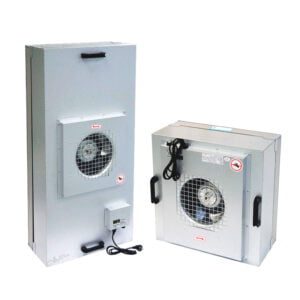
| Hotte haute performance de la taille d'un bureau | Rendement de 99,9951 TP10T à 0,3 µm ; débit supérieur à 100 CFM avec un ventilateur centrifuge et un filtre HEPA sur mesure | Un véritable écoulement laminaire dans un format compact ; une marge de débit d'air plus importante facilite le traitement par lots et la manutention de plusieurs articles |
La principale conclusion à tirer de ce tableau ne réside pas dans la ligne du milieu — qui montre un contrôle de la contamination significatif mais imparfait —, mais dans l’écart entre les extrémités « bas de gamme » et « haute performance » de la gamme compacte. Un acheteur qui choisit un appareil en se basant uniquement sur ses dimensions extérieures et les performances de filtration annoncées risque de se retrouver avec un produit dont les caractéristiques de ventilation et de débit d’air se rapprochent davantage du scénario de bas niveau que de celui de haute performance, sans qu’aucun indice visible ne permette de distinguer ces différences au moment de l’achat. Pour les opérations ponctuelles à faible débit portant sur un seul article, même un contrôle partiel de la contamination peut s’avérer acceptable selon l’application. Pour toute tâche impliquant le traitement par lots, la manipulation de plusieurs articles ou une durée de procédure prolongée, la marge de débit d’air est déterminante : un appareil incapable de maintenir une vitesse constante sur toute la surface de travail expose progressivement davantage les bords des produits et les mains à mesure que la procédure se prolonge. Vérifier la configuration du ventilateur centrifuge, le débit d’air réel mesuré en CFM et la certification du filtre HEPA — et pas seulement la classe d’efficacité nominale — avant l’achat est le contrôle qui permet de distinguer ces scénarios dès la phase de spécification.
Des mesures de la pièce effectuées trop tard, qui compromettent le dimensionnement final
Les problèmes de dimensionnement surviennent le plus souvent lorsque la profondeur du plan de travail, les dégagements par rapport aux murs et les voies d’accès sont confirmés après qu’un appareil a déjà fait l’objet d’un devis ou d’une commande. La raison de ce phénomène est d’ordre structurel : les acheteurs recueillent généralement les exigences de processus en amont, mais ne prennent les mesures de la pièce qu’en fin de processus, car celles-ci sont perçues comme un détail d’installation plutôt que comme un élément du cahier des charges. Il en résulte que, lorsque les dégagements réels sont confirmés pour la première fois par rapport à l’enveloppe physique de la hotte spécifiée, il est souvent trop tard pour modifier la commande sans entraîner de retard.
De nombreuses hottes compactes commercialisées pour les espaces restreints ne mentionnent pas, dans leurs caractéristiques techniques, les exigences relatives à la profondeur du plan de travail et au dégagement par rapport au mur. La largeur et la profondeur extérieures y figurent ; en revanche, la distance minimale par rapport au mur arrière, nécessaire au retour d’air ou à l’accès aux composants électriques, n’y est souvent pas indiquée. Il incombe à l’acheteur de procéder à cette vérification, car la fiche technique du produit ne signalera pas ce problème. Un appareil d’une profondeur de 24 pouces sur le papier peut nécessiter un espace libre supplémentaire de 4 à 6 pouces à l’arrière pour assurer un retour d’air adéquat, ce qui peut rendre impossible l’emplacement d’un plan de travail qui semblait viable sur le plan d’aménagement.
Les conséquences pratiques d’une prise de mesures tardive ne se limitent pas aux retards d’installation. Lorsqu’une hotte fait l’objet d’une nouvelle spécification au moment de la livraison, l’unité de remplacement est souvent choisie dans l’urgence — une situation qui favorise le choix de la taille la plus proche disponible plutôt que celle qui convient réellement. C’est dans ce scénario qu’une unité se retrouve soit surdimensionnée par rapport à la paillasse (ce qui réduit l’accès de l’opérateur et la couverture), soit sous-dimensionnée par rapport au procédé (ce qui reproduit les problèmes de contamination et de mise en place décrits dans les sections précédentes). La vérification des dimensions réelles de la pièce — y compris la hauteur libre, les obstacles au niveau du sol et la largeur des couloirs d’accès — avant de finaliser un devis constitue l’étape de la procédure d’achat qui présente le plus grand potentiel pour éviter les problèmes en aval. Pour les installations impliquant une configuration mobile, la vérification de la largeur des couloirs et de la surface au sol est tout aussi cruciale ; a chariot mobile pour flux d'air laminaire nécessite une trajectoire de mouvement bien définie qu'un exercice de mesure sur banc fixe ne permet pas à lui seul de saisir.
L'empiètement sur la bande avant qui prouve que le capot est trop petit
La bande de turbulence avant correspond à la zone située au niveau de l'ouverture de la hotte, où le flux d'air pur et unidirectionnel entre en contact avec l'air ambiant et perd son caractère laminaire. Le travail effectué dans cette zone n’est pas protégé par le flux d’air pur, quelles que soient les performances du filtre et du ventilateur. Lorsque les procédures courantes amènent systématiquement les mains, les bords des récipients ou le produit à pénétrer dans cette bande, la hotte s’avère fonctionnellement trop petite pour le processus — non pas en raison d’une limitation du filtre, mais parce que la zone propre utile s’arrête avant la fin de l’opération.
L'empiètement sur la bande avant est utile en tant que signal diagnostique plutôt que comme critère d'essai formel. Si un opérateur, effectuant la procédure à un rythme normal et avec les matériaux disposés tels qu'ils le sont réellement en utilisation, constate que ses mains ou le produit atteignent systématiquement la zone d'ouverture avant, cette situation observable confirme le sous-dimensionnement de manière plus directe que n'importe quelle comparaison de dimensions externes. La présence d’un empiètement lors d’une procédure d’essai — avant l’acquisition définitive, si des tests sont possibles, ou lors des premiers cycles de production après l’installation — doit être considérée comme un échec de dimensionnement nécessitant une unité plus grande, une configuration différente du banc d’essai ou une approche de disposition révisée. Le fait d’adapter la technique pour maintenir les mains plus à l’intérieur de la hotte peut atténuer le problème sans en résoudre la cause : une procédure qui nécessite l’utilisation de tout l’espace intérieur pour fonctionner correctement n’est pas compatible avec une unité offrant une zone propre effective plus petite que ce qu’exige le processus. Si un hotte à flux laminaire Si l'installation passe les contrôles initiaux mais présente systématiquement un empiètement sur la bande avant en conditions réelles d'utilisation, la réflexion sur le dimensionnement doit repartir des exigences du processus, et non de l'encombrement au sol.
Le seuil à partir duquel il convient de réagir face à des signes d’empiètement est plus bas que ne le supposent la plupart des opérateurs. Un contact occasionnel avec la zone avant au cours d’une procédure par ailleurs bien exécutée constitue un signe d’alerte. Un contact régulier — c’est-à-dire survenant lors des mouvements normaux lors de la plupart des cycles — indique que la hotte ne peut pas protéger le processus dans sa configuration actuelle. Cette distinction est importante car les incidents de contamination dus à l’empiètement de la bande avant sont irréguliers et difficiles à reproduire lors d’essais contrôlés, ce qui signifie qu’ils peuvent susciter une fausse confiance pendant les périodes où les empiètements sont moins fréquents.
Le choix le plus fiable concernant les dimensions d’une hotte compacte consiste à comparer le déroulement réel du processus — y compris les mouvements des mains, le nombre de récipients et l’ensemble du matériel de préparation — aux dimensions de travail intérieures de la hotte, et non à son encombrement extérieur. Cette comparaison, associée aux mesures de la pièce validées avant la finalisation du devis, permet d’éviter les deux types d’échecs les plus courants : un appareil qui s’installe correctement mais ne peut pas prendre en charge le processus réel, et un appareil dont les spécifications doivent être modifiées dans l’urgence parce que la géométrie de la pièce n’a jamais été vérifiée.
Avant de choisir un modèle spécifique, vérifiez que la largeur utile intérieure correspond bien à la trajectoire de déplacement de la main prévue pour votre procédure ; vérifiez les caractéristiques du ventilateur et du débit d’air plutôt que de vous fier uniquement à la classe de filtration ; et vérifiez que les dégagements arrière et supérieurs sont conformes à la position de votre paillasse. Si la procédure envisagée implique un traitement par lots ou la manipulation de plusieurs éléments, accordez davantage d’importance au débit d’air qu’à l’encombrement lors de la comparaison finale. Pour un aperçu plus complet de la manière dont les dimensions des appareils s’adaptent aux différents types de processus de laboratoire, le Guide des dimensions des unités à écoulement laminaire pour les laboratoires aborde ce compromis de manière plus détaillée.
Questions fréquemment posées
Q : Que dois-je faire si l'empiètement sur la bande avant ne se produit que de temps en temps, et non à chaque cycle ?
R : Considérez les empiètements occasionnels comme un signal d’alerte précoce qui nécessite une intervention avant qu’ils ne deviennent systématiques. Les contacts irréguliers avec la zone de turbulence avant sont plus difficiles à attribuer à une cause première précisément parce qu’ils n’apparaissent pas de manière systématique lors des essais contrôlés — c’est ainsi que les incidents de contamination dus à un sous-dimensionnement peuvent persister sans être détectés pendant de longues périodes. Si cela se produit, même sporadiquement, au cours d’une procédure normale, réévaluez la largeur de travail intérieure par rapport à la course complète de la main et aux matériaux disposés par étapes avant de conclure que la hotte est acceptable.
Q : Une petite hotte à flux laminaire est-elle utile pour les tâches de production par lots, ou uniquement pour les interventions ponctuelles sur un seul élément ?
R : Une hotte compacte est particulièrement adaptée aux tâches ponctuelles sur un seul récipient et à faible débit ; les tâches de préparation par lots justifient plutôt le choix d’une unité plus grande offrant une marge de débit d’air plus importante. Lorsqu’une procédure nécessite de repositionner plusieurs récipients à la suite ou de garder les mains à l’intérieur pendant de longues périodes, une unité qui maintient une vitesse constante sur une surface de travail plus large réduit le risque que les bords du produit ou la position des mains sortent progressivement de la zone de protection. Le gain d’encombrement perd de son intérêt lorsque la procédure elle-même exige la marge de débit d’air qu’offre un appareil plus grand.
Q : Que se passe-t-il si je ne peux pas prendre les mesures de la pièce qu’après l’établissement du devis ?
R : Le processus d’approvisionnement doit être suspendu avant que la commande ne soit passée, et non après la livraison. Si la profondeur réelle du plan de travail, le dégagement arrière et les dimensions en hauteur ne sont pas connus au stade du devis, la finalisation d’une commande entraîne un risque élevé de révision des spécifications sous la pression du temps — situation qui conduit précisément à choisir la taille disponible la plus proche plutôt que la taille correcte. L’étape de prise de mesures doit être considérée comme une condition préalable indispensable à la validation du devis, et non comme une tâche d’installation à réaliser ultérieurement.
Q : Comment puis-je savoir si une hotte compacte que j'évalue produit réellement un flux d'air laminaire, ou si elle se contente simplement de respecter les critères de performance indiqués pour son filtre ?
R : Demandez la valeur réelle mesurée en CFM et vérifiez le type de ventilateur plutôt que de vous fier uniquement à la classe d’efficacité HEPA indiquée. Un filtre classé « haute efficacité » ne garantit pas que le ventilateur produise une vitesse suffisante et constante sur toute la surface de travail pour maintenir un flux unidirectionnel. La configuration du ventilateur centrifuge et le débit d’air vérifié sont les caractéristiques techniques qui distinguent un appareil capable de maintenir un balayage propre de celui qui, bien qu’il respecte les spécifications du filtre sur le papier, offre en pratique des performances proches d’un scénario de bas niveau.
Q : Si la pièce ne permet vraiment pas d'installer une hotte plus grande, existe-t-il un moyen d'adapter une petite hotte à un processus plus exigeant ?
R : Uniquement si le processus lui-même peut être réorganisé pour s’adapter à la zone propre effective de la hotte — et pas seulement à ses dimensions intérieures. Cela implique d’éliminer totalement les matériaux de transit de l’intérieur de l’unité en désignant une surface externe pour les fournitures secondaires, de réduire le nombre de conteneurs manipulés par cycle et de s’assurer que la trajectoire révisée des mains reste bien à l’écart de la bande de turbulence avant tout au long de la procédure. Si ces modifications ne sont pas viables sur le plan opérationnel, la contrainte liée à l’espace est bien réelle, mais la taille de la hotte n’est pas le bon élément à adapter pour y remédier ; la configuration de la paillasse, l’agencement des accès ou la séquence du processus doivent être modifiés avant de pouvoir finaliser le choix de la hotte.