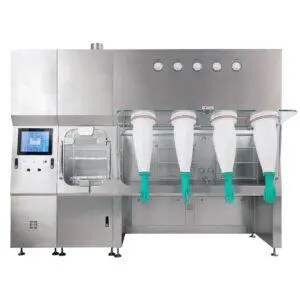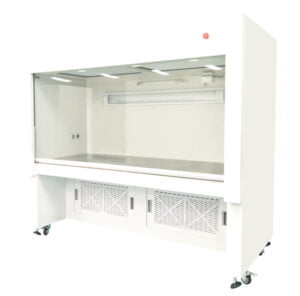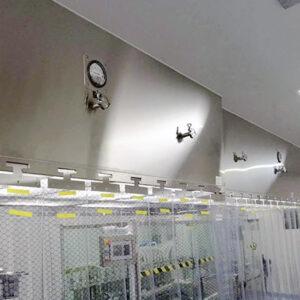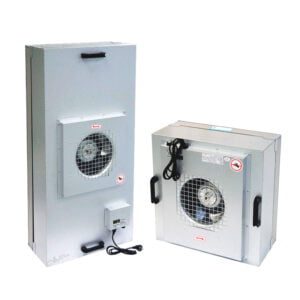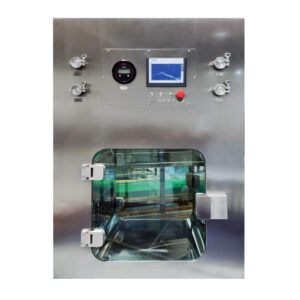
Les équipes chargées des achats qui reçoivent trois devis pour un chariot LAF mobile et qui constatent un écart de 40-60% entre le prix le plus bas et le prix le plus élevé ont rarement un problème de prix concurrentiel. Il s'agit plutôt d'un problème d'alignement du champ d'application. L'un des fournisseurs a fixé le prix d'un chariot nu ; un autre a inclus une filtration HEPA H14 scellée au gel, des ports de test DOP et une fabrication en acier inoxydable 316L ; et le troisième a supposé un bloc batterie UPS de 4 heures que l'acheteur n'a jamais spécifié. L'écart n'est pas visible sur la ligne du devis - il apparaît plus tard, lors de la mise en service ou d'un audit BPF, lorsque l'infrastructure de validation manquante doit être mise en place à un coût nettement plus élevé que ce qu'il en aurait coûté de spécifier correctement dès le départ. Ce qui compte, ce n'est pas de savoir quel est le prix le plus bas, mais de savoir si les devis décrivent bien le même chariot.
Les moteurs de devis qui modifient le plus rapidement la tarification des paniers mobiles
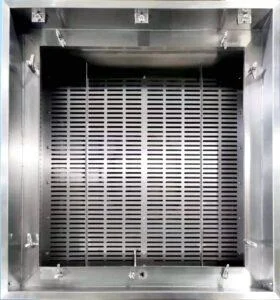
L'ensemble de filtres est le moyen le plus rapide de faire évoluer un devis de chariot mobile dans un sens ou dans l'autre, et il est souvent sous-spécifié dans les premières conversations sur les marchés publics. Un filtre standard et un filtre HEPA H14 scellé par le gel avec une efficacité ≥99,995% ne sont pas interchangeables du point de vue du coût ou de la conformité. La conception scellée par le gel ajoute à la fois au coût des matériaux et à la complexité de l'assemblage, et c'est la configuration qui répond aux exigences de propreté de la classe A (ISO 5) dans les environnements de production pharmaceutiques GMP. Le choix ou l'omission de cette configuration n'est pas une décision mineure - elle détermine si le chariot peut être validé de manière réaliste pour l'usage auquel il est destiné.
La filtration en deux étapes ajoute une couche supplémentaire à cette structure de coûts. Un préfiltre G4 en amont du filtre HEPA H14 prolonge la durée de vie du filtre en capturant les particules les plus grossières avant qu'elles ne chargent le filtre principal, mais il augmente à la fois le contenu matériel et l'encombrement du chariot. Le compromis est réel : les configurations à deux étages coûtent plus cher au départ et introduisent un deuxième élément de maintenance programmée, mais elles peuvent réduire le coût total de possession sur des cycles d'utilisation prolongés en protégeant un filtre H14 coûteux. Les acheteurs qui comparent un devis pour une configuration à un étage à un devis pour une configuration à deux étages sans identifier cette différence constatent un écart de coût qui n'existe pas comme ils le pensent.
Aucune des deux configurations de filtre ne doit être considérée comme une exigence réglementaire universelle indépendante des obligations de validation propres à l'établissement. La qualité H14 et la conception scellée au gel sont les choix appropriés pour les environnements classés BPF, mais la bonne spécification dépend de l'application, de la classe de propreté visée et de la portée de la qualification que l'établissement doit défendre. Fixer l'ensemble des filtres avant de solliciter des devis n'est pas facultatif - sans cela, toute comparaison de prix est structurellement incomplète.
Taille, puissance et mobilité du matériel derrière le budget
La largeur de la zone de travail est le point d'ancrage dimensionnel de tous les autres éléments d'un chariot mobile : le moteur du ventilateur, la surface du filtre, la charge nominale de l'ensemble des roulettes et le cadre structurel global. Les fournisseurs se réfèrent généralement à des largeurs standard de 800, 1000 et 1200 mm comme point de départ, mais la conséquence pratique en termes de coûts est que le passage de 800 mm à 1200 mm augmente à la fois la dimension de base du chariot et la charge électrique, et que la configuration de 1200 mm consomme 0,5 kW contre 0,4 kW pour les options plus étroites. Cette différence a une incidence sur la planification des installations électriques, en particulier pour les configurations alimentées par batterie, où la consommation d'énergie détermine directement l'autonomie.
| Facteur de décision | Options disponibles | Effet sur le devis |
|---|---|---|
| Largeur de la zone de travail | 800 mm (0,4 kW), 1000 mm (0,4 kW), 1200 mm (0,5 kW) | Une plus grande largeur augmente la dimension du chariot de base et la consommation d'énergie, ce qui accroît le coût. |
| Matériau du boîtier | Acier inoxydable 304 ou 316L | Le 316L offre une plus grande résistance à la corrosion mais ajoute un surcoût direct par rapport au SS304. |
| Autonomie de la batterie de l'ASI | Minimum de 2 heures ou de 4 heures | Une durée d'utilisation plus longue nécessite un bloc-batterie plus important, ce qui augmente directement le coût du matériel. |
Le matériau de l'enceinte est un facteur de coût caché récurrent que les équipes chargées des achats sous-estiment systématiquement au stade de la conception. L'acier inoxydable 304 est l'option la moins coûteuse et convient à de nombreuses applications en salle blanche. L'inox 316L offre une résistance supérieure à la corrosion - ce qui est particulièrement important lorsque le protocole de validation du nettoyage implique des agents agressifs ou lorsque le chariot fonctionne dans un environnement pharmaceutique à forte humidité - mais il entraîne un surcoût direct et ne peut être remplacé par l'inox 304 après le début de la fabrication sans relancer le processus de fabrication. Les équipes qui ne prennent pas cette décision explicitement avant la fabrication le font souvent par défaut, et revenir en arrière après coup signifie une reprise complète de la structure.
L'autonomie de la batterie est directement liée au coût unitaire et à la planification opérationnelle. Un onduleur de secours conçu pour une autonomie minimale de 2 heures constitue une base de référence ; l'extension à une autonomie minimale de 4 heures nécessite un bloc-batterie plus important et augmente le coût du matériel du chariot. L'autonomie adéquate n'est pas une norme industrielle fixe - elle dépend de la longueur de l'itinéraire opérationnel, des distances de transfert dans l'établissement et de l'accessibilité d'une station de recharge à mi-parcours. Le fait de spécifier “ASI de secours” sans préciser l'objectif d'autonomie produit des devis qui supposent des configurations de batterie différentes et ne sont donc pas directement comparables.
Un champ d'application incomplet qui masque les différences de spécification réelles
La situation la plus trompeuse sur le plan structurel dans le cadre de la passation de marchés pour des chariots LAF mobiles est une offre basse qui semble compétitive mais qui couvre un produit différent. La version la plus courante de ce schéma est un devis qui ne comprend que le corps du chariot - cadre, moteur de ventilateur et ensemble de filtres de base - contre un devis qui inclut des ports de test DOP, une analyse d'intégrité, une filtration HEPA scellée par un gel et une fabrication en acier inoxydable conforme aux normes pharmaceutiques GMP. L'écart entre ces deux offres peut être considérable, mais aucun des deux devis n'annonce la différence. L'acheteur voit un écart de prix et l'interprète comme une variation de la marge du fournisseur.
| Drapeau rouge | Ce qu'il cache | Ce qu'il faut clarifier |
|---|---|---|
| Le devis ne couvre qu'un corps de chariot de base, sans les ports de test DOP et l'analyse d'intégrité. | Coût réel de la validation et exigences de conformité aux BPF | Confirmer que le devis comprend les ports de test DOP et l'analyse d'intégrité pour une utilisation pharmaceutique conforme aux BPF. |
| Le fournisseur indique des tailles standard à titre de référence ; le chariot est vraisemblablement fabriqué selon les spécifications du client. | Inadéquation des dimensions entre les devis, ce qui nuit à la comparaison directe | Alignez les dimensions du chariot sur votre URS dans tous les devis avant de comparer les prix. |
Les ports de test DOP et un scan d'intégrité ne sont pas des accessoires optionnels sur un chariot destiné à une utilisation pharmaceutique GMP - ils sont le mécanisme par lequel l'intégrité du filtre peut être vérifiée sur le terrain et lors de la qualification. Un chariot dépourvu d'orifices de test DOP ne peut pas faire l'objet d'un contrôle d'intégrité après l'installation ou lors de la requalification périodique sans l'installation ultérieure d'orifices d'accès, ce qui constitue une modification de fabrication difficile à réaliser proprement sur une enceinte en acier inoxydable scellée. Les omettre lors de la construction initiale pour réduire le coût du devis est une erreur de planification qui transforme une dépense initiale moins élevée en un coût en aval beaucoup plus perturbateur.
L'étendue des dimensions du devis comporte le même risque. Les fournisseurs font généralement remarquer que les tailles standard publiées ne sont que des configurations de référence et que les chariots de production sont construits selon la spécification des besoins de l'utilisateur (User Requirement Specification) du client. Cela signifie que deux devis faisant tous deux référence à une “largeur de 1000 mm” peuvent décrire des chariots ayant des profondeurs de zone de travail différentes, des hauteurs internes différentes ou des profils de flux d'air différents si aucun URS commun n'a été utilisé pour ancrer la spécification. La comparaison directe des prix n'est valable que lorsque la base dimensionnelle est explicitement alignée sur toutes les offres.
Chariots de transfert de base ou constructions mobiles prêtes pour les BPF
Un chariot de transfert de base et une unité mobile de flux laminaire prête pour les BPF ne sont pas des offres concurrentes sur la même spécification - ce sont des catégories de produits différentes avec des empreintes de validation différentes et des conséquences en aval différentes en cas de mauvaise application. Comprendre où se situe la limite permet d'éviter deux erreurs distinctes en matière d'approvisionnement : sur-spécifier un chariot pour une zone de transfert non conforme aux BPF, où les caractéristiques BPF augmentent les coûts sans apporter d'avantages réglementaires, et sous-acheter un chariot de base pour une application de classe A, où l'infrastructure de validation manquante se traduira par un échec de la qualification.
| Type de chariot | Principales caractéristiques de construction et de validation | Classe de propreté et application typiques |
|---|---|---|
| Chariot de transfert de base | Pas de ports d'essai DOP, pas d'analyse d'intégrité ; paquet de filtres standard | Non classé pour les BPF ; convient uniquement pour le transfert général de matériel. |
| Construction mobile prête pour les BPF | Ports de test DOP, analyse de l'intégrité, filtre HEPA scellé au gel | Classe A (ISO 5) ; conçu pour la production pharmaceutique GMP. |
La norme ISO 14644-7:2004, qui régit les dispositifs de séparation, y compris les enceintes mobiles pour salles blanches, fournit un cadre de référence utile pour comprendre pourquoi une enceinte mobile classifiée diffère d'un chariot de transfert général - les exigences de test et de construction pour un dispositif maintenant une classe de propreté définie sont substantiellement plus exigeantes que celles d'un chariot effectuant des mouvements de matériaux non classifiés. Cette distinction est pertinente d'un point de vue pratique, car elle précise que les ports d'essai DOP et le contrôle d'intégrité d'un chariot prêt pour les BPF ne sont pas des caractéristiques commerciales, mais l'infrastructure nécessaire pour démontrer et maintenir la classe de propreté du chariot au fil du temps.
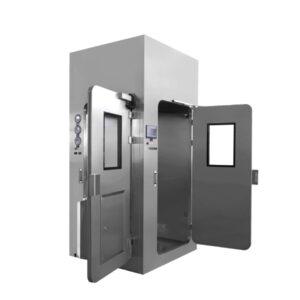
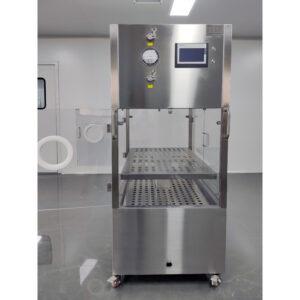
Pour les installations qui doivent déplacer des matériaux entre des zones classifiées sans rompre l'enveloppe de protection, un Chariot mobile pour flux d'air laminaire Un appareil de classe A (ISO 5), doté d'un système HEPA scellé par un gel et d'une capacité de balayage de l'intégrité, est le point de départ approprié pour la conversation sur les spécifications. Pour une utilisation générale de transfert dans des zones non classifiées, la même spécification représente un coût que l'application n'exige pas ou ne justifie pas. Faire correspondre le niveau de construction à l'application réelle est la décision qui empêche les équipes chargées des achats de gaspiller le budget ou d'acquérir un chariot qui échoue à la qualification.
Hypothèses commerciales qui faussent la comparaison avec les fournisseurs
Même lorsque l'emballage du filtre, les dimensions et le matériel d'emballage sont identiques d'un devis à l'autre, les différences de portée commerciale peuvent entraîner un écart de prix qui n'a rien à voir avec le chariot lui-même. Les incoterms déterminent qui prend en charge les frais de transport, d'assurance et d'importation - un devis établi au prix EXW et un devis établi au prix DDP peuvent refléter le même chariot mais sembler différer de 15-25% en fonction de la distance d'expédition et des droits de douane applicables. Si les fournisseurs établissent des devis en fonction de différents Incoterms sans que l'acheteur ne l'exige, la comparaison n'a aucun sens d'un point de vue commercial.
Le nombre de filtres de rechange crée une distorsion similaire. Un devis qui inclut un jeu de filtres de rechange initial pour le pré-filtre et les étages HEPA couvre un coût total différent de celui d'un devis qui ne mentionne que le corps du chariot. Cette distinction est importante d'un point de vue opérationnel, car le premier cycle de remplacement du filtre arrive relativement vite dans les applications à usage intensif, et le délai d'approvisionnement en filtres HEPA H14 de rechange - en particulier pour les configurations scellées au gel - peut être important. Les acheteurs qui ne tiennent pas compte des filtres de rechange lors de la comparaison initiale des devis découvrent souvent la différence au moment de la première maintenance programmée.
Les hypothèses de mise en service et de test d'acceptation en usine (FAT) complètent le tableau de la portée cachée. Un devis qui inclut la documentation FAT, l'assistance à la mise en service sur site et la formation de l'opérateur couvre beaucoup plus qu'un devis qui livre un chariot testé sans documentation de qualification. Pour les applications pharmaceutiques GMP où le chariot doit être intégré dans un protocole IQ/OQ, l'absence de documentation FAT n'est pas une lacune administrative mineure - il s'agit d'une lacune dans l'infrastructure de validation qui oblige l'acheteur à générer la documentation après coup, à ses propres frais, avec une traçabilité souvent moins fiable que la documentation produite pendant les tests contrôlés en usine.
Pour les acheteurs qui cherchent à comprendre les coûts et le retour sur investissement des équipements de flux d'air laminaire, l'étude de cas sur les équipements de flux d'air laminaire a été réalisée. Analyse des coûts unitaires du LAF fournit un cadre structuré pour évaluer le coût total tout au long du cycle de vie de l'équipement plutôt que de se concentrer uniquement sur le prix d'achat de base.
Exigences non fixées en matière de puissance et d'essais, ce qui rend la fixation du prix prématurée
Il existe une étape spécifique du projet avant laquelle toute comparaison de devis de chariots LAF mobiles est structurellement prématurée, et la plupart des processus d'achat commencent à collecter des prix avant de l'atteindre. Ce seuil correspond au moment où le mode d'alimentation, la durée de fonctionnement de l'onduleur, les dimensions du chariot et l'ensemble des tests sont tous fixés en tant qu'exigences de l'acheteur - et non comme des hypothèses que les fournisseurs peuvent compléter différemment.
| Exigence non fixée | Pourquoi cela conduit à des citations non comparables | Ce qui doit être spécifié |
|---|---|---|
| Autonomie de la batterie (UPS) | L'autonomie de 2 heures ou de 4 heures modifie la taille et le coût du bloc-batterie ; les devis refléteront des hypothèses différentes. | Décidez et déclarez la durée de fonctionnement minimale requise de l'ASI avant de demander une tarification. |
| Paquet de test (ports DOP, analyse d'intégrité) | L'inclusion ou l'omission peut modifier le prix de manière significative et affecter le champ d'application de la conformité aux BPF. | Confirmez que tous les devis portent sur le même ensemble de tests afin d'éviter les écarts de coûts cachés. |
L'autonomie de la batterie est la variable d'alimentation la plus couramment non fixée. Un acheteur qui demande un devis pour un “chariot mobile alimenté par batterie” sans préciser l'autonomie minimale de l'onduleur (2 heures ou 4 heures) recevra des devis qui supposent différents blocs-batteries. La différence de coût entre une configuration de 2 heures et de 4 heures n'est pas négligeable, et la conséquence opérationnelle du choix d'une mauvaise durée de fonctionnement - un chariot qui perd de l'énergie au milieu d'un transfert ou d'un cycle de production - est perturbatrice dans tout environnement classifié. La spécification des exigences en matière de durée d'utilisation est une décision prise en 30 secondes qui permet d'éviter des semaines de réapprovisionnement.
La portée de l'ensemble des tests a un poids équivalent. La norme ISO 14644-3:2019 établit les méthodes de test qui sous-tendent la vérification de l'intégrité des filtres et la qualification des performances dans les salles blanches, et ces méthodes nécessitent une infrastructure de test physique sur le chariot - en particulier des ports de test DOP qui permettent l'accès aux sondes pendant l'analyse de l'intégrité. Si le devis d'un fournisseur inclut cette infrastructure et pas celui d'un autre, la différence de prix n'est pas un prix compétitif - c'est un écart de capacité de validation. Confirmer que tous les devis incluent le même ensemble de tests avant de comparer les prix est la seule vérification qui empêche le plus sûrement les acheteurs de mal interpréter le paysage concurrentiel.
L'implication pratique de tout ce qui est couvert ici est qu'une comparaison crédible des prix des chariots LAF mobiles nécessite une spécification complète et partagée avant que le premier devis ne soit sollicité - et non pas après que trois devis ont été reçus et que les lacunes deviennent visibles. La largeur de la zone de travail, la qualité du matériau de l'enceinte, la durée de fonctionnement de l'onduleur, la configuration du filtre et la portée de l'ensemble des tests doivent tous être déclarés comme des exigences de l'acheteur dans l'appel d'offres. Les hypothèses commerciales - Incoterms, filtres de rechange, mise en service et inclusion du FAT - doivent être normalisées dans toutes les demandes des fournisseurs afin que les différences de prix qui subsistent reflètent une véritable variation des coûts plutôt qu'une inadéquation du champ d'application.
Avant de considérer un devis comme un point de référence concurrentiel, vérifiez qu'il couvre le même ensemble de filtres, la même infrastructure de validation et la même portée de livraison commerciale que tous les autres devis de la comparaison. Pour les applications pharmaceutiques GMP, confirmez spécifiquement que les ports de test DOP et la capacité de balayage de l'intégrité sont inclus, et que la construction du chariot s'aligne sur la classe de propreté que l'installation doit qualifier et maintenir. Un devis auquel il manque l'un de ces éléments n'est pas une offre plus basse - il s'agit d'un produit différent, et le coût de la découverte de cette différence après la mise en service est certainement plus élevé que le coût d'une spécification correcte dès le départ.
Questions fréquemment posées
Q : Que se passe-t-il si le protocole de validation du nettoyage d'un établissement n'a pas été finalisé ? Les services d'approvisionnement doivent-ils attendre avant de demander des devis pour des chariots LAF mobiles ?
R : Oui, la passation de marchés doit attendre que le protocole de nettoyage soit suffisamment stable pour confirmer au moins la qualité du matériau de l'enceinte, car le choix entre l'acier inoxydable 304 et 316L doit être verrouillé avant le début de la fabrication et ne peut être inversé sans un remaniement complet de la structure. Si des agents de nettoyage agressifs ou des conditions d'humidité élevée sont probables mais pas encore confirmés, le choix par défaut de l'inox 316L dans l'appel d'offres est la position la moins risquée - spécifier 304 et exiger ensuite l'inox 316L redémarre entièrement le processus de fabrication.
Q : Une fois l'appel d'offres émis avec une spécification parfaitement alignée, quelle est la première étape d'examen avant de considérer tout devis retourné comme un point de comparaison valable ?
R : Confirmez que chaque devis mentionne explicitement les mêmes Incoterms, inclut la même gamme de filtres de rechange et déclare si la documentation FAT et l'assistance à la mise en service sont incluses ou non dans la gamme. Ces trois variables commerciales peuvent entraîner un écart de prix apparent entre des devis qui décrivent en fait le même chariot, et ce sont les éléments les plus fréquemment laissés en suspens par les fournisseurs qui répondent à un appel d'offres.
Q : Les conseils donnés dans cet article s'appliquent-ils à une salle blanche pour semi-conducteurs plutôt qu'à un environnement pharmaceutique GMP ?
R : En partie. La logique des facteurs de coût concernant la qualité du filtre, le matériau du boîtier, les dimensions et la durée de fonctionnement de l'onduleur s'applique quel que soit le secteur, mais les exigences en matière d'infrastructure de validation diffèrent. Les ports de test DOP et la capacité de balayage de l'intégrité sont spécifiquement liés aux protocoles de qualification pharmaceutique GMP - une application de semi-conducteur régie par les méthodes de test ISO 14644-3:2019 peut avoir des exigences différentes en matière d'infrastructure physique. La discipline de base consistant à aligner le champ d'application avant de comparer les prix reste valable ; les éléments spécifiques de la liste de contrôle doivent être mis en correspondance avec les propres obligations de qualification de l'installation plutôt que de supposer qu'ils correspondent au cadre des BPF pharmaceutiques décrit ici.
Q : À quel moment la spécification d'une construction prête pour les BPF avec un HEPA H14 scellé au gel, des ports de test DOP et une fabrication en 316L cesse-t-elle d'être justifiée - où un chariot de transfert de base devient-il le choix le plus rationnel ?
R : Une construction prête pour les BPF n'est plus justifiée lorsque la zone de fonctionnement du chariot n'est pas classifiée et que l'application n'implique aucune classe de propreté réglementaire qui doit être démontrée ou maintenue dans le temps. L'infrastructure de validation - ports de balayage d'intégrité, HEPA scellé au gel, et la documentation de qualification qui l'accompagne - existe spécifiquement pour soutenir une classe de propreté défendable à travers la mise en service et la requalification périodique. Si l'évaluation des risques et le contexte réglementaire de l'installation n'imposent pas de classe de propreté à la voie de transfert, cette infrastructure ajoute des coûts sans apporter d'avantages en termes de conformité ou d'exploitation.
Q : Si deux fournisseurs mentionnent tous deux la même largeur de 1000 mm dans leurs devis, mais que l'un d'entre eux propose un prix nettement inférieur, peut-on supposer que la différence de prix reflète une réelle efficacité de fabrication ?
La largeur seule ne définit pas une spécification commune. Deux devis faisant référence à la même largeur nominale peuvent décrire des chariots avec des profondeurs de zone de travail, des hauteurs internes, des profils de flux d'air, des configurations de filtre et une infrastructure de test différents si aucune spécification commune des besoins de l'utilisateur n'a été utilisée pour ancrer la construction. Pour que la comparaison des prix soit pertinente, il faut que toutes les variables dimensionnelles, et pas seulement la largeur, soient explicitement alignées sur chaque devis - et que l'ensemble des filtres, la durée de fonctionnement de l'onduleur et la portée de la validation soient confirmés comme identiques avant que tout écart de prix résiduel ne soit attribué à l'efficacité ou à la marge du fournisseur.