Définir les spécifications d’une salle blanche destinée à l’assemblage de dispositifs médicaux en se basant sur une variable erronée — la catégorie du dispositif plutôt que l’exposition réelle du produit et son état d’emballage — constitue l’une des erreurs initiales les plus courantes dans ce type de projets, et celle-ci n’apparaît généralement qu’au moment de la qualification. Il en résulte soit une salle surclassée et coûteuse à entretenir, soit une salle qui ne peut être justifiée lors d’un audit QMSR de la FDA, car les délimitations des zones ne reflètent pas le risque réel de contamination auquel le produit est exposé. Les décisions relatives aux matériaux et aux flux prises lors de la phase de conception ont un impact disproportionné en aval : une finition murale choisie pour son aspect plutôt que pour sa compatibilité avec la désinfection se dégradera au fil des cycles de nettoyage répétés et finira par introduire des particules que la classification ISO initiale n’avait jamais prises en compte. C’est la compréhension de l’interaction entre le niveau d’exposition, le choix des matériaux, la séparation des flux et les preuves de conformité qui distingue une installation fonctionnelle d’une installation capable de résister à la pression de la qualification.
Exposition des dispositifs médicaux et état de l'emballage
La classe de propreté de toute zone dans une salle d’assemblage de dispositifs médicaux doit découler d’une seule question : la surface du produit ou le parcours de contact du produit est-il exposé à ce stade, et quel est son état d’emballage ? Un dispositif qui reste scellé dans son emballage primaire tout au long d’une étape ne présente pas le même risque environnemental qu’un dispositif dont les surfaces de contact sont exposées à l’air ambiant de la salle. Considérer ces deux états comme équivalents — en les classant tous deux dans la même classe ISO au seul motif qu’ils occupent la même surface au sol — entraîne soit une augmentation inutile des coûts, soit une exposition du produit sans contrôle adéquat.
Cette distinction a des conséquences directes dans le cadre du système de gestion de la qualité de la FDA, qui fait peser la responsabilité du contrôle de la contamination sur l’analyse des risques réalisée par le fabricant lui-même, plutôt que de prescrire une classification unique et universelle. Les recommandations de la FDA en matière de stérilisation renforcent ce point sous un angle différent : si un dispositif est destiné à être stérile, l’environnement d’emballage et de scellage fait lui-même partie de la chaîne de processus, et sa classe de propreté ne peut être attribuée indépendamment des étapes d’exposition en amont. Concrètement, cela signifie qu’une même chaîne de montage peut légitimement nécessiter deux ou trois zones de classification différentes selon l’endroit où le dispositif est exposé, où il est transféré vers l’emballage primaire, et où le produit scellé attend l’emballage secondaire ou le stockage.
Les équipes rencontrent des difficultés lorsque le cahier des charges initial est rédigé par le service des achats ou des installations, en utilisant la catégorie des dispositifs comme critère de classement. Les implants relèvent de la classe ISO 7, les instruments chirurgicaux généraux de la classe ISO 8 : ce sont là des hypothèses de départ raisonnables, mais elles s’effondrent rapidement lorsque la séquence d’assemblage réelle implique des étapes d’exposition à l’air libre au sein de zones théoriquement de classe inférieure, ou lorsqu’une étape d’emballage visant à sceller le dispositif est effectuée dans une salle dont la taille et les spécifications ont été définies pour la mise en place des composants. Identifier ces problèmes avant que l’agencement ne soit figé revient nettement moins cher que de reconfigurer les lieux après la construction. La carte d’exposition et de conditionnement doit être le premier document élaboré, et non un résultat dérivé du plan d’implantation.
Classe de propreté et choix des flux de matières
Une fois que le niveau d'exposition et le statut d'emballage sont définis par zone, les décisions de classification deviennent plus ciblées et donc plus faciles à justifier. Dans la pratique, les environnements d'assemblage de dispositifs médicaux utilisent couramment les normes ISO 7 et ISO 8 comme principales classifications de production et de soutien, la norme ISO 7 étant attribuée à l'assemblage et à l'échantillonnage des produits ouverts, et la norme ISO 8 couvrant la mise en place des composants, l'emballage secondaire et le stockage — bien que l'attribution appropriée dépende toujours du risque spécifique au produit, et non pas uniquement de l'étiquette de la zone.
La décision d’aménagement la plus déterminante concerne la manière dont les matériaux circulent entre ces zones. Un agencement qui oblige les opérateurs ou les matériaux à revenir sur leurs pas à travers les zones de production pour atteindre les postes d’inspection ou de mise en attente des rejets créera une confusion quant à l’état de contrôle, difficile à gérer sur le plan procédural et pratiquement impossible à justifier par observation lors d’un audit. L’analyse des flux réalisée avant la finalisation de l’agencement — à l’aide de méthodes telles que la cartographie par diagramme « spaghetti » pour tracer les trajectoires réelles — a permis d’obtenir des améliorations mesurables dans certains cas spécifiques de réaménagement.
| Métrique | Changer | Méthode |
|---|---|---|
| Distance parcourue à pied par l'opérateur par cycle | 8,0 m → 3,0 m (réduction de 63%) | Analyse du diagramme en spaghetti |
| Distance parcourue par le produit | Réduction 29% | Réaménagement d'une salle blanche dédiée au laser |
| Productivité | Augmentation de 23% | Réaménagement d'une salle blanche dédiée au laser |
Ces chiffres proviennent d’études de réaménagement spécifiques et ne doivent pas être interprétés comme des résultats garantis. Ils illustrent toutefois l’ordre de grandeur des avantages que peut apporter une analyse du flux préalable à la conception : une réduction des déplacements des opérateurs signifie une réduction du temps d’exposition à la contamination, et une réduction de la distance parcourue par les produits signifie moins d’occasions de franchir inutilement les limites des zones. Un agencement qui semble correct sur un schéma mais qui oblige les opérateurs à transporter des assemblages en cours de fabrication devant la zone de mise au rebut ou à travers un point d’entrée de composants entraînera une accumulation de violations du flux qui, cumulées, constituent un risque réel pour la qualification. C’est avant la construction de la salle, et non pendant la qualification de performance (PQ), qu’il faut identifier et éliminer ces chemins.
Conséquences liées aux matériaux utilisés pour les murs, les sols et les bancs
Dans la conception des salles blanches, les décisions relatives aux matériaux de surface sont généralement considérées comme des choix de finition — des choix esthétiques ou dictés par des considérations de coût, effectués à un stade avancé du processus de définition des spécifications. Cette approche a pour conséquence que les surfaces sont finalement choisies en fonction de critères visuels plutôt que de protocoles de nettoyage, et cette incompatibilité ne devient apparente qu’une fois l’installation commencée.
La question pratique qui se pose pour chaque surface est de savoir si elle peut résister aux produits chimiques de désinfection prévus par l'établissement, tout au long de la fréquence de nettoyage attendue, sans se dégrader, absorber de résidus ou libérer des particules. Les panneaux muraux dotés d’une finition intérieure en polymère renforcé de fibres (FRP) constituent un choix courant dans les environnements d’assemblage de dispositifs médicaux, précisément parce que le FRP résiste à des nettoyages répétés sans subir de dommages en surface ni d’accumulation de résidus. Il s’agit là d’un critère de durabilité et de facilité de nettoyage, et non d’une exigence réglementaire — mais la logique qui le sous-tend est directement liée au maintien de la classification au fil du temps. Une surface qui présente des microfissures, un délaminage ou des zones poreuses sous l’effet des produits chimiques de nettoyage devient une source de particules qui n’existait pas au moment des essais initiaux de classification ISO.
La certification selon des normes telles que FM, UL et ASTM E84 permet de vérifier, à un niveau minimal, la durabilité des matériaux, leur faible émission de particules et leur comportement au feu. Ces certifications renforcent la validité réglementaire dans le cadre d’un système de qualité QMSR, car elles fournissent des preuves documentaires attestant que les matériaux ont été évalués selon des critères de performance définis. Elles ne garantissent toutefois pas la performance dans toutes les conditions de désinfection possibles : l’utilisation fréquente de produits chimiques agressifs peut tout de même dégrader des matériaux qui ont théoriquement satisfait aux tests de certification statiques. La question la plus pertinente en matière d’approvisionnement est de savoir si le matériau a été validé ou, à tout le moins, testé face aux agents et aux cycles spécifiques que l’établissement utilisera effectivement.
Les plans de travail des paillasses obéissent à la même logique, avec une dimension ergonomique supplémentaire : un plan de travail qu’il est impossible d’essuyer entièrement sans laisser de résidus au niveau des joints, des points de fixation ou des transitions de surface devient un lieu d’accumulation de contaminants à l’endroit le plus proche du produit. Le choix de transitions sans joint ou à cornière au niveau des jonctions sol-mur et de bords de paillasse scellés n’est pas une simple question d’esthétique : il influe directement sur la fiabilité du nettoyage de la salle conformément à la classification.
Tri des composants, des sous-ensembles, des rebuts et des produits finis
Le fait de mélanger des composants, des sous-ensembles en cours de fabrication, des rebuts et des produits finis conditionnés au sein d’un même circuit de circulation est facile à négliger lors de la conception initiale et véritablement difficile à corriger une fois la salle construite. Le risque ne réside pas seulement dans la contamination croisée, mais aussi dans la confusion quant à l’état de contrôle : des matériaux se trouvant à différentes étapes du processus qualité sont physiquement proches les uns des autres, ce qui rend leur statut ambigu lors d’un audit ou d’une enquête de non-conformité. La séparation physique constitue la solution la plus justifiable, car elle permet de ne plus compter uniquement sur les contrôles procéduraux.
Les options de mise en œuvre concrète varient en fonction de la taille de l'établissement et des contraintes liées à sa configuration.
| Méthode de ségrégation | Mise en œuvre type | Principaux avantages |
|---|---|---|
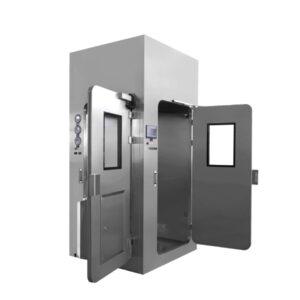
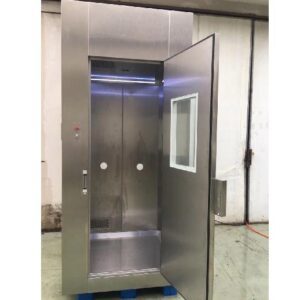
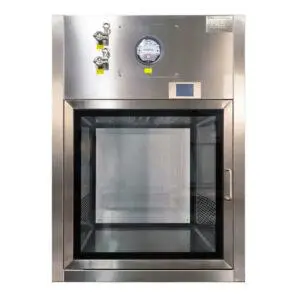
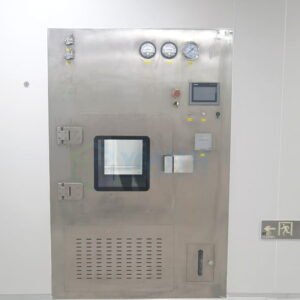
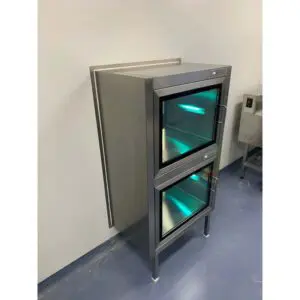
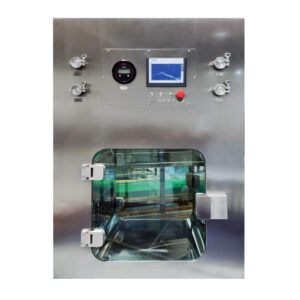
| Chambre de transfert murale | Chambre de 24″ × 24″ ; transferts entre zones ISO‑7 | Permet de contrôler les particules pendant le transport des matériaux |
| Mini-salle blanche interne | 6 mini-salles blanches au sein d'un site de 3 000 m² | Zones de traitement dédiées sans locaux séparés de taille normale ; permet de gagner de la place et de réduire les coûts |
| Locaux distincts pour l'échantillonnage, le conditionnement et le stockage | Situé à proximité de la salle blanche de production | Empêche le mélange des composants, des sous-ensembles, des rebuts et des produits finis |
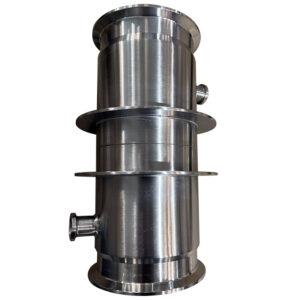
Les chambres de transfert permettent de préserver la classification des particules des deux zones lors du transfert de matériaux, évitant ainsi à l'opérateur de devoir retirer sa tenue de protection ou de transporter des matériaux à travers un couloir commun. Les dimensions et configurations spécifiques des chambres indiquées dans le tableau reflètent des exemples de mise en œuvre documentés plutôt que des normes universelles. Les mini-salles blanches internes, intégrées dans une enceinte plus grande, constituent une solution peu encombrante lorsque des processus spécifiques — collage, inspection ou étapes d’assemblage spécialisées — nécessitent une classification plus stricte que la pièce environnante, sans le coût d’une salle séparée de taille normale. Des salles de transit distinctes pour l’échantillonnage, le conditionnement et le stockage permettent d’éviter le risque que des produits finis scellés partagent le même espace au sol que des composants entrants non inspectés.
Le choix de conception qui présente systématiquement le plus grand risque d’audit est une configuration qui utilise l’étiquetage procédural — bacs à code couleur, ruban adhésif au sol, signalétique — comme principale méthode pour maintenir la séparation des matériaux, plutôt que des barrières physiques ou des points de passage contrôlés. L’étiquetage soutient la séparation ; il ne la remplace pas. Lorsqu’une pièce rejetée occupe le même poste de travail qu’un assemblage en cours de fabrication et que le seul moyen de contrôle est une étiquette que l’opérateur a peut-être appliquée correctement, ou peut-être pas, l’état du contrôle dépend alors de la conformité de l’opérateur plutôt que de la conception du système. La séparation physique élimine cette dépendance.
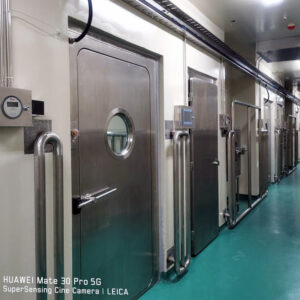
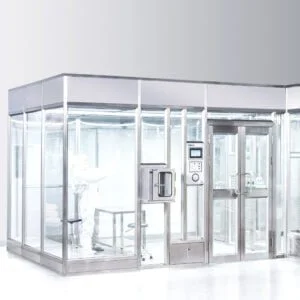
Pour les projets visant à examiner l'interaction entre les exigences de ségrégation et l'enveloppe globale de la salle blanche, Salle blanche modulaire à parois dures Il est judicieux d’étudier ces configurations dès le début, car il est plus facile de définir les panneaux muraux structurels et les passages intégrés en tant que système coordonné que de les adapter a posteriori à un agencement initialement conçu sans eux.
Besoins en matière de documentation et de contrôle d'accès pour les systèmes « Hardwall »
Les systèmes à parois rigides exigent davantage d'efforts structurels initiaux que les solutions à parois souples, mais le rapport qualité-prix en matière de documentation leur est systématiquement favorable dans les environnements d'assemblage de dispositifs médicaux où le contrôle d'accès, les relations de pression et les programmes de nettoyage réguliers doivent être intégrés au système qualité.
La raison tient à la lisibilité architecturale. Une salle à parois rigides présente des points d’entrée définis et fixes, des relations traçables entre les barrières de pression, ainsi qu’une surface de nettoyage pouvant être cartographiée une seule fois et entretenue de manière cohérente. Lorsque les systèmes de contrôle d’accès sont intégrés dès la phase de construction — plutôt que d’être acquis et installés séparément —, la piste d’audit qui en résulte relie l’entrée dans la salle aux dossiers du personnel, au respect des consignes d’habillage et à l’état de l’environnement, d’une manière que le responsable de l’assurance qualité peut suivre sans avoir à interpréter les données. Considérer le contrôle d’accès comme un ajout postérieur à l’installation implique généralement d’intégrer du matériel dans des surfaces qui n’ont pas été conçues pour l’accueillir, de réacheminer des gaines à travers des panneaux déjà posés et de produire une documentation faisant référence à deux interventions d’installation distinctes avec des registres d’installation différents.
La qualification de la conception avant construction — comprenant la modélisation BIM et la simulation numérique des flux d’air — permet de valider les différences de pression et l’emplacement des points d’accès avant le début de la fabrication. L’intérêt ne réside pas dans le fait que ces méthodes soient exigées par une norme quelconque, mais dans leur capacité à mettre en évidence les conflits entre les relations de pression prévues et la géométrie réelle de l’installation avant que ces conflits ne se concrétisent physiquement. Une salle qui passe avec succès la simulation de la phase de qualification de la conception (DQ), avec des différences de pression et des points d’accès correctement positionnés, est nettement plus facile à documenter lors des phases de qualification de l’installation (IQ) et de qualification opérationnelle (OQ) qu’une salle dont l’état tel que construit révèle que l’ouverture d’une porte ou l’emplacement d’une prise d’air de retour n’ont pas été pris en compte dans le dossier de conception. Le règlement QMSR de la FDA attribue la responsabilité des contrôles de conception et de la documentation au fabricant du dispositif, et l’évaluateur du système qualité s’attendra à ce que les dossiers de conception et de performance de la salle blanche soient cohérents avec ces contrôles.
Pour les installations dans lesquelles l'environnement de salle blanche fait partie intégrante du processus de fabrication de produits pharmaceutiques ou de dispositifs médicaux, Salle blanche modulaire pharmaceutique Ces configurations constituent un point de référence quant à la manière dont la construction des parois rigides, le contrôle d'accès et la documentation relative aux parois étanches à la pression sont généralement coordonnés dans le cadre d'un même projet.
Preuves d'acceptation pour l'examen du système qualité
La différence entre une salle blanche mise en service et une salle blanche « défendable » réside dans la chaîne de preuves. Une salle qui a passé avec succès les tests de classification ISO mais qui ne dispose pas d’une documentation cohérente reliant les résultats de ces tests à l’état de préparation au nettoyage, au flux de matériaux validé et aux propres dossiers qualité du fabricant du dispositif devra voir cette chaîne reconstituée sous la pression d’un audit — ce qui est à la fois chronophage et structurellement difficile lorsque les dossiers originaux ont été établis au cours de phases sans lien entre elles.
Le cadre de validation standard pour les salles blanches destinées aux dispositifs médicaux — IQ, OQ et PQ — constitue la structure porteuse de cette chaîne, mais la solidité de celle-ci dépend entièrement de la cohérence entre chaque étape. L’IQ confirme que la salle a été construite conformément aux spécifications. L’OQ confirme qu’elle fonctionne dans les limites des paramètres spécifiés, dans des conditions contrôlées. Le PQ confirme qu’elle répond aux spécifications dans des conditions de production représentatives. Lorsque ces étapes se réfèrent les unes aux autres de manière cohérente et renvoient au dossier initial de qualification de la conception, un auditeur peut retracer l’historique complet des performances de la salle sans avoir à se fier à des explications verbales.
| Volet « Preuves » | Ce qu'il confirme | Valeur du système qualité |
|---|---|---|
| Essais de réception en usine (FAT) | La salle blanche fonctionne conformément aux spécifications avant expédition | Réduit les risques liés à la mise en service sur site ; permet de disposer rapidement de la documentation nécessaire |
| Réussite dès la première tentative à l'évaluation des performances (PQ) | Une qualité de fabrication et des performances constantes | Facilite l'examen réglementaire grâce à des données de performance fiables |
| Protocole de validation IQ/OQ/PQ | L'installation, le fonctionnement et les performances sont conformes aux spécifications | Cadre structuré de données probantes destiné à l'examen par l'auditeur |
| Système de surveillance en continu | Visibilité en temps réel des paramètres critiques | Relie directement les données environnementales au système de qualité ; permet une réaction immédiate en cas d'écart |
Les essais de réception en usine avant expédition permettent de vérifier dès le début que la salle fonctionne conformément aux spécifications dans un environnement contrôlé, avant que des variables propres au site ne viennent interférer. La réussite dès le premier essai de qualification de performance (PQ) est un indicateur de performance associé à une qualité de fabrication constante ; elle n’est pas garantie, mais elle montre si la conception et le processus de fabrication ont été suffisamment maîtrisés pour produire des résultats prévisibles. La surveillance continue ne remplace pas les nouveaux essais de classification périodiques, mais elle fournit un enregistrement environnemental en temps réel qui relie l’essai de classification statique à l’environnement de production réel — et c’est ce lien que recherchent les auditeurs lorsqu’ils vérifient si la salle a fonctionné conformément à sa classification au cours d’une période de production spécifique.
La référence au contenu supplémentaire sur Équipement de salle blanche pour dispositifs médicaux - Exigences de la classe ISO aborde la manière dont la classification ISO et le choix des équipements s'articulent dans le cadre d'applications spécifiques à chaque dispositif, ce qui peut constituer une référence parallèle utile lors de l'élaboration du dossier de qualification de la conception.
La préparation la plus utile avant un examen final de la portée consiste à établir une cartographie écrite de l’exposition et du conditionnement, qui précise quelles zones manipulent des produits ouverts, lesquelles manipulent des produits scellés, et quelle est l’exigence maximale en matière de classe de particules à chaque étape. Ce document guide toutes les étapes en aval : l’attribution des classes, les critères de sélection des matériaux, les contraintes liées aux voies de circulation, les exigences de ségrégation, ainsi que la structure de la documentation à laquelle les essais de réception devront se référer. Sans lui, les décisions prises dans chaque discipline ont tendance à être raisonnables localement mais incohérentes globalement, et ces incohérences apparaissent lors de la qualification.
Avant de finaliser l’achat, vérifiez que les spécifications relatives aux matériaux des murs, des sols et des paillasses font référence aux produits de nettoyage et aux fréquences de nettoyage qui seront effectivement utilisés en exploitation — et non pas simplement à des mentions génériques telles que « de qualité salle blanche » ou à des allégations relatives au statut de certification. Vérifiez que l’approche de ségrégation prévue dans l’aménagement repose sur des contrôles physiques plutôt que procéduraux pour les transferts de matériaux présentant le plus haut risque. Vérifiez également que le périmètre des essais de réception génère des documents qui s’inscrivent directement dans le système qualité du fabricant du dispositif, et non pas uniquement dans la liste de contrôle de mise en service du fournisseur de la salle blanche. Cette distinction est importante lors de l’audit.
Questions fréquemment posées
Q : Que se passe-t-il si l'établissement prévoit de réaliser à la fois l'assemblage de produits ouverts et la manipulation de produits scellés dans la même pièce physique ? Une classification ISO unique reste-t-elle envisageable ?
R : Une classification unique ne peut fonctionner que si l’activité à moindre risque (produit scellé) ne compromet pas celle à risque plus élevé ; toutefois, cela introduit une complexité en matière de documentation et d’audit difficile à gérer à long terme. Lorsque des produits exposés et des produits scellés partagent le même air ambiant et la même surface au sol, la classification doit être définie en fonction du niveau de risque le plus élevé présent, ce qui signifie que la manipulation des produits scellés est surclassifiée et que le coût de maintien de cet environnement s’applique à toutes les activités menées dans la salle. Plus important encore, un auditeur examinant la carte d’exposition et d’emballage s’attendra à ce que les limites de la zone reflètent l’endroit où le risque réel de contamination change — une approche à salle unique réduit cette distinction à une question de procédure plutôt qu’à une conception physique, ce qui est plus difficile à justifier au regard du QMSR de la FDA lors de l’examen de l’analyse des risques de contamination.
Q : Une fois la carte d'exposition et de conditionnement finalisée et la mise en page validée, quelle est la première étape à suivre en matière d'approvisionnement ?
R : La première étape du processus d’approvisionnement consiste à commander la documentation relative à la qualification de la conception — y compris la modélisation BIM et la simulation numérique des flux d’air — avant le début de toute fabrication. La carte d'exposition et d'agencement définit les limites des zones et les exigences de classification, mais ces limites ne sont valables que si les différences de pression, les points d'accès et l'emplacement des retours d'air dans la géométrie réelle de l'agencement les corroborent. C'est le fait de valider le dossier de conception par le biais de la qualification de la conception (DQ) avant la fabrication qui garantit la cohérence ultérieure de la qualification de l'installation (IQ) et de la qualification opérationnelle (OQ) ; si l'on constate, une fois la pièce construite, que les rapports de pression ou l'emplacement des portes ne sont pas conformes, la correction nécessite à la fois des retouches physiques et une refonte de la documentation.
Q : Les recommandations concernant les systèmes à parois rigides restent-elles valables lorsque la superficie de la salle blanche est réduite et que le budget du projet est limité ?
R : Pour les salles d’assemblage de dispositifs médicaux où le contrôle d’accès, la documentation relative aux limites de pression et le nettoyage de routine doivent être intégrés à un système qualité, les systèmes à parois rigides restent le choix le plus justifiable, quelle que soit la superficie occupée — même si l’écart de coût entre les parois rigides et les parois souples se réduit considérablement à petite échelle. L’avantage des parois rigides en matière de documentation est d’ordre architectural : points d’entrée fixes, relations de pression définissables et surface à nettoyer pouvant être cartographiée en une seule fois. Une petite salle à parois souples n’élimine pas ces exigences de documentation ; elle les rend simplement plus difficiles à satisfaire, car les limites physiques ne sont pas fixes. Si le budget constitue véritablement une contrainte, le meilleur compromis à envisager est une salle à parois rigides plus petite, dont le périmètre est précisément adapté aux zones de traitement des produits ouverts, plutôt qu’une enceinte à parois souples plus grande qui couvre une plus grande surface au sol mais produit des dossiers de qualification moins solides.
Q : En quoi le recours à la séparation physique diffère-t-il d'un système d'étiquetage procédural rigoureusement appliqué lorsque les auditeurs examinent concrètement le contrôle des matières ?
R : La séparation physique s’avère systématiquement plus efficace que l’étiquetage procédural lors d’un audit, car elle élimine la dépendance vis-à-vis de la conformité de l’opérateur dans le registre de contrôle. Un système d’étiquetage bien documenté démontre l’intention ; un auditeur examinant un cas de non-conformité se demandera si le contrôle a empêché le mélange ou s’il a simplement exigé qu’une personne le remarque et réagisse correctement. Les barrières physiques, les points de passage contrôlés et les zones de transit séparées créent un système où le mauvais résultat — une pièce rejetée partageant l’espace de travail avec un assemblage en cours de fabrication — est structurellement empêché plutôt que simplement découragé par des procédures. La différence en termes de preuve est significative : les contrôles physiques peuvent être vérifiés par observation et documentés sur un plan d’implantation ; les contrôles procéduraux nécessitent des registres de formation, un suivi de la conformité et des registres des écarts pour établir le même niveau de confiance.
Q : Si un fournisseur de salles blanches fournit la documentation relative à la qualification de l'installation (IQ), à la qualification opérationnelle (OQ) et à la qualification de performance (PQ) dans le cadre de son offre standard, cela est-il suffisant pour l'évaluation du système qualité du fabricant du dispositif médical ?
R : Les dossiers d’IQ, d’OQ et de PQ établis par le fournisseur constituent un point de départ indispensable, mais sont rarement suffisants à eux seuls pour l’examen du système qualité d’un fabricant de dispositifs médicaux. La réglementation QMSR de la FDA attribue la responsabilité du contrôle de la conception et des risques de contamination au fabricant du dispositif médical, et non au fournisseur d’équipements — ce qui signifie que les dossiers de validation doivent établir un lien entre les performances de la salle blanche et l’analyse des risques, la carte d’exposition du produit et les dossiers qualité propres au fabricant, et pas seulement avec la liste de contrôle de mise en service du fournisseur. La lacune pratique se situe généralement au stade de la qualification de performance (PQ) : la PQ d’un fournisseur confirme que la salle fonctionne conformément aux spécifications dans des conditions contrôlées, mais le système qualité du fabricant de dispositifs médicaux a besoin de preuves attestant qu’elle a fonctionné dans les limites de sa classification dans des conditions de production représentatives pour son produit spécifique. Pour combler cette lacune, le fabricant doit soit mener, soit adopter officiellement des essais de PQ selon son propre protocole, avec une traçabilité vers ses propres dossiers qualité.