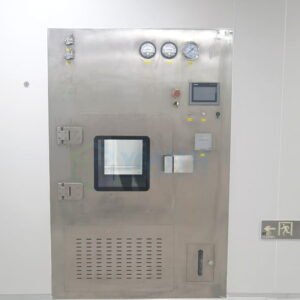
Les équipes de validation qui s'occupent de qualification opérationnelle (OQ) de la cabine de pesage en tant qu’étape de mise en service fonctionnelle — consistant à vérifier que le ventilateur fonctionne, que l’éclairage est opérationnel et que l’affichage est correct — découvrent souvent, lors de leur prochaine requalification semestrielle ou lors d’une inspection inopinée, que la dépression n’a jamais été correctement vérifiée en conditions réelles de charge du système CVC, que les alarmes n’ont jamais été testées à leurs seuils définis et que la configuration du flux d’air censée protéger à la fois l’opérateur et le produit n’a jamais fait l’objet d’un test à la fumée. L’écart entre les spécifications de la cabine et ce que la qualification opérationnelle (OQ) a effectivement confirmé devient alors un risque de non-conformité présent dans chaque enregistrement de lot généré depuis l’installation. Le coût concret se traduit par des travaux de reprise : une requalification qui devrait prendre quelques jours peut s’étendre sur plusieurs semaines lorsque des lacunes dans le protocole nécessitent une nouvelle validation, que les instruments doivent être recalibrés et que les conditions ambiantes doivent être rétablies. Le jugement pratique requis avant toute cabine de pesage pour déterminer si la cabine est réellement opérationnelle, il faut vérifier si le programme de qualification opérationnelle (OQ) teste effectivement la cabine dans l'ensemble de ses paramètres de fonctionnement — uniformité du débit d'air, cascade de pression, comportement des particules et réponse des alarmes — et pas seulement si l'équipement s'allume.
Questions de qualification (OQ) allant au-delà de la simple vérification du démarrage du ventilateur
La confirmation du démarrage du ventilateur est une condition préalable, et non un test de qualification opérationnelle (OQ). L'OQ a pour but de vérifier que la cabine fonctionne dans les limites de son plage de fonctionnement spécifié, dans les conditions réelles d'utilisation — c'est-à-dire avec le système CVC de la pièce fonctionnant à charge normale, la porte de la cabine fermée et étanche, et le ventilateur réglé à sa vitesse de qualification.
Le test qui permet de distinguer une qualification opérationnelle (OQ) approfondie d’une qualification superficielle est la vérification de la chute de pression. Une cabine qui repose sur un différentiel de pression négative pour contenir des poudres ou des aérosols doit démontrer qu’elle maintient ce différentiel sous une charge CVC réelle, et pas seulement dans des conditions de banc d’essai à air calme. Les recommandations commerciales font référence à des taux de fuite d’air comparés à des normes telles que l’ASTM E779, avec des valeurs de conception telles que 0,5 cm² par 100 m³ de volume de la chambre, utilisées pour caractériser une étanchéité acceptable. Ce chiffre spécifique reflète un critère de conception commercial plutôt qu’un seuil réglementaire universel, mais la logique sous-jacente s’applique de manière générale : si une cabine présente une fuite à un débit significatif sous des gradients de pression réels en fonctionnement, la surveillance de routine de la pression risque de ne pas la détecter, et le premier signe de défaillance pourrait être un dépassement de concentration de particules ou une enquête de contamination.
| Zone de test OQ | Ce qu'il vérifie | Risque en cas d'omission |
|---|---|---|
| Débit d'air et chute de pression | Différentiel de pression négatif sous charge CVC ; circulation d'air unidirectionnelle | Une perte de dépression ou une turbulence non détectée, entraînant une fuite de contaminants |
| Confinement des particules | Le nombre de particules non viables est conforme à la classe A, tant à l'arrêt qu'en fonctionnement | Risque de contamination de fond lors des opérations de pesée courantes |
| Vérification de l'alarme | Les alarmes liées à une défaillance du ventilateur, à la pression et au système se déclenchent correctement aux seuils définis | Le dysfonctionnement de l'équipement passe inaperçu jusqu'à la prochaine requalification ou inspection |
| Plage de fonctionnement et verrouillages | Le vérin fonctionne selon des paramètres variables prédéfinis et le dispositif de verrouillage s'enclenche sous charge | Les conditions hors spécifications ne déclenchent pas d'alarme ; les limites d'exploitation ne sont pas confirmées |
La colonne « Alarme et verrouillage » du tableau ci-dessus revêt une importance particulière, car les défaillances d’alarme sont, par nature, silencieuses. Une alarme de défaillance de ventilateur qui n’est jamais remise en question à son seuil de déclenchement pendant la qualification opérationnelle (OQ) peut cacher une dérive du capteur ou un défaut de câblage qui passera inaperçu jusqu’à ce qu’une véritable défaillance du ventilateur survienne lors d’une opération de pesée. À ce stade, l’opérateur aura peut-être continué à travailler en partant du principe que le système l’alerterait. Omettre la vérification des alarmes lors de la qualification opérationnelle (OQ) ne réduit pas le risque ; cela repousse la détection d’un défaut existant à un moment critique pour l’exploitation.
Essais de débit d'air, de particules et d'alarmes dans des conditions définies
Les critères d'acceptation figurant dans un protocole de qualification opérationnelle (OQ) d'une cabine de pesée ne sont pas arbitraires. Ils découlent de la logique de contrôle de la contamination que la cabine est conçue pour mettre en œuvre, et chacun d'entre eux correspond à un mode de défaillance différent. Le défi pour l'équipe de validation ne consiste pas à comprendre la nature de ces critères, mais à s'assurer que chaque essai est réalisé dans des conditions contrôlées et représentatives, afin que les données obtenues soient réellement défendables.
La mesure de la vitesse de l’air est un essai fondamental, et l’emplacement de la mesure est tout aussi important que le résultat. Effectuer la mesure à 6 pouces en aval de la face du filtre — plutôt qu’au ras de celle-ci ou au niveau de la surface de travail — permet de saisir le profil de vitesse là où le flux d’air s’est stabilisé dans ses conditions de fonctionnement. Un critère d’acceptation référencé dans le protocole, fixé à 90 FPM ±20% (0,45 m/s ±20%) à cet emplacement, permet de traiter à la fois les situations de vitesse insuffisante, où le confinement est réduit, et celles de vitesse excessive, où les risques de turbulence et de contamination croisée augmentent. Les méthodes d’essai sous-jacentes sont définies par ISO 14644-3, même si les valeurs d'acceptation spécifiques doivent être considérées comme des paramètres de conception propres à chaque protocole plutôt que comme des seuils universels.
Une qualification opérationnelle (OQ) qui confirme la vitesse moyenne mais pas l'uniformité spatiale laisse la question de la turbulence en suspens jusqu'à la réalisation d'un test à la fumée.
Le tableau ci-dessous répertorie les principaux critères d'acceptation qu'un protocole de qualification opérationnelle (OQ) bien structuré doit prendre en compte :
| Paramètre d'essai | Critères d'acceptation | Référence du protocole / Remarque |
|---|---|---|
| Vitesse de l'air | 90 FPM ±20% (0,45 m/s ±20%), mesuré à 6 pouces en aval de la face du filtre | Protocole relatif au stand de la RLAF dans le secteur industriel |
| Intégrité du filtre HEPA (test d'étanchéité) | Pénétration/fuite d'aérosol ≤ 0,011 TP10T de la concentration en amont | Pratique conforme à la réglementation |
| Pression différentielle – Filtre HEPA | 8 à 18 mm H₂O | Suivi effectué pendant 3 jours consécutifs |
| Pression différentielle – Filtre intermédiaire | 2 à 6 mm H₂O | Suivi effectué pendant 3 jours consécutifs |
| Dépression (de la pièce vers la cabine) | 0,5 à 2,5 mm H₂O | Suivi effectué pendant 3 jours consécutifs |
| Surveillance des particules non viables | Respecte les limites de la classe A, tant à l'arrêt qu'en fonctionnement | Réalisé dans les deux conditions |
| Vérification du fonctionnement de l'alarme | Des alarmes se déclenchent lorsque des seuils prédéfinis sont atteints, notamment en cas de panne de ventilateur, de perte de pression, etc. | Vérifié dans des conditions d'essai contrôlées |
L’intégrité du filtre HEPA, avec une limite de fuite ne dépassant pas 0,011 TP10T de la concentration en aérosols en amont, mérite d’être signalée séparément. Ce test ne peut pas être remplacé par la mesure de la pression différentielle à travers le filtre. Un filtre HEPA peut présenter une pression différentielle comprise entre 8 et 18 mm H₂O tout en comportant une microperforation localisée laissant passer des particules à des concentrations bien supérieures à la limite de classe A. Ces deux mesures portent sur des modes de défaillance différents et doivent toutes deux figurer dans le protocole. L’exigence relative à la surveillance des particules — effectuée à l’arrêt et en fonctionnement — suit la même logique : les résultats à l’arrêt établissent la référence que la cabine atteint en l’absence d’activité humaine, tandis que les résultats en fonctionnement confirment si la configuration du flux d’air est suffisamment robuste pour maintenir le confinement en cas de perturbations réalistes. Traitement Grade A Considérer que la surveillance des particules non viables dans une cabine, dans le cadre d'une qualification opérationnelle (OQ), équivaut à la qualification d'une salle blanche classifiée serait aller trop loin ; ce qu'elle apporte, c'est un point de données de vérification de la contamination conforme à Principes de classification ISO, utile pour établir des valeurs de référence en vue d'un suivi régulier.
La surveillance de la pression différentielle sur trois jours consécutifs pour les trois relations de pression — ΔP du filtre HEPA, ΔP du filtre intermédiaire et pression négative par rapport à la pièce — confère aux données de qualification opérationnelle (OQ) une dimension temporelle, plutôt qu’un simple instantané ponctuel. La plage de dépression comprise entre 0,5 et 2,5 mm H₂O est suffisamment étroite pour que les variations du système CVC dans une installation en service actif puissent faire basculer les mesures vers les limites de cette plage au cours d’une journée de fonctionnement normale. Le fait de détecter ce comportement lors de la qualification opérationnelle, plutôt que de le découvrir lors d’une surveillance de routine, permet à l’installation de s’attaquer aux causes profondes avant qu’elles n’apparaissent dans une tendance de surveillance environnementale.
Vérification de l'état des instruments et des locaux avant l'intervention
La cause la plus fréquente de retard dans l’exécution des tests de qualité opérationnelle (OQ) le jour de l’installation n’est pas l’absence d’une étape du protocole, mais l’absence d’un certificat d’étalonnage. Lorsque l’équipe de validation arrive avec un compteur de particules dont l’étalonnage a expiré deux semaines auparavant, ou avec un manomètre Magnehelic installé sur site qui n’a jamais été officiellement vérifié, toute la séquence d’exécution est interrompue. Les données générées à partir de ce moment-là ne sont plus valides, et la reprise des opérations nécessite non seulement une nouvelle planification, mais aussi, éventuellement, une nouvelle validation du protocole si un écart par rapport au protocole d’exécution a été enregistré.
La vérification de l'état de préparation avant l'exécution de la qualification opérationnelle (OQ) n'est pas une formalité administrative superflue ; il s'agit du mécanisme qui permet d'éviter qu'un échec d'exécution ne soit découvert a posteriori lors de la révision. Les éléments suivants doivent être vérifiés avant le début de tout test :
La stabilité des conditions ambiantes mérite une attention particulière, car il s’agit de l’élément le plus souvent considéré comme une hypothèse de fond plutôt que comme une condition préalable vérifiée. Si le système CVC de la salle a été mis en service récemment, si des travaux sont en cours dans les zones adjacentes ou si l’équilibre de l’air soufflé a été ajusté dans les jours précédant la qualification opérationnelle (OQ), le fond de particules et les relations de pression sur lesquels repose l’essai de la cabine peuvent se trouver dans un état transitoire plutôt qu’en régime permanent. Les résultats d’essais obtenus dans une salle instable ne reflètent pas les performances de la cabine dans des conditions normales d’exploitation et risquent de ne pas être reproductibles lors d’une requalification. Vérifier que la température, l’humidité, le débit d’air soufflé et la propreté de fond se situent dans des plages acceptables et sont restés stables pendant une période définie avant l’exécution de l’essai est une pratique standard conforme à l’annexe 15, et non une précaution facultative.
La réalisation d'une qualification opérationnelle (OQ) dans des conditions ambiantes instables génère des données qui reflètent l'état transitoire de la pièce, et non les performances validées de la cabine.
La vérification relative à la procédure opérationnelle standard (SOP) est plus simple, mais son omission entraîne les mêmes conséquences. Si l'opérateur utilise une version obsolète de la SOP relative au compteur de particules lors de l'exécution de la qualification opérationnelle (OQ), la procédure de collecte des données risque de ne pas correspondre à ce qui est prévu dans le protocole approuvé. Cet écart procédural sera considéré comme un non-conformité lors de l'examen, et non comme une simple note de bas de page pouvant être corrigée spontanément.
Modes de défaillance cachés qui apparaissent lors de la requalification
Certaines défaillances ne sont pas encore présentes au moment de la qualification opérationnelle initiale. Elles s’accumulent au fil du temps. Les filtres HEPA se dégradent sous l’effet des cycles de charge, les roulements des moteurs s’usent, les points de consigne des capteurs de pression dérivent et la compression des joints s’affaiblit avec le temps. L’objectif d’un programme de requalification structuré est de détecter ces changements avant qu’ils ne se traduisent par des incidents de contamination ou des non-conformités ; toutefois, cette détection n’est efficace que si la requalification couvre les mêmes essais que ceux qui avaient été initialement validés lors de la qualification opérationnelle.
Le risque concret est que les programmes de qualification opérationnelle (OQ) initiaux soient parfois définis de manière trop restrictive afin de réduire la durée de mise en œuvre, et que ce champ d’application restreint soit ensuite repris dans le calendrier de requalification. Une installation qui omet la vérification du profil de circulation de la fumée lors de sa qualification opérationnelle initiale peut également l’omettre lors de la requalification, ce qui signifie qu’un profil de turbulence apparaissant après le remplacement d’un moteur de ventilateur ou une modification de l’agencement d’une pièce passera inaperçu jusqu’à l’ouverture d’une enquête.
| Mode de défaillance caché | Comment cela se manifeste-t-il pendant le fonctionnement ? | Méthode de détection lors de la requalification |
|---|---|---|
| Turbulence du flux d'air | Contamination croisée des produits ; inconfort de l'opérateur | La configuration du flux de fumée montre un écoulement unidirectionnel sans turbulence visiblement significative. |
| Dégradation du filtre HEPA | Une fuite > 0,011 TP10T se développe ; le nombre de particules augmente | Test d'intégrité du filtre HEPA (aérosols) |
| Dérive due à la dépression | Présence de contaminants ambiants aspirés dans la cabine ; pression différentielle hors de la plage de 0,5 à 2,5 mm H₂O | Contrôle de la chute de pression ou de la pression négative dans un système CVC en fonctionnement |
| Dysfonctionnement du capteur d'alarme | Les alarmes ne se déclenchent plus aux seuils initialement définis | Vérification fonctionnelle des alarmes par rapport à des étalons calibrés |
Les essais de configuration du flux de fumée, dont l’acceptation exige un écoulement unidirectionnel de haut en bas sans turbulence visuellement significative, sont généralement prescrits comme une vérification annuelle dans les protocoles de référence des professionnels. Cette fréquence reflète le fait que des changements susceptibles de perturber l’écoulement de l’air — encrassement des filtres, variation de la vitesse du moteur, modification du système CVC en amont — peuvent survenir au cours d’une même année. La dérive des capteurs d’alarme suit une évolution similaire. Une alarme qui s’est déclenchée correctement lors de la qualification opérationnelle (OQ) peut ne plus se déclencher au seuil initialement défini après douze mois de fonctionnement continu si le capteur n’a pas fait l’objet d’une nouvelle vérification par rapport à une référence étalonnée.
Un phénomène de turbulence qui se développe après le remplacement d'un moteur de ventilateur n'apparaîtra pas lors des mesures de pression de routine ; seul un test à la fumée permet de le détecter.
Une requalification semestrielle comme fréquence de référence, complétée par des requalifications supplémentaires déclenchées par des événements de contrôle des changements, tels que des modifications majeures ou des changements de paramètres opérationnels, constitue un calendrier recommandé par les professionnels. La pertinence de cette fréquence pour une cabine spécifique dépend du taux de changement de l’installation, de la criticité du produit et des données historiques de surveillance. Ce que le tableau de requalification met clairement en évidence, c’est que chaque mode de défaillance caché dispose d’une méthode de détection spécifique, et que le fait de ne sélectionner cette méthode qu’une fois qu’un événement de contamination s’est déjà produit constitue une approche réactive plutôt qu’une approche maîtrisée.
Étape d'approbation du protocole avant de commencer la qualification opérationnelle (OQ) de la cabine
Sous Annexe 15 d'EudraLex, le protocole de qualification doit être approuvé avant le début de l'exécution. Cette étape d'approbation n'est pas une simple formalité administrative ; il s'agit du mécanisme par lequel les responsables de l'assurance qualité, de la validation et des processus s'accordent au préalable sur la nature des tests, les critères d'acceptation et ce qui constitue un résultat satisfaisant. Réaliser une qualification opérationnelle (OQ) sur la base d'un protocole non approuvé ou provisoire signifie que les critères d'acceptation sur lesquels l'équipe se base n'ont pas fait l'objet d'un accord formel, ce qui rend chaque résultat contestable lors de la révision.
La conséquence pratique du fait de ne pas obtenir ou de reporter l’approbation du protocole se manifeste lors de l’examen des données. Si les critères d’acceptation sont modifiés après l’exécution — ne serait-ce que pour corriger une erreur de transcription —, le protocole doit être révisé et approuvé à nouveau, et les tests déjà effectués devront peut-être être répétés si les critères d’origine ont été appliqués de manière incorrecte. Ce cycle de révision peut allonger le délai global de qualification de plusieurs semaines si les ressources de l’assurance qualité sont limitées ou si la modification du protocole nécessite l’aval d’un expert supplémentaire.
La procédure d’homologation protège également l’installation lors de toute modification de la configuration de la cabine après la qualification initiale. Si le réglage de la vitesse du ventilateur de la cabine est modifié, si un modèle de filtre intermédiaire différent est installé, ou si l’agencement spatial de la pièce modifie le rapport de pression, le protocole de qualification doit être révisé et faire l’objet d’une nouvelle homologation avant que des données de requalification ne soient générées dans les nouvelles conditions. C’est la documentation de qualification, dont les modifications sont contrôlées, qui rend la requalification défendable en tant que comparaison par rapport à une référence définie ; sans elle, la requalification n’est qu’un essai isolé, dépourvu de point de référence qualifié.
Avant de vous engager sur un calendrier d’exécution de la qualification opérationnelle (OQ), assurez-vous que l’approbation du protocole, l’état d’étalonnage des instruments, la stabilité des conditions ambiantes et la mise à jour des procédures opérationnelles standard (SOP) ont tous été traités comme des points clôturés — et non comme des axes de travail parallèles. Si l’une de ces conditions n’est pas remplie le jour de l’exécution, les données générées sont invalidées et le calendrier est relancé. Les critères d’acceptation définis dans le protocole — plage de vitesse, limite de fuite HEPA, pressions différentielles des filtres, différence de pression négative, comptages de particules au repos et en fonctionnement, et seuils d’alarme — doivent tous être traçables à une base documentée, qu’il s’agisse d’une spécification de conception, d’une norme de référence ou d’une pratique établie conforme à l’usage prévu de la cabine. Lorsque le périmètre des essais de qualification opérationnelle (OQ) de la cabine de pesée est suffisamment large pour couvrir l’ensemble de l’enveloppe de fonctionnement et suffisamment restreint pour être réalisable dans des conditions vérifiées, la documentation qui en résulte fournit une base de référence défendable qui soutient à la fois la surveillance de routine et les futures requalifications tout au long de la durée de vie de la cabine.
Questions fréquemment posées
Q : Notre cabine de pesage est conçue pour assurer la protection des produits par surpression plutôt que par confinement sous dépression. Les essais de chute de pression et d'alarme de dépression s'appliquent-ils tout de même ?
R : Non, ces tests sont spécifiques aux cabines de confinement qui reposent sur un flux d’air entrant pour retenir les poussières à l’intérieur. Dans le cas d’une cabine à pression positive qui expulse de l’air filtré vers l’extérieur pour protéger le produit, il convient de remplacer la vérification de la chute de pression et de la pression négative par la confirmation du différentiel de pression positif et de l’uniformité de l’air d’alimentation, tout en continuant à tester la vitesse du flux d’air, l’intégrité du filtre HEPA, les niveaux de particules et toute alarme liée à l’état du ventilateur ou du filtre.
Q : Quelle est la prochaine étape à suivre dès que le rapport de qualification opérationnelle (OQ) a été approuvé et que tous les résultats ont été acceptés ?
R : La prochaine étape logique consiste à finaliser le protocole de qualification de performance (PQ) qui permettra de tester la cabine avec le produit réel ou un substitut dans des conditions d'exploitation réalistes, et à commencer la surveillance environnementale de routine en utilisant les valeurs de référence établies lors de la qualification opérationnelle (OQ). Sans PQ, la cabine ne peut pas encore être déclarée apte à l'usage prévu, même si l'équipement lui-même répond aux spécifications de conception.
Q : À partir de quelle concentration de particules de fond dans la pièce environnante faut-il reporter l'exécution de la qualification opérationnelle (OQ) afin d'éviter d'invalider les essais relatifs à la salle blanche ?
R : Il n’existe pas de seuil unique universel, mais la règle pratique veut que la salle, à l’état de repos, doive déjà respecter la classe de propreté que la cabine est censée maintenir. Si les comptages de particules de fond dépassent systématiquement cette classe ISO, cela signifie que le système de filtration de la cabine est surchargé, et les données de surveillance des particules lors de la qualification opérationnelle (OQ) refléteront alors la contamination de la salle plutôt que les performances de la cabine. Le protocole doit définir un niveau de fond maximal admissible en fonction des spécifications de conception de la cabine ; toute mesure supérieure à ce seuil entraîne un report de la procédure jusqu’à ce que le système CVC de la salle soit rééquilibré.
Q : Peut-on échelonner les tests de qualification opérationnelle (OQ) — en effectuant dès maintenant les contrôles du débit d'air et de l'intégrité des filtres HEPA, et en reportant les tests de dispersion de la fumée et de déclenchement des alarmes à la veille de la mise en production — sans compromettre la conformité ?
R : Le report de tests essentiels, tels que la visualisation du tracé de fumée et la vérification des alarmes, entraîne un manquement à la conformité, car la cabine serait considérée comme qualifiée sans preuve que son périmètre de confinement est intact et que ses verrouillages de sécurité fonctionnent. Les autorités de régulation s'attendent à ce que le protocole complet de qualification opérationnelle (OQ) soit exécuté avant que l'équipement ne soit remis pour la qualification de performance (PQ). Une exécution par étapes n’est acceptable que si vous documentez formellement le statut d’OQ incomplet et que vous n’utilisez pas la cabine pour aucune opération conforme aux BPF tant que les essais restants n’ont pas été menés à bien et que l’OQ n’est pas clôturée.
Q : Pour un laboratoire de recherche non stérile manipulant de petites quantités de poudres à faible toxicité, l'ensemble complet de tests de qualification opérationnelle (OQ), comprenant une surveillance de la pression sur trois jours et des études de fumée, représente-t-il vraiment un investissement justifié ?
R : Une qualification opérationnelle (OQ) simplifiée et fondée sur les risques est justifiée si vous opérez en dehors des exigences de production des BPF. Les trois tests essentiels à conserver sont la vitesse du flux d’air (pour confirmer la vitesse de confinement), l’intégrité du filtre HEPA (pour détecter les microperforations) et la réponse des alarmes (pour garantir que l’opérateur sera averti en cas de défaillance du ventilateur). La surveillance de la pression sur plusieurs jours et la visualisation de la fumée peuvent être remplacées par des contrôles ponctuels et une inspection visuelle documentée si votre évaluation des risques pour la qualité le justifie, mais le fait de supprimer l'un des trois tests essentiels supprime la preuve fondamentale que la cabine protège l'opérateur conformément à sa conception.