Purchasing a BIBO housing on a compressed timeline often means accepting the first quote that looks complete — until field commissioning reveals missing test ports, mismatched duct flanges, or filter grades that were never confirmed in writing. Those gaps rarely surface as line items on a purchase order; they appear later as change requests, site fabrication charges, or failed in-situ leak tests that push qualification back by weeks. The underlying problem is almost always an RFQ that left too many configuration decisions to supplier interpretation. What follows gives engineers a structured way to define scope before sending a single request for quote, so that the quotes received are actually comparable and the acceptance decision carries fewer hidden risks.
RFQ Fields Engineers Need For Comparable BIBO Quotes
The comparability problem in BIBO procurement starts at the specification stage, not at quote review. When an RFQ omits housing material grade, filter dimensions, or pressure ratings, each supplier defaults to their own standard assumptions — and the resulting quotes reflect different physical products priced as if they were the same.
Housing material is a direct cost driver that is easy to leave undefined. Specifying T304 versus T316 stainless steel, or mild steel with powder coating, changes both material cost and corrosion suitability for the application. Gauge thickness — typically 12 or 14 gauge — affects housing rigidity under differential pressure and should be matched to the maximum design pressure the system will see. For high-differential applications, some projects require positive ratings up to 2,500 Pa and negative ratings up to 3,000 Pa; those thresholds are application-specific design inputs, not universal code requirements, but they must appear in the RFQ for a supplier to size and rate the housing correctly.
Filter grade and exact filter dimensions are equally critical. A supplier quoting an H13 filter at one face size and another quoting H14 at a different face size are not quoting the same product — but without explicit specification, both responses may look identical on a summary sheet. The same applies to rated airflow: expressing airflow requirements in m³/s or CMH for each housing model eliminates the possibility of a supplier selecting a unit that meets their default performance curve rather than the system design.
The two tables below capture the full set of RFQ fields that produce comparable quotes, split across configuration parameters and measurement or port requirements.
| RFQ Field | Cosa specificare | Perché è importante |
|---|---|---|
| Housing Material & Gauge | T304/316 SS, mild steel powder coated; 12 or 14 gauge | Missing material causes inconsistent price comparisons |
| Filter Dimensions & Grade | Exact HEPA/ULPA dimensions and grade (H13, H14, U16) | Without this suppliers quote different filters, breaking comparability |
| Flusso d'aria nominale | Flow in m³/s or CMH for each housing model | Omission leads to undersized or oversized units |
| Connection Duct Flange & Collar | Flange type, collar shape (square/round), pipe size | Unspecified interfaces result in mismatched site connections and retrofit costs |
| Maximum Design Pressure | Positive and negative pressure rating (e.g., 2500 Pa positive, 3000 Pa negative) | Omitting pressure limits risks structural failure in high-differential applications |
Test and measurement ports deserve particular attention because they are frequently treated as optional at RFQ stage and expensive when retrofitted in the field. Static pressure taps, DOP/PAO scan probe access points, aerosol injection ports, and differential manometer connections all need to be on the housing before delivery — retrofitting them after installation often requires housing removal or site welding that was never budgeted. Similarly, whether a magnehelic gauge is factory-mounted or field-supplied is a small line item that creates a real cost discrepancy when comparing quotes that handle it differently.
Service-Side And Filter-Stage Assumptions That Change Price
Configuration decisions that feel like installation details — which side the service access is on, how many filter stages are present, whether housing sections are joined in series — are actually pricing variables that can shift quotes by a significant margin without being obvious in a side-by-side comparison.
Service-side access is a case where the lower-cost option is not always the right one. Top-access configurations can reduce housing cost and may work well where overhead clearance is available and filter change frequency is low. Side-access is more common in constrained mechanical spaces and supports bag-in/bag-out filter changes more naturally, but it typically adds to housing complexity and cost. The relevant decision is not which access type is cheaper in isolation — it is which access type matches the change procedure your facility’s safety protocols require, because selecting the wrong one forces a housing replacement rather than a configuration adjustment.
Series versus parallel configurations represent a similar planning decision that must be resolved before RFQ, not during quote review. Housings joined in series with test sections between stages increase both ductwork complexity and the number of measurement points that need to be accounted for in field testing. If a supplier quotes a single-stage housing and the system design calls for dual-stage with an interstitial test section, those quotes are not comparable — and the difference will appear as a change order after award.
The factory welding versus site fabrication trade-off is worth resolving explicitly in the RFQ. Full argon-welded housings fabricated and pressure-tested at the factory carry higher unit costs but arrive with containment integrity already verified. Site-assembled sections reduce shipping cost and can simplify delivery logistics for large installations, but they introduce joint quality variability that shifts leak-test risk to the field. For applications where in-situ DOP or PAO testing must demonstrate high filter efficiency, an unverified site weld is a liability that may only become visible during commissioning.
Filter-to-housing seal type — whether the housing uses a continuous knife-edge fluid seal or a gasket seal — governs more than just the filter change procedure. The seal type determines which leak-test method is applicable and what the acceptance criteria look like. Knife-edge fluid seals are typically associated with more stringent containment and require compatible filter frames; gasket seals are simpler to handle but carry different leakage characteristics. Specifying seal type in the RFQ ensures that the supplier’s test methodology and the buyer’s field test plan are aligned before the housing ships.
If the project involves large or heavy filter cartridges, whether a filter changing table or auxiliary moving device is factory-supplied or site-provided should be a named scope item in the RFQ. Leaving it out does not eliminate the need — it transfers the procurement and cost decision to whoever is managing installation, often under time pressure.
Documentation Packages Buyers Should Request Up Front
A housing that performs correctly but arrives without adequate documentation creates a different category of problem: one that slows commissioning, complicates qualification, and leaves the engineering team reverse-engineering system parameters from the hardware itself.
The most defensible practice is to list required documentation in the RFQ as a deliverable with the same standing as dimensional or material requirements. Factory leak-tightness test reports should be explicitly requested, along with a supplier commitment that the housing is designed and manufactured to pass DOP or PAO in-situ testing at the specified efficiency class. Without a documented factory baseline, a field test failure creates ambiguity about whether the problem is installation-related or a manufacturing defect — and resolving that ambiguity after the housing is installed is far more expensive than requiring the evidence upfront.
ISO 14644-4:2022 provides a useful testing framework reference when specifying how cleanroom-related systems should be verified at installation, and it supports the rationale for requiring that suppliers document their in-situ test basis and acceptance criteria. Similarly, the principles behind ASTM E2500-25 — which emphasizes that specification and verification should be defined before a system is accepted — apply usefully here: a quote that lacks documented test commitments is a quote that defers verification risk to the buyer.
ISO 9001 certification evidence and documented weld inspection records (argon welding, seam inspection) should be named deliverables, not assumed inclusions. For procurement teams that need to demonstrate supply chain quality during facility audits, a supplier who cannot produce these records on request creates a documentation gap that may require corrective action.
O&M manuals, installation guides, and full drawing packages — including dimensional drawings, port location drawings, and any assembly-level schematics — should be listed as required deliverables in the RFQ. A list of all test ports with their intended purposes and corresponding acceptance criteria is particularly useful: it enables the commissioning team to plan field testing procedures before the housing arrives and confirms that the supplier’s manufacturing intent matches the buyer’s operational plan. For more context on how documentation supports the full commissioning sequence, Il processo di messa in funzione della camera bianca: Spiegazioni outlines how documentation gaps at equipment delivery stage compound downstream.
Supplier Comparison Risks From Unequal Accessory Scope
The most common reason a lower-priced BIBO quote turns out to be more expensive than it appeared is not a pricing error — it is a scope difference that was never made explicit. When one supplier includes an initial bag kit, a factory-mounted magnehelic gauge, and a built-in DOP scan probe, and another quotes only the bare housing with none of those items, the price difference reflects genuinely different products. The problem is that neither quote is wrong; both are responding to what the RFQ permitted them to assume.
| Accessory / Scope Item | What Could Be Hidden | Cosa verificare |
|---|---|---|
| BIBO Plastic Bags & O‑Rings | Quantities (2, 4, or 6) may differ; kit sometimes charged separately | Ask whether the initial bag kit is included in the base price and which quantity is supplied |
| UV Light, Magnehelic Gauge, Pressing Tools | May appear as extra-cost accessories or be omitted entirely | Confirm if these are standard inclusions or separate line items |
| Dampers, Transition Pieces, Test Sections | Often bundled without separate pricing, concealing differences | Require each to be listed as a distinct line item |
| Built‑in DOP Scan Probe | Can be quoted as an extra-cost option | Clarify whether the scan probe is part of the housing price |
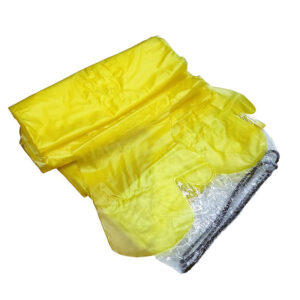
BIBO plastic bag quantities illustrate the hidden-cost pattern clearly. Depending on housing model and supplier practice, an initial bag kit may include 2, 4, or 6 bags, or may not be included at all and charged as a separate line item. Sealing O-rings follow the same pattern. For a project with multiple housing units, these small per-unit differences accumulate into meaningful consumable procurement gaps that were not visible during quote comparison. Asking suppliers to confirm whether the initial bag kit is included in the base price — and to specify the quantity — converts an ambiguity into a defined scope element.
Accessories such as UV lights, pressing tools, and magnehelic gauges occupy a gray zone in most supplier quote structures. They may appear as bundled inclusions in one quote, as optional add-ons priced separately in another, and as completely absent in a third. None of those responses is necessarily dishonest; all three reflect legitimate interpretations of an underspecified RFQ. The consequence is that comparing total delivered cost requires reconstructing what each quote actually includes — work that is far easier to do at specification stage than after quotes are received.
Requiring suppliers to list dampers, transition pieces, test sections, and static pressure taps as discrete line items rather than bundled scope eliminates one of the most effective ways scope differences hide inside competitive pricing. A built-in DOP scan probe, for example, may appear as a standard feature in one quote and as a separately priced option in another. Without line-item visibility, there is no reliable way to know which quote is structurally lower and which is lower because it excludes something the project needs.
Reviewers of BIBO containment bag options should also confirm compatibility between the bag specifications and the housing model at quote stage, since bag-to-housing fit is not always interchangeable across manufacturers.
Quote Acceptance Checks Before Technical Clarification Ends
Quote acceptance is a technical checkpoint, not just a commercial formality. Treating it as purely administrative — reviewing price, lead time, and payment terms without verifying technical scope — is where procurement errors become commissioning problems.
| Check Point | Cosa confermare | Perché è importante |
|---|---|---|
| DOP/PAO Leak Test Compliance | Quoted housing must pass in‑place leak tests per the specified efficiency class (H14, U16) | Acceptance contingent on documented results avoids field failures |
| Filter Grade & Dimension Fit | Filter grade and dimensions (e.g., 610×610×292 mm) match the system design | Mismatch is a common technical clarification issue that causes project delay |
| Factory‑Supplied vs Site‑Provided Split | Quote explicitly lists factory‑supplied components (bags, brackets, flanges) versus items the site must provide | Ambiguity here is a top friction point that leads to unexpected site purchases |
| Dimensional Drawing & Clearances | Overall size (W×D×H) and installation clearances are shown on a drawing | Missing dimensions cause site‑fit issues and rework |
| Static Pressure Rating Validation | Maximum pressure rating (positive and negative) from the quote is compared with the system design | Underrated pressure leads to leaks or structural damage |
The most consequential check is confirming whether the quoted housing is designed and documented to pass DOP or PAO in-place leak testing at the specified efficiency class. A quote for an H14 housing that does not include factory test documentation or a supplier commitment to in-situ test compliance is a quote that defers unknown risk to the commissioning phase. Acceptance of that quote should be conditioned on resolving the documentation gap before the purchase order is placed — not after delivery.
Filter grade and dimensional compatibility is a frequent technical clarification issue precisely because it looks like it should be obvious. A quote that references H14 efficiency but specifies a filter face size that does not match the system design — for example, 610×610×292 mm versus a different frame dimension — will create a filter sourcing problem that delays commissioning and may require housing modification. Verifying this match while technical clarification is still open costs very little; resolving it after the housing is fabricated costs significantly more.
The factory-supplied versus site-provided split is the friction point that most reliably produces unexpected field purchases. If a quote does not explicitly state which components — duct flanges, mounting brackets, bag kits — are included in the factory package and which the site must source independently, that question will be answered by whoever is managing installation, usually under schedule pressure and without budget authorization. A quote that separates these clearly is worth more than one that does not, even if the unit price looks higher.
Dimensional drawings with installation clearances should be confirmed as included before closing technical clarification. Missing dimensions are not a minor gap — a housing that does not fit the allocated mechanical space requires either field modification or space redesign, both of which carry costs and schedule impacts that are entirely avoidable at the specification stage. Similarly, validating the quoted maximum static pressure rating — both positive and negative — against the system design is a boundary condition check that prevents structural failures from pressure excursions the housing was never rated to handle.
The principle underlying all five checks is straightforward: any gap that remains unresolved at the end of technical clarification will be resolved later, at greater cost. ICH Q9(R1)’s quality risk management framework supports the general principle that risk identification should precede acceptance decisions — and in BIBO procurement, the risks are predominantly scope and specification risks that are identifiable before a purchase order is signed.
A BIBO housing specification sheet is only as useful as the questions it forces suppliers to answer before quoting. The most costly procurement errors in this equipment category do not come from choosing the wrong supplier — they come from accepting quotes that were never specific enough to compare honestly. Engineers who treat the RFQ as a configuration document rather than a project initiation formality consistently receive fewer change orders, shorter clarification cycles, and commissioning results that match the design intent.
Before sending any RFQ, confirm that the engineering team can answer: which components are factory-supplied, which filter grade and dimensions are required, what the design pressure limits are, and which test ports must be on the housing at delivery. If any of those questions remain open, the RFQ is not ready — and the cost of answering them at specification stage is a fraction of what they will cost in the field.
Domande frequenti
Q: What if the engineering team hasn’t finalized the ductwork layout before the RFQ needs to go out — is it still worth sending?
A: No — sending the RFQ before duct interface details are resolved produces quotes that cannot be accepted without change orders. Duct flange type, inlet and outlet collar shape, and pipe size directly determine whether the housing can connect to the site without field fabrication. If those parameters are still open, the RFQ will generate quotes that each assume different interface conditions, and the cost to reconcile them after award typically exceeds the time saved by sending early.
Q: At what point does a more complete BIBO specification stop improving quote quality and start slowing the procurement cycle unnecessarily?
A: Completeness stops adding value when it specifies preferences that do not affect price, comparability, or field fit — such as surface finish aesthetics on non-contact surfaces. Every field that changes housing cost, affects leak-test validity, or determines what the site must source independently belongs in the RFQ regardless of timeline pressure. The productivity loss from a shorter RFQ is not a faster quote cycle; it is a longer clarification cycle after quotes arrive, plus the risk of change orders once fabrication has started.
Q: Is factory argon welding always the right choice over site fabrication for containment applications, or are there cases where site assembly is defensible?
A: Site assembly is defensible only when the installation involves housings too large to ship pre-fabricated and the project specifies a formal weld inspection and pressure test protocol to be completed on-site before commissioning begins. Without that documented on-site verification step, site-fabricated joints shift leak-test liability entirely to the commissioning team, and a failure during in-situ DOP or PAO testing at that stage is significantly more expensive to resolve than a factory rejection would have been.
Q: How should a project team handle a situation where two shortlisted suppliers have interpreted “complete system” differently and neither quote is fully comparable?
A: Issue a structured clarification request that lists every accessory, documentation item, and test feature as a yes/no scope confirmation matrix, and require each supplier to re-price against that common baseline before the comparison proceeds. Comparing the original quotes as submitted means accepting that the lower price may reflect genuine efficiency or may reflect excluded scope — and there is no reliable way to tell which without forcing both responses onto the same item-level structure.
Q: Does the BIBO housing specification process change meaningfully for replacement units going into an existing validated cleanroom versus a new-build installation?
A: Yes — replacement into a validated space adds qualification boundary constraints that a new-build RFQ does not carry. The replacement housing must match the original validated configuration closely enough to avoid triggering a full requalification under the facility’s change control procedure, which means filter grade, face dimensions, seal type, and test port locations may be fixed parameters rather than open specification decisions. The RFQ for a replacement unit should include the original validation documentation as a reference attachment and explicitly ask suppliers to confirm dimensional and performance equivalence against it.