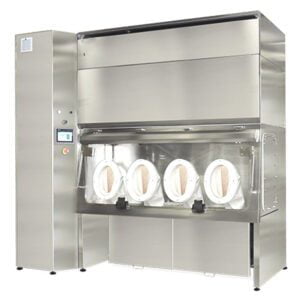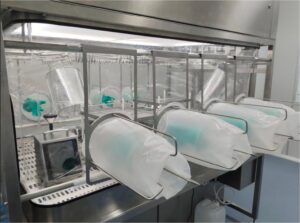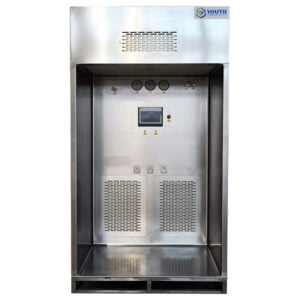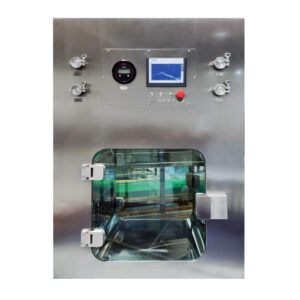
La mayoría de los problemas de adquisición de equipos para entornos controlados no se deben a la elección de un grado de filtro o unas especificaciones de motor inadecuadas, sino a que se inicia la negociación con el proveedor sin haber definido claramente los parámetros del proceso. Los equipos descubren, ya en plena fase de pedido, que el formato de la campana no se adapta a la sala, que el espacio libre interior no permite albergar el recipiente más alto o que se ha dado por sentado el estándar eléctrico en lugar de especificarlo, momento en el que es posible que la unidad a medida ya se encuentre en fase de fabricación. El error más grave es aplicar erróneamente la categoría del equipo por completo: hacer que el personal trabaje frente a una campana que impulsa el aire hacia ellos, utilizarla para cultivos celulares o material infeccioso, y considerar el resultado como un entorno contenido —un error que genera tanto un riesgo para la seguridad como un problema de cumplimiento normativo que ninguna adaptación posterior puede resolver—. Tomar estas decisiones correctamente depende de resolver un pequeño número de cuestiones interdependientes antes de elaborar cualquier lista de proveedores preseleccionados.
Cuestiones que hay que tener en cuenta antes de preseleccionar una campana de flujo laminar
El orden en que se toman las decisiones es más importante de lo que la mayoría de los compradores cree. El formato de la campana, las dimensiones de la abertura, la dirección del flujo, el grado de filtración y la configuración eléctrica no son opciones independientes: cada una de ellas está condicionada por la anterior, y los límites del proceso determinan todas ellas. Un equipo que empieza comparando opciones de motores o acabados de la carcasa está, en la práctica, eligiendo variables posteriores antes de conocer las restricciones previas.
Hay cuatro preguntas que deben responderse antes de que la primera conversación con el proveedor resulte útil. ¿Cuál es la clase ISO objetivo y qué requisitos implica eso para el filtro y el sistema de flujo de aire? ¿Cuáles son las dimensiones de la abertura útil y la altura libre interna necesarias para llevar a cabo el trabajo real, y no una versión abstracta del mismo? ¿Cuál es el patrón de carga —material de vidrio de perfil bajo, reactores altos, conjuntos de instrumentos dispuestos en niveles— y varía de una tanda a otra? ¿Y hay alguna tarea en el flujo de trabajo que implique materiales peligrosos, agentes biológicos o riesgo de exposición del personal? Porque, de ser así, la solución no es, en absoluto, una campana de flujo laminar.
Omitir cualquiera de estos aspectos genera una deficiencia en las especificaciones que se agrava con el tiempo. Una abertura de dimensiones insuficientes obliga a realizar trabajos de rectificación. Una campana con un espacio libre interior insuficiente o bien queda sin utilizar o bien requiere una solución alternativa no estándar que compromete la uniformidad del flujo de aire. Y una categoría de equipo mal aplicada crea un riesgo para la seguridad que no puede corregirse mediante modificaciones posteriores a la instalación. La ventaja de resolver estas cuestiones desde el principio es que reducen la comparación entre proveedores a una evaluación verdaderamente controlada, en lugar de una negociación basada en supuestos incompatibles.
Definir de antemano la clase ISO, el tamaño de la abertura y el patrón de carga
La norma ISO 5, equivalente a la antigua clasificación de Clase 100, es la condición de diseño más habitual para trabajos en los sectores farmacéutico, biotecnológico y de semiconductores, sensibles a las partículas. Representa un límite de recuento de partículas que el sistema de filtración y flujo de aire de la campana debe mantener de forma fiable en la superficie de trabajo; y especificarlo desde el principio, en lugar de permitir que los proveedores propongan su propio valor por defecto, garantiza que todos los presupuestos se evalúen en función del mismo umbral. La norma ISO 14644-3:2019 establece los métodos de ensayo utilizados para verificar si una campana alcanza la clase indicada in situ, por lo que la clasificación resulta más útil cuando se combina desde el principio con una expectativa sobre cómo se confirmará.
Las dimensiones de la abertura tienen una consecuencia que a menudo se subestima. Una campana de 48 pulgadas de ancho puede obligar a los operarios a apiñarse en la zona de trabajo o a colocar materiales fuera del recinto limpio. Una campana de 96 pulgadas de ancho puede no dejar espacio libre en la vía de acceso a la sala o no caber en la longitud de la mesa de trabajo disponible. La profundidad es importante por otra razón: una profundidad insuficiente en relación con el flujo de trabajo obliga a los operarios a situar el trabajo cerca de la abertura frontal, lo que aumenta significativamente el riesgo de que se produzcan turbulencias debidas a las corrientes de aire de la sala —un fallo operativo que solo se detecta tras la puesta en marcha—. La altura libre interior es el parámetro que con mayor frecuencia se omite en los documentos iniciales de adquisición, y es el que tiene más probabilidades de generar una incompatibilidad grave cuando la configuración estándar incluye recipientes altos, columnas de reflujo o torres de instrumentos.
| Parámetro | Especificaciones típicas | Por qué es importante |
|---|---|---|
| Clase de sala limpia prevista | ISO 5 (Clase 100) | Establece el límite de recuento de partículas para procesos estériles o sensibles |
| Ancho útil de la abertura | 48 pulgadas a 96 pulgadas | Evita que se pida una campana demasiado ancha para la habitación o demasiado estrecha para el trabajo |
| Profundidad de apertura útil | 24 pulgadas a 60 pulgadas | Garantiza que la superficie de trabajo se adapte al flujo de trabajo y al alcance del operario |
| Altura libre interior | Variable: especificar según el recipiente o instrumento más alto | Evita el uso de una campana que no pueda adaptarse a patrones de carga altos o a reactores |
Fijar estos cuatro parámetros antes de contratar a los proveedores no solo evita que se realice un pedido con unas dimensiones incorrectas, sino que elimina la asimetría en la negociación que se produce cuando un comprador acude sin unas especificaciones definidas y acepta las suposiciones predeterminadas del proveedor como punto de partida. Una vez que una unidad a medida entra en fase de fabricación con las dimensiones predeterminadas por el proveedor, el cambio de dimensiones conlleva consecuencias tanto en los costes como en los plazos que un documento de especificaciones de dos páginas habría evitado por completo.
Pruebas de calificación que permiten comparar las propuestas de los proveedores
Un error habitual en la evaluación de múltiples proveedores es recibir ofertas que parecen equivalentes sobre el papel, pero que se basan en distintos grados de filtrado, distintos protocolos de escaneo o distintas interpretaciones de lo que constituye un resultado satisfactorio en una prueba. Para armonizar las propuestas, es necesario definir los criterios de calificación en la propia solicitud de presupuesto, sin dejar que se negocien una vez aceptado el precio.
La especificación fundamental del filtro es una eficiencia HEPA de, como mínimo, 99,991 TP10T a 0,3 µm, lo que representa el tamaño de partícula más penetrante para los medios HEPA estándar. Para aplicaciones con requisitos más estrictos en cuanto a partículas, debe indicarse explícitamente el grado ULPA de 99,9991 TP10T o superior, ya que la diferencia de coste entre los distintos grados es real y los proveedores no ofrecerán la mejora de forma espontánea. Exigir la eficiencia del filtro mediante un escaneo —es decir, un escaneo punto por punto a lo largo de toda la superficie del filtro, en lugar de una medición en un único punto— es la comprobación de control que protege contra el riesgo de derivación. Un filtro que supere una prueba en el punto central, pero que presente fugas por pequeños orificios en el sellado del marco o en el perímetro de la junta, no mantendrá la clase ISO 5 en la superficie de trabajo, y la única forma de confirmar un rendimiento uniforme en toda la superficie es mediante un escaneo realizado según un protocolo de ensayo documentado.
Hacer referencia a la norma ISO 14644-3:2019 como marco de ensayo en la solicitud de presupuesto tiene una finalidad práctica: proporciona a todos los proveedores licitadores una referencia metodológica común, en lugar de permitir que cada uno proponga el método de ensayo que utilice su proceso interno de control de calidad. Esto no convierte a la norma ISO 14644-3:2019 en una normativa de contratación pública —se trata de una norma sobre métodos de ensayo—, pero designarla como marco de evaluación garantiza la comparabilidad, lo que, de otro modo, requeriría una aclaración significativa tras la presentación de las ofertas. El grado de filtrado y el requisito de escaneo deben figurar juntos en la misma sección de la solicitud de presupuesto, de modo que los proveedores no puedan cumplir uno de ellos y omitir discretamente el otro.
Bloqueo en la línea de ataque que anula la protección en la primera línea de defensa
La protección de primera línea que ofrece una campana de flujo laminar depende de que una columna de aire limpio y sin obstrucciones llegue a la superficie de trabajo antes de que el aire de la sala pueda mezclarse con ella. Esa protección se ve mermada —a menudo de forma considerable— cuando se colocan objetos cerca de la abertura frontal. Las cajas de cartón apiladas en el borde mientras el operario recoge materiales, los recipientes altos que sobresalen por encima de la zona limpia, los instrumentos inactivos que se dejan hacia delante entre una operación y otra: cada uno de estos elementos crea una obstrucción física que obliga a la corriente laminar a desviarse, y el flujo desviado arrastra la turbulencia del aire de la sala de vuelta hacia la zona de trabajo expuesta.
Este fallo resulta especialmente difícil de diagnosticar, ya que no se manifiesta como un mal funcionamiento visible. La campana sigue funcionando, el filtro sigue actuando y las lecturas del sensor de flujo de aire no varían. El episodio de contaminación no se debe a un fallo del equipo, sino a una práctica de carga que nunca se formalizó en un procedimiento operativo estándar (SOP), o a una disposición de la superficie de trabajo que tenía sentido para el operario, pero que nunca se revisó en relación con la geometría del flujo de aire. Para cuando el recuento de partículas o los fallos de esterilidad motivan una investigación, la causa rara vez se relaciona con la obstrucción del borde delantero sin una revisión operativa deliberada.
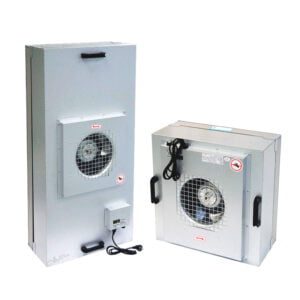
La implicación práctica es que la geometría de la zona de trabajo debe definirse durante la especificación, y no dejarse a la discreción del operario tras la instalación. La profundidad de la campana debe seleccionarse de modo que el trabajo se realice bien dentro del espacio libre, en lugar de en el borde delantero. Los equipos altos que deban colocarse dentro de la campana deben tenerse en cuenta en la especificación de altura libre interior, y no solucionarse empujándolos hacia la abertura. Además, cualquier patrón de carga que coloque habitualmente objetos en el borde delantero o cerca de él debe tratarse como un problema de diseño del flujo de trabajo, y no como una condición de uso normal. En los proyectos en los que la geometría de trabajo sea especialmente variable, Carro móvil de flujo de aire laminar Las configuraciones que permiten reubicar la zona limpia con respecto al flujo de trabajo pueden reducir la frecuencia de la carga forzada en el borde delantero.
Barrido horizontal frente a flujo descendente vertical en flujos de trabajo reales
La elección entre un flujo de aire horizontal y uno vertical es una cuestión de geometría, no una clasificación de calidad. Cada configuración ofrece un control adecuado de la contaminación cuando se adapta al trabajo que debe proteger, y cada una de ellas genera un patrón de fallo predecible cuando no es así.
El flujo laminar horizontal proporciona un barrido sin obstáculos desde la pared trasera hacia delante a lo largo de la superficie de trabajo. Para trabajos de perfil bajo —placas de Petri, bandejas poco profundas, matrices de sustratos planos—, este patrón de barrido resulta eficaz precisamente porque nada lo interrumpe entre la superficie del filtro y la abertura frontal. La limitación surge cuando se introducen objetos más altos: un recipiente o instrumento que se eleve por encima de la zona limpia bloquea la corriente horizontal, creando una zona de estela aguas abajo de la obstrucción donde el aire de la sala se mezcla con el aire filtrado. Las corrientes laterales procedentes del sistema de climatización de la sala o del movimiento del operador también son más propensas a perturbar el flujo horizontal que el vertical, ya que la corriente de aire entrante no tiene el mismo impulso descendente que resiste las corrientes transversales laterales.
Las unidades de flujo vertical descendente dirigen el aire desde el filtro, situado en la parte superior del armario, hacia abajo, sobre la superficie de trabajo. Esta configuración se adapta mejor a equipos de distintas alturas, ya que un recipiente más alto no interrumpe la corriente de aire principal de la misma manera: el aire sigue fluyendo a su alrededor y más allá de él, en lugar de quedar totalmente bloqueado. El impulso descendente también hace que el flujo vertical sea más resistente a las corrientes laterales, lo cual es importante en salas con rejillas de suministro de climatización activas cerca de la campana o en las que se abren las puertas con frecuencia. Las unidades verticales también suelen ocupar menos espacio, lo que influye tanto en la distribución de la sala como en las opciones de movilidad cuando la campana debe dar servicio a varias zonas.
| Factor de flujo de trabajo | Flujo laminar horizontal | Flujo laminar vertical |
|---|---|---|
| Altura de trabajo y patrón de carga | Barrido sin obstáculos en trabajos a baja altura; resulta óptimo cuando los recipientes permanecen por debajo de la zona de limpieza | Permite alojar recipientes más altos y realizar la carga en vertical; apto para equipos de distintas alturas |
| Resistencia a las corrientes de aire laterales | Más susceptible a las perturbaciones del aire provocadas por las corrientes de aire de la habitación | Mayor tolerancia a las corrientes laterales; el protector contra el flujo de aire es más resistente a las corrientes transversales externas |
El factor determinante es la combinación de la geometría del trabajo y las condiciones del flujo de aire en la sala, no la preferencia por el espacio ocupado. Un equipo que opte por un flujo horizontal para una sala con una fuerte corriente cruzada, o por un flujo vertical para trabajos en sustratos exclusivamente planos, está aceptando un desajuste entre el patrón de flujo de aire y las condiciones operativas que dará lugar a un rendimiento sistemáticamente inferior —no de forma catastrófica, pero sí lo suficiente como para plantear dudas durante la cualificación que requieran cambios en el diseño para resolverse—. Para obtener un desglose detallado de las configuraciones de las unidades LAF y los parámetros del flujo de aire, Especificaciones de la unidad LAF | Parámetros técnicos y normas aborda los criterios de rendimiento que distinguen las configuraciones en la práctica.
Detalles de la solicitud de presupuesto que retrasan la aprobación de la campana a medida
Los pedidos de campanas a medida se estancan, en la mayoría de los casos, no por cuestiones de precio o estética, sino por una breve lista de detalles operativos que resultan económicos de proporcionar en la fase de solicitud de presupuesto, pero costosos de resolver una vez iniciada la fabricación. El patrón es siempre el mismo: un comprador envía una solicitud de presupuesto en la que se especifican las dimensiones y el grado de filtración, pero sin indicar el estándar de potencia, las dimensiones de acceso a la sala, la configuración de las ventanas o las expectativas respecto a las pruebas de aceptación en fábrica (FAT); y el proveedor responde con una solicitud de aclaración que alarga el ciclo de aprobación en varias semanas.
Las especificaciones eléctricas son el principal motivo de retraso. Muchos conjuntos de ventiladores son compatibles de forma universal tanto con 115 V/60 Hz como con 230 V/50 Hz, pero la conexión eléctrica definitiva debe realizarla un electricista certificado, y dicha conexión no puede completarse hasta que se confirme por escrito la norma de suministro local. Un comprador que da por sentado que el proveedor aplicará por defecto la norma correcta y no la especifica crea una laguna que sale a la luz durante la instalación, y no durante la tramitación del pedido. Del mismo modo, los puntos de acceso para líneas de proceso, cables de datos o conexiones de instrumentos que se identifican tras la fabricación requieren modificaciones estructurales —que a menudo afectan a la cámara de distribución o al panel lateral— lo que conlleva consecuencias tanto en los costes como en el calendario de ejecución.
La configuración de las hojas y la puerta influye en que la campana se pueda utilizar realmente para el trabajo previsto. Una hoja deslizante horizontal que impida el acceso a equipos altos, o un frente fijo que no se pueda desmontar para su limpieza, se convierte en un obstáculo para el flujo de trabajo que el usuario compensa improvisando —normalmente de formas que comprometen la integridad del flujo de aire—. La elección entre una construcción de una sola pieza o modular es una limitación en la entrega que los equipos suelen pasar por alto hasta que la unidad llega y no puede pasar por un pasillo o una puerta estándar.
| Detalles de la solicitud de presupuesto | Por qué es importante | Qué incluir |
|---|---|---|
| Tensión y frecuencia de la red eléctrica | El ventilador universal es compatible con ambas opciones, pero es posible que la conexión final requiera la intervención de un electricista certificado; si no se realiza, se retrasará la aprobación eléctrica. | 115 V / 60 Hz o 230 V / 50 Hz (comprueba la red eléctrica local) |
| Puertos de acceso | La falta de puntos de entrada para cables, mangueras o cordones obliga a realizar costosas adaptaciones o retrasa la puesta en servicio | Indique la cantidad, el tamaño y la ubicación de los pasamuros para las líneas de alimentación, datos o proceso. |
| Configuración de la hoja y la puerta | Un tipo incorrecto puede interferir con las herramientas de montaje o con la inserción del equipo. | Especifica si es de deslizamiento horizontal, de deslizamiento vertical, desmontable o elevada/suspendida sobre el equipo |
| Diseño de una sola pieza frente a diseño modular | Es posible que una campana de una sola pieza no quepa por las puertas estándar ni por los pasillos del laboratorio. | Indica si la unidad debe dividirse en secciones para su entrega; facilita las dimensiones de la puerta y del pasillo |
| Requisitos del controlador de rendimiento | Los controladores (AirSafe, UVTect) incorporan indicaciones para el usuario y alarmas de flujo de aire, pero aumentan el coste. | Indique si se requiere un monitor de rendimiento o si basta con una interfaz de conmutación básica. |
| Dimensiones de la habitación y vía de acceso | La falta de información sobre el acceso suele provocar que se rechacen las entregas o que se produzcan retrasos en la instalación | Indique con claridad las dimensiones desde el suelo hasta el techo, la anchura y el radio de giro a lo largo de todo el recorrido de entrega. |
Es importante hacer especial hincapié en los requisitos de FAT o IQ, ya que los proveedores adaptan el alcance de su documentación a lo que solicita el comprador. Un comprador que no especifique si se requiere una prueba de aceptación en fábrica (FAT) o un paquete de cualificación de la instalación (IQ) recibirá lo que sea que el proveedor ofrezca de forma estándar, lo cual puede no cumplir con el protocolo de validación de la instalación. Especificar los requisitos de FAT o IQ en la solicitud de presupuesto no es una carga burocrática; es el paso que evita que una falta de documentación tras la entrega impida la puesta en servicio del equipo. Para los compradores que siguen todo el proceso de evaluación de proveedores, Proveedores de cabinas de flujo laminar | Guía de selección de proveedores explica cómo encajan estos detalles en el proceso de calificación de proveedores.
Necesidades de contención de materiales peligrosos que descartan el uso de campanas de flujo laminar
Una campana de flujo laminar protege el producto. No protege al operario ni al entorno de la sala. La corriente de aire se desplaza desde el filtro a través de la zona de trabajo y hacia el exterior, en dirección al operario y al espacio circundante, lo que significa que cualquier aerosol, vapor o partícula generada en la zona de trabajo se desplaza en la misma dirección. Se trata de una característica de diseño, no de una deficiencia: es el comportamiento correcto para aplicaciones de protección del producto. También es un límite estricto que no puede modificarse añadiendo accesorios, ajustando la velocidad del flujo de aire ni cambiando la posición del operario.
En el caso de trabajos que impliquen sustancias químicas peligrosas, muestras biológicas infecciosas o cultivos de células de mamíferos, esta limitación hace que la campana de flujo laminar no sea el equipo adecuado por su propio diseño. Su uso en este tipo de trabajos no solo aumenta el riesgo, sino que dirige activamente el peligro hacia el personal y el entorno circundante, sin proporcionar ninguna captura ni contención de los gases de escape. Las directrices del CDC sobre bioseguridad en laboratorios microbiológicos y biomédicos (BMBL) proporcionan el marco de referencia para llevar a cabo una evaluación de riesgos que determine si el trabajo requiere una cabina de bioseguridad de clase II o un nivel de contención superior; dicha evaluación debe realizarse antes de especificar cualquier equipo, y no después de que la campana ya esté instalada.
| Requisito | Por qué una campana de flujo laminar no es adecuada | Equipo adecuado |
|---|---|---|
| Protección del personal frente a riesgos químicos o biológicos | El flujo de aire se dirige hacia el usuario; no se capturan humos ni aerosoles. | Cabina de bioseguridad de clase II o campana extractora (en función del riesgo) |
| Protección medioambiental frente a los gases de escape peligrosos | La campana no trata ni recoge el aire expulsado | Cabina de bioseguridad de clase II o campana de gases con conductos y sistema de tratamiento de gases de escape |
| Muestras biológicas infecciosas o cultivos de células de mamíferos | Carece de las medidas de contención exigidas por las directrices de bioseguridad; expone al operario a riesgos biológicos | Cabina de bioseguridad de clase II (o superior) según la evaluación de riesgos de la guía BMBL de los CDC |
| Protección del operario cuando no es necesaria la protección del producto | Una campana de flujo laminar estándar solo protege el producto | Cabina de flujo laminar inverso (solo protección para el operador; el producto puede quedar expuesto) |
| Cumplimiento de la evaluación de riesgos en materia de bioseguridad | Si no se realiza esta evaluación, se corre el riesgo de elegir una clase de equipo inadecuada. | Realice una evaluación de riesgos siguiendo las directrices del BMBL de los CDC antes de formalizar el pedido. |
Las cabinas de flujo laminar inverso desempeñan una función específica y más limitada: alejan el aire filtrado del operario, lo que garantiza su protección. No protegen el producto de la contaminación generada por el operario, y no deben considerarse una solución de compromiso que satisfaga parcialmente ambos requisitos. Cuando es necesaria la protección tanto del producto como del personal, la especificación adecuada es una cabina de bioseguridad de Clase II, y ninguna variante de la configuración de flujo laminar puede sustituirla. La Campana de flujo laminar Esta categoría de productos está claramente delimitada por este principio: es la herramienta adecuada cuando el único objetivo es proteger una zona de trabajo limpia y sensible a las partículas frente a la contaminación ambiental, y no es la herramienta adecuada siempre que cambie alguno de los elementos de esa lista.
La comprobación previa a la adquisición más práctica consiste en analizar cada tarea que realizará la campana en función de dos preguntas: ¿genera esta tarea algún riesgo para el personal o el medio ambiente? y ¿se ajusta la geometría del trabajo —altura, profundidad y patrón de carga— a la dirección del flujo de aire de la configuración especificada? Si alguna de las respuestas plantea un problema, es necesario modificar las especificaciones antes de realizar el pedido, no después de que la unidad esté instalada y las pruebas de homologación pongan de manifiesto el problema. Las dimensiones, la clase ISO, el grado de filtrado, la dirección del flujo y los seis detalles de la solicitud de presupuesto que figuran en la tabla anterior pueden resolverse en una única sesión estructurada de especificación. Esa sesión es el momento de menor coste de todo el ciclo de adquisición y homologación para tomar la decisión correcta.
Preguntas frecuentes
P: ¿Se puede equipar una campana de flujo laminar con accesorios para manipular muestras biológicas de bajo riesgo en caso de que no se disponga de una cabina de bioseguridad?
R: No; los accesorios no pueden modificar la función fundamental de una cabina de flujo laminar. Dado que la corriente de aire se desplaza desde el filtro hacia el operador, cualquier aerosol o partícula generada durante el trabajo biológico se desplaza en la misma dirección, independientemente de lo que se añada a la unidad. La brecha de contención es una característica de diseño, no una deficiencia de rendimiento que pueda subsanarse. Para cualquier trabajo que implique muestras biológicas, debe realizarse la evaluación de riesgos exigida por las directrices BMBL de los CDC antes de especificar el equipo, y el resultado apuntará hacia una cabina de bioseguridad de clase II en lugar de cualquier variante de una configuración de flujo laminar.
P: Una vez instalada la campana y superada la comprobación inicial del filtro, ¿cuál es el siguiente paso de homologación antes de que pueda darse el visto bueno para su uso en producción?
R: El siguiente paso consiste en confirmar que la campana alcanza y mantiene la clase ISO objetivo en la superficie de trabajo real, bajo condiciones representativas de carga y funcionamiento, y no solo en la superficie del filtro. La norma ISO 14644-3:2019 establece los métodos de ensayo in situ para esta verificación. Si en la solicitud de presupuesto se ha especificado un paquete de control de calidad (IQ), se debe completar simultáneamente la documentación relativa a las condiciones de instalación, las conexiones a los servicios públicos y las dimensiones tal y como quedaron tras la construcción, ya que la falta de documentación tras la instalación es una de las razones más comunes por las que se bloquea la puesta en servicio del equipo, incluso después de que la unidad haya funcionado correctamente en los ensayos físicos.
P: ¿A partir de qué intensidad de flujo de aire en la sala deja de ser fiable el flujo laminar horizontal? ¿Debería ser el flujo vertical la opción predeterminada para las salas con un sistema de climatización activo cerca de la campana?
R: No existe un umbral universal publicado, pero el flujo horizontal es sistemáticamente más vulnerable a las corrientes transversales laterales que el flujo vertical, ya que carece del impulso descendente que se opone a las corrientes laterales. En salas con rejillas de suministro de climatización activas cerca de la campana o en las que se abren con frecuencia las puertas, lo que genera movimientos de aire direccionales, el flujo vertical descendente es la opción de menor riesgo. Si se prefiere el flujo horizontal por motivos relacionados con el flujo de trabajo, se debe evaluar el entorno del flujo de aire cerca del punto de instalación previsto antes de realizar el pedido; cambiar la posición de la campana con respecto a las rejillas de suministro resulta mucho más económico que rediseñar las especificaciones después de que las pruebas de homologación pongan de manifiesto fallos en la estanqueidad.
P: ¿Es siempre preferible una campana modular a una de una sola pieza para las reformas habituales de laboratorios, o la modularidad conlleva sus propios riesgos?
R: La construcción modular resuelve un problema de entrega, pero introduce un riesgo de estanqueidad que no presentan las unidades de una sola pieza. Las uniones entre secciones montadas in situ deben sellarse y verificarse con el mismo nivel de exigencia que el cerramiento fabricado en fábrica, y este paso a veces no se documenta suficientemente en los procedimientos de instalación. La construcción de una sola pieza elimina por completo esa unión, lo cual es preferible cuando la unidad puede pasar por la vía de acceso. La decisión correcta es confirmar la ruta de suministro —anchura del pasillo, dimensiones de la puerta, capacidad del ascensor— antes de especificar el tipo de construcción, de modo que la modularidad se elija solo cuando el acceso lo requiera realmente, y no como opción por defecto que añada trabajo de verificación in situ.
P: Si el flujo de trabajo cambia tras la instalación y es necesario incorporar equipos más altos, ¿existe alguna forma práctica de adaptar una campana de flujo horizontal que ya esté en funcionamiento?
R: En la mayoría de los casos, no; al menos no sin comprometer los criterios de homologación. La introducción de objetos más altos en una campana de flujo horizontal crea una zona de estela aguas abajo del obstáculo, donde el aire de la sala se mezcla con el aire filtrado, y se trata de un problema geométrico que no puede resolverse mediante ajustes en la velocidad del flujo de aire. Si los equipos más altos pasan a formar parte habitual del flujo de trabajo, la respuesta correcta es evaluar si el espacio libre interno y la dirección del flujo de la unidad existente siguen ajustándose al proceso y, en caso contrario, considerar el cambio en el flujo de trabajo como un motivo para revisar las especificaciones, en lugar de como una solución operativa provisional. Tener en cuenta los requisitos de altura de los equipos durante la especificación inicial —teniendo en cuenta el recipiente más alto de la configuración estándar— es el paso que evita que se produzca esta situación.