Le choix d’une classe de filtre inadaptée pour un module de salle blanche dédiée aux semi-conducteurs est rarement détecté lors de la phase de revue de conception. Ce problème apparaît lors de la mise en service, lorsque le ventilateur installé ne parvient pas à générer une pression statique suffisante pour le média ULPA, que le débit d’air est inférieur à l’objectif de conception et que le module génère un bruit qui ne figurait pas dans le modèle acoustique. À ce stade, les options possibles sont le remplacement du ventilateur, la refonte de l’infrastructure CVC ou l’acceptation d’un débit d’air réduit — aucune de ces solutions n’ayant été prévue au budget. La décision permettant d’éviter cela est simple : le choix de la classe de filtre doit dépendre de la sensibilité aux particules du processus et de la classe ISO cible pour chaque zone, et non d’une valeur par défaut prudente appliquée de manière uniforme à l’ensemble du module. Ce qui suit vous aidera à déterminer dans quels cas le filtre HEPA reste justifiable, dans quels cas le filtre ULPA modifie les hypothèses relatives au ventilateur et à la pression, et quelles preuves il convient d’exiger avant d’approuver l’ensemble de filtrage.
Quand la filtration HEPA s'inscrit toujours dans le champ d'application du module
Toutes les zones d'une salle blanche dédiée aux semi-conducteurs ne présentent pas le même risque de contamination, et le choix d'une classe de filtre qui ne tient pas compte de cette distinction engendre des coûts inutiles sans pour autant améliorer les résultats des processus. La filtration HEPA — en particulier les filtres H13 d’une efficacité de 99,95% et H14 d’une efficacité de 99,995% — est généralement adaptée aux zones annexes de classe ISO 5 à 8, où la taille critique des particules est égale ou supérieure à 0,3 µm et où la tolérance à la contamination est plus élevée. Pour ces zones, les filtres HEPA permettent de maintenir la qualité des processus sans les contraintes en matière d’énergie, de maintenance et d’infrastructure qu’impliquent les filtres ULPA.
La limite de taille des particules est plus importante que la classification ISO. C’est au niveau des motifs de circuits inférieurs à 0,1 µm, dans la lithographie de pointe ou les zones d’inspection critiques, que les ordres de grandeur supplémentaires d’efficacité des filtres ULPA ont un impact réel sur les taux de défauts. Lorsque les circuits ne fonctionnent pas à ces géométries, le fait de prescrire des filtres ULPA sur la base d’une interprétation prudente des spécifications du processus — plutôt que de la sensibilité réelle de celui-ci — entraîne des coûts supplémentaires sans apporter d’avantage correspondant au niveau du processus. Les analyses de compromis techniques indiquent que les filtres ULPA peuvent réduire les défauts d’environ 40% dans les environnements à haute sensibilité ; dans les zones de soutien à moindre sensibilité, cette marge ne justifie pas la différence de coût d’exploitation, qui est inférieure d’environ 25 à 30% pour les filtres HEPA sur la durée de vie du module.
Concrètement, pour la définition du périmètre d'application des modules, les filtres HEPA et ULPA doivent être considérés comme des choix spécifiques à chaque zone, et non comme une norme minimale applicable à l'ensemble de l'installation. Déterminer quelles zones nécessitent réellement une capture des particules inférieures à 0,1 µm avant de finaliser la configuration des modules permet d'éviter une surspécification dans les zones où un filtre HEPA est suffisant, et de concentrer l'utilisation des filtres ULPA là où ceux-ci ont un impact sur les résultats du processus.
| Critère | HEPA (H13–H14) | ULPA (U15–U17) |
|---|---|---|
| Classe ISO cible | ISO 5–8 (zones de soutien) | ISO 1–4 (zones critiques) |
| Taille critique des particules | circuits ≥ 0,3 µm ; tolérance accrue à la contamination | Motifs de circuits inférieurs à 0,1 µm |
| Sensibilité aux défauts | Zones à faible sensibilité aux défauts ; réduction des défauts 40% non requise | Haute sensibilité aux défauts ; les filtres ULPA permettent de réduire les défauts d'environ 40% |
| Coût d'exploitation | 25–30 % inférieur | 40–50 % : consommation d'énergie plus élevée |
| Cycle de remplacement | 3 à 5 ans | 2 à 3 ans |
| Complexité de la maintenance | Plus simple ; tests DOP | Plus exigeant ; tests PAO trimestriels |
Le cycle de remplacement influe également sur la planification du cycle de vie des modules. Dans des conditions normales, les filtres HEPA ont une durée de vie de 3 à 5 ans avant de devoir être remplacés, ce qui simplifie la planification de la maintenance et réduit le risque d'arrêts imprévus dans les zones de soutien où la fréquence des interventions est plus difficile à justifier sur le plan opérationnel.
Lorsque le choix d'un filtre ULPA modifie les hypothèses relatives au ventilateur et à la pression
Le remplacement d'un filtre HEPA par un filtre ULPA dans un module existant sans réévaluer le ventilateur constitue l'une des causes les plus courantes d'échec lors de la mise en service dans les projets de salles blanches destinées à l'industrie des semi-conducteurs. Cette erreur est souvent présentée comme une simple mise à niveau, mais le média plus dense du filtre ULPA crée un environnement de pression fondamentalement différent, pour lequel le ventilateur initial n'avait pas été dimensionné.
Les paramètres de conception qui varient sont spécifiques. La vitesse frontale maximale d’un filtre ULPA est généralement maintenue à 0,45 m/s ou moins afin d’empêcher le contournement des particules, contre 0,5 m/s pour un filtre HEPA. Le débit d’air typique d’un module ULPA est compris entre 250 et 750 m³/h, contre 450 à 900 m³/h pour un module HEPA équivalent — soit une réduction de 20 à 50% qui nécessite une pression statique du ventilateur plus élevée pour être compensée. Il ne s’agit pas là d’ajustements marginaux ; cela implique le choix d’un ventilateur différent, et non pas une version plus puissante du modèle HEPA.
| Paramètres de conception | Module HEPA | Modules ULPA |
|---|---|---|
| Limite de vitesse frontale | ≤ 0,5 m/s | ≤ 0,45 m/s |
| Débit d'air typique | 450 à 900 m³/h | 250 à 750 m³/h (20 à 50 % en partie inférieure) |
| Exigence en matière de pression statique | Besoin en pression statique réduit | Perte de charge plus importante ; nécessite un ventilateur plus puissant |
| Consommation d'énergie | Base de référence | 40–50 % de plus |
| Risque lié à la mise en service s'il n'est pas pris en compte | Minime | Déficit de débit d'air, bruit, gaspillage d'énergie |
Lorsque la pression statique du ventilateur n’est pas réévaluée après le remplacement du filtre ULPA, le scénario de défaillance est prévisible : un déficit de débit d’air apparaît lors des essais de performance de mise en service, et le bruit généré par un ventilateur fonctionnant à la limite de sa plage de fonctionnement aggrave le problème. La consommation d’énergie des systèmes ULPA est environ 40–50% supérieure à celle des systèmes HEPA (valeur de référence) — mais ce chiffre suppose que le ventilateur ait été correctement dimensionné dès le départ. Un ventilateur sous-dimensionné fonctionnant de manière inefficace aggrave encore le gaspillage d’énergie et accélère l’usure du moteur.
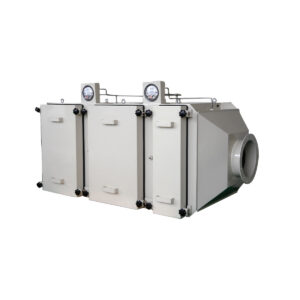
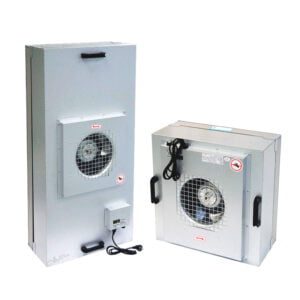
Pour unités de filtrage des ventilateurs Conformément aux spécifications relatives au service ULPA, les exigences d’approvisionnement stipulent que la pression statique du ventilateur, le débit d’air et le dimensionnement du moteur doivent tous être explicitement liés à l’hypothèse de perte de charge ULPA figurant dans la documentation technique du fournisseur — et ne doivent pas être repris d’une configuration antérieure de module basée sur la technologie HEPA.
Comparez le type de joint, la classe de filtre et la disponibilité des pièces de rechange
La classification des filtres et le type de joint sont deux éléments que les équipes chargées des achats traitent souvent comme des postes distincts, mais qui ont des implications différentes en matière de validation et de maintenance, lesquelles s’accumulent tout au long de la durée de vie du module. Le fait de bien définir ces deux éléments dès l’appel d’offres permet d’éviter par la suite des lacunes en matière de justifiabilité de la conformité.
Conformément à la norme EN 1822 — et dans le respect du cadre de classification et des méthodes d'essai défini dans ISO 29463-1:2024 — La norme HEPA couvre les classes allant de H13 (99,95%) à H14 (99,995%), tandis que la norme ULPA s'étend de la classe U15 (99,9995%) à la classe U17 (99,999995%). Ces limites de classification sont importantes, car un filtre simplement désigné par le terme “ ULPA ”, sans indication de classe d’efficacité ni de norme d’essai précise, ne peut être vérifié par rapport aux spécifications. Une classification erronée est difficile à détecter après l’installation et encore plus difficile à justifier lors d’un audit.
Le type de joint détermine si l'interface entre le filtre et le boîtier permet de maintenir l'efficacité offerte par le média filtrant. Les joints en gel et les joints à arête vive présentent chacun des profils de risque de fuite et des exigences d'inspection différents. Exiger une certification de test d'étanchéité — que ce soit selon la norme MIL-STD-282 ou un test à l'aérosol PAO conforme à la norme IEST-RP-CC034 pour les filtres ULPA — fournit à l'acheteur une preuve documentée de l'intégrité du joint avant l'acceptation du module.
| Paramètres | HEPA (H13–H14) | ULPA (U15–U17) |
|---|---|---|
| Classification des filtres (EN 1822) | H13 (99,95 %) – H14 (99,995 %) | U15 (99,9995 %) – U17 (99,999995 %) |
| Méthode et fréquence des contrôles | DOP annuel / semestriel | Tests trimestriels de étanchéité des aérosols PAO (IEST‑RP‑CC034) |
| Coût d'entretien | Seuil inférieur | 60–75 % de plus |
| Cycle de remplacement | 3 à 5 ans | 2 à 3 ans |
| Coût unitaire | Standard | Environ le double |
C’est au niveau de la disponibilité des pièces de rechange que les difficultés d’approvisionnement liées aux filtres ULPA se transforment en un problème de planification du cycle de vie. Le coût unitaire des filtres ULPA est environ le double de celui des filtres HEPA équivalents, leur intervalle de remplacement est de 2 à 3 ans contre 3 à 5 ans pour les filtres HEPA, et les coûts de maintenance — notamment les tests PAO trimestriels contre les tests DOP annuels ou semestriels pour les filtres HEPA — sont environ 60 à 75% plus élevés. Ces chiffres ne sont pas visibles au stade de l’appel d’offres, lorsque l’efficacité des filtres, les hypothèses de perte de charge et les filières d’approvisionnement en pièces de rechange sont proposés comme des options distinctes plutôt que comme un coût global du système. Exiger du fournisseur qu’il précise la disponibilité des pièces de rechange et la durée de vie utile dans le cadre de l’offre globale permet de combler cette lacune avant que la commande ne soit passée. Pour savoir comment ces classes d’efficacité se traduisent en exigences d’application spécifiques, le Comparaison des performances entre les filtres HEPA H14 et ULPA aborde plus en détail la distinction entre les classes ISO 3 et 5.
Risques liés à la mise en service résultant d'une surdimensionnement du système de filtration
La surspécification est un risque lié au projet qui s'amplifie au fil des étapes de mise en service d'une manière disproportionnée par rapport à la décision initiale. Opter pour un filtre ULPA dans une zone où un filtre HEPA suffirait ne se traduit pas seulement par des coûts d'exploitation plus élevés : cela peut entraîner une cascade de problèmes d'infrastructure qui retardent l'achèvement de la mise en service et obligent à procéder à des réaffectations budgétaires qui n'avaient pas été prévues lors de la phase de conception.
Le risque lié à l'inadéquation du ventilateur est le plus immédiat. La spécification d'un filtre ULPA sans vérification de la capacité de pression statique du ventilateur entraîne un déficit de débit d'air difficile à corriger sur site sans remplacer l'ensemble ventilateur ou, dans certaines configurations, sans repenser les raccordements CVC au module. Ce risque est distinct du risque lié aux coûts énergétiques : une installation utilisant des filtres ULPA alors qu’un filtre HEPA suffirait entraîne une consommation d’énergie supérieure d’environ 40 à 50% et, d’après les données disponibles sur les limites de conception, des coûts d’installation supérieurs de 45 à 60%, sans aucun avantage en termes de processus permettant de compenser ces deux chiffres.
Les conséquences liées à la refonte du système CVC méritent d’être traitées séparément, car elles sont souvent sous-estimées lors de l’examen des cahiers des charges. Lorsque la perte de charge plus élevée des filtres ULPA oblige à réévaluer le dimensionnement des conduits, les bilans de pression statique ou la capacité des centrales de traitement d’air, le calendrier de refonte ne coïncide pas avec les étapes clés de la mise en service. Il s’agit là d’un risque lié à l’infrastructure susceptible de retarder considérablement la remise des travaux — et non d’une simple note de bas de page relative aux coûts, absorbée dans la réserve pour imprévus.
| Facteur de risque | Conséquences de la mise en service | Éléments à vérifier avant de définir les spécifications |
|---|---|---|
| ULPA spécifiée sans vérification de la capacité du ventilateur | Déficit de débit d'air, bruit, gaspillage d'énergie | Pression statique et débit d'air du ventilateur compatibles avec la norme ULPA |
| Surcharger les spécifications ULPA alors que le filtre HEPA suffit | 40–50 % : consommation d'énergie plus élevée ; 45–60 % : coût d'installation plus élevé sans avantage supplémentaire | La sensibilité du processus exige véritablement l'utilisation de filtres ULPA ; comparez-en les performances à celles des filtres HEPA |
| La perte de charge plus élevée liée à l'ULPA oblige à repenser le système CVC | Complexité, coûts et retards accrus liés à la mise en service | Le système CVC existant est capable de supporter une perte de charge supplémentaire |
| Les conditions environnementales varient en dehors de la plage de fonctionnement restreinte de l'ULPA (20 à 60 % d'humidité relative, < 38 °C) | Efficacité du filtre compromise ; échec de la mise en service | La stabilité environnementale de l'installation reste dans les limites de la plage de fonctionnement de l'ULPA |
La plage de fonctionnement environnementale constitue une contrainte moins visible mais importante sur le plan pratique. L’efficacité des filtres ULPA peut être compromise si les conditions environnementales de l’installation s’écartent d’une humidité relative comprise entre environ 20 et 60% ou d’une température supérieure à 38 °C. Pour les installations situées dans des régions où les conditions ambiantes sont variables ou pour les modules installés à proximité d’équipements de production générant de la chaleur, la stabilité environnementale dans les limites de la plage de fonctionnement des filtres ULPA doit être vérifiée avant de finaliser le cahier des charges — et ne doit pas être supposée sur la base des conditions nominales de conception du système CVC.
Éléments à demander dans l'appel d'offres avant de choisir l'ensemble de filtres
Les décisions relatives au choix des filtres prises sans disposer de données structurées fournies par le fournisseur entraînent des lacunes en matière de justifiabilité de la conformité et des surprises au niveau des coûts sur l'ensemble du cycle de vie, qui auraient pu être évitées avant la passation de la commande du module. Le problème réside dans le fait que le rendement, l'hypothèse de perte de charge, le type de joint et la disponibilité des pièces de rechange sont systématiquement indiqués comme des postes distincts, ce qui oblige l'acheteur à se forger une vision globale cohérente du système à partir de données incomplètes.
Le fait d'exiger six éléments de preuve spécifiques regroupés en un seul dossier cohérent permet de combler les lacunes les plus courantes. La classe du filtre doit être indiquée avec son indice d'efficacité exact — H13, H14, U15 à U17 — et la norme d'essai mentionnée : EN 1822, ISO 29463, ou IEST-RP-CC007, selon le cas. Une allégation de rendement qui ne fait pas référence à une norme d'essai précise ne peut être vérifiée de manière indépendante et ne doit pas être acceptée comme preuve à valeur de spécification.
L'hypothèse relative à la perte de charge au débit nominal est tout aussi incontournable. Sans cette donnée, la compatibilité du ventilateur ne peut être confirmée, et le risque de déficit de débit identifié dans la section précédente reste sans solution au stade de l'approvisionnement. Le type de joint et la certification du test d’étanchéité — joint en gel ou à arête vive, testé selon la norme MIL-STD-282 ou par test à l’aérosol PAO selon la norme IEST-RP-CC034 — doivent être documentés afin de vérifier que l’interface entre le filtre et le boîtier maintient l’efficacité nominale du média dans les conditions de fonctionnement.
| Informations à demander | Pourquoi c'est important |
|---|---|
| Classe de filtration (H13, H14, U15–U17) et norme d'essai (EN 1822, ISO 29463, IEST-RP-CC007) | Garantit que le filtre est conforme aux spécifications ; évite toute erreur de classification |
| Hypothèse relative à la perte de charge au débit nominal | Vérifie la compatibilité des ventilateurs ; évite toute insuffisance de débit d'air |
| Type de joint (joint en gel, joint à arête vive) et certification de l'étanchéité conformément à la norme MIL-STD-282 ou à l'essai à l'aérosol PAO | Vérifie l'intégrité du joint ; empêche les fuites par contournement |
| Fréquence de remplacement des pièces et durée de vie prévue (2 à 3 ans pour les filtres ULPA, 3 à 5 ans pour les filtres HEPA) | Permet de planifier les coûts liés au cycle de vie ; évite les temps d'arrêt imprévus |
| Comparaison des données relatives à la fréquence des tests (PAO trimestriel pour les filtres ULPA vs DOP annuel pour les filtres HEPA) | Vérifie le respect continu des exigences ; établit le budget des coûts de maintenance |
| Données démontrant une réduction des défauts (par exemple, réduction de 40 défauts % grâce à la technologie ULPA) | Justifie la spécification ULPA pour le ROI des semi-conducteurs |
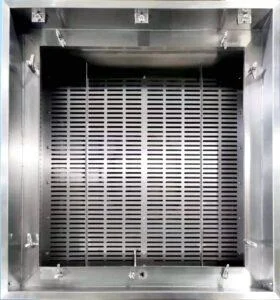
Le calendrier de remplacement des pièces et la durée de vie prévue doivent être stipulés par écrit, et non estimés à partir des données du catalogue. Pour les filtres ULPA, le cycle de remplacement de 2 à 3 ans et l’engagement de réaliser des tests PAO trimestriels doivent être liés à un accord d’approvisionnement spécifique, et non à une simple déclaration générale de disponibilité. Les preuves relatives à la fréquence des tests — test PAO trimestriel pour les filtres ULPA contre test DOP annuel pour les filtres HEPA — éclairent directement le budget de maintenance et le calendrier de mise en conformité dont les équipes de validation ont besoin avant la mise en service de l’installation. Pour les applications dans le secteur des semi-conducteurs où l’utilisation de filtres ULPA est envisagée afin de réduire les taux de défauts, demander au fournisseur de fournir des preuves spécifiques à l’application concernant la réduction des défauts donne à l’équipe chargée des achats une justification défendable du retour sur investissement, plutôt qu’une spécification fondée sur des conventions. Le filtre HEPA/ULPA à mini-plis Cette documentation peut servir de référence pour savoir comment la classe de filtration, la perte de charge et le type de joint sont généralement indiqués dans un dossier de conformité d'un produit.
Le point le plus déterminant dans cette décision n’est pas de savoir si la technologie ULPA est techniquement supérieure, mais si la sensibilité du procédé, la capacité du ventilateur et les contraintes d’infrastructure justifient réellement l’utilisation de la technologie ULPA pour chaque zone couverte par le module. Dans les zones où c’est le cas, la technologie ULPA doit être spécifiée, les hypothèses relatives au ventilateur, à la perte de charge et à l’environnement devant être entièrement clarifiées avant que l’ensemble du module ne soit approuvé. Dans les zones où ce n’est pas le cas, les filtres HEPA offrent des performances satisfaisantes à des coûts d’exploitation et de maintenance nettement inférieurs.
Avant d'approuver le dossier relatif aux filtres, assurez-vous que le fournisseur a bien indiqué la classe de filtration, la norme d'essai, le type de joint, l'hypothèse de perte de charge au débit nominal, le circuit de remplacement des pièces et la fréquence des essais dans un seul et même document cohérent — et non sous forme d'options distinctes à harmoniser après la passation de la commande. Cette vérification d'un seul document est la mesure la plus pratique qui permet de faire la différence entre une mise en service sans heurts et une refonte liée à la filtration qui apparaîtra dans le calendrier comme un point en suspens non résolu.
Questions fréquemment posées
Q : Que se passe-t-il si l'humidité ou la température ambiante de l'installation sort des plages normales ? Cela a-t-il une incidence sur la classe de filtre qui peut être réellement spécifiée ?
R : Oui, et cela doit être vérifié avant de finaliser le cahier des charges. L’efficacité des filtres ULPA peut être compromise si l’humidité relative varie en dehors d’une plage d’environ 20–60% ou si les températures dépassent 38 °C. Pour les modules installés à proximité d’équipements de production générant de la chaleur, ou dans des installations où les conditions ambiantes sont variables, la stabilité environnementale dans les limites de fonctionnement de l’ULPA doit être vérifiée par rapport aux données réelles du site — et non déduite des valeurs nominales de conception du système CVC. Si ces conditions ne peuvent pas être maintenues de manière fiable, un filtre HEPA peut constituer le choix le plus justifiable, même lorsque la classe ISO cible suggérerait autrement un filtre ULPA.
Q : Si le cahier des charges du projet mentionne une norme d'essai différente de la norme EN 1822 ou ISO 29463, la comparaison entre les classes de filtres reste-t-elle valable ?
R : Les limites d'efficacité restent inchangées, mais la norme d'essai mentionnée définit la manière dont la conformité est démontrée et contrôlée. Les classifications H13 à H14 et U15 à U17 sont définies par la norme EN 1822 et s’alignent globalement sur le cadre de la norme ISO 29463, mais un fournisseur invoquant la norme IEST-RP-CC007 ou une autre norme doit faire explicitement référence à cette norme dans l’appel d’offres — sinon, l’allégation d’efficacité ne pourra pas être vérifiée de manière indépendante. Si le cahier des charges du projet mentionne une norme spécifique, exigez du fournisseur qu’il confirme sa conformité par rapport à ce document précis, et non par une simple déclaration générale d’équivalence.
Q : Une fois que l'ensemble de filtres a été validé et que le module est installé, quelle est la première opération d'entretien qui varie selon que l'on a opté pour un filtre HEPA ou ULPA ?
R : L’obligation relative à la fréquence des tests constitue la différence opérationnelle la plus immédiate. Les filtres ULPA nécessitent des tests de fuite d’aérosol PAO trimestriels, tandis que les filtres HEPA font généralement l’objet d’un programme de tests DOP annuels ou semestriels. Cette distinction doit être formalisée dans le plan de maintenance et le calendrier de conformité avant la mise en service de l’installation, car elle a une incidence directe sur la planification des interventions de l’équipe de validation, les coûts de certification récurrents et le temps consacré par le personnel à la vérification de l’intégrité des filtres. Une planification budgétaire qui considère ces deux classes de filtres comme équivalentes en termes de frais généraux de maintenance après mise en service sous-estimera le coût des filtres ULPA d’environ 60 à 75%.
Q : Existe-t-il un cas de figure dans lequel le passage à la technologie ULPA en cours de projet — une fois que les unités de filtration à ventilateur ont déjà été choisies — peut être envisagé sans avoir à remplacer l'ensemble des ventilateurs ?
R : Rarement, et uniquement si le ventilateur d'origine était nettement surdimensionné pour l'application HEPA. La limite inférieure de vitesse frontale des filtres ULPA (égale ou inférieure à 0,45 m/s contre 0,5 m/s pour les filtres HEPA) et leur débit d’air réduit — généralement compris entre 250 et 750 m³/h contre 450 à 900 m³/h pour les filtres HEPA — nécessitent une pression statique de ventilateur plus élevée que celle que la plupart des ventilateurs de taille HEPA ne sont pas configurés pour fournir. Avant d’accepter un remplacement par un ventilateur ULPA en cours de projet, exigez du fournisseur qu’il soumette une estimation révisée de la perte de charge au débit nominal et qu’il confirme par écrit que l’ensemble ventilateur existant répond à cette exigence de pression statique. Si cette documentation n’est pas disponible, considérez le choix du ventilateur comme une question en suspens, et non comme une compatibilité confirmée.
Q : Dans une installation comportant à la fois des zones critiques et des zones de soutien, est-il envisageable d'utiliser des modules HEPA et ULPA sur la même infrastructure de traitement de l'air, ou la différence de pression nécessite-t-elle des systèmes distincts ?
R : Les installations combinant plusieurs classes de filtres sont réalisables, mais nécessitent une gestion rigoureuse du budget de pression qui n’est pas toujours prise en compte dès les premières étapes de la conception du système CVC. Les modules ULPA imposent une demande de pression statique nettement plus élevée que les modules HEPA sur un même réseau de distribution, et l'équilibrage de ces deux classes de filtres au sein d'un système partagé, sans créer de déficits de débit d'air dans les zones ULPA — ni de débits d'air excessifs dans les zones HEPA —, dépend du dimensionnement des registres, de la disposition des conduits et des choix de zonage des ventilateurs, qui doivent être définis lors de la conception détaillée, et non lors de la mise en service. La recommandation pratique consiste à signaler explicitement la configuration à classes mixtes dans l’appel d’offres afin que le fournisseur indique les hypothèses de perte de charge pour chaque zone séparément, et non sous la forme d’un chiffre global unique.