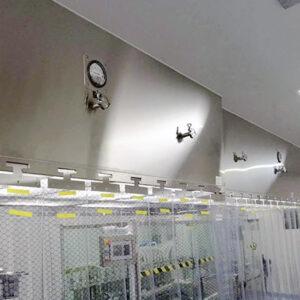
Procurement teams that finalize FFU counts, LAF unit positions, or HEPA housing configurations before the intended ISO class is confirmed are not moving faster — they are building a redesign trigger into the project schedule. When commissioning arrives and test-point coverage falls short or airflow patterns cannot support the required particle limits, the rework is structural, not cosmetic: ceiling modules, return-air placement, and monitoring interfaces may all require adjustment. The judgment that prevents this is straightforward in principle but frequently skipped under schedule pressure: lock the ISO class, its operational-state assumption, and its particle size designation before any equipment type is assessed. What follows helps engineers and procurement teams understand exactly which classification details drive which equipment decisions, where the sequence tends to break down, and what to verify before a specification moves forward.
ISO 14644 class as the starting point for equipment selection
The ISO class is not background documentation for equipment selection — it is the primary input that sets airflow tier, filtration demand, and ceiling coverage requirements. Getting this wrong at the outset, or treating it as interchangeable with an older standard, produces specifications that appear internally consistent but fail when tested against the actual particle limits the room must demonstrate.
The scale difference between adjacent classes is larger than most procurement timelines account for. ISO 7 and ISO 8 differ by a factor of three in minimum air change rate and a factor of ten in allowable particle concentration at 0.5 µm. That gap cannot be bridged by adding a few modules or upgrading a filter grade after the room is built. The ACH requirement drives ceiling coverage area, number of fan filter units, and static pressure design. The particle concentration limit determines how much filtration efficiency and how much airflow uniformity the equipment must collectively deliver.
| Clasa ISO | Minimum ACH | Max Particule ≥0,5 µm/m³ |
|---|---|---|
| ISO 7 | 60 | 352,000 |
| ISO 8 | 20 | 3,520,000 |
The practical implication is that equipment specified for ISO 8 conditions — 20 ACH and a 3,520,000 particles/m³ ceiling — cannot simply be redeployed in an ISO 7 environment without structural changes. Conversely, over-specifying for ISO 7 in a room intended for ISO 8 adds cost without compliance benefit. The classification number is the calibration point; everything downstream from it, including which equipment types are appropriate, how many units are required, and where monitoring interfaces must be placed, follows from that number and the operational state it is tied to.
Airflow, particle control, and monitoring interfaces by equipment type
Each equipment type has a distinct role in meeting the cleanliness target, and that role is not interchangeable between airflow strategies. Selecting equipment without mapping it to the room’s airflow pattern — unidirectional versus non-unidirectional — often produces particle control gaps that are difficult to diagnose during qualification because the equipment performs correctly in isolation but not as part of the room’s air delivery system.
For HEPA filtration systems operating under ISO 8 conditions, the design figures commonly referenced are ≥99.97% efficiency at 0.3 µm and a minimum of 20 ACH. These figures are tied to the classification context established by ISO 14644-1 and should be treated as design thresholds for that class, not as universal requirements that apply regardless of the room’s intended ISO designation. An ISO 7 room requires substantially higher ACH and correspondingly more filtration coverage, which changes the ceiling module layout and the number of unități de filtrare ventilator needed to achieve the required uniformity.
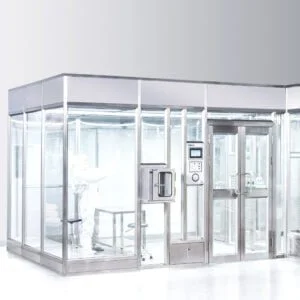
ISO 8 environments commonly rely on non-unidirectional, turbulent-mixing airflow delivered from ceiling-mounted HEPA modules with low-wall return air grilles. This is an implementation convention tied to the class’s particle limit, not a codified compliance requirement, but it carries real equipment consequences. HEPA module position determines where particle concentrations will be highest and lowest under operational conditions. Return-air grille placement affects how effectively the airflow sweeps contamination out of the room. Monitoring port locations must be chosen to reflect the actual flow pattern, not an idealized one — a detail that becomes a test-coverage problem during classification if monitoring interfaces are placed without reference to the return-air layout.
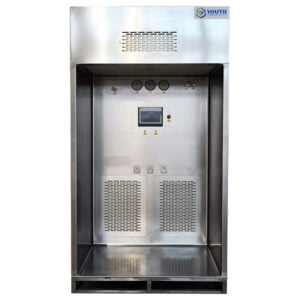
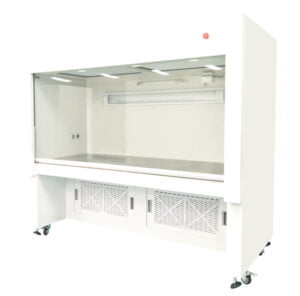
Laminar air flow units introduce a different consideration: they create a localized unidirectional zone within a room that may itself be classified at a lower ISO level. The monitoring interface for that local zone must be specified separately from the room’s ambient monitoring points. Conflating the two — using room-level monitoring data to demonstrate local unidirectional zone performance — is a qualification gap that auditors identify readily and that requires physical changes to the monitoring setup to resolve.
Testing access for FFU, LAF, HEPA housing, and pass-through units
Test access is a physical constraint that must be built into equipment specifications before procurement, not resolved during commissioning. ISO 14644-3:2019 defines the test methods used to demonstrate classification performance — filter integrity, airflow velocity, particle counts, and uniformity — and each of those methods requires physical access to specific locations on or near the equipment. Equipment that does not provide that access forces either a test workaround that compromises the result or a structural modification that delays qualification.
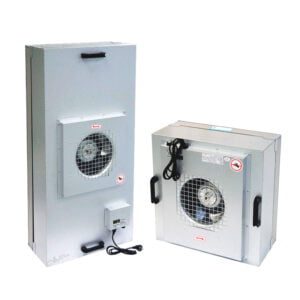
For fan filter units installed in a modular ceiling grid, the relevant access points are the downstream face for velocity measurement and particle sampling, and the filter frame seal for integrity testing. If FFUs are specified and installed without confirmed access for a scanning probe or a point-measurement instrument at the required downstream distance, the integrity test either cannot be executed or must be performed under conditions that are difficult to defend in a classification report. This is not a hypothetical risk — it is a common commissioning delay in facilities where ceiling height, adjacent obstructions, or grid geometry were finalized before test-method geometry was checked.
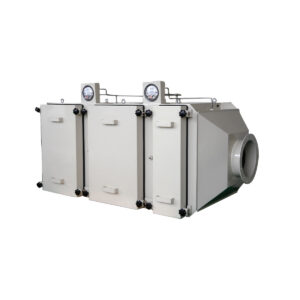
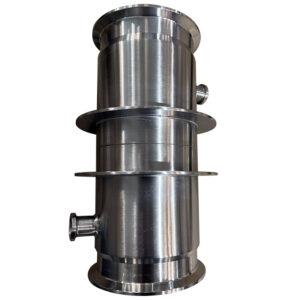
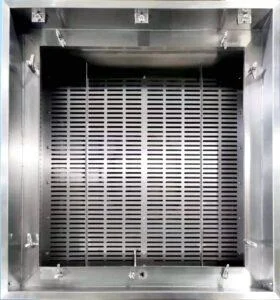
HEPA housing boxes present a related but distinct issue. Terminal housing units installed in ductwork or ceiling plenums require upstream and downstream access for differential pressure measurement and, in some configurations, filter integrity scanning. If the housing is specified without ports at those locations, or if the ports are positioned where a probe cannot be inserted at the correct angle, the test cannot be completed as designed. The consequence is either a non-standard test method — which must be justified and documented — or a housing replacement that was not in the project budget.
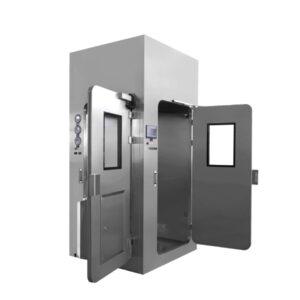
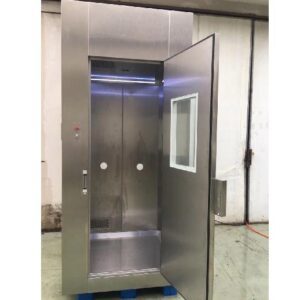
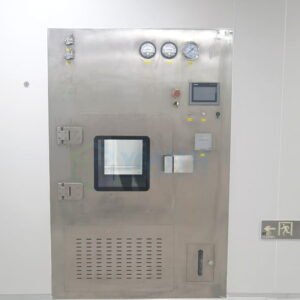
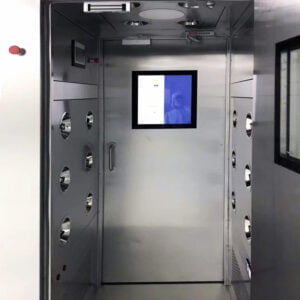
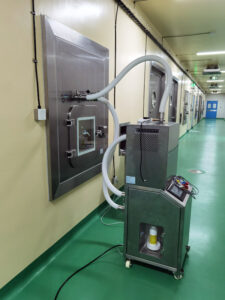
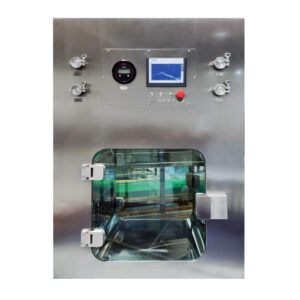
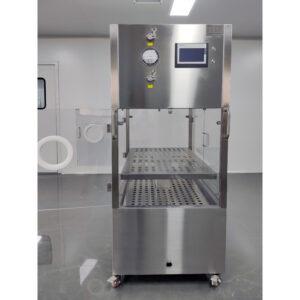
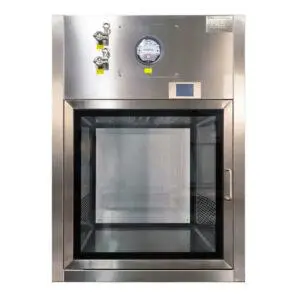
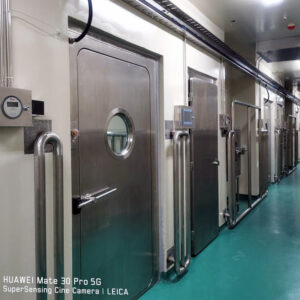
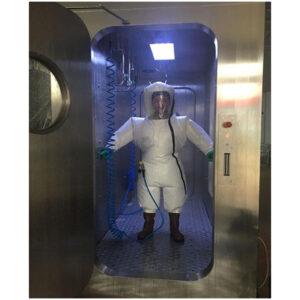
Pass-through units add an airflow directionality requirement to the access question. If the pass-through incorporates HEPA filtration or an interlocked airflow design, the testing plan must account for which operational state — door closed, door open on one side, interlock cycling — is the reference condition for the classification test. That decision must be made before the unit is specified, because the physical access and instrumentation positions depend on it. Specifying the unit first and resolving the test method later is the sequence that produces field modifications during qualification.
Misclassification risk when equipment is chosen before room class
The most persistent source of misclassification is not an engineering error — it is a documentation inheritance problem. Legacy projects, vendor quotation templates, or internal specifications that carry Federal Standard 209E terminology into an ISO 14644-governed procurement create a unit mismatch that is invisible until qualification testing reveals that the equipment cannot meet the particle limits the room must demonstrate.
Federal Standard 209E expressed particle concentration in particles per cubic foot. ISO 14644-1 expresses it in particles per cubic meter. These are not interchangeable by simple unit conversion in procurement documents, because the threshold values were set differently and carry different statistical treatment. When a specification references Class 100,000 alongside ISO 8 without explicitly converting and reconciling the limits, the equipment vendor has no reliable basis for confirming which particle-count threshold the airflow and filtration system must actually meet.
| Reference Standard | Particle Threshold | Unitate | Risk If Used for Equipment Selection |
|---|---|---|---|
| Federal Standard 209E (Class 100,000) | 100,000 | particles/ft³ | Incorrect particle-count basis drives wrong airflow and filtration specs, risking non-compliance |
| ISO 14644-1 (ISO 8) | 3,520,000 | particles/m³ | Equipment must match this threshold to meet ISO 8 requirements |
The downstream consequence is that airflow and filtration specifications built on the wrong particle-count basis tend to produce equipment that is either under-powered for the actual ISO limit or over-specified in ways that inflate cost without improving compliance. Neither outcome is identified until the room is tested against the ISO 14644-1 threshold — at which point the corrective path involves either additional equipment, reconfigured airflow, or a formal variance that must be justified to the relevant authority. Catching the unit basis discrepancy before equipment is procured costs a brief document review. Catching it during qualification costs weeks and carries audit exposure.
Selection trigger after classification and test method assumptions are fixed
No equipment assessment should move forward until two specific agreement points are confirmed between the customer and supplier: the particle size range designated by the ISO class, and the operational state — as-built, at-rest, or operational — under which the room will be classified. These are not procedural formalities. They are the conditions that determine whether the equipment being specified can actually be tested to demonstrate compliance.
ISO 14644-1:2015 designates particle size ranges for each class, and the size range affects the detection capability required of monitoring equipment and the efficiency demands placed on filtration. If a supplier quotes based on a different size designation than the one the facility intends to use for classification, the equipment may pass its own factory acceptance test while failing to support the site classification test. ISO 14644-3:2019 provides the test method context that makes this distinction concrete: different test methods apply under different operational states, and the instrumentation and sampling locations appropriate for an at-rest classification are not necessarily adequate for an operational one.
| Ce să clarificăm | Risk If Not Clarified |
|---|---|
| Particle size range(s) designated by the ISO class | Equipment selection may fail to meet the correct particle count limits, leading to non-compliance |
| Test item’s mode of operation (as-built, at-rest, operational) | Equipment performance may not align with the required test state, causing test-point or airflow coverage mismatches |
The reason this functions as a hard selection trigger — rather than a documentation preference — is that unresolved assumptions at this stage become redesign triggers at every downstream stage: fabrication, installation, commissioning, and audit. A specification that proceeds without confirming operational state, for example, may result in monitoring port placement optimized for at-rest conditions that cannot capture the particle distribution generated during operational activity. Correcting that after installation requires physical modification to the room, not just a document revision. Treating this agreement step as a defensibility check before procurement begins is the most reliable way to prevent qualification delays from tracing back to an assumption that was never explicitly stated.
For a structured look at how these classification criteria interact with specific equipment compliance requirements, the ISO 14644 cleanroom equipment standards compliance guide provides useful additional context on how classification language maps to equipment specification decisions.
The clearest single implication of this sequence is that ISO classification and equipment selection are two distinct decisions that must happen in the right order and involve different expertise. Classification defines the cleanliness target and the conditions under which it must be demonstrated. Equipment selection determines whether air delivery, filtration, monitoring interfaces, and physical test access can actually support that demonstration under real room conditions. Collapsing the two into a single procurement decision — or running them in parallel before either is fully resolved — is the pattern that produces qualification delays, unit-basis mismatches, and test-access problems at commissioning.
Before moving any equipment specification forward, confirm that the ISO class is explicitly stated, the operational state is agreed, the designated particle size range is documented, and the physical access requirements for the relevant test methods are reflected in the equipment configuration. Each of those four items represents a separate assumption that, if left implicit, will need to be resolved later — at greater cost and under more schedule pressure than resolving it at the specification stage.
Întrebări frecvente
Q: Does this selection sequence still apply if the room will be classified at-rest rather than operational?
A: Yes, but the at-rest assumption must be explicitly documented before equipment is specified, not assumed by default. The operational state determines which test methods from ISO 14644-3:2019 apply, where sampling locations must be placed, and what particle distribution the equipment must support during the classification test. An at-rest classification permits different monitoring port positions and airflow uniformity tolerances than an operational one. Equipment specified without a stated operational-state assumption will be evaluated against whichever state the test team defaults to — which may not match the room’s intended use or the authority’s expectation.
Q: What is the first concrete action after the ISO class, operational state, and particle size designation are all confirmed?
A: The immediate next step is a physical access audit against the specific test methods in ISO 14644-3:2019 that apply to your confirmed class and operational state. Before any equipment is ordered, map the downstream face clearance for FFUs, the port positions on HEPA housing boxes, and the sampling access points for pass-through units against the probe geometry and minimum measurement distances those test methods require. This check takes hours at the specification stage and typically takes weeks to remediate after installation.
Q: At what ISO class does unidirectional airflow become necessary rather than optional?
A: Unidirectional airflow generally becomes a practical requirement at ISO 5 and above, where allowable particle concentrations are too low for turbulent-mixing strategies to achieve reliably across the full room volume. ISO 7 and ISO 8 environments commonly use non-unidirectional airflow with ceiling-mounted HEPA modules and low-wall returns, and that approach is consistent with their particle limits. Attempting to meet ISO 5 limits with a turbulent-mixing layout is not a documented prohibition, but the airflow uniformity and particle sweep-out efficiency it requires in practice make unidirectional delivery the standard engineering response.
Q: Is it worth specifying a higher FFU density than the ISO class strictly requires as a buffer against future reclassification?
A: Only if the structural ceiling load, static pressure system, and power distribution are designed for the higher density from the outset — otherwise the buffer creates cost without usable flexibility. Adding FFU capacity to a ceiling grid that was not engineered for it requires more than swapping modules: return-air capacity, plenum pressure, and monitoring interface coverage all need to match the higher ACH the additional units would deliver. A genuine upgrade path requires that the room’s mechanical and electrical infrastructure be specified for the higher class from the start, which is a project-scope decision that should be made before the base specification is fixed, not as a procurement hedge.
Q: What happens if a project inherits a vendor quote that uses Federal Standard 209E class designations alongside ISO 14644 references?
A: Treat it as an unresolved unit-basis conflict and resolve it explicitly in writing before accepting the quote as a specification input. Federal Standard 209E particle thresholds are expressed per cubic foot and were derived under different statistical assumptions than ISO 14644-1’s per-cubic-meter limits. A quote that references both without explicit reconciliation gives the vendor no reliable basis for confirming which threshold the equipment must meet, and the discrepancy will not surface until qualification testing is run against the ISO limit. The correction at that stage — additional equipment, airflow reconfiguration, or a formal variance — carries both schedule and audit exposure that a brief document review at the quote stage would have prevented.