Una caja de paso parece un sencillo recinto con dos puertas interbloqueadas, pero que forme parte de una ruta de transferencia de grado A/B depende del tipo de material, del estado en el que debe llegar y de lo que la estrategia de control de la contaminación (CCS) que la rodea esté diseñada para evitar. Elegir la caja antes de responder a esas preguntas suele dar lugar a un equipo que cumple con una ficha técnica sin eliminar el riesgo real de la transferencia. El punto de partida más útil es la propia transferencia: qué cruza el límite, en qué estado y qué condiciones deben darse en el lado receptor para que la zona crítica se considere protegida.
Riesgos de transferencia que deben tenerse en cuenta en el sistema de captura de CO₂ (CCS) antes de la selección de los equipos
Cada transferencia de material entre niveles conlleva una serie de riesgos que existen independientemente del tipo de caja de paso que se instale finalmente. El material tiene un estado cuando entra en el límite —puede estar sin procesar, parcialmente tratado, estéril o a la espera de una etapa de descontaminación— y ese estado determina lo que la secuencia de transferencia debe seguir cumpliendo antes de que el material sea aceptable en el lado de destino. Si el material ya presenta la reducción de carga biológica requerida al llegar al límite, la función de la etapa de transferencia es preservar ese estado. Si no es así, la propia etapa de transferencia debe aportar parte de esa reducción, lo que cambia lo que el equipo situado dentro del límite debe hacer, en lugar de limitarse simplemente a facilitar el proceso.
La diferencia de grado entre el origen y el destino constituye el segundo factor de riesgo. Cuando ambos lados se sitúan muy próximos en la clasificación de limpieza, la función del proceso de transferencia consiste principalmente en evitar la contaminación cruzada y mantener las relaciones de presión. Cuando la diferencia es mayor, la secuencia de transferencia debe establecer de forma activa una barrera que impida que el grado inferior vuelva a entrar en el superior, y el margen de error en los procedimientos se reduce. Es aquí donde Anexo 1 de las PCF de la UE adquiere una relevancia directa: su ámbito de aplicación abarca la estrategia de control de la contaminación, el enclavamiento de las esclusas de grado A/B y la transferencia controlada de material o la desinfección en el marco de las operaciones de fabricación estéril de la UE, y un sistema de control de la contaminación (CCS) diseñado en función de esas expectativas considera el límite de transferencia como parte del entorno controlado, en lugar de como un elemento de servicio independiente.
El tratamiento de la superficie exterior supone un riesgo específico que es fácil dar por resuelto. Un material puede estar estéril en su interior, mientras que su envoltorio exterior o la superficie del envase pueden presentar contaminación procedente del lado de menor grado; la fase de transferencia debe abordar específicamente esa condición de la superficie, y lo que significa “abordar” depende de la estructura del material y de la tolerancia del grado de destino respecto a la carga biológica residual en las superficies que posteriormente entrarán en contacto con la zona crítica.
La secuencia de las puertas y el punto en el que comienza la protección de la zona crítica están relacionados, pero son aspectos distintos. La secuencia define cómo se permite que funcionen las dos puertas una respecto a la otra; el punto de protección define en qué momento de esa secuencia la transferencia ha proporcionado lo que la zona crítica necesita. Un equipo de proyecto que defina la secuencia de puertas sin fijar también el punto de protección corre el riesgo de construir un enclavamiento que, aunque sea mecánicamente correcto, no se ajuste al momento en que realmente debe estar en vigor el control de la contaminación. Estos cuatro elementos de riesgo —el estado del material, el límite de calidad, el tratamiento de superficies y la relación entre la secuencia y la protección— son los que el CCS debe tener en cuenta antes de seleccionar cualquier familia de equipos, ya que determinan lo que el equipo debe hacer, y no solo cómo debe construirse.
Representación del estado de los materiales, los límites de calidad y la secuencia de puertas
| Campo de mapa de transferencia | Entrada específica del proyecto | Decisión respaldada |
|---|---|---|
| Estado del material | Estado del material en la fase de transferencia | Indica la condición del material que debe tenerse en cuenta en el plan de transferencia |
| Calidades de origen y destino | Marca a ambos lados de la transferencia | Define el límite de calidad que supera el material |
| Tratamiento de la superficie exterior | Tratamiento aplicado a la superficie exterior del material | Vincula la etapa de tratamiento con la secuencia de transferencia prevista |
| Secuencia de puertas | Secuencia prevista para el funcionamiento de los dos lados de la cámara de transferencia | Sienta las bases para definir el comportamiento de los enclavamientos |
| Inicio de la protección de la zona crítica | Punto del caudal en el que comienza la protección de la zona crítica | Indica dónde debe conectarse la transferencia a los controles de la zona crítica |
Una vez identificados los elementos de riesgo, es necesario organizarlos en forma de flujo en lugar de una lista, ya que cada uno de ellos solo tiene sentido en relación con el lugar que ocupa en la secuencia. Un mapa de flujo de transferencia ordena el estado del material, los grados de origen y destino, la etapa de tratamiento de la superficie exterior, la secuencia de puertas y el inicio de la protección de la zona crítica en el orden en que el material se desplaza realmente a través de ellos, de modo que quien revise el proceso pueda ver dónde una condición depende de otra, en lugar de tratarlas como especificaciones independientes.
La ventaja de utilizar un mapa en lugar de una lista se pone de manifiesto cuando las condiciones interactúan. Un material con un estado favorable (ya descontaminado, estable, en embalaje inerte) que cruza un límite de grado moderado puede que solo necesite una secuencia controlada de puertas y un periodo de retención definido. Un material con un estado desfavorable —sensible a la humedad, sin tratar aún en superficie o que llega en un embalaje que ha sido manipulado en un espacio de grado inferior— que cruza un límite de grado más amplio necesita que el mapa indique dónde se lleva a cabo el tratamiento de superficie en relación con la secuencia de puertas, ya que tratarlo demasiado tarde en la secuencia deja un intervalo en el que el material sin tratar permanece dentro de un límite que se supone que ya está protegiendo la zona crítica.
La secuencia de las puertas en sí misma no es una característica fija de la cámara de transferencia; se trata de una decisión del proyecto que el esquema debe justificar. Cuando la transferencia solo tiene que impedir que se abran dos puertas a la vez, basta con un sencillo enclavamiento mecánico o eléctrico para reflejar la secuencia. Cuando la transferencia también requiere que se complete una fase de tratamiento o de espera antes de que pueda abrirse la puerta interior, la secuencia debe codificar esa dependencia, y el esquema es lo que muestra al equipo de diseño por qué el enclavamiento necesita esa condición adicional en lugar de una más sencilla.
El inicio de la protección de la zona crítica es el área del mapa que une todas las demás. Marca el punto a partir del cual se aplican al material las premisas de control de contaminación del lado de destino. Si ese punto se sitúa demasiado pronto en el flujo —antes de que el tratamiento superficial se haya completado realmente—, se está pidiendo al nivel de destino que tolere un riesgo para el que no fue diseñado. Si se sitúa adecuadamente más adelante, el mapa muestra que todos los pasos anteriores (estado, cruce de grados, tratamiento superficial, secuencia de puertas) deben completarse antes de llegar a ese punto, lo que convierte al mapa en un elemento de diseño más que en un mero ejercicio de documentación.
Selección de funciones estáticas, dinámicas o VHP para la transferencia prevista
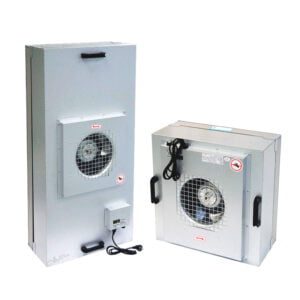
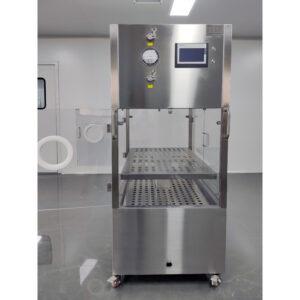
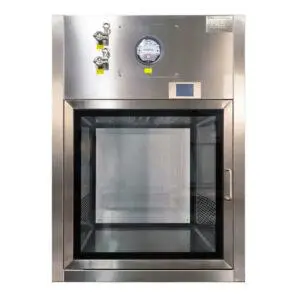
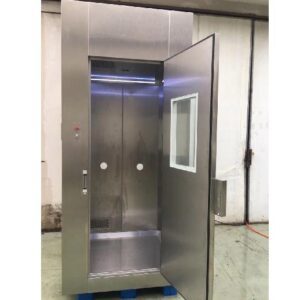
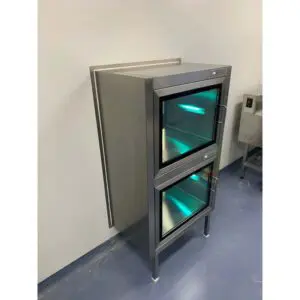
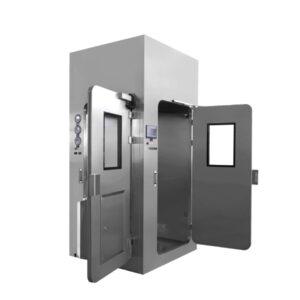
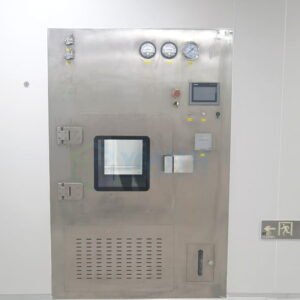
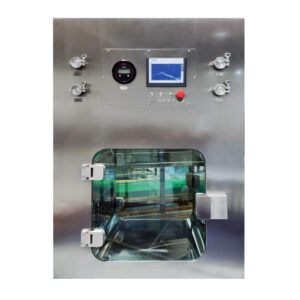
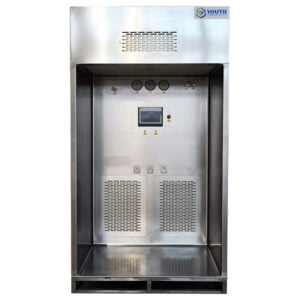
Una vez trazado el flujo de transferencia, la función de la caja de paso se reduce a determinar qué categoría puede proporcionar lo que exige el mapa en el punto donde comienza la protección de la zona crítica. Las cajas de paso estáticas, que se ofrecen como Caja de paso estática / compuertas de transferencia, controlan mecánicamente la apertura entre dos espacios —normalmente mediante un sistema de enclavamiento de puertas que impide que ambos lados estén abiertos al mismo tiempo— sin desempeñar por sí mismas ninguna función de tratamiento del aire ni de descontaminación. Cuando el mapa de flujo de transferencia muestra que el estado del material y el tratamiento de la superficie ya están resueltos antes de que el material alcance el límite, y la diferencia de nivel es tal que una simple abertura con enclavamiento puede soportarla, una función estática puede ser suficiente para preservar lo que ya se ha conseguido.
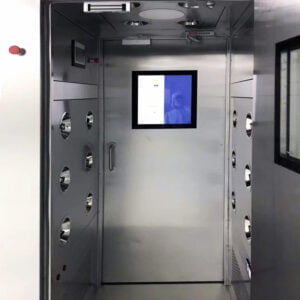
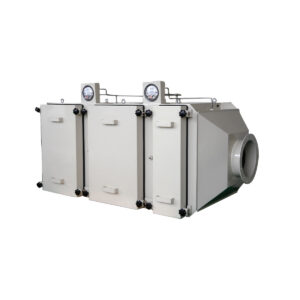
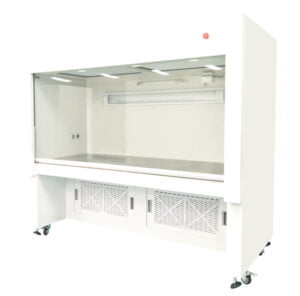
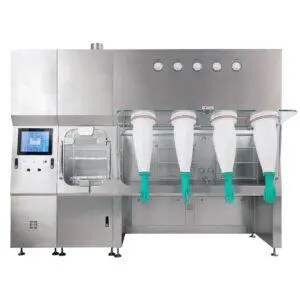
Cajas de paso dinámicas añadir un elemento de control del flujo de aire al recinto, lo cual cobra importancia cuando el mapa indica que es necesario mantener activamente el control de la cascada de presión o de las partículas durante la propia transferencia, y no dar por sentado que se obtiene de las salas circundantes. La distinción es importante porque un Una función dinámica responde a una pregunta diferente a la de una función estática.: una función estática se pregunta “¿se puede impedir que ambos lados se conecten directamente?”, mientras que una función dinámica se pregunta “¿se puede controlar activamente el espacio entre ellos mientras hay material presente?”. Un mapa de flujo de transferencia que no muestre la necesidad de un control activo entre las operaciones de las puertas no justifica, por sí solo, la complejidad añadida de una función dinámica; en cambio, un mapa que indique que el límite debe mantener su propia condición controlada durante el periodo de retención apunta hacia ello.
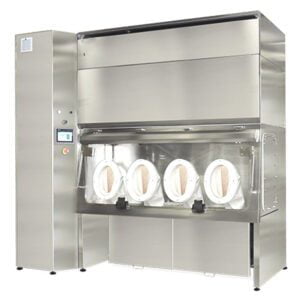
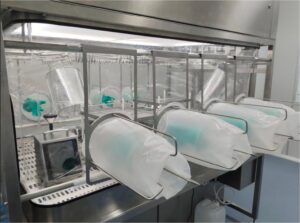
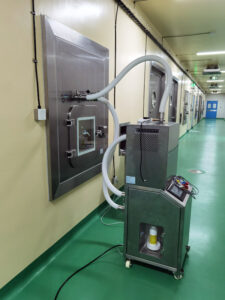
Las cajas de paso VHP, disponibles como Caja de paso de peróxido de hidrógeno vaporizado (VHP) / Cámara de VHP, añadir un ciclo de descontaminación a la propia etapa de transferencia. Esta función cobra especial relevancia cuando el mapa indica que el estado del material o el tratamiento de la superficie exterior no se resuelven antes de que el material llegue al límite —es decir, cuando la propia etapa de transferencia debe lograr una reducción de la carga biológica, en lugar de limitarse a mantener un estado ya aceptable—. Seleccionar una función de VHP porque el límite de clase es amplio, sin confirmar que el mapa requiera realmente una etapa de descontaminación durante la transferencia, conlleva el riesgo de especificar una capacidad que la transferencia no necesita; seleccionar una función estática o dinámica cuando el mapa muestra una contaminación superficial no resuelta conlleva el riesgo de cometer el error contrario.
Las tres categorías no son intercambiables, y es el mapa el que indica cuál de ellas se ajusta a la transferencia, y no únicamente el límite de calidad. Un proyecto con una gran diferencia de calidad, pero con material totalmente pretratado, puede seguir siendo adecuado para una función dinámica; un proyecto con una diferencia de calidad moderada, pero con un estado de la superficie sin resolver, puede seguir requiriendo una función VHP. La selección de la función se basa en lo que el mapa indica que sigue siendo necesario en el límite, y no en los valores de calidad por sí solos.
Definición de enclavamientos, pasos de desinfección, cargas, alarmas y recuperación
| Elemento de requisito de usuario | Se necesita una definición | Relación entre la decisión y las pruebas |
|---|---|---|
| Comportamiento del sistema de bloqueo | Comportamiento requerido para la secuencia prevista de las puertas | Rastrea hasta la transferencia de límite de curso asignada |
| Distribución de la carga | Disposición prevista de la carga de transferencia | Considéralo como una condición operativa específica del proyecto |
| Pasos de limpieza o desinfección | Pasos necesarios para la transferencia prevista | No se debe considerar la trampilla de paso por sí sola como prueba de esterilización o de que la desinfección de la transferencia es adecuada. |
| Condiciones de retención | Condiciones en las que se celebra la transferencia | Indique los límites específicos del proyecto para continuar con la transferencia |
| Respuesta ante una alarma | Respuesta obligatoria ante las alarmas definidas | Relaciona la respuesta con la secuencia de transferencia prevista |
| Pruebas de recuperación | Documentación necesaria para la recuperación | Incorporar el requisito en la calificación del proyecto |
La selección de una categoría funcional determina qué tipo de caja de paso es la adecuada; sin embargo, aún no establece cómo debe comportarse dicha caja de paso durante su funcionamiento, y ese comportamiento debe especificarse en los requisitos del usuario, en lugar de darse por supuesto a partir de la capacidad general del equipo. El comportamiento del enclavamiento es el primer elemento, y debe derivarse directamente de la secuencia de puertas establecida en el diagrama de flujo de transferencia —no solo “evitar que ambas puertas se abran a la vez” en términos generales, sino la secuencia específica y cualquier retención condicional que el diagrama identifique como necesaria antes de que se permita la apertura de la puerta interior—.
La disposición de la carga es una condición operativa específica de cada proyecto que influye en el rendimiento real del sistema de transferencia durante su uso. La forma en que se distribuye el material dentro de la cámara influye en la distribución del flujo de aire en un funcionamiento dinámico y afecta a la distribución del vapor y al contacto en un funcionamiento con VHP; un plan de transferencia que especifique correctamente el funcionamiento pero que deje sin definir la disposición de la carga conlleva el riesgo de que el sistema funcione en pruebas aisladas, pero no en las condiciones de carga que realmente se dan en la instalación.
Los pasos de limpieza o desinfección deben definirse de forma explícita porque, tal y como deja claro la opinión de los profesionales sobre las compuertas de transferencia, una compuerta de paso controla una abertura entre espacios, pero no garantiza por sí sola la esterilización ni una desinfección aceptable de la transferencia. Esto cobra mayor importancia cuando la función seleccionada es estática o dinámica, en lugar de VHP: el recinto puede crear un límite controlado, pero cualquier desinfección en la que se base la transferencia debe definirse como un paso del procedimiento especificado en los requisitos del usuario, y no deducirse de la mera presencia del equipo.
Las condiciones de retención definen el límite a partir del cual se permite que la transferencia continúe o se detenga, y deben establecerse en función de cada proyecto concreto, en lugar de seguir una regla genérica, ya que lo que provoca una retención en una transferencia (un ciclo de tratamiento incompleto, una posición de la puerta no confirmada) puede no ser relevante en otra. La respuesta a una alarma debe estar vinculada a la misma secuencia de transferencia: una alarma durante una Ciclo VHP requiere una respuesta diferente a la de una alarma en caso de un simple fallo en el enclavamiento de la puerta, y los requisitos del usuario deben especificar qué respuesta se aplica a cada condición, en lugar de un único comportamiento genérico de alarma. La evidencia de recuperación es lo que el proyecto presenta en la fase de cualificación: documentación que demuestre que, tras una alarma o una condición de retención, la transferencia se reanudó o se reinició de forma trazable. EudraLex, volumen 4, anexo 15 permite la trazabilidad de los requisitos de usuario (URS) y de la calificación (DQ) a lo largo de todo el ciclo de vida de la validación, lo que significa que cada uno de estos elementos, una vez definido en los requisitos de usuario, debe poder rastrearse hasta las pruebas de calificación que genera el proyecto; el requisito no es un mero trámite administrativo.
Conexión de la cámara de transferencia a los controles de la sala contigua y del operador
| Interfaz | Relación de control con la captura | Límite de la evidencia |
|---|---|---|
| Abertura de paso | Cómo se controla la apertura entre los dos espacios | El control de la apertura no garantiza por sí solo la esterilización ni una desinfección aceptable de la transferencia. |
| Salas de origen y destino | Cómo se relacionan los controles de la sala circundante con el límite de la nota | Especifica los límites del equipo junto con los controles de la sala circundante |
| Secuencia de transferencia de operadores | Cómo se adaptan el tratamiento de la superficie exterior y la secuencia de puertas al flujo de transferencia | Vincula la secuencia al punto en el que comienza la protección de la zona crítica |
| Función de caja de paso seleccionada | Cómo contribuye la función seleccionada a la transferencia prevista | Integrar la función en la estrategia de control de la contaminación de las instalaciones |
Una caja de paso no funciona como una unidad aislada; se sitúa en la unión de dos salas y está controlada por una secuencia de operaciones, y el control efectivo de la contaminación durante la transferencia depende de cómo se relacionan esos tres elementos, no de las especificaciones de la caja de paso por sí solas. La propia abertura de paso solo está tan controlada como lo estén el enclavamiento y los pasos procedimentales que la rigen; repitiendo lo dicho anteriormente, el control de la abertura no garantiza por sí solo la esterilización ni una desinfección aceptable de la transferencia, lo que significa que el control de la abertura debe evaluarse junto con cualquier paso de desinfección o tratamiento en el que se base la transferencia, y no como sustituto de este.
Las salas de origen y destino aportan su propio control de contaminación independientemente de la caja de paso, y el CCS debe reflejar cómo ese control a nivel de sala se relaciona con el límite de clase que la caja de paso atraviesa. Cuando las salas de ambos lados mantienen cascadas de presión consistentes y el enclavamiento de la caja de paso es fiable, el límite funciona según lo previsto. Cuando cambian las condiciones de control de cualquiera de las salas —por ejemplo, una situación de mantenimiento o un modo de funcionamiento diferente—, es necesario reevaluar el funcionamiento de la caja de paso en función de las condiciones reales de la sala, ya que la capacidad del propio equipo no ha cambiado, pero sí lo ha hecho el entorno del que debe proteger. Esta es la base para calificar el límite del equipo junto con los controles de las salas circundantes, en lugar de tratar la caja de paso como un elemento calificado de forma independiente.
La secuencia de transferencia del operador es donde se llevan a cabo realmente el tratamiento de la superficie exterior y la secuencia de puertas, y su fiabilidad depende exclusivamente de la formación y los procedimientos en los que se basa. Una secuencia que existe correctamente sobre el papel, pero que no se sigue de forma sistemática en el momento de su aplicación, reintroduce el mismo riesgo que se pretendía eliminar al seleccionar el equipo. Vincular la secuencia al punto en el que comienza la protección de la zona crítica significa que el procedimiento del operario debe dejar claro ese punto —no solo “siga los pasos”, sino “la zona crítica no está protegida hasta que se complete este paso”—, de modo que el procedimiento siga la misma lógica que establece el mapa de flujo de transferencia.
Cuando una instalación está determinando qué función de caja de transferencia y qué disposición de interfaces se adapta a una transferencia concreta, la información del proyecto recopilada en el diagrama de flujo y los requisitos del usuario —estado del material, límites de calidad, secuencia de puertas, requisitos de enclavamiento y desinfección— es lo que necesita un proveedor como YOUTH para evaluar la configuración en función de las familias de equipos disponibles, entre las que se incluyen Opciones de caja de paso estática, dinámica y VHP, en lugar de proponer una función basada únicamente en el límite de la nota.
Pruebas de cualificación que cierran la vía de transferencia de los grados A/B
| Conjunto de pruebas | Contenido compatible con el seguimiento | Lo que establece |
|---|---|---|
| Mapa de flujo de transferencia | Estado del material, calidades de origen y destino, tratamiento de la superficie exterior, secuencia de las puertas y inicio de la protección de la zona crítica | Define la ruta de transferencia que requiere control |
| Requisitos del usuario | Comportamiento de los enclavamientos, distribución de la carga, pasos de limpieza o desinfección, condiciones de mantenimiento, respuesta ante alarmas y pruebas de recuperación | Define los requisitos del proyecto con respecto a los cuales se puede realizar el seguimiento del diseño |
| Trazabilidad de la homologación del diseño | Función seleccionada de la cámara de transferencia, límites del equipo y relación con la estrategia de control de la contaminación de la instalación | Muestra cómo el diseño propuesto cumple los requisitos de transferencia definidos |
| Pruebas de idoneidad del proyecto | Datos sobre la vía de transmisión, las medidas de control en las estancias circundantes y la recuperación | Cierra la cadena de pruebas específica del proyecto; las fases de calificación y los criterios de aceptación siguen dependiendo de cada proyecto. |
El mapa de flujo de transferencia, el requisito del usuario y la función seleccionada solo cierran la ruta de transferencia de grado A/B si cada elemento puede rastrearse hacia adelante hasta las pruebas de cualificación, ya que un requisito que no se pueda verificar no establece realmente que la transferencia funcione según lo previsto. El contenido del mapa de flujo de transferencia —el estado del material, los grados de origen y destino, el tratamiento de la superficie exterior, la secuencia de puertas y el inicio de la protección de la zona crítica— define la ruta que debe controlarse en primer lugar; sin él, no hay base para juzgar si un resultado de cualificación posterior es realmente relevante para el riesgo que presenta la transferencia.
Los elementos de los requisitos del usuario —comportamiento de los enclavamientos, disposición de la carga, pasos de limpieza o desinfección, condiciones de retención, respuesta a las alarmas y pruebas de recuperación— convierten esa ruta trazada en requisitos verificables. A continuación, la cualificación del diseño debe demostrar que la función seleccionada para la caja de paso, los límites de su equipo y su relación con el sistema de control y señalización (CCS) de la instalación responden efectivamente a lo especificado en los requisitos del usuario; es aquí donde surgiría una discrepancia entre una función seleccionada y el requisito real de la transferencia (por ejemplo, una función estática en la que un tratamiento superficial no resuelto requiriera un ciclo de VHP), si se llevara a cabo realmente la trazabilidad en lugar de darse por sentada.
Las pruebas de cualificación del proyecto son lo que finalmente cierra la cadena: pruebas relativas a la propia ruta de transferencia, a los controles de la sala circundante y a la recuperación tras cualquier condición de retención o alarma. El Anexo 15 de EudraLex respalda la trazabilidad de los URS a la DQ a lo largo de este ciclo de vida, pero no establece cuáles deben ser las fases de cualificación ni los criterios de aceptación para un proyecto concreto; estos siguen dependiendo de la transferencia específica, de los grados implicados y del CCS que la instalación haya establecido en torno a ellos. Un equipo de proyecto debe considerar esto como la cuestión pendiente que la planificación de la cualificación debe resolver directamente: qué criterios de aceptación se aplican a esta transferencia, en este límite de grado y bajo este CCS, no es algo que pueda aportar una referencia general, y confirmarlo es lo que permite que la cadena de pruebas —desde el mapa hasta el requisito, pasando por el diseño y la cualificación— demuestre realmente que la ruta de transferencia de grado A/B está controlada y no solo documentada.
Preguntas frecuentes
Q: ¿Basta con una caja de paso para que una transferencia de grado A/B sea aceptable?
A: No. Una compuerta de paso controla la abertura entre espacios, pero por sí sola no garantiza la esterilización ni una desinfección aceptable durante el trasvase. Defina el tratamiento de las superficies exteriores, la secuencia de las puertas, los pasos de limpieza o desinfección y el punto en el que comienza la protección de la zona crítica; a continuación, incorpore esos requisitos en la cualificación.
Q: ¿Debería el equipo elegir una función estática, dinámica o VHP antes de realizar la asignación de la transferencia?
A: Comienza por el flujo de transferencia y, a continuación, selecciona la función que lo respalda. Registra el estado del material, las calidades de origen y destino, la disposición de la carga, el tratamiento de la superficie exterior, la secuencia prevista de puertas y el inicio de la protección de la zona crítica; vincula la función seleccionada y los límites del equipo a la estrategia de control de la contaminación de la instalación.
Q: ¿Qué debería ocurrir si una alarma o una condición de retención interrumpiera la transferencia?
A: Los requisitos del usuario deben definir cuándo se lleva a cabo la transferencia, la respuesta de alarma requerida y las pruebas necesarias antes de la recuperación. La cualificación debe hacer un seguimiento de dichas reglas hasta la secuencia de puertas prevista y la transferencia entre niveles, de modo que el reinicio se realice de acuerdo con las pruebas definidas en el proyecto.
Q: ¿Basta con certificar la caja de paso por sí sola?
A: No. La cadena de pruebas debe abarcar conjuntamente la ruta de transferencia, los límites del equipo de la cámara de transferencia, los controles de la sala circundante y la secuencia del operador. Siga este proceso desde el mapa de flujo de transferencia, pasando por los requisitos del usuario y la cualificación del diseño, hasta llegar a las pruebas de cualificación específicas del proyecto; los criterios de aceptación siguen dependiendo de cada proyecto.
Q: ¿Establece el Anexo 1 de las BPF de la UE un ciclo universal de esterilización con vapor a alta presión (VHP) o una norma de transferencia de bioseguridad?
A: No. Sirve de apoyo a la planificación del control de la contaminación para los trasvases de grado A/B, pero no establece una norma universal de bioseguridad ni un protocolo específico para el ciclo de VHP. Se deben definir los pasos de limpieza o desinfección específicos del proyecto, las cargas, las condiciones de almacenamiento, los criterios de aceptación y las pruebas de recuperación, y posteriormente verificarlos mediante un proceso de cualificación.