Les équipes de validation qui se rendent sur un système BIBO nouvellement installé et dépourvu d’orifices d’injection d’aérosol sont confrontées à un problème simple mais coûteux : il n’existe aucun moyen conforme d’introduire un aérosol d’essai en amont du filtre sans percer les conduits ni ouvrir le boîtier, deux opérations qui compromettent le confinement que le système est censé assurer. Les travaux de modification qui s’ensuivent — réacheminement de sections de conduits, adaptation des raccords ou répétition des changements de filtres dans des conditions non contrôlées — ne constituent pas un problème lié aux essais. Il s’agit d’un problème d’accessibilité lié à la conception qui n’a jamais été soulevé lors de la phase de revue de l’implantation. Ce qui distingue une installation BIBO prête pour les essais d’une autre qui bloque la qualification, c’est de savoir si les orifices d’injection d’aérosol, les voies d’accès pour le balayage et les dispositifs de vérification des joints ont été spécifiés comme contraintes de conception avant le début de la fabrication, et non traités comme des éléments à régler ultérieurement. Comprendre le fonctionnement de chacun de ces points d’accès — et ce qui ne fonctionne pas lorsqu’il en manque un — fournit aux ingénieurs et aux responsables de la validation les informations dont ils ont besoin pour définir les exigences de préparation aux essais avant que la configuration des conduits ne limite les options.
Points d'accès pour les tests d'étanchéité intégrés à la conception du boîtier BIBO
Un boîtier BIBO permettant de réaliser des tests d'intégrité sans rompre le confinement nécessite bien plus qu'un élément filtrant de haute qualité. Il requiert un ensemble de dispositifs physiques intégrés au boîtier lui-même, chacun remplissant une fonction distincte dans la séquence de vérification.
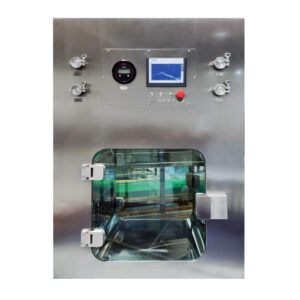
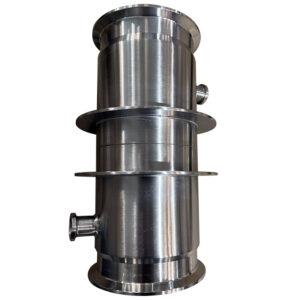
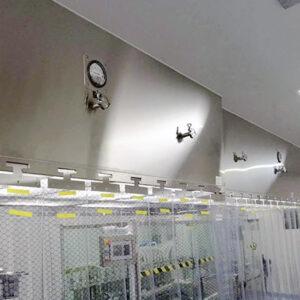
Le premier, et le plus important, est un orifice d’injection d’aérosol. Dans les boîtiers bien conçus, il s’agit d’un orifice de prélèvement en acier inoxydable (SUS304) d’un diamètre nominal d’environ φ10 mm — une dimension qui permet d’utiliser des raccords d’injection d’aérosol standard sans modification sur site. Il s’agit d’un détail technique propre au produit, et non d’une dimension imposée par toutes les normes, mais cela reflète la réalité pratique selon laquelle un orifice trop petit ou absent oblige les techniciens à improviser un accès, généralement en perçant les conduits ou en ouvrant temporairement le boîtier. Ces deux approches compromettent le confinement avant même que l’essai n’ait produit le moindre point de données.
La deuxième disposition est une rainure d’essai — un canal dédié dans le boîtier qui permet de tester l’étanchéité du joint entre le cadre du filtre et le boîtier, dans une étape distincte de l’analyse de la face du filtre. Cette distinction est importante car la fuite au niveau du joint est un mode de défaillance reconnu que l’indice d’efficacité du filtre ne peut détecter à lui seul. Un filtre certifié conforme à la performance H14 (99,9951 TP10T au niveau MPPS selon les conditions de la norme EN 1822) peut tout de même présenter une pénétration mesurable en aval en service si l’étanchéité périphérique n’est pas vérifiée de manière indépendante. En l’absence de rainure de contrôle, le test d’intégrité du joint nécessite un placement improvisé de la sonde ou est tout simplement omis, laissant ainsi sans solution le mode de défaillance le plus courant une fois le filtre installé.
Au-delà de l'injection d'aérosol et de la vérification des joints, des sections d'essai dédiées — souvent désignées par les sigles TSU (en amont) et TSD (en aval) dans la documentation de conception — intègrent des orifices d'injection d'aérosol et des raccords d'échantillonnage dans la structure même du boîtier. Cette configuration permet de tester les filtres in situ sans démonter aucun composant du système, éliminant ainsi le compromis entre confinement et accessibilité qui, sans cela, obligerait les équipes de validation à choisir entre l'obtention de données utiles et l'intégrité de la barrière.
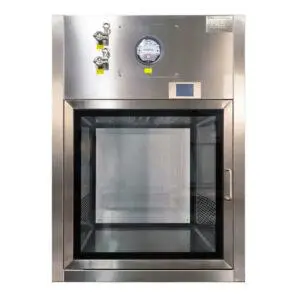
Enfin, une fenêtre d’inspection offre un moyen de contrôle préalable souvent sous-estimé, jusqu’à ce qu’il vienne à manquer. Vérifier la présence du sac, le bon positionnement du filtre, l’alignement du joint et l’état des fixations avant de lancer un test d’intégrité est une précaution simple qui permet d’éviter un problème plus grave : ouvrir un boîtier potentiellement endommagé pour inspecter un élément que la fenêtre aurait pu révéler sans aucun risque.
| Point d'accès | Fonction | Pourquoi c'est important |
|---|---|---|
| Orifice de prélèvement PAO (SUS304, φ10 mm) | Introduit un aérosol d'essai en amont du filtre | En l'absence de raccords standard, l'injection d'aérosol nécessite de percer le réseau de conduits ou d'ouvrir le boîtier, ce qui compromet le confinement. |
| Rille d'essai | Permet de tester séparément l'étanchéité du joint entre le filtre et le boîtier | Une fuite de dérivation au niveau du joint peut entraîner une défaillance de l'intégrité de l'installation, même lorsque le média filtrant est intact. |
| Sections d'essai dédiées (TSU/TSD) | Prévoir des orifices d'injection d'aérosols et des raccords de prélèvement permettant de réaliser des tests HEPA sur site sans démontage | Évite d'avoir à rompre le confinement pour vérifier l'intégrité |
| Fenêtre de visualisation | Vérification visuelle de la présence du sac, de l'état du filtre, de la bonne mise en place du joint et de l'alignement des pièces de fixation | Une inspection préalable au test permet de réduire le risque d'ouvrir un boîtier endommagé et de libérer des contaminants pendant la validation. |
Aucune de ces dispositions n'est automatiquement intégrée à tous les boîtiers BIBO disponibles sur le marché. Chacune doit être spécifiée. La conséquence pratique de l'omission de l'une d'entre elles n'est pas abstraite : elle se manifeste à un moment du projet où le matériel de test arrive et où l'accès requis par la procédure n'existe pas.
Test d'aérosol et trajectoires de balayage sans rompre le confinement
L'injection d'un aérosol d'essai et l'analyse de la face aval d'un filtre HEPA constituent, sur le plan conceptuel, des étapes simples. Les mettre en œuvre sans ouvrir le boîtier ni franchir la barrière de pression représente un défi technique que les méthodes d'analyse conventionnelles ont, par le passé, eu du mal à relever.
Les tests de balayage manuels traditionnels reposaient sur une tige d'actionnement qui traversait l'enveloppe sous pression pour atteindre la face du filtre. Cette tige permettait à la sonde de balayage de parcourir la surface du filtre alors que le système restait nominalement fermé, mais la pénétration elle-même créait une voie potentielle de fuite de contaminants — une fuite introduite par la méthode censée détecter les fuites. Pour les applications BIBO destinées à protéger contre les aérosols dangereux, il ne s'agit pas d'un compromis de conception acceptable.
Le système AstroScan M résout ce problème en déplaçant l’ensemble de l’actionneur entièrement à l’extérieur de l’enceinte sous pression. Aucune tige de pénétration n’étant nécessaire, le scanner peut parcourir la face du filtre sous un débit d’air de fonctionnement maximal sans qu’aucune partie du mécanisme ne franchisse la barrière de confinement. Concrètement, cette approche permet de collecter des données d’intégrité dans des conditions réelles d’exploitation, plutôt que dans un état de démontage partiel, et ce sans créer la voie de fuite que présentait l’ancienne configuration à tige de pénétration. Il s’agit là d’une mise en œuvre spécifique à un produit particulier, et non d’une description des pratiques générales du secteur, mais elle illustre clairement le principe d’ingénierie : la conception de la méthode d’essai doit respecter les mêmes normes de confinement que la conception de l’enceinte.
Une autre approche, qui ne repose absolument pas sur du matériel de balayage externe, consiste à utiliser une section d’essai dédiée (TSU/TSD). Lorsque les raccords d’injection d’aérosol et d’échantillonnage en aval sont intégrés au boîtier en usine, la vérification de l’intégrité sur site se résume à raccorder les instruments d’essai aux ports existants, plutôt qu’à déterminer comment introduire et récupérer l’aérosol à travers une barrière de pression. La norme ISO 29463-4:2011 fournit un cadre pertinent pour les principes des méthodes de balayage, mais ni celle-ci ni aucune autre norme ne prescrit une configuration spécifique des actionneurs : le choix de la manière de préserver le confinement pendant les essais reste une décision de conception, qui doit être prise avant la fabrication du boîtier.
Le critère déterminant pour choisir la solution la plus appropriée ne réside pas dans la préférence pour une méthode de test donnée, mais dans la géométrie du boîtier et les contraintes d'accessibilité du lieu d'installation. Un module BIBO installé dans un espace mécanique exigu, avec un accès en aval restreint, peut ne pas permettre l'intégration d'un équipement de balayage externe, quelle que soit la conception de l'actionneur. Dans ces cas-là, les sections TSU/TSD intégrées ne constituent pas une simple option de confort, mais une condition préalable indispensable à la réalisation de tout contrôle d'intégrité pertinent.
Efficacité des filtres par rapport aux preuves d'intégrité de l'installation
Les indices d'efficacité des filtres et les preuves d'intégrité après installation répondent à des questions différentes, et considérer l'un comme un substitut de l'autre constitue l'une des erreurs les plus courantes dans la planification de la validation des filtres HEPA.
L'indice d'efficacité d'un filtre — qu'il soit exprimé en H13, H14 ou ULPA U15 selon la classification EN 1822 — décrit les performances du média filtrant dans des conditions de laboratoire contrôlées. Il indique comment le filtre se comporte lorsqu'il est correctement monté, correctement étanchéifié et soumis à un aérosol normalisé à une vitesse normalisée. Elle ne décrit pas le comportement du filtre une fois qu’il a été installé dans un boîtier spécifique, comprimé contre un joint spécifique, exposé aux vibrations des systèmes de circulation d’air sur site et laissé en place pendant un cycle de remplacement du filtre. La preuve de l’intégrité du filtre une fois installé ne peut provenir que d’essais réalisés in situ dans des conditions de fonctionnement, et nécessite des dispositions d’accès aux essais dont l’indice de filtration ne dit rien.
C'est au niveau du joint d'étanchéité que cette distinction prend toute son importance dans la pratique. Un filtre H14 certifié pour une efficacité de 99,9951 TP10T à la taille de particule la plus pénétrante peut présenter un contournement mesurable au niveau du joint périphérique si la compression du joint est insuffisante ou mal répartie. Les mécanismes de serrage positif du filtre — conçus pour maintenir une compression constante du joint face aux vibrations induites par le flux d’air et aux différences de pression — contribuent à préserver l’intégrité de l’étanchéité tout au long de la durée de vie de l’installation, mais ils traitent un mode de défaillance différent de celui lié à la dégradation du média filtrant. Ces deux phénomènes sont réels ; aucun d’entre eux n’est pris en compte par le seul certificat du filtre.
Le tableau ci-dessous présente une synthèse comparative de ces trois approches fondées sur des données probantes : ce qu’elles évaluent, leurs limites et les dispositions en matière de conception des logements que chacune d’entre elles requiert.
| Approche | Ce qu'il évalue | Principales limites / Risques | Assistance requise pour la conception BIBO |
|---|---|---|---|
| Seule l'efficacité nominale du filtre | Capture des particules par les médias filtrants dans des conditions de laboratoire | Impossible de détecter un contournement du joint ou une dégradation du joint installé ; un filtre H14 peut tout de même échouer au test d'intégrité une fois installé. | Une rainure d'essai pour le contrôle d'étanchéité du joint et une fenêtre d'inspection pour le contrôle préalable à l'essai sont nécessaires pour compléter la certification. |
| Inspection manuelle traditionnelle à l'aide d'une tige de pénétration | Intégrité de la face du filtre et du boîtier en conditions d'installation | La tige de l'actionneur traverse l'enveloppe sous pression, créant ainsi une voie potentielle de fuite de contaminants qui compromet le confinement pendant l'essai | Non recommandé – cette méthode crée un chemin de fuite ; la conception du boîtier doit permettre d'éviter toute perforation |
| Contrôle non intrusif des fuites sur site (AstroScan M / TSU/TSD) | Intégrité maintenue à plein débit de fonctionnement sans rupture du confinement | Nécessite l'intégration préalable d'un actionneur externe ou de sections de test intégrées ; non disponible sur les boîtiers ne disposant pas de ces fonctionnalités | Le montage d'un actionneur externe ou de sections d'essai dédiées (TSU/TSD) doit être prévu dès la conception ; des mécanismes de serrage positifs garantissent le maintien de la compression du joint dans le temps. |
L'implication pour les achats est claire : spécifier un filtre de classe H14 sans préciser également les caractéristiques du boîtier nécessaires pour permettre la réalisation de tests d'intégrité une fois le filtre installé n'est pas un choix prudent, mais un choix incomplet. Le certificat du filtre atteste de la qualité du média filtrant. Le test d'étanchéité une fois le filtre installé, réalisé via une rainure d'essai pour la vérification du joint et via un accès de scan conforme pour la face du filtre, atteste des performances du filtre une fois installé. Les cadres réglementaires tels que la norme ISO 14644-3:2019 traitent précisément de la vérification in situ, car ces deux types de preuves ne sont pas interchangeables.
Retards de validation dus à l'absence de ports de test
La plupart des retards de validation BIBO attribués à des conflits d'horaires ou à la disponibilité des sous-traitants s'avèrent, à y regarder de plus près, être des problèmes d'accès. La procédure de test existe. L'équipement de test est disponible. La procédure ne peut tout simplement pas être exécutée car le boîtier ne dispose pas des connexions physiques nécessaires.
En l'absence de fenêtre d'inspection, l'étape de contrôle préalable au test — consistant à vérifier que le sac est correctement fixé, que le filtre est bien en place et que le joint ne présente aucune déformation visible — nécessite l'ouverture du boîtier. Pour un système BIBO protégeant contre des aérosols dangereux ou puissants, l’ouverture du boîtier n’est pas une opération anodine. Elle comporte soit un risque de libération de contamination, soit la nécessité de porter un équipement de protection individuelle complet et de suivre une procédure contrôlée qui n’était pas prévue dans le calendrier de validation. Dans les deux cas, cela prend du temps et entraîne des retouches qui n’avaient pas été prises en compte dans le calendrier de validation.
L'absence d'orifices d'injection d'aérosol pose un problème structurel plus complexe. Si aucun orifice de test n'est intégré au boîtier ou à la tuyauterie en amont, l'introduction de PAO ou d'un aérosol de test équivalent nécessite une modification sur site : perçage d'un orifice, fabrication d'un raccord temporaire ou repositionnement de la tuyauterie déjà installée et équilibrée. Chacune de ces interventions comporte ses propres risques : un orifice percé sur site qui n’est pas correctement étanchéifié après les essais devient une source de fuite permanente ; le repositionnement des conduits perturbe les étapes de mise en service qui précèdent la validation dans le calendrier du projet. Aucune de ces options n’est rapide, et toutes deux peuvent être évitées si l’emplacement des orifices d’essai est pris en compte lors de l’examen du cahier des charges du boîtier, plutôt qu’une fois la fabrication des conduits terminée.
Le problème structurel lié au calendrier réside dans le fait que les décisions concernant les ports de test sont souvent reportées, car elles semblent relever de la phase de validation du projet plutôt que de la phase de conception. Or, ce n’est pas le cas. Au moment où une équipe de validation examine une conception pour vérifier qu’elle est prête pour les tests, le tracé des conduits est généralement figé, le boîtier est en cours de commande ou déjà livré, et les possibilités d’ajouter des points d’accès se limitent à des modifications qui entraînent des surcoûts et des risques pour le calendrier. Considérer le placement des ports comme une contrainte de conception — confirmée lors de la phase de revue de l’agencement, parallèlement au tracé des conduits et aux dégagements d’accès — permet d’éviter ce type de retard qui, sans cela, survient immanquablement. Le Guide de remplacement du filtre HEPA BIBO aborde les aspects liés à la planification de l'accès dans le cadre des procédures de remplacement, qui dépendent toutes de la même conception en amont.
Rapports de réception après les essais d'étanchéité des filtres HEPA
Les procès-verbaux de réception des systèmes HEPA BIBO ont une fonction qui est souvent sous-estimée lors de la mise en œuvre d'un projet : ils doivent permettre de distinguer la qualité de fabrication des performances d'installation. Un procès-verbal qui confond ces deux aspects ne peut étayer aucune conclusion d'audit concernant l'un ou l'autre.
Les essais de référence en usine — notamment la vérification de l’étanchéité à l’air à une pression égale ou supérieure à 2,5 kPa (chiffre issu des spécifications du produit plutôt qu’un seuil réglementaire universellement imposé), la détection des fuites des filtres HEPA et l’évaluation de la sécurité opérationnelle avant expédition — permettent de déterminer l’état du boîtier tel qu’il a été fabriqué. Il s’agit du point de référence par rapport auquel les performances une fois installé peuvent être comparées. Lorsqu'un test sur site révèle par la suite une pénétration ou une anomalie d'étanchéité, les registres d'usine permettent de déterminer si le problème existait au moment de la fabrication ou s'il est apparu pendant le transport, l'installation ou la mise en service initiale. Sans cette base de référence, le mode de défaillance reste ambigu et les mesures correctives sont plus difficiles à cibler.
Les essais in situ réalisés à l'aide de sections d'essai dédiées (TSU/TSD) fournissent la preuve documentaire que la barrière de filtration fonctionne comme prévu dans les conditions réelles du site : débit d'air, pression du système, vibrations et interface spécifique entre le filtre et son boîtier telle qu'elle est installée. Il s’agit du dossier que les auditeurs réglementaires s’attendent à voir lors de l’examen des installations BIBO dans les environnements de fabrication pharmaceutique ou de bioconfinement ; ce dossier doit refléter les essais réalisés sur le site d’installation dans des conditions d’exploitation représentatives, et non pas être déduit uniquement à partir des données d’essais en usine. La norme ISO 14644-3:2019 fournit le cadre de référence pour la documentation de vérification in situ dans le contexte des salles blanches, établissant ainsi la norme de pratique à l’aune de laquelle ces dossiers sont évalués.
La revérification post-événement vient compléter la structure du dossier en trois étapes. Après tout événement survenu dans l’installation susceptible d’affecter l’intégrité du filtre — une perturbation inattendue du débit d’air, une variation de pression, un remplacement imprévu du filtre effectué dans des conditions non standard —, le dossier d’acceptation doit être mis à jour afin de démontrer que la barrière reste intacte. Les systèmes conçus pour permettre une revérification rapide sans compromettre le confinement, tels que ceux utilisant un balayage par actionneur externe ou des connexions TSU/TSD intégrées, réduisent le délai entre l’événement et la mise à disposition d’une documentation de conformité à jour.
| Phase de test | Indicateurs clés / Critères | Objectif des registres d'acceptation |
|---|---|---|
| Tests de référence en usine | Étanchéité à l'air à ≥ 2,5 kPa, détection des fuites HEPA, évaluation de la sécurité de fonctionnement avant expédition | Établit des données de référence en matière de performances afin de les comparer aux résultats obtenus sur site, en distinguant les problèmes liés à la qualité de fabrication de ceux liés à l'installation |
| Contrôle d'étanchéité in situ (TSU/TSD) | Vérification sur site de l'efficacité et de l'intégrité des filtres HEPA à l'aide de sections d'essai dédiées, sans démontage | Fournit des preuves documentées attestant que la barrière de filtration fonctionne comme prévu dans les conditions d'installation ; élément essentiel pour les audits réglementaires |
| Nouvelle vérification a posteriori (AstroScan M) | Nouveau test rapide d'intégrité après des incidents survenus dans l'installation (par exemple, perturbation du flux d'air, remplacement d'un filtre) sans compromettre le confinement | Réduit au minimum les incertitudes et les temps d'arrêt ; permet d'établir des procès-verbaux de réception reproductibles et démontre le maintien de la conformité après les incidents |
Les données générées à chaque étape ne sont pas interchangeables. Les données de référence d'usine étayent une allégation relative à la qualité de fabrication. Les données d'essais in situ étayent une allégation relative aux performances une fois l'installation mise en service. Les données post-événementielles étayent une allégation de conformité continue. Ces trois types de données doivent coexister et être traçables jusqu'à la même unité physique pour constituer un dossier d'acceptation défendable tout au long de la durée de vie opérationnelle de l'installation. Pour plus d'informations sur les pratiques de vérification continue des filtres dans des environnements contrôlés, le Guide d'essai et d'entretien des ventilateurs-filtres pour salles blanches traite des aspects liés à la documentation concernant les systèmes HEPA en service.
La leçon la plus importante à retenir de tout audit des tests d'intégrité BIBO est que la préparation aux tests relève de la conception et non d'une activité de validation. Les caractéristiques du boîtier — orifices d'injection d'aérosol, rainures d'essai, sections d'essai dédiées, hublots — sont soit présentes à l'arrivée de l'équipe de validation, soit absentes ; leur installation a posteriori, une fois le réseau de conduits achevé, s'avère coûteuse, chronophage et parfois techniquement irréalisable en raison des contraintes d'espace.
Avant que le marché ne soit conclu, l'examen du cahier des charges pour tout Boîtier « Bag In Bag Out » doit confirmer trois éléments : que l’injection d’aérosol en amont peut être réalisée via un orifice intégré sans percer le réseau de conduits ; que l’étanchéité du joint peut être testée indépendamment du balayage de la face du filtre ; et que le parcours de balayage mis en place — qu’il s’agisse d’un dispositif à actionneur externe ou de sections TSU/TSD intégrées — préserve le confinement tout au long de la procédure. Un boîtier qui ne répond pas « oui » à ces trois critères n’est pas encore prêt pour les essais, et le moment opportun pour y remédier se situe au stade de la spécification, et non lors de la réunion de lancement de la validation.
Questions fréquemment posées
Q : Que faire si le boîtier BIBO a déjà été installé et que le tracé des conduits est définitif ? Existe-t-il un moyen conforme de rajouter a posteriori un point d'injection d'aérosol ?
R : La mise à niveau est possible, mais elle entraîne des coûts et des risques importants, et les options se réduisent considérablement une fois que le réseau de conduits a été équilibré et mis en service. Le perçage sur site d’un orifice dans un boîtier ou une section de conduit déjà installée est techniquement faisable, mais un orifice qui n’est pas conçu en usine selon la spécification φ10 mm peut ne pas accepter les raccords d’injection standard sans modification, et toute perforation qui n’est pas correctement étanchée après les essais crée une voie de dérivation permanente. Si le boîtier lui-même est encore accessible, certains fabricants peuvent fournir des ensembles d’orifices de mise à niveau, mais l’installation nécessite de percer une paroi sous pression ou potentiellement contaminée. La méthode la moins perturbatrice — lorsque la géométrie le permet — consiste à intégrer le test d’aérosol via une section de conduit adjacente à l’aide d’un raccord étanche temporaire, à condition que le point d’injection soit véritablement en amont de la face du filtre et que la concentration en aérosol atteignant le filtre réponde aux exigences du test. Aucune de ces options n’est équivalente à un orifice spécifié en usine, et aucune n’élimine l’étape de revérification qui confirme que le raccord de mise à niveau est lui-même étanche avant que les données d’intégrité ne puissent être considérées comme fiables.
Q : Après avoir réussi un test de fuite HEPA BIBO sur site, que doit faire l'équipe de validation avant de clôturer le procès-verbal de réception ?
R : L’étape suivante consiste à comparer les résultats obtenus sur site avec les données de référence d’usine afin de confirmer que les valeurs de pénétration mesurées se situent bien dans la plage attendue pour une unité correctement installée, et pas seulement en dessous du seuil de réussite/échec pris isolément. Si le balayage sur site détecte une pénétration localisée que le test en usine n’avait pas relevée, cet écart nécessite une enquête documentée — les dommages liés au transport, la déformation du joint lors de l’installation et un serrage incorrect du filtre en sont les causes les plus courantes. Une fois les données d’essai réconciliées, le procès-verbal de réception doit mentionner la méthode d’essai spécifique utilisée, la concentration de l’aérosol d’essai en amont, la couverture du tracé de balayage et l’état d’étalonnage des instruments — et pas seulement le résultat « conforme ». Un procès-verbal qui se contente d’indiquer un verdict de conformité sans documenter les conditions dans lesquelles il a été obtenu ne saurait étayer une conclusion d’audit ultérieure si la méthode d’essai ou les modalités d’accès sont remises en cause.
Q : Les recommandations concernant les ports de test intégrés s'appliquent-elles également aux installations BIBO présentant un risque moindre, ou concernent-elles spécifiquement les environnements pharmaceutiques et de confinement biologique ?
R : Le compromis entre confinement et accessibilité existe dans toute installation BIBO où l’ouverture du boîtier entraîne des conséquences, mais le seuil à partir duquel l’absence d’un orifice de test pose un véritable problème de conformité varie selon l’application. Dans les environnements de fabrication pharmaceutique et de bioconfinement, les tests d’intégrité in situ conformément à la norme ISO 14644-3:2019 constituent une exigence vérifiable, et l’absence d’un circuit de test conforme constitue un obstacle direct à la validation finale. Dans les installations industrielles de classe inférieure, où le niveau de risque est moindre et où la fréquence des essais in situ est réduite, l’absence de ports intégrés en usine constitue davantage un inconvénient pratique qu’un manquement réglementaire — un accès improvisé peut être acceptable si le profil de risque le permet. La condition déterminante est de savoir si un organisme de réglementation ou un système qualité interne exige des preuves documentées de l’intégrité in situ à des intervalles définis. Si tel est le cas, l’accès aux orifices de test constitue une exigence de conception, quel que soit le secteur d’activité. Si des tests in situ périodiques ne sont pas requis, l’urgence de disposer d’orifices spécifiés en usine est moindre, bien que le risque de dérivation au niveau des joints d’étanchéité subsiste.
Q : Le balayage à l'aide d'un actionneur externe — tel que la méthode sans tige décrite pour l'AstroScan M — est-il nettement plus coûteux que les essais de balayage classiques par pénétration de tige, et cela a-t-il une incidence sur le choix de la méthode à prescrire ?
R : Les systèmes à actionneur externe entraînent un coût d’investissement plus élevé que les équipements de balayage conventionnels à tige et sonde, et cette différence de coût est suffisamment importante pour apparaître dans les analyses budgétaires des projets. Cependant, la comparaison pertinente ne porte pas uniquement sur le prix d’achat de l’équipement : il s’agit du coût total d’une opération de test, incluant la main-d’œuvre, les temps d’arrêt, la préparation du confinement et la prime de risque liée à la création d’une pénétration temporaire dans une zone d’aérosols dangereux. Pour les installations dont la classification de danger impose le port d’un équipement de protection individuelle complet en cas de rupture de l’enceinte de confinement, ou pour lesquelles une défaillance de l’enceinte de confinement pendant les essais entraînerait une décontamination et une requalification, les coûts liés à la main-d’œuvre et aux temps d’arrêt de l’analyse conventionnelle dépassent systématiquement la différence de coût de l’équipement sur un petit nombre de cycles d’essai. Pour les applications BIBO à faible risque nécessitant des essais peu fréquents, l’analyse conventionnelle peut rester le choix le plus rentable. Le critère de décision réside dans la question de savoir si le profil de risque de l’installation fait de la compromission du confinement due à la pénétration de la tige un événement de routine acceptable ou un risque récurrent inacceptable.
Q : Les résultats des essais d'étanchéité à l'air réalisés en usine à 2,5 kPa peuvent-ils être présentés à un auditeur des autorités de contrôle comme preuve de l'intégrité de l'installation, ou un essai in situ distinct est-il toujours nécessaire ?
R : Les rapports d'étanchéité établis en usine ne peuvent se substituer aux preuves d'intégrité in situ dans les environnements réglementés — ils répondent à une question différente. Les essais en usine confirment que le boîtier, tel qu’il a été fabriqué, est structurellement solide et exempt de fuites importantes à une pression définie ; il s’agit là d’une garantie de qualité de fabrication. Ils ne confirment pas que le joint d’étanchéité entre le filtre et le boîtier ait atteint une compression adéquate après l’installation, que le boîtier ait conservé son étanchéité à l’air pendant le transport et la manutention lors de l’installation, ni que le système fonctionne correctement dans les conditions de débit d’air et de pression propres au site concerné. Les cadres réglementaires, notamment la norme ISO 14644-3:2019, exigent une vérification in situ précisément parce que les performances en situation réelle ne peuvent être déduites des données d’usine. Un auditeur chargé d’examiner une installation BIBO dans un environnement pharmaceutique ou de bioconfinement s’attendra à disposer des deux types de données — les données de référence d’usine comme point de repère et les données d’essais in situ comme preuve de performance — et considérera l’absence de l’une ou de l’autre comme une lacune dans le dossier de qualification.