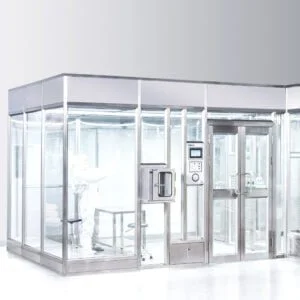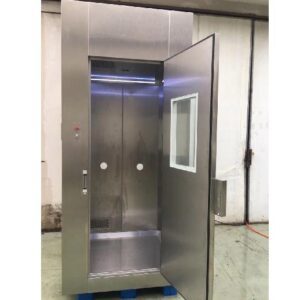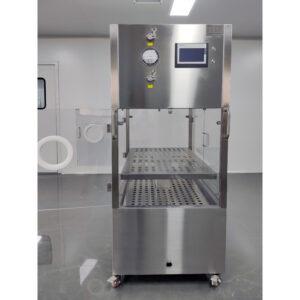
La mise en service d’une cabine sans avoir préalablement défini la classification des risques liés aux matières est l’une des erreurs de séquencement les plus coûteuses dans les projets d’installations pharmaceutiques. Les équipes qui reportent la détermination de l’OEL ou de l’OEB jusqu’après la présélection des fournisseurs découvrent souvent, lors de la qualification, que la cabine répond bien à la classe de salle blanche spécifiée, mais n’offre aucun confinement vérifié pour le principe actif manipulé — une lacune qui oblige généralement à une mise à niveau du système de confinement, à relancer la validation du nettoyage et à retarder la mise en service de plusieurs mois. Le problème ne réside généralement pas dans l’équipement lui-même, mais dans le fait que l’objectif de protection n’a jamais été clairement défini avant le début des discussions relatives à l’approvisionnement. Ce qui suit est structuré de manière à aider les responsables de la biosécurité, les équipes d’assurance qualité et les responsables techniques à identifier les seuils et les décisions qui doivent être confirmés avant la sélection d’un fournisseur de cabines, afin que les critères d’évaluation correspondent au risque d’exposition réel plutôt qu’à une spécification générique de salle blanche.
Séquence de tâches relatives à la manutention des poudres avant la sélection du fournisseur de cabines
Les risques liés aux matériaux, la VLE et la plage OEB doivent être considérés comme des paramètres fixes avant la sélection des fournisseurs, et non comme des vérifications à effectuer après celle-ci. Cet ordre de priorité est important car les spécifications de la cabine découlent du risque, et toute spécification rédigée avant la définition du risque sera optimisée pour des critères autres que le confinement — généralement la classe de salle blanche, l'encombrement ou le prix.
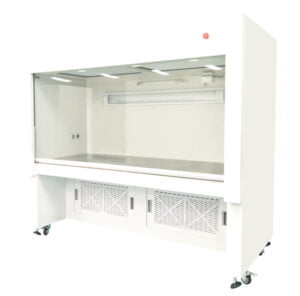
Une source concrète de confusion réside dans le fait que les termes « cabine de pesée », « cabine de distribution », « cabine d’échantillonnage », « cabine à flux descendant » et « cabine de confinement des poussières » sont utilisés de manière interchangeable dans les catalogues des fabricants, les cahiers des charges des installations et les documents d’appel d’offres. Ce chevauchement terminologique ne reflète pas une classification technique ou réglementaire, mais relève plutôt d’un étiquetage commercial. Deux cabines portant des noms différents peuvent présenter des configurations de flux d’air identiques, tandis que deux cabines portant le même nom peuvent offrir des performances de confinement totalement différentes. Clarifier la terminologie lors des discussions avec les fournisseurs permet d’éviter les malentendus, mais cela ne remplace pas la définition précise de ce contre quoi la cabine est censée assurer une protection.
La séquence permettant d'éviter les problèmes en aval se déroule dans l'ordre suivant : confirmer le danger lié aux matières et la cible OEB, définir l'objectif de protection pour chaque tâche (pesage, échantillonnage, distribution), puis rédiger le cahier des charges et contacter les fournisseurs. Inverser l'ordre de l'une de ces étapes revient généralement à transférer la tâche de définition des dangers au fournisseur, où elle est alors traitée selon une logique commerciale plutôt que selon une logique de maîtrise des risques.
Cibles de protection pour les postes de pesage, d'échantillonnage et de distribution
Une cabine installée dans une salle blanche de classe ISO 5 peut assurer un flux descendant unidirectionnel et respecter les exigences en matière de nombre de particules, tout en ne parvenant pas à contenir un principe actif puissant dans la zone de respiration de l'opérateur. La classification ISO des salles blanches et le confinement de l'opérateur ne constituent pas le même objectif de conception, et le fait de considérer la classe de la salle blanche comme un indicateur de la vérification du confinement représente un risque d'échec courant qui apparaît lors de la qualification ou, ce qui est plus problématique encore, lors d'une inspection réglementaire.
Il existe trois cibles de protection distinctes : l’opérateur, le produit et l’environnement environnant. Chacune nécessite des preuves de vérification spécifiques de la part du fournisseur, et chacune peut présenter une défaillance indépendamment des autres. Une cabine qui protège le produit contre la contamination croisée grâce à un flux descendant unidirectionnel de haute qualité peut tout de même permettre la migration d’aérosols vers l’opérateur si le circuit de retour d’air est compromis par un conteneur surdimensionné ou une étape de transfert à ciel ouvert. Une cabine qui retient la poudre dans la zone de travail peut évacuer cet air sans filtration HEPA secondaire, créant ainsi un risque de rejet dans l’environnement de substances puissantes ou sensibilisantes. Il ne s’agit pas là de cas limites théoriques ; ce sont ces distinctions qui déterminent les preuves de conformité que le fournisseur doit fournir avant que la cabine ne soit acceptée.
| Cible de protection | Description | Ce qu'il faut vérifier |
|---|---|---|
| Protection de l'opérateur | Protéger les opérateurs contre l'inhalation de poussières en suspension dans l'air | Résultats des essais de confinement de poudre de substitution, et pas seulement la classe de salle blanche (par exemple, ISO 5) |
| Protection des produits | Protéger les produits contre la contamination croisée | Performances du flux descendant unidirectionnel pendant la pesée, le prélèvement d'échantillons et le transfert de matières |
| Protection de l'environnement | Prévenir la pollution de la zone environnante | Que l'air soit évacué via un système de filtration HEPA ou recyclé avec un système de filtration validé |
Considérer les trois objectifs de protection comme une seule question de type « réussite/échec » — la cabine fonctionne-t-elle ? — revient à regrouper des décisions qui doivent rester distinctes. La démarche d’approvisionnement la plus justifiable consiste à définir une exigence de vérification explicite pour chaque objectif de protection avant même d’entamer la comparaison des fournisseurs.
Choix concernant le flux descendant, l'air de retour et les parcours de nettoyage
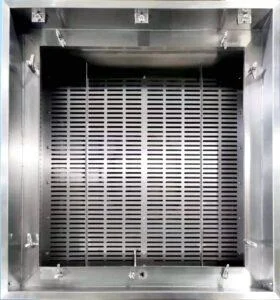
La plupart des cabines de pesée pharmaceutiques fonctionnent selon un principe de flux descendant unidirectionnel à pression négative : l’air est aspiré vers le bas à travers un système de filtration HEPA situé en hauteur, passe devant l’opérateur et les récipients ouverts, puis est renvoyé par des grilles situées au niveau du sol avant d’être recyclé ou évacué. Il s’agit là d’une approche de conception courante, mais ce n’est pas la seule configuration de confinement acceptable ; l’adéquation d’une configuration spécifique dépend des matières manipulées et de l’interface avec le système CVC de l’installation.
Le choix entre un système de recirculation et un système d’évacuation en un seul passage est le point où le concept de circulation d’air influe le plus directement à la fois sur la robustesse du confinement et sur l’envergure de l’installation. Une cabine à recirculation conserve l’air conditionné à l’intérieur de l’enveloppe de l’installation et réduit la charge du système CVC ; c’est souvent la solution par défaut la plus pratique dans les installations où le contrôle de la température et de l’humidité est essentiel et où les matières manipulées ne présentent pas de risques liés aux vapeurs ou à la sensibilisation qui justifieraient un système d’évacuation. Un système d’évacuation à passage unique élimine entièrement l’air contaminé de l’installation, améliorant ainsi la robustesse du confinement pour les principes actifs puissants ou sensibilisants, mais il nécessite un conduit d’évacuation dédié, une filtration HEPA au point d’évacuation et une capacité CVC suffisante pour compenser le volume extrait. Aucune de ces options n’est universellement valable ; le choix doit découler de l’évaluation des risques et du cahier des charges de conception du système CVC, et non de la configuration par défaut proposée dans le catalogue des cabines.
Le choix du parcours de nettoyage est une décision qu’il est facile de reporter et difficile de corriger une fois l’installation terminée. La géométrie interne de la cabine — rayons des angles, nombre de fixations apparentes, accessibilité des grilles et parcours de remplacement des filtres — détermine si le nettoyage peut être validé pour les matériaux manipulés et si l’entretien des filtres peut être effectué sans créer de risque de contamination secondaire. Pour les configurations de cabines partagées utilisées dans le cadre de plusieurs campagnes de production, le périmètre de la validation du nettoyage s’étend proportionnellement au nombre de matières transitant par la même zone à flux descendant. Une cabine dédiée à une tâche spécifique limite la validation du nettoyage à un seul ensemble de matières, mais augmente l’encombrement de l’équipement. Le compromis est réel, et aucune des deux configurations n’évite le travail de validation ; l’option de la cabine partagée concentre ce travail sur les changements de production et les limites de résidus plutôt que de l’éliminer.
Risques liés au flux de travail découlant de configurations génériques des cabines
Le fait de se fier à des allégations génériques de confinement sans effectuer de tests spécifiques à la configuration crée une lacune en matière d’exposition qui peut ne devenir visible qu’au moment d’un audit ou d’un incident. Un chiffre de confinement issu du catalogue d’un fabricant représente le résultat d’un test réalisé dans les conditions dans lesquelles celui-ci a été effectué ; or, ces conditions peuvent ne pas refléter les conteneurs, les quantités de poudre, les mouvements de l’opérateur ou les méthodes de transfert utilisés dans le processus réel. Lorsque l’une de ces variables diffère des conditions de test, le chiffre publié cesse de décrire le profil d’exposition réel dans la zone de respiration de l’opérateur.
Le risque en aval ne se limite pas à l’exposition de l’opérateur. Un dossier de sécurité fondé sur des allégations génériques de confinement qui s’avèrent par la suite refléter une configuration d’exploitation différente est difficile à défendre devant un inspecteur réglementaire ou lors d’un examen d’hygiène du travail. L’inadéquation entre les spécifications du catalogue et les conditions d’utilisation réelles n’apparaît souvent que lorsqu’un résultat de surveillance environnementale, un constat de surveillance biologique ou un test de mise à l’épreuve du confinement réalisé lors de la qualification produit un résultat incompatible avec les performances publiées par le fournisseur. À ce stade, la cabine a déjà été installée, l’interface CVC a été mise en place et la validation du nettoyage a été lancée.
| Conditions d'essai | Pourquoi c'est important | Ce qu'il faut confirmer |
|---|---|---|
| Type de conteneur | La production de poussière varie en fonction de la forme et de l'ouverture du récipient | Le test utilise exactement les mêmes types de conteneurs que ceux utilisés dans les opérations courantes |
| Quantité de poudre | A une incidence sur la concentration dans l'air et le risque d'exposition | Le test utilise des quantités représentatives de poudre, et non des quantités minimales |
| Mouvements de l'opérateur | Les mouvements des bras et du corps perturbent le flux d'air unidirectionnel | Le test comprend des mouvements réalistes de la main et du bras pendant la pesée et le transfert |
| Méthode de transfert | Le fait de prélever, de verser ou de renverser des produits génère des profils de poussière différents | Le test reproduit la technique de transfert réellement utilisée en production |
| Configuration du stand | Les portes, les cloisons partielles et l'emplacement des entrées et sorties modifient le flux d'air | Le test est réalisé sur le modèle et la configuration spécifiques de la cabine que vous comptez acheter |
Concrètement, cela signifie que les essais indépendants de confinement de la poudre, réalisés dans des conditions représentatives de l'utilisation de la cabine, doivent être considérés comme une exigence de vérification dès la phase d'acquisition, et non comme une étape de confirmation facultative après l'installation.
Validation du fournisseur de stands une fois les contrôles de sécurité et de réception effectués
Le cahier des charges utilisateur (URS) est le document de référence qui permet de comparer valablement les fournisseurs. Contacter des fournisseurs avant la rédaction de l’URS revient à évaluer leurs propositions au regard de critères qui n’ont pas encore été fixés, ce qui revient à laisser la gamme de produits du fournisseur dicter les spécifications. Pour une cabine destinée à la manutention de matériaux présentant des classifications OEB bien définies et des objectifs explicites en matière de protection des opérateurs, ce transfert constitue une faille dans le contrôle des risques, et pas seulement une inefficacité en matière d’approvisionnement.
Un cahier des charges fonctionnels (URS) bien structuré pour une cabine de pesage, d’échantillonnage ou de dosage couvre les dimensions internes, les risques liés aux matières et les valeurs cibles OEB/OEL, la configuration du flux d’air, les spécifications de filtration et la classe HEPA, les exigences en matière de surveillance et d’alarmes, les matériaux de construction et la finition des surfaces, ainsi que l’étendue de la documentation de qualification attendue à la livraison. Il convient de préciser explicitement l’élément relatif à la documentation de qualification. L’annexe 15 du volume 4 d’EudraLex définit les procédures IQ, OQ et PQ comme une séquence structurée assortie de critères d’acceptation définis et de preuves documentées ; lorsque des demandes d’autorisation réglementaires sont prévues, l’alignement du dossier de documentation du fournisseur sur ce cadre avant la passation de commande permet d’éviter les retouches pendant la phase de qualification. Demander la portée de la documentation dès la phase de devis plutôt que de soulever la question lors de la réception en usine constitue l’un des moyens les moins contraignants de réduire les retards de qualification.
| URS Element | Éléments à préciser | Pourquoi c'est important |
|---|---|---|
| Dimensions intérieures | Dimensions intérieures requises | Garantit que le stand s'adapte à la configuration des lieux et respecte les principes d'ergonomie pour les opérateurs |
| Risque lié aux substances / OEB / Valeur cible de l'OEL | Plages OEL et OEB pour les matières manipulées | Définit l'exigence de performance en matière de confinement |
| Configuration du flux d'air | Circulation unidirectionnelle vers le bas et recirculation vs. évacuation en un seul passage | Détermine comment l'opérateur, le produit et l'environnement sont protégés |
| Spécifications de filtration | Classe de filtre HEPA et perte de charge admissible | Confirme que l'efficacité du filtre répond aux exigences des salles blanches et des zones de confinement |
| Niveau HEPA | par exemple, H13 ou H14 | Une qualité supérieure améliore l'élimination des particules, mais a une incidence sur la consommation d'énergie et le dimensionnement du ventilateur |
| Exigences en matière de surveillance et d'alarme | Débits d'air, pressions différentielles et seuils d'alarme des filtres | Garantit la conformité aux BPF et signale les défaillances du système de confinement |
| Matériaux de construction | Nuance d'acier inoxydable et finition de surface | Influence la facilité de nettoyage, la résistance aux produits chimiques et le dégagement de particules |
| Périmètre de la documentation relative à la qualification | Protocoles et rapports IQ, OQ et PQ | Prend en charge les démarches réglementaires et la validation sur site |
| Attentes en matière de service après-vente | Garantie, maintenance et délais d'intervention | Réduit les temps d'arrêt et garantit une efficacité de confinement à long terme |
| Essai de confinement indépendant | Essai avec une poudre de substitution pour la conception spécifique de la cabine | Vérifie que la protection des opérateurs dans des conditions réelles dépasse les affirmations génériques des fabricants |
Les résultats d’essais indépendants de confinement des poussières, réalisés sur le modèle spécifique de cabine — et non issus d’un modèle différent ou d’une configuration d’exploitation différente —, doivent figurer en tant que livrable distinct dans la comparaison des fournisseurs. Pour les cabines destinées à être utilisées avec des matériaux relevant des classes OEB4 ou supérieures, ou lorsque l’objectif de protection de l’opérateur est défini par une VLE plutôt que par une classe de salle blanche, accepter des déclarations génériques de confinement à la place de données d’essai spécifiques à la configuration prive l’argumentaire de sécurité de l’opérateur de tout fondement quantifié. Demander ces résultats avant l’attribution du marché et s’assurer que les conditions d’essai reflètent le scénario d’exploitation prévu ne constitue pas une charge supplémentaire en matière de diligence raisonnable ; c’est le moment où le cahier des charges est vérifié plutôt que supposé.
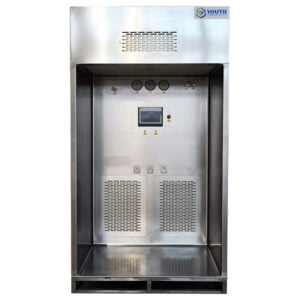
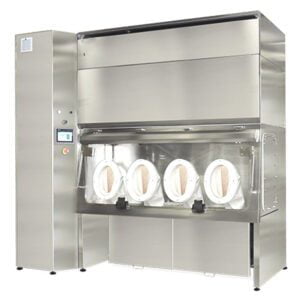
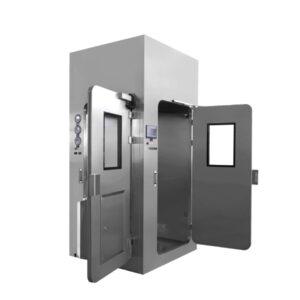
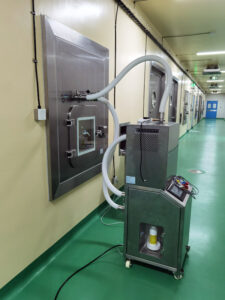
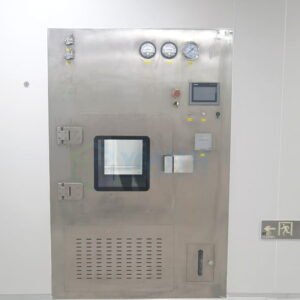
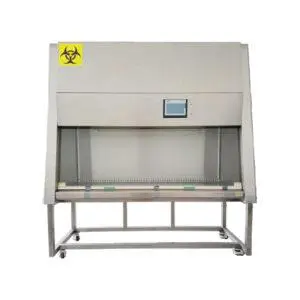
Pour obtenir un aperçu détaillé des différences de configuration des cabines de distribution et d'échantillonnage selon les différents scénarios de manipulation des API, consultez la comparaison présentée dans Comptoir de délivrance de médicaments vs comptoir d'échantillonnage couvre les décisions de configuration prises par le contexte de confinement OEB. Le filtre « Jeunes » Cabine de distribution, cabine d'échantillonnage et cabine de pesage La gamme de produits sert de référence pour les discussions relatives aux spécifications, notamment en ce qui concerne la configuration du débit d'air et les options de documentation.
Le résultat le plus utile de cette série d'évaluations est un cahier des charges de cabine qui associe chaque cible de protection à une méthode de vérification précise avant même qu'un fournisseur ne reçoive une demande de devis. Une fois que la bande OEB est définie, que le concept de circulation d'air est choisi, que la décision relative à la recirculation est prise et que le parcours de nettoyage est évalué, la comparaison entre fournisseurs se fait alors sur la base de critères fixes, plutôt que sous la forme d'une négociation visant à déterminer quels critères s'appliquent.
Ce qui reste généralement imprécis au moment de la sélection du fournisseur, ce sont les conditions d’essai de confinement — plus précisément, la question de savoir si les données publiées par le fournisseur reflètent les types de conteneurs, les quantités de poudre et les mouvements de l’opérateur correspondant au processus prévu. La vérification des bases d’essai avant l’attribution du marché, et la prise en compte de cette vérification dans les critères d’acceptation du FAT, constituent le point de contrôle qui empêche que les performances indiquées dans le catalogue ne soient considérées comme des performances validées une fois la cabine mise en service.
Questions fréquemment posées
Q : Si nous utilisons uniquement des excipients non dangereux, devons-nous tout de même définir une bande OEB et demander au fournisseur de réaliser des essais de confinement ?
R : Non. Lorsque la matière ne présente aucun risque d’inhalation et n’est pas classée comme puissante, les exigences de conception de la cabine ne portent plus sur le confinement de l’opérateur, mais sur la protection du produit et la maîtrise de la contamination croisée. Vous pouvez alors définir la classe de salle blanche requise et la qualité du flux descendant sans avoir à procéder à une vérification du confinement basée sur l’OEB. Consignez l’évaluation des risques afin que les motifs justifiant l’exclusion des essais de confinement puissent être retracés lors d’un audit.
Q : Que faut-il faire dès que nous avons sélectionné un fournisseur de stands pour nous assurer que le matériel répondra à nos objectifs de confinement ?
R : Mettez en place un essai de réception en usine qui reproduise les conditions d’exploitation prévues, en utilisant une poudre de substitution avec des conteneurs, des quantités de poudre et des gestes de l’opérateur représentatifs. La vérification de la configuration spécifique par rapport aux objectifs de confinement définis dans le cahier des charges (URS) dans les locaux du fournisseur permet de détecter les écarts de performance avant l’expédition, évitant ainsi des mesures correctives coûteuses lors de la qualification du site.
Q : Comment définir les spécifications d'une cabine de pesée partagée qui sera utilisée pour plusieurs principes actifs (API) relevant de différentes classes OEB, y compris des composés puissants ?
R : Les spécifications doivent être établies en fonction du matériau le plus exigeant qui sera manipulé. La configuration du flux d’air, la filtration HEPA et les performances de confinement doivent satisfaire à la classe OEB la plus stricte, et la validation du nettoyage doit tenir compte des limites de résidus pour tous les matériaux. Les données d’essais de confinement fournies par le fournisseur doivent refléter les conditions d’exploitation les plus difficiles, et non une moyenne ou le meilleur scénario possible.
Q : Dans le cas d'une poudre OEB3, dans quelles conditions peut-on utiliser une cabine à recirculation plutôt qu'un système d'évacuation à passage unique ?
R : La recirculation est généralement acceptable pour la classe OEB3 lorsque l'air de retour passe par un système de filtration HEPA secondaire certifié et que le composé ne présente aucun risque de sensibilisation ou lié aux vapeurs. Si l'API est un sensibilisant respiratoire ou si le système CVC de l'installation ne peut garantir une recirculation sûre, l'évacuation en un seul passage constitue le choix le plus sûr. La décision doit découler d'une évaluation des risques fondée sur le profil toxicologique complet, et non sur la seule classe OEB.
Q : Est-ce que les essais indépendants de confinement des poussières de substitut justifient l'investissement pour une cabine destinée uniquement à traiter des matériaux de classe OEB2 ?
R : Pour les tâches OEB2 simples et à faible niveau d'exposition, où les conditions d'essai du fournisseur correspondent étroitement à vos types de conteneurs, à vos méthodes de transfert et aux mouvements de vos opérateurs, des données d'essai génériques bien documentées peuvent suffire. Si l'une de ces variables diffère, des essais indépendants constituent la seule preuve directe que l'exposition des opérateurs reste dans les limites de la VLE ; il s'agit donc d'un investissement judicieux pour combler une lacune potentielle en matière de conformité avant la mise en service de la cabine.